

Reviewed · FUSHIMI INARI TOURS
Kyoto Night Walking Guided Tour at Fushimi Inari Shrine
Fushimi Inari is one of Kyoto’s busiest sights, but after dark its famous torii gates take on a calmer, more mysterious feel. This one-hour walk lets you see the shrine at night while an English-speaking guide explains the difference between Shinto and Buddhism.
I like the small group size, capped at 10 people, and the chance to ask questions without a large crowd around you. I also like the clear meeting point at Inari Station, directly across from the shrine entrance. The main catch is the walking: you will climb a decent number of steps, so this is not a gentle stroll for everyone.
Key points at a glance
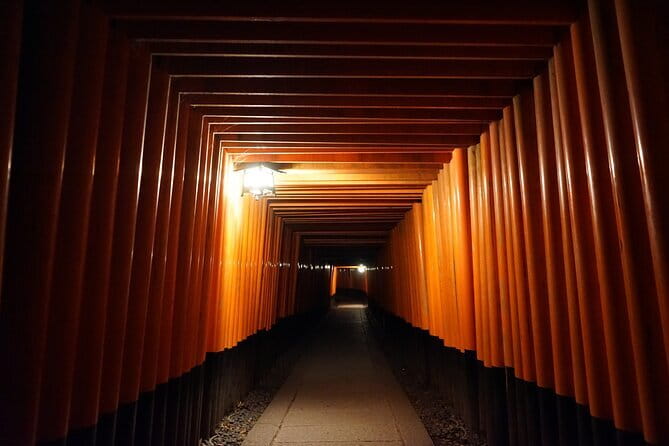
- Nighttime access to Fushimi Inari: Visit after the busiest daytime hours, when the shrine can feel quieter and more atmospheric.
- Guide Junko’s cultural explanations: Expect clear discussion of Shinto, Buddhism, local history, and the meaning of the shrine.
- A small group of no more than 10: The format leaves room for questions and conversation.
- One hour on foot: This is a focused introduction rather than a long mountain hike.
- Easy rail meeting point: Start at Inari Station, close to the shrine entrance.
- $39.19 per person: The price makes the most sense if you want context and conversation, not just a walk through the gates.
Why Fushimi Inari feels different after dark
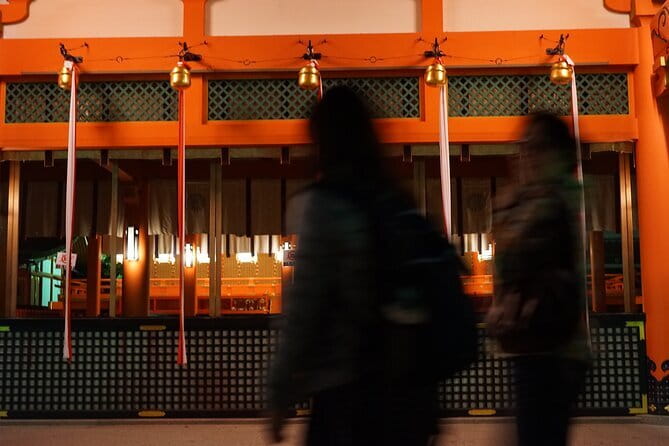
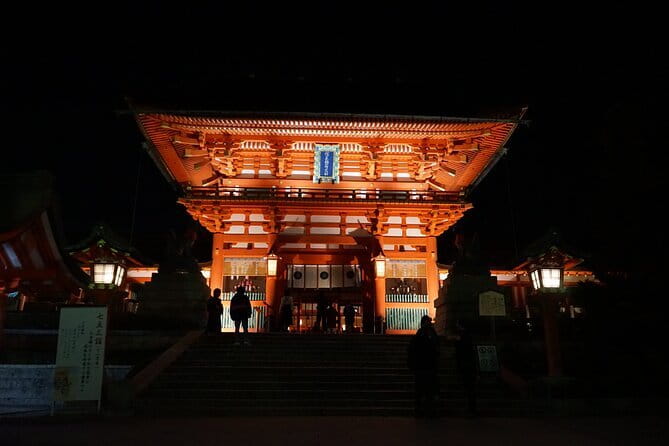
Fushimi Inari-taisha is among Kyoto’s best-known places, famous for its long rows of orange torii gates. During the day, the approach can be crowded and noisy. A 7:00 pm start gives you a better chance to see the shrine with fewer people pressing around you.
Night changes the mood without changing the site itself. The gates still form the main visual attraction, but darkness makes the walk feel more peaceful and less like a quick photo stop. You can pay closer attention to the shapes, spacing, and gradual climb instead of simply trying to move with the crowd.
That calmer setting is the main reason to choose this tour. You are not paying for a special admission area or an elaborate performance. You are paying for a guided walk at a useful time of day, with cultural background that can help the shrine make more sense.
Keep your expectations in check. The tour lasts about one hour, so it does not promise a full exploration of every upper section of the shrine grounds. It is best viewed as a short evening introduction, not a complete Fushimi Inari hike.
More ways to walk the Fushimi Inari gates:
- Kyoto: Fushimi Inari, Kinkakuji, Bamboo Grove 1 Day Bus Tour
★ 4.8 · 4,316 reviews - Fushimi Inari Hidden Hiking Tour (Private Option Available)
★ 5.0 · 1,750 reviews - Osaka/Kyoto:Kinkakuji,Arashiyama,FushimiInariShrine,NaraPark
★ 4.1 · 1,596 reviews
Meeting at Inari Station at 7:00 pm
The meeting point is Inari Station, at Fukakusa Inarionmaecho in Kyoto’s Fushimi Ward. This is a practical starting place because the station is close to the shrine entrance. One of the tour’s useful details is that the JR stop is right across from the entrance, which can make the first meeting less stressful.
You will need to arrive ready to walk at 7:00 pm. The activity returns to the same meeting point at the end, so you do not need to work out a separate evening pickup location.
The location also helps you plan the rest of your day. You can visit another part of Kyoto first, then come to Fushimi Inari for the evening walk. Since the meeting point is near public transportation, you do not need to depend on a private vehicle or arrange a complicated transfer.
The tour uses a mobile ticket, and confirmation is normally sent when you book. If you reserve within one day of the start, confirmation may take longer and depends on availability. That is worth checking before you head toward the station.
A one-hour walk through Fushimi Inari-taisha
The entire scheduled visit takes about one hour and centers on Fushimi Inari-taisha Shrine. Your English-speaking guide leads the walk and explains the site as you go.
The key benefit is interpretation. Without a guide, it is easy to see Fushimi Inari as a striking corridor of orange gates and move on. The walk adds cultural context, especially around Shinto practice and the ways it differs from Buddhism.
You can expect time on foot and a number of steps. One detailed account of the walk specifically points out that you should be prepared for a decent amount of stair climbing. That makes sensible footwear important, even though the tour is short.
The one-hour length works well for several types of schedules. You can fit it into an evening without giving up the rest of your night. It also keeps the commitment modest if you are unsure how much walking you want to do after a full day of sightseeing.
The tradeoff is coverage. A longer tour could give you more time to explore the shrine’s upper paths and spend longer with the guide. Here, the compact format means you get a focused visit rather than an exhaustive one.
Learning the difference between Shinto and Buddhism
The cultural explanation is the heart of the tour. Guide Junko is described as friendly, professional, and well informed about the area. She explains the shrine’s background and takes time to answer questions about Japanese religion and culture.
The discussion of Shinto and Buddhism is especially useful because the two traditions can be confusing if you are seeing Japanese religious sites for the first time. A guided explanation gives you a basic framework for understanding what you are seeing at Fushimi Inari and how it fits into Japanese religious life.
That context matters here. Fushimi Inari is not simply a decorative tunnel of gates. The shrine has religious meaning, and the walk gives you a chance to connect the physical setting with the ideas behind it.
Junko’s willingness to answer questions is another strong point. The small group limit helps here. With no more than 10 people, you have a better chance of hearing the explanation clearly and asking about something that catches your attention.
This is not a lecture-heavy museum visit. The setting keeps the information tied to the place around you. You listen while walking through the shrine grounds, which makes the explanations easier to connect with what you are seeing.
More Kyoto after dark:
- Kyoto: Gion Magical Night Walking Tour with Geisha Trivia
★ 4.9 · 2,393 reviews - Night Walk in Gion: Kyoto’s Geisha District
★ 4.5 · 2,003 reviews - Kyoto Night Foodie Tour in Gion (9+ dishes + 6 Sake tastings)
★ 5.0 · 1,762 reviews - Kyoto Gion Night Walk & Geisha District Guided Tour
★ 5.0 · 786 reviews
What the small group changes
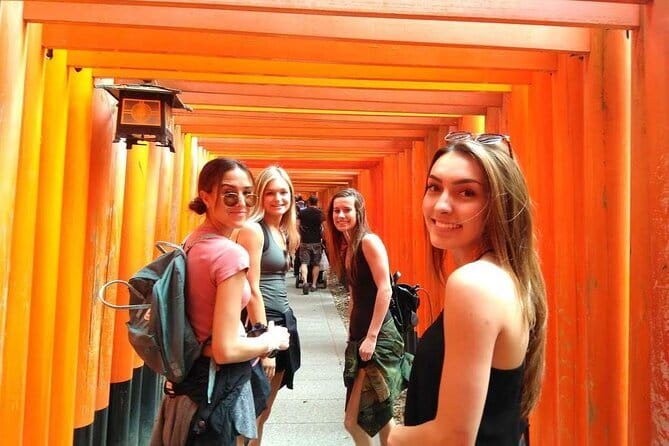
A maximum of 10 people is a useful middle ground. You get the social feel of a shared tour without the size of a large bus group.
Small groups also matter more at a religious site than they do on a simple city transfer. A large crowd can make it hard to hear or keep up. A group of 10 gives the guide room to stop, explain, and respond to questions without creating a large knot of people.
I would choose this format if you want human guidance but do not want a private tour price. At $39.19 per person, the cost is not just for walking through a place that is free to enter. It pays for the guide’s time, cultural explanation, and the convenience of joining a planned evening route.
Still, value depends on what you want. If you already know a great deal about Fushimi Inari and prefer to walk alone, the price may not feel necessary. The admission ticket is free, so the entire paid value comes from the guide service.
For a first visit to Kyoto, that can be worthwhile. A short explanation of religious customs can prevent the shrine from becoming just another scenic stop on your list.
Steps, pace, and practical comfort

The biggest physical consideration is the stairs. The tour description calls for a night walk, and the specific feedback about the route warns you to expect a decent amount of steps. You should be comfortable walking uphill for part of the hour.
The supplied information says most people can participate, but it does not promise a flat route or special accessibility arrangements. If stairs are difficult for you, ask the provider about the route before booking.
The nighttime setting adds another practical point: you will want to stay with the group and follow the guide’s pace. The walk is short, but the steps and evening conditions make comfortable shoes a sensible choice.
Weather can also affect the outing. This activity requires good weather. If poor weather causes cancellation, you will be offered another date or a full refund.
The tour does not include insurance, so you will need to arrange your own coverage if that matters to you. That is a small but important detail when comparing this with more fully packaged excursions.
Is $39.19 a fair price?
At $39.19 per person, this is a moderate price for a one-hour guided activity in Kyoto. The shrine itself does not charge an admission fee, so you should judge the cost by the quality and usefulness of the guiding.
I see the value in three parts. First, you get a planned evening visit at a time that may be less crowded. Second, you receive explanations about the shrine, Shinto, and Buddhism. Third, the group size stays at 10 or fewer, which gives the guide room to interact with you.
The price is less attractive if you only want photographs. You can visit the shrine independently and avoid the guide fee. But an independent walk will not include Junko’s explanations or the chance to ask questions as you go.
For couples, solo visitors, and first-time visitors to Kyoto, the added context may justify the price. The short duration also keeps the cost from taking over an entire evening.
Who should book this evening walk?

This tour suits you if you want a simple, guided introduction to one of Kyoto’s most famous sites. It is a good fit for someone who enjoys cultural explanation, prefers a small group, and likes the idea of seeing Fushimi Inari after the daytime rush.
It also works well for visitors with a tight schedule. One hour is long enough to get a feel for the shrine and ask questions, but short enough to leave room for dinner or another evening plan.
You may want to skip it if you dislike stairs, need a fully accessible route, or want a long climb through the entire shrine complex. It is also not the best match if you prefer to explore alone and do not need background information.
The tour’s strongest points are specific and practical: the 7:00 pm timing, the nearby station, the small group, and Junko’s explanations. Those features matter more than a long list of extras, because the activity is intentionally simple.
Booking, cancellation, and group details
You can cancel up to 24 hours before the start time for a full refund. Cancellations or changes made less than 24 hours before the tour are not accepted for a refund, and the cutoff uses Kyoto local time.
The activity may also be canceled if the minimum number of participants is not reached. In that case, you can choose another date or activity, or receive a full refund.
The tour is operated by Kyoto Personal Tours. Admission to Fushimi Inari is free, and the listed inclusion is the tour guide service. Insurance is not included.
Should you book the Fushimi Inari night tour?
Book it if you want more than a quick walk under the torii gates. For $39.19, you get a compact evening visit, a group of no more than 10, and guide Junko’s explanations of Shinto, Buddhism, and the shrine itself.
I would especially recommend it for first-time Kyoto visitors who want cultural context without committing to a long excursion. The only serious caution is the steps. If you are comfortable walking uphill for an hour, this is a useful way to see Fushimi Inari in a quieter nighttime setting. If you need a flat route or prefer total independence, visit on your own instead.
FAQ
How long does the Fushimi Inari night tour last?
The tour lasts approximately one hour.
What time does the tour begin?
The tour starts at 7:00 pm.
Where do I meet the guide?
You meet at Inari Station, at Fukakusa Inarionmaecho in Kyoto’s Fushimi Ward.
Where does the tour end?
The activity ends back at the meeting point.
Is admission to Fushimi Inari included?
Admission to Fushimi Inari is free. The paid service is the guided tour.
Who provides the tour?
The experience is provided by Kyoto Personal Tours.
How many people can join the tour?
The group has a maximum of 10 participants.
Is insurance included?
No. Insurance is not included.
Can I cancel for a full refund?
Yes. You can cancel at least 24 hours before the start time for a full refund. Cancellations and changes made less than 24 hours before the start time are not accepted for a refund.
More Walking Tours in Kyoto
- Kyoto Geisha Walking Tour: Gion District & Hidden Gems
★ 4.7 · 3,273 reviews - Kyoto: Gion Geisha District Walking Tour – Stories of Geisha
★ 4.7 · 2,187 reviews - Kyoto Gion Geisha District Walking Tour – The Stories of Geisha
★ 5.0 · 1,441 reviews - Nishiki Market Brunch Walking Tour (7 Tastings + Brunch)
★ 5.0 · 1,355 reviews
More Shrines in Kyoto
- Osaka/Kyoto: Arashiyama, Nara & Fushimi Inari Shrine w/Lunch
★ 4.4 · 754 reviews - KYOTO Tea Ceremony with kimono near by Imamiya Jinjya Shrine
★ 5.0 · 343 reviews - Kyoto: 3-Hour Fushimi Inari Shrine Hidden Hiking Tour
★ 4.9 · 270 reviews - Kyoto Magical Night English Tour: Gion & Fushimi Inari Shrine
★ 5.0 · 97 reviews
Newest Kyoto experiences on the site
- Treasures of Kyoto: Gion & historical Walking Tour★ 5.0 · 6 reviews
- Whisk Your Own Matcha: A Zen Matcha Experience at Temple★ 3.6 · 7 reviews
- Kyoto tea town for matcha lovers★ 5.0 · 16 reviews
- Uji: Private immersion into Kyoto’s tea and reglious culture★ 5.0 · 17 reviews
- Kyoto Matcha Green Tea Tour★ 4.5 · 23 reviews
- Uji and Wazuka Matcha Farm Half Day Private Guided Tour★ 5.0 · 21 reviews
- Utilising upcycled Matcha! Creating matcha incense (Uji, Kyoto)★ 5.0 · 6 reviews
- Sacred Temple Yoga Experience in Japan★ 5.0 · 3 reviews
Fushimi Inari Tours, compared.
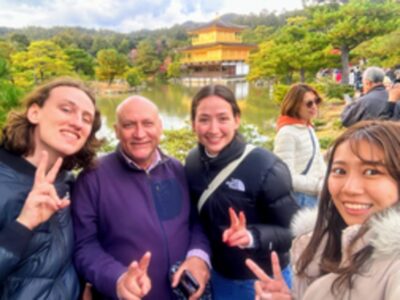
Fushimi Inari, Kinkakuji, Bamboo Grove 1 Day Bus Tour
Read our review →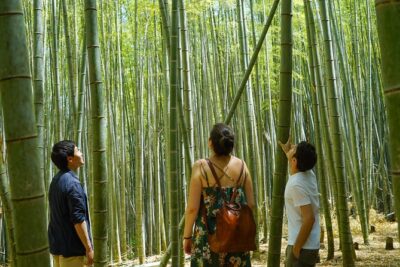
Fushimi Inari Hidden Hiking Tour (Private Option Available)
Read our review →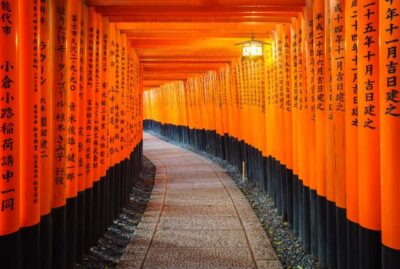
Kinkakuji,Arashiyama,FushimiInariShrine,NaraPark
Read our review →
Nara, Fushimi Inari Taisha, Arashiyama Bus Tour
Read our review →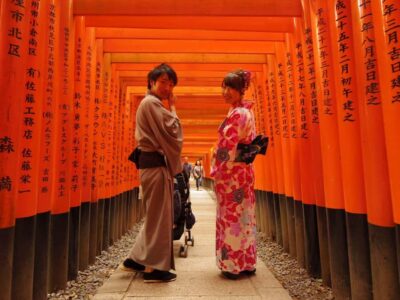
Arashiyama, Nara & Fushimi Inari Shrine w/Lunch
Read our review →
Nijo Castle, Kiyomizu & Fushimi Inari Guided Tour
Read our review →
Nijo, Kinkaku-ji, Arashiyama, Kiyomizu & Fushimi Inari
Read our review →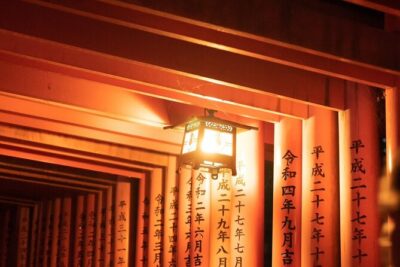
Browse the lists this tour appears in