
Reviewed · GION DISTRICT TOURS
Night Walk in Gion: Kyoto’s Geisha District
Gion after dark is Kyoto at its most atmospheric. Lantern-lit lanes, wooden teahouses, and the sound of footsteps beside the stream create the setting, while your guide explains the world of geiko and maiko, Kyoto’s professional entertainers. You may even see one heading to an evening appointment, though that is never promised.
I like two things here: the clear etiquette guidance, which helps you observe without adding to the problems caused by intrusive visitors, and the local detail shared by guides such as Mia, Mie, Chako, and Toko. The main caution is simple: this is a walking lesson, not a guaranteed geisha sighting, and you cannot record video.
Key points to know before you book
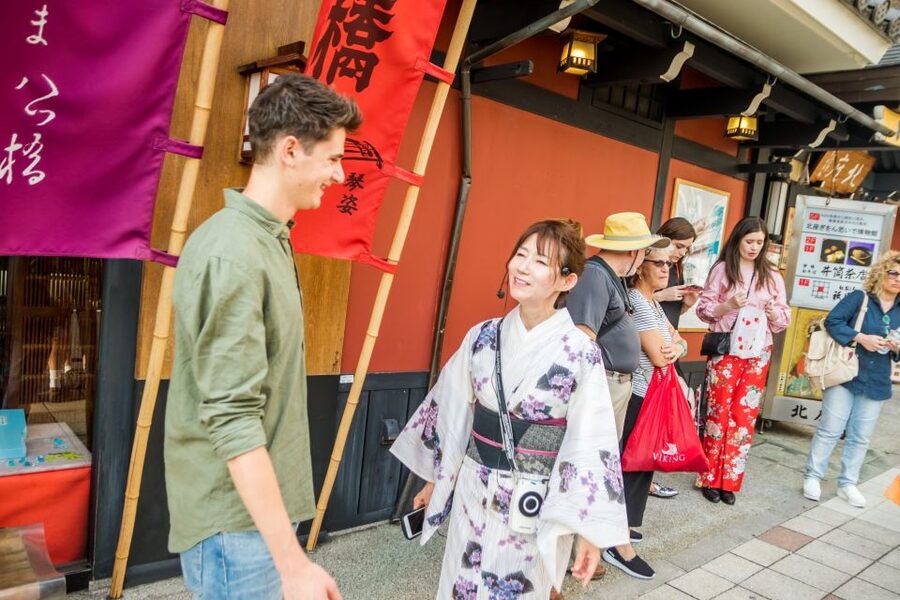
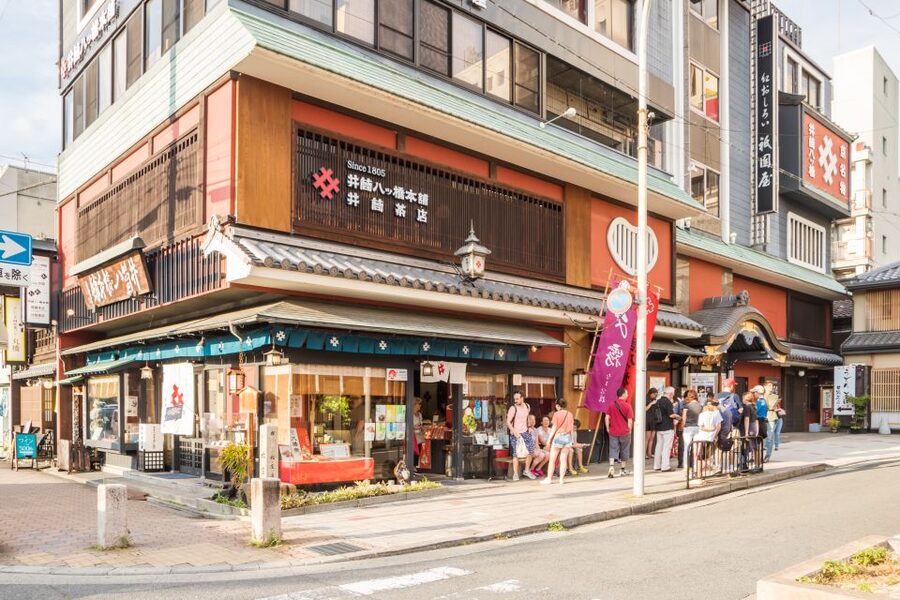
- The walk begins near Gion Shijo Station, in front of the Gion Omoide Museum beside the Izutsu Yatsuhashi pastry shop.
- You learn the difference between geiko and maiko, including clothing, hairstyles, training, work, and daily routines.
- Nighttime Gion is the real attraction, with classic lanes, a stream, wooden facades, and locations linked with Memoirs of a Geisha.
- Seeing geiko or maiko is possible but not guaranteed, so book this for the explanation and atmosphere first.
- Respect is part of the tour, and video recording is not allowed. You are taught how to watch quietly and avoid blocking or disturbing anyone.
- The $21 price is strong value for a 100-minute guided walk, especially if you want context you would not easily get by wandering alone.
Why Gion makes more sense with a guide
Gion can look simple at first glance: narrow lanes, old wooden buildings, small restaurants, and people in traditional dress moving between appointments. The important details are easy to miss. Which buildings are teahouses? What does a maiko’s hairstyle mean? Why do some performers wear more elaborate clothing than others? A good guide gives the district a human shape.
This walk focuses on the geisha world, although geisha is a broad term more commonly used outside Kyoto. In Kyoto, professional entertainers are called geiko, while apprentices are called maiko. The distinction is not merely a matter of age or costume. It reflects different stages of training, presentation, and work.
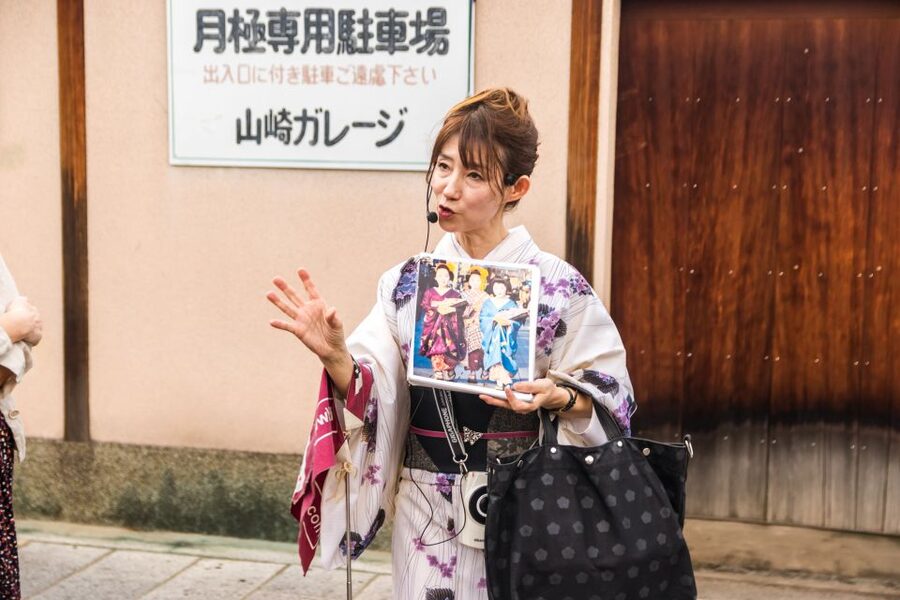
The guides use photos and visual aids to explain details that are difficult to spot from a distance. Mie, for example, has brought a substantial file of images and uses it to explain clothing, customs, and people connected with the district. Other guides, including Mia and Chako, are praised for combining facts with humor and practical advice.
That matters because Gion is not a museum. It is a working neighborhood. Teahouses continue to receive clients, and geiko and maiko move through the streets on their way to appointments. A guide can help you understand what you are seeing without treating the people who live and work there as scenery.
More ways to walk Gion:
- Kyoto Geisha Walking Tour: Gion District & Hidden Gems
★ 4.7 · 3,273 reviews - Kyoto: Gion Magical Night Walking Tour with Geisha Trivia
★ 4.9 · 2,393 reviews - Kyoto: Gion Geisha District Walking Tour – Stories of Geisha
★ 4.7 · 2,187 reviews
Meeting beside Gion Shijo Station
The meeting point is in front of the Gion Omoide Museum, connected to the Izutsu Yatsuhashi pastry shop. Its coordinates are 35.0044519, 135.7723814, which is useful if you prefer to confirm the location on a map before setting out.
The starting point near Gion Shijo Station is practical. You do not need hotel pickup, and transportation to the meeting point is not included, so allow time to reach the area on your own. Look for the pastry shop connection and the museum entrance rather than expecting a large tour office.
Once the group gathers, the guide sets the tone. The strongest part of this experience is not simply pointing out attractive streets. It is explaining how to behave in them. You learn to keep your distance, avoid blocking a doorway, speak quietly, and watch without chasing someone for a picture.
The group may be small, although the exact maximum is not provided. Several accounts describe a smaller group than some of the large walking tours seen elsewhere in Gion. That can make it easier to hear the guide and easier to move through narrow lanes, but you should not assume every departure has the same size.
Walking the classic Gion lanes
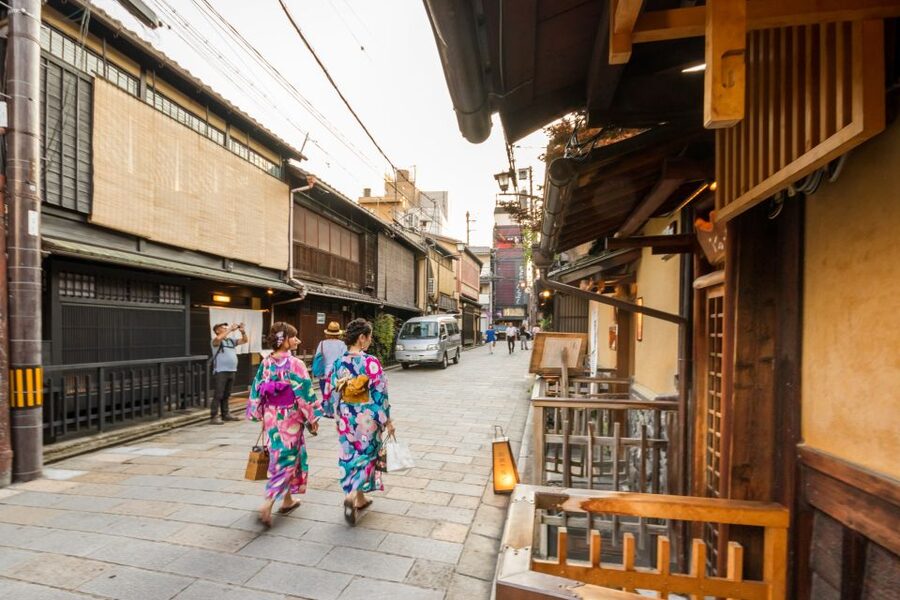
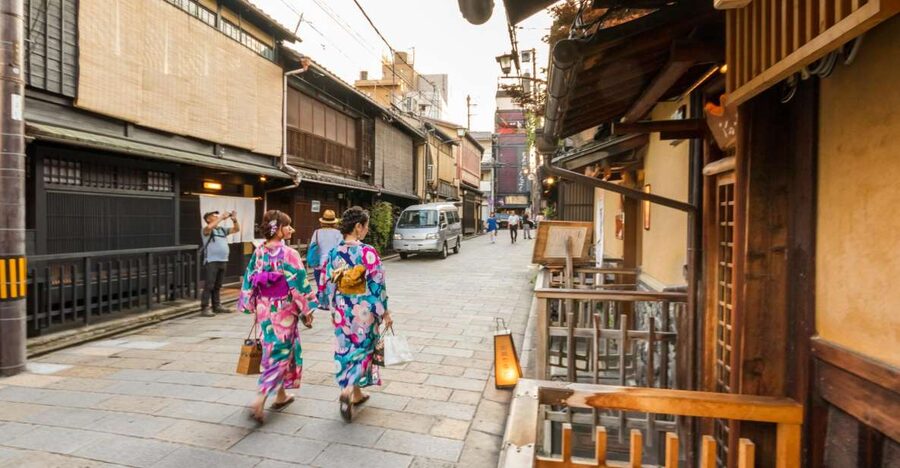
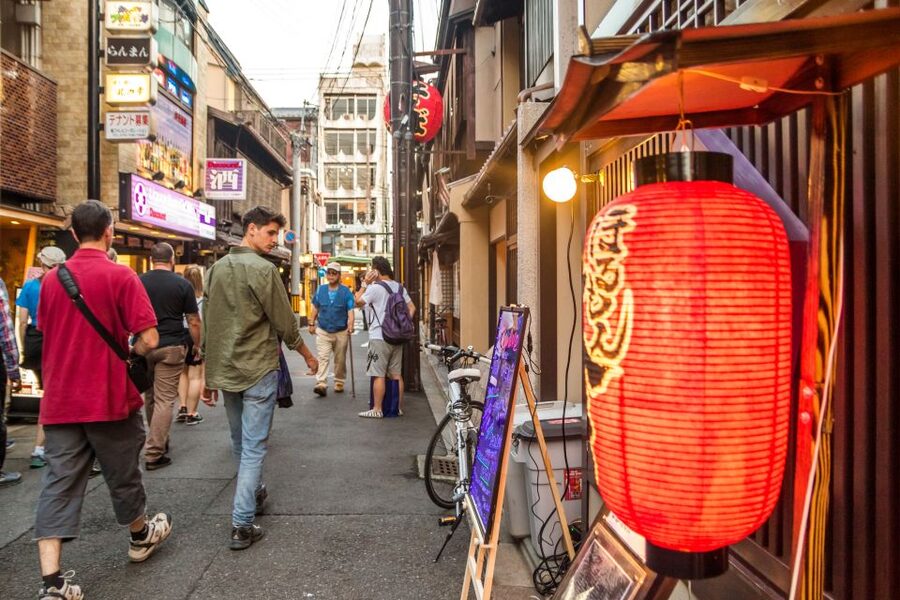
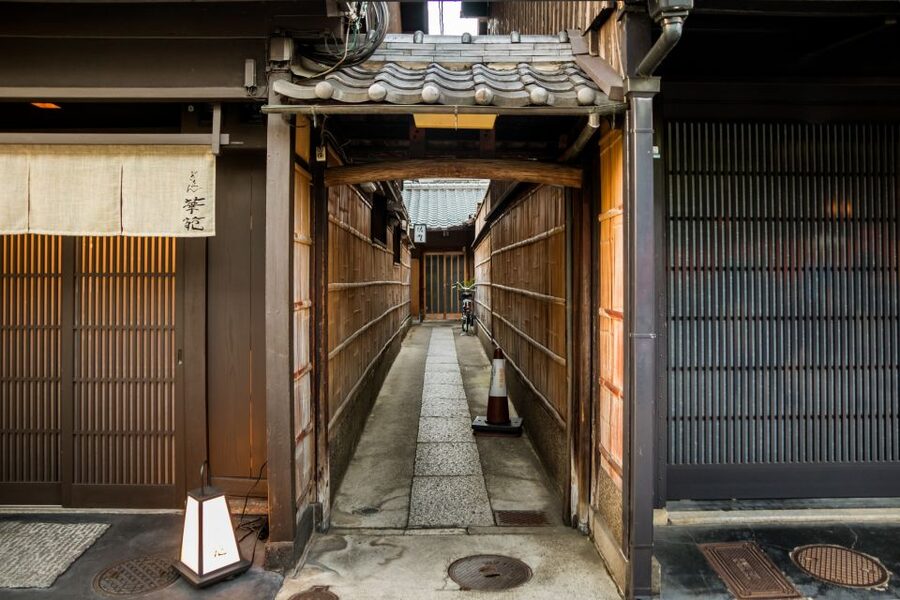
The route takes you through the traditional streets of Gion at night, beside a beautiful stream and past the wooden architecture that has made the district famous. The setting is one of the tour’s strongest features even if no geiko or maiko appears.
This is also the part connected in the public imagination with Memoirs of a Geisha. The film and book helped turn these streets into an international symbol of Kyoto, but the real district is less theatrical and more delicate. You see working buildings, quiet entrances, and signs that suggest private activity rather than public attractions.
Your guide explains how to tell a traditional teahouse from an ordinary tea shop. That distinction is useful because the English word teahouse can make two very different places sound alike. In Gion, an ochaya is a private entertainment venue, not a casual café where you walk in for a cup of tea.
The pace is generally manageable, with enough time to listen and look around. Still, it is an evening walk on ordinary streets. You may need to stop at crossings, wait for other pedestrians, and keep moving when the guide asks. Comfortable shoes will make the 100 minutes much easier.
The itinerary can also include less crowded corners and picturesque areas away from the most obvious lanes. That helps the walk feel less like a photo stop circuit. It also gives the guide space to explain the neighborhood without competing with a large crowd.
Understanding geiko, maiko, and their work
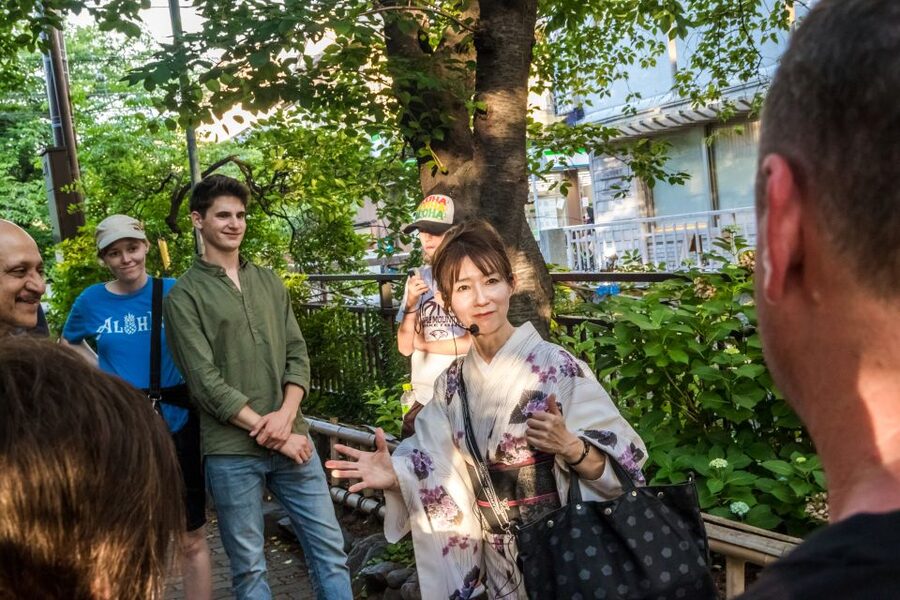
The main subject is the life of geiko and maiko. The guide explains their training, clothing, makeup, hairstyles, rules, and daily routines. You also hear about tea house culture and the way appointments shape the evening movement through Gion.
The visual differences are part of the lesson. A maiko’s appearance is more youthful and often more ornate, while a geiko’s presentation reflects a different professional stage. The guide can point out details such as hairstyles, kimono patterns, accessories, and footwear that you might otherwise lump together as simply traditional dress.
You also learn that the work is more than a costume display. Geiko and maiko train in traditional arts and social skills, then perform and host at private gatherings. The walk gives you a better sense of the discipline behind the polished appearance.
This is where the guides’ personal familiarity with the area can add value. Some guides have working connections with geiko and maiko and can identify people they know. That does not mean you receive private access or enter a boarding house. It means the explanation may be more precise and grounded than a general account taken from a guidebook.
Privacy is central. The tour does not take you inside a geisha boarding house or teahouse. One guide even used the phrase boarding school in explaining why such access would cross a line. That limitation is a good one. You are seeing a public street, not receiving access to someone’s private workplace or home.
More geisha and maiko evenings in Kyoto:
- Best of Kyoto: Gion, Geisha, Pagodas & Cobblestones
★ 4.9 · 2,058 reviews - Kyoto Gion Geisha District Walking Tour – The Stories of Geisha
★ 5.0 · 1,441 reviews - Kyoto Gion: 2-Hour Geisha Culture & History Walking Tour
★ 5.0 · 1,186 reviews - Kyoto Gion Night Walk & Geisha District Guided Tour
★ 5.0 · 786 reviews
The chance to see geiko or maiko
Many departures encounter geiko or maiko walking to evening appointments. Some groups have seen several, including reports of four maiko and one geiko on one walk, and six maiko and one geiko on another. One departure reportedly saw more than eight.
Those sightings can be memorable. You might see a maiko moving quickly toward a waiting car, a geiko passing through a lane, or a performer leaving a boarding house for a teahouse appointment. But the range of experiences is wide, and the tour cannot guarantee a sighting.
That uncertainty is not a flaw if you set the right expectation. Book this as a guided introduction to Gion, with a possible encounter as an extra. If you book mainly to collect photographs, you may leave disappointed. If you want to understand the district and learn how to behave respectfully, the tour still has value when the streets are quiet.
Photography requires care. Video recording is specifically not allowed, and the group is instructed not to harass geiko or maiko. Even still photos may be restricted in practice when someone is passing by, so follow the guide rather than raising a camera automatically.
You may feel that the guide keeps the group farther away than expected. That is intentional. One account found the guide overly protective, but the same account still enjoyed the walk. This is a fair trade. A close encounter is not worth making someone late, uncomfortable, or surrounded by a crowd.
The guides make the difference
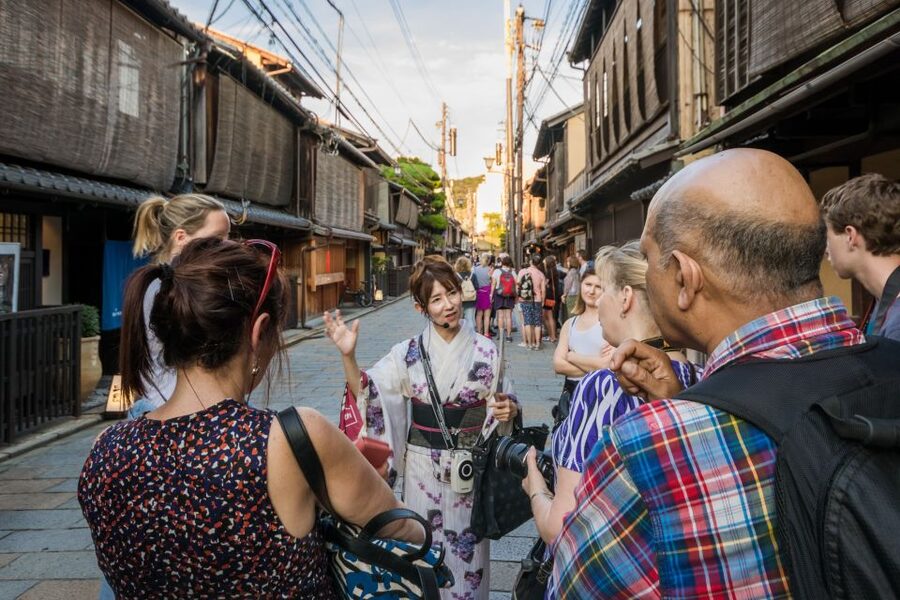
The experience is delivered in English by licensed local guides, and the guide assigned to your departure will shape the tone. Names that appear in recent departures include Mia, Mie, Chako, Chako-san, Toko, Mai, and Haruto. You may not receive a particular guide, so consider the names examples rather than a booking promise.
Mia is repeatedly described as funny, warm, and deeply familiar with geiko and maiko culture. Mie is praised for clear English, useful anecdotes, photos, and small Japanese expressions that are hard to pick up from a standard guidebook. Chako is noted for her enthusiasm, patience, and ability to include people with different levels of interest.
The best guides do more than recite dates. They explain how the district works today, answer questions, and add small cultural details. Some use humor to keep the walk lively, which helps if you are visiting with children or if the subject feels unfamiliar at first.
The guide also has a practical job: keeping the group together in a busy old district. One departure included a large group in rainy conditions, and the guide made sure nobody was lost at a crossing. That kind of care matters more than polished storytelling when the weather turns or the group gets spread out.
English ability is generally strong, but accents and speaking styles can vary. The content is information-heavy, so listen closely and ask questions when you can. If your interest is only in taking pictures, you may find the explanations too long. For anyone curious about Japanese culture, the detail is the point.
A good evening choice for families
The walk has worked well for families, including children who were unsure about the subject before it began. The blend of costumes, stories, local streets, and the possibility of seeing a maiko can hold younger attention better than a formal museum visit.
A family group has also managed the walk with a child in a pram. Still, the tour is not suitable for people with mobility impairments, and the route includes ordinary streets rather than a purpose-built accessible attraction. Narrow lanes, crossings, and a 100-minute walking period may be tiring for anyone who needs frequent rest.
Rain does not necessarily stop the experience. Guides have continued in wet weather, and the evening setting remains atmospheric, but bring suitable rain protection. Since the activity takes place outdoors, conditions can affect comfort and visibility.
The 5:30 p.m. start mentioned in one account shows why timing can be useful. An early evening departure lets you avoid some daytime heat and see Gion as its lanterns and businesses shift into the night. Starting times vary, so check the available departure when booking.
What the $21 price really buys
At $21 per person, this is an affordable way to add structure to an evening in Kyoto. You are paying for a professional English-speaking guide, not admission to a show, meal, private tea ceremony, or exclusive encounter.
That distinction makes the value easy to judge. If you want a performance, choose a different activity. If you want the background that turns a walk through Gion into something more meaningful, $21 is reasonable.
The tour lasts 100 minutes, though the description also refers to it as a two-hour walk. Plan on roughly 100 minutes and allow extra time before and after for meeting the group and continuing your evening. The activity does not include transportation, hotel pickup, or drop-off.
The booking terms are friendly: you can cancel up to 24 hours ahead for a full refund, and a reserve-now, pay-later option is available. Children can receive a discount when you present valid identification. These details make it easier to fit the walk into a changing Kyoto schedule.
Who should book this Gion walk
I would choose this tour if you are visiting Kyoto for the first time and want context before exploring Gion alone. It is especially useful if you are curious about Japanese customs, traditional arts, or the difference between the image of a geisha in popular culture and the reality of geiko and maiko in Kyoto.
It also suits you if you want an evening activity that is calm, local, and not centered on food or shopping. The streets, stream, wooden buildings, and explanations provide plenty to notice even when no performers appear.
You may want to skip it if you dislike walking, have difficulty with mobility, or expect guaranteed access to private places. It is also a poor fit if your main goal is photography. The no-video rule and respectful distance are firm parts of the experience.
Final verdict: book it for the insight, not the sighting
I recommend the Night Walk in Gion for the price, setting, and careful explanation of geiko and maiko culture. The strongest guides turn a short walk into a useful lesson in etiquette, appearance, work, and modern Kyoto.
Go with modest expectations about sightings. You might see several geiko and maiko, or none at all. Either way, you will come away better prepared to walk through Gion without treating it as a stage set. At $21, that is a fair exchange for 100 minutes of local context and a more respectful evening in one of Kyoto’s most famous districts.
FAQ
Where does the Night Walk in Gion begin?
The meeting point is in front of the Gion Omoide Museum, connected to the Izutsu Yatsuhashi pastry shop. It is near Gion Shijo Station. The coordinates are 35.0044519, 135.7723814.
How long does the tour last?
The activity duration is 100 minutes. The description also refers to it as a two-hour walk, so allow a little extra time around the scheduled start and finish.
Is seeing a geiko or maiko guaranteed?
No. You may encounter geiko or maiko walking to evening appointments, but sightings are not guaranteed.
Can I take video during the walk?
No. Video recording is not allowed. You should also follow the guide’s instructions about keeping a respectful distance and avoiding disturbances.
Is the tour suitable for people with mobility impairments?
No. The activity is not suitable for people with mobility impairments.
What does the price include?
The $21 price includes a professional English-speaking guide. Transportation, hotel pickup, and hotel drop-off are not included.
More Walking Tours in Kyoto
- Nishiki Market Brunch Walking Tour (7 Tastings + Brunch)
★ 5.0 · 1,355 reviews - Kyoto Arashiyama Walking Tour: Bamboo, Monkeys, Gardens & Secrets
★ 5.0 · 1,216 reviews - Kyoto: Izakaya Bars Guided Walking Tour
★ 4.9 · 815 reviews - Kyoto Sake Brewery & Tasting Walking Tour
★ 5.0 · 623 reviews
More of Kyoto After Dark
- Kyoto Night Foodie Tour in Gion (9+ dishes + 6 Sake tastings)
★ 5.0 · 1,762 reviews - Kyoto Ghost Tour: Dark Tales, Urban Legends, Bamboo Forest Night
★ 5.0 · 625 reviews - Kyoto Bar Hopping Night Tour
★ 5.0 · 613 reviews - Kyoto Night All-Inclusive Eats and Streets, Gion and Beyond
★ 4.7 · 601 reviews
Newest Kyoto experiences on the site
- Treasures of Kyoto: Gion & historical Walking Tour★ 5.0 · 6 reviews
- Whisk Your Own Matcha: A Zen Matcha Experience at Temple★ 3.6 · 7 reviews
- Uji: Private immersion into Kyoto’s tea and reglious culture★ 5.0 · 17 reviews
- Kyoto tea town for matcha lovers★ 5.0 · 16 reviews
- Kyoto Matcha Green Tea Tour★ 4.5 · 23 reviews
- Uji and Wazuka Matcha Farm Half Day Private Guided Tour★ 5.0 · 21 reviews
- Utilising upcycled Matcha! Creating matcha incense (Uji, Kyoto)★ 5.0 · 6 reviews
- Sacred Temple Yoga Experience in Japan★ 5.0 · 3 reviews
Gion District Tours, compared.
Kyoto Geisha Walking Tour: Gion District & Hidden Gems
Read our review →
Gion Magical Night Walking Tour with Geisha Trivia
Read our review →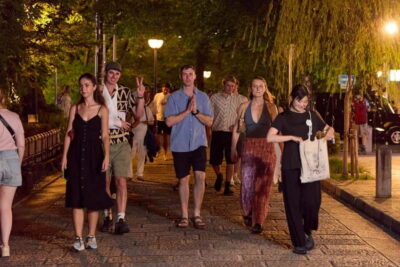
Gion Geisha District Walking Tour – Stories of Geisha
Read our review →
Best of Kyoto: Gion, Geisha, Pagodas & Cobblestones
Read our review →
Kyoto Night Foodie Tour in Gion (9+ dishes + 6 Sake tastings)
Read our review →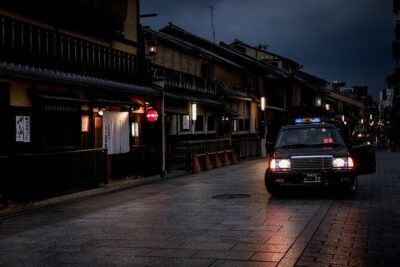
Kyoto Gion Geisha District Walking Tour – The Stories of Geisha
Read our review →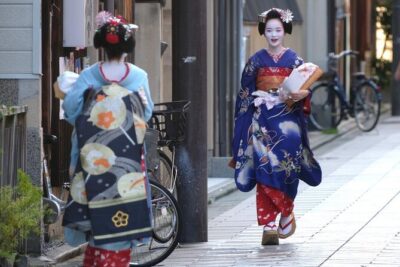
Kyoto Gion: 2-Hour Geisha Culture & History Walking Tour
Read our review →
Chopsticks Making Workshop in Gion with Engraving Option
Read our review →Browse the lists this tour appears in