
Reviewed · GION DISTRICT TOURS
Kyoto Gion Geisha District Walking Tour – The Stories of Geisha
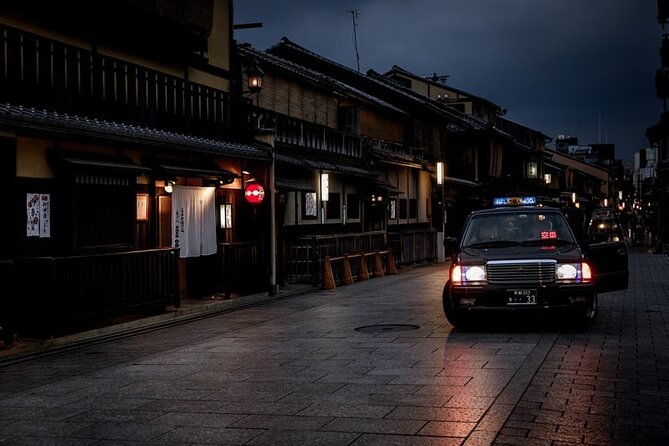
Gion changes after sunset. The daytime crowds thin, lanterns begin to glow, and the old streets make more sense as a working district for geiko and maiko rather than a photo backdrop. I especially like the small-group limit of 15 and the way guides such as Ben, Deborah, Shin, Nami, Kenji, and Melanie connect geisha culture with wider Kyoto history.
I also like the $25 price, which buys two hours of guided context without adding a performance or shopping stop. The main drawback is that the walking can feel chilly in winter, and one evening may offer more explanation than sightseeing, so bring a warm coat and realistic expectations.
Key points to know before you book
- Gion after dark: See the district when the biggest daytime crowds have gone and the streets take on a quieter mood.
- Small groups: The maximum group size is 15, making it easier to hear explanations and ask questions.
- A useful route: Walk from Ben’s Cookies near Shijo through Gion to Yasaka Shrine, with stops at Tatsumi Bridge, Hanamikoji Street, Minamiza, and Gion Corner.
- Culture, not a staged show: The focus is on geiko and maiko history, customs, work, and Kyoto’s entertainment districts.
- Good first-night choice: The tour helps you understand Gion before you return on your own for dinner or further exploring.
- Plan for the weather: Bottled water is not included, and poor weather can lead to a change of date or a full refund.
Why Gion is better understood at night
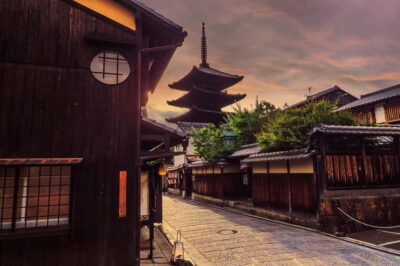
Gion is easy to misread in daylight. Its narrow lanes, wooden machiya buildings, tea houses, and expensive restaurants can look like a preserved historic quarter designed for sightseeing. They are also part of a living entertainment district, with geiko and maiko moving to appointments and businesses preparing for the evening.
That is the useful idea behind this tour. You are not simply ticking off pretty streets. You are learning why certain buildings matter, how the flower districts developed, and how geiko and maiko fit into Japanese performing arts.
The timing helps. Gion is famous, and famous places in Kyoto can become crowded enough to hide the character you came to see. After dark, the atmosphere is more focused. You may see geiko or maiko making their way to appointments, but this is not promised and should never be treated as the purpose of the walk. The real value is understanding the setting respectfully.
The guides bring different strengths. Ben has been praised for explaining the hidden codes of the flower towns and for connecting Gion with Pontocho. Deborah has led walks with detailed explanations of geisha life and related history. Shin, Nami, Kenji, Melanie, Joy, Manny, Tommy, Sakuri, and others have also guided this experience, with the emphasis usually falling on clear storytelling and questions.
More ways to walk Gion:
- Kyoto Geisha Walking Tour: Gion District & Hidden Gems
★ 4.7 · 3,273 reviews - Kyoto: Gion Magical Night Walking Tour with Geisha Trivia
★ 4.9 · 2,393 reviews - Kyoto: Gion Geisha District Walking Tour – Stories of Geisha
★ 4.7 · 2,187 reviews
Starting near Shijo and the Izumo-no-Okuni statue
The meeting point is Ben’s Cookies Kyoto Shijo at 89 Shinchō, in Shimogyo Ward. The route begins with the Statue of Izumo-no-Okuni, a bronze memorial to Okuni, the figure traditionally linked with the founding of kabuki theater.
This is a smart opening stop because it places geisha culture within Japan’s wider world of performance. The evening is not only about costumes and appearances. It is also about theater, music, dance, training, patronage, and the long connection between entertainment and Kyoto’s urban culture.
The statue stop lasts about 10 minutes and has no admission fee. It is short, but it gives your guide a natural way to explain how kabuki and the geisha arts developed alongside one another.
You should arrive ready to walk rather than expecting a series of indoor visits. This is an outdoor tour, and the route includes ordinary city streets as well as scenic lanes. Comfortable shoes matter more than dressy clothes.
Minamiza and Kyoto’s performing arts
Minamiza is a historic theater associated with kabuki performances. The tour includes it as part of the route, though the experience does not include a kabuki ticket or a performance.
That distinction matters. If you want to watch a full kabuki production, you will need a separate plan. Here, Minamiza works as a visual and historical reference point. Your guide can use the theater to explain the dramatic side of Japanese culture and how public performance relates to the more private world of tea houses and geiko appointments.
This is one of the better reasons to take the walk early in your Kyoto stay. Once you understand the links between kabuki, geiko, maiko, and the flower districts, later visits to theaters, shrines, or Gion restaurants become easier to place.
The walk also gives you a chance to ask basic questions without feeling foolish. The terms can be confusing at first. Geiko is the Kyoto term commonly used for a fully trained geisha, while maiko refers to an apprentice. The details of appearance, training, and work are part of the evening’s subject.
Tatsumi Bridge and the Gion Shinbashi lanes
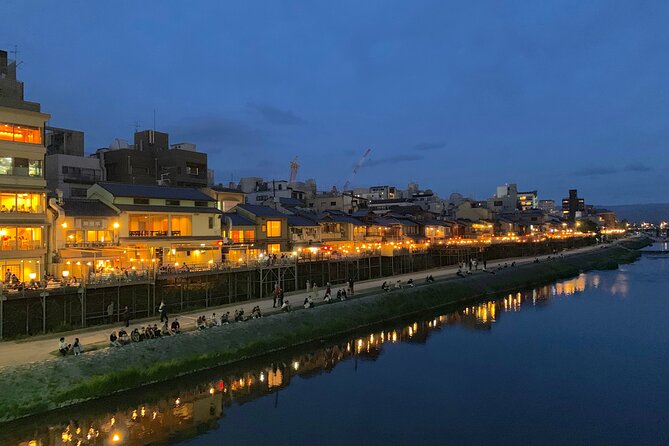
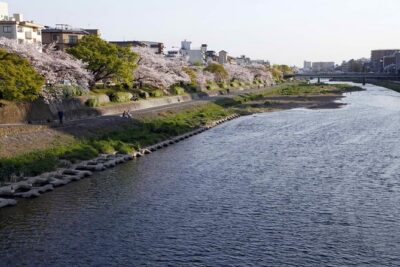
Tatsumi Bridge is one of the prettiest points on the route. It sits in the Gion Shinbashi area, known for traditional tea houses, narrow streets, and old buildings. This is the sort of place that can look perfect in a quick photograph but becomes more interesting once someone explains what you are seeing.
The bridge stop lasts about 10 minutes. Your guide may point out buildings that appear plain at first yet have a role in the district’s geisha culture. That was a repeated strength of this experience: the walk draws attention to details you might pass without noticing.
Keep your camera ready, but keep it secondary. Gion is a working neighborhood, not an open-air stage. If geiko or maiko pass by, give them space and follow local etiquette. The tour helps you understand that distinction, which is more valuable than chasing a photograph.
At this point, the evening mood usually becomes part of the experience. Lantern light, quiet side streets, and traditional façades create a setting that feels very different from daytime Gion. Still, the route is not silent or remote. You are walking through an active part of Kyoto, so expect pedestrians, traffic, and occasional crowds.
More geisha and maiko evenings in Kyoto:
- Best of Kyoto: Gion, Geisha, Pagodas & Cobblestones
★ 4.9 · 2,058 reviews - Night Walk in Gion: Kyoto’s Geisha District
★ 4.5 · 2,003 reviews - Kyoto Gion: 2-Hour Geisha Culture & History Walking Tour
★ 5.0 · 1,186 reviews - Kyoto Gion Night Walk & Geisha District Guided Tour
★ 5.0 · 786 reviews
Hanamikoji Street and the flower district
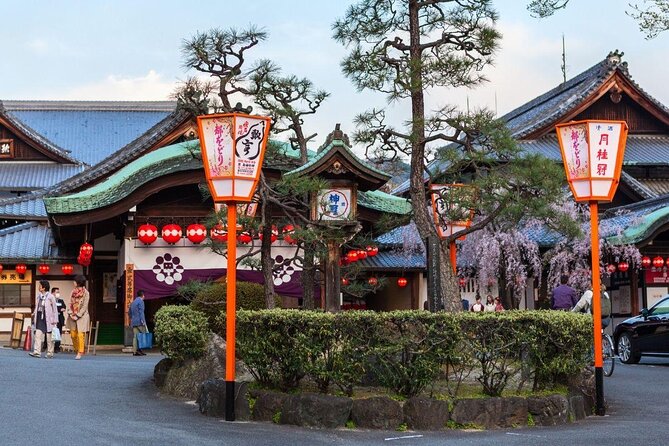
Hanamikoji Street is the best-known stretch of the route. Its traditional machiya houses, tea houses, restaurants, and entertainment venues make it an obvious place to discuss Gion’s past and present.
The stop is listed at about 10 minutes, but the guide’s explanation is more important than the clock. You will hear about the structure of the flower districts, the role of tea houses, and the work that goes into becoming geiko or maiko. The strongest guides also explain the difference between a tourist’s idea of geisha culture and the real professional system behind it.
This is where the tour can feel more substantial than a standard city walk. Guides such as Manny and Kenji have been singled out for explaining the evolution of geiko and maiko life, while Tommy has been noted for bringing in local history and personal context. The experience is designed to give you a framework, not just a list of pretty buildings.
There is one fair limitation. One person found the itinerary could use more content, and that is worth keeping in mind if you already know a great deal about Japanese theater or geisha history. For most first-time visitors, though, the pace gives you time to absorb the information without turning the evening into a lecture.
Gion Corner and the question of performance
Gion Corner is a cultural center and performance venue in the district. It presents several traditional Japanese arts in a condensed format, but this walking tour does not include a performance ticket.
That makes Gion Corner another useful reference point rather than a scheduled show. Your guide can explain how traditional arts are presented and how performance fits into Kyoto’s cultural life. If you want to see an organized cultural performance, treat that as a separate activity.
The distinction also protects the tour from promising something it does not deliver. You are paying for a guided walk and interpretation, not for a geisha appearance or stage program. That keeps the price low and the evening flexible.
I would not book this tour expecting guaranteed contact with geiko or maiko. You might see them heading to appointments, as the route is timed for the evening, but sightings depend on the date, timing, and ordinary chance. The reliable part is the explanation of the district and its customs.
Yasaka Shrine and the end of the walk
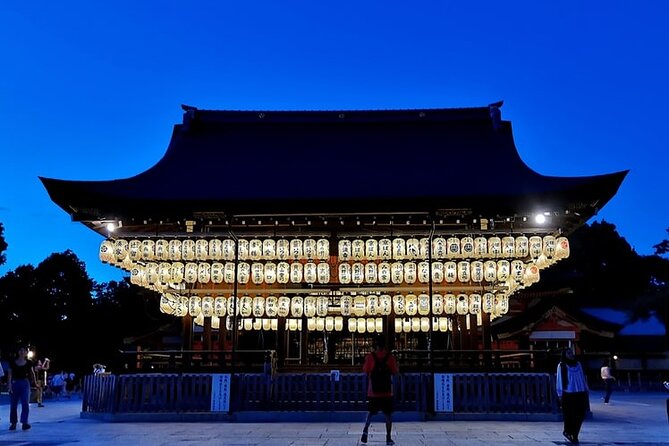
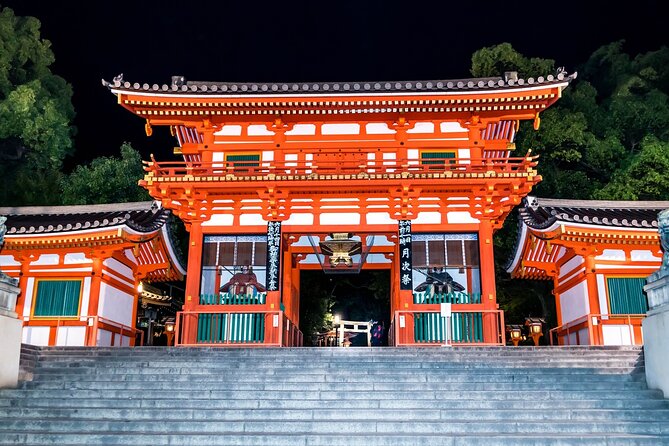
The tour ends at Yasaka Shrine, also called Yasaka Jinja or Gion Shrine. This is one of Kyoto’s best-known Shinto shrines and a fitting finish because of its close connection with the Gion area.
The shrine gives the walk a change of mood. After narrow streets and entertainment history, you finish in a major religious setting. It helps show that Gion is not an isolated theme park. It is part of a larger Kyoto neighborhood where worship, business, dining, festivals, and traditional arts all meet.
The end point is practical, too. From Yasaka Shrine, you can continue exploring Gion, look for dinner, or make your way back through the Higashiyama area. The tour does not include food, drinks, or bottled water, so plan your evening around it rather than expecting refreshments along the way.
What two hours and $25 really provide
At $25 per person, this is a reasonably priced introduction to Gion. You are not paying for admission to a theater, a meal, or a private meeting with a geisha. You are paying for a guide who can explain why the streets, theaters, shrines, and understated buildings matter.
That is good value if you are arriving in Kyoto with little background. A self-guided walk will show you the same general streets, but it will not necessarily explain the hidden codes of the flower towns, the link to kabuki, or the difference between geiko and maiko.
The price is less compelling if you already have a strong academic or personal knowledge of the subject. In that case, the evening atmosphere and chance to ask questions may still be worthwhile, but the route itself is short and the stops are free.
The maximum of 15 people is another part of the value. This is not a private tour, yet it is small enough for a guide to answer questions. The experience lasts about two hours, which makes it easy to fit into a Kyoto itinerary without consuming an entire day.
Weather, walking, and practical planning
This is an outdoor evening walk, so weather affects the experience. A winter visit can be genuinely cold. Bring a proper coat, and do not assume that Kyoto’s mild daytime weather will continue after sunset.
Wear shoes suited to a steady walk on city streets. The route is not described as difficult, and most people can take part, but several stops and the movement between them mean you should not treat it as a seated activity.
The meeting point is near public transportation, and the end at Yasaka Shrine leaves you in a useful part of eastern Kyoto. A mobile ticket is provided, and confirmation comes at booking. Service animals are allowed, and most people can participate.
Free cancellation is available up to 24 hours before the start time for a full refund. Cancellations or changes made inside 24 hours are not refunded. If poor weather causes the operator to cancel, you are offered another date or a full refund.
Who will enjoy this Gion walk most
I would recommend it to first-time Kyoto visitors who want context before exploring Gion on their own. It also works well for families with older children or teenagers, since the walk is short enough to manage and the subject gives younger visitors more to notice than another run through a shrine complex.
It suits anyone curious about Japanese performing arts, local customs, and the difference between staged entertainment and working cultural traditions. The repeated praise for guides such as Ben, Shin, Nami, Kenji, Melanie, and Deborah points to the importance of the person leading your group, so expect the tone to vary slightly by guide.
It is less suitable if you want an indoor cultural demonstration, a meal, a guaranteed geisha sighting, or a full theatrical performance. You should also reconsider if cold weather makes evening walking unpleasant for you.
Should you book the Kyoto Gion Geisha District Walking Tour?
Book it if you want a low-cost, two-hour introduction to Gion that gives meaning to the streets you are seeing. The combination of evening timing, a maximum group of 15, and guides who explain geiko, maiko, kabuki, Kyoto history, and local customs makes this more useful than simply wandering Hanamikoji Street with a camera.
Do not book it for guaranteed access to geisha or a performance. Think of it as a thoughtful orientation walk, not a backstage pass. Bring warm clothing, comfortable shoes, and curiosity, and the $25 fee is easy to justify.
FAQ
How long does the Kyoto Gion Geisha District Walking Tour last?
The tour lasts approximately two hours.
Where does the tour begin?
It begins at Ben’s Cookies Kyoto Shijo, 89 Shinchō, Shimogyo Ward, Kyoto, 600-8001, Japan.
Where does the tour end?
The tour ends at Yasaka Shrine, 625 Gionmachi Kitagawa, Higashiyama Ward, Kyoto, 605-0073, Japan.
How large is the tour group?
The maximum group size is 15 people.
Are admission fees included?
All fees and taxes are included. The route’s listed stops do not require an admission ticket, and the tour does not include a kabuki or Gion Corner performance.
What happens if the weather is poor?
The experience requires good weather. If it is canceled because of poor weather, you will be offered another date or a full refund. You can also cancel at least 24 hours before the start time for a full refund.
More Walking Tours in Kyoto
- Nishiki Market Brunch Walking Tour (7 Tastings + Brunch)
★ 5.0 · 1,355 reviews - Kyoto Arashiyama Walking Tour: Bamboo, Monkeys, Gardens & Secrets
★ 5.0 · 1,216 reviews - Kyoto: Izakaya Bars Guided Walking Tour
★ 4.9 · 815 reviews - Kyoto Sake Brewery & Tasting Walking Tour
★ 5.0 · 623 reviews
Newest Kyoto experiences on the site
- Treasures of Kyoto: Gion & historical Walking Tour★ 5.0 · 6 reviews
- Whisk Your Own Matcha: A Zen Matcha Experience at Temple★ 3.6 · 7 reviews
- Kyoto tea town for matcha lovers★ 5.0 · 16 reviews
- Uji: Private immersion into Kyoto’s tea and reglious culture★ 5.0 · 17 reviews
- Kyoto Matcha Green Tea Tour★ 4.5 · 23 reviews
- Uji and Wazuka Matcha Farm Half Day Private Guided Tour★ 5.0 · 21 reviews
- Utilising upcycled Matcha! Creating matcha incense (Uji, Kyoto)★ 5.0 · 6 reviews
- Sacred Temple Yoga Experience in Japan★ 5.0 · 3 reviews
Gion District Tours, compared.
Kyoto Geisha Walking Tour: Gion District & Hidden Gems
Read our review →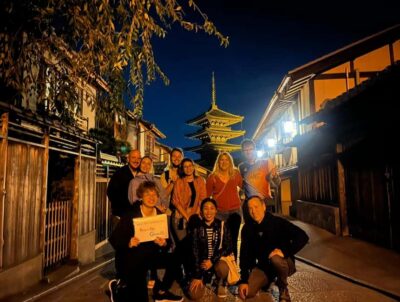
Gion Magical Night Walking Tour with Geisha Trivia
Read our review →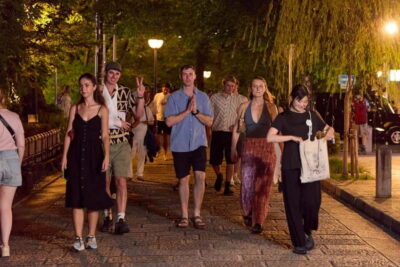
Gion Geisha District Walking Tour – Stories of Geisha
Read our review →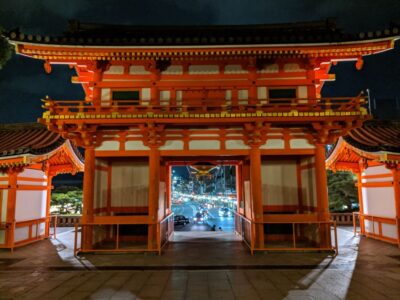
Best of Kyoto: Gion, Geisha, Pagodas & Cobblestones
Read our review →
Kyoto Night Foodie Tour in Gion (9+ dishes + 6 Sake tastings)
Read our review →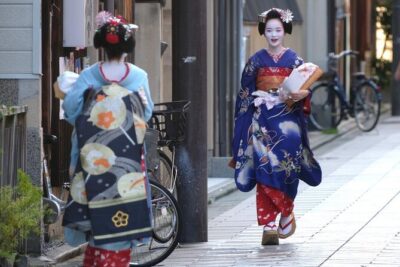
Kyoto Gion: 2-Hour Geisha Culture & History Walking Tour
Read our review →
Chopsticks Making Workshop in Gion with Engraving Option
Read our review →Browse the lists this tour appears in