
Reviewed · KYOTO KIMONO RENTALS
KYOTO Tea Ceremony with kimono near by Imamiya Jinjya Shrine
Putting on a Kyoto kimono is not a quick costume change. It is a careful, multilayered process, followed by hair styling, photographs, and a formal tea ceremony in a room used by three generations. The result feels more meaningful than a simple dress-up stop, especially when you learn why the clothing and tea rituals matter.
I especially like the chance to prepare your own cup of tea after watching the master, and the setting near Daitoku-ji, an area closely tied to Kyoto’s tea culture. The main consideration is time: the kimono fitting and hair styling take part of the 90-minute visit, and the older tea room may feel modest rather than polished.
Key points at a glance
- Choose from Nishijin kimono: Pick a color and pattern from a substantial collection before the dressing begins.
- Hair styling is included: Staff arrange your hair before helping you into the kimono.
- A tea master leads the ceremony: The instructor has studied tea ceremony for 30 years.
- You do more than watch: After the demonstration, you have a chance to prepare tea yourself.
- Photos are part of the experience: Staff help pose you and take pictures while you are dressed.
- Small-group format: The experience accepts a maximum of 12 people and ends where it begins.
Why this Kyoto tea ceremony feels different
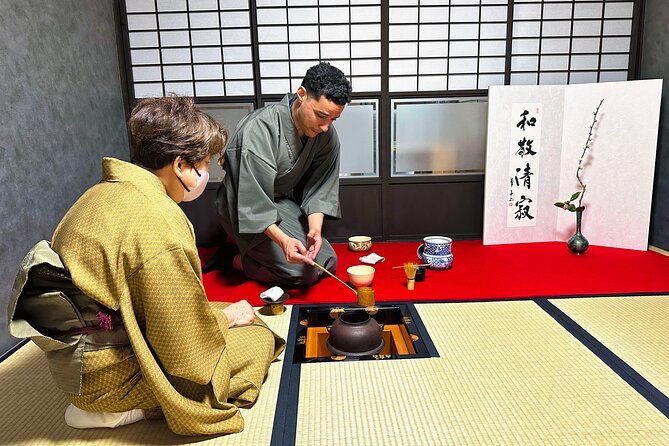
Many cultural activities in Kyoto give you a quick look at a traditional art. This one gives you several connected pieces: clothing, manners, tea, seasonal sweets, and the quiet movements of a formal ceremony.
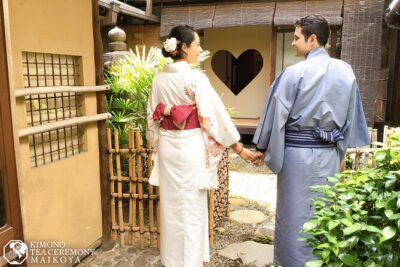
The kimono is not merely a photo prop. Staff help you select one from a collection associated with Nishijin, Kyoto’s well-known textile district. You also learn about the meaning of different patterns, which gives the clothing a cultural context that a standard rental often lacks.
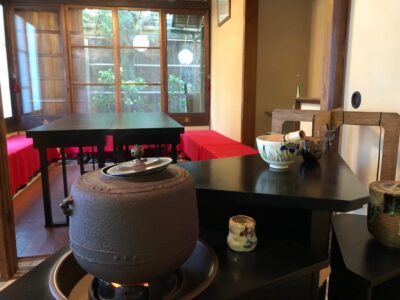
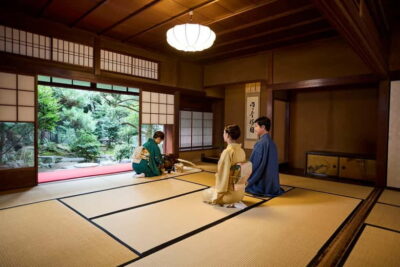
The ceremony takes place in a tea room used for three generations. It is described as somewhat old, so do not expect a sleek modern studio. That age is part of the appeal for many people. The room offers a more personal setting than a large performance space, though anyone seeking luxury finishes may find it plain.
The activity lasts about 90 minutes and allows up to 12 people. That is small enough for individual help with dressing and photographs, but not private. You may share the room and the instruction with other people from around the world.
More tea ceremonies in Kyoto:
- Kyoto: Tea Ceremony in a Traditional Tea House in Kiyomizu
★ 4.9 · 3,519 reviews - Kyoto: Tea Ceremony Ju-An at Jotokuji Temple
★ 4.9 · 3,207 reviews - Kyoto: 45-Minute Tea Ceremony Lesson Experience
★ 4.3 · 2,378 reviews
Choosing your kimono and getting dressed
Your visit begins by choosing a kimono color and pattern. This is a practical moment to think about before arriving. Staff move efficiently, so having a general idea of whether you prefer light, dark, bold, or subtle colors can help you decide without holding up the group.
Getting dressed takes longer than many first-time visitors expect. A kimono involves several layers and careful adjustment. Staff help with the full process, rather than handing you an outfit and leaving you to manage it yourself.
That careful dressing is one of the strongest parts of the experience. You begin to understand why traditional clothing requires training and assistance. The finished look is polished, but it does not come from simply wrapping one garment around your body.
Hair styling is included before the kimono goes on. The available information does not promise a particular hairstyle, so expect a simple arranged style rather than a full salon appointment. Staff also help with photographs afterward, making this useful for families and couples who want pictures of everyone together.
A practical tip: arrive with enough time to settle in. One particularly useful observation is that the dressing area can feel hectic when everyone arrives at once. Getting there a little early gives the staff more room to work and lets you choose your kimono without feeling rushed.
The photo session before tea
Once you are dressed, the staff arrange a short photo session. This is not presented as a separate professional photography package, but the team helps with poses and takes memorable pictures for you.
That assistance matters. A kimono changes how you stand, sit, and move, and it is not always easy to know what looks natural. The interpreter or guide may also offer posing help and additional information about the clothing and ceremony.
You should treat this as a pleasant part of the program, not the main event. The real value comes from combining the photographs with an explanation of what you are wearing. If your priority is a long photo shoot with many locations, this activity may feel brief. If you want a few well-timed pictures as part of a cultural visit, it fits well.
Some accounts describe walking to a nearby temple for the ceremony, while the main meeting information places the activity at Tea Ceremony Caren, 74-4 Murasakino Daitokujicho, in Kyoto’s Kita Ward. Confirm the precise instructions attached to your booking, since the experience is described as being near both Imamiya Jinjya Shrine and Daitoku-ji Temple.
Watching a tea master with 30 years of practice
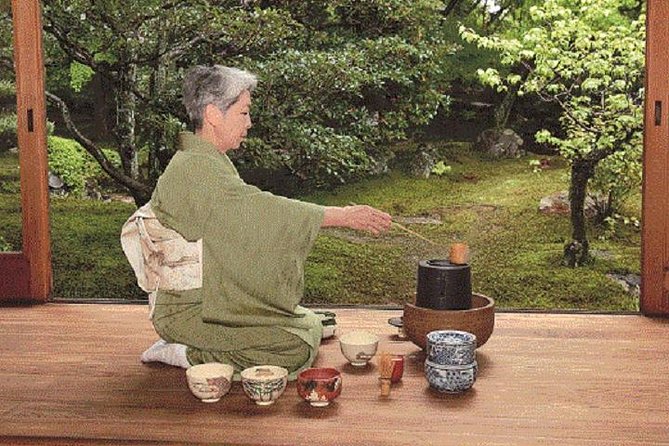
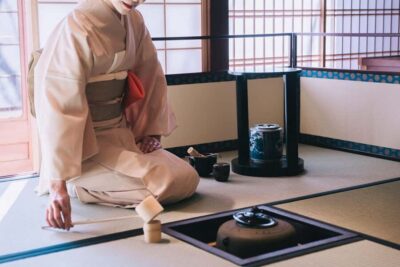
The central ceremony is led by a tea master who has studied the art for 30 years. First, the master demonstrates the traditional preparation. Watch the hands closely. The movements are deliberate, and small actions have a purpose.
You learn how to behave during the ceremony, including Japanese manners and the order of events. The explanation covers the history of tea ceremony and the role of etiquette, rather than treating the ritual as a silent performance with no context.
This is where the experience gains substance. You are not simply handed matcha in a pretty room. You see how the tea is prepared, learn how to receive it, and gain a basic sense of why the ceremony values attention, restraint, and respect.
The demonstration may feel slow if you prefer fast-paced sightseeing. That is also the point. The ceremony offers a calm pause in a Kyoto schedule often packed with shrines, markets, and crowded streets. You need to be willing to sit quietly and watch the process.
More kimono and yukata rentals in Kyoto:
- Kimono Tea Ceremony at Kyoto Maikoya, NISHIKI
★ 5.0 · 911 reviews - Kyoto: Kimono Rental with Hairstyling and Accessories
★ 4.8 · 653 reviews - Kyoto: Kimono Tea Ceremony at Orizuruya Gion
★ 4.9 · 618 reviews - Kyoto: Kimono and Tea Ceremony Experience at Cultural Asset
★ 4.3 · 306 reviews
Matcha, seasonal sweets, and your turn to prepare tea
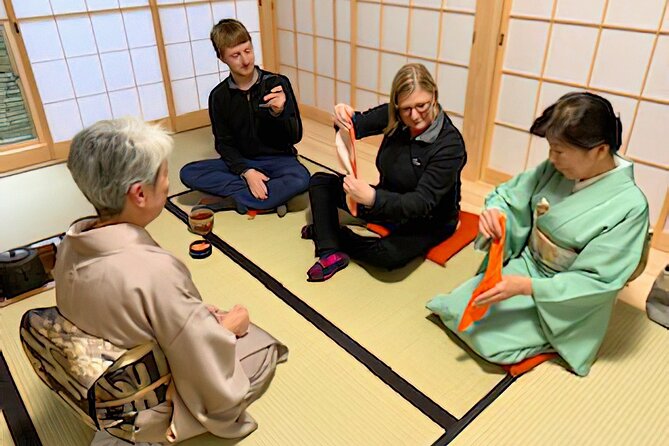
After the master’s demonstration, you receive tea with a seasonal sweet. The sweet gives you a small taste of the seasonal side of Japanese tea culture and helps balance the bitterness of matcha.
Then you have the chance to prepare tea yourself. The instructor guides you through the process, so you do not need prior experience. The hands-on part is valuable because it turns the ceremony from a performance into a lesson.
You may prepare tea for another member of your party, and solo participants can also be included. The experience is designed to encourage participation rather than leave you watching from the edge.
Do not expect to become a tea master in one sitting. The preparation is an introduction, not a full course in tea ceremony. Still, making the tea yourself helps you remember the steps and gives you a better feel for the discipline behind the ritual.
The atmosphere is described as welcoming and attentive. Explanations can be given through interpretation, and one interpreter identified in the experience feedback is Akira. Mera is also mentioned as an especially attentive guide, although the spelling and staff assignments may vary by session.
The setting near Daitoku-ji and Imamiya Jinjya
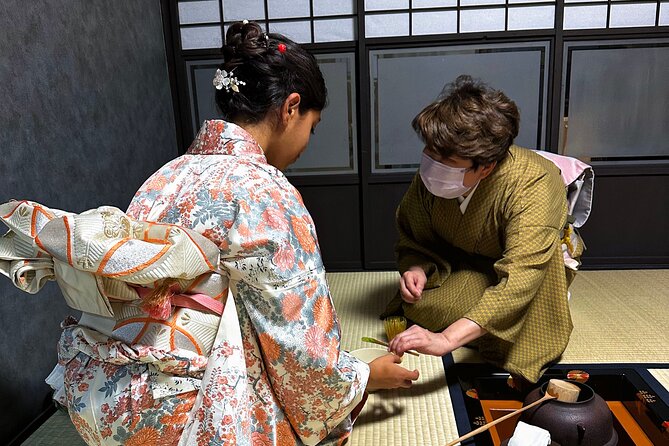
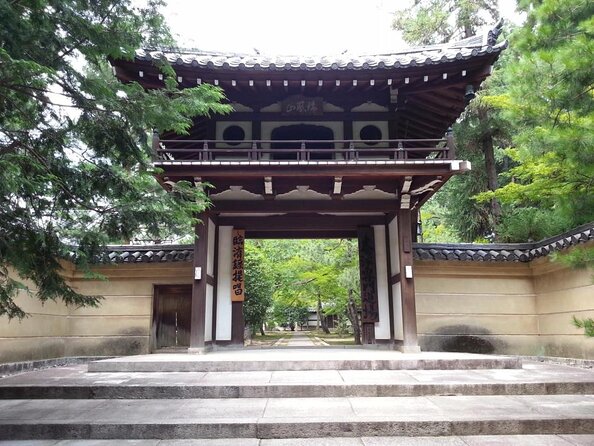
The location is in northern Kyoto, near Daitoku-ji Temple and Imamiya Jinjya Shrine. The meeting point is close to public transportation, but private transportation is not included.
This part of Kyoto suits the activity well. Daitoku-ji is closely associated with Zen and tea culture, so the setting gives the ceremony a stronger sense of place than a generic downtown event space. The activity does not include temple admission or a guided temple tour, however. You should think of the nearby landmarks as useful additions to your day, not included stops.
Imamiya Jinjya Shrine is also nearby, making it possible to pair the tea ceremony with a shrine visit if your schedule allows. Keep your plans flexible. The kimono dressing, photos, and ceremony form the actual program, and the 90-minute estimate leaves little room for a long extra visit during the activity.
The tea room itself is old. That may be a plus if you value atmosphere and continuity, but a drawback if you expect a spotless, newly renovated interior. The setting is best understood as traditional and lived-in, not luxurious.
Who will get the most from this experience
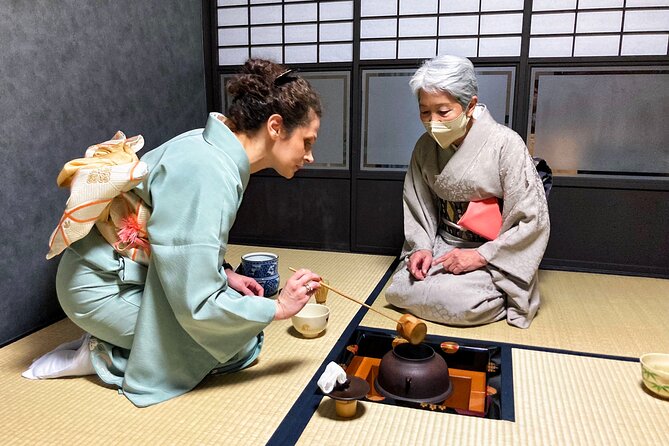
This activity suits first-time visitors who want a clear introduction to two important parts of Japanese culture: kimono and tea ceremony. You do not need previous experience, and the instructor explains the steps before asking you to participate.
It works well for couples, families, and multigenerational groups. The experience has included teenagers and older family members, and the photo element gives people who are less interested in tea a reason to enjoy the visit.
It can also work for solo visitors. The group format means you will not have a private ceremony, but solo participants can still be invited to prepare tea and take part in the photographs.
You should choose another activity if you want a long, highly formal tea ceremony with no photography or group interaction. This is an accessible cultural introduction, not an advanced school of tea. The kimono dressing and practical explanations make it friendly to beginners, but the pace includes several elements beyond the ceremony itself.
Is the $99.49 price good value?
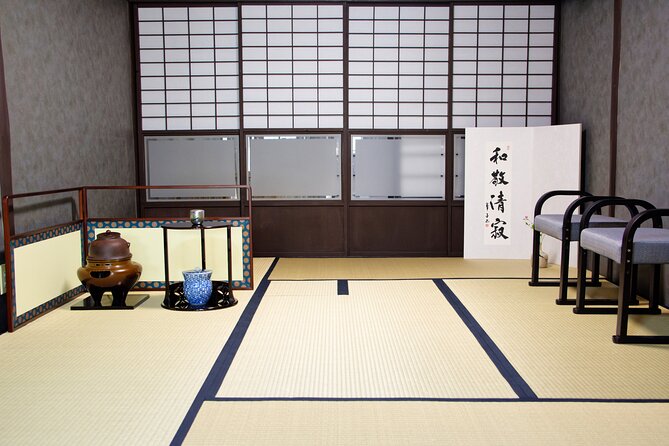
At $99.49 per person, the price is not low for a 90-minute activity. The value depends on what you would otherwise pay for separately.
Here, the fee includes kimono use, assistance putting it on, hair styling, photographs, instruction, tea, seasonal sweets, and the chance to prepare your own cup. You also receive the benefit of a tea master with three decades of study, plus interpretation and help from the staff.
If you only want to rent a kimono for pictures, a simple rental may cost less. If you want a serious tea ceremony without dressing up, another format may be more direct. This activity combines both, which explains the higher price.
I consider it a fair choice for someone who wants a single, organized cultural experience rather than arranging clothing rental, hair styling, photography, and a tea lesson separately. The small maximum group size also helps justify the cost, though the experience is not private.
Timing, group size, and practical planning
The advertised duration is about one hour and 30 minutes. Because the program includes selecting a kimono, hair styling, dressing, photographs, a demonstration, explanations, tea, and hands-on practice, the schedule is full.
The maximum group size is 12 people. That is small enough for staff to provide personal help, but you should not assume every minute will be tailored only to your party.
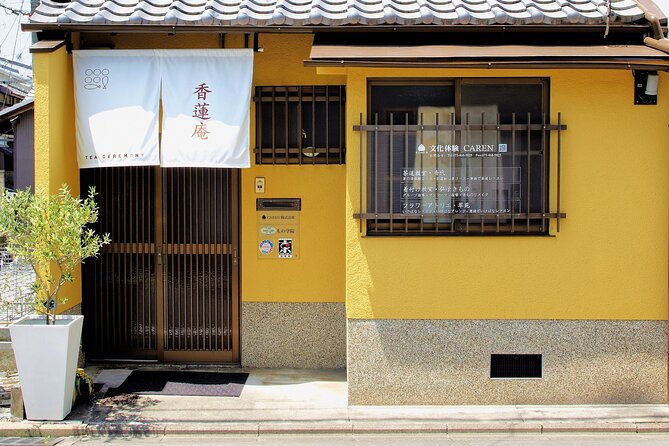
The meeting point is Tea Ceremony Caren at 74-4 Murasakino Daitokujicho, Kita Ward, Kyoto, 603-8231. The activity ends at the same location. Private transportation is not included, although the meeting point is near public transportation.
Wear clothing that makes changing straightforward, and allow extra time to find the address. Most importantly, do not schedule a major attraction immediately afterward. The stated duration is approximate, and a relaxed approach will make the dressing and ceremony more enjoyable.
Cancellation is free up to 24 hours before the start time for a full refund. Changes or cancellations inside 24 hours are not accepted for a refund. The activity can also be canceled if minimum attendance is not met or if poor weather affects the program, with a new date or refund offered in those cases.
Should you book this Kyoto tea ceremony?
Book it if you want more than a quick kimono photograph. The strongest reason to choose this experience is the combination of careful dressing, cultural explanation, and hands-on tea preparation in one compact visit.
It is especially suited to first-time visitors, families, couples, and anyone curious about the meaning behind Japanese manners. The 30-year tea master, attentive staff, hair styling, and photo help add real value.
Skip it if you want a private ceremony, a long temple tour, or a luxury setting. The room is old, the group may include up to 12 people, and the visit moves through several activities in 90 minutes.
For most people with room in their Kyoto schedule, this is a thoughtful way to slow down near Daitoku-ji and leave with more than a photograph. You leave having worn the clothing, tasted the tea, learned the etiquette, and tried the ritual yourself.
FAQ
Where does the tea ceremony take place?
The meeting point is Tea Ceremony Caren at 74-4 Murasakino Daitokujicho, Kita Ward, Kyoto, 603-8231, Japan. The activity is near Daitoku-ji Temple and Imamiya Jinjya Shrine.
How long does the experience last?
The experience lasts approximately one hour and 30 minutes.
What is included in the price?
The experience includes tea, use of a kimono, assistance putting it on, hair styling, instruction, and the professional instructor’s tea ceremony guidance.
Is transportation included?
No. Private transportation is not included. The meeting point is near public transportation.
Can I choose my kimono?
Yes. You choose a kimono from a collection associated with Nishijin, Kyoto, including different colors and patterns.
Is help with hair included?
Yes. Staff help arrange your hair before putting on the kimono.
Do I get to make tea myself?
Yes. After watching the tea master, you have the chance to prepare your own cup of Japanese tea.
How many people can join the activity?
The experience has a maximum of 12 participants.
Does the activity end at the meeting point?
Yes. The activity ends back at the original meeting point.
What is the cancellation policy?
You can cancel at least 24 hours before the start time for a full refund. Cancellations or changes made less than 24 hours in advance are not refunded or accepted.
More Shrines in Kyoto
- Osaka/Kyoto: Arashiyama, Nara & Fushimi Inari Shrine w/Lunch
★ 4.4 · 754 reviews - Kyoto: 3-Hour Fushimi Inari Shrine Hidden Hiking Tour
★ 4.9 · 270 reviews - Kyoto Magical Night English Tour: Gion & Fushimi Inari Shrine
★ 5.0 · 97 reviews - Kyoto: Fushimi Inari Shrine and Tofukuji Temple E-Bike Tour
★ 5.0 · 75 reviews
Newest Kyoto experiences on the site
- Treasures of Kyoto: Gion & historical Walking Tour★ 5.0 · 6 reviews
- Whisk Your Own Matcha: A Zen Matcha Experience at Temple★ 3.6 · 7 reviews
- Kyoto tea town for matcha lovers★ 5.0 · 16 reviews
- Uji: Private immersion into Kyoto’s tea and reglious culture★ 5.0 · 17 reviews
- Kyoto Matcha Green Tea Tour★ 4.5 · 23 reviews
- Uji and Wazuka Matcha Farm Half Day Private Guided Tour★ 5.0 · 21 reviews
- Utilising upcycled Matcha! Creating matcha incense (Uji, Kyoto)★ 5.0 · 6 reviews
- Sacred Temple Yoga Experience in Japan★ 5.0 · 3 reviews
Kyoto Kimono Rentals, compared.
Kimono and Tea Ceremony Experience at Cultural Asset
Read our review →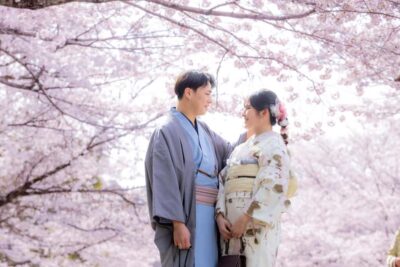
Family-Friendly Kimono & Yukata Experience at WARGO
Read our review →
1 Day Traditional Japanese Kimono Rental Experience
Read our review →
Kimono Rental Traditional Experience at Wargo in Gion
Read our review →Browse the lists this tour appears in