
Reviewed · FUSHIMI INARI TOURS
Kyoto Fushimi Inari Night Walking Tour
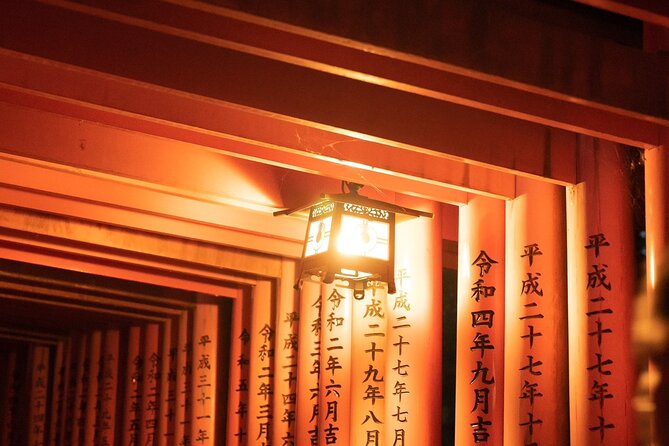
Fushimi Inari is famous for its seemingly endless rows of orange torii gates, and this evening walking tour gives you a quick, guided look after the worst of the daytime heat and crowds have eased. The one-hour route begins at JR Inari Station and ends at Fushimi Inari Taisha.
I like two things right away: the guide adds meaning to a place that can otherwise feel like a photo stop, and the $35.93 price keeps the experience within reach for a short Kyoto evening. Guides including Kanami, Mai, Satsuki, Moto, and Haruki have been praised for clear explanations, good photo suggestions, and useful transport advice.
The main tradeoff is time. One hour is enough for an introduction, not a full mountain visit, and the 5:00 pm start may overlap with dinner plans or other evening activities.
Key points to know before booking
- The walk begins at JR Inari Station: Meet in front of the Daily Yamazaki convenience store after turning left from the station exit.
- You visit Fushimi Inari in the evening: The timing helps you avoid the midday heat and the busiest daytime period.
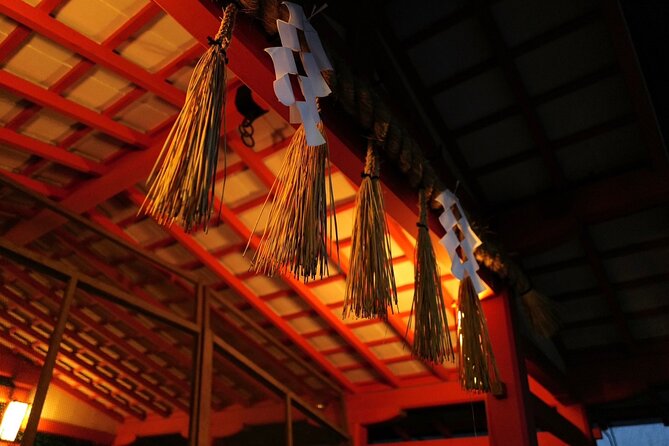
- Shinto and Buddhism are explained: The guide covers the shrine’s religious setting as well as its famous gates.
- The group is limited to 15 people: That is small enough for questions, though it is not a private tour.
- The tour lasts about one hour: It works well before or after dinner, but it will not cover every part of the shrine.
- Admission to the shrine is free: Your payment mainly covers the English-speaking guide and the guided explanation.
Why an evening visit suits Fushimi Inari
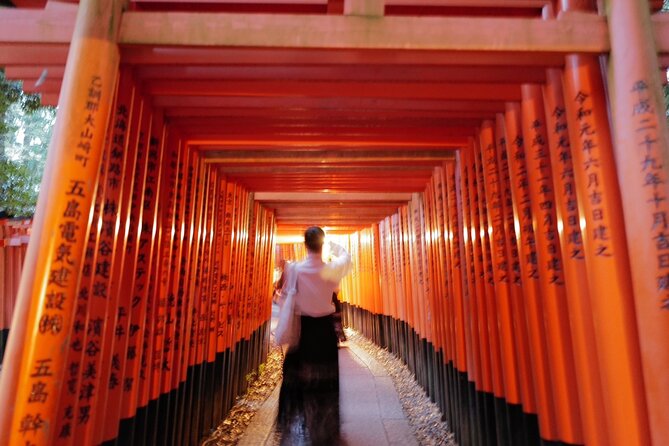
Fushimi Inari Taisha is one of Kyoto’s best-known sights because of its thousands of orange torii gates. The gates form covered pathways up the hillside, creating a scene that is striking even when you know what to expect.
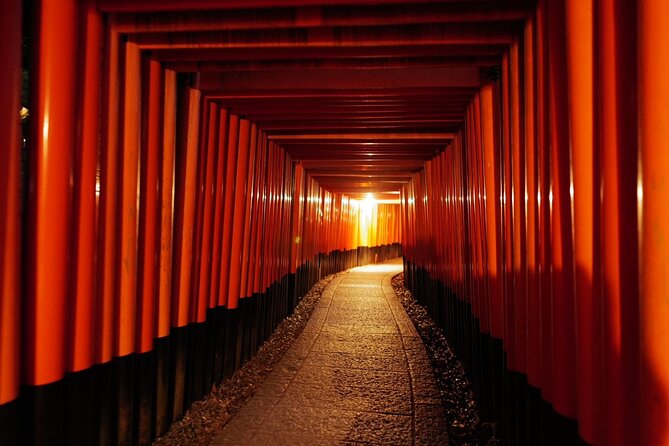
The timing makes good sense. A 5:00 pm start avoids the middle of the day, when Kyoto can feel hot and the shrine’s lower section can be crowded. Evening light also gives the gates a different mood from the bright daytime photographs you usually see.
You should not expect a silent or empty shrine. Fushimi Inari is too popular for that promise, and this experience does not claim to remove all other people from the site. Still, an evening walk can feel less rushed, especially if you are trying to fit the shrine around dinner.
I like the balance here. You get the famous gates, some cultural context, and a guide to point out details, without spending half a day on a long excursion. If this is your first visit to Kyoto, that can be useful. You can see one of the city’s major sights and still keep the rest of the evening open.
More ways to walk the Fushimi Inari gates:
- Kyoto: Fushimi Inari, Kinkakuji, Bamboo Grove 1 Day Bus Tour
★ 4.8 · 4,316 reviews - Fushimi Inari Hidden Hiking Tour (Private Option Available)
★ 5.0 · 1,750 reviews - Osaka/Kyoto:Kinkakuji,Arashiyama,FushimiInariShrine,NaraPark
★ 4.1 · 1,596 reviews
Meeting at JR Inari Station
The meeting point is simple once you know what to look for. Exit JR Inari Station, turn left, and find the Daily Yamazaki convenience store. The guide meets you in front of the store.
This is more practical than a vague meeting point inside a large station. You do not need to search through the shrine grounds or guess which entrance to use. Plan to arrive with enough time to find the station exit and convenience store before the 5:00 pm start.
The tour does not include hotel pickup, so you are responsible for reaching Inari Station. The location is near public transportation, and the tour finishes at Fushimi Inari Taisha, at 68 Fukakusa Yabunouchicho.
That start and finish arrangement matters. You begin near the railway station, then end at the shrine rather than returning to your hotel or starting point. You can continue exploring the area afterward, find dinner nearby, or make your own way back into central Kyoto.
Walking beneath the 10,000 torii gates
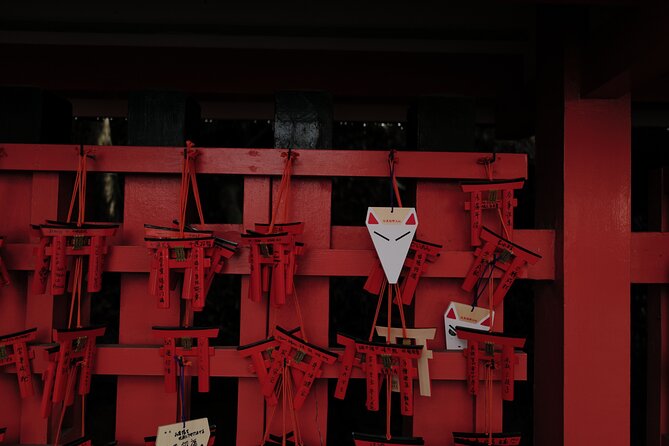
The heart of the experience is a guided visit to Fushimi Inari Taisha. The shrine is known for its estimated 10,000 torii gates, donated gates that create the famous orange corridors.
A guide changes the way you see the scene. Without context, it is easy to walk through the gates, take a few pictures, and leave with little sense of what the place means. The tour explains the shrine’s religious background and helps you understand the difference between Shinto and Buddhism.
That distinction is especially useful in Japan, where visitors often see both traditions during the same trip. You do not need prior knowledge to follow the explanations. The tour is designed as a short introduction, not an academic lecture.
The guide also gives you a person to ask. The supplied experience details specifically mention explanations of the shrine’s past and the differences between Shinto and Buddhism. Several guides have also been praised for answering questions and offering practical help beyond the shrine itself.
Keep your expectations measured. The official duration is about one hour, and the description gives no promise of reaching the highest point of the mountain or covering every side path. If you want a longer hike through the full shrine complex, you will need to allow extra time on your own.
Guides who add more than directions
The guides are a major part of the tour’s value. Kanami has been noted for answering questions, pointing out small details, and suggesting good photo opportunities. Mai has been praised for making the evening pleasant while helping visitors get strong pictures.
Satsuki Morikawa has been described as especially engaging with a family group that included a 13-year-old. That is a helpful sign if you are visiting with an older child or teenager who may not want a long formal lecture. The experience appears to leave room for questions and conversation.
Moto is described as friendly and well informed about the shrine. Haruki has been praised for explaining both Buddhism and Shinto and for giving advice about transport in the area.
You cannot select a specific guide from the information provided, so treat those names as examples of the team rather than a guarantee. The important point is that the experience depends heavily on the person leading your group. With a good guide, the walk becomes a cultural introduction. Without much interest in explanation, you may feel that one hour is brief.
The maximum group size is 15 people. That is a useful middle ground. You are not paying for a private guide, but the group should be small enough for questions to be possible. Larger groups can make a narrow gate path harder to manage, so the limit is worth noting.
More Kyoto after dark:
- Kyoto: Gion Magical Night Walking Tour with Geisha Trivia
★ 4.9 · 2,393 reviews - Night Walk in Gion: Kyoto’s Geisha District
★ 4.5 · 2,003 reviews - Kyoto Night Foodie Tour in Gion (9+ dishes + 6 Sake tastings)
★ 5.0 · 1,762 reviews - Kyoto Gion Night Walk & Geisha District Guided Tour
★ 5.0 · 786 reviews
What the $35.93 price really buys
At $35.93 per person, this is not the cheapest way to see Fushimi Inari, since admission to the shrine is free. You are paying for the English-speaking guide, the planned meeting point, and the cultural explanation.
That can be good value if you would otherwise walk through the gates without understanding the setting. The cost is also modest compared with a full-day guided tour, and the short schedule makes it easier to fit into a Kyoto visit.
The value is strongest for first-time visitors who want a clear introduction. You get help with the shrine’s religious context, questions answered on the spot, and some practical suggestions for photos and local transport.
The value is weaker if you already know Fushimi Inari well, speak Japanese comfortably, or prefer to explore alone. Since the shrine itself is free and open to independent visitors, a self-guided walk will cost less.
Still, the short format keeps the financial risk limited. You are not committing to a costly half-day activity. For many visitors, the guide fee is a reasonable price for making one of Kyoto’s most photographed places easier to understand.
How much walking should you expect?
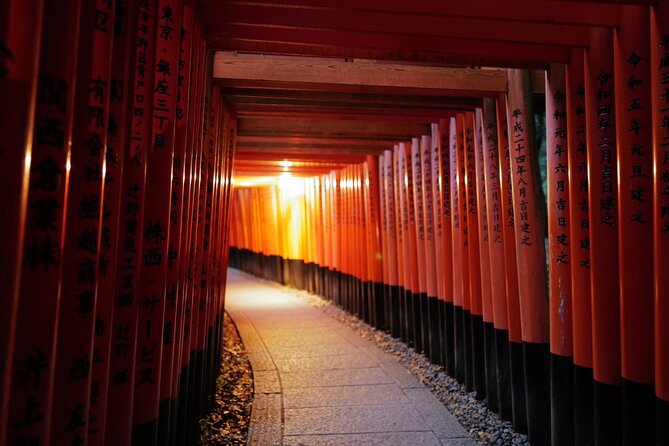
The experience is described as a walking tour lasting about one hour. You should be prepared to walk through the shrine grounds and beneath the torii gates, but the information does not specify a total distance, elevation gain, or exact stopping points.
That means you should wear comfortable shoes and avoid treating this as a seated sightseeing activity. Fushimi Inari includes paths that rise toward the hillside, so the walk may feel more active than the short duration suggests. The tour details say most people can participate, but they do not provide a specific accessibility assessment.
The short duration is useful if you are fitting the shrine into a packed Kyoto schedule. It also means the guide must keep moving. You may not have long at every photo spot, and you may want to return afterward for your own slower walk.
I would treat the guided hour as an orientation. Listen carefully, ask your main questions, and note places you want to revisit. After the tour ends at Fushimi Inari Taisha, you can decide whether to continue independently.
Best for a first Kyoto evening
This tour suits you if you want a small cultural activity before or after dinner. The 5:00 pm start gives you a defined plan without taking over the whole day, and the shrine’s location near public transportation makes the evening easier to organize.
It is also a good match for solo visitors who want company and a guide for one major sight. Families with older children may appreciate the compact length, particularly if young visitors are more likely to stay engaged with a short walk than a long museum visit.
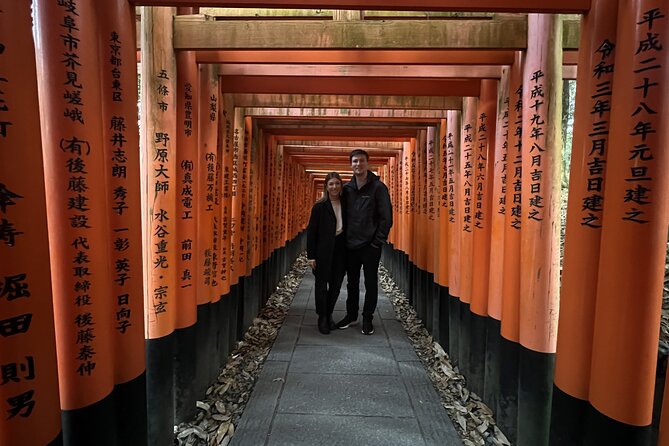
The experience can work well for couples and friends who want photos but also want to know what they are looking at. The comments about photo suggestions are practical, since the torii gates are one of the main reasons people come.
You may want something else if you are looking for a private experience, a long hike, hotel pickup, food, or a broad tour of southern Kyoto. None of those are included. This is a focused shrine walk, and its limits are part of its appeal.
Simple planning advice for the 5:00 pm start
Book with the timing in mind. The experience is often reserved well ahead, with an average booking time of 46 days in advance. That does not guarantee that every date will sell out, but it suggests you should not leave a preferred evening until the last minute.
The mobile ticket is convenient for keeping your booking details with you. Confirmation is provided at booking, and free cancellation is available if you cancel at least 24 hours before the start time. Cancellations made less than 24 hours before the start time are not refunded, and late changes are not accepted.
Bring your own food and drinks if needed, since neither is included. You can plan a meal before or after the walk, but do not assume that the tour will stop for refreshments.
Arrive at the station meeting point with a little spare time. The key details are easy to remember: JR Inari Station, turn left after exiting, then look for Daily Yamazaki. The tour starts at 5:00 pm and finishes at Fushimi Inari Taisha.
Should you book the Fushimi Inari night walk?
Book it if you want a short, affordable introduction to Fushimi Inari with an English-speaking guide. The evening timing, small group limit, religious context, and practical tips make it more useful than simply passing through the gates for pictures.
I would especially recommend it for a first Kyoto visit, a family with an older child, or anyone who wants an organized activity before dinner. The consistently perfect rating and praise for guides such as Kanami, Mai, Satsuki, Moto, and Haruki support the idea that the guide can make the difference.
Skip it if you want a private tour, a full climb through the shrine, hotel pickup, or a completely free visit. Admission costs nothing, and independent exploration is easy.
For $35.93, the strongest reason to book is not access. It is understanding. You are paying for an hour of explanation, questions, photo help, and a smoother introduction to one of Kyoto’s most famous religious sites.
FAQ
Where does the Fushimi Inari night walking tour begin?
It begins at JR Inari Station. After exiting the station, turn left and meet in front of the Daily Yamazaki convenience store.
What time does the tour start?
The tour starts at 5:00 pm local time.
How long does the tour last?
The guided walk lasts approximately one hour.
Is admission to Fushimi Inari Taisha included?
Admission to the shrine is free. The tour price covers the English-speaking guide and the one-hour guided experience.
What is included in the tour?
An English-speaking tour guide and a one-hour in-depth tour of Fushimi Inari Shrine are included. Hotel pickup, food, and drinks are not included.
Can I cancel for a full refund?
Yes. You can cancel at least 24 hours before the experience start time for a full refund. Cancellations or changes made less than 24 hours before the start time are not accepted or refunded.
More Walking Tours in Kyoto
- Kyoto Geisha Walking Tour: Gion District & Hidden Gems
★ 4.7 · 3,273 reviews - Kyoto: Gion Geisha District Walking Tour – Stories of Geisha
★ 4.7 · 2,187 reviews - Kyoto Gion Geisha District Walking Tour – The Stories of Geisha
★ 5.0 · 1,441 reviews - Nishiki Market Brunch Walking Tour (7 Tastings + Brunch)
★ 5.0 · 1,355 reviews
Newest Kyoto experiences on the site
- Treasures of Kyoto: Gion & historical Walking Tour★ 5.0 · 6 reviews
- Whisk Your Own Matcha: A Zen Matcha Experience at Temple★ 3.6 · 7 reviews
- Kyoto tea town for matcha lovers★ 5.0 · 16 reviews
- Uji: Private immersion into Kyoto’s tea and reglious culture★ 5.0 · 17 reviews
- Kyoto Matcha Green Tea Tour★ 4.5 · 23 reviews
- Uji and Wazuka Matcha Farm Half Day Private Guided Tour★ 5.0 · 21 reviews
- Utilising upcycled Matcha! Creating matcha incense (Uji, Kyoto)★ 5.0 · 6 reviews
- Sacred Temple Yoga Experience in Japan★ 5.0 · 3 reviews
Fushimi Inari Tours, compared.

Fushimi Inari, Kinkakuji, Bamboo Grove 1 Day Bus Tour
Read our review →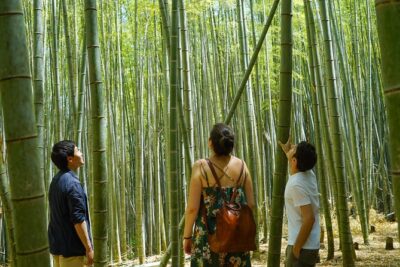
Fushimi Inari Hidden Hiking Tour (Private Option Available)
Read our review →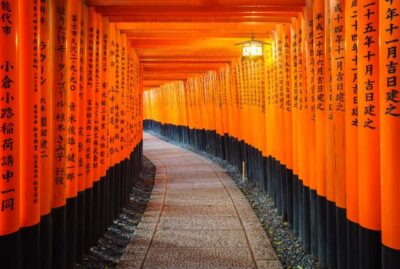
Kinkakuji,Arashiyama,FushimiInariShrine,NaraPark
Read our review →
Nara, Fushimi Inari Taisha, Arashiyama Bus Tour
Read our review →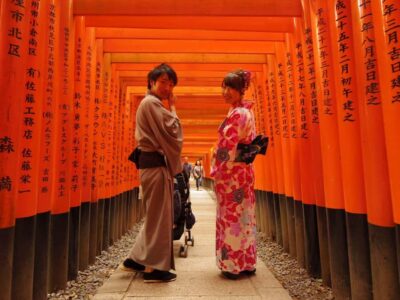
Arashiyama, Nara & Fushimi Inari Shrine w/Lunch
Read our review →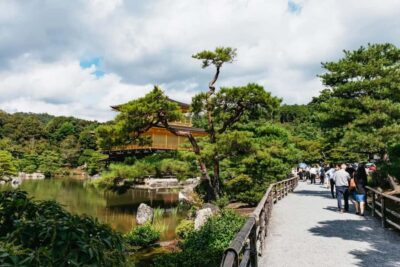
Nijo Castle, Kiyomizu & Fushimi Inari Guided Tour
Read our review →
Nijo, Kinkaku-ji, Arashiyama, Kiyomizu & Fushimi Inari
Read our review →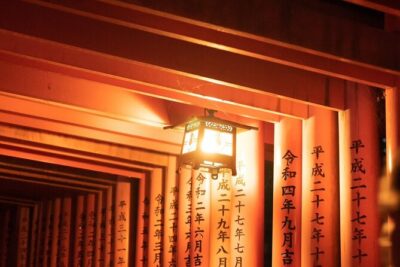
Browse the lists this tour appears in