
Reviewed · ARASHIYAMA BAMBOO GROVE TOURS
Arashiyama’s Best Vegan Ramen & Gyoza Class
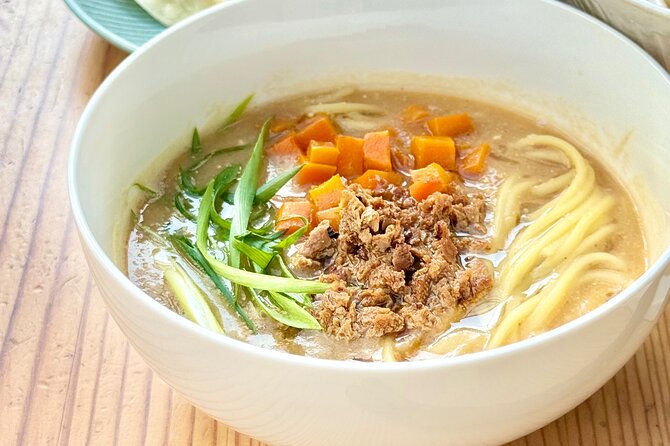
Arashiyama’s best surprise may be waiting in a kitchen, not beside the bamboo grove: a 100% plant-based ramen broth built from kombu, shiitake, and Kyoto vegetables. The class also teaches you to make crispy gyoza from scratch, then sit down for the meal you prepared.
I like two things right away. First, the class welcomes meat-eaters as well as vegans, so you are not being asked to settle for thin vegetable soup. Second, it is a private activity, with an English-speaking instructor, recipes to take home, and water and tea included.
The main consideration is the home setting. A dog lives at the property, so this class is not a good choice if you have animal allergies. The advertised price is $65.15 per person, and the session lasts about two hours.
Key points at a glance
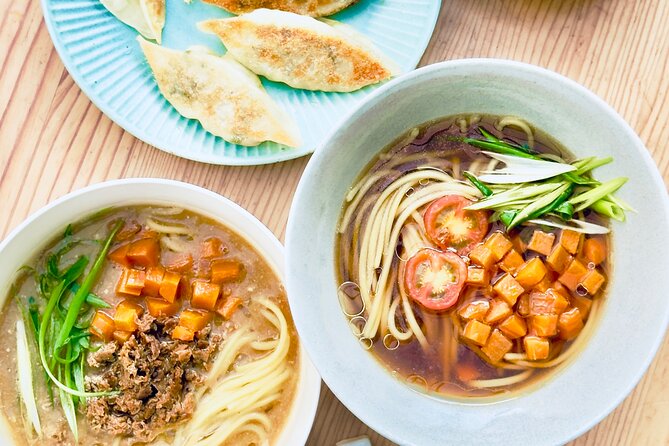
- Two broths from scratch: Compare two plant-based ramen broths built with kombu, shiitake, and Kyoto vegetables.
- Gyoza is part of the meal: You will prepare crispy dumplings as well as ramen.
- Private Kyoto cooking class: Only your group takes part, giving you room to ask questions.
- English instruction and recipes: You can follow along during class and recreate the dishes at home.
- Arashiyama meeting point: Meet near Arashiyama Station, then finish back at the same point.
- Useful dietary details: The food is dashi-free and plant-based, with gluten-free options available if arranged.
Why this ramen class is different from a standard Kyoto meal
Many visitors come to Arashiyama for scenery, temples, and the famous bamboo path. This class gives you a quieter way to spend part of the day. Instead of simply ordering a bowl, you learn how its flavor is built.
The central idea is the broth. The kitchen team spent months working on a plant-based version with the weight and savoriness people often associate with tonkotsu, the creamy pork-bone style of ramen. The result is made without meat, fish, or dashi.
That last point matters. Japanese cooking often relies on dashi, a stock commonly made with fish or other animal ingredients. Here, the broth remains fully plant-based while using kombu, shiitake, and local Kyoto vegetables to create savory depth.
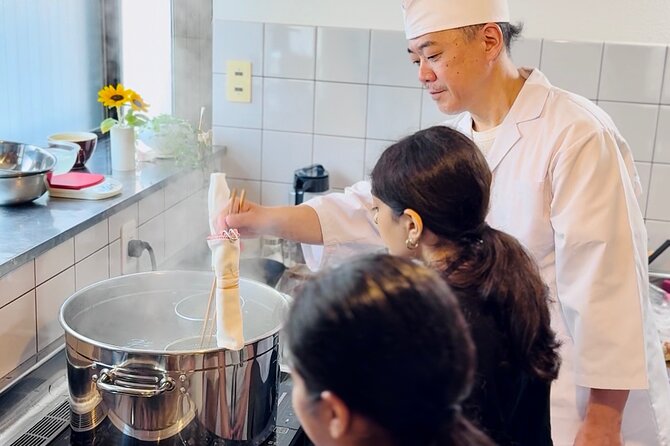
You should arrive expecting a hands-on meal rather than a formal demonstration. The available details describe two ramen broths and gyoza made from scratch. The recipes are included, so the practical value continues after you leave Kyoto.
More mornings in Arashiyama and the bamboo grove:
- Kyoto: Fushimi Inari, Kinkakuji, Bamboo Grove 1 Day Bus Tour
★ 4.8 · 4,316 reviews - Osaka/Kyoto:Kinkakuji,Arashiyama,FushimiInariShrine,NaraPark
★ 4.1 · 1,596 reviews - Kyoto/Osaka: Nara, Fushimi Inari Taisha, Arashiyama Bus Tour
★ 4.7 · 1,275 reviews
Meeting near Arashiyama Station
The meeting point is Arashiyama Station in the Higashichikawacho area of Nishikyo Ward. This is useful if you are already planning a visit to Arashiyama, since the cooking session begins and ends in the same general area.
Your confirmation arrives within 48 hours of booking, subject to availability. The class is generally booked about 11 days ahead, so I would not leave it until the last morning of your Kyoto stay, especially if your schedule is tight.
The session lasts roughly two hours. That is long enough to cook several dishes without taking over your entire day. You can pair it with Arashiyama sightseeing before or after, but leave yourself enough time to reach the meeting point without rushing.
Exact walking directions and the home address are not provided in the available details. Check your confirmation carefully for the final meeting instructions.
Building two plant-based ramen broths
The main lesson centers on two broths. You are not simply watching someone pour soup into a bowl. You are learning how ingredients work together to create flavor without meat or fish.
Kombu contributes a savory base. Shiitake adds another layer of earthy flavor. Kyoto vegetables bring sweetness and freshness. Together, these ingredients give the soup more character than a plain vegetable stock.
The class description focuses on depth and texture, comparing the intended richness with tonkotsu. That does not mean you should expect the taste of pork. It means the broth is designed to feel substantial and satisfying, even though every ingredient is plant-based.
Making two broths is especially useful because it lets you compare methods and flavors within one short session. The available information does not name the broths or list every ingredient, so you should treat the class as a chance to learn the kitchen’s particular recipes rather than a fixed menu with detailed choices.
You will also want to ask questions as you cook. Since the class is private, you can ask about substitutions, preparation order, and how to repeat the process at home without needing to hold back for a large group.
Shaping crispy gyoza from scratch

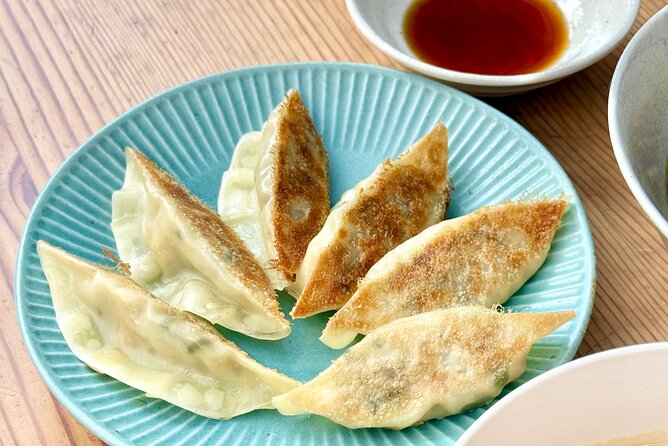
Ramen gets top billing, but the gyoza makes the meal feel more complete. You prepare the dumplings yourself, including the filling and shaping work described in the class.
Gyoza can look simple when they arrive on a plate. Folding them neatly takes a little practice, and the final cooking step is what gives them their appealing contrast: a crisp base with a softer top.
The class promises crispy gyoza, but it does not provide a detailed dumpling recipe in advance. You should expect practical instruction rather than a long technical workshop. The useful part is taking the recipe home and trying it again when you have more time.
For families or couples, gyoza also adds a social part to the class. Ramen broth can require patient simmering and careful seasoning. Dumpling preparation gives you a task to share while the meal comes together.
More ramen nights in Kyoto:
- Ramen Cooking Class at Ramen Factory in Kyoto
★ 5.0 · 1,937 reviews - Kyoto: Ramen Cooking Class at a Ramen Factory with Souvenir
★ 4.9 · 532 reviews - Kyoto: Ramen, Gyoza, and Onigiri Cooking Class
★ 5.0 · 445 reviews - Kyoto Ramen and Gyoza Cooking Class with Professional Chefs
★ 5.0 · 282 reviews
Sitting down to eat what you made
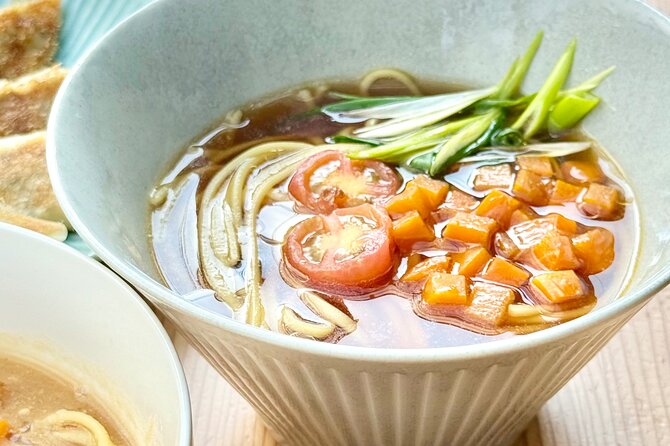
Lunch and evening bookings include the meal you prepare. Water and tea are freely available, while alcohol and soft drinks are not included.
That arrangement keeps the focus on the food. You do not need to find a restaurant afterward, and you can judge the broth at the table while the process is still fresh in your mind. I like this format because the class has a clear payoff: you cook, then eat the finished dishes.
The meal is also a useful test for omnivores. The class is aimed at vegans, vegetarians, and people who simply care about good food. If you normally look for meat-based ramen, this gives you a chance to see how much flavor can come from plant ingredients alone.
Do not book it expecting a broad Japanese cooking menu. The stated focus is narrow and clear: two ramen broths and crispy gyoza. That focus is a strength if you want to learn these dishes properly, but it may feel limited if you want sushi, tempura, or a large survey of Japanese food.
The value of $65.15 for two hours
At $65.15 per person, this is not the cheapest lunch in Kyoto. You are paying for more than the food on the table, though. The price includes instruction, ingredients for the meal, an English-speaking instructor, aprons, towels, water, tea, and recipes.
The private format adds to the value. A public class may be less expensive, but a private session gives your group the whole setting and makes it easier to ask for clarification. That matters if you are new to cooking Japanese food or need to discuss dietary restrictions.
The recipes are an important part of the calculation. A restaurant meal ends when the bowl is empty. Here, you leave with instructions that can change how you prepare ramen and dumplings at home. The value is strongest for anyone who enjoys cooking and plans to use the recipes later.
The value is less clear if you are only looking for a quick meal near the bamboo grove. In that case, a restaurant will probably cost less and take less time. Book this class for the activity and the meal together, not simply for a bowl of noodles.
Who will enjoy the private format most
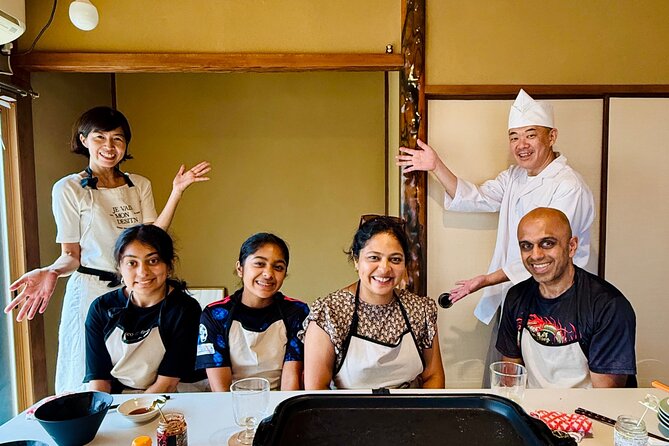
This class suits several types of visitors:
- Vegans and vegetarians: Every dish is plant-based and dashi-free.
- Omnivores who like bold flavor: The broth is designed to satisfy people accustomed to meat-based ramen.
- Home cooks: You receive recipes and can ask questions during preparation.
- Couples and small groups: The private format keeps the pace personal.
- Visitors with dietary needs: Gluten-free options are available, but you must provide allergy information in advance.
The class may be less suitable if you dislike cooking, want a large group atmosphere, or have limited time in Arashiyama. It is also not recommended for anyone with animal allergies because a dog lives at the property.
Food allergies should be reported before the class. Do not assume that a plant-based menu automatically covers every allergy. Ask for confirmation before booking if you need strict avoidance of a specific ingredient.
What the class atmosphere is likely to feel like
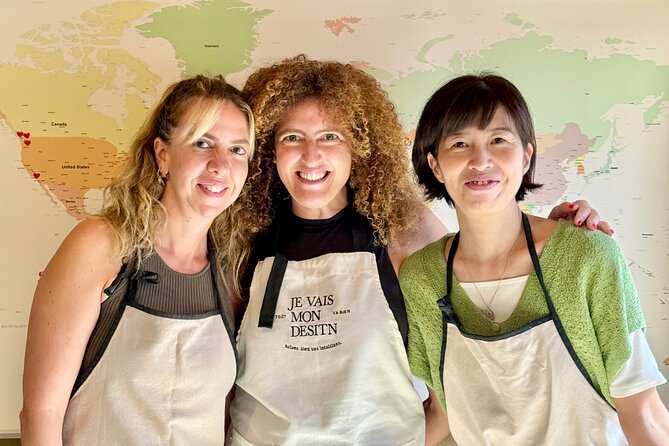
The cooking takes place in a home setting described as clean and welcoming. The instruction is organized and relaxed, with enough room for questions. Satoru and Akiko are the names associated with Kyoto green cuisine, and the class is presented as an English-language activity.
A home kitchen gives the session a personal quality that a restaurant kitchen cannot provide. You are not just receiving a plate from a chef. You are seeing how the food is assembled and learning the small steps that make a difference.
At the same time, a home class is not the same as a professional cooking school. The space may feel informal, and the available information does not promise commercial kitchen facilities or a staged demonstration area. That is part of the charm for some people and a possible drawback for anyone expecting a polished culinary studio.
Past written feedback associated with the hosts praises the clear instruction, careful organization, friendly manner, and relaxed pace. One note describes learning basic but important cooking methods and being able to ask detailed questions. Those are good signs for beginners who want guidance without pressure.
Some older comments refer to sushi, tempura, rice, and miso soup. The current class information centers on ramen and gyoza, so confirm the present menu rather than assuming those earlier dishes are included.
Timing the class with an Arashiyama day
A two-hour session can fit neatly into a full day, but do not squeeze it between fixed reservations. The class begins near Arashiyama Station and ends back at the meeting point, making it convenient for a before-or-after sightseeing plan.
You might schedule it after visiting the area’s main sights, when a hot bowl of ramen feels welcome. An earlier booking also leaves time afterward for a walk around Arashiyama. The best choice depends on your sightseeing plans and the reservation time offered.
For evening bookings, the meal is described as dinner. For lunch bookings, it is lunch. In both cases, you cook and eat with the hosts, so the class functions as both a lesson and a planned meal.
The activity is booked about 11 days ahead on average. That does not guarantee that every date fills, but it suggests you should reserve before your Kyoto schedule is completely fixed.
Dietary details you should handle before booking
The food is 100% plant-based and dashi-free. Gluten-free options are available, but the details of those substitutions are not specified, so contact the provider before you pay if gluten must be strictly avoided.
The same advice applies to food allergies. Provide the information in advance rather than bringing it up only after arriving. The kitchen can then tell you if the menu suits your needs.
The dog is the clearest caution. If you have an animal allergy, this class is not recommended. A plant-based menu does not make the setting allergy-free.
Water and tea are included. Alcohol and soda are not included, so plan on a simple beverage selection with the meal.
Cancellation and booking flexibility
You can cancel for a full refund up to 24 hours before the start time. Cancellations made less than 24 hours before the activity are not refunded, and changes inside that window are not accepted.
The cut-off follows local Kyoto time. Keep that in mind if you are changing plans from another time zone. Confirmation is sent within 48 hours, subject to availability.
Because this is a private activity, the booking is for your group alone rather than a mixed class. That makes early confirmation more useful if you want a specific date or time.
Should you book Arashiyama’s vegan ramen class?
Book it if you want a personal Kyoto food activity with a clear focus, a full meal, and recipes you can use at home. The combination of two broths, handmade gyoza, private instruction, and a plant-based menu gives the class more substance than a simple tasting.
I would especially recommend it to meat-eaters curious about serious vegan cooking, vegetarians who have trouble finding satisfying ramen, and home cooks who value technique. The class also makes sense if you are already spending time in Arashiyama and want something more personal than another restaurant meal.
Skip it if you want a cheap lunch, a broad Japanese cooking course, or a dog-free setting. For everyone else, $65.15 is a fair price for a two-hour private lesson that includes the food, instruction, and recipes. Just report allergies in advance, confirm the current menu, and reserve before your Kyoto calendar fills.
FAQ
Where does the ramen and gyoza class meet?
The class meets near Arashiyama Station in Higashichikawacho, Nishikyo Ward, Kyoto. The activity ends back at the meeting point.
How long does the activity last?
The class lasts approximately two hours.
What food will I make?
You will make two types of plant-based ramen broth and crispy gyoza from scratch.
Is the food fully vegan?
Yes. The class uses a 100% plant-based menu and is dashi-free.
Are gluten-free options available?
Gluten-free options are available. Tell the provider about your needs before the class so the menu can be discussed.
Is the class private?
Yes. Only your group participates in this activity.
Is instruction provided in English?
Yes. An English-speaking instructor is included.
Are lunch or dinner included?
Yes. Lunch reservations include the meal you prepare for lunch, and evening reservations include the meal as dinner.
Can I cancel for a full refund?
You can cancel at least 24 hours before the start time for a full refund. Cancellations or changes made less than 24 hours before the start time are not accepted for a refund.
More Vegan & Vegetarian in Kyoto
- 3 Hour Vegan Walking Tour with Lunch
★ 5.0 · 3 reviews
More Cooking Classes in Kyoto
- Kyoto: Japanese Washoku Bento Small Group Cooking Class
★ 5.0 · 380 reviews - Kyoto: Afternoon Japanese Izakaya Cooking Class
★ 4.9 · 241 reviews - Izakaya Style Cooking Class
★ 5.0 · 219 reviews - Gyoza Cooking Class in Kyoto: Traditional Japanese Dumplings
★ 5.0 · 210 reviews
Newest Kyoto experiences on the site
- Treasures of Kyoto: Gion & historical Walking Tour★ 5.0 · 6 reviews
- Whisk Your Own Matcha: A Zen Matcha Experience at Temple★ 3.6 · 7 reviews
- Kyoto tea town for matcha lovers★ 5.0 · 16 reviews
- Uji: Private immersion into Kyoto’s tea and reglious culture★ 5.0 · 17 reviews
- Kyoto Matcha Green Tea Tour★ 4.5 · 23 reviews
- Uji and Wazuka Matcha Farm Half Day Private Guided Tour★ 5.0 · 21 reviews
- Utilising upcycled Matcha! Creating matcha incense (Uji, Kyoto)★ 5.0 · 6 reviews
- Sacred Temple Yoga Experience in Japan★ 5.0 · 3 reviews
Arashiyama Bamboo Grove Tours, compared.
Fushimi Inari, Kinkakuji, Bamboo Grove 1 Day Bus Tour
Read our review →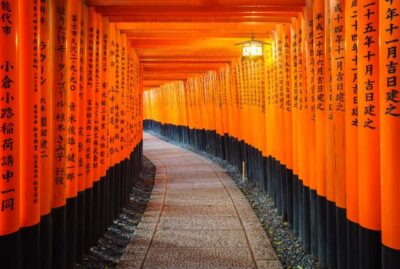
Kinkakuji,Arashiyama,FushimiInariShrine,NaraPark
Read our review →
Nara, Fushimi Inari Taisha, Arashiyama Bus Tour
Read our review →
Kyoto Arashiyama Walking Tour: Bamboo, Monkeys, Gardens & Secrets
Read our review →
Arashiyama Bamboo, Temple, Monkeys, or Secret Sake Brewery
Read our review →
Arashiyama Bamboo Forest, Monkeys, Matcha & Temple Tour
Read our review →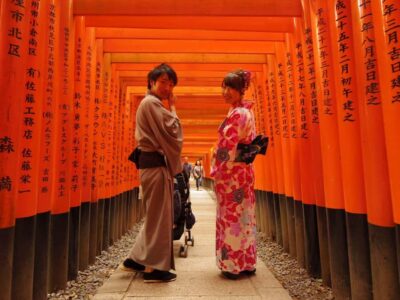
Arashiyama, Nara & Fushimi Inari Shrine w/Lunch
Read our review →
Nijo, Kinkaku-ji, Arashiyama, Kiyomizu & Fushimi Inari
Read our review →Browse the lists this tour appears in