
Reviewed · KYOTO RAMEN EXPERIENCES
Kyoto: Ramen, Gyoza, and Onigiri Cooking Class
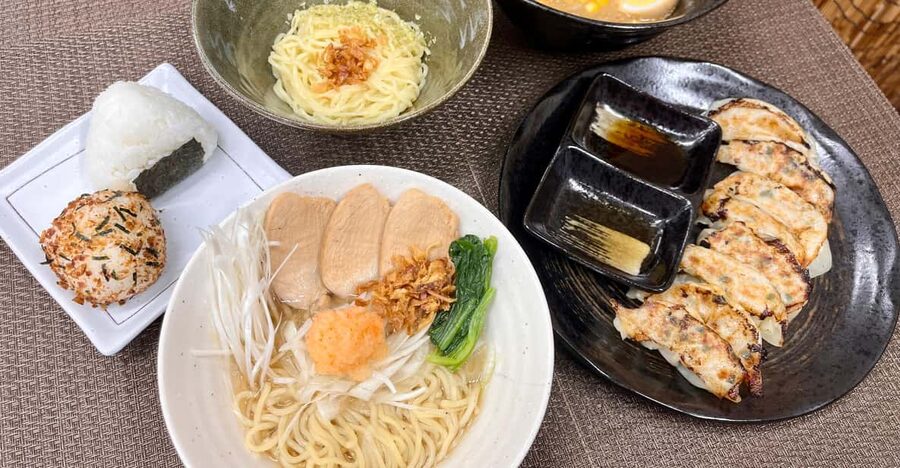
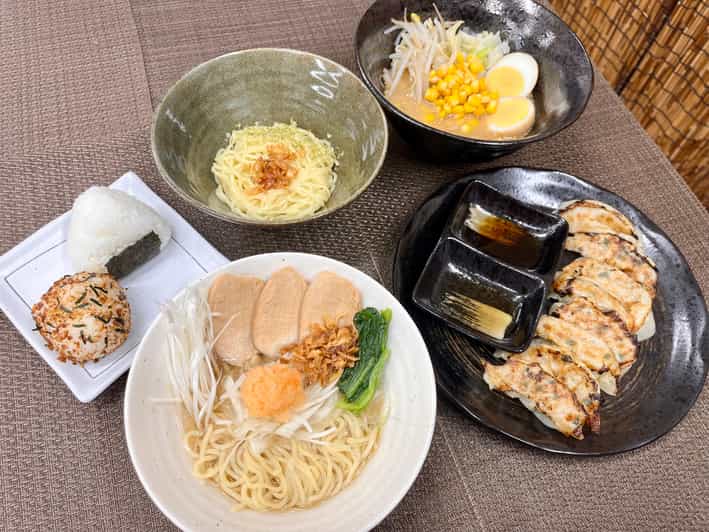
Two kinds of ramen, gyoza, and onigiri in 90 minutes is a serious amount of cooking. This Kyoto class focuses on practical home skills rather than fancy knife work: you build miso and shoyu broth, fill and seal dumplings, shape rice balls, then sit down to eat.
I like the small groups of up to eight, which leave room for help at your station. I also like the recipes and simple ingredients, since you can find ramen noodles and seasonings more easily at home than you can recreate a restaurant kitchen. The main catch is dietary: the class cannot accommodate vegan, pescatarian, gluten-free, or other special diets.
- Two ramen styles: Prepare miso and shoyu broths with everyday seasonings.
- Gyoza technique: Learn filling balance, folding, sealing, and pan-frying.
- Onigiri shaping: Make Japanese rice balls for a snack or simple lunch.
- English instruction: Nori, Kairi, Aoi, and other instructors explain the food and methods clearly.
- Small, fast-moving class: Up to eight people, with all ingredients and equipment supplied.
- Come hungry: You eat the ramen, gyoza, and onigiri you prepare.
Two Ramen Broths in the Heart of Kyoto
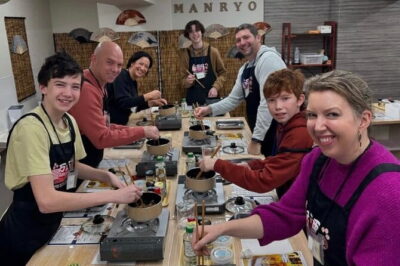
This is a hands-on Japanese cooking class for people who want more than a meal but less than a full-day culinary course. The classroom is in the basement of the Life Building, one street away from the main road near Sanjo Keihan.
The food is familiar, but the lesson is useful. The class does not make ramen noodles from scratch. Instead, it tackles the part most home cooks find harder to recreate: the broth.
That is a sensible choice. You can often buy fresh or dried ramen noodles near home, but a good soup base is less obvious. Here you learn how soy sauce, miso, garlic, ginger, sesame oil, mirin, cooking sake, chicken stock powder, fish powder, and other seasonings work together.
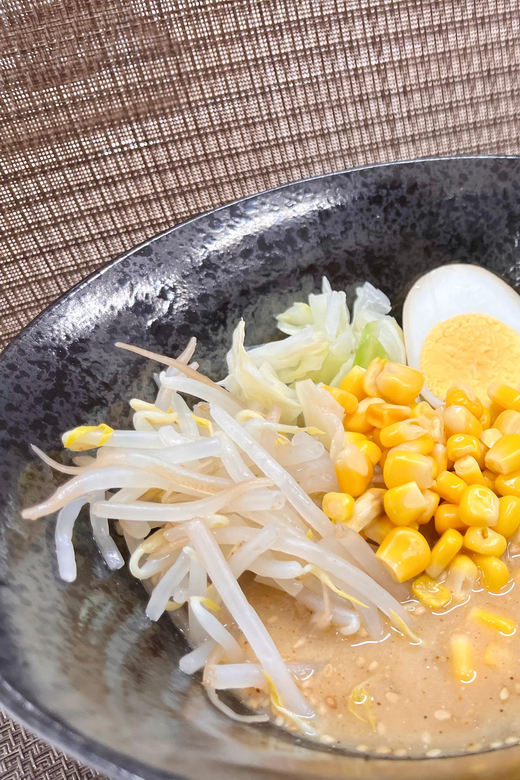
You prepare both miso ramen and shoyu ramen, giving you two different flavor patterns to take home. The miso version comes with boiled egg, bean sprouts, green onions, and sweet corn. The shoyu version uses chicken, bamboo shoots, and green vegetables.
The toppings are deliberately restrained. That matters because ramen toppings should support the broth, not overpower it. You learn why simple vegetables and mild additions work better than throwing every strong flavor into the bowl.
The ingredient list also includes ground pork, cabbage, chives, lard, oyster sauce, chili oil, butter, and black pepper. Some of these ingredients serve the gyoza or onigiri rather than the ramen, and the instructors explain how each one fits into the meal.
Gyoza Folding Is the Main Skill Lesson
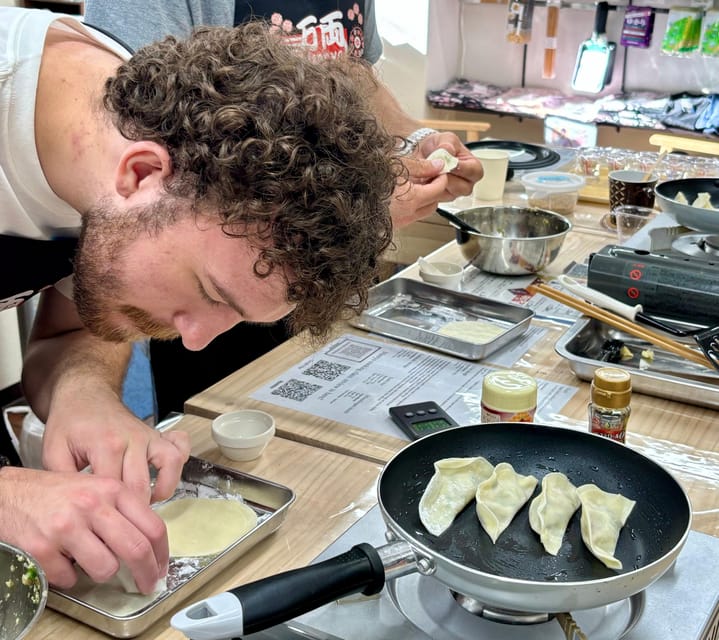
Gyoza can look simple until the filling leaks out or the wrapper refuses to seal. This class gives you repeated practice with the part that makes the dish work: getting the right amount of filling and creating a firm, tidy seal.
You balance ground meat, cabbage, onion, chives, garlic, ginger, and seasonings. The filling needs enough moisture and flavor, but not so much that the wrapper becomes difficult to handle. The instructor shows you how to portion it before you fold.
The folding stage is friendly to beginners. You will likely make a few uneven dumplings at first, which is normal. The point is not to produce a row of identical restaurant dumplings. It is to understand how the wrapper closes, where to press, and how to keep the filling inside.
You then cook the gyoza until the base is browned and the wrapper is tender. This is one of the most satisfying parts of the class because the finished result gives you an immediate lesson in heat and timing.
If you enjoy cooking at home, gyoza is probably the most useful takeaway. Once you understand the filling and folding method, you can change the ingredients while keeping the basic structure. The printed recipe helps you repeat the process after your Japan trip.
More ramen nights in Kyoto:
- Ramen Cooking Class at Ramen Factory in Kyoto
★ 5.0 · 1,937 reviews - Kyoto: Ramen Cooking Class at a Ramen Factory with Souvenir
★ 4.9 · 532 reviews - Kyoto Ramen and Gyoza Cooking Class with Professional Chefs
★ 5.0 · 282 reviews
Onigiri Gives the Meal a Simple Finish
Onigiri are Japanese rice balls, often made as a portable snack or lunch. They look modest beside a bowl of ramen, but shaping them neatly takes a little practice.
The class shows you how to form the rice into a clean shape and season it with suitable fillings and flavors. This is not a complicated dish, which makes it a good counterpoint to the broth work and gyoza folding.
I like onigiri as part of this menu because it gives you something practical for busy days at home. You do not need special equipment, and the basic method is easy to adapt. The class also makes clear why rice balls are such a useful alternative to sandwiches.
Do not expect a long separate lesson on onigiri. The schedule is tight, so the activity moves from one dish to the next. Still, you get enough guidance to make a properly shaped rice ball and understand the basic idea.
What the 90-Minute Schedule Feels Like
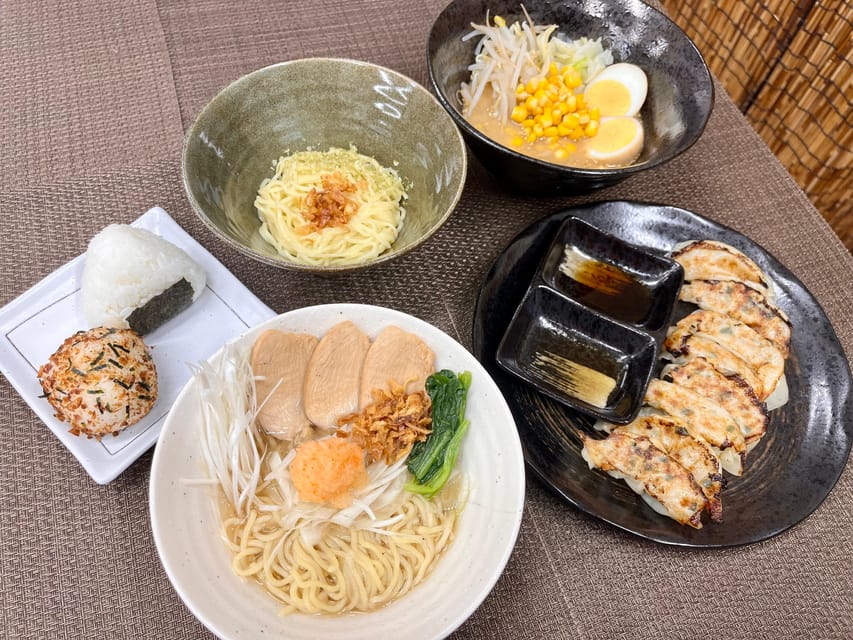
The class is fast, organized, and built around preparation. Ingredients and equipment are supplied, and several people who attended with Nori and the teaching team described the setup as highly efficient.
That preparation is the reason the class can cover so much in an hour and a half. You are not spending the first 20 minutes washing vegetables or searching for measuring spoons. Instead, you focus on mixing, folding, shaping, cooking, and tasting.
The pace may feel brisk if you prefer a slow, leisurely lesson. It works well if you want a practical introduction during a short Kyoto stay. You also have a finished meal at the end, rather than a small sample.
The food is substantial. People often finish with full bowls and several dumplings and rice balls, so I would not schedule a large meal immediately afterward. Free coffee and tea are included, and beer may be available to purchase after the meal, according to the class experience described by one group.
The class can feel especially personal when numbers are low. One session had only one booking, and another had two people. The published maximum is eight, so you should plan for a small group but not assume a private lesson.
English Instruction and the Teaching Style
Instruction is in English, and the class is designed for international visitors. Nori is named as one of the instructors, with Kairi, Aoi, Minori, Ayuna, Riho, and other helpers appearing in different sessions.
The teaching style combines cooking directions with short explanations about the dishes, ingredients, and Japanese food culture. You are not just handed a bowl and told to stir. The instructors explain why the broth uses mild toppings and how the flavors develop.
The support team is useful during the hands-on steps. This matters most when you are folding gyoza or trying to shape onigiri while the ramen timing continues. The class has received strong praise for clear English, humor, patience, and help that does not feel intrusive.
If you cook alone, you must be able to manage the activity without constant personal assistance. The stated age and participation rules require children to be at least 13 and able to cook independently. The wider information also lists children under 12 as unsuitable, so families should confirm the age rule before booking.
Some past attendees arrived with younger children and received substantial help, but that should not be treated as the official policy. For a smooth experience, follow the stated minimum age and independence requirement.
More cooking classes in Kyoto:
- Kyoto: Japanese Washoku Bento Small Group Cooking Class
★ 5.0 · 380 reviews - Kyoto: Afternoon Japanese Izakaya Cooking Class
★ 4.9 · 241 reviews - Izakaya Style Cooking Class
★ 5.0 · 219 reviews - Gyoza Cooking Class in Kyoto: Traditional Japanese Dumplings
★ 5.0 · 210 reviews
The Real Value of the $90 Price
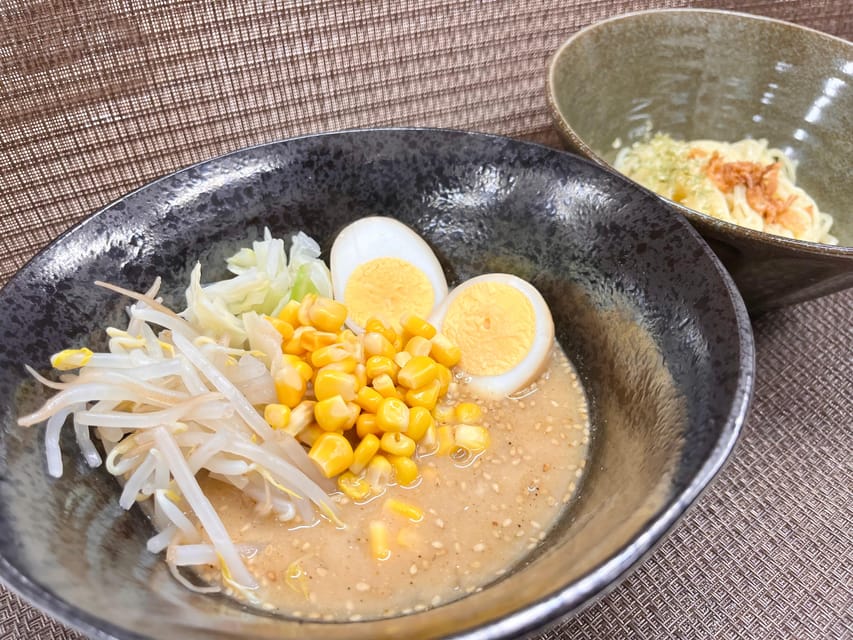
At $90 per person, this is not the cheapest way to eat ramen in Kyoto. A restaurant bowl costs far less. You are paying for instruction, ingredients, equipment, a small group, English guidance, and a full meal that includes several dishes.
The value improves if you plan to use the recipes at home. The class focuses on accessible items such as soy sauce, miso, garlic, ginger, sesame oil, mirin, cabbage, pork, and common vegetables. You are not learning a recipe that depends on rare equipment or an all-day stock.
The price also makes more sense for couples, families with eligible teenagers, and friends who want an activity with a meal built in. It is less compelling if you only want to taste excellent ramen and have no interest in cooking.
You receive recipes for ramen and gyoza. The onigiri method is taught during the session, though the included recipe information specifically lists ramen and gyoza. Keep that distinction in mind if written instructions for every dish are important to you.
Finding the Basement Classroom
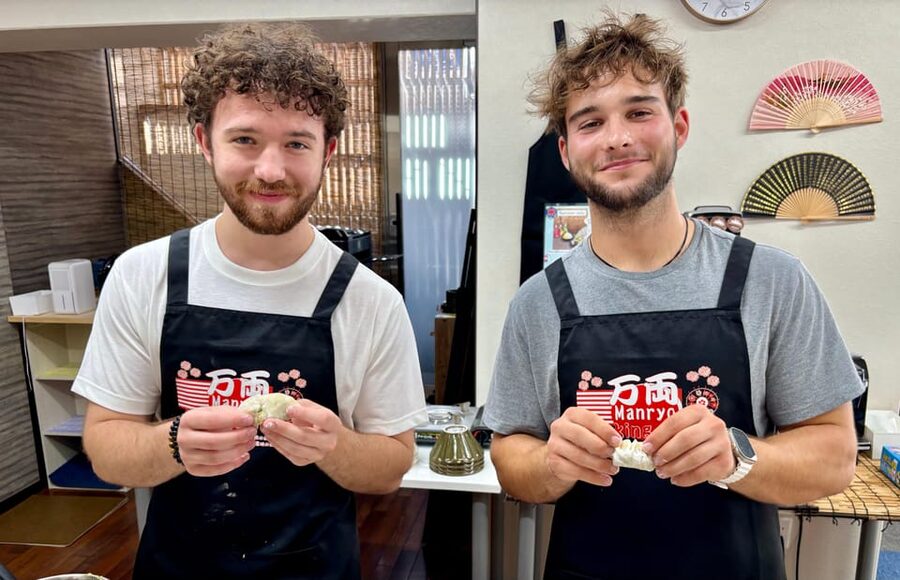
The classroom is at B1 of the Life Building. It is not directly on the main street, and the entrance can be easy to miss if you arrive at the last moment.
The clearest navigation advice is to search Google Maps for Manryo cooking class and check the route before the day of the activity. If you arrive by taxi, get out near the Family Mart at Sanjo Keihan. From there, the classroom is about a two-minute walk.
I would arrive around 10 minutes early. That gives you time to find the side street and basement entrance without turning the first cooking lesson into a navigation test.
Wear comfortable clothing and shoes. You will be working with food and moving through several cooking steps, so formal clothes are not a good match.
There is no hotel pickup or drop-off. You arrange your own way to the meeting point, which is simple enough from central Kyoto but worth allowing extra time for if you are unfamiliar with the Sanjo Keihan area.
Dietary Limits You Should Take Seriously
The class offers two stated menus: a regular menu and a vegetarian menu. The vegetarian option replaces pork with tofu, but other ingredients remain the same.
The important warning is that the class cannot accommodate vegan, pescatarian, gluten-free, or other special diets. Fish powder, oyster sauce, lard, soy sauce, cooking sake, and other ingredients may be part of the recipes, so do not assume a dish is suitable just because it contains vegetables or tofu.
A few individual sessions appear to have handled special requests, including one person who received a vegan meal. That conflicts with the current published restriction. I would not rely on an exception, and I would contact the provider before booking if your diet is anything beyond the regular or stated vegetarian menu.
This is also not a good fit for someone with gluten intolerance. The activity is not presented as a gluten-free kitchen, and no special-diet accommodation is offered.
Who Will Get the Most From This Class
I would choose this class if you want to learn dishes you can repeat at home, especially if ramen broth has always seemed difficult. The focus is practical, and the recipes use ingredients that are reasonably accessible in many countries.
It suits couples, families with older children, and friends who enjoy doing something together. The meal gives the activity a clear reward, and the small group allows you to ask questions about cooking as well as Japanese food.
It also works well as a lunch or early evening plan. Since the class lasts 90 minutes and includes plenty of food, it can replace a regular meal.
You may want something else if you are looking for noodle-making, advanced knife skills, or a deep study of regional Japanese cuisine. This is a compact introduction to popular home-style dishes, not a chef-training course.
Wheelchair users and people with recent surgeries should not book based on the stated suitability information. The class is also not suitable for children under 12, and the participation rules specify that younger cooks cannot attend independently.
Booking Details That Matter
The activity costs $90 per person and allows free cancellation up to 24 hours before the start time. You can also reserve now and pay later, which helps if your Kyoto schedule is still changing.
Only one reservation should be made per group. Multiple bookings under the same name for the same or different dates can all be canceled because they hold places that other people may need.
Everyone entering must be taking the class. If you book for five people, only those five participants may enter. The provider does not allow people to come along simply to watch the facility.
The group limit is eight, and the instruction language is English. Since the class can fill its spaces, book once your date is firm, but check the meeting point carefully before setting out.
Should You Book the Kyoto Ramen Class?
Book it if you want a hands-on meal and usable recipes, not simply a bowl of noodles. The combination of two broths, gyoza, and onigiri gives you a lot for 90 minutes, and the small class format makes it easier to get help with the fiddly parts.
I especially recommend it for first-time Japanese cooking students, food-loving families with eligible teenagers, and anyone who wants to recreate Kyoto memories at home. Nori and the wider teaching team bring clear English, humor, and steady support to a fast schedule.
Skip it if you need vegan, pescatarian, gluten-free, or highly customized food. Also skip it if you want to make ramen noodles from flour, since this class teaches the broth rather than the noodles.
For everyone else, the $90 price is fair when you count the instruction, meal, recipes, and three dishes you can carry into your own kitchen. Arrive early, come hungry, and use Google Maps before you leave your hotel.
FAQ
How long does the cooking class last?
The class lasts 90 minutes.
What dishes will I make?
You will make miso ramen, shoyu ramen, gyoza, and onigiri. The ramen lesson focuses on broth, and the class does not make noodles from scratch.
Is the class taught in English?
Yes. The listed instruction language is English, and the class has English-speaking instructors.
How many people can join?
The class is limited to eight participants.
What is included in the price?
The price includes English-speaking instruction, ingredients, cooking equipment, the food you prepare, recipes for ramen and gyoza, and free coffee and tea.
Can I choose a vegetarian menu?
Yes. The stated vegetarian menu replaces pork with tofu, but the other ingredients remain the same.
Can the class accommodate vegan or gluten-free diets?
No. The class cannot accommodate vegan, pescatarian, gluten-free, or other special diets.
Where is the classroom?
The classroom is in the basement level B1 of the Life Building. It is one street away from the main road. Search Google Maps for Manryo cooking class, or get out near Family Mart at Sanjo Keihan and walk for about two minutes.
Newest Kyoto experiences on the site
- Treasures of Kyoto: Gion & historical Walking Tour★ 5.0 · 6 reviews
- Whisk Your Own Matcha: A Zen Matcha Experience at Temple★ 3.6 · 7 reviews
- Uji: Private immersion into Kyoto’s tea and reglious culture★ 5.0 · 17 reviews
- Kyoto tea town for matcha lovers★ 5.0 · 16 reviews
- Kyoto Matcha Green Tea Tour★ 4.5 · 23 reviews
- Uji and Wazuka Matcha Farm Half Day Private Guided Tour★ 5.0 · 21 reviews
- Utilising upcycled Matcha! Creating matcha incense (Uji, Kyoto)★ 5.0 · 6 reviews
- Sacred Temple Yoga Experience in Japan★ 5.0 · 3 reviews
Kyoto Ramen Experiences, compared.
Ramen Cooking Class at Ramen Factory in Kyoto
Read our review →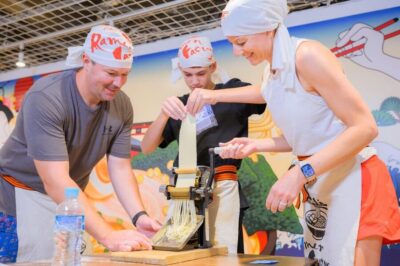
Ramen Cooking Class at a Ramen Factory with Souvenir
Read our review →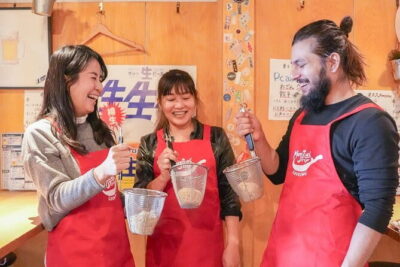
Kyoto Ramen and Gyoza Cooking Class with Professional Chefs
Read our review →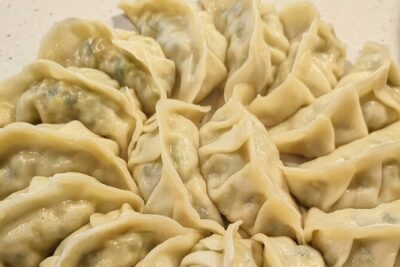
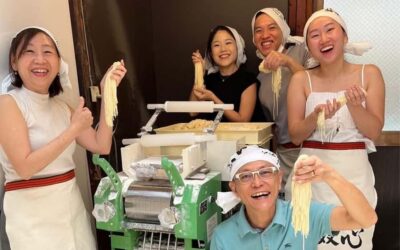
Kyoto Michelin Ramen Workshop or Painting Ramen Essentials
Read our review →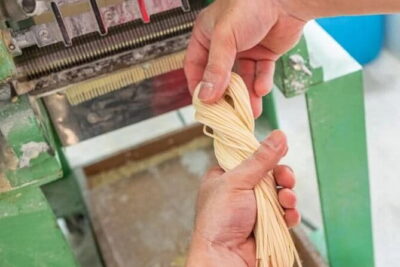
Ramen Gyoza Onigiri Japanese Cooking Class in Kyoto
Read our review →
Kyoto Ramen Spoon Painting & Michelin Cooking Class
Read our review →Browse the lists this tour appears in