
Reviewed · KYOTO RAMEN EXPERIENCES
Home style Ramen and Homemade Gyoza in Kyoto
The best part of this Kyoto class is that you do not just watch someone prepare ramen. You work through a home-style meal with Nariko, making soup from her mother’s recipe, rolling gyoza skins, shaping dumplings, and preparing cucumber pickles. Then you sit down in her home and eat what you made. The meal is practical, not a polished restaurant demonstration.
I like two things in particular: the small group size, limited to eight, keeps the lesson personal, and the recipes are realistic enough to try again at home. I also like the mix of cooking and conversation. You get a look at ordinary Japanese home food, not only the dishes served in restaurants.
The main consideration is dietary. The ramen broth uses dried fish, and Nariko cannot make it vegetarian. You also make ramen soup and use prepared ramen noodles, rather than making the noodles themselves. Children must be over 10 and able to handle a knife.
Key points
- Make gyoza wrappers from scratch: The dumpling skins are part of the lesson, not a store-bought shortcut.
- Use Nariko’s family ramen recipe: The soup follows her mother’s home-style method and includes dried fish.
- Eat the meal you prepare: Ramen, fried gyoza, and cucumber pickles make up a generous lunch or early meal.
- Cook in a real Kyoto home: The setting feels domestic and relaxed, with a clean kitchen arranged for teaching.
- Keep the group small: The maximum is eight people, and past class sizes have included four to seven.
- Take the skills home: The cooking methods are simple enough to repeat after your Japan trip, and recipes are shared.
A home-cooked Kyoto lesson, not a noodle show
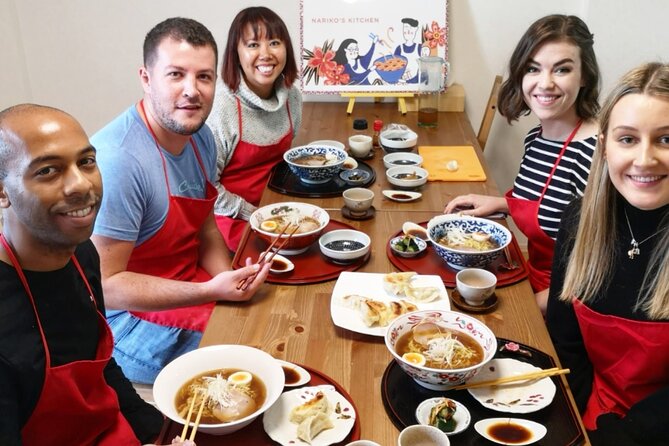
This is a hands-on cooking class held at Nariko’s home in Kyoto’s Sakyo Ward. The meeting point is 5-6 Matsugasaki Rokunotsubochō, Kyoto 606-0915, with a 10:00 am start. The class lasts about three and a half hours and ends back at the same place.
That length matters. You are not rushing through a quick folding demonstration. There is time to prepare several dishes, learn the basic techniques, cook them, and sit down to eat. You also have room for questions and conversation with Nariko and the other people in the class.
Nariko’s approach is warm and patient. She demonstrates each step, then lets you try it yourself. The class is suited to people who have never made gyoza before, but it still offers useful details for home cooks who already know their way around a kitchen.
The setting is part of the appeal. You are not in a large culinary school with rows of stations and a formal lecture. You cook in a carefully arranged home kitchen, then share the finished food at a table. That gives the experience a more personal feel and helps explain how these dishes fit into everyday Japanese cooking.
More ramen nights in Kyoto:
- Ramen Cooking Class at Ramen Factory in Kyoto
★ 5.0 · 1,937 reviews - Kyoto: Ramen Cooking Class at a Ramen Factory with Souvenir
★ 4.9 · 532 reviews - Kyoto: Ramen, Gyoza, and Onigiri Cooking Class
★ 5.0 · 445 reviews
10:00 am at Matsugasaki
You meet Nariko at the stated Kyoto address near public transportation. One class arrangement has included meeting at a train station, followed by a short walk to her home, so check the exact meeting instructions you receive after booking. Confirmation is sent within 48 hours, subject to availability.
Arrive ready to work. This is not a class where you sit back with a camera while an instructor does all the chopping. You will handle ingredients, use a knife, shape dough, and take part in the cooking.
The maximum group size is eight. That is small enough for Nariko to watch your technique and help when a wrapper tears or a dumpling refuses to close. Some sessions have been smaller, including a group of four, while others have had six or seven people. A smaller class usually gives you more space and more chances to ask questions.
The morning timing works well for a cooking activity. You can eat the finished meal around lunchtime, then have the rest of the day for Kyoto sightseeing. Just remember that the class ends where it starts, so plan your next stop from Matsugasaki rather than from central Kyoto.
Building ramen around a family broth
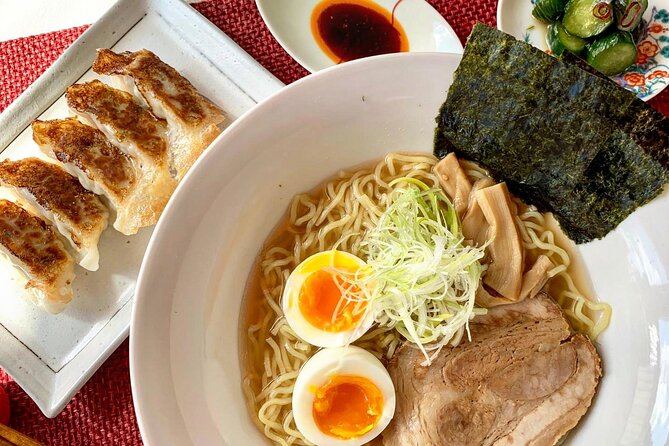
The ramen portion uses Nariko’s mother’s recipe for the soup. You make the broth with simple ingredients, including dried fish, which gives the dish an important savory base. Vegetables and meats are also part of the preparation described in the class.
This is home-style ramen, not a lesson in elaborate restaurant ramen production. The class does not include making ramen noodles. Instead, you prepare the soup and use ramen noodles as part of the completed dish.
That distinction is worth noting before you book. If your main goal is to learn how to stretch, cut, and cook fresh ramen noodles, this is not the right class. If you want to understand how a satisfying bowl of ramen comes together at home, the focus is better suited to you.
I like this division of labor. Making noodles from scratch would add a separate technical lesson and might leave less time for the broth, gyoza, and pickles. Here, the attention stays on a meal you can realistically repeat in your own kitchen.
The dried fish also rules out a fully vegetarian version. Nariko says she cannot make the ramen soup without it, so you should share dietary restrictions before booking. She may or may not be able to adjust other parts of the meal, but you should not count on a vegetarian ramen alternative.
Rolling gyoza skins by hand
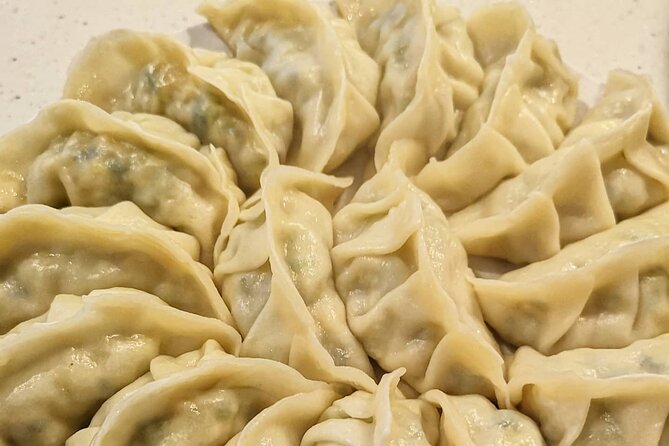
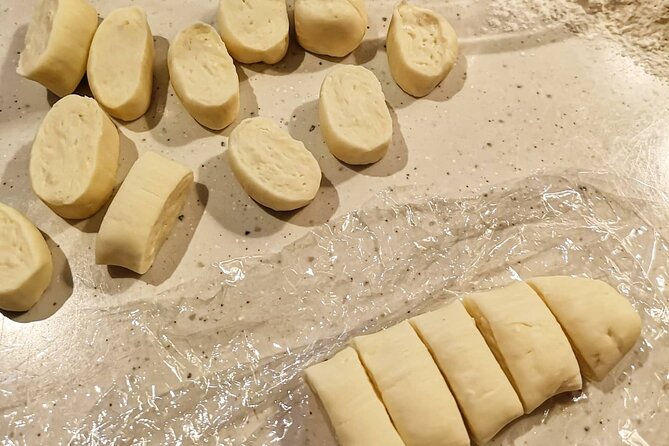
The gyoza lesson is the most distinctive cooking task. You make the wrappers yourself, rather than opening a package of ready-made skins. That takes more effort, but it also gives you a better sense of what goes into Japanese dumplings.
Nariko shows you how to prepare the dough and work it into thin wrappers. You then fill and fold the gyoza. Beginners should not worry about producing picture-perfect pleats on the first attempt. The point is to learn how the dough behaves and how to seal the dumpling well enough for cooking.
This is also where a small class helps. You can watch Nariko’s hands closely, then get direct help with your own dumplings. A class of four gives everyone plenty of attention, while a group of seven or eight still remains manageable.
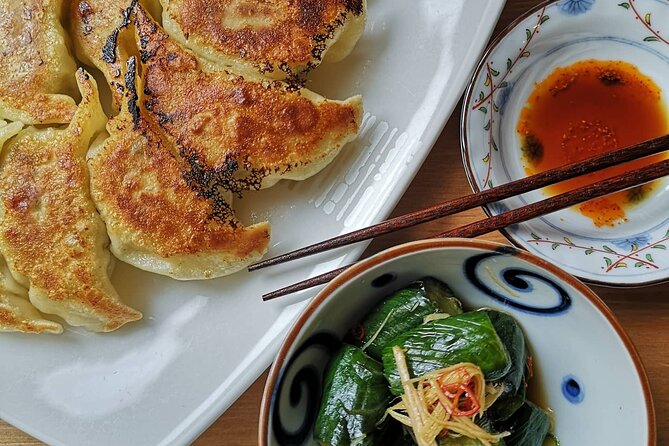
The gyoza are fried rather than boiled. That gives the finished dumplings a crisp base and makes the cooking stage feel different from the soft ramen preparation. The contrast is useful: you learn to manage both a soup dish and a pan-fried dumpling in the same meal.
The class is not presented as a performance where the instructor fixes everything behind the scenes. You make the food yourself, including the dough and the folding. That is why the experience can feel rewarding even if your dumplings look uneven.
More cooking classes in Kyoto:
- Kyoto: Japanese Washoku Bento Small Group Cooking Class
★ 5.0 · 380 reviews - Kyoto Ramen and Gyoza Cooking Class with Professional Chefs
★ 5.0 · 282 reviews - Kyoto: Afternoon Japanese Izakaya Cooking Class
★ 4.9 · 241 reviews - Izakaya Style Cooking Class
★ 5.0 · 219 reviews
Quick cucumber pickles and the rhythm of a Japanese meal
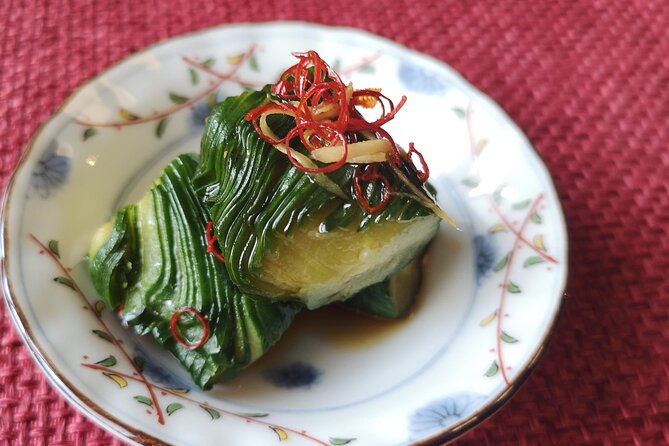
Cucumber pickles round out the menu. They are a smaller part of the class, but they matter because they show how a simple side dish can balance a richer meal.
The pickles also give you a task with a different pace. Ramen broth and gyoza demand active preparation, while the cucumber dish is a quick, fresh addition. Together, the three dishes form a practical home meal rather than three unrelated cooking samples.
You will likely appreciate this if you want more than a single signature dish. By the end, you have practiced soup preparation, dough making, dumpling assembly, frying, and a simple pickle. None of these techniques requires specialist equipment according to the information provided, which makes the class easier to repeat at home.
Sitting down to eat your own work
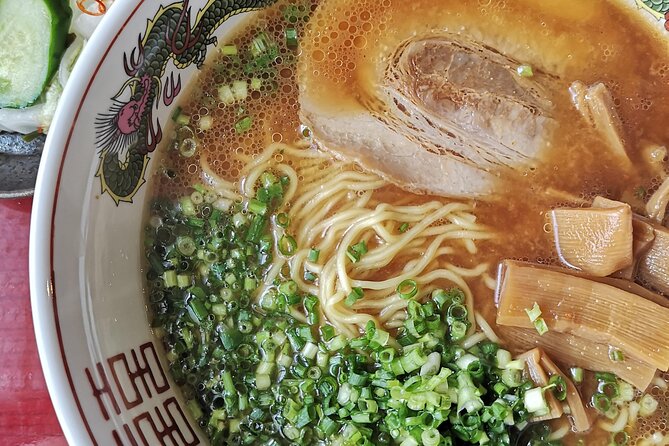
After the cooking, you eat the meal in Nariko’s home. The table is prepared for the group, and the food is described as plentiful rather than a tiny tasting portion. You get ramen, gyoza, and cucumber pickles, all made during the session.
This shared meal is not an afterthought. It is the payoff for the work and a chance to see how the separate pieces come together. You can judge the texture of your gyoza, taste the broth you helped prepare, and notice which techniques you want to practice again.
The home setting adds to the meal. You are not simply handed a bowl and sent on your way. The atmosphere is described as clean, orderly, and comfortable, with a table arranged for eating. The class can feel social without being a loud group event.
It is also a good way to meet people from different parts of the world without sacrificing the food focus. You cook side by side, share the table, and have an easy subject for conversation. Solo visitors, couples, and families can all fit into the format, as long as each person attending is actually taking the class.
What the $118.92 price includes in value
At $118.92 per person, this is not a cheap lunch. You should compare it with the cost of a ramen meal and a gyoza meal in Kyoto, then remember that the price also covers about three and a half hours of instruction, a home visit, hands-on preparation, and the food you eat.
The strongest value comes from the repeat factor. You are not only paying for one meal. You learn a broth method, homemade gyoza wrappers, dumpling folding, frying, and cucumber pickles. Recipes are shared, so you can try to recreate the meal for family or friends after returning home.
The value is weaker if you only want to eat ramen or if you already have extensive experience making dumplings. You may find a restaurant meal much cheaper and faster. But if you want a personal cooking lesson and a cultural experience in a real home, the longer format makes the price easier to justify.
The class is booked an average of 24 days in advance, so this is not an activity I would leave until the final few days of a Kyoto visit. Its maximum of eight people also limits the number of available spaces.
Who will enjoy this class most
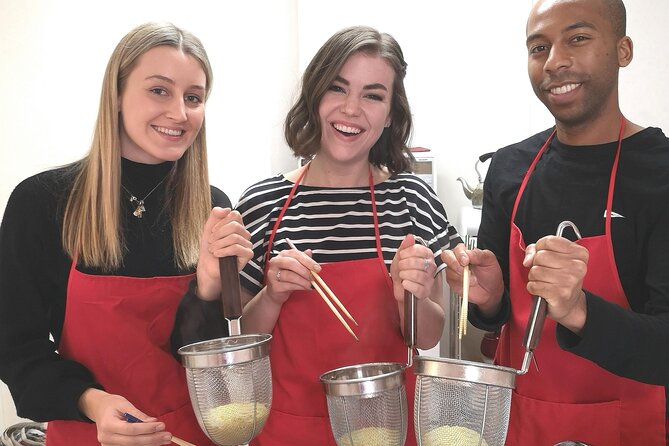
I would recommend it to couples, families with older children, solo visitors, and anyone who likes bringing food skills home from a trip. It is especially useful if you prefer a small, active lesson to a large group demonstration.
Families should pay close attention to the age rule. Participants must be older than 10 because knives are used, and children must be able to handle one safely. A younger child cannot simply attend as a spectator because only people taking part in the class may enter, due to limited space.
This is also a good match for curious eaters who want to understand Japanese food beyond sushi and restaurant ramen. The menu shows how a Japanese home meal can combine broth, dumplings, and a simple vegetable side without requiring complicated equipment.
I would be more cautious about recommending it to strict vegetarians or people with dietary restrictions. Dried fish is used in the ramen soup, and Nariko asks you to provide details before booking so she can explain what may be possible.
Practical details before you reserve
The experience begins at 10:00 am and ends at the meeting point. It is near public transportation, but you should allow time to find the exact address in Sakyo Ward. The activity uses a mobile ticket, and confirmation is normally provided within 48 hours if space is available.
Only participating people may attend. That means a family member who does not want to cook cannot come along simply to watch. The maximum group size is eight, which helps keep the home kitchen workable.
The cancellation terms are strict. The booking is non-refundable and cannot be changed for any reason. If the provider cancels because the minimum number of participants is not reached, you are offered another date or experience, or a full refund. For that reason, book only when your Kyoto schedule is firm.
Should you book Nariko’s Kyoto cooking class?
Book it if you want to make a complete Japanese meal, meet Nariko in her home, and leave with techniques you can use again. The handmade gyoza wrappers, family ramen broth, fried dumplings, and cucumber pickles give the three-and-a-half-hour class enough variety to keep it interesting.
Skip it if you want to make ramen noodles from flour, need a vegetarian broth, dislike hands-on kitchen work, or are looking for a low-cost meal. For everyone else, the small group, patient instruction, generous meal, and useful recipes make this one of the stronger food activities for a Kyoto itinerary.
FAQ
Where does the cooking class take place?
The class takes place at Nariko’s home at 5-6 Matsugasaki Rokunotsubochō, Sakyo Ward, Kyoto, 606-0915, Japan.
What time does the class begin?
The class starts at 10:00 am.
How long does the experience last?
The activity lasts approximately three hours and 30 minutes.
What food will I make?
You will make home-style ramen soup, gyoza with homemade wrappers, and cucumber pickles. You will then eat your creations.
Are ramen noodles made during the class?
No. The class makes the ramen soup, but it does not include making ramen noodles.
Are gyoza wrappers made from scratch?
Yes. You make the gyoza skins from scratch during the class.
Is the class vegetarian?
No. Dried fish is used in the ramen soup, and Nariko cannot make the ramen soup without it.
What is the minimum age for children?
Participants must be older than 10 and able to use a knife safely.
How many people can join the class?
The activity has a maximum of eight participants.
Can someone attend just to watch?
No. Only people participating in the class may attend because space is limited.
Is the booking refundable?
No. The experience is non-refundable and cannot be changed for any reason. If the activity is canceled because the minimum number of participants is not reached, you are offered another date or experience, or a full refund.
Newest Kyoto experiences on the site
- Whisk Your Own Matcha: A Zen Matcha Experience at Temple★ 3.6 · 7 reviews
- Treasures of Kyoto: Gion & historical Walking Tour★ 5.0 · 6 reviews
- Kyoto tea town for matcha lovers★ 5.0 · 16 reviews
- Uji: Private immersion into Kyoto’s tea and reglious culture★ 5.0 · 17 reviews
- Kyoto Matcha Green Tea Tour★ 4.5 · 23 reviews
- Uji and Wazuka Matcha Farm Half Day Private Guided Tour★ 5.0 · 21 reviews
- Utilising upcycled Matcha! Creating matcha incense (Uji, Kyoto)★ 5.0 · 6 reviews
- Sacred Temple Yoga Experience in Japan★ 5.0 · 3 reviews
Kyoto Ramen Experiences, compared.
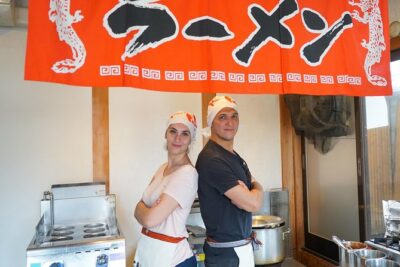
Ramen Cooking Class at Ramen Factory in Kyoto
Read our review →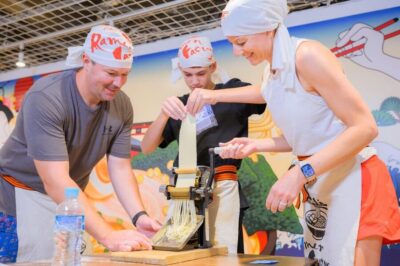
Ramen Cooking Class at a Ramen Factory with Souvenir
Read our review →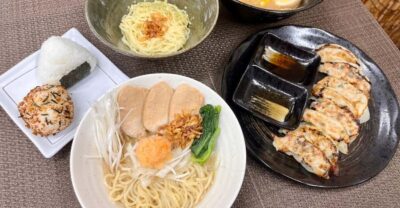
Kyoto Ramen and Gyoza Cooking Class with Professional Chefs
Read our review →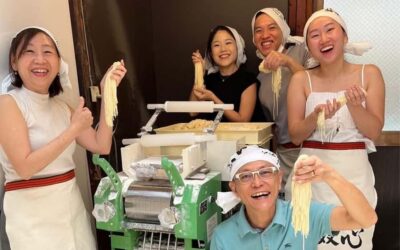
Kyoto Michelin Ramen Workshop or Painting Ramen Essentials
Read our review →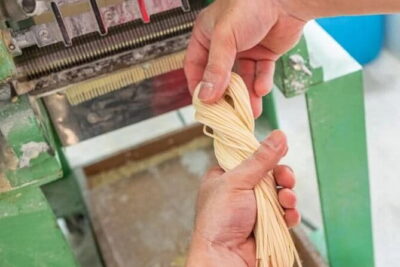
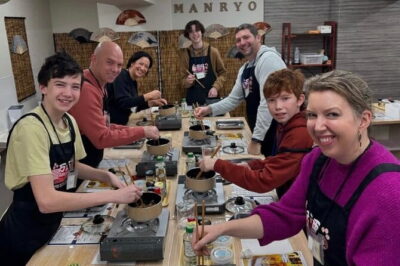
Ramen Gyoza Onigiri Japanese Cooking Class in Kyoto
Read our review →
Kyoto Ramen Spoon Painting & Michelin Cooking Class
Read our review →Browse the lists this tour appears in