
Reviewed · KYOTO GEISHA & MAIKO EXPERIENCES
Kyoto: Lunch or Dinner with Maiko
Kyoto’s Maiko lunch or dinner gives you a rare look at a living tradition without asking you to spend an evening at an exclusive ochaya. You’ll eat a traditional Kyoto meal, watch two graceful dances, ask questions, take a photo beside the Maiko, and join a lighthearted game.
I especially like the direct Q&A, which turns a polished performance into a human meeting, and the small Senjafuda charm presented after your photo. The main thing to weigh is the setting: this is a practical room in a building, not a historic tea house, and the food may feel plain if you prefer bold flavors.
Key points to know before booking
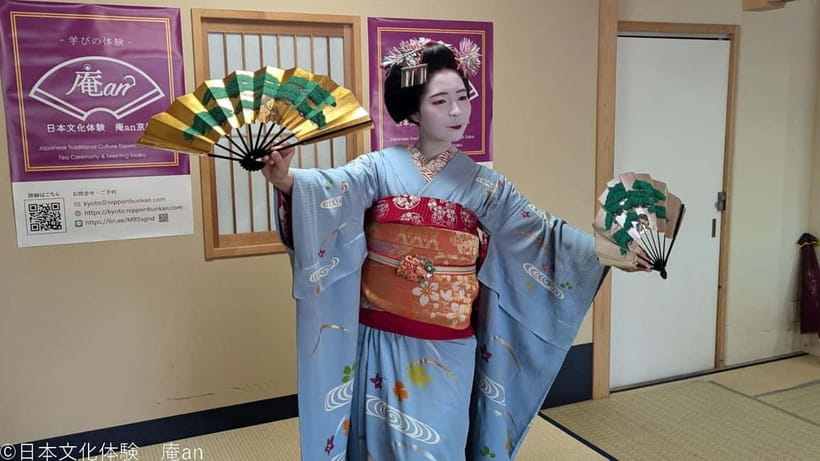
- Two dances are included: The Maiko performs dances linked to Japanese seasons, love stories, or daily life.
- The Q&A is a real part of the program: You can ask about her routines and traditional training.
- The meal is Kyoto-style: Expect dishes made with dashi and a traditional restaurant meal, often delivered in shidashi style.
- The venue is modern and simple: It is not an ochaya or old Japanese house, and you’ll need to use stairs.
- You may meet a Geiko instead: The performer can change depending on the day.
- Paid upgrades are available: Tea making costs 1,600 JPY, while first-row seating costs 3,300 JPY.
Meeting a Maiko without entering an ochaya
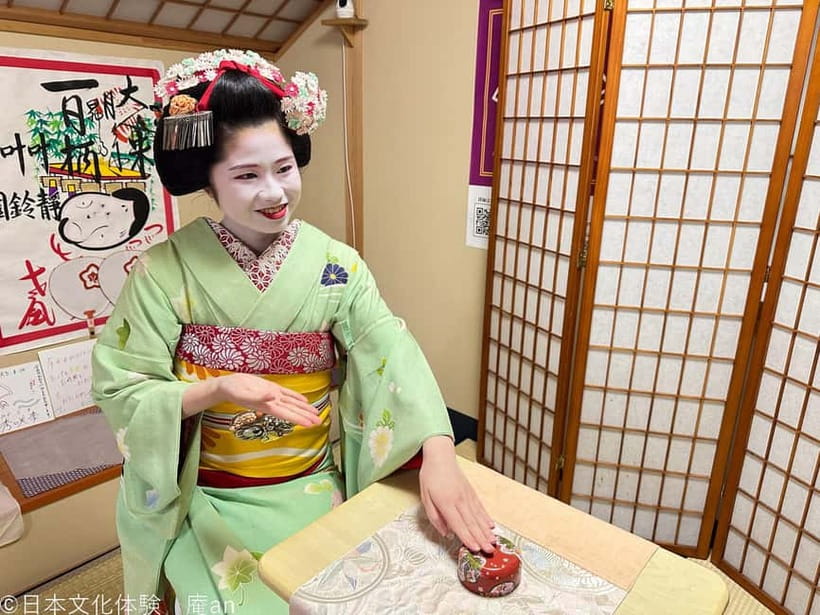
Maiko are apprentice geisha who train in traditional arts, manners, music, dance, and hospitality. Their kimono, hairstyle, makeup, and careful movements are not costume pieces put on for a short show. They reflect a demanding way of life that still exists in Kyoto.
That context matters. If you only see a Maiko walking through Gion, you may get a quick glimpse and a photograph from a distance. Here, you have time to watch, listen, and ask questions in a controlled setting. The experience gives you a clearer sense of the person behind the formal appearance.
Still, keep your expectations grounded. The venue is not an ochaya, the private traditional teahouse associated with geiko entertainment. This program takes place in a building near Gojo Station, with a relaxed atmosphere and friendly staff rather than old beams, garden views, or historic décor.
That tradeoff is sensible for many visitors. A private ochaya experience can be difficult to arrange and costly. This program offers a shorter, more accessible introduction at $63 per person, with dinner included.
More geisha and maiko evenings in Kyoto:
- Kyoto Geisha Walking Tour: Gion District & Hidden Gems
★ 4.7 · 3,273 reviews - Kyoto: Gion Magical Night Walking Tour with Geisha Trivia
★ 4.9 · 2,393 reviews - Kyoto: Gion Geisha District Walking Tour – Stories of Geisha
★ 4.7 · 2,187 reviews
What happens during the 90-minute program
The schedule begins when you arrive at the venue and continues for about 90 minutes. The Maiko leaves at roughly the 75-minute mark, giving you about 15 minutes afterward to finish up and leave the room.
The order can vary slightly, but the planned flow is:
- Tea ceremony demonstration
- Traditional Kyoto dinner
- Questions and answers
- Photo with the Maiko
- Senjafuda gift
- Two Maiko dances
- Interactive game
- Departure
This is a tightly packed program. You are not spending a long evening at the table, so it works well if you want a cultural activity that fits around sightseeing in central Kyoto. It also means each segment is fairly focused. You should arrive ready to take part rather than expecting a slow meal with long pauses.
The tea ceremony opens the meeting
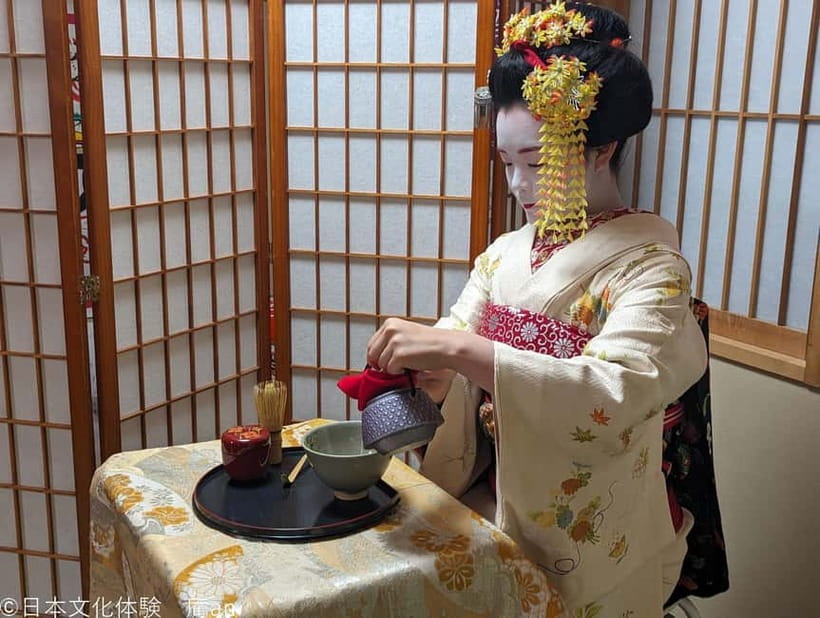
The first part is a demonstration of a traditional tea ceremony. Watch for the small movements: how the tea is prepared, how utensils are handled, and how etiquette shapes the exchange between host and guest.
The value here is not simply the cup of tea. The ceremony shows the discipline behind Japanese hospitality. Every gesture has a place, and the Maiko’s controlled movements provide a calm start before the meal and performance begin.
You can add a tea-making experience for 1,600 JPY when you apply. This is optional, so the basic $63 price includes watching the demonstration, not necessarily making tea yourself. If hands-on activities matter to you, select the option in advance or contact the operator about adding it.
English translation is provided as much as possible when requested. Since the instructor language is Japanese, I would contact the provider ahead of time if you need consistent English explanations.
Kyoto food built around dashi
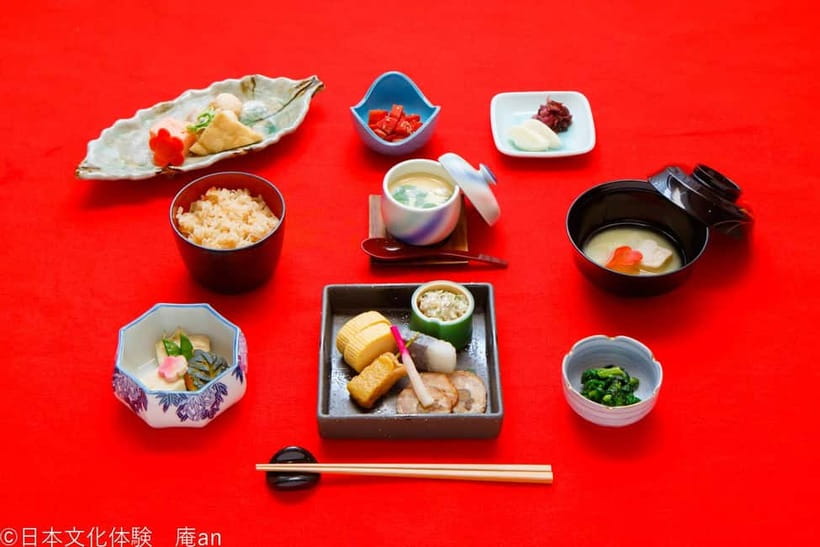
The included meal comes from a long-established Kyoto restaurant and uses traditional local dishes. Kyoto cooking often relies on dashi, a soup stock that adds gentle flavor without heavy seasoning. If you enjoy subtle food, careful presentation, and a meal that reflects local custom, this part should fit the mood.
The food may be served in shidashi style. In Kyoto, shidashi refers to prepared food delivered from a restaurant, a practice linked to formal gatherings and traditional hospitality. That detail gives the meal a local connection beyond simply ordering a Japanese set lunch.
I would not book this activity mainly for a lavish dinner. The meal is part of the cultural program, and its restrained seasoning may seem quiet. Some diners may find the dishes less flavorful than expected, and the presentation can feel more functional than theatrical.
That is the key food decision. You receive dinner as part of the $63 cost, but the strongest value comes from pairing the meal with the Maiko program. If you want a memorable Kyoto menu first and cultural entertainment second, you may prefer a dedicated kaiseki or restaurant reservation.
The meal can also take place alongside people doing different versions of the program. For example, some participants may be eating while others are taking part in the tea-making option. This shared setup can make the room feel less private and less carefully staged, but it also keeps the price within reach.
More long lunches in Kyoto:
- Bike Tour Exploring North Kyoto plus Lunch
★ 5.0 · 1,087 reviews - Osaka/Kyoto: Arashiyama, Nara & Fushimi Inari Shrine w/Lunch
★ 4.4 · 754 reviews - Kyoto Zen Meditation & Garden Tour at a Zen Temple with Lunch
★ 5.0 · 441 reviews - 4.5-Hour Kyoto Bike Tour with Lunch and UNESCO Zen Temples
★ 5.0 · 122 reviews
Ask about daily life, not just costumes
The Q&A is one of the most useful parts of the experience. You can ask the Maiko directly about her daily routine and the world she has entered.
Prepare a few questions before you arrive. You might ask about the meaning of her hairstyle, the training behind the dances, the role of seasonal themes, or how she balances formal duties with ordinary life. Keep your questions respectful and concise, since the program has a fixed schedule.
This exchange helps prevent the experience from becoming a simple photo opportunity. You see the formal side of Maiko culture during the ceremony and dance, then get a chance to understand the person and discipline behind it.
The language point matters here. The instructor is Japanese, and English support is available as much as possible if requested. Do not assume every answer will be delivered in fluent English. Contacting the operator before booking is the safest choice if the Q&A is your main reason for attending.
Two dances show the Maiko’s discipline
The Maiko performs two traditional dances. Their themes may draw on the seasons, love stories, or scenes from everyday life.
These are not large stage productions. Their effect comes from detail: the angle of a fan, the turn of a sleeve, the controlled pace of each step, and the way the performer holds her posture. You’ll want to watch closely rather than wait for dramatic movement.
The two dances are an important reason to choose this program over a simple cultural meal. You see the skills that make Maiko entertainment distinctive, but in a small enough setting to notice the gestures.
Depending on the date, a Geiko may attend instead of a Maiko. That is not a lower-quality substitute. A Geiko is a more senior performer in Kyoto’s traditional entertainment world, while a Maiko is still in training. The change means you should treat the advertised performer as subject to the day’s arrangements.
A photo and a Senjafuda keepsake
After the questions, you’ll have a chance to take a commemorative photo beside the Maiko. This is a structured opportunity, not an invitation to photograph freely throughout the entire program.
The Maiko also gives you a Senjafuda. These small paper name cards have long been associated with performers and visitors leaving their names at temples, shrines, or entertainment houses. Here, it works as a personal memento of the meeting.
I like this part because it gives you something more distinctive than a standard souvenir. Keep your phone or camera ready, but follow the staff’s instructions so the photo session stays on schedule.
If you want the best view for the dances and photo portion, paid seating upgrades are offered:
- SS seat, first row: 3,300 JPY
- S2 seat, second row: 2,200 JPY
- S3 seat, third row: 1,100 JPY
The base price does not include these upgrades. For most people, the standard seat may be enough, but a front row can make a real difference when you want to study the dance movements.
The game brings down the formality
The final entertainment segment is an interactive game with the Maiko. Volunteers can join, while everyone else can watch, clap, and cheer.
This is a useful change of pace. The tea ceremony and dances ask you to sit quietly and observe. The game makes the room more social and gives the Maiko a chance to show the playful side of her hospitality.
You do not need to volunteer. If you prefer to watch, you can still support the players and enjoy the friendly competition. If you like taking part in cultural activities rather than sitting through a performance, this is one of the program’s stronger features.
The game also helps explain why the experience feels more like an introduction than a formal theater show. You are not only watching a professional. You are sharing a short social event with her.
A simple room, not a historic Kyoto house
The venue is about a one-minute walk from Exit 1 of Gojo Station on the Subway Karasuma Line. The entrance faces Gojo-dori, the main street, so the location is easy to reach once you are at the station.
There is no elevator. You’ll need to use stairs to reach the venue, so this is an important practical issue for anyone with mobility concerns or heavy luggage.
The room is in a building and does not recreate an ochaya. You may find simple furnishings and limited decoration rather than screens, tatami rooms, or a traditional garden setting. Some participants may feel that the plain room weakens the atmosphere, especially during the dances.
I see the setting as a clear tradeoff. The modern location makes the program easier to arrange and keeps the price reasonable. If your dream is a highly polished old-Kyoto setting, this may feel too basic. If you care more about meeting a Maiko than about the room’s décor, the venue should not be a deal breaker.
Is $63 a fair price?
At $63, you receive dinner, a tea ceremony demonstration, a Q&A, a photo opportunity, a Senjafuda gift, two dances, and a game within 90 minutes. You are paying for access to a rare cultural meeting as much as for the meal.
The value is strongest for first-time visitors who want a clear introduction to Maiko culture without arranging a private experience. The price also makes sense if you plan to pair it with other sightseeing in central Kyoto, since the program does not take up an entire evening.
The value is weaker if you judge the cost by the food alone. The dishes are traditional and based on Kyoto cooking, but they are not presented as a luxury dinner. The room is also functional rather than ornate.
I would consider the seat upgrades carefully. Paying 1,100 JPY for a third-row seat or more for the front may be worthwhile if the dance is your main interest. The tea-making option at 1,600 JPY is a better choice if you want a hands-on activity.
Who should book this Kyoto experience?
I would recommend it to you if you want:
- A short introduction to Maiko culture
- A chance to ask questions directly
- Two traditional dances in a small setting
- A cultural activity near a subway station
- Dinner included in the price
- A program suitable for a first visit to Kyoto
It is also a good fit for families with older children who can sit quietly during the ceremony and performance. Children under two can attend free when seated on a parent’s lap, but a child who needs a separate seat or meal is charged the standard fee.
I would hesitate if you need a fully English-led program, an elevator, a private room, or an elaborate historic setting. I would also choose another activity if your top priority is a high-end Kyoto meal.
Book with timing in mind. The program cannot wait for late arrivals, and travel costs are not reimbursed if you miss it. Cancellations made up to eight days in advance qualify for a full refund, while later changes or cancellations can bring fees.
Final call: cultural meeting first, dinner second
Book this if you want a practical and fairly priced way to meet a Maiko, hear about her life, watch two dances, and join a little Kyoto-style hospitality. The Q&A, photo, Senjafuda, and game give the 90 minutes a good range.
Skip it if you are paying mainly for an elegant old-house setting or a standout meal. The room is plain, English help requires planning, and the food’s mild style will not suit every palate.
For most first-time visitors, I would choose the standard program and ask for English support in advance. Add tea making if you like hands-on experiences, and consider a seat upgrade if seeing the dances clearly matters most.
FAQ
Where does the Maiko experience take place?
It takes place about one minute from Exit 1 of Gojo Station on the Subway Karasuma Line. The entrance faces Gojo-dori.
How long does the program last?
The full program lasts 90 minutes. The Maiko portion ends at about 75 minutes, followed by departure from the room at around 90 minutes.
Is dinner included?
Yes. Dinner with the Maiko is included in the $63 price.
What kind of food is served?
The meal consists of traditional Kyoto dishes from a long-established restaurant. Kyoto-style cooking uses dashi, or soup stock, often.
Is the tea ceremony included?
A tea ceremony demonstration is part of the program. Making your own tea is an optional extra costing 1,600 JPY.
Can I take a photo with the Maiko?
Yes. The program includes a commemorative photo opportunity beside the Maiko.
What gift do I receive?
The Maiko presents a Senjafuda, a small lucky charm, after the photo opportunity.
Will a Maiko definitely attend?
A Geiko may be invited instead, depending on the situation.
Is the activity available in English?
The instructor language is Japanese. English translation is provided as much as possible if requested, so contact the provider before booking if you need it.
Is the building accessible by elevator?
No. There is no elevator, and you need to use stairs to reach the venue.
More Dinners Worth Booking in Kyoto
- Private Dinner with a Geisha
★ 5.0 · 65 reviews - Kyoto Evening Gion Food Tour Including Kaiseki Dinner
★ 5.0 · 62 reviews - Kyoto: Maiko Dinner in Traditional Restaurant and Tour
★ 4.8 · 55 reviews - Private Dinner with Maiko and Geiko in Kyoto
★ 5.0 · 28 reviews
More Dinner Experiences in Kyoto
- Kyoto Gion Cultural Walk & Geisha Show with Dining Options
★ 5.0 · 518 reviews - Kyoto Gion Cultural Walk & Geisha Show with Dining Options
★ 5.0 · 483 reviews - Dinner with Maiko in a Traditional Kyoto Style Restaurant Tour
★ 5.0 · 175 reviews - Kyoto: Geisha Dinner & Gion Cultural Walk
★ 5.0 · 73 reviews
Newest Kyoto experiences on the site
- Treasures of Kyoto: Gion & historical Walking Tour★ 5.0 · 6 reviews
- Whisk Your Own Matcha: A Zen Matcha Experience at Temple★ 3.6 · 7 reviews
- Uji: Private immersion into Kyoto’s tea and reglious culture★ 5.0 · 17 reviews
- Kyoto tea town for matcha lovers★ 5.0 · 16 reviews
- Kyoto Matcha Green Tea Tour★ 4.5 · 23 reviews
- Uji and Wazuka Matcha Farm Half Day Private Guided Tour★ 5.0 · 21 reviews
- Utilising upcycled Matcha! Creating matcha incense (Uji, Kyoto)★ 5.0 · 6 reviews
- Sacred Temple Yoga Experience in Japan★ 5.0 · 3 reviews
Kyoto Geisha & Maiko Experiences, compared.
Kyoto Geisha Walking Tour: Gion District & Hidden Gems
Read our review →
Gion Magical Night Walking Tour with Geisha Trivia
Read our review →
Gion Geisha District Walking Tour – Stories of Geisha
Read our review →
Best of Kyoto: Gion, Geisha, Pagodas & Cobblestones
Read our review →
Kyoto Gion Geisha District Walking Tour – The Stories of Geisha
Read our review →
Kyoto Gion: 2-Hour Geisha Culture & History Walking Tour
Read our review →
Kyoto Gion Night Walk & Geisha District Guided Tour
Read our review →Browse the lists this tour appears in