
Reviewed · KYOTO GEISHA & MAIKO EXPERIENCES
Private Dinner with a Geisha
A private evening with a geiko or maiko gives you something rare in Kyoto: time to ask questions, share a meal, and see traditional music and dance at close range. The evening begins with a guided walk through Gion, then moves to a restaurant or tea house for kaiseki cuisine and conversation.
I like the way the English-speaking guides prepare you before the meeting, especially guides such as Mia and Mie, who are praised for their clear explanations and warm manner. I also like the personal setting, where you can ask about training, clothing, daily life, and traditions instead of simply watching a short stage show.
The main caution is the fixed traditional menu. It may be difficult for picky eaters, vegetarians, vegans, or anyone avoiding seafood, even when dietary needs are given in advance. The event also costs $381.49 per person, so you should book it for the cultural access, not just for dinner.
Key points at a glance
- Gion before dinner: Walk through Kyoto’s famous geiko district with an English-speaking guide before entering the dining venue.
- A personal cultural exchange: Ask a geiko or maiko about training, clothing, work, and life in Kyoto.
- Live traditional entertainment: Expect Japanese dance, singing, musical instruments, and simple games.
- Kaiseki dining: The meal includes multiple courses built around seafood, vegetables, tempura, and other traditional dishes.
- Tea house upgrade: The private tea house option includes drinks, while other choices charge separately for beverages.
- Plan ahead: Confirmation can take up to 48 hours, and the experience is non-refundable after booking.
What you are really paying for
At $381.49 per person, this is a major splurge. You can eat a fine meal in Kyoto for much less. The price makes more sense if you see the dinner as only one part of a larger cultural appointment, one that includes a guide, access to a geiko or maiko, translation, entertainment, and a private or specially arranged setting.
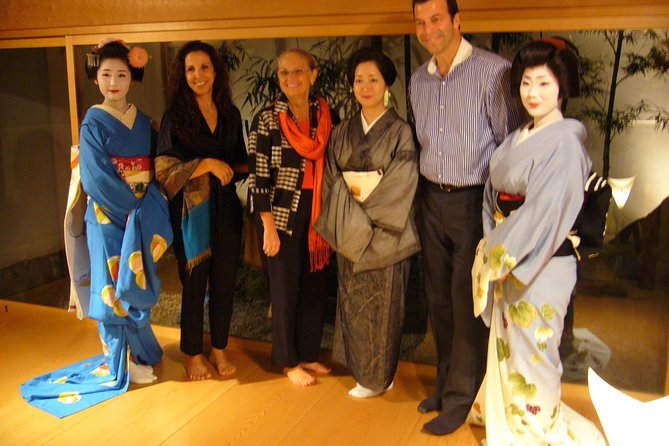
A geiko is Kyoto’s term for a professional geisha. A maiko is an apprentice. The evening lets you meet one or both, depending on the option and availability. You are not simply sitting in an audience while someone performs. You can ask questions and hear explanations through your guide.
That access is the central value. If your main aim is a long, elaborate dinner, the cost may feel hard to justify. If you have a serious interest in Japanese culture and want a close look at a tradition that is not usually open to the public, the price becomes easier to understand.
The experience is also rated highly overall, with a 4.8 score and a 97 percent recommendation rate from 65 ratings. That does not erase the occasional concerns about food, service, group size, or communication, but it does show a strong pattern of satisfaction.
More geisha and maiko evenings in Kyoto:
- Kyoto Geisha Walking Tour: Gion District & Hidden Gems
★ 4.7 · 3,273 reviews - Kyoto: Gion Magical Night Walking Tour with Geisha Trivia
★ 4.9 · 2,393 reviews - Kyoto: Gion Geisha District Walking Tour – Stories of Geisha
★ 4.7 · 2,187 reviews
Meeting at Minamiza Theatre at 5 pm
Your meeting point is in front of the main gate of the Minamiza Kabuki Theatre, facing Shijo Street. The listed address is 198 Nakanocho in Kyoto’s Higashiyama Ward. The area is near public transportation, which makes the starting point practical for an evening activity.
The scheduled start time is 5 pm. Arrive with enough time to find the theatre and locate the main gate. The meeting point matters because the evening begins outdoors, and the guide will lead you into Gion rather than sending you directly to the restaurant.
The total duration is listed as approximately three and a half hours, while the walk and party are also described as taking about three hours. Allow the full evening, including the transfer between the meeting point and dining venue. The activity ends at the restaurant or tea house, with some information also describing the return to the meeting point, so confirm the end point for your selected option.
Walking through Gion with a cultural guide
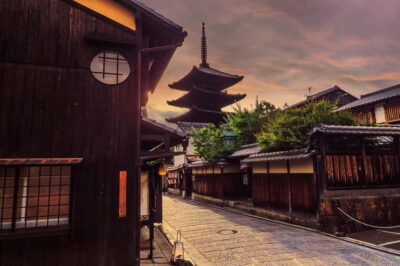
The first portion is a walk through Gion, Kyoto’s historic geiko district. You pass traditional Japanese houses and receive an explanation of the area, the geiko and maiko world, and the difference between popular myths and daily reality.
This walk is not filler. It gives you the basic vocabulary and context needed for the dinner. Without it, you might see the kimono, elaborate hairstyle, and dance without understanding the years of training behind them.
The guides are an important part of the experience. Mia is repeatedly praised for her fluent English, humor, and ability to explain difficult cultural points in a relaxed way. Mie is also described as warm and well prepared, including with families and teenagers. One guide had trained as a geiko but had not completed the process, giving her a particularly personal understanding of the profession.
That kind of guide can make a large difference. You may arrive nervous about what to ask or how to behave. A good guide explains the setting, translates questions, and helps the conversation feel natural. The guide also gives you a chance to ask about etiquette before you enter the private room.
One practical warning: if your particular booking includes a larger shared group, it can be harder to hear the guide outdoors. The supplied details describe the activity as private, but some options and past arrangements have involved more than one party. Check the exact format at booking, especially if a quiet, highly personal evening is important to you.
Entering the restaurant or tea house
After the walk, you go to a Japanese restaurant or tea house. The dining room is traditionally styled, and the meal is served in a private room or private tea house setting, depending on your selection.
This is the moment when the atmosphere changes. Gion’s streets give you an outside view of the district. The dining room gives you a closer look at how a traditional entertainment evening is arranged.
The tea house option is the more expensive choice, but it includes drinks such as sake and beer. With other choices, drinks are not included, though they may be available for purchase. The minimum drinking age in Japan is 20, so younger adults should not expect alcoholic drinks.
The experience is not designed around a quick photo opportunity. The maiko or geiko joins you during the meal, speaks with the group through the guide, and performs during the evening. The pace can feel long if you are not used to a multi-course meal and extended conversation, but that slower rhythm is part of the setting.
A few more Kyoto tours worth putting on the shortlist
- Kyoto Gion Cultural Walk & Geisha Show with Dining Options
★ 5.0 · 518 reviews - Kyoto Gion Cultural Walk & Geisha Show with Dining Options
★ 5.0 · 483 reviews - Dinner with Maiko in a Traditional Kyoto Style Restaurant Tour
★ 5.0 · 175 reviews - Kyoto: Geisha Dinner & Gion Cultural Walk
★ 5.0 · 73 reviews
What the kaiseki meal includes
The meal is a half or full kaiseki dinner, depending on your booking. Kaiseki is a traditional, multi-course style of Japanese dining. The food described here centers on seafood, vegetables, tempura, and other seasonal-style preparations.
The full meal can be elaborate, and several people found it excellent. The half kaiseki option may be enough for many people, especially if your priority is the geiko or maiko meeting rather than a long dinner. One dining account described the half meal as plenty of food.
You should approach the menu with an adventurous appetite. Dishes may be unfamiliar, and the meal is not presented as a flexible Western-style dinner with many substitutions. Some diners enjoyed trying traditional flavors, while others found the food difficult or had problems after eating raw fish.
Give all dietary requirements when booking, but do not assume they will be fully accommodated. There are specific reports of seafood restrictions not being handled as expected, and one vegetarian booking had trouble getting a useful response before arrival. If you have a serious allergy, a strict religious diet, or a vegan diet, contact the operator before paying and ask for a clear answer.
For the same reason, this may not be the right experience if food is your main concern. You can ask your guide what each course contains, but there may not be a detailed menu explaining every ingredient. Bring patience, and tell the guide clearly what you cannot eat as soon as you arrive.
Conversation with a maiko or geiko
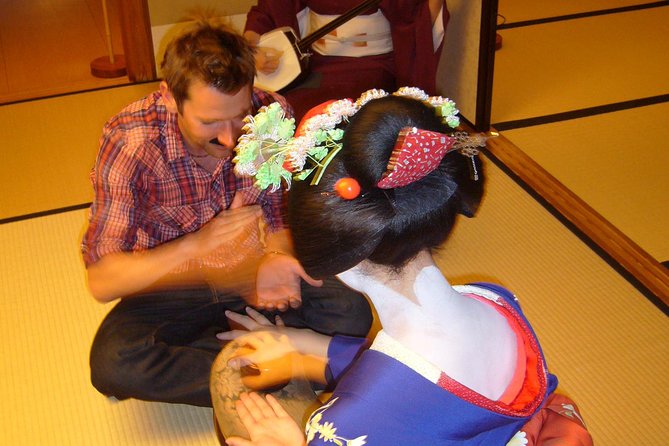
The conversation is the heart of the evening. You can ask about the training required to become a maiko and later a geiko, how the kimono is worn, what daily life is like, and how the performer prepares for an appointment.
Past experiences have included questions about sleeping with traditional hairstyles, favorite pop culture interests, and the path from apprentice to professional. These details help you see the person behind the formal appearance. The exchange is especially useful for families and teenagers because the guide can translate and keep the discussion moving.
English ability can vary between the performer and the guide. In one account, the maiko spoke little or no English, but the guide translated throughout. That is normal for this format and is one reason the guide matters so much.
You should also remember that the geiko or maiko is working. Ask polite questions, listen to the answers, and avoid treating the evening as a costume display. The operator specifically reserves the right to refuse service to people who do not show proper respect for the traditions. Good manners are not a minor detail here. They are part of the price of admission.
Dance, shamisen, singing, and games
During dinner, the performer provides traditional entertainment. Depending on the arrangement, you may see Japanese dance, singing, and musical instruments such as the shamisen. Some evenings include one performer, while others include both a maiko and a geiko.
The dances can be elegant and highly formal. The performance space may be limited, especially in a private restaurant room, so do not expect a large stage production. One account found the performance brief because the room offered little space. The length and number of dances can also vary.
The informal portion may include simple games or drinking games. These activities give the evening a lighter feel and help the group interact with the performer. They are not compulsory, but they can be fun if you are comfortable joining in.
Photography is part of some arrangements, and people have taken pictures during the evening. Still, follow the guide’s instructions and ask before photographing. The most rewarding part is usually the exchange itself, not collecting a long series of posed images.
The private format and group-size question
The experience is described as a private tour, with only your group participating. That is appealing if you are booking for a family or a small party and want the conversation to feel personal.
At the same time, the available options appear to differ. Some past arrangements have included larger groups, and one group had 13 people in total. The booking system may also limit the number of people you can place in a single reservation even when the actual party is larger.
If you are booking for a group bigger than the listed limit, contact the operator before paying. Do not assume that adding separate reservations will place everyone together. This is one area where advance confirmation matters more than usual.
The private tea house option is likely the best fit if privacy and drinks matter most. The casual or half kaiseki choices may suit you better if you want to reduce the cost while still meeting a maiko or geiko.
Is $381.49 good value?
I would judge the value in three parts.
First, there is the meal. Kaiseki dining can be expensive, but this price is not simply a restaurant bill. Food quality appears to vary by venue and personal taste, and the fixed menu will not suit everyone.
Second, there is the guide. Translation and cultural explanation are essential because the meeting may otherwise be difficult to follow. The strongest accounts give the guides much of the credit for making the evening relaxed, informative, and enjoyable.
Third, there is the access to the geiko or maiko. This is the part you cannot easily reproduce by visiting a museum, watching a stage show, or booking an ordinary dinner. You have time to ask questions, see traditional entertainment, and observe the social setting up close.
For a one-time Kyoto splurge, I think the value is strongest for people who care about culture and personal contact. It is weaker for anyone mainly seeking a cheap dinner, a long dance performance, or a menu tailored to special diets.
Who should book this evening?
I would recommend it for couples, families with older children, and small groups with a real interest in Japanese customs. Teenagers can enjoy the games and personal questions, while adults often appreciate the history, training, and formal arts.
It is also a good fit if you have already seen Kyoto’s major temples and want an evening focused on living cultural traditions. The guide-led walk helps you connect the neighborhood to the dinner rather than treating the tea house as an isolated show.
I would be cautious if you are vegetarian, vegan, allergic to seafood, very selective about food, or uncomfortable with a fixed menu. I would also reconsider if you need a fast meal or dislike formal social settings.
Book well ahead if possible. The experience is commonly reserved about 38 days in advance, and confirmation can take up to 48 hours depending on availability. Since the booking is non-refundable and cannot be changed after purchase, confirm the date, group size, meal type, drink arrangement, and dietary situation first.
Should you book Private Dinner with a Geisha?
Book it if you want a rare cultural meeting and are willing to pay for access, translation, etiquette, and atmosphere. The best moments come from the conversation, the guide’s explanations, and the chance to see dance and music in a small setting.
Choose the tea house option if drinks and a more private feel matter to you. Choose a less expensive dinner option if the performer is your priority and you want to keep the cost under control.
I would not book it for the food alone. I would book it as a carefully arranged Kyoto evening, with dinner as the setting for a personal encounter with a maiko or geiko.
FAQ
Where does the experience start?
The meeting point is in front of the main gate of Minamiza Kabuki Theatre, facing Shijo Street, at 198 Nakanocho in Kyoto’s Higashiyama Ward.
What time does the tour begin?
The listed start time is 5 pm.
How long does the experience last?
The experience lasts approximately three and a half hours. The walking tour and party are also described as taking about three hours, depending on the option selected.
What does the walking portion include?
You walk through Gion, Kyoto’s historic geiko district, with an English-speaking cultural guide. The guide explains the area, geiko and maiko traditions, and local customs before dinner.
Will I meet a geiko, a maiko, or both?
Depending on the selected arrangement, you may meet a geiko, a maiko, or both.
What kind of food is served?
The meal is a half or full kaiseki dinner with multiple courses that can include seafood, vegetables, and tempura.
Are drinks included?
Drinks are included with the private tea house option. For other options, drinks are available for purchase but are not included.
Can children participate?
Children can participate, but they must be accompanied by an adult.
What is the minimum drinking age?
The minimum drinking age in Japan is 20.
Can I cancel or change the booking?
No. The experience is non-refundable and cannot be changed for any reason after booking.
More Dinners Worth Booking in Kyoto
- Kyoto Evening Gion Food Tour Including Kaiseki Dinner
★ 5.0 · 62 reviews - Kyoto: Maiko Dinner in Traditional Restaurant and Tour
★ 4.8 · 55 reviews - Kyoto: Lunch or Dinner with Maiko
★ 4.2 · 52 reviews - Private Dinner with Maiko and Geiko in Kyoto
★ 5.0 · 28 reviews
Newest Kyoto experiences on the site
- Treasures of Kyoto: Gion & historical Walking Tour★ 5.0 · 6 reviews
- Whisk Your Own Matcha: A Zen Matcha Experience at Temple★ 3.6 · 7 reviews
- Kyoto tea town for matcha lovers★ 5.0 · 16 reviews
- Uji: Private immersion into Kyoto’s tea and reglious culture★ 5.0 · 17 reviews
- Kyoto Matcha Green Tea Tour★ 4.5 · 23 reviews
- Uji and Wazuka Matcha Farm Half Day Private Guided Tour★ 5.0 · 21 reviews
- Utilising upcycled Matcha! Creating matcha incense (Uji, Kyoto)★ 5.0 · 6 reviews
- Sacred Temple Yoga Experience in Japan★ 5.0 · 3 reviews
Kyoto Geisha & Maiko Experiences, compared.
Kyoto Geisha Walking Tour: Gion District & Hidden Gems
Read our review →
Gion Magical Night Walking Tour with Geisha Trivia
Read our review →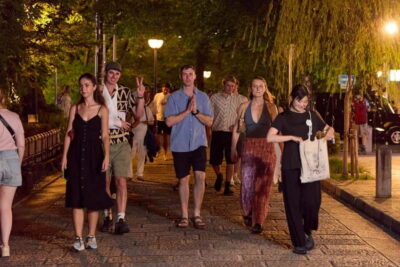
Gion Geisha District Walking Tour – Stories of Geisha
Read our review →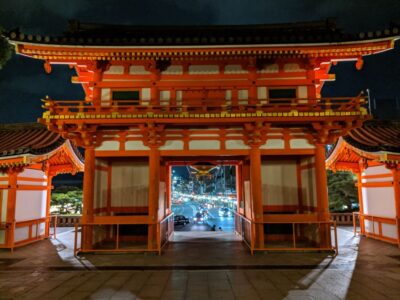
Best of Kyoto: Gion, Geisha, Pagodas & Cobblestones
Read our review →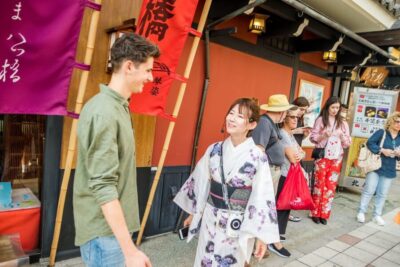
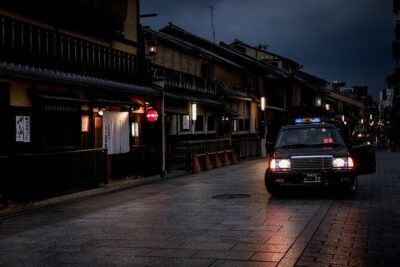
Kyoto Gion Geisha District Walking Tour – The Stories of Geisha
Read our review →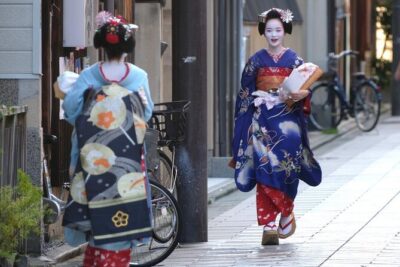
Kyoto Gion: 2-Hour Geisha Culture & History Walking Tour
Read our review →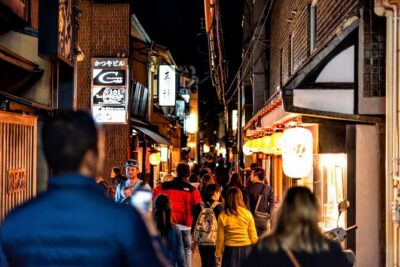
Kyoto Gion Night Walk & Geisha District Guided Tour
Read our review →Browse the lists this tour appears in