
Reviewed · GION DISTRICT TOURS
Kyoto Gion Cultural Walk & Geisha Show with Dining Options
The real appeal here is the chance to meet an apprentice maiko after walking through Gion’s streets and learning how the district works. The 45-minute meeting includes tea, conversation, questions, and one or two dances, with guides such as Ken, Kenta, and Akari helping explain and translate.
I like the small group, limited to nine people, and the way the walk connects Kabuki, Shinto, Zen, and geiko culture rather than treating the maiko appearance as a stand-alone show. The main caution is the dining option: some diners found the meal excellent, while one paid extra and left hungry.
Key points to know
- A real Gion introduction: Walk from the Izumo-no-Okuni statue through Gion Shirakawa, Hanamikoji Street, and nearby temple grounds.
- A 45-minute maiko meeting: Expect tea, a dance performance, and time for questions through your guide.
- Small-group format: The maximum is nine people, which makes it easier to ask questions and stay with the guide.
- Strong guide service: Ken, Kenta, and Akari are praised for clear explanations, translation, kindness, and practical help.
- Dining requires a careful choice: Food is included with some options, but the amount and value have not been consistent for everyone.
- Plan for walking: The route includes several stops and is not recommended if you have leg problems.
Why the maiko meeting is the heart of the evening
Kyoto’s geiko and maiko world can seem sealed off from ordinary sightseeing. You may spot a woman in elaborate dress hurrying along Hanamikoji Street, but that glimpse tells you very little about her training, work, or place in Kyoto’s traditional arts.
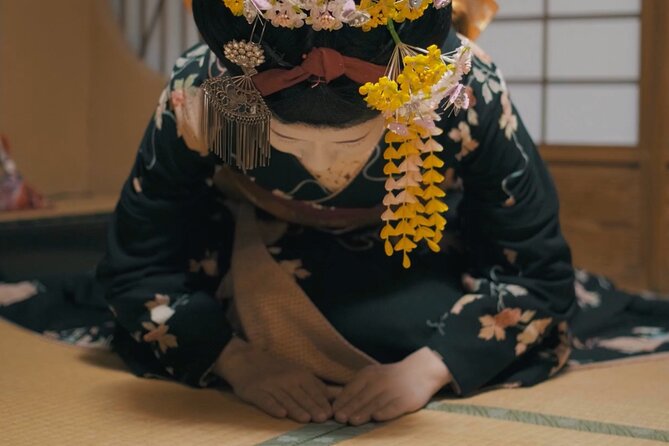
This experience gives you a better setting for understanding it. First, you walk through Gion with a guide. Then you sit down with an apprentice geisha, more accurately called a maiko, for tea, conversation, and a short performance.
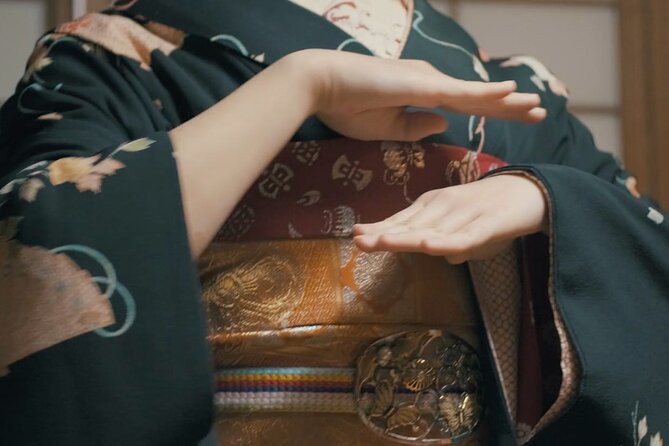
The format matters. You are not simply watching a stage show from a distance. You can ask questions, and the guide helps with translation and context. The maiko performs one or two dances, depending on the arrangement, and the meeting lasts about 45 minutes.
The strongest part is the connection between the streets and the meeting. By the time you sit down, you have already seen the district’s theaters, shrines, traditional lanes, and temple grounds. The performance feels less like a decorative add-on and more like the next chapter of the walk.
The quality of the evening also depends on your guide. Ken and Kenta are praised for explaining customs with care and for translating during the meeting. Akari is described as warm, attentive, and willing to help with questions, photographs, and practical matters. Guides have even supplied cold drinks, cooling towels, umbrellas, or rain ponchos when conditions changed.
More ways to walk Gion:
- Kyoto Geisha Walking Tour: Gion District & Hidden Gems
★ 4.7 · 3,273 reviews - Kyoto: Gion Magical Night Walking Tour with Geisha Trivia
★ 4.9 · 2,393 reviews - Kyoto: Gion Geisha District Walking Tour – Stories of Geisha
★ 4.7 · 2,187 reviews
Starting at the Izumo-no-Okuni statue
The meeting point is the statue of Izumo-no-Okuni in Kawabatacho, near the Kamogawa River. This is a fitting place to begin because Okuni is linked to the early development of Kabuki.
Your guide explains that Kabuki began with women, even though modern Kabuki is performed by men. That detail gives you an early lesson in how Japanese theater has changed over time and how performance traditions can take unexpected paths.
This stop lasts about 15 minutes and costs nothing to enter. It is more of a short orientation than a major sightseeing stop, but it gives the tour a useful starting point. You begin with theater and performance before moving toward the geiko and maiko traditions of Gion.
The statue is also easy to reach by public transportation. Still, allow time to find it, especially if this is your first evening in Kyoto. The tour is guided from here, so arriving late could mean trying to catch up in a crowded part of town.
Minamiza Theater and the link between Kabuki and Gion
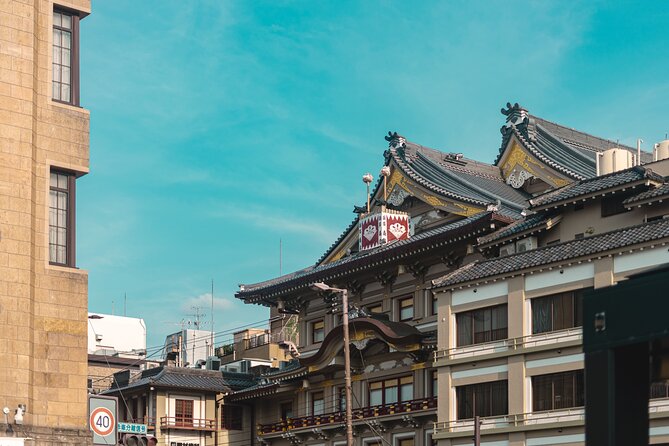
The next stop is Minamiza Theater, one of Kyoto’s most important Kabuki venues. The visit is brief, about 10 minutes, and focuses on the building’s architecture and the theater’s role in Kyoto.
You also hear about the connection between Kabuki and modern technology, including the use of virtual reality with Kabuki. That makes this more than a quick photograph outside a theater. The guide uses the building to show how old performance forms continue to find new audiences.
I like this part because it puts geiko culture in a wider setting. Gion is not only about ornate clothing or mysterious customs. It is part of a working arts district linked to theater, music, dance, food, and formal hospitality.
There is no admission charge for this stop. The tour does not appear to include a Kabuki performance, so keep your expectations focused on architecture, background, and the relationship between the theater and the surrounding district.
Gion Shirakawa, the prettiest stretch of the walk
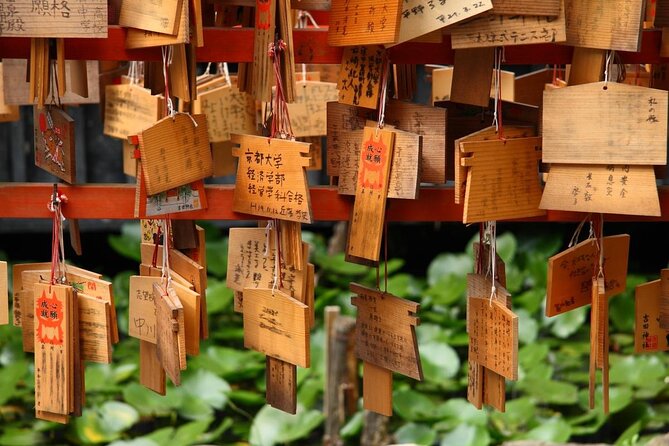
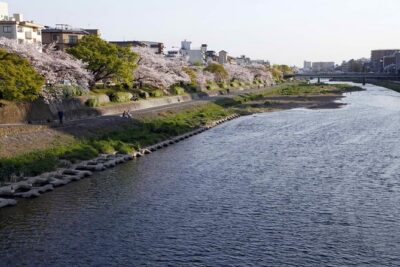
Gion Shirakawa is one of the most scenic sections of the route. Old-style buildings line the riverside, and the area has the traditional appearance many people picture when they think of Kyoto.
The stop lasts about 15 minutes. Your guide explains Gion’s role as a geiko district and sorts out some of the terms that are often mixed together. In Kyoto, geiko is the local term for a professional entertainer often called a geisha elsewhere, while maiko are apprentices.
This is also where good behavior matters. Gion is a residential and working district, not a theme park. You should listen to the guide’s instructions about photographs and avoid blocking lanes or approaching performers who are moving between appointments.
You might see a geiko or maiko passing by, but the tour does not promise a street sighting. The scheduled meeting later in the experience is the dependable opportunity to meet an apprentice.
More geisha and maiko evenings in Kyoto:
- Best of Kyoto: Gion, Geisha, Pagodas & Cobblestones
★ 4.9 · 2,058 reviews - Night Walk in Gion: Kyoto’s Geisha District
★ 4.5 · 2,003 reviews - Kyoto Gion Geisha District Walking Tour – The Stories of Geisha
★ 5.0 · 1,441 reviews - Kyoto Gion: 2-Hour Geisha Culture & History Walking Tour
★ 5.0 · 1,186 reviews
Tatsumi-jinja and a short lesson in Shinto
At Tatsumi-jinja, also called Tatsumi Dai-myojin, the focus shifts from theater to religion. Your guide introduces Shinto, Japan’s native religious tradition, and explains the idea that the country has eight million gods.
The phrase is useful as a simple way to understand the many spirits and sacred presences found in Japanese belief. It also helps you read the small shrine itself. Instead of passing it as a pretty roadside structure, you get an explanation of why shrines appear throughout neighborhoods and how people approach them.
The stop lasts about 15 minutes and has no admission fee. It is not a large shrine complex, so the value comes mainly from the explanation. If you prefer nonstop famous sights, this may feel modest. If you want cultural context, it is a worthwhile pause.
Hanamikoji Street and the chance of a geiko sighting
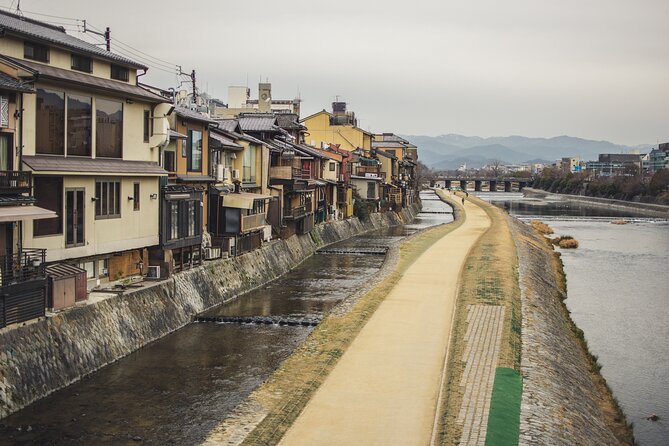
Hanamikoji Street is Gion’s main thoroughfare and one of the best-known places to look for traditional architecture. The tour spends about 10 minutes here, with the guide pointing out the street’s connection to the geiko world.
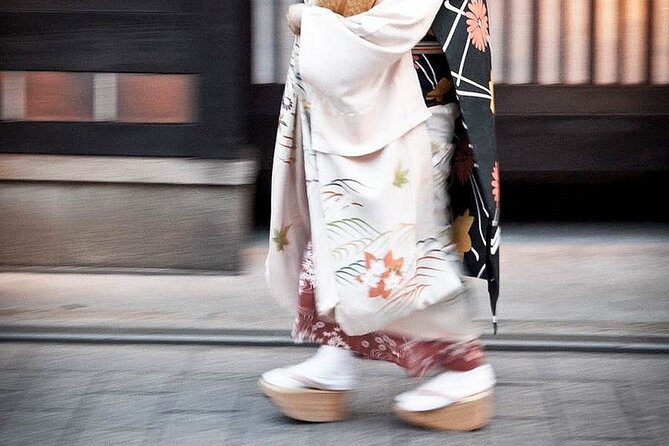
You might see a geiko or maiko walking between appointments, but there is no guarantee. That uncertainty is part of the reality. These women are working, and a respectful glimpse from a distance is appropriate. The tour should not be treated as a hunt for photographs.
This is where the guide’s role becomes especially useful. Without context, you may see a woman in formal clothing and assume she is heading to a public performance. Your guide can explain the difference between a professional geiko and an apprentice maiko, along with the careful training and customs behind the appearance.
The route is not designed for a long stop at every lane. Instead, it gives you a clear introduction before the more personal meeting later.
Kennin-ji Temple and Zen in a working district
Kennin-ji is a Zen Buddhist temple founded in 1202. Admission is not included, so check what your chosen booking option covers before setting out. The planned stop lasts about 15 minutes.
The temple adds a useful contrast to the rest of the walk. Gion’s streets are linked to entertainment and hospitality, while Kennin-ji offers a place to discuss Zen Buddhism and its influence on Japanese life.
Because the stop is short, you should not expect a full temple visit. It works better as a guided introduction than as a detailed examination of the grounds. If Kennin-ji is a personal priority, you may want to return at another time with a separate admission and more time.
The inclusion of a temple also makes the route feel more rounded. You see that Gion is not simply a district of restaurants and traditional performers. It sits within an older religious and urban setting.
Zenkyo-an and the boar guardians
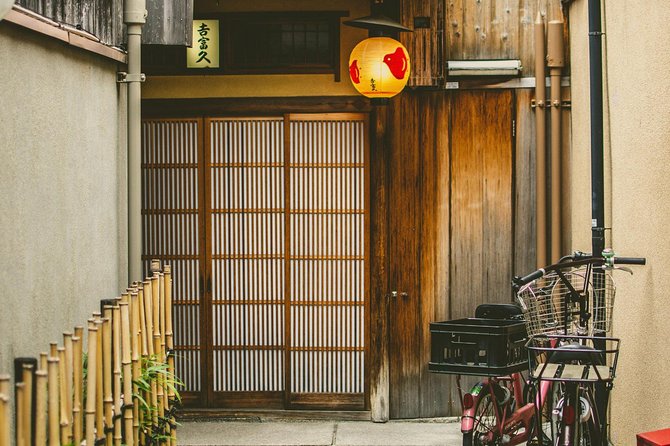
The final listed stop is Zenkyo-an, a subtemple of Kennin-ji also known as Marishitendo. It is associated with boar guardians, luck, and safety, and the planned visit lasts about 15 minutes.
This is the sort of small cultural detail that can disappear on a self-guided walk. A guide can point out why the boar imagery matters and connect the temple to local beliefs.
Admission is not included here. Since the route includes several short stops, you should think of the walk as a moving lesson rather than a series of long visits inside major monuments. The experience is strongest if you enjoy hearing the story behind places that might otherwise take only a minute of your attention.
The 45-minute tea, dance, and question session
After roughly 1.5 to 2 hours of walking and explanation, the experience turns indoors for the maiko meeting and show. This portion lasts about 45 minutes.
The apprentice maiko serves as the evening’s central cultural encounter. You can ask questions about her work and traditions, watch one or two dances, and enjoy tea. Your guide helps bridge the language gap and explains what you are seeing.
The dance is brief, so do not book this expecting a full theater production. Its value lies in the setting and the chance to ask questions. The meeting gives you a clearer sense of the person behind the formal appearance, while still respecting the boundaries of her work.
Photography rules may apply. One important practical point is to listen carefully to the guide before taking pictures or sharing them. The experience is intended to be respectful, and not every image or detail is necessarily meant for social media.
The guides receive especially strong praise for this portion. Ken and Kenta are noted for translating and helping the conversation flow. Akari is described as making solo participants feel included and assisting with photographs. That kind of personal attention matters in a small cultural meeting, where a quiet guest could otherwise miss the chance to ask anything.
Dining options and the question of value
The listed price is $121.37 per person, but dining choices affect the value. Some versions include a meal, while the experience is also presented with different dining options. Read the exact option carefully before paying.
Food quality has been described as very good, with family-style service, several choices, and attention to dietary restrictions. Other feedback points to small portions and poor value for the added meal cost. Those two experiences can both be true if the menu and dining package differ.
My advice is simple: choose the meal option for the social setting and convenience, not because you expect a large dinner. If you have a big appetite, check what is included or eat a light snack beforehand. The cultural meeting is the main reason to book this experience. The food should be viewed as part of the evening, not its sole justification.
The meal can still add something important. Sitting together gives you more time to ask questions and lets the guide continue explaining customs in a relaxed setting. If the food is family-style, you may also find it easier to manage dietary needs, but you should raise those needs when booking.
At this price, the tour offers reasonable value if you would otherwise pay separately for a guided Gion walk and seek out a cultural performance. It is less attractive if you mainly want a full meal or a long dance show.
Guide quality and the small-group advantage
The maximum group size is nine. That is a strong feature for this kind of experience because the topic invites questions and the streets of Gion are easier to manage with a compact group.
Ken, Kenta, and Akari are the guides most closely associated with the experience. Their strengths include explaining terminology, correcting common misconceptions, translating during the maiko meeting, and helping with practical needs. Several descriptions also highlight patience and a clear affection for Kyoto’s traditions.
The small group does not guarantee a private meeting. It does mean that you are more likely to hear the guide and have a chance to ask something. Solo participants should feel comfortable booking, since Akari in particular is noted for making people feel included.
The tour is also near public transportation. The route is about three hours, with considerable walking and several outdoor stops. It is not recommended for people with leg problems, and comfortable shoes are a sensible choice.
Weather matters. If poor weather causes cancellation, you can receive a different date or a full refund. Guides have handled sudden heat and rain with cold towels, drinks, umbrellas, and ponchos, but you should still dress for the forecast.
Who should book this Gion experience
I would recommend it to first-time Kyoto visitors who want a clear introduction to Gion without trying to decode the district alone. It also suits anyone curious about how geiko culture connects with Kabuki, Shinto, Zen, and traditional hospitality.
Families with older children may appreciate the question session, provided everyone understands that the maiko is a working performer and that respectful behavior is expected. Solo visitors can also fit comfortably into the small group.
I would hesitate if your main goal is a filling dinner, a long stage performance, or a completely flexible evening. The walk has a set route, the dance portion is short, and the food option may not satisfy a large appetite.
The tour is also not ideal for anyone who cannot comfortably walk for 1.5 to 2 hours. Kennin-ji and Zenkyo-an may involve admission costs, so allow for those if they are part of your selected plan.
Should you book it?
Book this experience if you want context before spectacle. The walk explains Gion’s streets, theaters, shrines, and temples, then the maiko meeting puts those ideas into a human setting.
The strongest value comes from the guide and the conversation, not from the meal alone. Choose your dining option carefully, prepare for walking, and treat the performance as an intimate cultural presentation rather than a full evening of theater.
If that sounds like your kind of Kyoto night, the combination is hard to arrange on your own. If you only want photographs or a large dinner, spend your money elsewhere.
FAQ
How long does the Kyoto Gion Cultural Walk and Geisha Show last?
The experience lasts approximately three hours. About 1.5 to 2 hours are spent walking and learning about Gion, followed by a 45-minute maiko meeting and show.
What is included in the experience?
The experience includes guided sightseeing in Gion and a 45-minute meeting with an apprentice maiko. The meeting includes tea, questions, and one or two dances.
Is dinner included?
Dining depends on the option selected when booking. Some options include a meal, while the tour is also offered with different dining choices. Check the exact package before purchase.
How many people can join the tour?
The maximum group size is nine people.
Where does the tour start?
The tour starts at the Statue of Izumo-no-Okuni in Kawabatacho, Higashiyama Ward, Kyoto.
Does the tour visit Kennin-ji Temple?
Kennin-ji is included as a stop on the walking route. Admission is not included.
Is admission to Zenkyo-an included?
Admission to Zenkyo-an is not included.
Is the tour suitable for people with leg problems?
The experience is not recommended for people with leg problems because it includes an extended walking route through Gion.
Can I cancel for a refund?
You can cancel at least 24 hours before the start time for a full refund. Changes or cancellations made less than 24 hours before the start time are not accepted for a refund. If poor weather or an insufficient minimum group causes cancellation, you are offered another date or a full refund.
More Dinner Experiences in Kyoto
- Kyoto Gion Cultural Walk & Geisha Show with Dining Options
★ 5.0 · 518 reviews - Dinner with Maiko in a Traditional Kyoto Style Restaurant Tour
★ 5.0 · 175 reviews - Kyoto: Geisha Dinner & Gion Cultural Walk
★ 5.0 · 73 reviews - Private Dinner with a Geisha
★ 5.0 · 65 reviews
More Walking Tours in Kyoto
- Nishiki Market Brunch Walking Tour (7 Tastings + Brunch)
★ 5.0 · 1,355 reviews - Kyoto Arashiyama Walking Tour: Bamboo, Monkeys, Gardens & Secrets
★ 5.0 · 1,216 reviews - Kyoto: Izakaya Bars Guided Walking Tour
★ 4.9 · 815 reviews - Kyoto Gion Night Walk & Geisha District Guided Tour
★ 5.0 · 786 reviews
Newest Kyoto experiences on the site
- Treasures of Kyoto: Gion & historical Walking Tour★ 5.0 · 6 reviews
- Whisk Your Own Matcha: A Zen Matcha Experience at Temple★ 3.6 · 7 reviews
- Kyoto tea town for matcha lovers★ 5.0 · 16 reviews
- Uji: Private immersion into Kyoto’s tea and reglious culture★ 5.0 · 17 reviews
- Kyoto Matcha Green Tea Tour★ 4.5 · 23 reviews
- Uji and Wazuka Matcha Farm Half Day Private Guided Tour★ 5.0 · 21 reviews
- Utilising upcycled Matcha! Creating matcha incense (Uji, Kyoto)★ 5.0 · 6 reviews
- Sacred Temple Yoga Experience in Japan★ 5.0 · 3 reviews
Gion District Tours, compared.
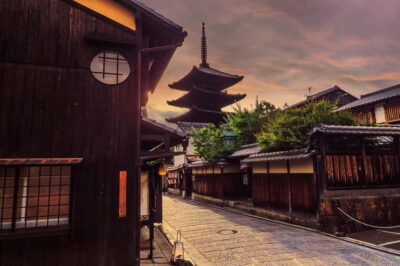
Kyoto Geisha Walking Tour: Gion District & Hidden Gems
Read our review →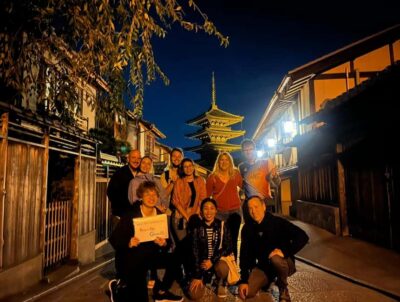
Gion Magical Night Walking Tour with Geisha Trivia
Read our review →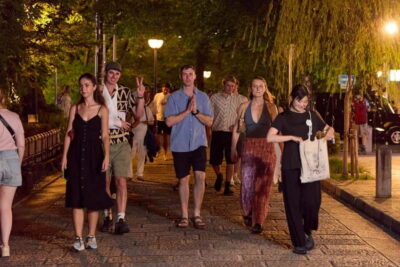
Gion Geisha District Walking Tour – Stories of Geisha
Read our review →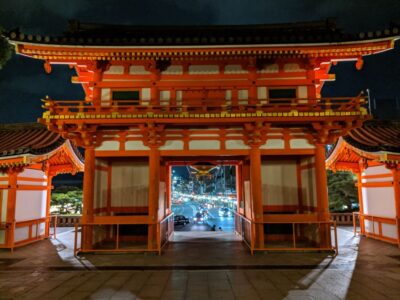
Best of Kyoto: Gion, Geisha, Pagodas & Cobblestones
Read our review →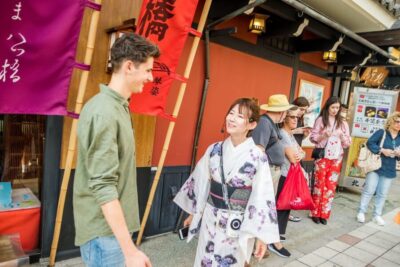
Kyoto Night Foodie Tour in Gion (9+ dishes + 6 Sake tastings)
Read our review →
Kyoto Gion Geisha District Walking Tour – The Stories of Geisha
Read our review →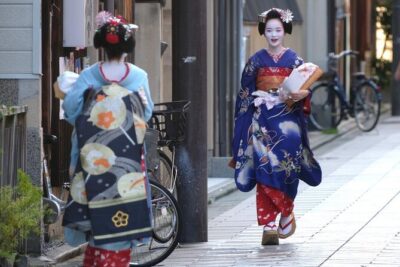
Kyoto Gion: 2-Hour Geisha Culture & History Walking Tour
Read our review →Browse the lists this tour appears in