
Reviewed · FUSHIMI INARI TOURS
Kyoto Guided Walking Tour: Secret Zen Garden and Fushimi Inari
The best part of this Kyoto tour is the route between the famous sights. You begin near Tofukuji and its quiet temple grounds, then reach Komyo-in’s Zen garden before approaching the famous torii gates of Fushimi Inari from a less crowded path. It gives you both Kyoto’s calm side and its postcard icon in one morning.
I like the small group of no more than eight and the way the route mixes scenery with useful cultural explanation. I also like the flexible pace. Guides including Mika, Kenta, and Naomi have been praised for clear English, thoughtful answers, and good crowd avoidance.
The catch is the walking. This is not a gentle stroll. You will handle uphill paths, stairs, and a moderate hike, so good shoes and a reasonable level of fitness matter. Rain will not stop the tour.
Key points at a glance
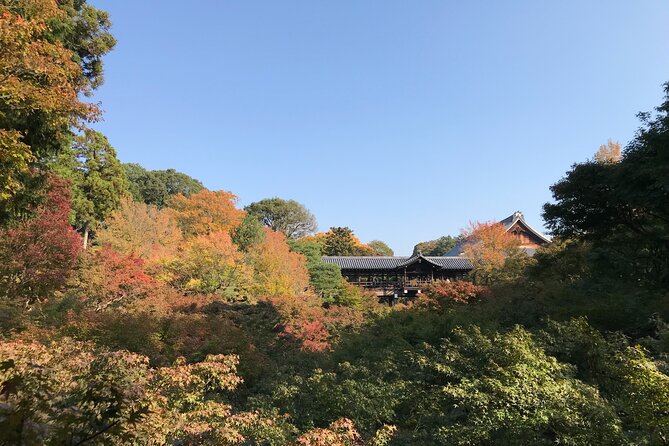
- A quiet start near Tofukuji: Begin among temple grounds and maple-filled views before reaching Fushimi Inari.
- Komyo-in’s Zen garden: Spend time at a lesser-known sub-temple where the focus is stillness, design, and meditation.
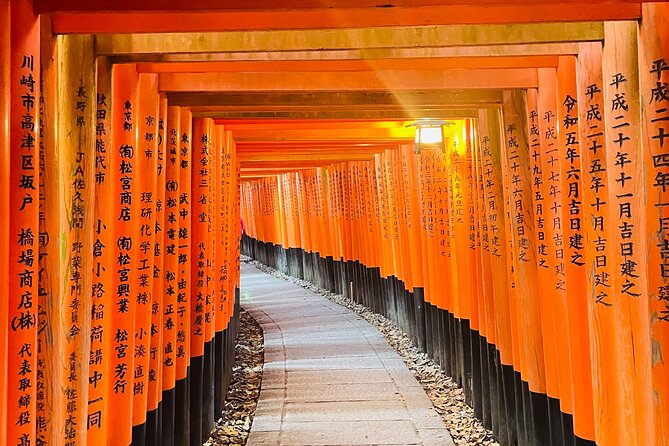
- A less crowded approach to Fushimi Inari: Reach the famous torii gates by way of smaller shrines and side paths.
- Yotsuji viewpoint: Pause at a scenic point partway up the mountain for a broad view over Kyoto.
- Small-group guidance: With a maximum of eight people, the guide can answer questions and adjust the pace.
- A four-hour walking commitment: Comfortable shoes, water, and a willingness to climb are essential.
Why this route works so well in Kyoto
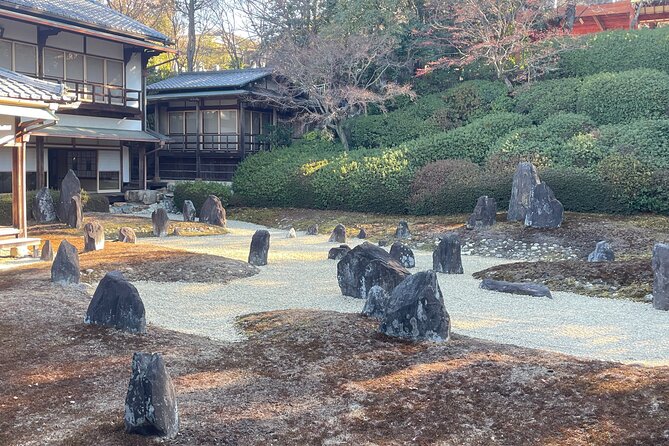
Kyoto has an awkward problem for first-time visitors. Its famous sights are spread across the city, and the most rewarding places are often reached by side streets, temple lanes, or uphill paths that are easy to miss. This four-hour walk solves part of that problem without turning the morning into a race between major attractions.
The route links the Tofukuji area with Fushimi Inari Shrine. Those two places are close enough to combine on foot, but they feel different. Tofukuji offers temple architecture, gardens, and quiet wooded views. Fushimi Inari brings thousands of orange torii gates, fox statues, worship halls, and a steady climb into the hills.
I especially like the order. You start with a calmer introduction to Zen thought and temple design. By the time you reach Fushimi Inari, you have some context for how Japanese religious places work. The tour is not only a photo stop at a famous shrine. It gives you a little help in understanding what you are looking at.
The small-group format is important here. A maximum of eight people makes it easier to hear the guide in temple courtyards and on narrow paths. It also allows the guide to slow down when you want more time in the garden or keep moving when a busy section becomes less pleasant.
More ways to walk the Fushimi Inari gates:
- Kyoto: Fushimi Inari, Kinkakuji, Bamboo Grove 1 Day Bus Tour
★ 4.8 · 4,316 reviews - Fushimi Inari Hidden Hiking Tour (Private Option Available)
★ 5.0 · 1,750 reviews - Osaka/Kyoto:Kinkakuji,Arashiyama,FushimiInariShrine,NaraPark
★ 4.1 · 1,596 reviews
Starting at Tofukuji and Gaun-kyo Bridge
The meeting point is outside FamilyMart near Tofukuji at 9 a.m. From there, the route moves toward Gaun-kyo Bridge, a wooden crossing with a view toward Tsutenkyo Bridge and the maple trees below.
The bridge stop is brief, about five minutes, but it gives you an immediate sense of the area. In autumn, the maple view is the main event. In other seasons, the wooded valley and temple setting still provide a pleasant opening to the morning.
The short stop also tells you something about the tour’s rhythm. This is not a long photography session at every point. Some places receive a quick look, while the garden and religious sites get more explanation and time.
The route then reaches Tofukuji, one of Kyoto’s major Zen temples, founded in the 13th century. Its size and age give the guide plenty to explain, from the role of Zen temples to the relationship between buildings, gardens, bridges, and surrounding trees.
You should not expect a full temple complex tour with unlimited free time. The strength here is having someone point out what matters as you move through the grounds. A guide such as Mika may use notes or simple illustrations to make the history easier to follow. That is useful when a large temple has more buildings and customs than you can absorb on your own.
The calm pause at Komyo-in Temple
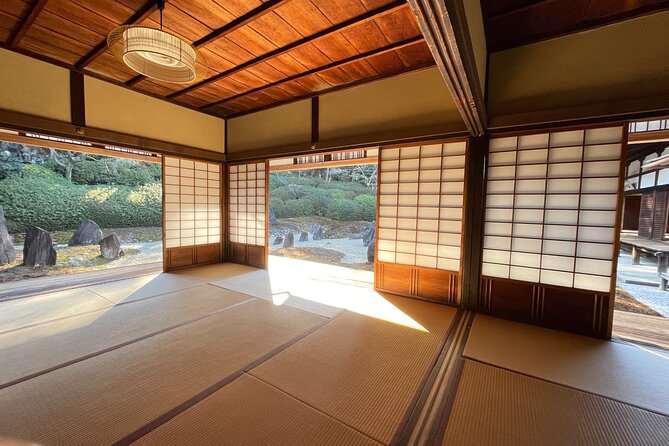
Komyo-in is the heart of the quieter part of the morning. This sub-temple is known for its Zen garden and peaceful setting, yet it receives less attention than Kyoto’s biggest names.
You spend about 25 minutes here. That is enough time to sit, look closely at the garden, and listen to an explanation of Zen ideas without feeling hurried. The point is not to race through another temple gate. It is to notice how stones, moss, open space, and carefully framed views can suggest movement and stillness at the same time.
This is also the tour’s best answer to the crowds at Fushimi Inari. The garden offers a slower experience before the more popular shrine. If you enjoy design, photography, or quiet religious spaces, this stop may be more rewarding than the headline attraction.
The word secret should be treated with some care. Komyo-in is not an unknown private site, and the tour does not promise a place entirely free of other people. Its appeal is that it is less prominent and usually calmer than Kyoto’s most famous temple stops.
A guide adds value here because a Zen garden can be easy to admire without understanding its purpose. You can ask about meditation, symbolism, and temple practice instead of simply taking a photograph and leaving.
Small shrines and the path toward Fushimi Inari
After Komyo-in, the route turns toward smaller spiritual sites, including Araki Shrine. This shrine is associated with prayers for love, strong relationships, and general well-being.
You spend about 10 minutes there. It is a modest stop, but it adds a personal side to the morning. Large temples can feel formal and impressive. A smaller shrine shows how religious places also serve everyday hopes and concerns.
The guide can help you understand the difference between a Buddhist temple and a Shinto shrine, along with the customs connected to each. That context matters, especially if this is your first visit to Japan and you are unsure when to bow, where to pray, or how shrine spaces are used.
The route then continues toward the Fushimi Inari trail and the Yotsuji viewpoint. This is where the walking becomes more demanding. You will be climbing, and the path can feel more strenuous than the early temple grounds.
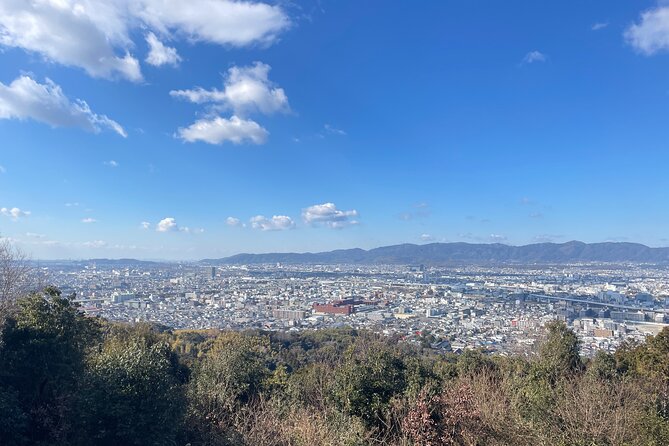
Yotsuji, or Four-Way Crossroad, is a useful rest point. You can stop for about 20 minutes and look across Kyoto from the hillside. The city view gives you a reason to pause, while the elevation reminds you that Fushimi Inari is not just a row of gates near the station. The shrine extends up Mount Inari, with paths that continue far beyond the busiest entrance area.
The viewpoint is one of the tour’s better practical choices. You get a scenic reward without needing to complete the full mountain route. Still, you should be ready for an uphill walk. Anyone with mobility concerns should consider the physical demands before booking.
More zen sittings and garden visits in Kyoto:
- Kyoto Zen Meditation & Garden Tour at a Zen Temple with Lunch
★ 5.0 · 441 reviews - Kyoto: Zen Experience in a Hidden Temple
★ 5.0 · 437 reviews - Kyoto: Tea Ceremony Meditation – Make Matcha with Tea Master
★ 4.8 · 406 reviews - Kyoto: Zen Meditation at a Private Temple with a Monk
★ 5.0 · 202 reviews
Kumataka Shrine and the quieter side of Fushimi Inari
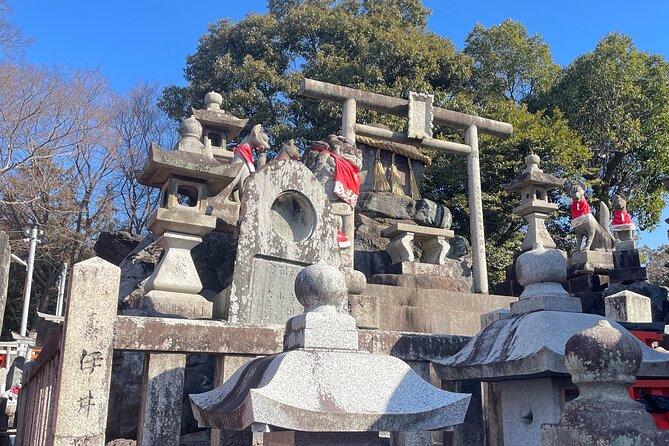
Kumataka Shrine is a secluded stop away from the main torii route. The setting is described as spiritually powerful and quiet, offering a different feel from the better-known parts of Fushimi Inari.
You spend about 15 minutes here. The value comes from contrast. The Senbon Torii gates are striking, but their fame brings people. Kumataka gives you a pause in a smaller setting, where the focus is less on the iconic image and more on the atmosphere of the mountain shrines.
This part of the route is also where a local guide earns the fee. It is easy to visit the main Fushimi Inari path alone. It is much harder to know which side routes and smaller shrines are worth your time. Guides such as Mika have been praised for choosing less crowded paths and explaining the historical background in clear English.
You should not expect every section to be silent. Fushimi Inari is one of Kyoto’s most popular sites. The benefit is that the tour reaches the famous areas by a route that can feel more peaceful before you enter the busiest stretches.
The torii gates, Okusha, and the main sanctuary
The Okusha Worship Center is another short stop, about 10 minutes. This part of the shrine complex is connected with sacred ofuda, omamori charms, and goshuin stamps.
If you want a goshuin, this is the kind of place where you can ask the guide how the process works. An ofuda is a sacred talisman, while an omamori is a protective charm. You do not need to buy anything, but knowing what these items mean makes the shrine shop and worship areas easier to understand.
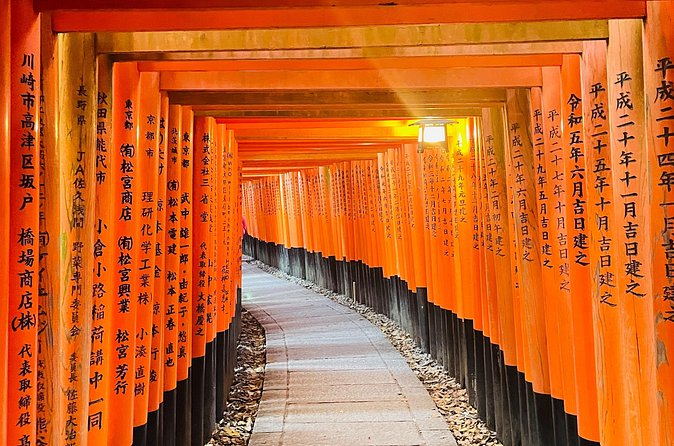
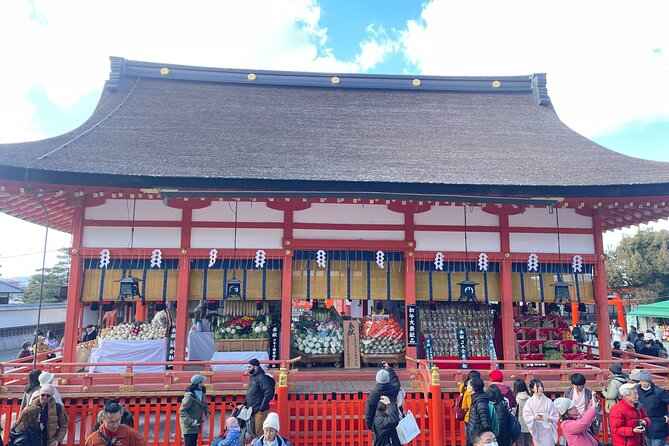
Next comes Senbon Torii, the famous tunnel of orange gates. The name means thousand torii, though the full Fushimi Inari complex contains many more gates than the name suggests. Each gate has been donated by a person, family, or business, and many carry writing on the back.
This is the tour’s most recognizable scene, and you will have time to take photographs. The practical advantage of arriving with a guide is knowing how to move through the space respectfully. The torii path is a place of worship, not only a backdrop, so you should avoid blocking the way or treating every gate as a private photo set.
The final stop is Fushimi Inari Taisha’s main sanctuary, where people come to worship. The main building can be overshadowed by the torii gates and fox statues, but it gives the tour a proper ending. You see the central religious space rather than leaving after the most famous photograph.
The tour ends at the Outer Oratory in Fushimi Inari Shrine. That is convenient if you want to continue exploring the shrine, find lunch nearby, or return by public transportation. It does not return you to the original meeting point, so plan the rest of your day from Fushimi.
What the guides add to the morning
The guides are a major part of the value. Mika is praised for using clear notes, explaining history in an easy way, and adjusting the pace. Kenta is noted for walking at the group’s speed, which matters on the uphill portions. Naomi is described as informative and ready to answer questions.
Those details point to the tour’s strongest feature: personal explanation rather than a fixed speech. If you want to ask why a garden is arranged in a certain way, what a shrine charm means, or how Zen shaped the temple grounds, a small group gives you room to do so.
The route can also change in feel depending on the guide and the group. You may spend more time at Komyo-in, move more quickly through a crowded stretch, or pause longer at the viewpoint. That flexibility is useful, but it means the exact balance of stops may not be identical every morning.
The tour is conducted in English according to the available feedback, but the supplied details do not specify a formal language guarantee beyond the comments about the guides. If language support is a deciding factor, confirm it when booking.
Is $78.83 a fair price?
At $78.83 per person, this is not the cheapest way to see Fushimi Inari. You can enter the shrine freely and walk to the main torii gates without paying an admission charge. Tofukuji and the smaller shrine stops also do not require a large entry fee, while Komyo-in admission is included.
You are paying mainly for the guide, route planning, cultural explanation, and small-group attention. That can be good value if you have limited time, dislike navigating unfamiliar temple lanes, or want to understand what you are seeing rather than collect photographs.
The value is strongest for a first Kyoto visit. You get a planned half-day with a clear start and finish, plus access to quieter places that are harder to identify on your own. It is less compelling if you already know Tofukuji and Fushimi Inari well, prefer to explore at your own speed, or do not want to climb.
The tour is often booked about 37 days ahead, so an early reservation makes sense during popular travel periods. Free cancellation is available until 24 hours before the start time. Changes or cancellations inside that window are not accepted for a refund.
Who should book this walking tour?
I would choose this tour for a first-time Kyoto visitor who wants a useful introduction to Zen, shrine customs, and Fushimi Inari in one morning. It also suits photographers and nature lovers who want maple views, a garden, a city panorama, and torii gates without spending the entire day on one mountain.
Couples may appreciate Araki Shrine’s focus on love and relationships. Families with older children could enjoy the mix of short stops and visual highlights, provided everyone can manage the hills and stairs.
I would think twice if you have limited walking ability, dislike uneven paths, or need a slow, fully accessible route. The tour takes place in rain or shine, and comfortable walking shoes are not optional advice here.
FAQ
How long does the Kyoto walking tour last?
The tour lasts approximately four hours.
What time does the tour begin?
The tour starts at 9 a.m.
Where does the tour meet?
The meeting point is FamilyMart Nakai Tofukuji, at 12-chōme-232 Honmachi in Kyoto’s Higashiyama Ward.
Where does the tour end?
The tour ends at the Outer Oratory at Fushimi Inari Shrine.
How many people can join the tour?
The maximum group size is eight people.
Is the tour physically demanding?
A moderate amount of walking and hiking is involved, including uphill sections. Comfortable walking shoes are recommended, and a moderate level of physical fitness is required.
Does the tour operate in bad weather?
Yes. The tour takes place rain or shine.
Can I cancel for a full refund?
Yes, if you cancel at least 24 hours before the local start time. Cancellations or changes made less than 24 hours before the tour are not refunded or accepted.
Should you book it?
Book this tour if you want Kyoto explained as you walk, not simply photographed as you pass. The combination of Tofukuji, Komyo-in, smaller shrines, Yotsuji viewpoint, and Fushimi Inari gives you a fuller morning than a direct visit to the torii gates.
Skip it if you want a flat route, complete independence, or a long visit at one temple. For most first-time visitors who can handle the climb, the small group, flexible pace, and quieter approach make the $78.83 worthwhile.
More Walking Tours in Kyoto
- Kyoto Geisha Walking Tour: Gion District & Hidden Gems
★ 4.7 · 3,273 reviews - Kyoto: Gion Magical Night Walking Tour with Geisha Trivia
★ 4.9 · 2,393 reviews - Kyoto: Gion Geisha District Walking Tour – Stories of Geisha
★ 4.7 · 2,187 reviews - Night Walk in Gion: Kyoto’s Geisha District
★ 4.5 · 2,003 reviews
Newest Kyoto experiences on the site
- Treasures of Kyoto: Gion & historical Walking Tour★ 5.0 · 6 reviews
- Whisk Your Own Matcha: A Zen Matcha Experience at Temple★ 3.6 · 7 reviews
- Kyoto tea town for matcha lovers★ 5.0 · 16 reviews
- Uji: Private immersion into Kyoto’s tea and reglious culture★ 5.0 · 17 reviews
- Kyoto Matcha Green Tea Tour★ 4.5 · 23 reviews
- Uji and Wazuka Matcha Farm Half Day Private Guided Tour★ 5.0 · 21 reviews
- Utilising upcycled Matcha! Creating matcha incense (Uji, Kyoto)★ 5.0 · 6 reviews
- Sacred Temple Yoga Experience in Japan★ 5.0 · 3 reviews
Fushimi Inari Tours, compared.

Fushimi Inari, Kinkakuji, Bamboo Grove 1 Day Bus Tour
Read our review →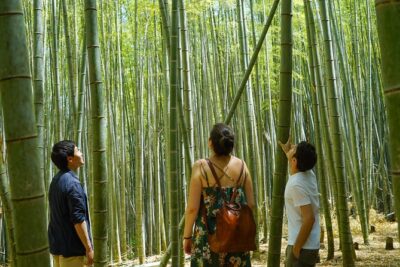
Fushimi Inari Hidden Hiking Tour (Private Option Available)
Read our review →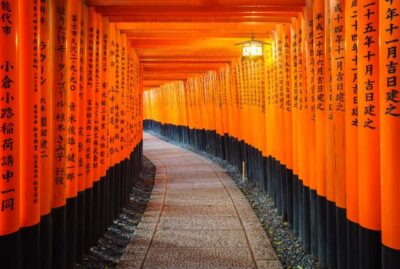
Kinkakuji,Arashiyama,FushimiInariShrine,NaraPark
Read our review →
Nara, Fushimi Inari Taisha, Arashiyama Bus Tour
Read our review →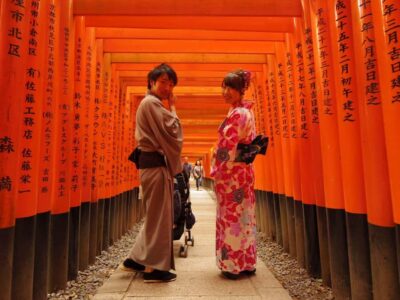
Arashiyama, Nara & Fushimi Inari Shrine w/Lunch
Read our review →
Nijo Castle, Kiyomizu & Fushimi Inari Guided Tour
Read our review →
Nijo, Kinkaku-ji, Arashiyama, Kiyomizu & Fushimi Inari
Read our review →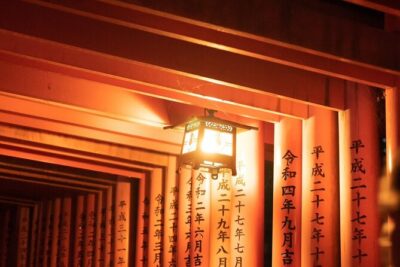
Browse the lists this tour appears in