
Reviewed · FUSHIMI INARI TOURS
Gion and Fushimi Inari Shrine Kyoto Highlights with Government-Licensed Guide
Kyoto’s famous geisha districts are best understood on foot, and this small-group tour takes you through lanes that cars cannot reach. You begin at Tatsumi Daimyojin Shrine, then explore Gion, Pontocho, and Miyagawacho before visiting major sights such as Fushimi Inari-taisha and Kiyomizu-dera.
I like the maximum group size of 10, which makes it easier to hear the guide and ask questions. I also like the focus on geiko and maiko customs, including the training path that turns a young apprentice into a professional entertainer. The main drawback is that the title and route promise a lot for six hours, while transport between widely separated sights is not included or clearly described.
Key points to know before booking
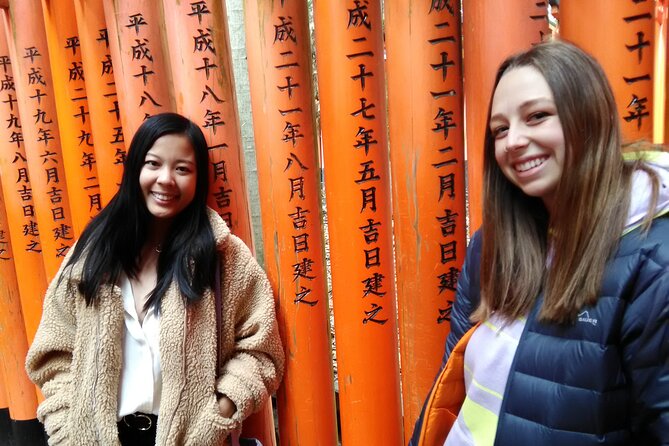
- Fushimi Inari comes with an hour for the vermilion torii gates, but the full mountain trail is far longer than that.
- Gion’s narrow lanes are the heart of the walk, with stops around Shirakawa, Pontocho, and Miyagawacho.
- Guide Mari has earned special praise for explaining the difference between geiko and maiko in a clear, friendly way.
- Kiyomizu-dera and Kennin-ji admission fees are extra, so budget beyond the tour price.
- The tour begins and ends at Tatsumi Daimyojin Shrine, not at your hotel, and pickup is on foot.
- A sighting of a geiko or maiko is not guaranteed, so book this for cultural context, not a promised encounter.
Gion after dark: what this Kyoto walk is really about
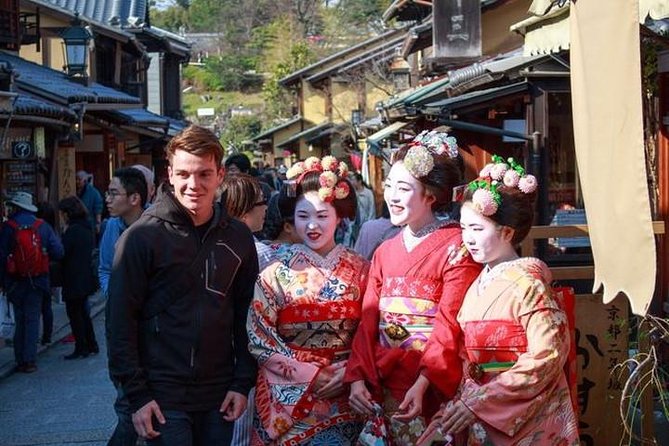
The most useful part of this experience is not simply checking off famous shrines. It is learning how to read Gion without treating it like a stage set. Your guide can explain the difference between geiko and maiko, describe the training involved, and point out the role of ochaya, the traditional teahouses where private entertainment takes place.
That context matters. Without it, Gion can look like a collection of attractive wooden buildings and narrow lanes. With a guide, details such as a doorway, a small shrine, or a canal-side restaurant can connect to Kyoto’s long performing-arts tradition.
The tour is conducted in English by a licensed local guide. Mari is one guide specifically praised for making the walk informative and personal. A small group helps here. Ten people or fewer is still large enough for a social outing, but far easier to manage than a big coach group.
The experience is listed at about six hours and costs $154.37 per person. That is not a bargain-priced orientation walk. Its value depends on how much you want a guide to explain Kyoto’s religious sites and geisha districts in one outing. If you would visit the shrines on your own and only want photographs, the price may feel high. If you want several major sights tied together with cultural background, the fee becomes easier to justify.
One point needs careful attention before you book. The meeting point is Tatsumi-jinja Shrine in Gion, and the tour ends back there. The description includes Fushimi Inari-taisha and Kiyomizu-dera, but no private vehicle is provided. Since these sights are in different parts of Kyoto, ask the operator how the group moves between them and whether any public transport costs are yours to pay. The phrase pickup and drop-off on foot means this is not hotel pickup.
More ways to walk Gion:
- Kyoto Geisha Walking Tour: Gion District & Hidden Gems
★ 4.7 · 3,273 reviews - Kyoto: Gion Magical Night Walking Tour with Geisha Trivia
★ 4.9 · 2,393 reviews - Kyoto: Gion Geisha District Walking Tour – Stories of Geisha
★ 4.7 · 2,187 reviews
Starting at Tatsumi Daimyojin Shrine
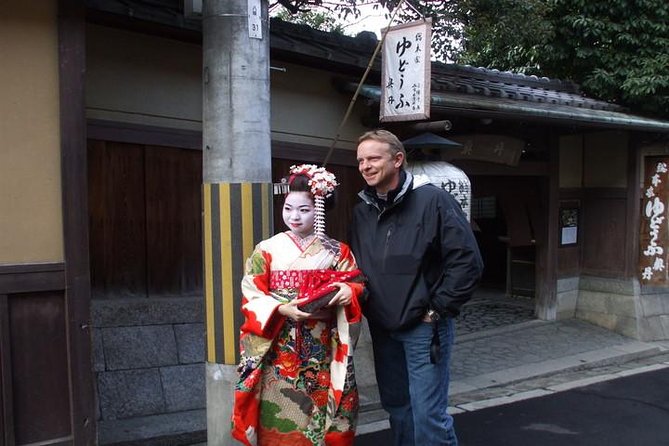
The walk begins at Tatsumi Daimyojin, a small shrine near the Shirakawa area of Gion. It is a fitting meeting point because it places you close to one of Kyoto’s prettiest traditional districts from the first minute.
The shrine is associated with the local geisha quarter, though its story is not entirely clear. That uncertainty is part of what makes a guide useful. Rather than receiving a polished legend with every detail neatly arranged, you can ask how local shrines function and why modest religious sites remain woven into the city’s daily life.
The inner torii and compact setting make this a short stop, listed at about 10 minutes. Do not expect a large temple complex here. The value is orientation: you are introduced to the quieter side of Gion before moving into its better-known lanes.
Because the tour starts and finishes at the same place, take note of the exact shrine location. Tatsumi Daimyojin is not a hotel lobby, and arriving late could be awkward in narrow streets where a group is easy to miss.
Shirakawa, Pontocho, and Miyagawacho on foot
Gion is best explored slowly. Cars can carry you along the main roads, but they cannot show you the narrow passages and canal-side corners that give the district its character.
The Shirakawa area runs beside the Shirakawa Canal, parallel to Shijo Avenue. Willow trees line the water, while restaurants and ochaya occupy the traditional buildings nearby. Some teahouses have rooms overlooking the canal, giving the area a refined feel without needing grand monuments.
Pontocho offers another view of Kyoto’s evening culture. Its narrow lane follows the Kamo River and is packed with restaurants and traditional establishments. Miyagawacho, another geisha district, adds a different set of streets and buildings to the walk.
The tour’s strength here is navigation. Gion is not difficult to reach, but its side streets can be confusing if you are trying to find particular shrines or canal views quickly. A guide can keep the route moving while pointing out places you might otherwise pass.
You should also approach this part with respect. Gion is a working neighborhood, not a theme park. The tour’s educational focus is helpful because it gives you a better sense of appropriate behavior around teahouses and performers. A geiko or maiko may appear, but the experience does not promise one. One evening produced several unexpected sightings for a participant, while another produced none. Your reason for booking should be the explanation of the district, not a guaranteed photograph.
Yasaka Shrine and the religious side of Gion
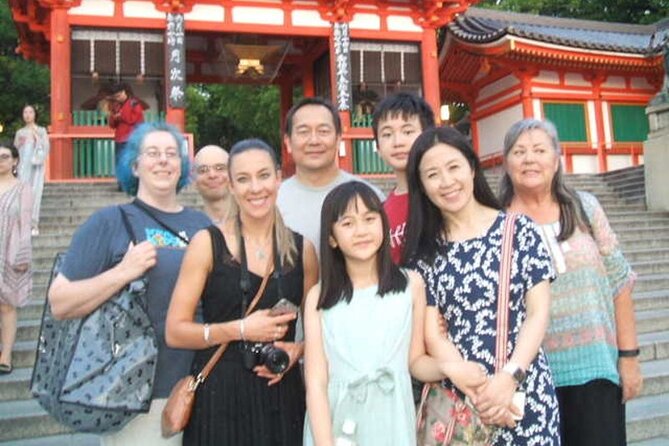
Yasaka Shrine, also called Gion Shrine, sits between Gion and Higashiyama. Its origins reach back more than 1,350 years, and its location makes it a natural link between the entertainment district and Kyoto’s older religious traditions.
The scheduled visit is brief, about 10 minutes, so expect an introduction rather than a detailed examination of the entire shrine grounds. Admission is free. Your guide can explain how a Shinto shrine differs from a Buddhist temple and help you notice the relationship between the shrine and the streets around it.
This stop works well in combination with Gion. The district is often described through food, architecture, and geiko culture, but Yasaka reminds you that religious practice remains central to Kyoto’s identity. The short timing is also a limitation. If you want quiet time to explore every gate, lantern, and side path, you may need to return on your own.
More ways to walk the Fushimi Inari gates:
- Kyoto: Fushimi Inari, Kinkakuji, Bamboo Grove 1 Day Bus Tour
★ 4.8 · 4,316 reviews - Fushimi Inari Hidden Hiking Tour (Private Option Available)
★ 5.0 · 1,750 reviews - Osaka/Kyoto:Kinkakuji,Arashiyama,FushimiInariShrine,NaraPark
★ 4.1 · 1,596 reviews - Kyoto/Osaka: Nara, Fushimi Inari Taisha, Arashiyama Bus Tour
★ 4.7 · 1,275 reviews
Kiyomizu-dera and the Higashiyama hillside
Kiyomizu-dera is the largest major temple stop on the route, with about an hour scheduled. Founded more than 1,250 years ago, it sits partway up Mount Otowa in Kyoto’s Higashiyama range.
The approach and temple grounds are among Kyoto’s best-known sights, so this is likely to be one of the busiest sections of the day. The tour gives you a framework for understanding the temple rather than leaving you to sort through the complex on your own.
Admission is not included. That matters when you compare the $154.37 price with a self-guided day. The tour covers entry fees only for sights listed as included, while Kiyomizu-dera and Kennin-ji are specifically marked as extra. Confirm the current cost before departure, since the supplied details do not give an amount.
An hour can be enough for a focused visit, especially if the guide leads you directly to the key areas. It is not enough for a leisurely exploration of every building and path. If Kiyomizu-dera is your top priority, tell the guide early and keep track of the time.
The hillside setting also makes footwear important. This is a walking experience with several temple and shrine stops, so comfortable shoes are a better choice than dress footwear. The tour information says most people can participate, but it does not provide a detailed mobility assessment.
Kennin-ji, a quiet contrast near Hanamikoji
Kennin-ji is close to Hanamikoji and Shijo streets, yet its grounds offer a calmer change of pace. The temple is known for its pleasant grounds and two dry gardens, called karesansui.
The listed stop is only one minute, which appears too brief for a meaningful visit inside the temple. Treat this as a quick orientation or exterior look unless the operator confirms that the schedule has changed. Admission is not included here either.
This is one of the places where the tour’s broad scope creates a tradeoff. You get exposure to several important Kyoto sites, but the time at each one can be short. A self-guided visit would let you linger in the dry gardens and decide how much time to spend inside.
Still, Kennin-ji is a smart inclusion because it adds a Zen temple to a route otherwise centered on shrines, geisha districts, and Kiyomizu-dera. The contrast helps you see that Kyoto’s cultural identity is not limited to one style of building or one historic tradition.
Fushimi Inari and the red torii gates
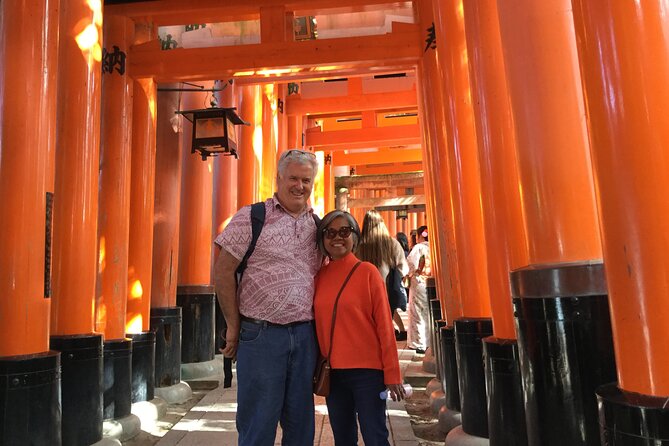
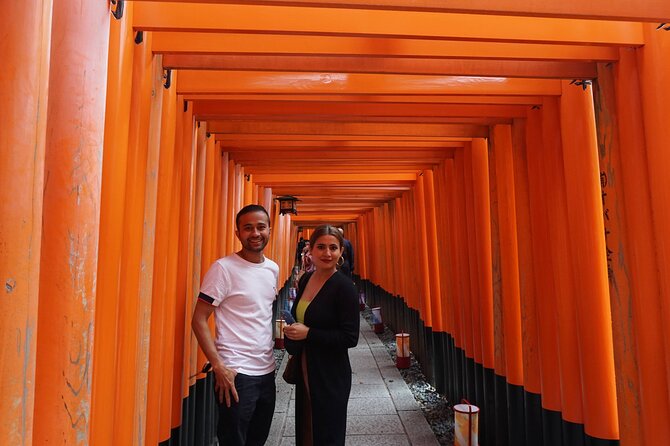
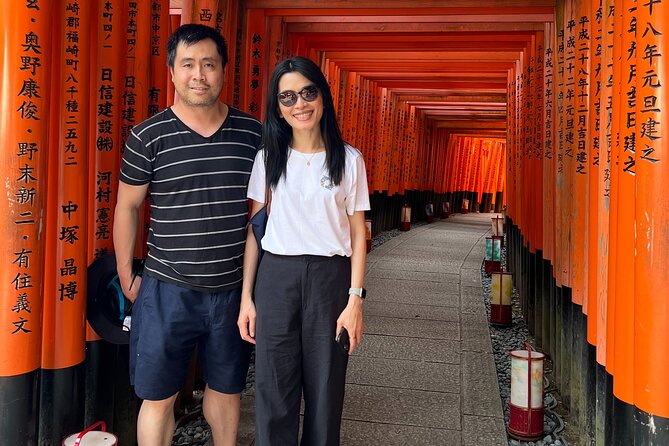
Fushimi Inari-taisha is in southern Kyoto and is famous for its thousands of vermilion torii gates. The gates climb along a network of trails behind the main shrine, creating the image most people associate with the site.
The tour allows about one hour here, with no admission fee. That is enough to enter the shrine, see the main approach, and walk through an initial section of the torii route. It is not enough to complete the full mountain circuit at a relaxed pace.
This distinction is important. Fushimi Inari is not a single viewpoint that you can finish in ten minutes. The torii continue uphill, and the experience changes as you move farther from the main entrance. A guided hour gives you an introduction, but you may want to return separately if you hope to walk a longer section.
The order of the stops also deserves confirmation. The meeting point is in Gion, while Fushimi Inari is in southern Kyoto, and the tour description also emphasizes an evening visit to Gion. The supplied details do not say whether the shrine comes first, whether public transport is used, or how the six-hour schedule handles the distances. Ask before booking so you know how much independent movement and extra fare payment to expect.
What the guide adds to the experience

A licensed local English-speaking guide is included, and this is the main reason to choose the tour over a map app. The guide can connect shrine etiquette, temple traditions, neighborhood history, and geiko culture as you move through the city.
The strongest guide moments are likely to come in Gion. You can learn how a maiko differs from a geiko, what the training path involves, and why the teahouses operate differently from ordinary restaurants. These details are difficult to gather from signs alone.
One guide, Mari, has been singled out for making the evening informative and enjoyable. Another positive account describes a small group where everyone could hear and keep up easily. Those details match the tour’s maximum of 10 people and suggest that the format is better suited to conversation than a large group lecture.
There is also a small cultural bonus: one outing included a quick taste of local sweets. Do not count on this as a formal food stop, since it is not listed as an included feature. Consider it an occasional extra rather than a guaranteed part of the program.
Price, pace, and practical value
At $154.37 per person, this is a premium walking tour. The price covers the licensed English-speaking guide and the planning needed to connect several districts and religious sites. It does not cover a private vehicle, and admission to Kiyomizu-dera and Kennin-ji is extra.
I see the best value for people visiting Kyoto for the first time, especially those who want the story behind Gion rather than only its appearance. The guide can save you time finding the right lanes and help you avoid treating a living neighborhood as a photo backdrop.
The value is weaker if you are already comfortable using Kyoto’s trains and buses, want long visits at each temple, or prefer to set your own pace. Fushimi Inari and Kiyomizu-dera are both possible to visit independently, and one-hour or one-minute stops may feel rushed.
The tour is offered with group discounts, a mobile ticket, and free cancellation up to 24 hours before the start time. Changes or cancellations made less than 24 hours ahead are not refunded. The confirmation arrives at booking, and service animals are allowed.
Who should book this Kyoto walk?
I would choose this experience if you want a guided first look at Gion, need help with the cultural background, and like the idea of a small group. It suits visitors who want several major Kyoto sights in one half-day rather than a slow, single-temple visit.
I would be cautious if you are booking mainly to see a geiko or maiko. Sightings are possible but never guaranteed. I would also ask about transportation before paying, because the route covers separated areas and the package does not include a private vehicle.
Book it if you value interpretation, efficient orientation, and access to lanes that are easy to miss. Skip it if you want a cheap stroll, long temple visits, or complete control over the schedule. For the right person, the guide’s explanations are the real souvenir.
FAQ
How long does the experience last?
The experience lasts approximately six hours.
Where does the tour begin?
The tour begins at Tatsumi-jinja Shrine, also called Tatsumi Daimyojin, in Kyoto’s Higashiyama Ward.
Where does the tour end?
The activity ends back at the meeting point at Tatsumi-jinja Shrine.
Is hotel pickup included?
No. Pickup and drop-off are on foot, and the tour does not include a private vehicle.
What sights are included?
The route includes Fushimi Inari-taisha Shrine, Gion, the Shirakawa area, Yasaka Shrine, Tatsumi Daimyojin Shrine, Kiyomizu-dera Temple, and Kennin-ji Temple.
Are admission fees included?
Admission is free at Fushimi Inari-taisha and Yasaka Shrine. Admission to Kiyomizu-dera and Kennin-ji is not included. The tour covers guide entry fees only for sights listed in the program.
How large is the group?
The group has a maximum of 10 participants.
Is the tour conducted in English?
Yes. A licensed local English-speaking guide is included.
Can I cancel for a full refund?
Yes, if you cancel at least 24 hours before the experience start time. Cancellations or changes made less than 24 hours before the start are not refunded or accepted.
More Shrines in Kyoto
- Osaka/Kyoto: Arashiyama, Nara & Fushimi Inari Shrine w/Lunch
★ 4.4 · 754 reviews - KYOTO Tea Ceremony with kimono near by Imamiya Jinjya Shrine
★ 5.0 · 343 reviews - Kyoto: 3-Hour Fushimi Inari Shrine Hidden Hiking Tour
★ 4.9 · 270 reviews - Kyoto Magical Night English Tour: Gion & Fushimi Inari Shrine
★ 5.0 · 97 reviews
Newest Kyoto experiences on the site
- Treasures of Kyoto: Gion & historical Walking Tour★ 5.0 · 6 reviews
- Whisk Your Own Matcha: A Zen Matcha Experience at Temple★ 3.6 · 7 reviews
- Kyoto tea town for matcha lovers★ 5.0 · 16 reviews
- Uji: Private immersion into Kyoto’s tea and reglious culture★ 5.0 · 17 reviews
- Kyoto Matcha Green Tea Tour★ 4.5 · 23 reviews
- Uji and Wazuka Matcha Farm Half Day Private Guided Tour★ 5.0 · 21 reviews
- Utilising upcycled Matcha! Creating matcha incense (Uji, Kyoto)★ 5.0 · 6 reviews
- Sacred Temple Yoga Experience in Japan★ 5.0 · 3 reviews
Fushimi Inari Tours, compared.
Fushimi Inari, Kinkakuji, Bamboo Grove 1 Day Bus Tour
Read our review →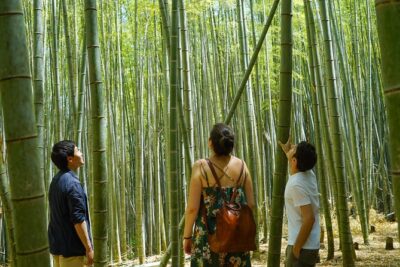
Fushimi Inari Hidden Hiking Tour (Private Option Available)
Read our review →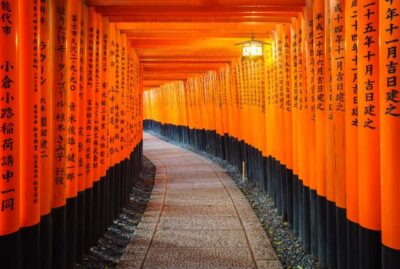
Kinkakuji,Arashiyama,FushimiInariShrine,NaraPark
Read our review →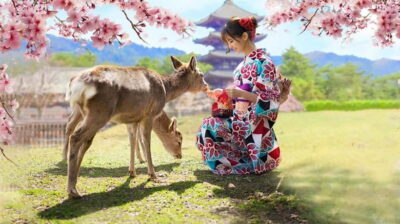
Nara, Fushimi Inari Taisha, Arashiyama Bus Tour
Read our review →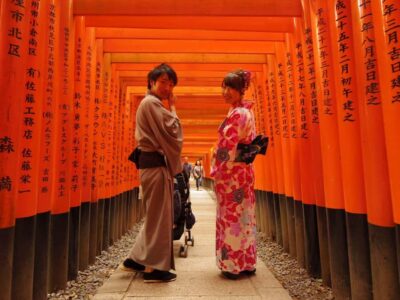
Arashiyama, Nara & Fushimi Inari Shrine w/Lunch
Read our review →
Nijo Castle, Kiyomizu & Fushimi Inari Guided Tour
Read our review →
Nijo, Kinkaku-ji, Arashiyama, Kiyomizu & Fushimi Inari
Read our review →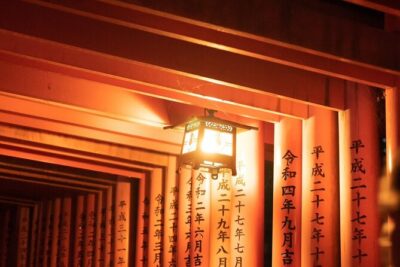
Browse the lists this tour appears in