
Reviewed · KIYOMIZU-DERA TEMPLE TOURS
Kyoto Sushi & Takoyaki Cooking Class near Gion and Kiyomizu-dera!
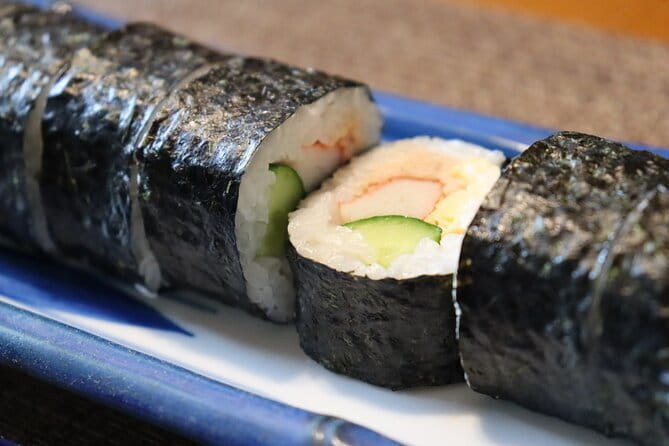
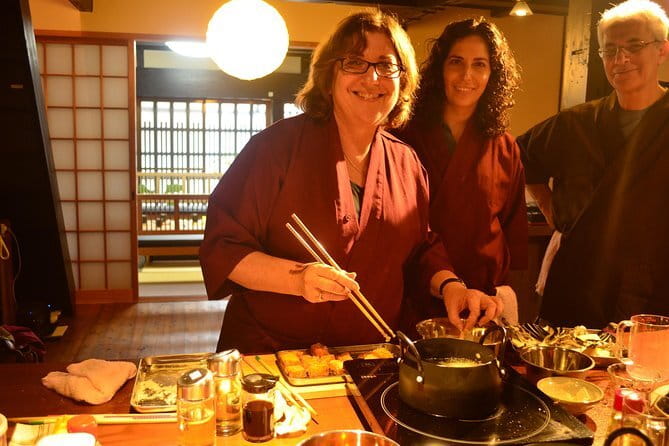
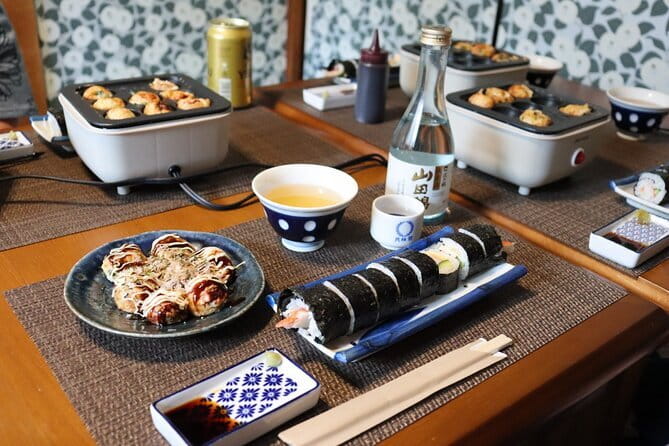
Kyoto’s food culture comes to life in this small cooking class inside a traditional machiya near Gion and Kiyomizu-dera. With local instructor HANA, you prepare rolled sushi and takoyaki yourself, then sit down to eat what you made with a drink and matcha mochi ice cream.
I like the hands-on format, which gives you more than a meal and a few photos. I also like the small maximum of six people, plus the stories about Japanese food and daily life that help explain what you are cooking.
The main consideration is the price: at $96.19 per person for about two hours, this costs more than a basic lunch. It makes the most sense if you want a cultural activity, not just a quick bite.
Key Points to Know Before Booking
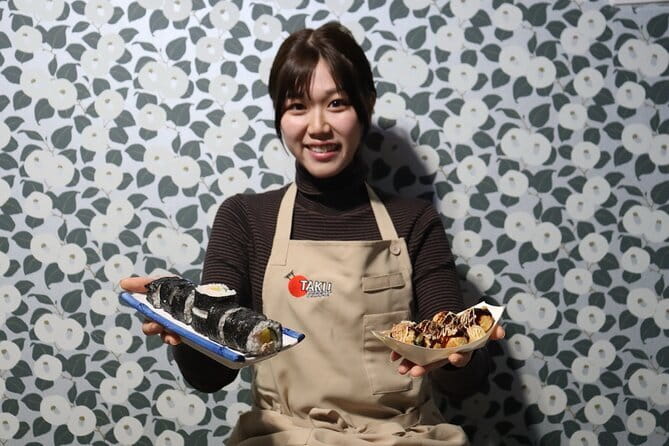
- Cook two Japanese favorites: You make rolled sushi and takoyaki rather than simply watching a demonstration.
- Learn in a traditional machiya: The class takes place at Hanakiya Inn in Kyoto’s Higashiyama Ward.
- Meet HANA: Your English-speaking local instructor shares cooking tips and stories about Japanese food culture.
- Keep the group small: The class accepts a maximum of six people, allowing for personal help at the cooking stations.
- Finish with local flavors: Lunch includes your sushi and takoyaki, a drink, and matcha mochi ice cream.
- Take the recipes home: You receive recipes and practical tips for making the dishes again in your own kitchen.
Cooking Rolled Sushi Inside a Kyoto Machiya
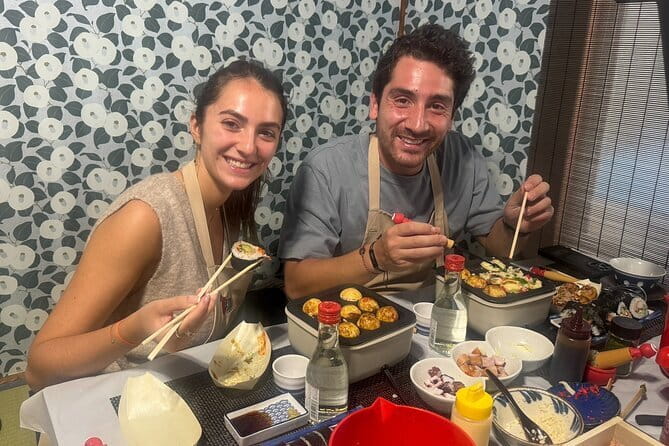
The setting gives this class much of its appeal. You meet at Hanakiya Inn, at 6-chōme-583-101 Gojōbashihigashi in Kyoto’s Higashiyama Ward, an area close to the sights around Gion and Kiyomizu-dera.
A machiya is a traditional Kyoto townhouse, so the class offers a change of pace from restaurants and busy sightseeing streets. You are not simply eating a finished dish in a dining room. You are working with ingredients and tools in a local-style setting, while HANA explains what you are doing.
The class lasts about two hours. That is long enough to make two dishes and enjoy a sit-down meal, but short enough to fit neatly into a sightseeing day. You could schedule it between visits around Higashiyama, though you should allow enough time to reach the meeting point without rushing.
Rolled sushi is one of the two main projects. The useful part of making it yourself is learning how the ingredients come together, rather than treating sushi as something that only a trained chef can prepare. You receive recipes and tips afterward, so the lesson has value beyond your time in Kyoto.
The exact ingredients and step-by-step method are not specified in the available details, so you should not expect a full professional sushi course. Think of it as an approachable introduction to making rolled sushi at home.
More ways to walk Gion:
- Kyoto Geisha Walking Tour: Gion District & Hidden Gems
★ 4.7 · 3,273 reviews - Kyoto: Gion Magical Night Walking Tour with Geisha Trivia
★ 4.9 · 2,393 reviews - Kyoto: Gion Geisha District Walking Tour – Stories of Geisha
★ 4.7 · 2,187 reviews
Takoyaki Makes the Class More Playful
Takoyaki is the second dish, and it gives the class a different kind of cooking task. These round, savory Japanese snacks are made in a special pan, and preparing them calls for active attention as they cook.
That makes takoyaki a good match for a short group class. You are not waiting passively for food to arrive. You have something to do, and HANA can help you with the tools and techniques as the dish takes shape.
The supplied information does not list every filling, topping, or cooking step, so I would avoid booking this expecting a detailed restaurant-style menu. The appeal is the chance to make one of Japan’s best-known casual foods with guidance, then eat the result as part of lunch.
The two dishes also give the class useful variety. Rolled sushi introduces one kind of Japanese meal preparation, while takoyaki brings a more hands-on, snack-style activity. You get a broader taste of everyday Japanese food than you would from preparing only one recipe.
HANA Adds Food Culture to the Meal
HANA is the local English-speaking instructor. Her role goes beyond showing you where to place ingredients. The class includes stories about Japanese culinary traditions and daily life in Japan, which helps place the recipes in context.
That personal explanation is important. A cooking class can feel thin if it only gives you a list of steps. Here, the food is tied to customs and ordinary life, giving you a better sense of how Japanese cooking fits into the culture you are seeing outside the classroom.
The English-language format is helpful if you want to ask questions as you work. One especially positive account describes HANA as fantastic and praises the presentation, food, and conversation. The same account came from a parent and daughter who also joined a walking tour, and the host response mentions their questions, laughs, and conversation.
That detail points to the tone of the class. It is not presented as a silent technical workshop. You can expect room for conversation and questions, which suits people who want a social cultural activity.
Still, the small group size matters. With a maximum of six people, you have a better chance of receiving direct help than in a large commercial class. It also means availability may be more limited, so booking around ten days ahead is a sensible plan.
What You Eat and Drink After Cooking
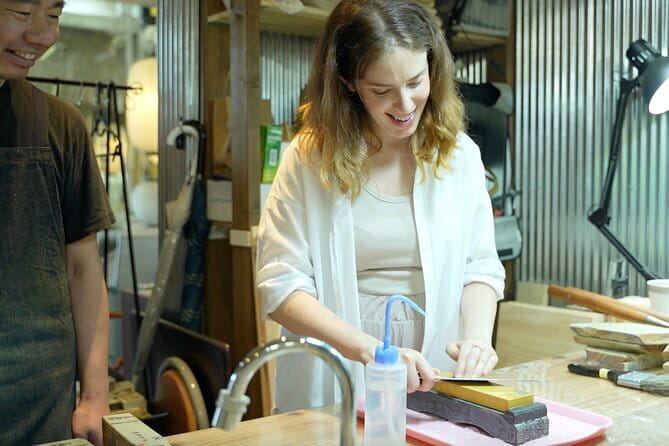
The class includes lunch, with the rolled sushi and takoyaki you make yourself. That is a practical benefit because the $96.19 price covers both an activity and a meal, rather than adding the cost of lunch afterward.
The food has also been described as plentiful enough that one parent and daughter could not finish everything and took some away. You should treat that as a useful possibility, not a guarantee of leftovers, since appetite and portion size vary.
Your included drink can be sake, beer, or juice. This gives you a choice between a local alcoholic pairing and a nonalcoholic option. If you do not drink alcohol, you are not left without a beverage.
The drink choice also changes the feel of the meal. Sake connects naturally with the food and local dining culture, while beer is a familiar option. Juice keeps things simple for children old enough to join or for anyone avoiding alcohol.
Dessert is matcha mochi ice cream. Matcha brings a distinctly Japanese flavor, while the cold, creamy texture provides a neat finish after the hot takoyaki. The listing calls it matcha mochi ice cream, so you can expect dessert with both matcha and mochi elements.
Children under six cannot take part for safety reasons. Families with older children may find the cooking format more engaging than a standard restaurant meal, but you should consider your child’s ability to follow instructions and take part safely around cooking tools.
More Kiyomizu-dera visits and hillside walks:
- Kyoto: Tea Ceremony in a Traditional Tea House in Kiyomizu
★ 4.9 · 3,519 reviews - Kyoto: Nijo Castle, Kiyomizu & Fushimi Inari Guided Tour
★ 4.7 · 700 reviews - Kyoto: Nijo, Kinkaku-ji, Arashiyama, Kiyomizu & Fushimi Inari
★ 5.0 · 699 reviews - Kyoto Tea Ceremony & Kiyomizu-dera Temple Walking Tour
★ 5.0 · 115 reviews
Is $96.19 Good Value for Two Hours?
The price is not low for a two-hour activity. If you measure value only by the amount of food, you can find a cheaper lunch in Kyoto. That is not the right comparison.
You are paying for an English-speaking instructor, all ingredients, cooking tools, a meal, a drink, dessert, recipes, and a cultural lesson in a traditional setting. The small group limit also matters. A class capped at six people can offer more individual attention than a large workshop.
I would call it good value for someone who wants an activity with a meal built in. It is less compelling for someone who already cooks Japanese food, has a tight budget, or wants to spend the full day sightseeing.
The recipes and tips add value after the trip. You can try to recreate the dishes at home, which turns a two-hour class into something you may use again. That is a stronger benefit than a souvenir that sits on a shelf.
The food portion also sounds generous. An account from a parent and daughter says they could not eat everything and took some away, though you should not count on a takeaway portion. The main point is that the class is not just a token tasting.
Fitting the Class Into a Kyoto Day
The meeting point is Hanakiya Inn in the Gojōbashihigashi area of Higashiyama. The activity is near public transportation, and it ends back at the same meeting point.
That return to the starting point makes planning easier. You do not need to arrange a separate ride from an unknown final location, and you can continue sightseeing in the same general part of Kyoto afterward.
The class works especially well on a day focused on eastern Kyoto. You can pair it with visits near Gion and Kiyomizu-dera, since those areas are named as nearby points of interest. The available information does not provide walking times or exact directions from those sights, so check your route before the start time.
A mobile ticket is included, which keeps the booking confirmation available on your phone. Confirmation is received at the time of booking. Hotel pickup is not included, so you need to make your own way to Hanakiya Inn.
The class starts and ends at the meeting point. Since the full activity lasts about two hours, it can fit into either a morning or afternoon schedule, but the exact start times are not provided here. Check the selected booking time carefully when you reserve.
Who Will Get the Most From This Class?
I would recommend this class to you if food is part of how you like to understand a place. You get to cook, ask questions, eat a meal, and hear about Japanese daily life in one compact activity.
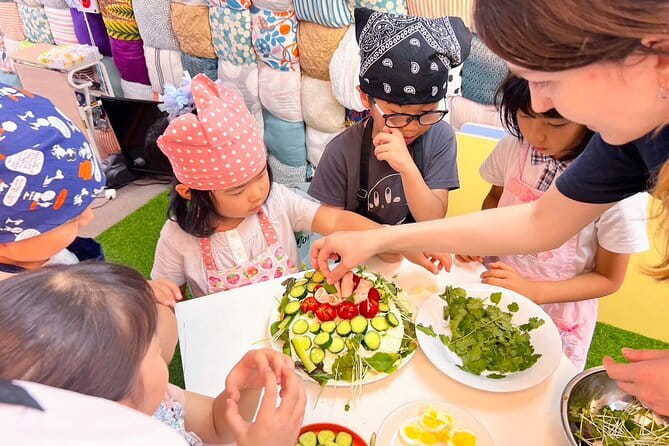
It is also a good pick for couples, families with children aged six or older, and small groups of friends. The six-person limit suits people who prefer a quieter class over a large room with many participants.
The class may also suit solo visitors. A small group and an English-speaking instructor can make it easier to talk with other participants without the event feeling crowded.
You should think twice if your main goal is technical mastery. The format is designed for a fun introduction to rolled sushi and takoyaki, not a professional culinary qualification. You should also consider the cost if you are trying to keep every meal inexpensive.
People who dislike group activities may not love the social side, though the small size helps. And because children under six are not permitted, families with toddlers need another plan for this part of the day.
Practical Details That Matter
The experience provider is OTAKU hopper. The class is available as a mobile-ticket activity, and booking confirmation arrives at the time of reservation.
The maximum group size is six. That is one of the strongest practical details because cooking instruction is easier when the instructor can see what each person is doing.
All ingredients and cooking tools are included. You do not need to shop before arriving or bring special equipment. Lunch, dessert, and one drink are also included.
You can cancel up to 24 hours before the experience for a full refund. That gives you some flexibility if your Kyoto plans change, but the class is often booked around ten days ahead, so waiting until the last minute may reduce your choice of dates.
The meeting point is:
Hanakiya Inn
6-chōme-583-101 Gojōbashihigashi
Higashiyama Ward, Kyoto 605-0846, Japan
The activity ends at the same place. Since hotel pickup is not included, plan your route in advance and allow time to find the inn.
Should You Book the Kyoto Sushi and Takoyaki Class?
Book it if you want a small, social food lesson with a meal, dessert, and local conversation included. The strongest reasons are the traditional machiya setting, the maximum of six people, HANA’s English instruction, and the chance to make two different Japanese dishes.
The $96.19 cost is fair for the full package, but it is not a bargain lunch. I would choose it for a special Kyoto afternoon, a family activity with older children, or a first introduction to Japanese home-style cooking.
Skip it if you only want to eat sushi and takoyaki, or if your schedule and budget are tight. For everyone else, this is a practical way to turn a meal into a memorable part of your Kyoto visit, with recipes you can try again after you return home.
FAQ
Where does the Kyoto cooking class take place?
The class takes place at Hanakiya Inn, 6-chōme-583-101 Gojōbashihigashi, Higashiyama Ward, Kyoto 605-0846, Japan.
How long does the cooking class last?
The activity lasts approximately two hours.
What dishes will I make?
You will make rolled sushi and takoyaki during the class.
Is lunch included?
Yes. Lunch consists of the rolled sushi and takoyaki you make during the activity.
What dessert is included?
The included dessert is matcha mochi ice cream.
What drinks are available?
You can choose sake, beer, or juice.
Is the class taught in English?
Yes. The class is led by an English-speaking local cooking instructor named HANA.
Can young children join?
Children under six years old are not permitted to participate for safety reasons.
Where does the activity end?
The activity ends back at the meeting point at Hanakiya Inn.
More Cooking Classes in Kyoto
- Ramen Cooking Class at Ramen Factory in Kyoto
★ 5.0 · 1,937 reviews - Kyoto: Ramen Cooking Class at a Ramen Factory with Souvenir
★ 4.9 · 532 reviews - Kyoto: Ramen, Gyoza, and Onigiri Cooking Class
★ 5.0 · 445 reviews - Kyoto: Japanese Washoku Bento Small Group Cooking Class
★ 5.0 · 380 reviews
More Sushi Making Classes in Kyoto
- Sushi Making in Kyoto! Same-day bookings welcome!
★ 5.0 · 713 reviews - The Original Small-Group Sushi Making Class in Kyoto
★ 5.0 · 436 reviews - Kyoto: Small-Group Authentic Sushi Making Workshop
★ 5.0 · 137 reviews - Sushi – Authentic Japanese Cooking Class – the best souvenir from Kyoto!
★ 5.0 · 93 reviews
Newest Kyoto experiences on the site
- Treasures of Kyoto: Gion & historical Walking Tour★ 5.0 · 6 reviews
- Whisk Your Own Matcha: A Zen Matcha Experience at Temple★ 3.6 · 7 reviews
- Kyoto tea town for matcha lovers★ 5.0 · 16 reviews
- Uji: Private immersion into Kyoto’s tea and reglious culture★ 5.0 · 17 reviews
- Kyoto Matcha Green Tea Tour★ 4.5 · 23 reviews
- Uji and Wazuka Matcha Farm Half Day Private Guided Tour★ 5.0 · 21 reviews
- Utilising upcycled Matcha! Creating matcha incense (Uji, Kyoto)★ 5.0 · 6 reviews
- Sacred Temple Yoga Experience in Japan★ 5.0 · 3 reviews
Kiyomizu-dera Temple Tours, compared.
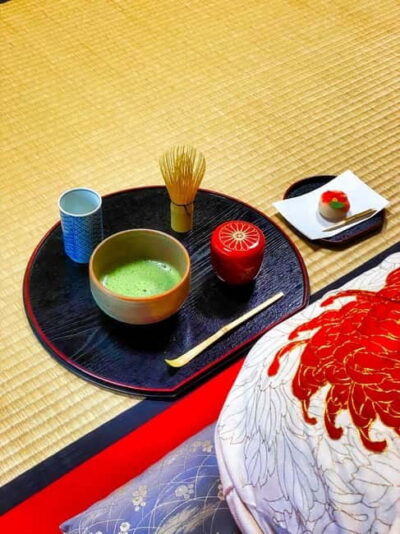
Tea Ceremony in a Traditional Tea House in Kiyomizu
Read our review →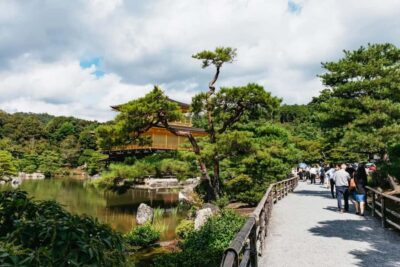
Nijo Castle, Kiyomizu & Fushimi Inari Guided Tour
Read our review →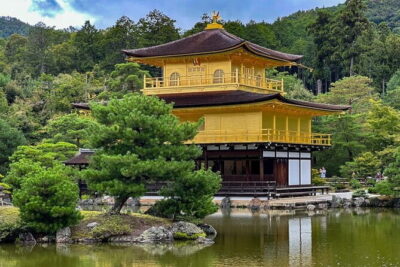
Nijo, Kinkaku-ji, Arashiyama, Kiyomizu & Fushimi Inari
Read our review →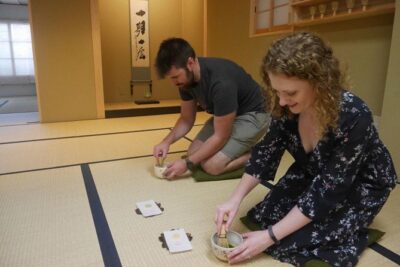
Kyoto Tea Ceremony & Kiyomizu-dera Temple Walking Tour
Read our review →
Kyoto Kiyomizu Tea Ceremony with Scenic Garden Views
Read our review →
Kimono/Yukata Rental 5 Minute from Kiyomizu-dera
Read our review →
Kyoto Gion Kiyomizudera Kimono Yukata Hairstyle | Photoshoot
Read our review →
Kiyomizu Temple and Backstreets of Gion, Half Day Group Tour
Read our review →Browse the lists this tour appears in