
Reviewed · KYOTO SUSHI MAKING CLASSES
The Original Small-Group Sushi Making Class in Kyoto
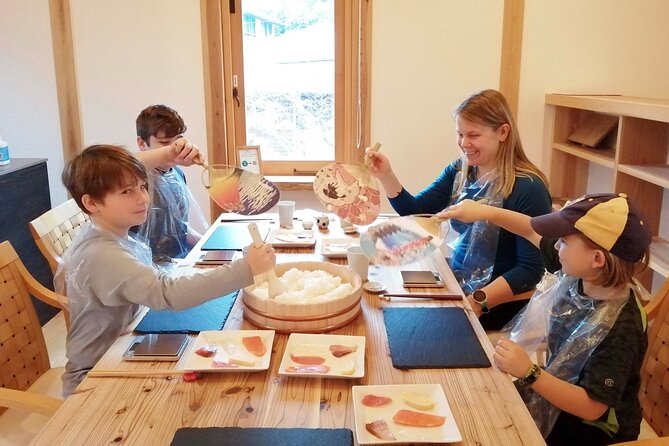
Kyoto’s original small-group sushi workshop puts you at the counter, not behind a glass wall. In about 90 minutes, Kana guides you through seasoned rice, nigiri, and maki, then you sit down to eat what you made. The class takes place in a restored townhouse near Kiyomizu-dera and Gion, so the setting feels more personal than a large cooking school.
I like the maximum of eight people, which leaves room for questions and hands-on help. I also like the practical finish: several types of sushi to eat, plus a gift bag that can include class notes, recipes, chopsticks, and a sushi mat for trying the skill at home.
The main consideration is food choice. A vegetarian or vegan version is not offered, and the class uses fish, so you should check directly about allergies or other dietary needs before booking. The class is also short, focused on a useful foundation rather than a full professional sushi course.
Key points at a glance
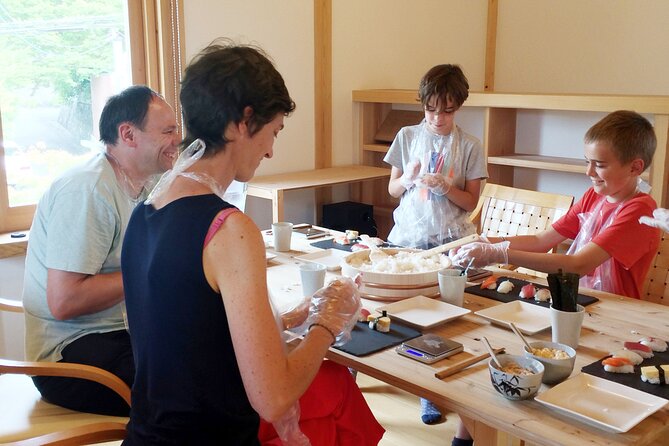
- Small class size: No more than eight people, with personal guidance from an English-speaking Japanese instructor.
- Two core sushi styles: You learn to shape nigiri and make maki rolls, not simply watch a demonstration.
- Historic Kyoto setting: Atelier SUSHI is near Kiyomizu-dera and Gion, in a restored traditional townhouse.
- A full meal is included: The sushi you prepare is served as lunch or dinner, depending on the class time.
- Useful take-home items: Past class packages have included recipes, notes, chopsticks, and a sushi mat.
- A relaxed cultural exchange: Kana and her husband Kerim are also happy to discuss Japanese life, Kyoto, and local places to visit.
Why this sushi class works so well in Kyoto
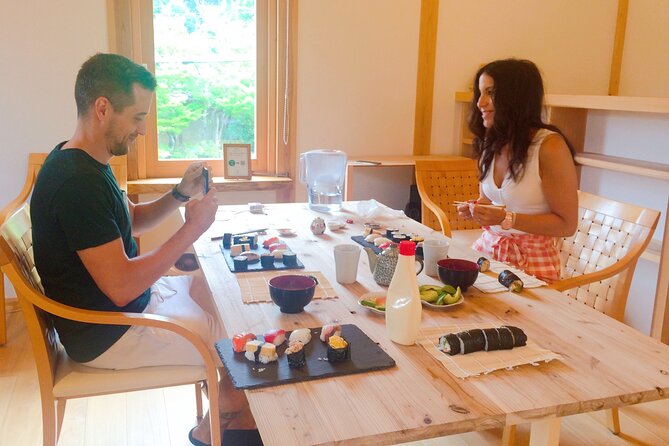
I see this as a cooking lesson with a Kyoto conversation built into it. You are not just assembling food for a photograph. You learn why rice matters, how sushi is shaped, and how fresh ingredients can carry much of the flavor without heavy seasoning.
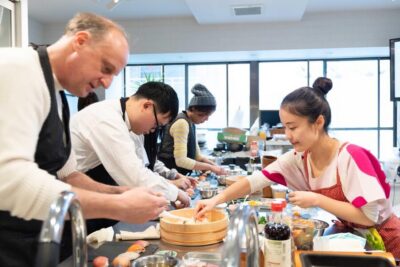
The class is conducted in English, which makes it easy to follow even if sushi is new to you. Kana’s teaching style is described as patient and clear, and the lesson is set up for direct participation. You handle the rice, fish, seaweed, and rolling rather than standing at the edge of a large room.
The small size matters here. With eight people or fewer, you can ask for help when rice sticks to your fingers or a roll refuses to hold its shape. You also get a chance to watch other people work, which is useful because sushi-making looks simple until you try to make each piece the same size.
The atmosphere is friendly and informal. Kana and Kerim have been praised for talking about Japanese culture, offering Kyoto tips, and making solo visitors, couples, and families feel welcome. If you enjoy meeting the people behind a local activity, this personal touch is a major part of the value.
More sushi making classes in Kyoto:
- Sushi Making in Kyoto! Same-day bookings welcome!
★ 5.0 · 713 reviews - Kyoto: Small-Group Authentic Sushi Making Workshop
★ 5.0 · 137 reviews - Sushi – Authentic Japanese Cooking Class – the best souvenir from Kyoto!
★ 5.0 · 93 reviews
Arriving at Atelier SUSHI near Kiyomizu-dera
The meeting point is Atelier SUSHI, at 311-1 Kitatōryōchō in Kyoto’s Higashiyama Ward. It is near public transportation and close to two of Kyoto’s best-known areas, Kiyomizu-dera and Gion.
That location makes the class easy to pair with sightseeing. You could schedule it around a morning visit to Kiyomizu-dera, or use it as a midday break before walking through Gion. I would allow time to find the address without rushing, especially if you are coming through the narrow streets around Higashiyama.
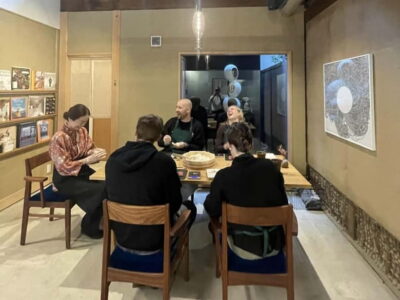
The building is part of the experience. It is a restored historic townhouse, giving the class a quieter, more traditional setting than a modern commercial kitchen. You sit down in a place that feels connected to Kyoto’s domestic architecture, which suits a lesson built around careful preparation and hospitality.
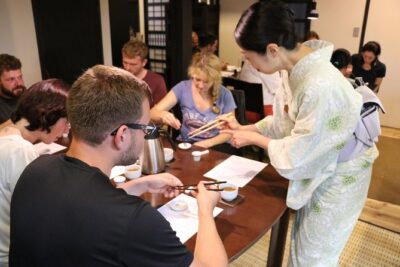
Aprons and gloves are provided. That is a small but useful detail, particularly if you are traveling with limited clothing or have just spent the morning walking through the city. Coffee, tea, and Japanese tea are also included.
The first lesson: seasoning rice correctly
Rice is the base of sushi, and the class gives it proper attention. You learn how to season properly cooked rice before moving on to shaping the sushi.
This is one of the most useful parts for home cooks. Fish may be difficult to source once you return home, but the rice technique is something you can repeat with ordinary kitchen equipment and suitable ingredients. The lesson helps you understand that sushi rice is not simply plain rice with raw fish placed on top.
The workshop is prepared in advance, so you are not spending the whole 90 minutes washing rice or waiting for ingredients to cook. That keeps the pace moving and leaves more time for shaping, rolling, questions, and eating.
You should expect a structured class rather than an open-ended cooking session. The ingredients and tools are ready, and the instructor takes you through the process in manageable steps. That makes the class approachable for beginners, while still giving experienced home cooks useful details about technique.
Shaping nigiri with personal guidance
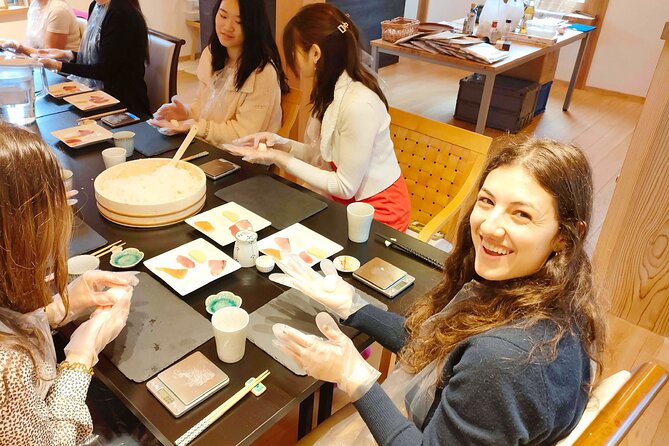
Nigiri is the small hand-formed piece of sushi with fish placed over rice. It looks modest, but making a neat piece requires control. Too much rice makes the bite heavy. Too little gives the fish nowhere to sit. Press too firmly and the rice becomes dense.
Kana demonstrates the process, then you make your own pieces with guidance nearby. The point is not perfect restaurant-level presentation in one lesson. The value is learning the feel of the rice and the basic hand movement so you can repeat it later.
The class uses premium fresh fish and selected local ingredients. The exact fish selection is not specified, so the menu may depend on availability. That is normal for a food experience centered on fresh ingredients, but it is worth remembering if you have a particular fish in mind.
The amount of food appears generous. You should arrive ready to eat, since the finished sushi is served as your lunch or dinner. The class is not merely a tasting with one or two sample pieces. You make enough food to leave satisfied.
More craft workshops in Kyoto:
- Kyoto: 45-Minute Tea Ceremony Lesson Experience
★ 4.3 · 2,378 reviews - Ramen Cooking Class at Ramen Factory in Kyoto
★ 5.0 · 1,937 reviews - Kyoto : Chopsticks Making Workshop in Gion with Engraving Option
★ 5.0 · 958 reviews - Kyoto: Samurai Sword Class by Experts in Traditional Arts
★ 4.9 · 657 reviews
Rolling maki without the usual frustration
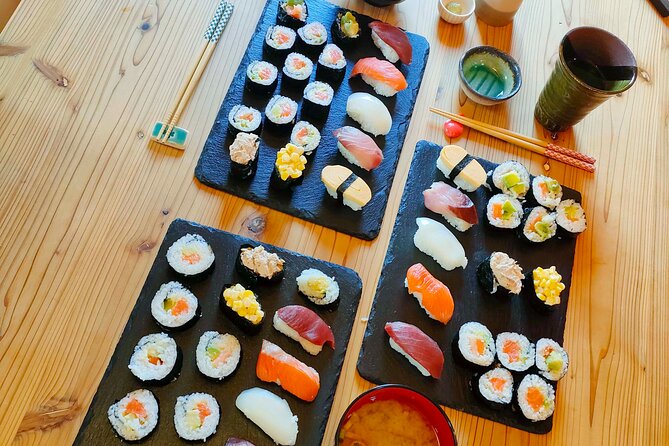
The second main skill is maki, the rolled sushi wrapped in seaweed. You learn to spread and arrange the ingredients, then use a sushi mat to form the roll.
This part tends to be social and hands-on. Everyone is working at the same time, and the instructor can step in when the roll needs more pressure or the filling begins to escape. You learn how the sushi mat helps create a firm shape rather than simply wrapping everything by hand.
The lesson includes more than one kind of sushi, with nigiri and maki forming the central pair. The variety gives you a better sense of how sushi changes with shape, proportion, and handling. It also makes the final meal more interesting than a plate of identical pieces.
A useful bonus is the possibility of taking home a sushi mat and recipes or class notes. Those supplies turn the experience into something you can repeat. You may not recreate every ingredient easily, but you can practice the rice and rolling techniques with ingredients available at home.
Eating the sushi you prepared
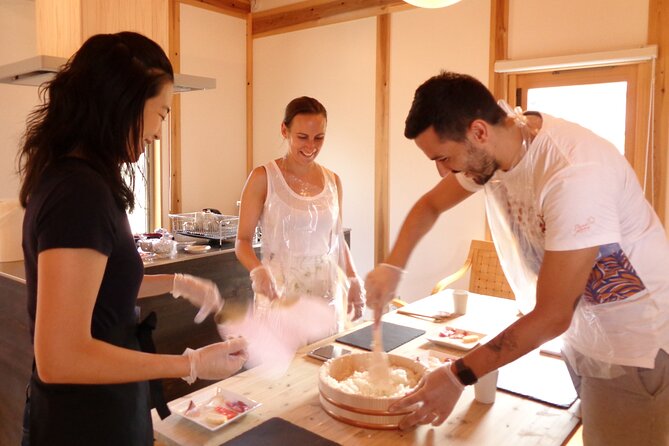
Once the making is finished, you eat the sushi in the same setting. Depending on the time you book, this functions as lunch or dinner.
I like this format because the meal has a clear connection to the lesson. You remember the pieces that came out uneven, the roll that needed help, and the nigiri that finally held together. The food becomes part of the learning rather than a separate restaurant course.
Freshness is especially important here. One reason the experience has appeal is that simple sushi depends on good fish and careful rice. You are not covering the food with complicated sauces or elaborate cooking. The ingredients and technique do the work.
Portions are substantial enough that you should not plan a large meal immediately afterward. Several descriptions of the class point to a filling amount of sushi. That makes the $69.64 price easier to assess, since it includes both the instruction and a full meal, rather than a short demonstration with food sold separately.
The Kyoto conversation with Kana and Kerim
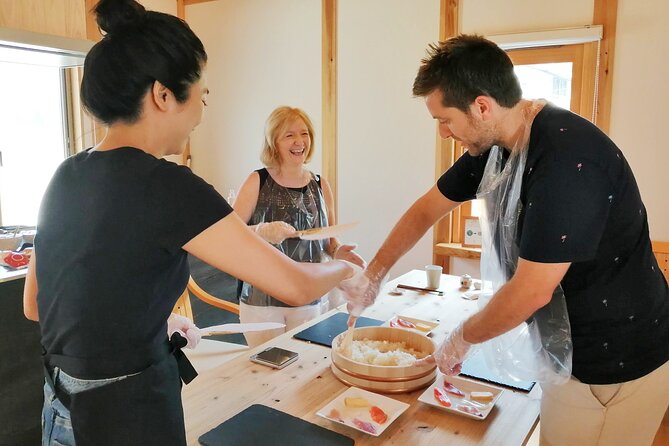
The instructors add a cultural layer without turning the class into a lecture. Kana shares her personal connection to sushi and talks about Japanese culture, while Kana and Kerim have also offered practical suggestions for the rest of a Kyoto visit.
That can be especially helpful if you book the class early in your stay. You can ask about nearby areas, places to eat, or how to plan the rest of your time in the city. Of course, local advice varies with your interests, so treat it as a friendly bonus rather than the main reason to book.
The family-run feel is part of the appeal. You may be welcomed into a small space by the people actually running the workshop, rather than passed between a booking desk and a rotating team. That tends to make the class feel more like a shared meal and less like a production.
You can also expect conversation with the other people in your group. With only eight places, the room has enough energy for exchange without becoming noisy or impersonal. Solo visitors can join without feeling stranded, while couples and families still have room to work together.
How much value do you get for $69.64?
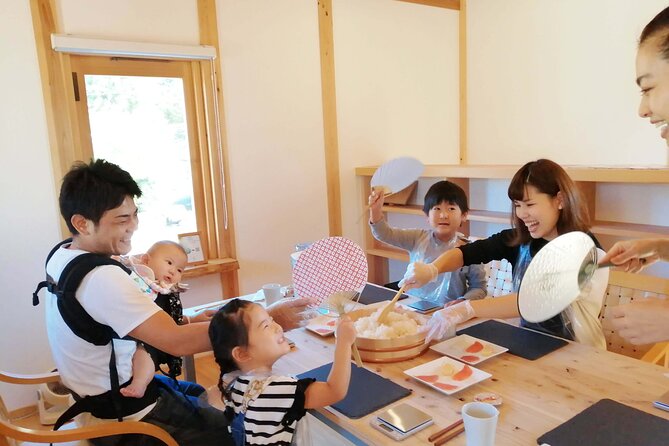
At $69.64 per person, this is not the cheapest way to eat sushi in Kyoto. It can still be good value if you want instruction, a meal, a cultural encounter, and supplies to continue at home.
The price includes the 90-minute workshop, English-language guidance, fresh fish and local ingredients, the sushi you prepare, an apron, gloves, tea or coffee, and the small-group format. The food alone is not the whole calculation. You are also paying for a teacher who watches your technique and answers questions.
The eight-person limit helps justify the cost. A large class could offer the same recipe but less individual help. Here, the instructor has a reasonable chance to notice how you are shaping the rice or rolling the maki.
The take-home items add practical value. Recipes, notes, chopsticks, and a sushi mat have been included for some participants, though you should confirm the exact current package when booking. If you want a souvenir that is more useful than another decorative item, this is a nice touch.
I would consider the class worthwhile for people who enjoy food experiences and want to learn something they can try again. If you only want the least expensive sushi meal near Gion, a restaurant will likely suit you better.
Who should book this class?
This is a strong choice for first-time sushi makers. The lesson breaks the process into clear pieces, and the instructor’s patient approach helps take pressure off getting everything perfect.
Families can also do well here. A 12-year-old sushi lover has enjoyed the class, and the activity gives children a real task rather than asking them to sit through a long cultural presentation. Younger children may need help with food handling and shaping, but the supplied information does not specify a minimum age, so confirm that before booking.
Couples get a shared activity with a meal at the end. Solo visitors can join a small group and have plenty of opportunity to talk with the hosts and other participants. The class also suits someone who already makes sushi at home, since the teaching style and cultural setting add something beyond a basic recipe.
It is less suitable for anyone seeking a vegetarian or vegan menu. The experience does not offer those options. It may still be possible to discuss common allergies, since gluten and shellfish needs have been accommodated in some cases, but you should contact Atelier SUSHI before booking rather than assume a substitution is available.
Timing, meeting point, and cancellation details
The class lasts approximately one hour and 30 minutes. It begins and ends at Atelier SUSHI, so you do not need to arrange a separate return transfer.
The activity is offered at a time that serves as lunch or dinner. Check your selected start time and build in enough time to reach the Higashiyama meeting point. The nearby Kiyomizu-dera and Gion areas can be busy, and a relaxed arrival is better than running in with no time to find the townhouse.
A mobile ticket is accepted. Confirmation is provided when you book. Free cancellation is available up to 24 hours before the start time, based on local time. Cancellations or changes made inside that 24-hour window are not accepted for a refund.
Should you book the Atelier SUSHI workshop?
I would book this class if you want a small, personal Kyoto food experience rather than a quick demonstration. The combination of fresh ingredients, hands-on nigiri and maki, a filling meal, and conversation with Kana and Kerim gives the 90 minutes real substance.
Book it early in your Kyoto stay if you want local suggestions and time to use them. Book it later if you prefer to connect the class with what you have already learned about Japanese food.
Skip it if you need a vegetarian or vegan menu, want an advanced professional course, or only care about eating sushi at the lowest possible price. For everyone else, especially couples, families, solo visitors, and home cooks, this is a practical way to turn a famous Kyoto food into a skill you can carry home.
FAQ
Where does the sushi-making class take place?
The class takes place at Atelier SUSHI, 311-1 Kitatōryōchō, Higashiyama Ward, Kyoto, Japan. It is near public transportation and close to Kiyomizu-dera and Gion.
How long is the workshop?
The experience lasts approximately one hour and 30 minutes.
How many people can join the class?
The maximum group size is eight people. This keeps the workshop small enough for questions and individual guidance.
Is the class taught in English?
Yes. The workshop is conducted in English and led by an English-speaking instructor.
What kinds of sushi will I learn to make?
You learn to season sushi rice, shape nigiri, and roll maki. You then eat the sushi you prepare.
Is a meal included?
Yes. The sushi you make is served as a meal. It is offered as lunch or dinner depending on the workshop time. Coffee, tea, or Japanese tea is also included.
Are vegetarian or vegan options available?
No vegetarian or vegan option is offered. If you have allergies or another dietary concern, check with Atelier SUSHI before booking.
What happens if I need to cancel?
You can receive a full refund if you cancel at least 24 hours before the experience start time. Cancellations or changes made less than 24 hours before the start time are not accepted for a refund.
Newest Kyoto experiences on the site
- Treasures of Kyoto: Gion & historical Walking Tour★ 5.0 · 6 reviews
- Whisk Your Own Matcha: A Zen Matcha Experience at Temple★ 3.6 · 7 reviews
- Uji: Private immersion into Kyoto’s tea and reglious culture★ 5.0 · 17 reviews
- Kyoto tea town for matcha lovers★ 5.0 · 16 reviews
- Kyoto Matcha Green Tea Tour★ 4.5 · 23 reviews
- Uji and Wazuka Matcha Farm Half Day Private Guided Tour★ 5.0 · 21 reviews
- Utilising upcycled Matcha! Creating matcha incense (Uji, Kyoto)★ 5.0 · 6 reviews
- Sacred Temple Yoga Experience in Japan★ 5.0 · 3 reviews
Kyoto Sushi Making Classes, compared.
Sushi – Authentic Japanese Cooking Class – the best souvenir from Kyoto!
Read our review →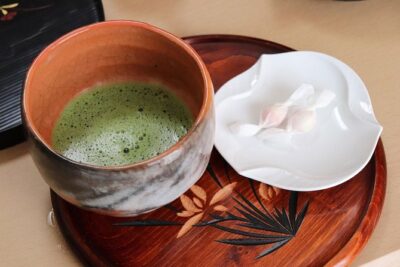
Private Kyoto Sushi Cooking Class & Tea Ceremony with Emika
Read our review →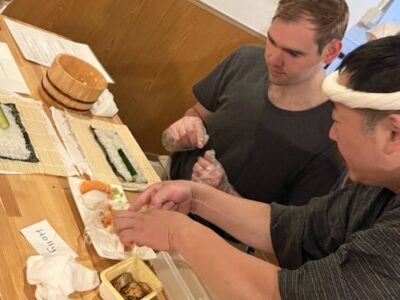
Enjoy Sushi & Market Tour! Best for Family & Couple!
Read our review →
Sushi or Traditional Japanese Cuisine in a Kyoto Home with Emika
Read our review →
Kyoto Sushi Making Experience with a Professional Sushi Chef
Read our review →
Browse the lists this tour appears in