
Reviewed · KYOTO SUSHI MAKING CLASSES
Kyoto: Small-Group Authentic Sushi Making Workshop
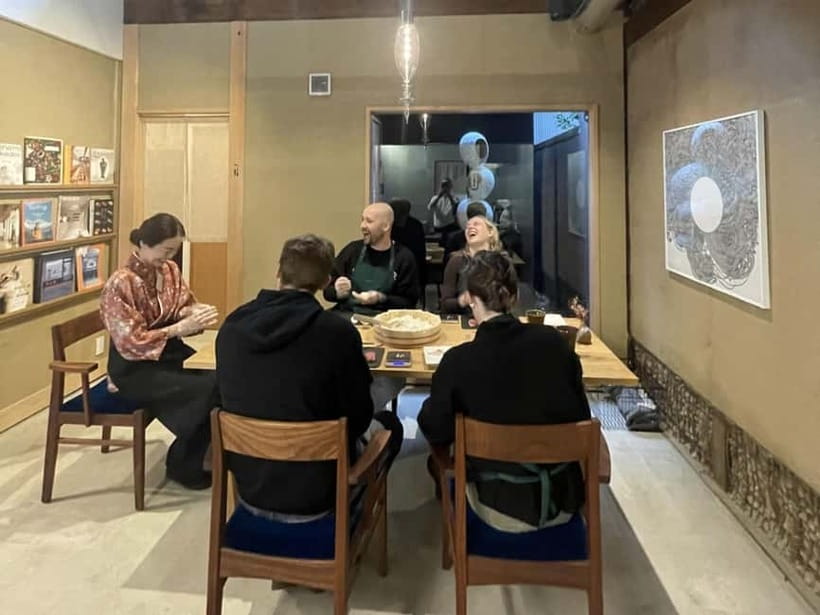
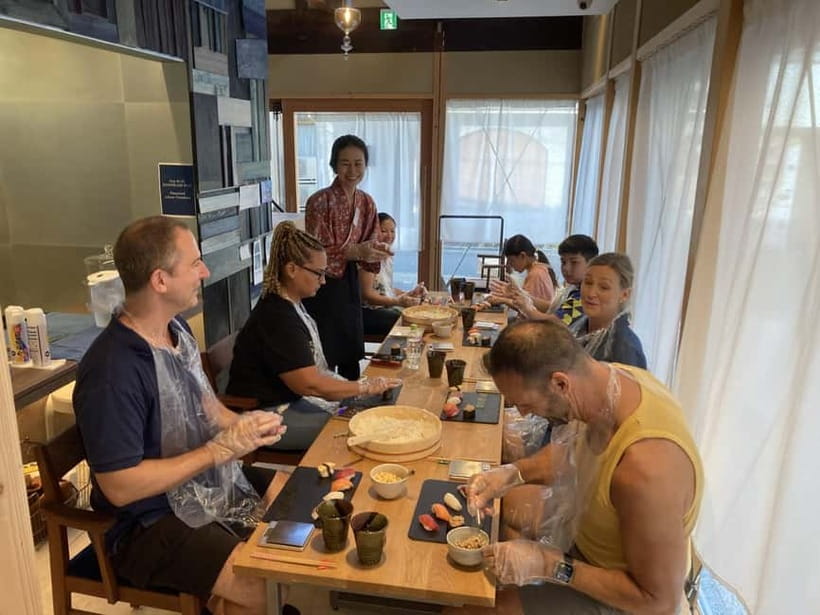
Kyoto’s original small-group sushi workshop gives you more than a quick cooking demonstration. You work with the rice, fish, and rolling mat yourself, then sit down to eat the meal you created. Kana leads the class in clear English, with assistants such as Aya, Ayumi, or her husband Karim helping participants one at a time.
I like the eight-person limit, which keeps the pace calm and leaves room for questions. I also like the setting: a restored Kyoto townhouse near Kiyomizu-Gojō Station, close to Gion and Kiyomizu-dera. The main catch is simple: this class is not suitable for vegetarians or wheelchair users.
Key points to know before booking
- You make several kinds of sushi: Expect instruction in nigiri and maki, with past classes also including gunkan.
- Fresh local ingredients matter: Fish is sourced locally, including from Nishiki Market, and the rice may come from Kana’s family farm.
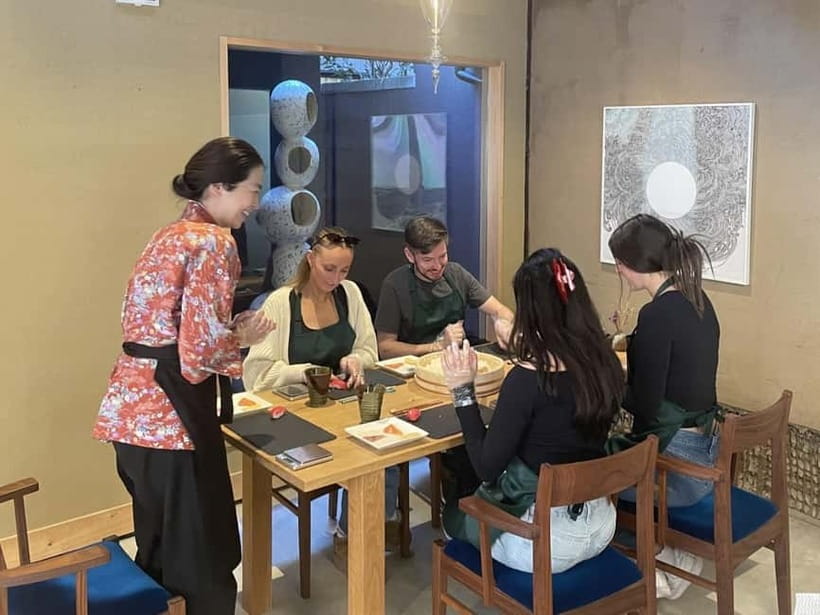
- The group stays small: A maximum of eight people means more help with shaping, pressing, and rolling.
- It is a full hands-on lunch: You eat the sushi you prepare, along with miso soup. Several participants found the portion generous.
- The class has a cultural side: Kana is happy to discuss Japanese food, Kyoto, local history, and daily life.
- You take home useful tools: The gift bag includes a sushi rolling mat, chopsticks, and a recipe card.
A calm start inside Kyoto Wand
The meeting point is the Kyoto Wand building, a short walk from Kiyomizu-Gojō Station on the Keihan Main Line. It sits within walking distance of major sightseeing areas, including Gion and Kiyomizu-dera, so you can pair the workshop with a morning at the temples or an afternoon around the old streets.
The location is useful in another way: it gets you away from the busiest tourist routes for a little while. You enter a traditional Kyoto townhouse that has been restored for the workshop. The setting is attractive without being fussy, and the peaceful room suits a lesson that rewards patience.
You do not need to arrange hotel pickup. Plan your own way to the building and allow enough time to find the entrance. The supplied Google Plus Code is XQVC+J7 Kyoto, which can help if your map app has trouble with the address.
The class is conducted in English. That matters here because sushi has many small movements that are easier to follow when the instructor can slow down, repeat a step, or correct your hand position. Kana is also happy to talk about Japanese culture and Kyoto, so the class feels like a food lesson with a local conversation built in.
More craft workshops in Kyoto:
- Kyoto : Chopsticks Making Workshop in Gion with Engraving Option
★ 5.0 · 958 reviews - Authentic knife making experience at a blacksmith in Kyoto
★ 4.8 · 350 reviews - Roketsu dyeing experience: M course Roketsu Dyeing Experience
★ 5.0 · 163 reviews
Ninety minutes of useful, hands-on instruction
The workshop lasts 90 minutes. That is short enough to fit neatly into a sightseeing day, but long enough to make several kinds of sushi rather than simply assembling one prepared roll.
You begin with the foundation: sushi rice. The class covers seasoning properly cooked rice, an important step that is often skipped in casual home recipes. Rice that is too wet, too dry, too warm, or poorly seasoned can overpower the fish, so learning this part gives you a skill you can use long after your Kyoto visit.
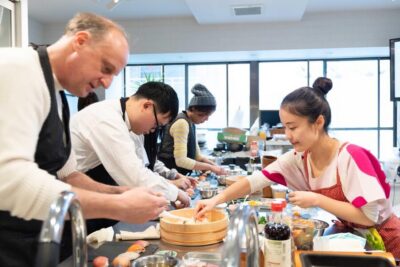
The instructors demonstrate each stage before you try it. You then work at your own place with disposable gloves and an apron supplied for the class. The small group helps here. A teacher can watch your hands as you shape the rice, rather than leaving you to copy a demonstration from across a crowded room.
Next comes nigiri, the familiar hand-shaped sushi with rice topped by fish or another ingredient. You learn how much rice to use, how to form it without crushing the grains, and how to place the topping neatly. It looks simple, but the shape and pressure take practice. The class gives you a friendly place to get that practice without worrying about restaurant-level perfection.
You also prepare maki rolls. The rolling mat in your gift bag becomes part of the lesson, not just a souvenir. You spread the rice, arrange the filling, roll the sheet, and cut the finished piece. The process is satisfying because the result changes from a loose collection of ingredients into a complete, shareable meal.
Some sessions have also included gunkan, a small sushi shape wrapped with nori and topped with a softer filling such as corn or tuna salad. The exact selection can vary, but you should expect a useful range of sushi forms rather than one repeated recipe.
What makes the food worth the $60 price
At $60 per person, this is not the cheapest lunch in Kyoto. You can buy sushi for less, especially at a casual counter or food hall. The value here comes from combining lunch with instruction, personal help, cultural conversation, and equipment you can use at home.
The ingredients are a key part of the deal. The fish is described as fresh and high quality, with supplies sourced locally. One class used fish from Nishiki Market, and past menus have included salmon, tuna, squid, yellowtail, and egg omelet. The exact fish may change, so do not book expecting one guaranteed selection.
The rice has an unusually personal connection in some sessions. Kana’s family grows the rice used in the class, giving the lesson a direct link to Japanese food production. That detail helps explain why the instructors spend time on rice preparation rather than treating it as a background ingredient.
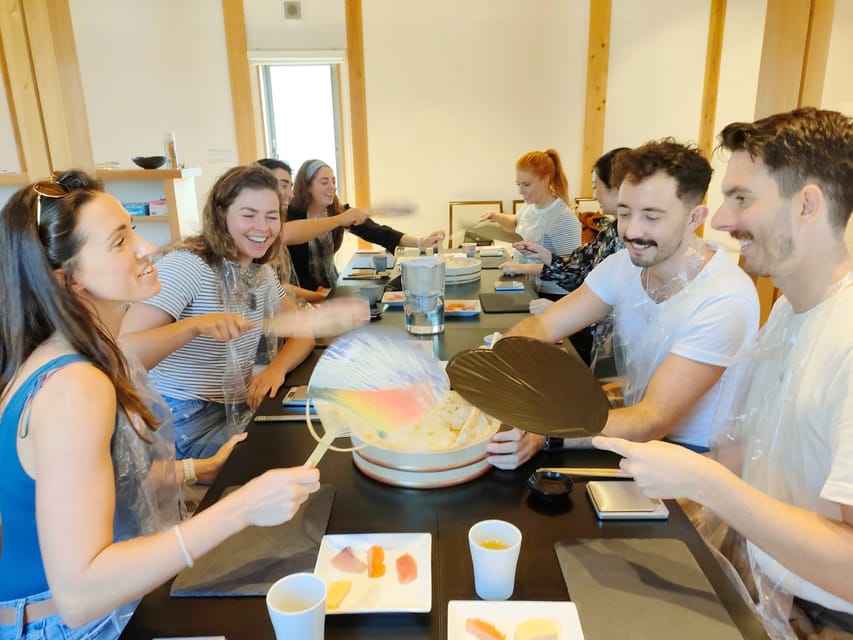
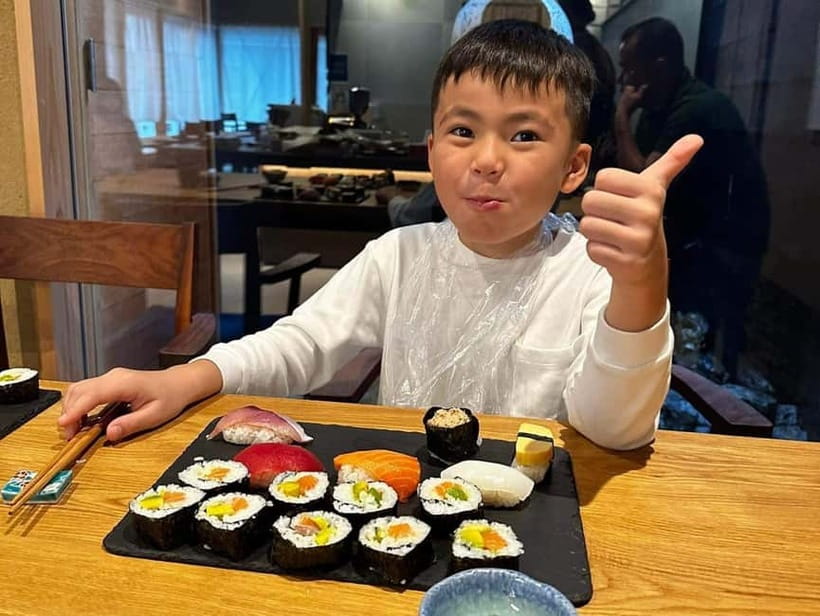
You also receive miso soup with your sushi. The meal itself can be substantial. Several participants noted that they made and ate a large amount, with one family preparing two sets of 16 pieces. Come hungry, especially if you are planning the class as lunch rather than a snack.
The take-home bag adds practical value. A sushi rolling mat, chopsticks, and recipe card are simple items, but they give you a realistic chance to repeat the class at home. You will still need ingredients, and shaping sushi will take practice, but you leave with more than photographs and a full stomach.
A teacher who makes room for questions
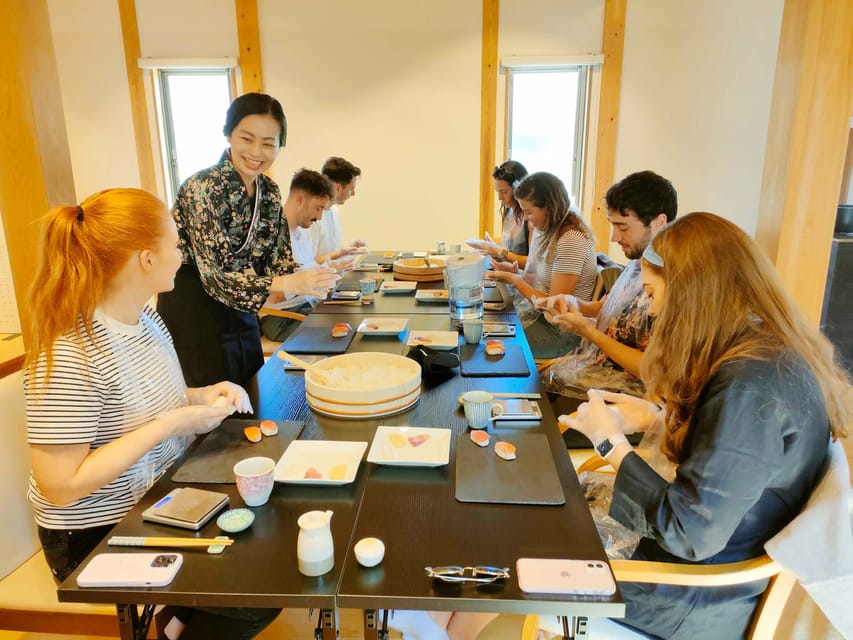
Kana receives the strongest praise for her calm teaching style and warm welcome. She explains each step carefully, repeats demonstrations when needed, and helps individuals without making beginners feel behind. That is important for families and mixed-age groups, where one person may already cook regularly while another is holding a rolling mat for the first time.
Her conversation adds another layer. She has spoken about growing up in Osaka, moving to Kyoto, Japanese history, local customs, and places to eat or visit. You can ask about the food in front of you, or use the time to get practical ideas for the rest of your stay.
Her husband Karim has helped with classes, and other assistants named in past sessions include Aya and Ayumi. Having more than one instructor can make a real difference when several people are shaping rice at once. It also gives the class a relaxed, family-hosted feeling rather than the atmosphere of a large cooking school.
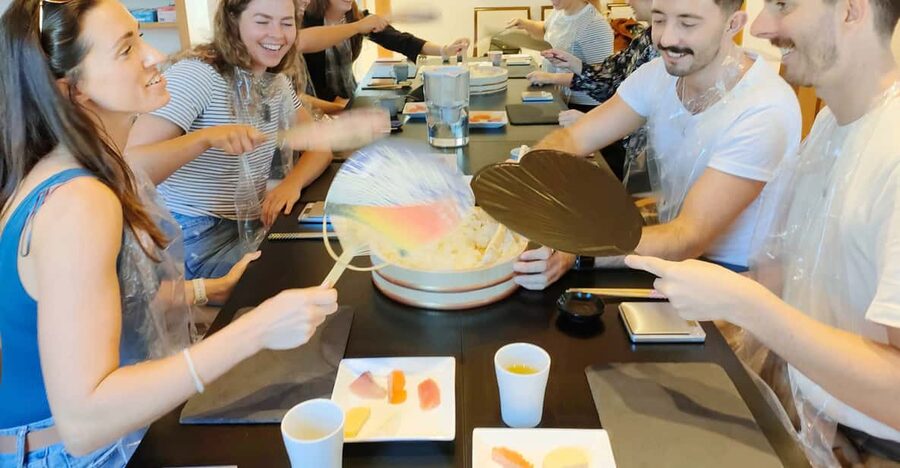
The social side is part of the appeal. You sit around a table with a small international group, make food together, and usually have time to talk while following the instructions. If you prefer a private lesson with no interaction, this may not be your ideal format. If you enjoy meeting people during a trip, the shared meal works well.
More sushi making classes in Kyoto:
- Sushi Making in Kyoto! Same-day bookings welcome!
★ 5.0 · 713 reviews - The Original Small-Group Sushi Making Class in Kyoto
★ 5.0 · 436 reviews - Sushi – Authentic Japanese Cooking Class – the best souvenir from Kyoto!
★ 5.0 · 93 reviews - Private Kyoto Sushi Cooking Class & Tea Ceremony with Emika
★ 5.0 · 66 reviews
Eating what you make
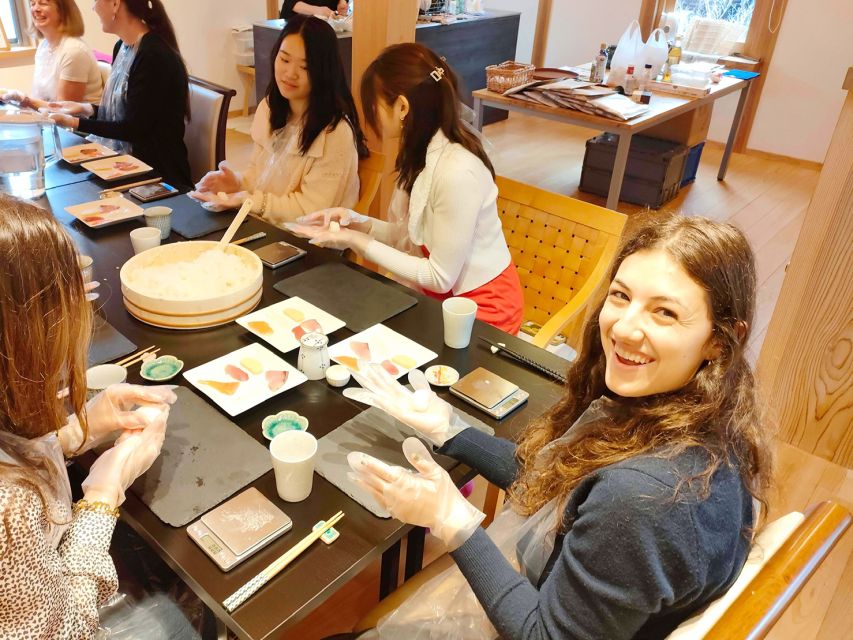
The best moment comes after the preparation, when the sushi is served for your lunch. You use soy sauce, wasabi, and ginger with the pieces you shaped yourself. Even an imperfect roll tastes better when you remember the rice sticking to your fingers and the instructor showing you how to tighten the mat.
The meal also gives you a chance to compare techniques. A neat piece of nigiri may look very different from a first attempt, and that is part of the fun. You can see how rice pressure, filling placement, and cutting affect the final result.
Freshness is especially important for anyone nervous about raw fish. The class uses high-quality fish prepared for the workshop, and one participant who had been hesitant about raw seafood found the fish easy to enjoy. Still, raw fish is part of the experience, so you should be comfortable eating it before booking.
The portion is generous enough that you may want to treat this as a proper meal. That makes the timing useful: schedule it around lunch rather than directly after a large breakfast or before an elaborate dinner.
Who will enjoy this Kyoto workshop
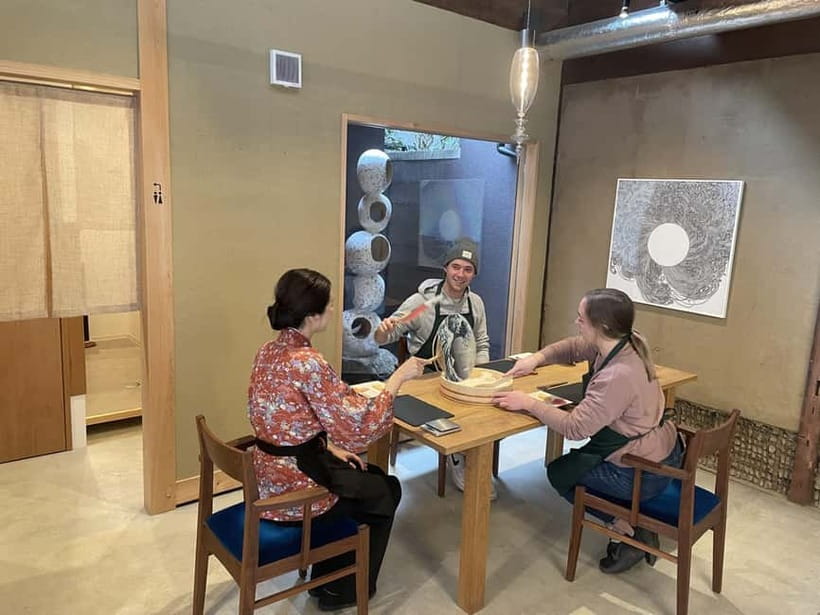
This is a strong choice for first-time sushi makers. The instructions are designed for beginners, and the instructors guide you through each stage rather than expecting you to know how to handle rice or nori.
It also suits people who already make sushi at home but want a more traditional local approach. You can ask about rice seasoning, shaping, ingredients, and the differences between sushi styles. The recipe card gives you a reference once you return home.
Families can do well here. A seven-person family, including grandparents and children, fit within the group format and enjoyed making nigiri and maki together. A 10-year-old also took part successfully with a parent. The hands-on work gives children a clear role, though parents should decide if the food and raw fish are suitable for them.
Couples and solo participants can enjoy it too. If only a few people book a particular session, you may receive very personal instruction. Larger groups still remain limited to eight, so the class should not feel like a lecture.
This experience is less suitable for vegetarians because vegetarian participation is specifically excluded. It is also not suitable for wheelchair users. Tell the provider about dietary restrictions when booking, since the class centers on prepared fish and other selected ingredients.
Timing it with your Kyoto sightseeing
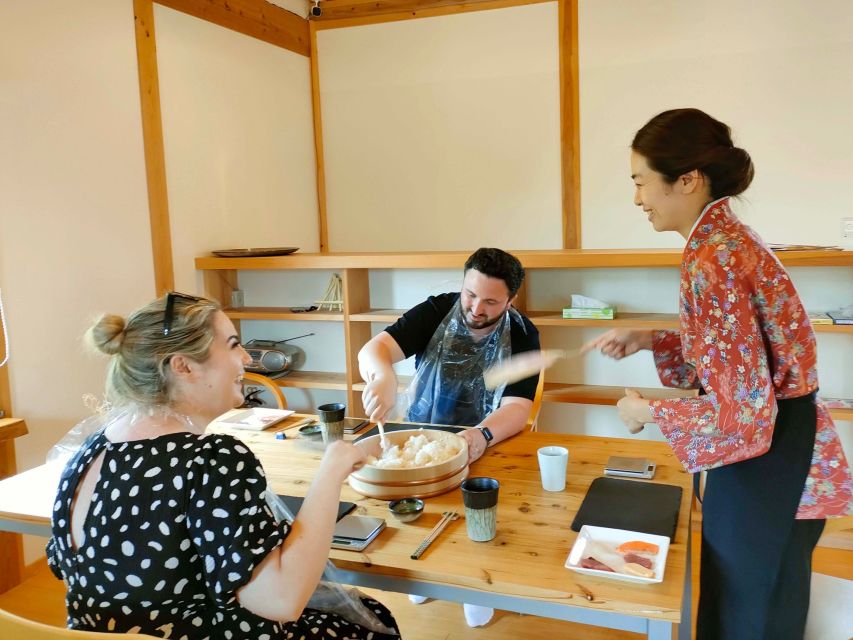
The workshop works especially well as a break from temple visits. Kiyomizu-dera and Gion are nearby, and Kiyomizu-Gōjō Station provides a straightforward rail reference point. You can plan the class before or after sightseeing in eastern Kyoto, depending on the available start time.
I would avoid squeezing it between distant attractions. The class has a relaxed pace, and arriving rushed would undercut one of its best qualities. Check the start times for your date, then leave room for walking to the townhouse and finding the entrance.
There is no hotel pickup or drop-off. That is not a major issue in central Kyoto, but it means you need to handle the final walk yourself. The location is practical for visitors already exploring the eastern side of the city, less so if you are staying far away and have a tightly packed schedule.
Cancellation is flexible enough for changing travel plans: you can cancel up to 24 hours before the activity for a full refund. You can also reserve now and pay later, which helps if your Kyoto schedule is still taking shape.
The small drawbacks to consider
The 90-minute length is a strength for a busy itinerary, but it also limits how far the lesson can go. You learn preparation and shaping, not the full work of a professional sushi chef. You do not cut the fish yourself, a detail one participant specifically wished had been included.
The class can also be quite filling. That is good value at lunchtime, but less convenient if you want to sample several Kyoto restaurants later the same day.
The group limit is eight, not necessarily two or three. Some sessions may be almost private, while others may include a full group. The experience should remain personal, but the amount of one-on-one help can change with attendance.
Finally, the menu is tied to fresh ingredients and the needs of the class. Expect quality fish and several sushi styles, but do not treat the examples of salmon, tuna, squid, yellowtail, or gunkan as a guaranteed menu.
Should you book it?
Book this workshop if you want to make your own lunch, learn skills you can repeat at home, and spend time with friendly English-speaking instructors in a traditional Kyoto setting. The $60 price is fair when you count the food, miso soup, instruction, and take-home tools.
Skip it if you are vegetarian, use a wheelchair, dislike raw fish, or want a formal professional-chef course with fish cutting and advanced knife work. For everyone else, this is a practical, personal way to connect food with Kyoto, especially for families, beginners, and curious home cooks.
FAQ
How long does the Kyoto sushi-making workshop last?
The workshop lasts 90 minutes. Check the available start times when booking.
How many people can join the class?
The class is limited to eight participants, making it a small-group experience.
Is the sushi workshop taught in English?
Yes. The host and instructors conduct the workshop in English.
What kinds of sushi will I learn to make?
You will learn to prepare nigiri and maki rolls. Some sessions have also included gunkan sushi.
Is lunch included?
Yes. You eat the sushi you make, and miso soup is included.
What comes in the take-home gift bag?
The gift bag includes a sushi rolling mat, chopsticks, and a recipe card.
Is the workshop suitable for vegetarians or wheelchair users?
No. The activity is not suitable for vegetarians or wheelchair users. You should advise the provider about dietary restrictions when booking.
Newest Kyoto experiences on the site
- Treasures of Kyoto: Gion & historical Walking Tour★ 5.0 · 6 reviews
- Whisk Your Own Matcha: A Zen Matcha Experience at Temple★ 3.6 · 7 reviews
- Kyoto tea town for matcha lovers★ 5.0 · 16 reviews
- Uji: Private immersion into Kyoto’s tea and reglious culture★ 5.0 · 17 reviews
- Kyoto Matcha Green Tea Tour★ 4.5 · 23 reviews
- Uji and Wazuka Matcha Farm Half Day Private Guided Tour★ 5.0 · 21 reviews
- Utilising upcycled Matcha! Creating matcha incense (Uji, Kyoto)★ 5.0 · 6 reviews
- Sacred Temple Yoga Experience in Japan★ 5.0 · 3 reviews
Kyoto Sushi Making Classes, compared.
The Original Small-Group Sushi Making Class in Kyoto
Read our review →
Sushi – Authentic Japanese Cooking Class – the best souvenir from Kyoto!
Read our review →
Private Kyoto Sushi Cooking Class & Tea Ceremony with Emika
Read our review →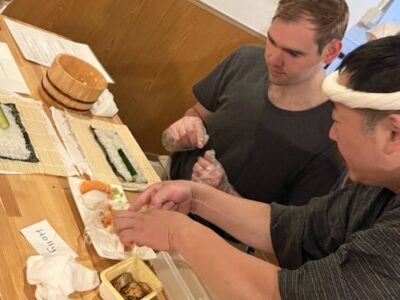
Enjoy Sushi & Market Tour! Best for Family & Couple!
Read our review →
Sushi or Traditional Japanese Cuisine in a Kyoto Home with Emika
Read our review →
Kyoto Sushi Making Experience with a Professional Sushi Chef
Read our review →
Browse the lists this tour appears in