
Reviewed · KYOTO CRAFT WORKSHOPS
Roketsu dyeing experience: M course Roketsu Dyeing Experience
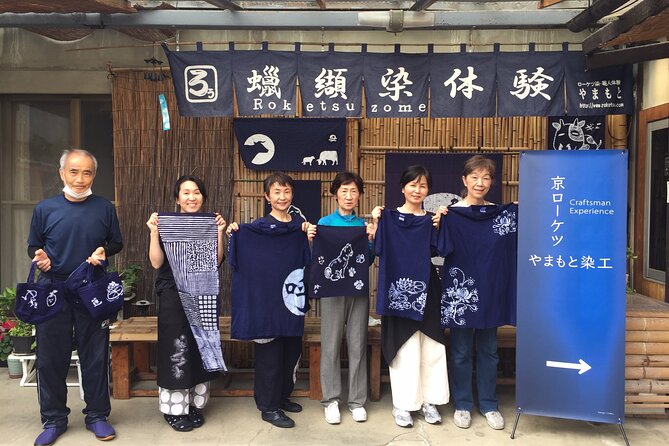
Roketsu dyeing gives you something many Kyoto activities do not: a souvenir you make yourself, from first sketch to final color. At Roketsu73, you choose an item, select from a large collection of stencils, apply melted wax, and let the workshop complete the bucket dyeing. The finished piece is ready to take home the same day.
I like the calm, hands-on pace and the chance to spend time with a small family-run craft studio. I also like the price, about $25.77 per person, which includes a useful keepsake rather than a quick demonstration. The main thing to consider is communication: English is limited, so you may need to watch carefully and ask for help through gestures and simple words.
Key points at a glance
- Make the design yourself: Choose from dozens, possibly hundreds, of stencils, or bring your own sketch.
- Work with real wax-resist dyeing: You paint melted wax onto the fabric before it is dyed.
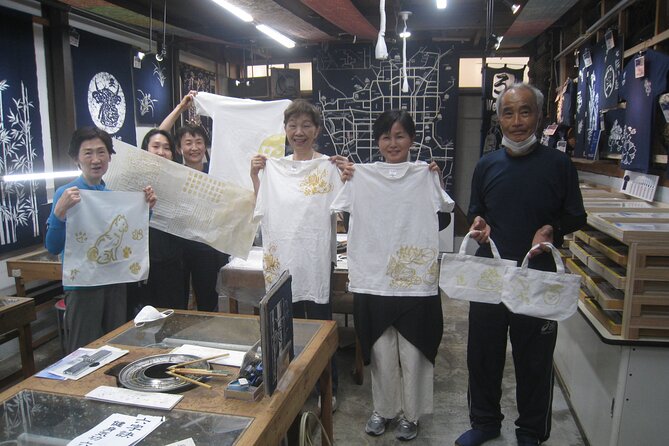
- Choose your finished item: Options include T-shirts, tote bags, decorative banners, and wall hangings.
- Meet a local craft family: The owner and his mother, Yoko, guide you through the process.
- Plan extra time for detail: The basic visit takes 90 to 120 minutes, but intricate designs can take around three hours.
- Take it home the same day: You do not have to wait for a later shipment or return visit.
What Roketsu dyeing actually involves
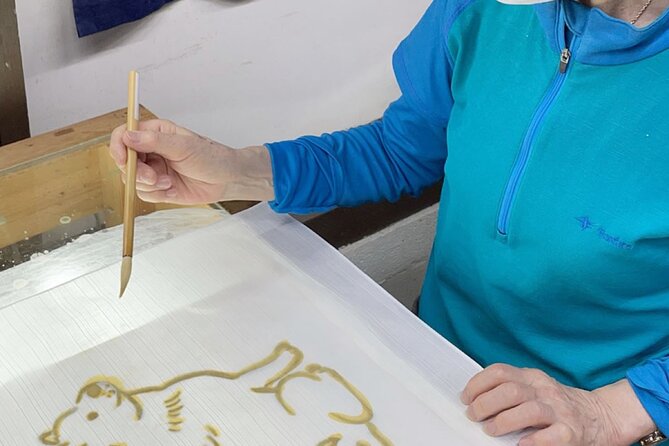
Roketsu is a traditional Japanese wax-resist dyeing method. The basic idea is simple: areas covered with wax resist the dye, leaving the design visible when the fabric is colored. The process gives you a clear role in the work, rather than leaving you to watch an artist do everything.
You begin by choosing what to decorate. A T-shirt is the obvious choice if you want something wearable, but a tote bag, banner, or hanging may be easier for a first project. The size and shape of your item affect how much room you have for a design, so think about that before you start choosing patterns.
Next comes the design. You can pick from the studio’s large supply of stencils, combine several designs, or work freehand. If you have your own sketch, you can use it as the basis for an original piece. That option makes this more than a standard craft class, though it also adds time and demands more care.
You practice on a small piece of cloth before working on your chosen item. This is an important step. The wax process has a learning curve, and a short trial lets you see how the tool behaves without risking your final work.
Once you are ready, you paint the melted wax onto the fabric. The studio team then handles the dyeing stage, using the bucket dyeing method that defines the workshop. The color develops around the wax-covered areas, revealing the pattern. You get to see how your drawing changes once the fabric has been dyed, which is part of the fun.
The final result will not always look exactly like your stencil or sketch. That is normal with hand dyeing. Small changes in wax thickness, brush movement, and the dye itself can create differences. If you want a perfectly uniform printed shirt, this is not the right activity. If you want a one-of-a-kind object with signs of your own hand, it is a good fit.
More craft workshops in Kyoto:
- Kyoto : Chopsticks Making Workshop in Gion with Engraving Option
★ 5.0 · 958 reviews - Authentic knife making experience at a blacksmith in Kyoto
★ 4.8 · 350 reviews - Kyoto: Beginner Knife Sharpening & Handle Fitting Workshop
★ 4.9 · 141 reviews
Choosing a T-shirt, tote, banner, or hanging
The item you choose shapes the whole session. A T-shirt gives you a souvenir you can wear, and it is a popular pick for families and first-time crafters. A tote bag is practical and usually gives you a manageable flat surface for a design.
Decorative banners and wall hangings make more sense if you want the craft itself to be the main memory. They can display a larger or more formal pattern at home. One participant came away with a wall hanging, while other groups made shirts and bags, so the workshop offers more range than a single standard product.
Ask yourself how much detail you want. A simple stencil can fit the advertised 90 to 120 minutes. Several patterns, freehand work, or a larger item can stretch the session to three hours. The instructors do not appear to rush you, which is helpful, but you should not schedule a tight museum visit immediately afterward.
The studio has a large selection of designs. You can select one pattern or combine several to make something more personal. For a child, choosing a stencil may be easier than drawing from scratch. For an adult who already has an idea, bringing a sketch gives you more control.
A closer look at the workshop pace
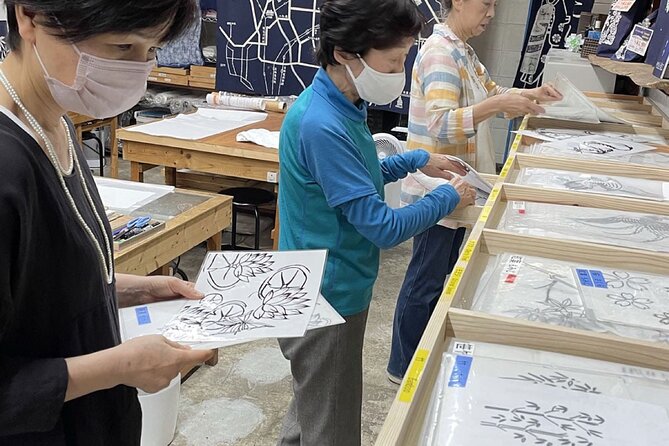
The activity is structured, but it does not feel like a race. You receive guidance at each stage, then do as much of the work as possible yourself. That balance matters. You are not simply decorating a preprinted object, yet you also do not have to master the whole craft alone.
The owner and his mother, Yoko, are central to the experience. The owner demonstrates the process and helps you get the result you want. Yoko, described as an artist, also provides support during the work. Their patience is especially useful if your design takes longer than expected or if you are unsure how much wax to apply.
English instruction is limited. The hosts can show you the steps, and the activity is hands-on enough that you can follow much of it by watching. Still, explanations may be brief or unclear at times. I would treat this as part of the setting and arrive ready to observe closely, point to the area you need help with, and ask simple questions.
That language point is worth taking seriously. One person found the technique confusing at moments and felt that staff sometimes tried to adjust the drawing. Others found the guidance easy to follow because the process was shown directly. If you want a long, detailed English lecture on textile art, choose another class. If you are comfortable learning by demonstration, the language gap is manageable.
Why the slow pace works in Kyoto
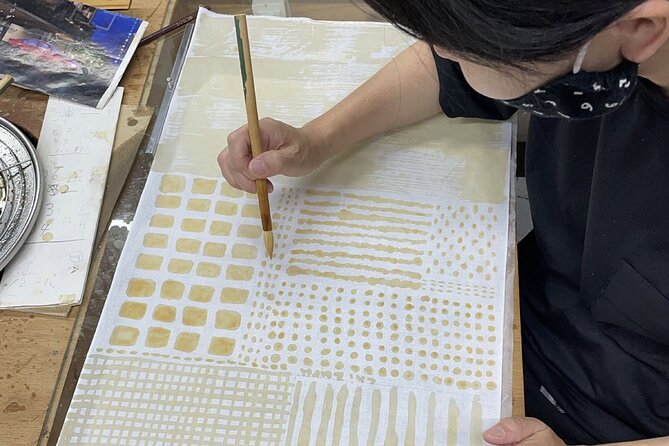
Kyoto can fill your day with temples, trains, queues, and long walks. A craft session gives you a different kind of afternoon. You sit down, concentrate on one small task, and let the sightseeing schedule pause for a while.
I like this change of pace because the activity has a clear result without feeling like a race toward a photo opportunity. Families can work side by side, and children have a project to focus on. One family of six, including four teenagers, spent several hours on shirts and a banner, with the teens staying off their phones while they worked.
The workshop also suits solo visitors. You do not need to arrive with a group or be an artist. The instructors guide you through the choices, and the process gives you something to do with your hands. A personal souvenir can feel more meaningful than another bought item, especially when you can explain how you made it.
The setting is outside Kyoto’s main sightseeing areas, at Roketsu73, Nishikyogoku Umazukacho, Ukyo Ward. That means it is not a quick add-on between major central attractions. You need to allow time to reach western Kyoto and return. The benefit is a more local-feeling stop away from the busiest sightseeing routes.
A few more Kyoto tours worth putting on the shortlist
- PERFECT KYOTO 1-Day Bus Tour
★ 5.0 · 13,518 reviews - Kyoto: Fushimi Inari, Kinkakuji, Bamboo Grove 1 Day Bus Tour
★ 4.8 · 4,316 reviews - Kyoto: Tea Ceremony in a Traditional Tea House in Kiyomizu
★ 4.9 · 3,519 reviews - Kyoto Geisha Walking Tour: Gion District & Hidden Gems
★ 4.7 · 3,273 reviews
What the finished piece is worth
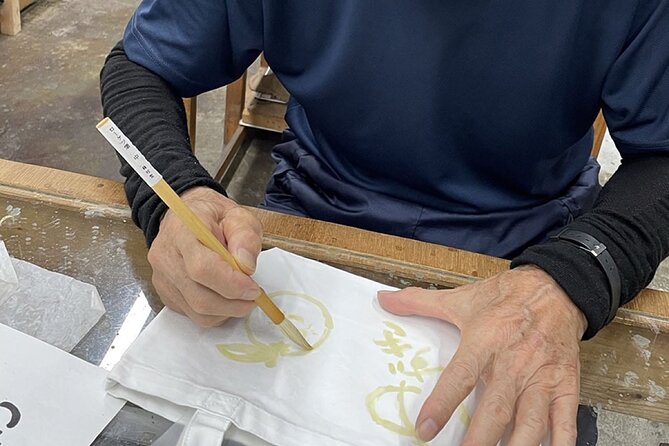
At about $25.77, this is strong value if the selected item is included in the booking price, as the experience format suggests. You get instruction, materials, dyeing, and a finished object to take away. The value is not just in the fabric. You also pay for a two-hour creative break and the chance to work with a traditional technique.
The same-day pickup makes the price easier to appreciate. You can use or pack the item before leaving Kyoto, and you do not need to arrange international delivery. That is useful for short trips and for anyone who wants to see the final color before deciding how to carry the piece home.
There are limits. Your work may not look like a professional textile artist’s piece, and the final pattern can vary from the stencil. You also need to invest your time. If you want a very quick souvenir, a shop-bought item is easier. If you want something made with your own effort, this offers much more for the money.
The work can also become more expensive in practical terms if you book it on a packed sightseeing day. A basic session takes around 90 minutes to two hours, but detailed work has taken some people about three hours. I would budget a full half-day once transport and extra design time are included.
Who will enjoy this most
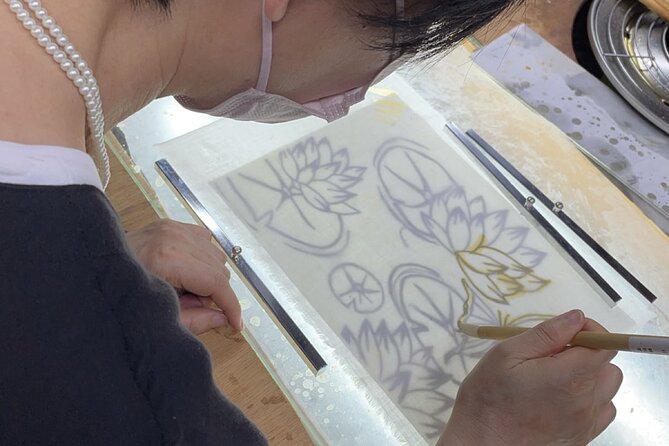
This is a good choice for people who enjoy arts and crafts, even if they do not think of themselves as artistic. The instructors offer enough help to get beginners through the process, and the practice fabric reduces the risk of making an early mistake on your final item.
Families have a strong reason to consider it. Children can choose an image, apply the wax with help, and leave with a practical memory of Kyoto. The activity also gives parents and teenagers a rare period of shared focus during a busy trip.
It suits solo visitors, couples, and friends as well. You can work at your own pace, and the finished item becomes a personal reminder of the trip. The studio can accommodate up to 30 people, so the maximum is fairly large, though the experience itself is still described as a family-run workshop.
You may want to skip it if you dislike crafts, do not want to sit for an extended period, or need a fully English-led class. You should also avoid booking it immediately before a fixed reservation. The flexible pace is a strength, but it makes exact timing difficult for detailed designs.
Planning the visit at Roketsu73
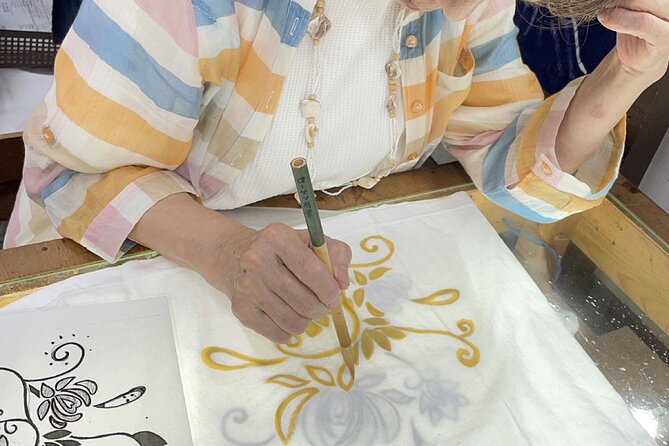
The meeting point and end point are the same: Roketsu73, Nishikyogoku Umazukacho, in Kyoto’s Ukyo Ward. The studio is near public transportation, but the address is outside the city’s main tourist core. Check your route before leaving and allow extra time rather than arriving just as the session begins.
Mobile tickets are accepted. Booking confirmation is sent within 48 hours, subject to availability, so do not wait until the last possible moment if your dates are fixed. The activity has been booked more than 10 times in a recent week, which is a useful sign that popular time slots can fill.
Service animals are allowed, and most people can take part. The activity requires good weather under its operating policy. If poor weather causes cancellation, you can choose another date or receive a full refund.
You can cancel for a full refund up to 24 hours before the start time. Changes or cancellations inside that 24-hour window are not accepted for a refund. Use Kyoto local time when calculating the cutoff.
Simple ways to get a better result
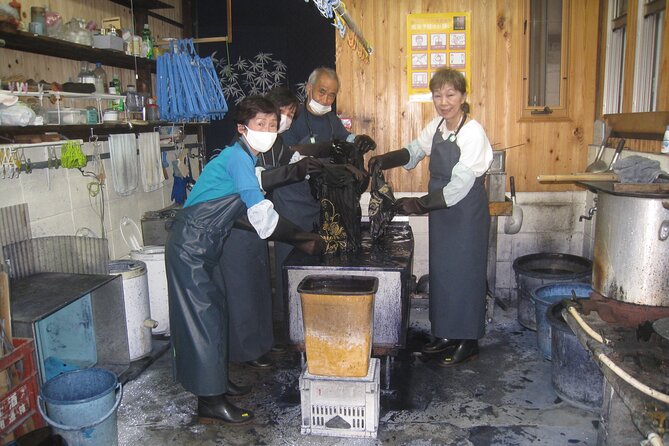
Start with a design that matches your patience. One or two clear shapes are easier to manage than a crowded composition, especially on a first attempt. The studio has many stencils, so you do not need to invent an elaborate pattern to make something personal.
Use the practice cloth seriously. Test how the wax looks, ask where to place it, and watch how the staff hold their tools. The short rehearsal can save you from spreading a line or filling an area you meant to leave open.
If you bring a sketch, keep it clear and not too detailed. The activity allows original works, but fine lines may be harder to transfer through wax than bold shapes. Combining a few ready-made patterns may give you a more polished result with less stress.
Give yourself more time than the advertised minimum if you care about the design. A simple piece may be finished in 90 minutes, while a detailed shirt or banner can take three hours. The instructors are willing to let you continue, but your own schedule is the part you control.
Finally, remember that handmade dyeing has variation. The final work may have small irregularities, and that is part of its character. I would judge success by whether the piece feels like yours, not by whether it matches a printed sample exactly.
Should you book this Roketsu experience?
Book it if you want a quiet, hands-on Kyoto activity and a souvenir with a real story behind it. The combination of local guidance, same-day pickup, many design choices, and a price of about $25.77 makes it one of the more useful craft stops for families, solo visitors, and anyone ready for a break from temples and walking.
Skip it if you need a tightly timed tour, a polished professional result, or detailed English instruction. For everyone else, schedule at least two hours, and three if you are choosing complex designs. The best reason to book is simple: you leave with something you helped create, not just something you bought.
FAQ
How long does the Roketsu dyeing experience take?
The activity is listed at approximately two hours, with a usual range of 90 to 120 minutes. Detailed designs can take around three hours.
What can I dye during the workshop?
You can choose among items such as T-shirts, tote bags, decorative banners, and wall hangings.
Can I bring my own design?
Yes. You can bring your own sketch and use it to create an original work. The studio also provides a large selection of stencil designs.
Can I take the finished item home the same day?
Yes. The completed item can be taken home on the day of the experience.
Where does the activity start and finish?
It starts and ends at Roketsu73, Nishikyogoku Umazukacho, Ukyo Ward, Kyoto, 615-0885, Japan.
Can I cancel for a refund?
You can receive a full refund if you cancel at least 24 hours before the local start time. Cancellations or changes made less than 24 hours before the experience are not refunded.
Newest Kyoto experiences on the site
- Treasures of Kyoto: Gion & historical Walking Tour★ 5.0 · 6 reviews
- Whisk Your Own Matcha: A Zen Matcha Experience at Temple★ 3.6 · 7 reviews
- Kyoto tea town for matcha lovers★ 5.0 · 16 reviews
- Uji: Private immersion into Kyoto’s tea and reglious culture★ 5.0 · 17 reviews
- Kyoto Matcha Green Tea Tour★ 4.5 · 23 reviews
- Uji and Wazuka Matcha Farm Half Day Private Guided Tour★ 5.0 · 21 reviews
- Utilising upcycled Matcha! Creating matcha incense (Uji, Kyoto)★ 5.0 · 6 reviews
- Sacred Temple Yoga Experience in Japan★ 5.0 · 3 reviews
Kyoto Craft Workshops, compared.
Chopsticks Making Workshop in Gion with Engraving Option
Read our review →
Authentic knife making experience at a blacksmith in Kyoto
Read our review →
Beginner Knife Sharpening & Handle Fitting Workshop
Read our review →
Japanese Archery Workshop with Experienced Instructor
Read our review →
Kyoto Michelin Ramen Workshop or Painting Ramen Essentials
Read our review →

Browse the lists this tour appears in