
Reviewed · KYOTO CRAFT WORKSHOPS
Kyoto: Beginner Knife Sharpening & Handle Fitting Workshop
A Japanese kitchen knife becomes a much better souvenir when you learn to sharpen and finish it yourself. At Japanese knife shop HIRAI in Kyoto, you choose a Santoku, Deba, or Yanagi blade, work it on shop whetstones, and fit a magnolia handle before taking it home. I like the small group of up to three and the fact that the standard knife is included. I also like that this is a useful skill, not just a craft demonstration.
The main drawback is that the two-hour session requires focus and careful hand work. You will also use fire while fitting the handle, so your clothes may pick up a smoky smell. The shop is in the busy Nishiki Market area, where finding the white storefront curtain can take a little patience.
Key points at a glance
- Sharpen and assemble one knife: You work on a Santoku, Deba, or Yanagi and fit its handle during the same session.
- Take home a practical souvenir: The knife you sharpen and the magnolia handle you attach are included in the $161 price.
- Small, hands-on instruction: The group is limited to three, giving you time for demonstrations, corrections, and practice.
- English help is available: Instruction is offered in English and Japanese, with guides such as Julio and Tatsu assisting participants.
- Engraving can add a personal touch: Engraving is included, but you must request it in advance and provide up to four letters.
- Expect heat and smoke: Fire is used during handle fitting, so wear clothes you do not mind smelling smoky.
Why this Kyoto workshop is more than a knife purchase
Many Kyoto souvenirs look attractive for a few days and then disappear into a cupboard. This one gives you a knife, a new maintenance skill, and a clear memory of how the object came together. You are not simply choosing a finished blade from a shelf. You are learning how to care for it and taking part in the final stages of its preparation.
The class begins with an explanation of Japanese knives and their history. That short introduction matters because the three knife types are not interchangeable. A Santoku is the most general-purpose choice. A Deba is associated with heavier work, while a Yanagi is a long, narrow style often linked with precise slicing. The workshop lets you select the shape that best fits your kitchen interests.
I especially like the practical focus. Several people arrive unsure about wetstone sharpening, often because online videos make the process look easier than it feels. Here, you see a demonstration first, then work on your own blade while the instructor watches your angle and movement. That immediate correction is the useful part. You leave with more than a sharp knife. You leave with a method you can repeat.
More craft workshops in Kyoto:
- Kyoto : Chopsticks Making Workshop in Gion with Engraving Option
★ 5.0 · 958 reviews - Authentic knife making experience at a blacksmith in Kyoto
★ 4.8 · 350 reviews - Roketsu dyeing experience: M course Roketsu Dyeing Experience
★ 5.0 · 163 reviews
Finding HIRAI near Nishiki Market
You go directly to the shop rather than meeting a guide at a station or hotel. Look for the white storefront curtain at the building. The shop is in the Nishiki Market area, which is convenient but crowded, and the entrance can be easy to miss among the market activity.
Arrive at least five minutes early. The workshop is only two hours long, so a late arrival cuts into the explanation and practice time. I would not schedule this with a tight connection to another booking. Give yourself enough time to locate the shop, particularly if you are already carrying shopping bags or moving through the market at a busy hour.
The location also makes this easy to pair with a walk through central Kyoto. Still, remember that you will leave with a knife. Plan how you will carry it safely and check any airline or transport rules that apply to you. The workshop packages the knife for you, but it remains your responsibility after you leave the shop.
The first lesson: Japanese knives and your choice of blade
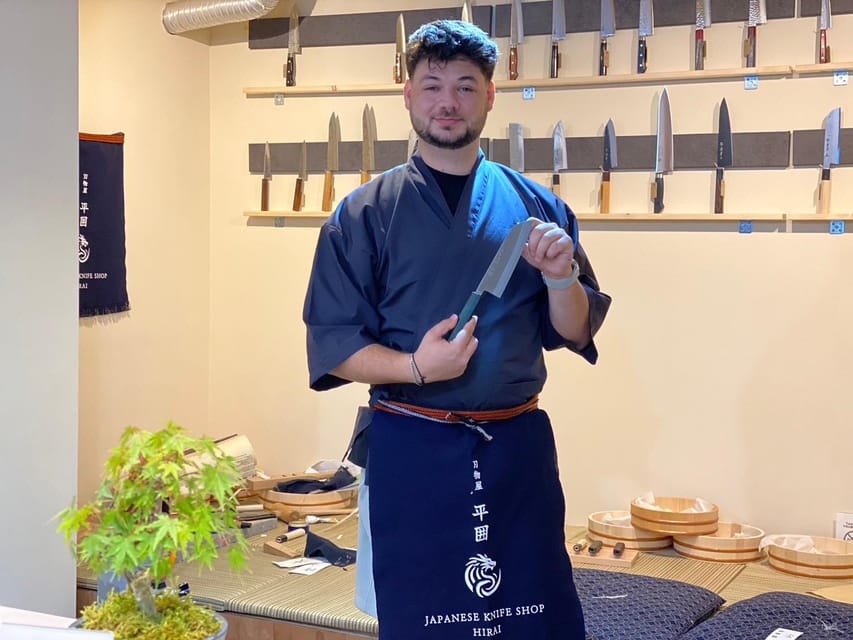
The opening section covers the background of Japanese knives and explains the work ahead. This is not a long lecture. It gives you enough context to understand why the blade shape matters and what you will be doing with the whetstone.
You then choose one knife from three options:
- Santoku: A sensible all-round option for someone who wants a useful everyday kitchen knife.
- Deba: A more substantial style for people interested in a different blade profile and heavier kitchen work.
- Yanagi: A longer, narrower style that appeals to those drawn to precise slicing and traditional Japanese forms.
The standard choices are already included in the price. That is important because the workshop does not force you into an upgrade to make the experience worthwhile. The included knives are described as good quality, and the activity remains useful even if you choose the standard option.
The shop also sells additional knives, but any extra purchase costs more. You can upgrade the blade if you want a different model, but treat that as an optional shopping decision rather than part of the required workshop. One useful feature of this experience is the lack of pressure to buy more.
Learning wetstone sharpening without guesswork
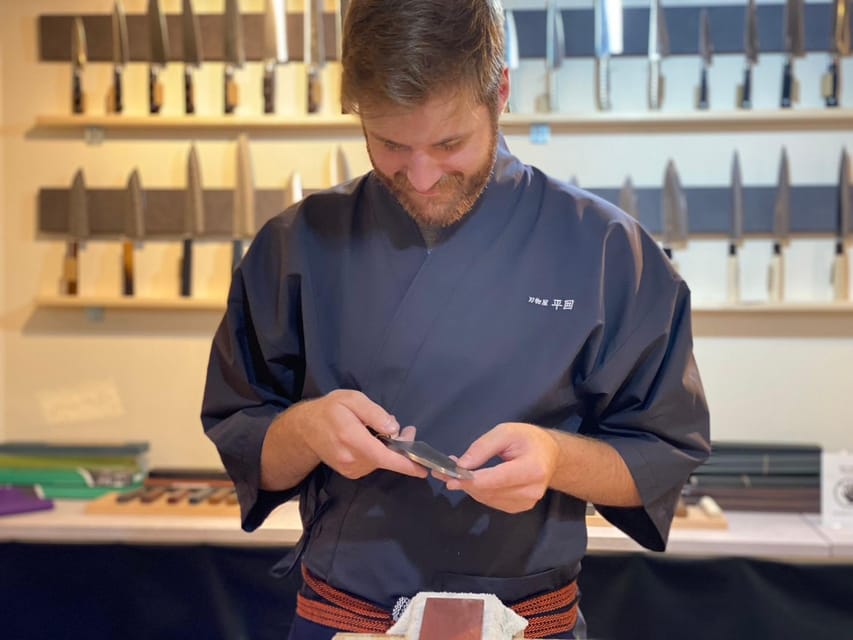
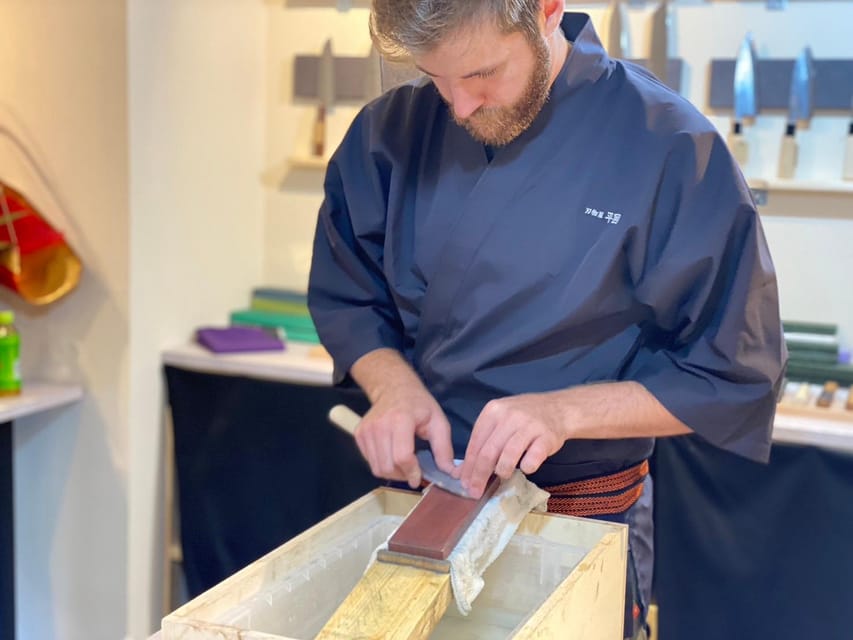
The sharpening section is the heart of the workshop. The shop provides the whetstones, so you do not need to buy one to take part. You first watch the correct method, often using demonstration knives, then begin working on your own blade.
For a beginner, the value comes from feedback. Keeping a consistent angle and applying the right pressure is hard to judge when you are alone at home. An instructor can show you what the movement should feel like, then correct your hands before a small mistake becomes a bad habit.
The instructors use simple explanations and allow you to practice. English support is available, and the workshop is also conducted in Japanese. Julio is named as one of the instructors, and Tatsu is another staff member who has helped participants through knife selection and handle work. The exact instructor may vary, but the important point is that English-speaking support is available.
You should expect concentration. This is not a casual activity where you chat through the entire session while someone else does the work. You handle the blade and stone, and the result depends partly on your attention. That makes the class rewarding, but it may feel demanding for anyone expecting a quick demonstration.
A short written reminder of the technique is not listed as part of the workshop. I would pay close attention during the demonstration and, if permitted, make your own notes afterward. The hands-on correction helps, but remembering each step once you return home is another matter.
Same city, a completely different kind of day:
- PERFECT KYOTO 1-Day Bus Tour
★ 5.0 · 13,518 reviews - Kyoto: Fushimi Inari, Kinkakuji, Bamboo Grove 1 Day Bus Tour
★ 4.8 · 4,316 reviews - Kyoto: Tea Ceremony in a Traditional Tea House in Kiyomizu
★ 4.9 · 3,519 reviews - Kyoto Geisha Walking Tour: Gion District & Hidden Gems
★ 4.7 · 3,273 reviews
Fitting the magnolia handle over an open flame
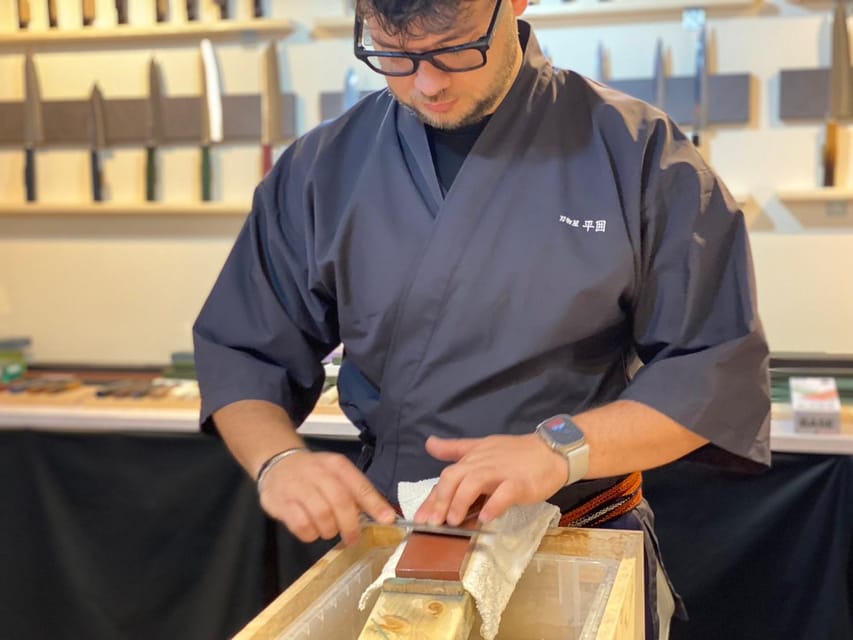
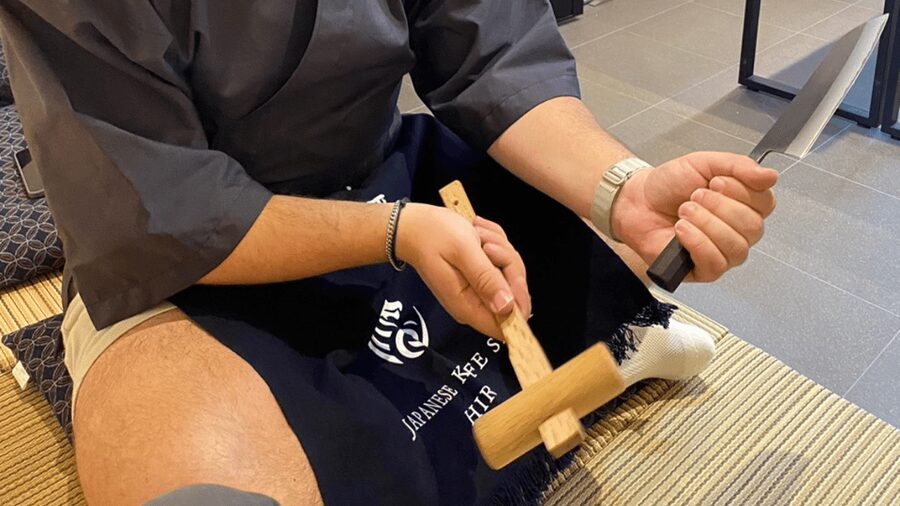
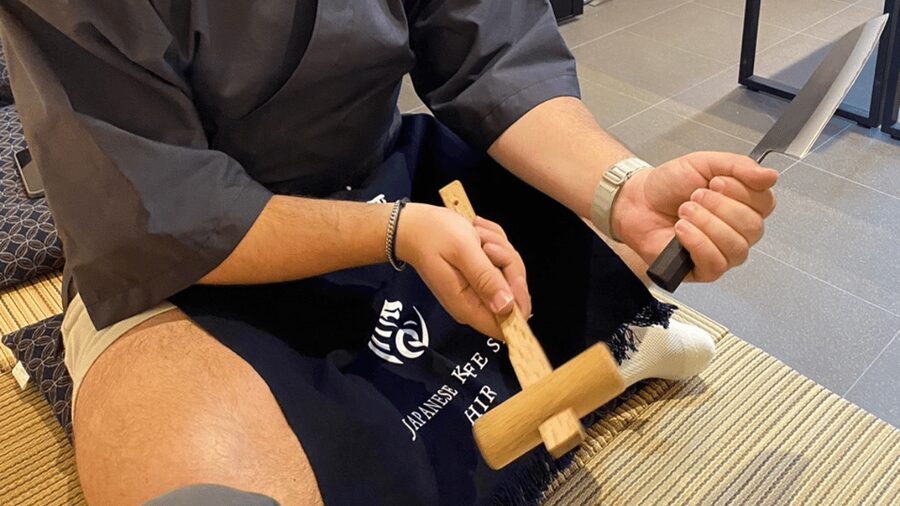
After sharpening, you move to handle fitting. The included handle is made from magnolia wood, a traditional-looking choice that keeps the standard experience within the advertised price.
This is the most unusual part of the workshop. You are not merely selecting a handle from a display. With guidance, you fit the handle to the blade and work through the assembly process. The activity gives you a better sense of how a knife becomes a finished kitchen tool.
Fire is used during this stage, and smoke can sometimes come out. Wear clothes you do not mind smelling smoky. This is a small detail, but it is one of the most useful things to know before booking. Avoid arriving in an outfit you need to wear to a formal dinner immediately afterward.
Other handle types are available for an additional fee. The cost depends on the handle you select, so ask about the price before choosing an upgrade. The magnolia handle is included, and there is no need to pay extra unless the alternative material or style matters to you.
The process is supervised, but this is still a workshop involving a blade, heat, and tools. Children under 15 are not accepted. People who dislike focused hand work or who want a purely passive demonstration may find another Kyoto activity more comfortable.
Engraving and the finished knife
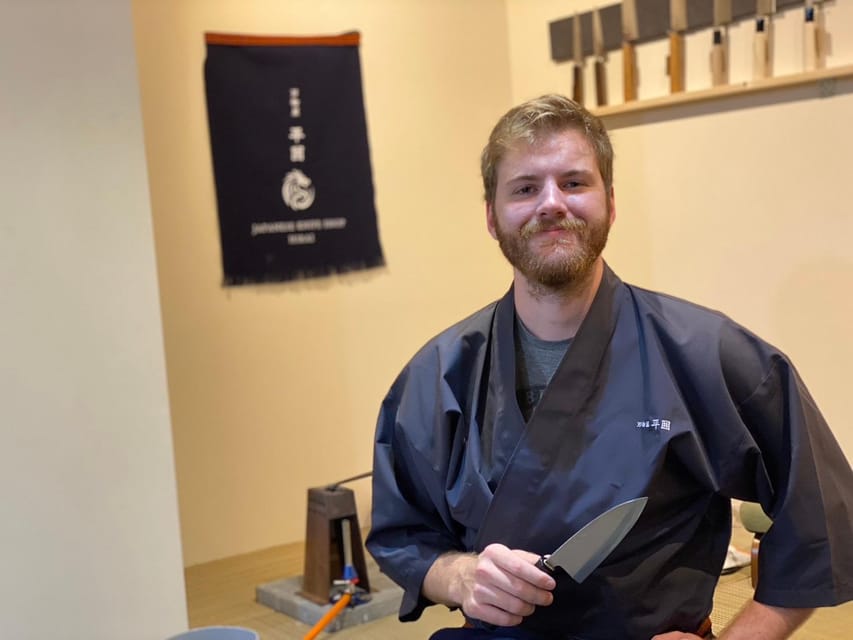
Engraving is included, which gives the finished knife a personal mark without an extra charge. You need to request it in advance and provide the characters you want, with a limit of four letters.
Keep the inscription short and check the spelling carefully before booking. A first name, initials, or a brief personal mark fits the stated limit. The engraving request is not something to leave until you arrive, since the shop needs advance notice.
At the end, the shop packages your knife so you can take it home. The combination of sharpening, handle fitting, and engraving makes the object feel more personal than a knife bought ready-made. You know what you selected, what you worked on, and how the handle was attached.
The knife is also a useful souvenir. If you cook regularly, you are more likely to use it than a decorative object. The class gives you a reason to keep caring for it, since you have learned the basics of sharpening instead of treating the blade as disposable.
Why the $161 price can make sense
The price is $161 per person for two hours. That is not a low-cost activity, but it includes the knife, magnolia handle, sharpening stones during the class, working uniform and apron, instruction, and engraving.
The strongest value comes from comparing the price with the combined cost of a good Japanese knife and a hands-on lesson. If you already planned to buy a Japanese knife, the workshop adds practical instruction and a personal assembly experience for a relatively small step beyond a simple purchase. Several participants who compared buying a knife alone with taking the class felt the package offered better value.
The calculation changes if you are not interested in cooking or knife care. You are paying for the object and the teaching, not just for two hours of entertainment. Someone who wants a ready-made souvenir with no effort may prefer to shop for a knife and leave.
Upgrades can also raise the total. A different blade or handle costs extra, and additional knives in the shop are not included. Set your spending limit before you arrive. The standard knife choices are enough to make the activity worthwhile, so upgrades are optional rather than necessary.
Who will enjoy the two-hour format
I would recommend this workshop to home cooks, food lovers, and anyone who wants a souvenir tied to a useful skill. It also suits couples, friends, and parent-child groups with participants aged 15 or older, as long as everyone is comfortable working carefully with a blade.
The small group limit of three is a real advantage. You are not lost in a large class, and the instructor has time to watch your sharpening technique. This matters more here than it would in a simple cooking demonstration because small changes in hand position affect the result.
English support makes the activity accessible to international visitors, while Japanese instruction is also available. Guides including Julio have been described as patient and clear, and the teaching style is aimed at beginners rather than professional chefs.
I would think twice if you use a wheelchair, since the activity is listed as unsuitable for wheelchair users. It is also not suitable for children under 15 or people over 80. Pets, baby strollers, smoking, alcohol, drugs, and loud behavior are not allowed.
Practical advice before you book
Choose your knife in advance if possible. Knowing whether you want a Santoku, Deba, or Yanagi will save time and help you think about what you will actually use at home.
Send the engraving request before the workshop. Keep the message within four letters and confirm the exact characters.
Wear practical clothes and an outfit that can tolerate smoke. The handle-fitting section uses fire, and the smell may remain on your clothing.
Arrive five minutes early, then allow extra time to find the shop near Nishiki Market. The white curtain is the key landmark.
Plan the rest of your day around the knife. The shop packages it, but you will be carrying a blade through the rest of your visit. If you are flying, check the rules that apply to your luggage before you book.
The activity allows free cancellation up to 24 hours in advance for a full refund, and you can reserve now and pay later. Starting times vary, so check availability for your date.
Should you book the HIRAI knife workshop?
Book it if you want a Kyoto souvenir you can use, enjoy careful hands-on instruction, and are willing to concentrate for two hours. The standard knife, magnolia handle, engraving, and small-group teaching give the $161 price solid value for someone who already wants a Japanese kitchen knife.
Skip it if you want a quick shopping stop, dislike smoke, or have no interest in maintaining a blade at home. For the right person, this is one of those rare activities where the souvenir is not an afterthought. You make it, learn how to care for it, and carry home a practical reminder of Kyoto.
FAQ
How long does the knife sharpening workshop last?
The workshop lasts two hours. Check the available starting times when booking.
Which knife can I choose?
You can choose one knife from three styles: Santoku, Deba, or Yanagi.
Is the knife included in the price?
Yes. The knife you sharpen during the workshop is included, along with the magnolia wood handle you fit.
Is engraving available?
Yes. Engraving is included, but you must request it in advance and provide up to four letters.
Is the workshop available in English?
Yes. Instruction is offered in English and Japanese. Guides such as Julio and Tatsu have assisted with the workshop.
Do I need to bring a whetstone?
No. The shop provides the whetstones used during the class. Buying a whetstone to take home is not included.
Can I cancel the booking?
You can cancel up to 24 hours in advance for a full refund. Reserve now and pay later is also available.
Newest Kyoto experiences on the site
- Treasures of Kyoto: Gion & historical Walking Tour★ 5.0 · 6 reviews
- Whisk Your Own Matcha: A Zen Matcha Experience at Temple★ 3.6 · 7 reviews
- Kyoto tea town for matcha lovers★ 5.0 · 16 reviews
- Uji: Private immersion into Kyoto’s tea and reglious culture★ 5.0 · 17 reviews
- Kyoto Matcha Green Tea Tour★ 4.5 · 23 reviews
- Uji and Wazuka Matcha Farm Half Day Private Guided Tour★ 5.0 · 21 reviews
- Utilising upcycled Matcha! Creating matcha incense (Uji, Kyoto)★ 5.0 · 6 reviews
- Sacred Temple Yoga Experience in Japan★ 5.0 · 3 reviews
Kyoto Craft Workshops, compared.
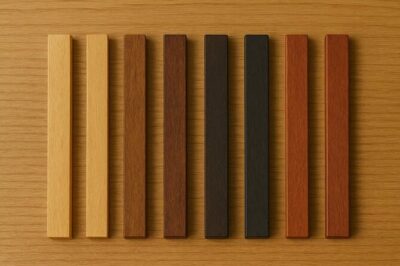
Chopsticks Making Workshop in Gion with Engraving Option
Read our review →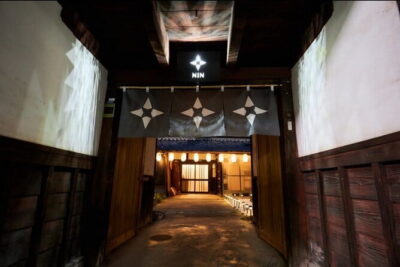
Authentic knife making experience at a blacksmith in Kyoto
Read our review →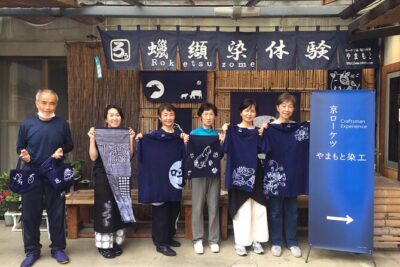
Roketsu dyeing experience: M course Roketsu Dyeing Experience
Read our review →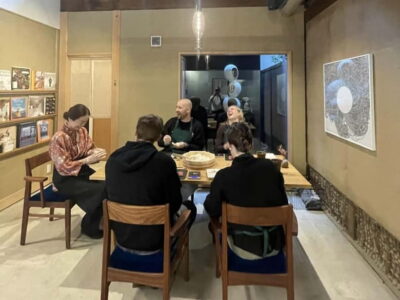
Japanese Archery Workshop with Experienced Instructor
Read our review →
Kyoto Michelin Ramen Workshop or Painting Ramen Essentials
Read our review →

Browse the lists this tour appears in