
Reviewed · KYOTO CRAFT WORKSHOPS
Kyoto: Japanese Archery Workshop with Experienced Instructor
Kyoto’s Kyudo workshop offers something most sightseeing days do not: a close look at a living Japanese martial art, taught by Master Yamaguchi, who has practiced for more than 50 years. You will learn the formal stance, bow hold, shooting method, and the calm mental focus behind each movement.
I like the small groups of four, which give you real hands-on time instead of a quick demonstration. I also like the balance between doing and understanding: you learn the physical steps, but also why Kyudo includes careful movements that can feel like a martial-arts routine and a form of meditation.
The main consideration is language. The instructor teaches in Japanese, though an assistant provides English help and written material. The bows are large and heavier than many Western-style bows, so some people may find the session physically demanding.
Key points before you book
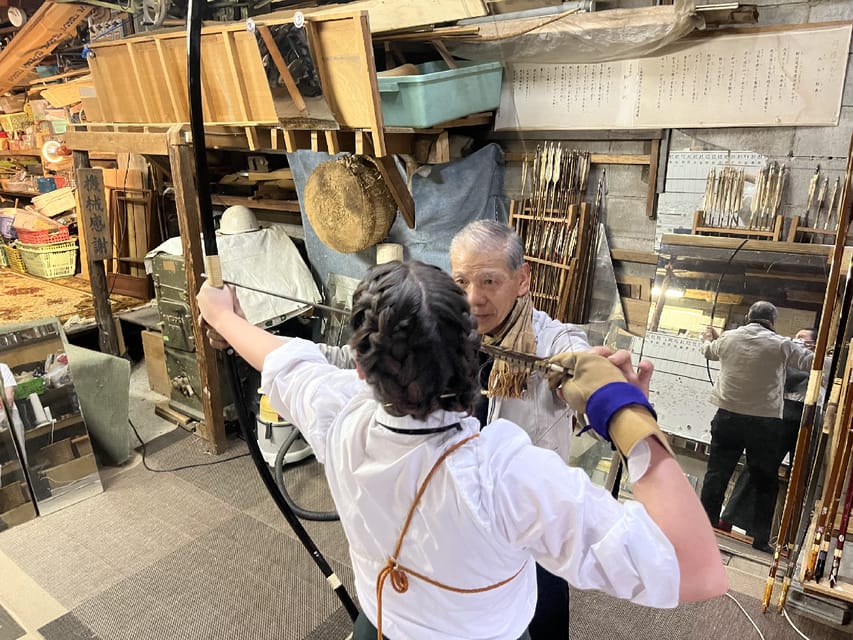
- Master Yamaguchi’s decades of practice: You learn from an instructor with more than 50 years in Kyudo and a Kyudo Kyoshi 6th-grade teaching rank.
- Small group, up to four people: The limited size allows close correction and several attempts with the bow.
- Hands-on from the start: You practice stance, bow grip, and shooting rather than only watching a demonstration.
- English support is available: The teacher speaks Japanese, while an assistant can translate and explain the cultural background.
- A quiet Kyoto experience: This is less about hitting a bull’s-eye and more about posture, patience, control, and respect.
- Easy central access: The studio is about 10 minutes on foot from JR Tambaguchi, Hankyu Omiya, and Randen Shijo-Omiya stations.
What Kyudo teaches beyond shooting an arrow
Kyudo is Japanese archery, but calling it simply archery misses much of the point. The bow is only one part of the practice. Your posture, foot position, breathing, hand placement, and release all matter.
The opening movements can feel almost like a karate kata. You do not simply pick up a bow, aim, and fire. You follow a sequence, learning to make each motion deliberate. That structure gives the activity its calm, focused quality.
I like this because it changes your goal. You are not there just to hit the target. You are learning why the form matters, how the body works with the bow, and how concentration affects the shot.
The session also gives you a useful introduction to the spiritual side of Kyudo. English explanations cover the tradition’s peaceful message and the reasons behind its formal movements. Even in one hour, you can begin to understand that accuracy is only one measure of progress.
More craft workshops in Kyoto:
- Kyoto : Chopsticks Making Workshop in Gion with Engraving Option
★ 5.0 · 958 reviews - Authentic knife making experience at a blacksmith in Kyoto
★ 4.8 · 350 reviews - Roketsu dyeing experience: M course Roketsu Dyeing Experience
★ 5.0 · 163 reviews
Meeting Master Yamaguchi in a four-person group
Master Yamaguchi is the heart of the experience. The information provided describes him as a Kyudo Kyoshi, 6th grade, with more than 50 years of practice. Several accounts also note his patience, humor, and careful attention to beginners.
That matters because Kyudo can look simple until you try it. The bow is tall, the grip feels unfamiliar, and the movements require more control than most first-time participants expect. A patient instructor makes it easier to stay relaxed when your first attempts feel awkward.
With no more than four participants, you should receive more direct attention than you would in a large class. The teacher can adjust your stance, show you how to hold the bow, and guide your arms through the correct motion.
Hands-on instruction is part of the format. The instructor may physically guide your stance and bow hold to show the correct position. If you prefer not to receive that kind of contact, tell the provider in advance.
Only paying participants should attend because the studio has limited space. That rule is practical rather than fussy. It keeps the teaching area clear and gives each person room to handle the equipment safely.
Your one-hour Kyudo lesson
The exact order may vary slightly, but you can expect the hour to move through a clear set of stages.
Getting settled and learning the tradition
The session begins with an introduction to Kyudo, its tools, and its place in Japanese culture. English materials are provided, and an assistant can help explain the instructor’s demonstrations.
This background is worth your attention. Without it, the formal movements might seem like a long way of preparing to shoot. With it, you can see the activity as a discipline built around posture, attention, and respect.
The instructor speaks Japanese, not fluent English. That may slow the verbal explanation, but the teaching relies heavily on demonstrations, gestures, and correction. An assistant or student interpreter can explain the cultural and practical points in English.
Same city, a completely different kind of day:
- PERFECT KYOTO 1-Day Bus Tour
★ 5.0 · 13,518 reviews - Kyoto: Fushimi Inari, Kinkakuji, Bamboo Grove 1 Day Bus Tour
★ 4.8 · 4,316 reviews - Kyoto: Tea Ceremony in a Traditional Tea House in Kiyomizu
★ 4.9 · 3,519 reviews - Kyoto Geisha Walking Tour: Gion District & Hidden Gems
★ 4.7 · 3,273 reviews
Learning stance and bow hold
You then work on the basics: how to stand, how to position your feet, and how to hold the bow. These details are not decoration. A poor stance affects the entire shot.
The lesson is beginner-friendly, but not effortless. You may find the bow heavier than expected, especially if your experience is limited to lighter European or recreational bows. One useful tip is to arrive in comfortable clothing that lets your shoulders and arms move freely.
The instructor’s hands-on corrections are especially useful here. Kyudo has enough unfamiliar parts that a spoken explanation alone may not be clear. Seeing the movement, copying it, and receiving a small adjustment can make the technique click.
Practicing the shooting sequence
Once you understand the basic position, you begin practicing the shooting process. The instructor walks you through each movement and encourages you to stay calm.
Do not expect to master Kyudo in an hour. The sequence is difficult because it combines balance, strength, timing, and concentration. That is also what makes the activity rewarding. You are given a real taste of the discipline, not a simplified photo opportunity.
Some people may hit the target during the session, while others may not. The experience should not be judged only by the number of successful shots. You will gain more from noticing how your stance changes, how the bow feels, and how the full sequence fits together.
The limited group size helps at this point. You should have time to try, watch the instructor correct you, and try again. That is a better setup for learning than a rushed turn at the range.
The English support and what to expect from it
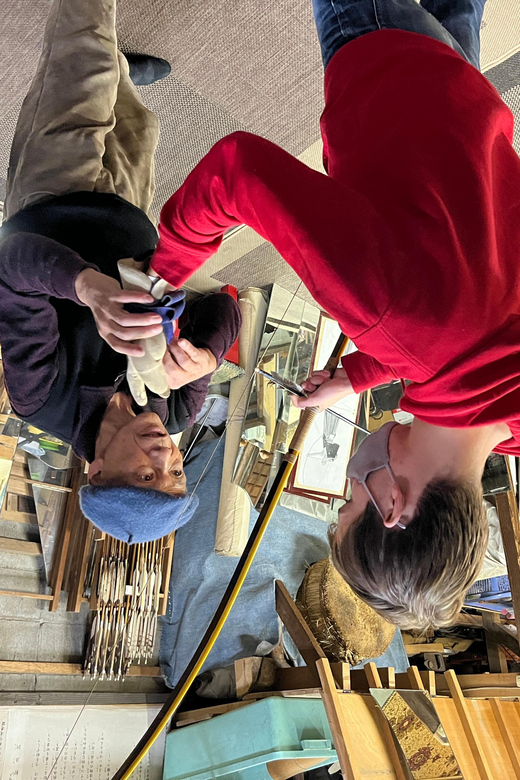
The instructor’s main language is Japanese, so this is not a standard English-language class. The assistant helps translate and can explain Kyudo’s history, cultural meaning, and spiritual ideas.
In practice, much of the teaching comes through demonstration. The assistant’s archery knowledge is useful because the explanations are connected to what you are physically doing, rather than being general sightseeing commentary.
If you have a question, ask. The instructor is described as friendly and willing to teach, and the activity information specifically encourages participants to raise doubts or concerns. You may need the assistant to translate, but that is part of the normal format.
This arrangement works best if you are comfortable with a little nonverbal communication. You will not receive a long, fluent lecture from the teacher himself. Instead, you watch, copy, listen to the translation, and ask when something is unclear.
Why the small studio setting matters
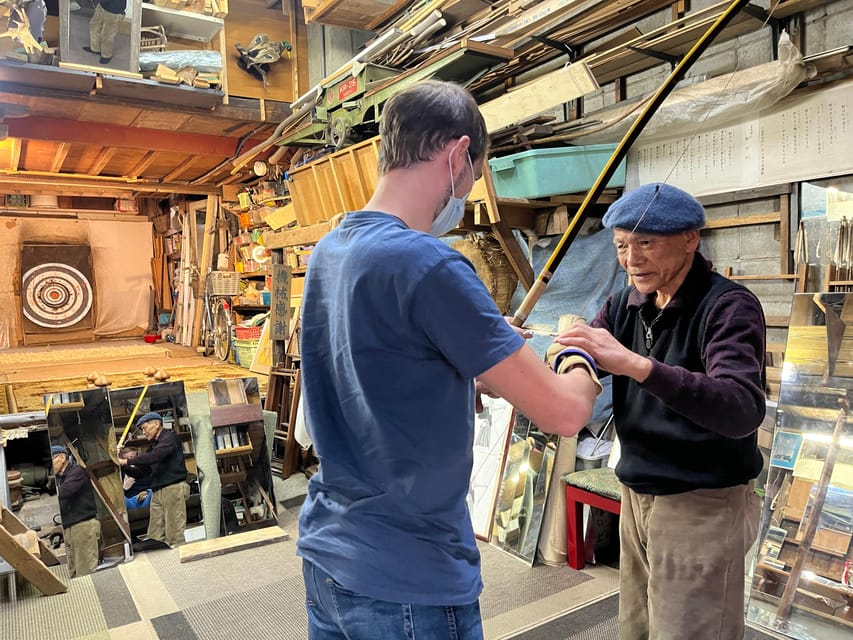
The setting is a local Kyudo practice space rather than a large attraction built for crowds. That gives the hour a more personal feel.
You are there to meet an experienced Japanese teacher and learn a traditional practice directly from him. The small setting also means you should treat the space with care. Only participants may attend, and the entrance instructions are important.
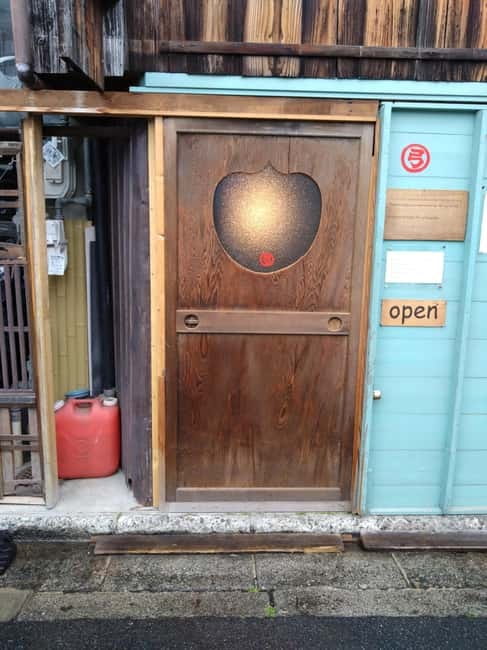
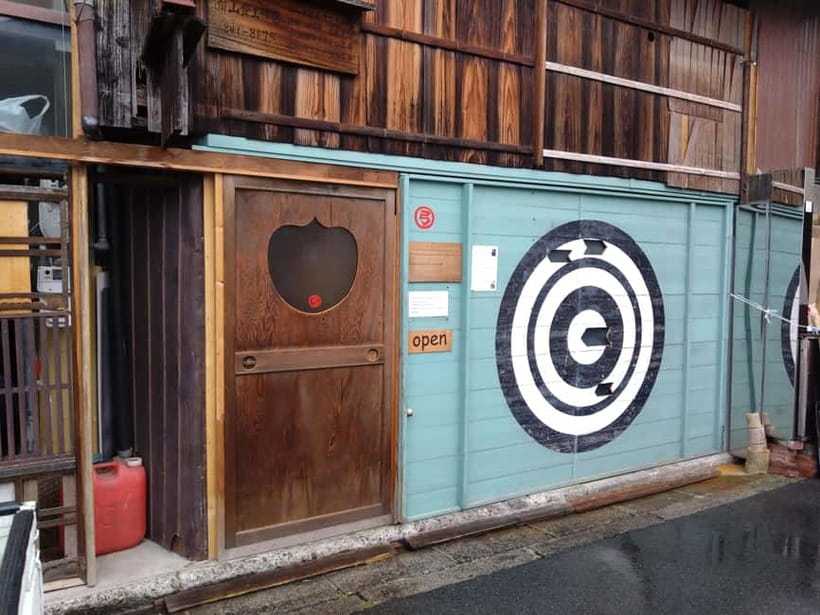
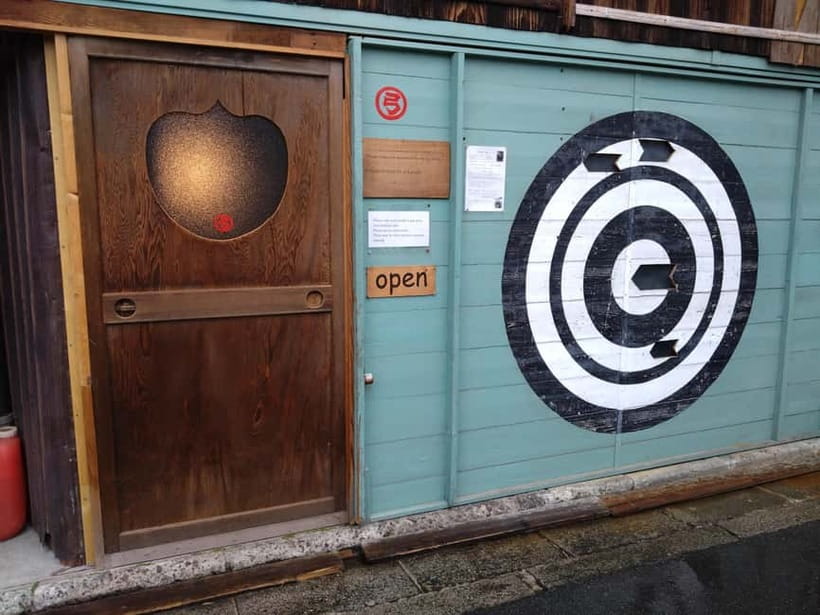
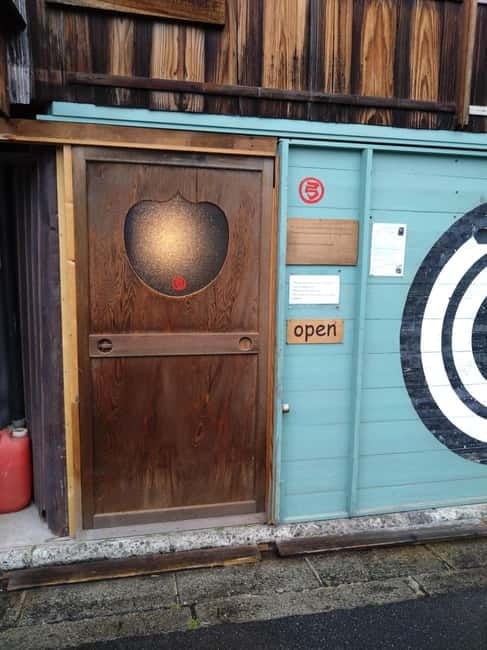
There are no doorbells at the entrance. Use the entrance on the side of the building, opposite a small parking lot. Do not enter through other doors or ring a doorbell.
For mapping, search for Kyudo Experience Kyoto or copy and paste the Japanese name, からくり弓道体験場. Compare the map result with the stated meeting details. The studio is roughly a 10-minute walk from JR Tambaguchi, Hankyu Omiya, or Randen Shijo-Omiya station.
If you use a taxi, tell the driver Mibugawa-street, Takatsuji-street rather than relying on the address. This simple tip may save you from being dropped at the wrong entrance.
Is $38 good value for one hour?
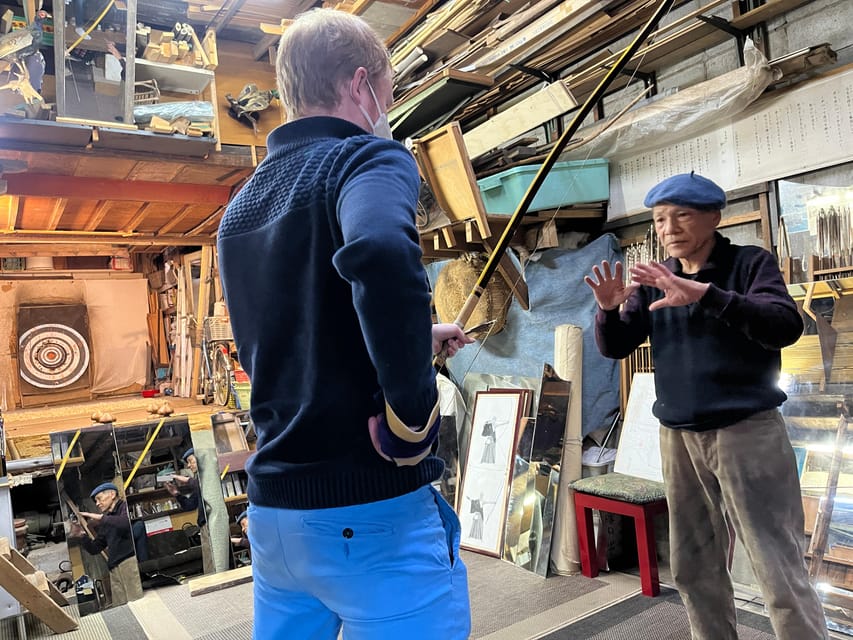
At $38 per person, this is a reasonable price for a small, equipment-included cultural lesson. You are not paying only for access to a bow. The price covers the instruction, the use of all required Kyudo equipment, and direct help from a teacher with decades of practice.
The value is strongest for anyone who wants more than a quick cultural demonstration. You learn the basic structure of Kyudo, receive physical correction, hear about its cultural meaning, and get several opportunities to practice.
The one-hour duration is both a benefit and a limit. It fits neatly into a Kyoto sightseeing day and does not demand a full afternoon. At the same time, Kyudo is difficult enough that you will only reach the starting line, not anything close to mastery.
Free cancellation up to 24 hours before the start gives you useful flexibility, and you can reserve without paying immediately. Hotel pickup and drop-off are not included, but the studio is reachable on foot from several stations.
Who should book this experience
I would choose this for an adult or older child who enjoys trying a traditional activity slowly and carefully. It suits people interested in Japanese culture, martial arts, meditation, craft, or the discipline behind formal movement.
Families can take part, and a smaller bow is available for younger children. One family used a smaller bow for a seven-year-old, while teenagers aged 12 and 15 were able to participate. The provider does not specify a minimum age, so confirm the details for your child before booking.
You do not need previous archery experience. In fact, beginners are the intended audience. You should have enough arm strength to handle a large bow, however, and be willing to follow instructions closely.
This may not suit you if you want fast action, repeated target shooting, or a relaxed drop-in activity with no formal structure. The method is patient and precise. That is its appeal, but it is not for everyone.
Practical tips for a better session
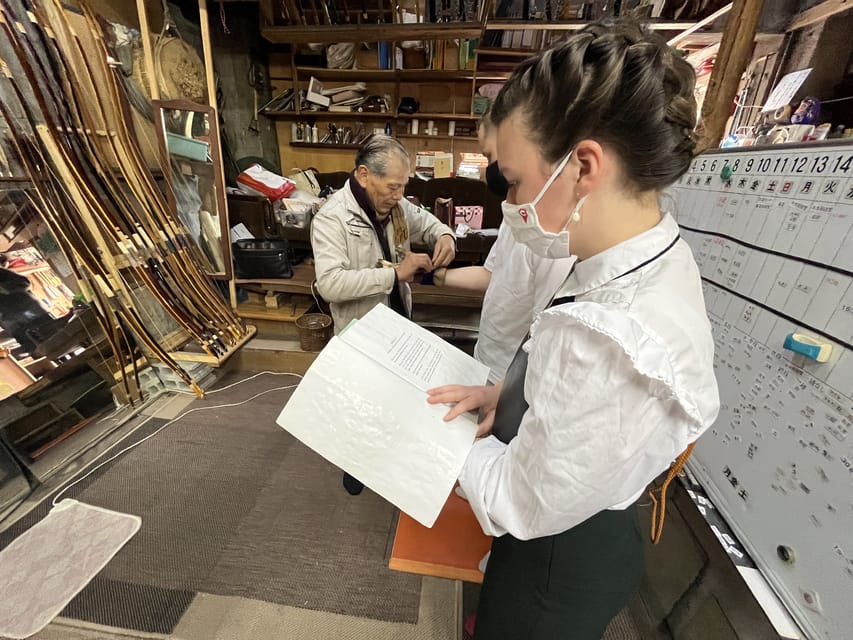
Wear comfortable clothing that allows free movement in your shoulders and arms. Avoid anything restrictive, since the bow-handling technique needs room.
Arrive with realistic expectations. You may find the technique tricky, and the bow may feel heavier than expected. Keep your attention on the instructor’s corrections rather than trying to force the shot.
Ask questions as soon as you are unsure. The teacher is friendly, and the assistant is there to help with English explanations. Do not hesitate to ask about the stance, the bow, or the reason for a particular movement.
Allow time to find the side entrance. There is no doorbell, and the wrong door can lead to confusion. Check the Japanese meeting name and use the street directions if you take a taxi.
Remember that the session is not a private lesson. The group is small, but up to four people may attend. That is still enough to watch others, learn from their corrections, and enjoy a shared activity.
Should you book the Kyoto Kyudo workshop?
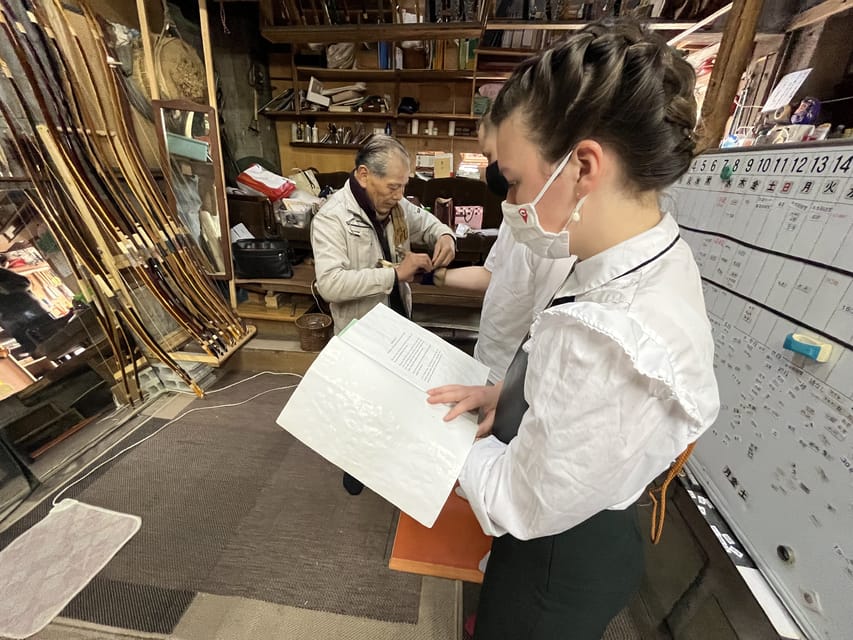
Book it if you want a genuine, focused Japanese cultural activity and are happy to trade speed for patience. The strongest reasons are the small group, the hands-on teaching, the access to Master Yamaguchi’s long experience, and the English help from an assistant.
The main drawbacks are clear: the instructor teaches in Japanese, the bow can be physically demanding, and one hour is only enough for an introduction. You should also expect formal movements and repeated correction rather than a simple archery game.
For $38, I think it is a good choice for a Kyoto itinerary that already includes temples and food stops but needs something more personal. You may not leave as a skilled archer, but you will leave with a better sense of the control, patience, and quiet purpose behind Kyudo.
FAQ
Where does the Kyudo workshop take place?
It takes place at からくり弓道体験場 in Kyoto, Honshu, Japan. You can search for Kyudo Experience Kyoto or copy and paste the Japanese name into Google Maps.
How far is the studio from public transportation?
The location is about a 10-minute walk from JR Tambaguchi, Hankyu Omiya, or Randen Shijo-Omiya station.
What should I tell a taxi driver?
Tell the driver Mibugawa-street, Takatsuji-street rather than relying on the listed address.
Is the instructor fluent in English?
The instructor teaches in Japanese. An assistant provides translation and English explanations, and English materials are available.
How many people can join each session?
The group is limited to four participants.
Is Kyudo equipment included?
Yes. The lesson includes all required Kyudo equipment.
What should I wear?
Wear comfortable clothing that allows you to move your arms and shoulders freely.
Can children participate?
Children can participate, and a smaller bow is available for younger children. The available information does not state a minimum age, so check the booking details for your child.
Can I cancel for a full refund?
You can cancel up to 24 hours in advance for a full refund. You can also reserve now and pay later.
Newest Kyoto experiences on the site
- Treasures of Kyoto: Gion & historical Walking Tour★ 5.0 · 6 reviews
- Whisk Your Own Matcha: A Zen Matcha Experience at Temple★ 3.6 · 7 reviews
- Kyoto tea town for matcha lovers★ 5.0 · 16 reviews
- Uji: Private immersion into Kyoto’s tea and reglious culture★ 5.0 · 17 reviews
- Kyoto Matcha Green Tea Tour★ 4.5 · 23 reviews
- Uji and Wazuka Matcha Farm Half Day Private Guided Tour★ 5.0 · 21 reviews
- Utilising upcycled Matcha! Creating matcha incense (Uji, Kyoto)★ 5.0 · 6 reviews
- Sacred Temple Yoga Experience in Japan★ 5.0 · 3 reviews
Kyoto Craft Workshops, compared.
Chopsticks Making Workshop in Gion with Engraving Option
Read our review →
Authentic knife making experience at a blacksmith in Kyoto
Read our review →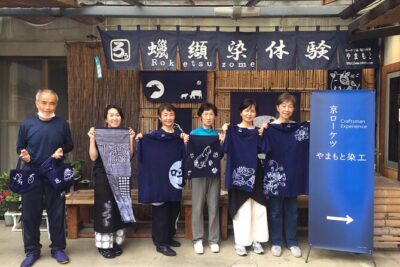
Roketsu dyeing experience: M course Roketsu Dyeing Experience
Read our review →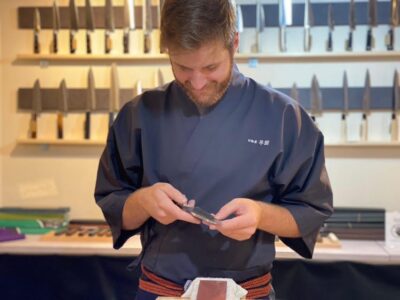
Beginner Knife Sharpening & Handle Fitting Workshop
Read our review →
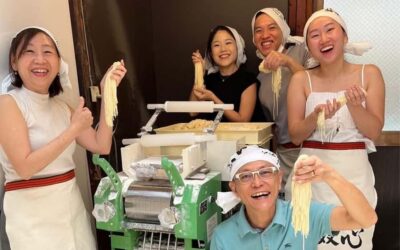
Kyoto Michelin Ramen Workshop or Painting Ramen Essentials
Read our review →

Browse the lists this tour appears in