
Reviewed · GION DISTRICT TOURS
Kyoto: Foodie Night Tour in Gion with 9 dishes + 6 Sake
Kyoto’s best food experiences are often tucked behind an ordinary door. This 210-minute evening tour takes you through Gion and Pontocho, pairing local dishes with six Kyoto sake tastings and a dessert stop in a traditional building. You get food, a walking tour, and a local guide at the same table.
I like two things here. First, the route gives you a taste of Kyoto’s old entertainment districts without asking you to decode every menu alone. Second, the guide can turn a meal into a cultural lesson, as Rika did for one group by keeping conversation flowing and helping everyone connect.
The main caution is the price: $361 per person is a serious bill for a food walk. The first restaurant has earned strong praise, but the second food stop has produced a mixed reaction, and one person felt the meal did not justify the cost. Go for the guidance and access to traditional places, not a guaranteed luxury feast.
Key points before you book
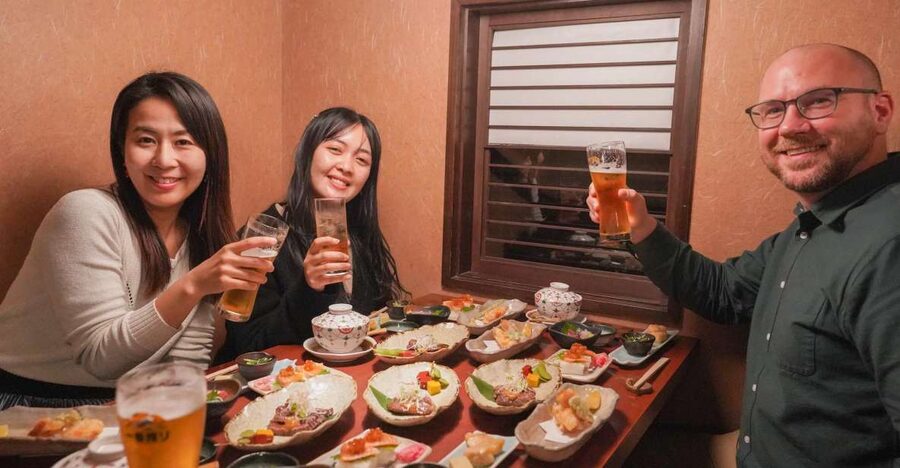
- Nine dishes and six sake tastings: The package includes a dinner course, dessert, two drinks, and six kinds of Kyoto sake.
- Two classic Kyoto districts: You walk from Gion Shijo Station through Gion and Pontocho, with stops for food along the way.
- A local English-speaking guide: Rika is one guide named in the feedback, and the guide’s role is central to explaining customs and keeping the group together.
- Traditional food rather than a single famous dish: You might try obanzai, oden, yuba, and other seasoned Kyoto foods.
- The quality can vary by stop: The first meal has been praised, while the second stop has received a notably less favorable response.
- Plan for a walking evening: Some locations are not suitable for wheelchairs or strollers, and the tour is not recommended if you have mobility problems.
Starting beneath the Izumo-no-Okuni statue
The evening begins outside Exit 5 of Gion Shijo Station, in front of the statue of Izumo-no-Okuni. This is a sensible meeting point because it is easy to reach by train and puts you at the edge of Gion from the first minute.
I like meeting in a public place rather than at a restaurant you may struggle to find. Look for the statue, then stay alert for your English-speaking MagicalTrip guide. The exact guide is not guaranteed, though Rika is one named guide associated with an especially positive experience.
From the station, you walk through Gion, where old Kyoto-style buildings line streets that still carry the feel of the city’s traditional pleasure quarters. The guide explains how local people use the area at night and may point out details you would likely pass without noticing.
You might even see a geisha passing by. That possibility is part of Gion’s appeal, but it should not be treated as a scheduled feature. Keep your camera respectful, give people room, and enjoy the street itself rather than turning the evening into a hunt for a sighting.
More ways to walk Gion:
- Kyoto Geisha Walking Tour: Gion District & Hidden Gems
★ 4.7 · 3,273 reviews - Kyoto: Gion Magical Night Walking Tour with Geisha Trivia
★ 4.9 · 2,393 reviews - Kyoto: Gion Geisha District Walking Tour – Stories of Geisha
★ 4.7 · 2,187 reviews
The first meal: obanzai, oden, yuba, and sake
The first restaurant is the strongest reason to consider this tour. It is described as a place you would be unlikely to find without local help, and the setting is traditional rather than built for large sightseeing crowds.
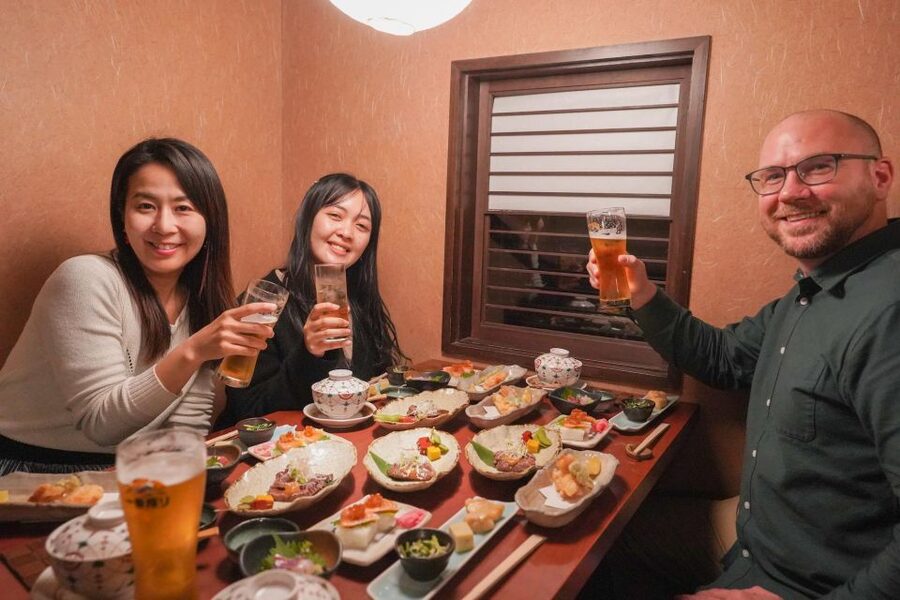
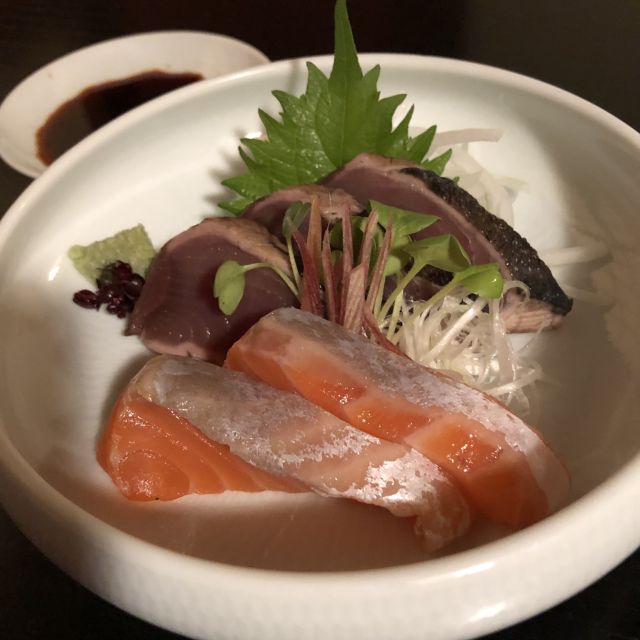
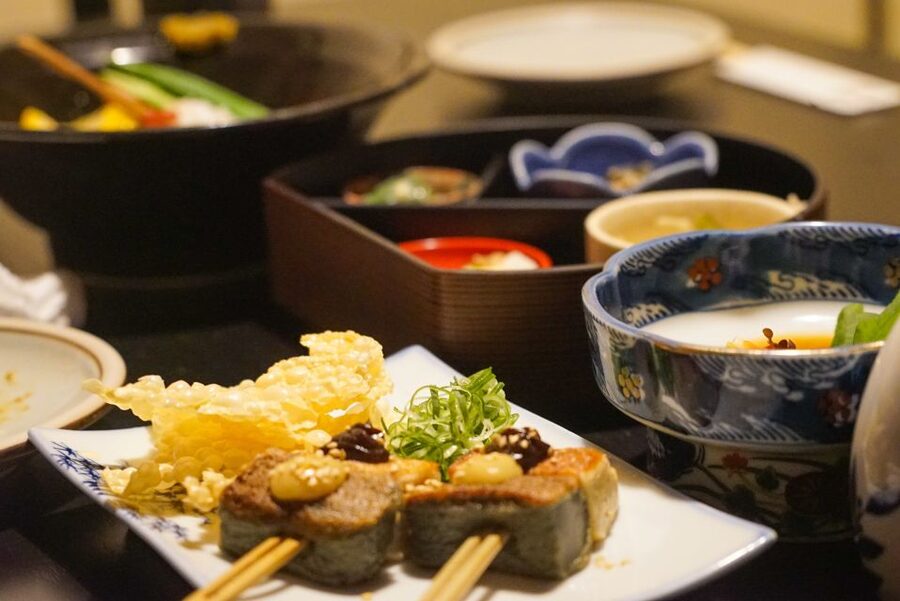
The food focuses on straightforward Kyoto dishes with carefully seasoned flavors. Possible choices include obanzai, the home-style cooking associated with Kyoto, along with oden and yuba, or tofu skin. These are useful foods for understanding the city because they are not simply famous items presented for tourists. They reflect everyday cooking traditions and the Japanese preference for balance, texture, and restrained seasoning.
I would approach this stop with the right expectation. You are not ordering a large steak or a parade of dramatic plates. You are tasting several small preparations, and the pleasure comes from comparing them while the guide explains what you are eating.
The tour includes nine dishes across the food program, though the exact menu can change. That is normal for restaurants serving seasonal or locally selected items, but it also means you should not book this expecting a fixed list of nine named courses.
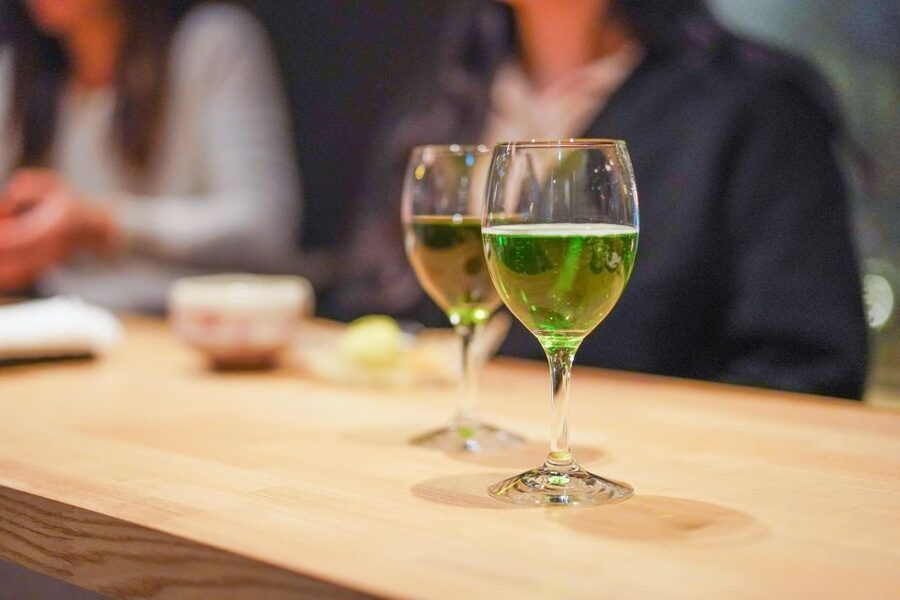
This is also where the first sake tasting begins. The Kiki sake format lets you compare three Kyoto-made sakes, with the guide explaining what you are drinking. Later tastings bring the total to six kinds. For someone new to sake, that guidance matters more than the number alone. Six small samples can help you notice differences without committing to full bottles or large pours.
Two drinks are included, and both alcohol and non-alcohol options are available. Only people aged 20 or older may drink alcohol under Japanese law. If you do not drink, the tour still includes the food and guide commentary, but you should clarify what non-alcoholic choices are available.
Walking through Pontocho between meals
After the first meal, you walk toward Pontocho. This narrow area is one of Kyoto’s most atmospheric evening streets, with traditional buildings, small restaurants, and a strong sense of place.
The walk helps break up the meal, though it is not a major sightseeing circuit with a long list of monuments. The value is in moving through two districts with someone who can explain how they fit into Kyoto’s night culture.
One useful criticism is that the tour could provide more information about Gion and Pontocho themselves. If you want a detailed history walk, this is not the right product. If you want enough context to make the streets and restaurants more meaningful while you eat, it should do the job.
Expect about an hour at the second food stop, according to the planned schedule. The information describes this portion as another dinner stop, followed by a cafe and dessert in Gion. In practical terms, the evening feels like a progressive meal rather than a standard restaurant dinner.
The second food stop is the uncertain part
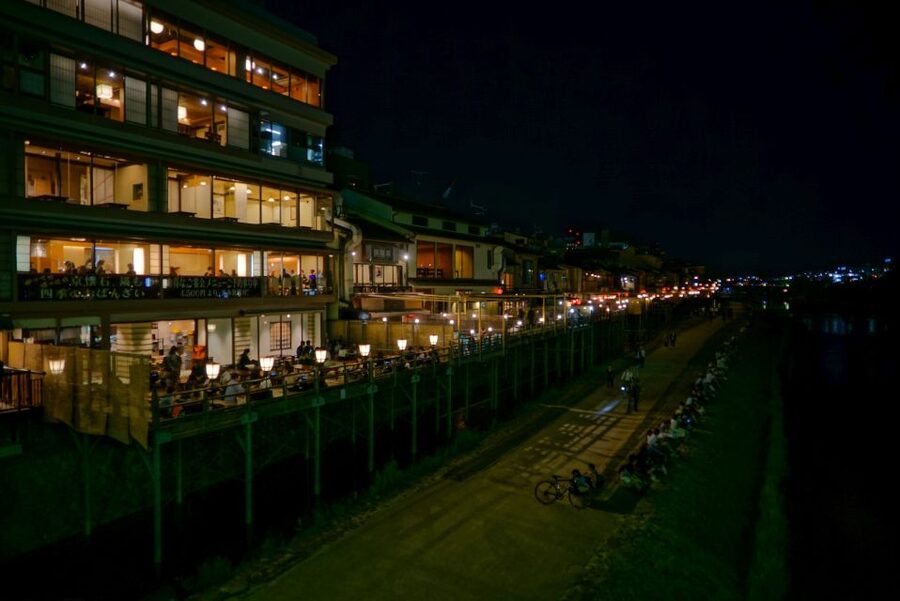
Here is where I would temper the enthusiasm. The first restaurant has been described as excellent and local, but the second stop has not been as consistent for every diner. One person called the first dinner amazing and the second quite poor. Another found the overall food less than average and felt a meat dish did not match the quality expected at this price.
That does not prove every group will have the same experience. Menus, kitchens, and personal taste vary. Still, the contrast is useful. You are paying for a guided evening with multiple venues, not a carefully controlled tasting menu at one top restaurant.
If you are selective about food, ask in advance for the type of cuisine and the likely course structure. Do not assume that the word foodie means every dish will be exceptional. This tour is better suited to an open-minded eater who enjoys trying traditional preparations than to someone looking for premium wagyu or a polished fine-dining meal.
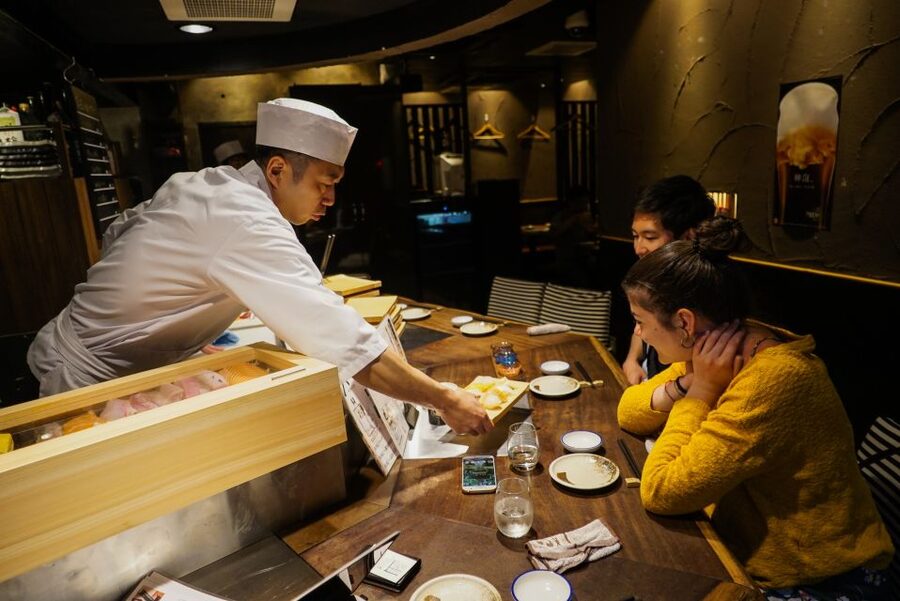
The guide remains important here. A local guide can explain why a simple dish belongs on the table, help with ordering, and keep the group talking. But a guide cannot fully control the quality of food served by restaurants that are operated independently.
More sake tastings in Kyoto:
- Kyoto Night Foodie Tour in Gion (9+ dishes + 6 Sake tastings)
★ 5.0 · 1,762 reviews - 3-Hour Kyoto Insider Sake Brewery Tour with Tastings & Pairings
★ 5.0 · 917 reviews - Arashiyama Bamboo, Temple, Monkeys, or Secret Sake Brewery
★ 4.8 · 886 reviews - Kyoto: Insider Sake Brewery Tour with Sake and Food Pairing
★ 5.0 · 704 reviews
Six Kyoto sake tastings, not just one drink
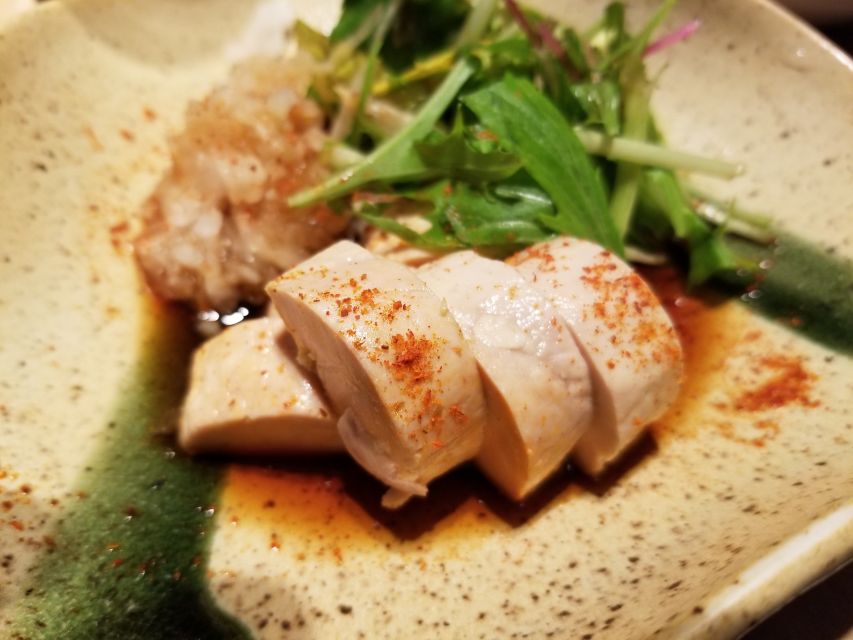
The six sake tastings are one of the clearest reasons to book this experience. Kyoto is known for sake production, and sampling several varieties gives you a better sense of how much sake can differ in flavor and style.
The first Kiki sake set includes three different kinds produced in Kyoto. The full evening includes six kinds of sake tastings. The guide explains the drinks as you go, so you are not simply receiving small cups with no context.
I like this format for first-time sake drinkers. You can test what you prefer while eating dishes that may bring out different qualities in each drink. A light sample may suit one appetizer, while another sake may work better with a stronger broth or savory dish.
Do remember that the listed inclusions and the practical notes are not exactly the same thing. The tour includes two drinks, six sake tastings, and non-alcoholic options, but you should bring cash for food, drinks, and extras because many bars do not take credit cards. Ask the guide or provider what is covered if you want to avoid surprises.
Dessert in a traditional Kyoto cafe
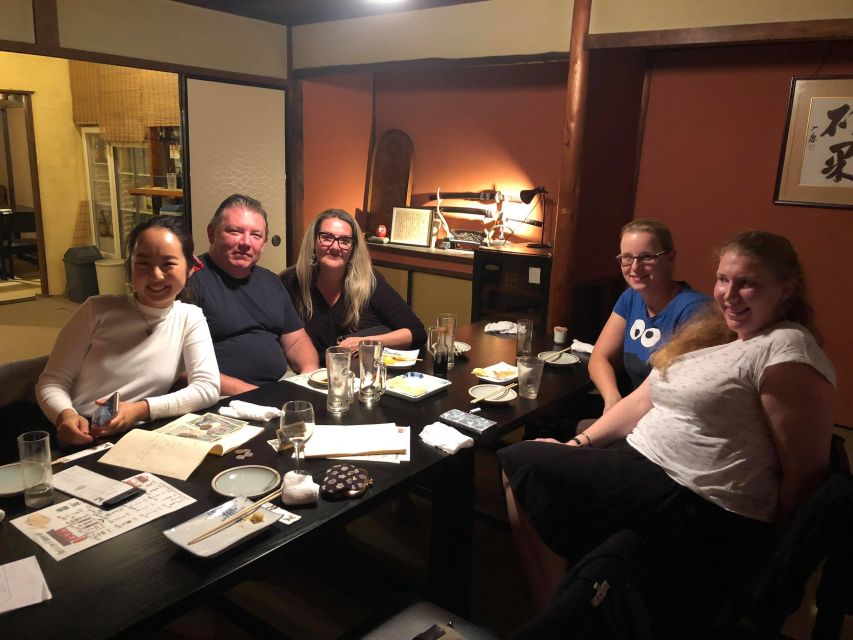
The final food stop takes you to a Kyoto cafe around Pontocho, where you can have a local dessert in a traditional building. This gives the evening a gentler finish after the savory food and sake.
The dessert stop is also useful for pacing. Three hours of eating and walking can feel heavy if every stop is another large plate. A cafe setting gives you time to sit, talk, and ask the guide about Kyoto life.
The details of the dessert are not fixed in the available information, so I would not book this expecting one particular sweet. Think of it as a Kyoto-style ending rather than a guaranteed specialty item.
The route then returns to the Izumo-no-Okuni statue. That makes the finish simple, especially if you need to continue to another part of Kyoto by train.
Is $361 a fair price?
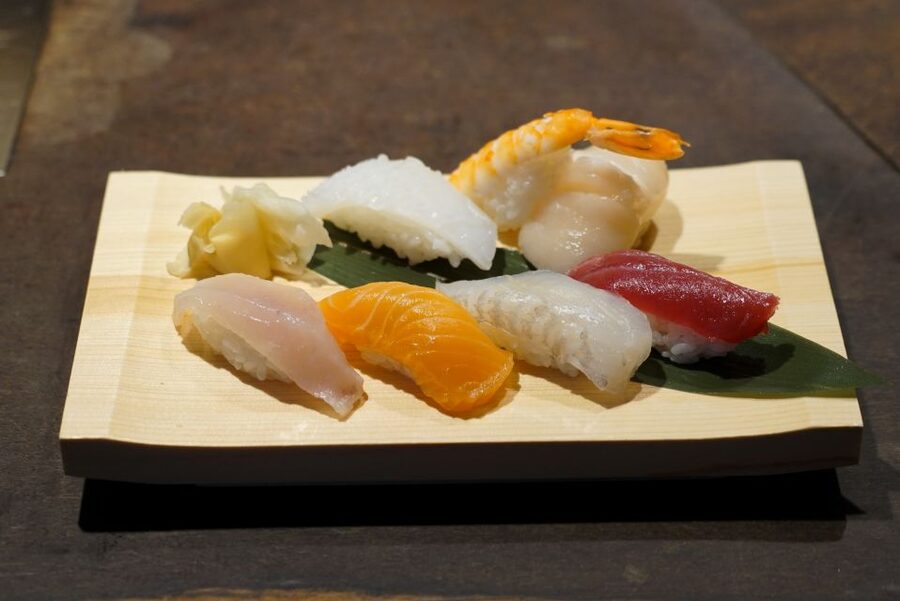
At $361 per person, this is not a cheap dinner. You are paying for nine dishes, dessert, six sake tastings, two drinks, a guide, restaurant access, and a three-and-a-half-hour route through two of Kyoto’s most atmospheric districts.
The value depends on how much you would pay for convenience and explanation. If you would otherwise spend the evening choosing restaurants, translating menus, and wondering what to order, the guide may save you time and reduce the risk of a poor decision. The walk between stops also adds a cultural element that a simple restaurant booking would not provide.
On the other hand, I would not describe the price as an automatic bargain. The food quality has been uneven, and one person judged the experience far too expensive for what was served. A self-guided evening in Gion and Pontocho could cost much less, especially if you choose casual restaurants and skip the sake tastings.
The tour makes more financial sense for a first visit, a special evening, or anyone who values a local host. It makes less sense if your priority is maximum food quality per dollar. At this price, you are buying access, structure, translation, and company as much as you are buying dinner.
Who should book this Kyoto night tour?
I would recommend it to you if you:
- Want to eat traditional Kyoto food without planning several restaurants yourself
- Enjoy small dishes and tasting portions
- Want to sample sake with an explanation in English
- Prefer a local guide and shared conversation to dining alone
- Are comfortable walking through Gion and Pontocho at night
- Can accept that one stop may be stronger than another
I would hesitate if you:
- Need a fully wheelchair-accessible or stroller-friendly route
- Have serious food allergies or strict dietary requirements
- Want a fixed, high-end menu with guaranteed premium meat
- Dislike alcohol-focused tastings
- Expect a detailed historical tour of Gion
- Are judging the evening mainly by food quantity or value
Dietary requests must be made by the day before. Same-day changes are not accepted, and the operator cannot promise an allergy-free meal because the food is prepared in kitchens it does not control. Substitutions may not always be possible, though the guide will try to make up for missed items at other stops.
Summer deserves extra care. Kyoto can be very hot and humid, so bring water and a hat. You will spend time outdoors between restaurants, and the tour is not a good fit if heat or walking is a major concern.
Should you book it?
Book this tour if you want an organized introduction to Kyoto’s evening food culture, especially if you are new to sake or uneasy about ordering in small Japanese restaurants. The guide, the traditional settings, and the route through Gion and Pontocho give the evening more shape than a restaurant reservation alone.
I would not book it expecting every dish to be outstanding. The first stop appears to be the safer bet, while the second can be less satisfying. At $361, that matters.
My call: book it for cultural access and guided tasting, not for a guaranteed gourmet meal. If you value conversation, local context, and trying foods you might not choose alone, it can be a memorable Kyoto night. If you want the best possible meal for your budget, spend the money on one carefully selected restaurant instead.
FAQ
Where does the tour begin?
It begins in front of the Izumo-no-Okuni statue outside Exit 5 of Gion Shijo Station.
How long does the experience last?
The tour lasts 210 minutes, or three and a half hours.
Which areas does the tour visit?
The route includes Gion and Pontocho Alley, with food stops in both areas and a return to the Izumo-no-Okuni statue.
How many dishes are included?
The dinner course and dessert include nine dishes in total.
How many sake tastings are included?
Six kinds of Kyoto sake are included. The first Kiki sake tasting offers three different Kyoto-produced sakes.
Are drinks included?
Yes. The package includes two drinks, with alcohol and non-alcoholic choices available. Six sake tastings are also included.
Can someone under 20 drink sake on the tour?
No. Japanese law does not allow people under 20 to drink alcohol.
Can I request a special diet?
You must submit dietary requests by the day before the tour. Same-day requests cannot be accepted, and allergy-free meals or substitutions cannot be guaranteed.
Is the tour wheelchair or stroller accessible?
No. Some locations are not accessible by wheelchair or stroller, and the experience is not recommended for people with mobility issues.
What happens if I need to cancel?
You can cancel up to 24 hours in advance for a full refund. You can also reserve now and pay later, according to the booking terms.
More of Kyoto After Dark
- Night Walk in Gion: Kyoto’s Geisha District
★ 4.5 · 2,003 reviews - Kyoto Gion Night Walk & Geisha District Guided Tour
★ 5.0 · 786 reviews - Kyoto Ghost Tour: Dark Tales, Urban Legends, Bamboo Forest Night
★ 5.0 · 625 reviews - Kyoto Bar Hopping Night Tour
★ 5.0 · 613 reviews
More Food Tours in Kyoto
- Kyoto Nishiki Market Food and Culture Walking Tour
★ 5.0 · 412 reviews - Kyoto: Gion Food Tour 13 Dishes at 4 Eateries
★ 5.0 · 408 reviews - Kyoto Foodie Night Tour
★ 5.0 · 376 reviews - Kyoto: Gion & Pontocho Food Tour with 13 Dishes
★ 4.9 · 235 reviews
Newest Kyoto experiences on the site
- Treasures of Kyoto: Gion & historical Walking Tour★ 5.0 · 6 reviews
- Whisk Your Own Matcha: A Zen Matcha Experience at Temple★ 3.6 · 7 reviews
- Kyoto tea town for matcha lovers★ 5.0 · 16 reviews
- Uji: Private immersion into Kyoto’s tea and reglious culture★ 5.0 · 17 reviews
- Kyoto Matcha Green Tea Tour★ 4.5 · 23 reviews
- Uji and Wazuka Matcha Farm Half Day Private Guided Tour★ 5.0 · 21 reviews
- Utilising upcycled Matcha! Creating matcha incense (Uji, Kyoto)★ 5.0 · 6 reviews
- Sacred Temple Yoga Experience in Japan★ 5.0 · 3 reviews
Gion District Tours, compared.
Kyoto Geisha Walking Tour: Gion District & Hidden Gems
Read our review →
Gion Magical Night Walking Tour with Geisha Trivia
Read our review →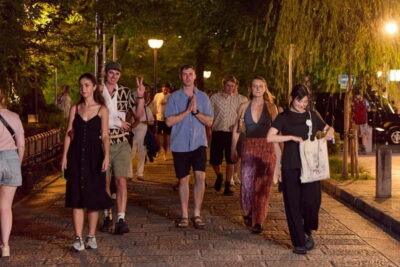
Gion Geisha District Walking Tour – Stories of Geisha
Read our review →
Best of Kyoto: Gion, Geisha, Pagodas & Cobblestones
Read our review →
Kyoto Night Foodie Tour in Gion (9+ dishes + 6 Sake tastings)
Read our review →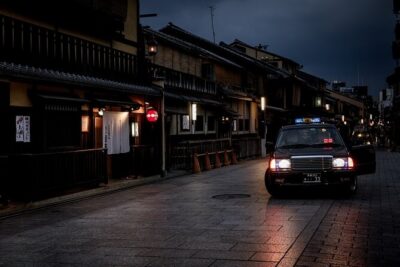
Kyoto Gion Geisha District Walking Tour – The Stories of Geisha
Read our review →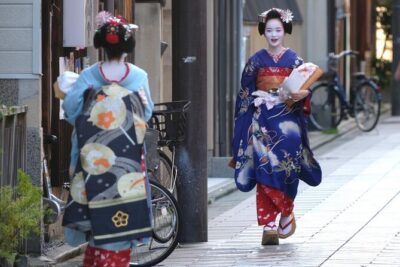
Kyoto Gion: 2-Hour Geisha Culture & History Walking Tour
Read our review →Browse the lists this tour appears in