
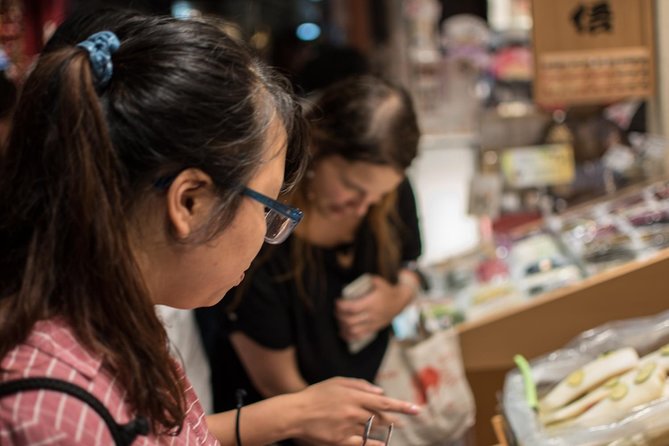
Reviewed · KYOTO FOOD TOURS
Kyoto Foodie Night Tour
Kyoto’s best food lesson may happen after sunset, when the tour leaves the postcard sights and heads into small family-run shops, izakayas, and sake stops. This three-and-a-half-hour evening walk combines seven food tastings with two drinks, while a guide such as Sora, Chikako, Leandra, or Taishi explains what is on the table and why it matters.
I like the small group of no more than eight and the useful mix of places: Nishiki Market for a quick look at Kyoto’s food traditions, several restaurants for a proper meal, and Pontocho for atmosphere and geisha history. The main thing to consider is food style. This tour leans into Japanese flavors, seafood, and alcohol, so it suits adventurous eaters better than picky diners or people who do not drink.
Key points at a glance
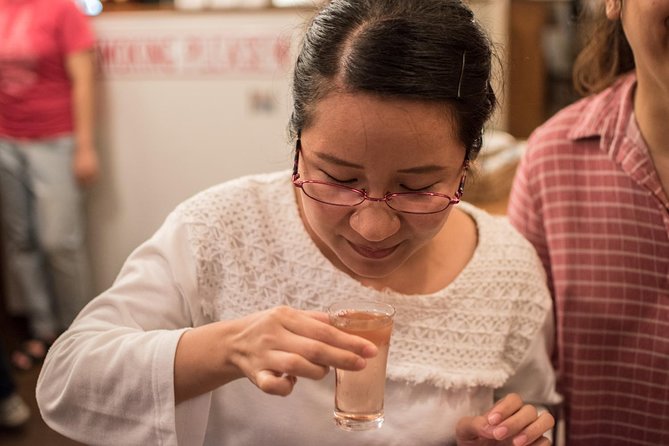
- Seven food tastings: Expect Kyoto-style obanzai, local izakaya dishes, market samples, and other small plates.
- Two drinks included: Beer and sake are listed, with soft drinks available according to tour details and individual dining arrangements.
- Nishiki Market beginning: Visit two or three family-owned shops for sample-size bites tied to Kyoto’s food traditions.
- Restaurant-focused evening: Spend about two hours at two or three local restaurants rather than simply grazing at market stalls.
- Pontocho finish: Walk through Kyoto’s narrow restaurant district and hear about geisha culture and the city’s past.
- Food restrictions need advance notice: Vegan, vegetarian, and gluten-free choices are limited, and requests must be sent at least one week ahead.
Why this Kyoto food walk works so well
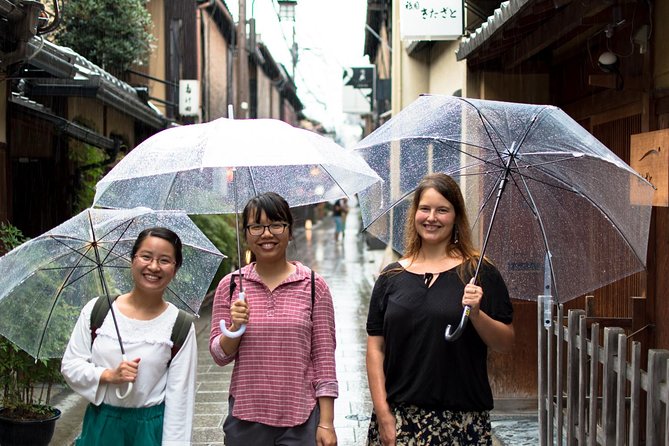
This is not just a market snack tour. Nishiki Market is the opening chapter, but most of the evening takes place at restaurants where you can sit down, share dishes, and see how Kyoto’s casual dining culture works.
I like that structure. A market gives you quick tastes and visual context. Restaurants give you time to ask questions, try dishes you might skip on your own, and compare different kinds of Kyoto food. The tour also adds a short walk through Pontocho, so the evening is not only about eating.
The format is especially helpful on a first visit. Japanese menus can be hard to read, and small restaurants may not have much English signage. A guide can order a range of dishes and explain how they are eaten. Guides named in the tour feedback include Sora, Chika or Chikako, Yui or Yuina, Leandra, Shun, Moe, Izumi, Mana, and Taishi. The exact guide depends on the date, but the repeated praise centers on friendly hosts who explain food, culture, and neighborhood history in clear English.
The tour carries a 4.9 rating from 376 reviews, with 98 percent recommending it. Those numbers point to a strong, consistent experience, but they do not erase the one real caution: the tour’s food choices may be more adventurous than some diners expect.
More food tours in Kyoto:
- Kyoto Night Foodie Tour in Gion (9+ dishes + 6 Sake tastings)
★ 5.0 · 1,762 reviews - Kyoto: Insider Sake Brewery Tour with Sake and Food Pairing
★ 5.0 · 704 reviews - Kyoto Nishiki Market Food and Culture Walking Tour
★ 5.0 · 412 reviews
Starting with Kyoto’s Nishiki Market
The tour begins at 5 p.m. near Alba Creative Boutique in central Kyoto. From there, you head to Nishiki Market, the traditional covered food market downtown.
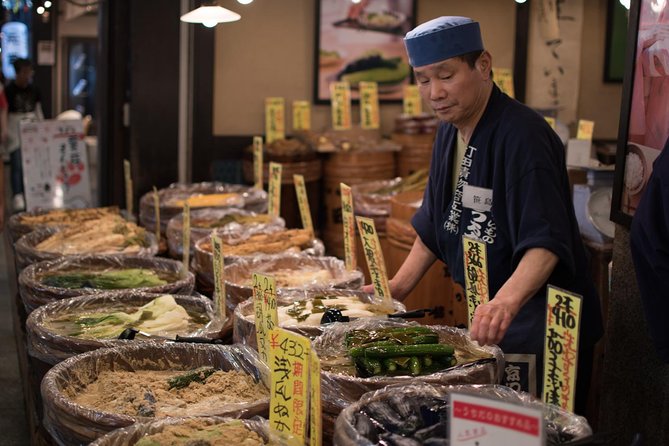
The market portion lasts about 25 minutes. That is enough time for two or three family-owned shops and several sample-size tastes, but not enough for a slow, stall-by-stall exploration. Think of Nishiki as a short introduction rather than the main meal.
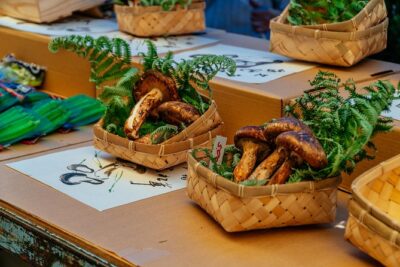
This is where the tour connects food with place. Nishiki has long been associated with Kyoto’s cooks and food shops, and the guide can point out how local ingredients and preserved foods fit into the city’s cooking traditions. The experience is more useful than wandering through the market without knowing what you are seeing.
You might sample something unfamiliar. That is part of the point. The tour is designed to introduce you to local food culture, not simply provide safe versions of dishes you already know. If you are curious, the market can give you a quick taste of the variety that follows.
One practical note: Nishiki Market can be crowded, and the group moves on after a short stop. Keep your belongings close, stay near the guide, and do not expect time for serious shopping. If you want to buy gifts or return for a longer look, save that for another visit.
Two hours of obanzai and izakaya food
The heart of the evening is a two-hour visit to two or three restaurants. Here you move from market samples to Kyoto-style obanzai and local izakaya dishes.
Obanzai is home-style Kyoto cooking, often built around seasonal vegetables and simple preparations. It is a useful counterpoint to the famous temple foods and formal meals associated with Kyoto. You get a sense of what people might order for a relaxed meal, not only what appears in a polished tourist menu.
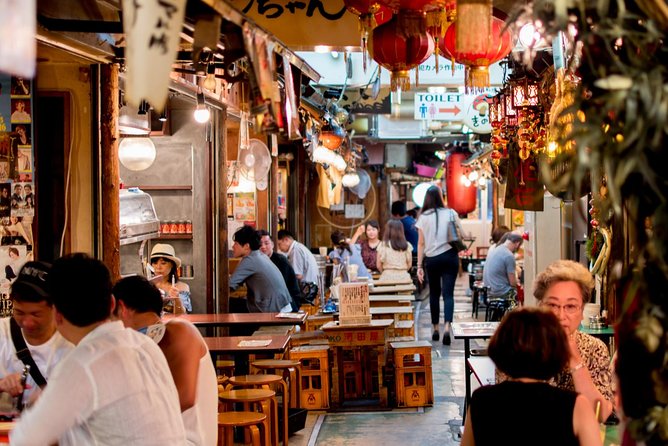
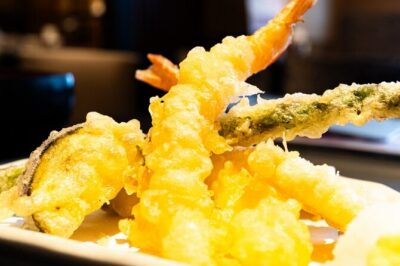
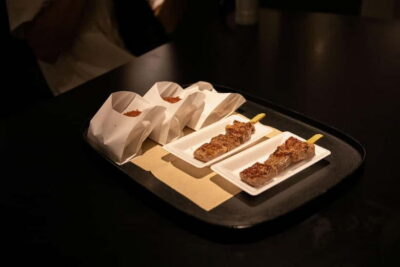
Izakayas are casual Japanese drinking places where diners share several small dishes. This setup is ideal for a food tour because it lets the guide order a spread instead of locking you into one entrée. You may try bar snacks, seafood, tempura, sashimi, eel, and other local specialties, depending on the guide and the restaurants visited.
The food is generally described as plentiful. Several guides, including Sora, Leandra, Chikako, Moe, and Chica, are praised for ordering enough food to leave people full. One particularly useful detail is that some diners returned to restaurants they discovered during the tour, which suggests the stops can be practical recommendations for later in your trip.
Still, portion size deserves a closer look. Shared plates are standard in an izakaya, and the amount each person receives can depend on group size and the dishes selected. One less satisfied participant felt that seven people, including the guides, were sharing small plates and receiving only a taste of some items. That experience differs from the many reports of plentiful food, but it is a fair reminder that seven tastings does not mean seven full portions.
If you want a full dinner with large individual plates, this may not be the right format. If you enjoy trying many things in small amounts, it should suit you well. Come hungry, but do not assume every tasting will be a substantial serving.
Sake, beer, and the drinking side of the evening
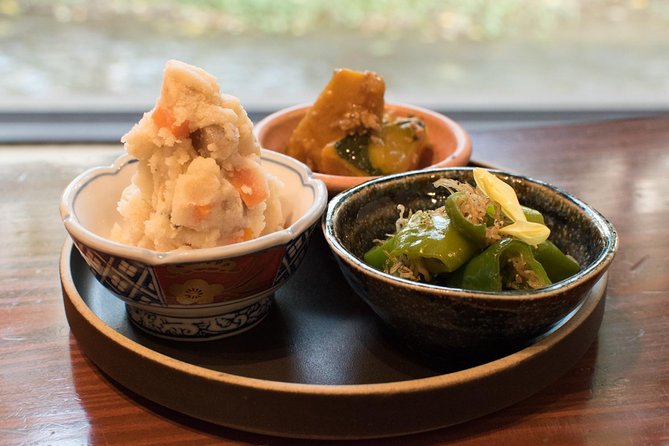
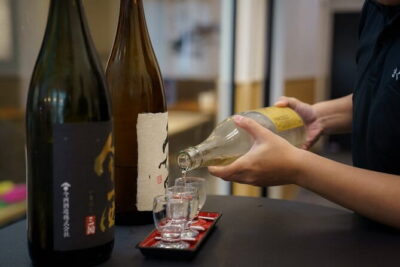
Two drinks are included, listed as beer or sake. Sake is a major part of the experience, and the tour may include a dedicated tasting or sake bar visit. The sake stop is often treated as a highlight because it adds another layer to the meal: you are not only tasting Japanese food, but learning how drinks fit into the way people dine.
The tour’s drinking side is worth understanding before you book. Some participants felt the experience placed too much weight on alcohol, especially those who were not big drinkers. If you rarely drink, tell the guide at the start and take advantage of the nonalcoholic choices available. The supplied details say soft drinks can be included at restaurants, but vegan, vegetarian, and gluten-free options are limited.
I like the sake element for visitors who want a broader food lesson. It gives you something you may not arrange easily on your own, especially if Japanese labels and menus are unfamiliar. But I would not book this tour solely for food quantity if you plan to skip the drinks. The price and format reflect a combined food-and-drink outing.
More Kyoto after dark:
- Kyoto: Gion Magical Night Walking Tour with Geisha Trivia
★ 4.9 · 2,393 reviews - Night Walk in Gion: Kyoto’s Geisha District
★ 4.5 · 2,003 reviews - Kyoto Gion Night Walk & Geisha District Guided Tour
★ 5.0 · 786 reviews - Kyoto Ghost Tour: Dark Tales, Urban Legends, Bamboo Forest Night
★ 5.0 · 625 reviews
A short walk through Pontocho
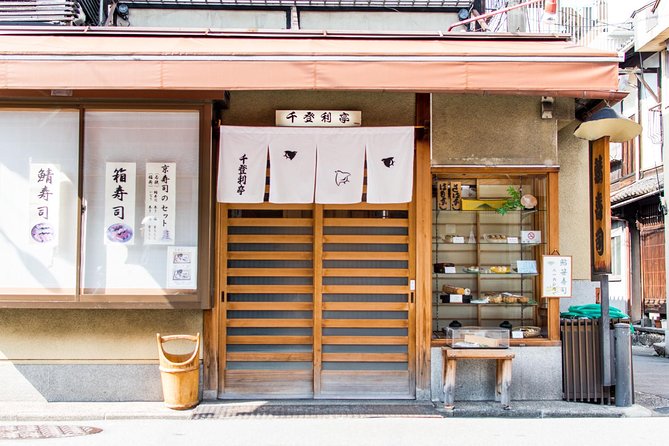
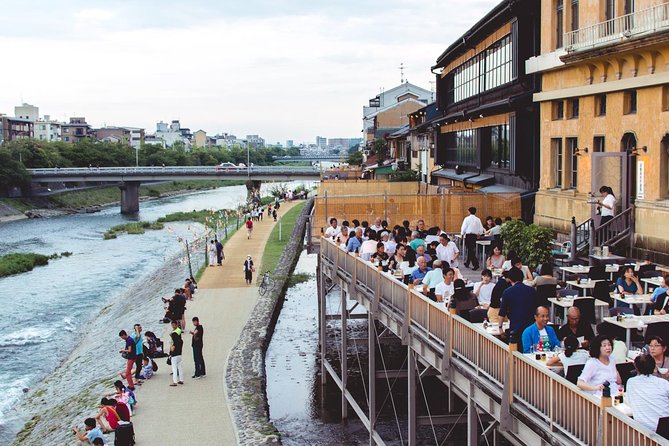
After the restaurant stops, the tour passes through Pontocho District. The walking segment takes about 15 minutes and covers the narrow lane’s place in Kyoto’s nightlife and geisha culture.
Pontocho is one of Kyoto’s atmospheric areas, with traditional façades, discreet entrances, and restaurants packed into a narrow corridor beside the Kamo River. The tour does not promise a geisha performance or a long evening of sightseeing. Instead, the guide provides context while you walk through a district that can be confusing to understand from the outside.
This short stop gives the evening a welcome change of pace. After several food stops, you get a little air, a bit of history, and a look at one of central Kyoto’s most distinctive streets. The tour ends near the former Sanjo Bridge, at the stone pillar area by Omiya, so you finish in a central part of town rather than at the starting point.
Because the tour ends at a different location, plan your evening around the finish, not the start. The walk between stops is part of the experience, so comfortable shoes are a smart choice.
The guides make the difference
The strongest part of this experience is the guide. The food itself matters, but a good host turns unfamiliar dishes into a useful lesson.
Sora is praised for taking people to his favorite places and explaining local culture. Chikako, also called Chika, is repeatedly singled out for her energy, food choices, sake knowledge, and ability to make families and solo diners feel at ease. Leandra is praised for finding small restaurants, explaining local history, and sharing her own experience of living in Kyoto. Taishi is described as easy to talk with and particularly good at explaining his favorite local stops.
Yui and Yuina receive praise for patience and personal attention. One especially nice detail is that Yuina helped a Japanese-language learner practice speaking during the evening. Shun is praised for clear English and his grasp of local food culture. Other guides, including Moe, Izumi, Mana, and Chikako, are described as warm and enthusiastic hosts.
The guide can also help you take a few risks. You may try foods you would not order alone, from unfamiliar bar snacks to seafood or regional specialties. That is where the tour earns its keep. You are not just paying for a meal, you are paying for someone to make the ordering easier and explain the choices.
At the same time, tell the guide clearly about dislikes at the start. One participant specifically said they did not like sashimi or eel but still received both. This may have been a communication problem, yet it shows why you should repeat important preferences before ordering.
Price and value at $102.47
At $102.47 per person, this is not a cheap dinner. The right comparison is not a market snack and a bowl of noodles. Compare it with three and a half hours of food, drinks, local guidance, restaurant access, neighborhood history, and the chance to avoid ordering mistakes.
I think the price can be good value for first-time visitors who want a structured introduction to Kyoto food. Seven tastings across several settings would cost money on its own, and a private-style group capped at eight gives the guide room to answer questions. You also gain restaurant suggestions that may help shape the rest of your trip.
The value is less clear for people who already know Kyoto’s food scene, do not drink, or prefer to choose every dish themselves. You may get more for your money by eating one large meal and exploring Nishiki Market independently.
The small group matters here. Eight people is still large enough that dishes are shared, but it is far more manageable than a bus-style food outing. One person felt an even smaller group would have been better, so expectations should stay realistic. This is intimate, not private.
Who should book this evening?
I would recommend it to adventurous eaters, first-time Kyoto visitors, couples, families with older children or teens, and solo visitors who like meeting people over food. Families have found the format engaging, especially because the evening includes culture and history rather than a nonstop list of dishes.
It also suits people who want help with Japanese dining customs. You can ask questions as the meal unfolds, see how an izakaya works, and learn what to look for when you return on your own.
I would be cautious if you are vegan, vegetarian, gluten-free, allergic to several ingredients, or very selective about seafood. The operator asks for food restrictions at least one week before the tour, and last-minute requests cannot be accommodated. Options are limited, so send a detailed message well before the date.
This is also not ideal if alcohol is central to your concerns. The tour includes two drinks and may place strong attention on sake. You can request soft drinks, but the basic character remains a food-and-drink night.
Practical details before you reserve
The tour starts at 5 p.m. at Alba Creative Boutique in the Shimogyo Ward area. It ends near the former Sanjo Bridge, not at the starting point. The full outing lasts about three hours and 30 minutes.
You receive confirmation when booking, and the maximum group size is eight. A mobile ticket is provided, which keeps the meeting process simple.
The experience requires good weather. If poor weather cancels it, you are offered another date or a full refund. It also requires a minimum number of participants, so a cancellation for that reason brings the same choice of another date or a full refund.
The booking itself is non-refundable and cannot be changed for personal reasons. Read that rule carefully before paying, especially if your Kyoto schedule is still shifting.
Should you book the Kyoto Foodie Night Tour?
Book it if you want a guided introduction to Kyoto’s everyday food culture, enjoy sharing many small dishes, and like the idea of sake, izakayas, and local specialties. The strongest reason to go is the combination of food access and human guidance. Hosts such as Sora, Chikako, Leandra, Yui, and Taishi can make a confusing dining scene much easier to understand.
Skip it if you want large individual portions, strict control over every dish, or a tour built around nonalcoholic dining. For most curious eaters, though, the mix of Nishiki Market, obanzai, izakaya dishes, sake, and Pontocho makes this a useful first-night orientation to Kyoto’s table.
FAQ
How long is the Kyoto Foodie Night Tour?
The tour lasts approximately three hours and 30 minutes.
What time does the tour begin?
The tour starts at 5 p.m.
How many people can join the tour?
The maximum group size is eight travelers.
What food is included?
You receive at least seven food tastings, including Nishiki Market samples, Kyoto-style obanzai, and local izakaya dishes served at two or three restaurants.
Are drinks included?
Two drinks are included, such as beer or sake. Soft drinks may be available at the restaurants.
Can the tour accommodate dietary restrictions?
You must send food restriction details at least one week before the tour. Vegan, vegetarian, and gluten-free choices are limited, and last-minute requests cannot be accommodated.
Newest Kyoto experiences on the site
- Treasures of Kyoto: Gion & historical Walking Tour★ 5.0 · 6 reviews
- Whisk Your Own Matcha: A Zen Matcha Experience at Temple★ 3.6 · 7 reviews
- Kyoto tea town for matcha lovers★ 5.0 · 16 reviews
- Uji: Private immersion into Kyoto’s tea and reglious culture★ 5.0 · 17 reviews
- Kyoto Matcha Green Tea Tour★ 4.5 · 23 reviews
- Uji and Wazuka Matcha Farm Half Day Private Guided Tour★ 5.0 · 21 reviews
- Utilising upcycled Matcha! Creating matcha incense (Uji, Kyoto)★ 5.0 · 6 reviews
- Sacred Temple Yoga Experience in Japan★ 5.0 · 3 reviews
Kyoto Food Tours, compared.
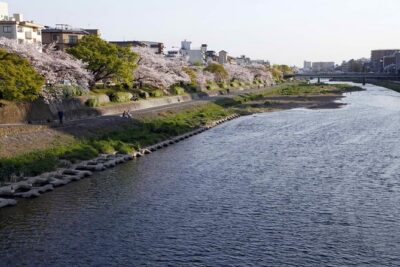
Kyoto Night Foodie Tour in Gion (9+ dishes + 6 Sake tastings)
Read our review →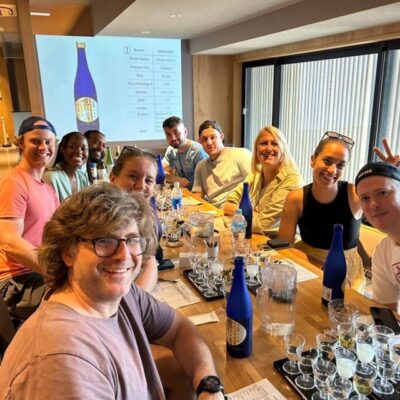
Insider Sake Brewery Tour with Sake and Food Pairing
Read our review →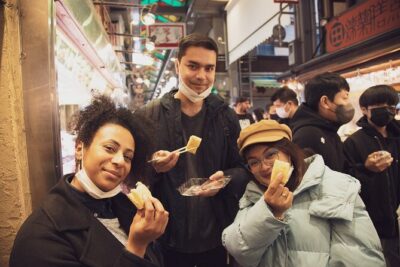
Kyoto Nishiki Market Food and Culture Walking Tour
Read our review →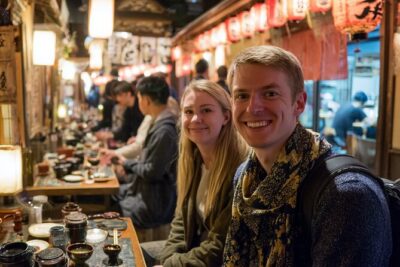
The Award-Winning PRIVATE Food Tour of Kyoto: The 10 Tastings
Read our review →Browse the lists this tour appears in