
Reviewed · FUSHIMI INARI TOURS
Kyoto Early Morning E Biking Tour Fushimi Inari Kiyomizu Temple
Kyoto is at its best before the crowds arrive, and this early-morning e-bike tour puts three major sights within a manageable five-hour outing. You ride from Kyoto Station to Fushimi Inari, Sanjusangendo, and Kiyomizu-dera, with an English-speaking guide handling the route and temple visits.
I like the practical design: the e-bike is supplied, so Kyoto’s hills are less of a chore, and admission to the temples is meant to be included. I also like the small maximum of eight people, which gives guides such as Rin or Hiro room to explain the sights and help with photos.
The main point to check is admission payment. One booking experience reported paying ¥3,300 for three entries despite the stated inclusion, so confirm the fee arrangement before setting out. The ride also requires moderate fitness and depends on good weather.
Key points at a glance
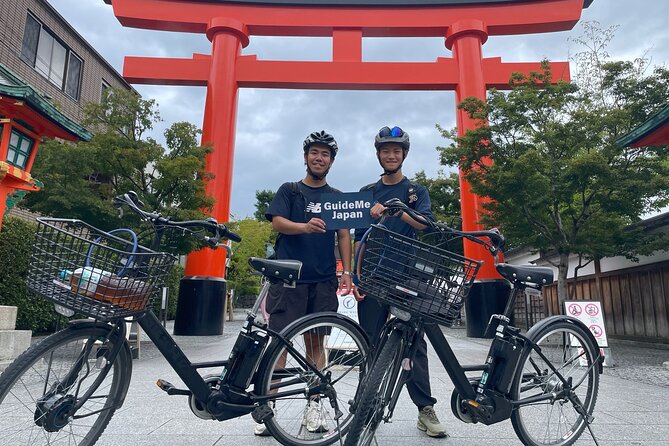
- Early start, quieter famous sights: Reach Fushimi Inari and Kiyomizu-dera before the heaviest daytime crowds.
- Three very different stops: Red torii gates, a hall filled with 1,000 Kannon figures, and a hillside temple with city views.
- E-bike included: You do not need to arrange a rental, and the motor helps on Kyoto’s uphill sections.
- Small group size: The tour accepts no more than eight people, making questions and conversation easier.
- Guides add personality: Rin is praised for photography, while Hiro is described as personable and informative.
- Five hours from Kyoto Station: The tour begins and ends at the JR-Central Ticket Office by the Shinkansen Hachijo Entrance.
Why an early e-bike ride works well in Kyoto
Kyoto’s biggest sights can become crowded quickly. Fushimi Inari’s torii gates and Kiyomizu-dera’s hillside paths are much easier to appreciate when you are not moving in a solid stream of people. An early departure does not make these places empty, but it gives you a better chance at a calmer visit and clearer photographs.
The bicycle also changes how you see the city. Rather than spending the whole morning moving between stations, you travel under your own pedal power with a guide leading the way. The electric assist matters most around eastern Kyoto, where the approach to Kiyomizu-dera includes uphill riding. You still need to pedal and steer, but the motor takes some strain out of the climb.
I would not choose this tour solely as a sightseeing checklist. Its appeal is the combination of movement, local explanation, and three contrasting places. You get the dramatic red gates of Fushimi Inari, the quiet visual impact of Sanjusangendo, and Kiyomizu-dera’s broad views over Kyoto.
The group limit of eight is useful here. A large cycling group can feel slow and awkward, especially near temple entrances. With a smaller party, you have a better chance to hear the guide and ask about what you are seeing.
More ways to walk the Fushimi Inari gates:
- Kyoto: Fushimi Inari, Kinkakuji, Bamboo Grove 1 Day Bus Tour
★ 4.8 · 4,316 reviews - Fushimi Inari Hidden Hiking Tour (Private Option Available)
★ 5.0 · 1,750 reviews - Osaka/Kyoto:Kinkakuji,Arashiyama,FushimiInariShrine,NaraPark
★ 4.1 · 1,596 reviews
Meeting at Kyoto Station
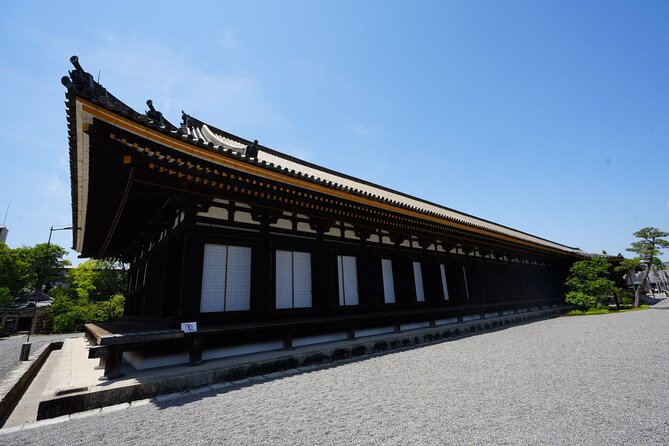
The starting point is the JR-Central Ticket Office at the Kyoto Station Shinkansen Hachijo Entrance, on the first floor. This is a sensible place to meet because Kyoto Station is served by trains and is easy to reach from many parts of the city.
Give yourself enough time to find the correct side of the station. Kyoto Station is large, and the Shinkansen entrances are not interchangeable with every local train entrance. The stated meeting address is JR Kyoto Station Hachiguchi, 83 Higashishiokoji Takakuracho, Shimogyo Ward.
The activity ends back at the same meeting point. That makes the tour convenient if you have afternoon plans near the station, a train to catch later, or luggage stored nearby. Food and drinks are not included, so eat before departure or plan to buy something afterward.
The tour lasts about five hours. That is long enough for a proper visit to the three listed sights, but it is not an all-day Kyoto tour. You should still have time afterward for Nishiki Market, Gion, the Imperial Palace area, or another temple.
Fushimi Inari and its thousands of red gates
Fushimi Inari-taisha is the most instantly recognizable stop. Its rows of red-orange torii gates climb through wooded paths on Mount Inari, creating a sequence of narrow passages, shadows, and flashes of color.
The tour allows about an hour here. That gives you time to walk through the most famous gate-lined sections, take photographs, and listen to the guide explain the shrine. It is not enough for an extended hike to every point on the mountain, so keep your expectations sensible. You are getting a focused visit rather than a full mountain trek.
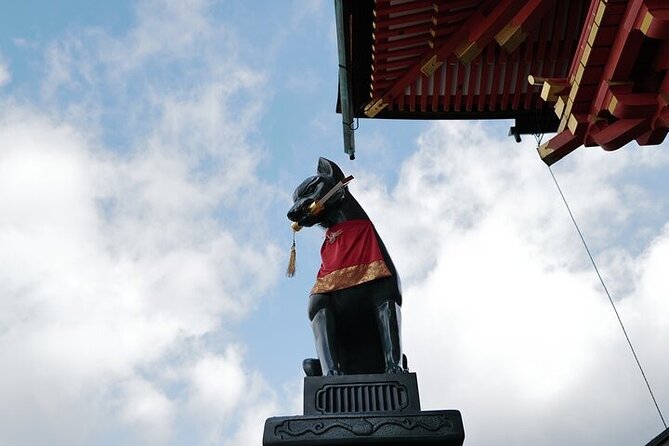
The shrine is dedicated to Inari, a deity associated with rice, prosperity, and business. Fox figures appear around the grounds because foxes are traditionally linked with Inari. Your guide can help connect these details to the objects and symbols you see, which is especially helpful when the shrine feels visually overwhelming.
Early timing matters most at this stop. The gates are beautiful at any hour, but a packed walkway can turn the experience into a slow queue. Morning also suits the shrine’s mood. The quiet forest paths and repeated gates feel more atmospheric before the heat and crowds build.
Wear shoes you can walk in comfortably. Even with a bike ride doing much of the transportation, Fushimi Inari requires walking and some uneven ground. The supplied information calls for moderate physical fitness, and this is one reason why.
Sanjusangendo and the 1,000 Kannon figures
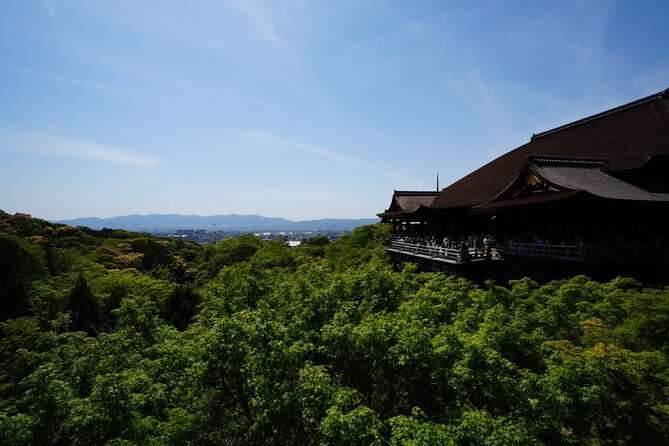
Sanjusangendo offers a sharp change of mood. Instead of an outdoor route through gates, you enter a long temple hall known for its formation of 1,000 statues of Kannon, the Buddhist goddess of mercy.
The scale of the interior is the main event. The statues are arranged in orderly rows, but each figure has individual details and expression. After the visual repetition of Fushimi Inari, the hall gives you a quieter, more concentrated experience.
The planned visit is about an hour, which is generous enough to look carefully rather than rush through. A guide can explain what you are seeing and provide context for the figures, the temple, and the religious ideas behind them. This is the kind of place where a short explanation adds real value because the room itself does not tell you everything.
Photography rules and interior etiquette matter at Japanese temples. Follow the guide’s instructions and any posted signs. The key pleasure here is looking closely, not racing to the next stop.
Sanjusangendo also helps justify the tour’s varied route. If you visited only Fushimi Inari and Kiyomizu-dera, your morning would lean heavily toward famous outdoor sights. Adding this temple gives you a more balanced picture of Kyoto’s religious art and architecture.
More Kiyomizu-dera visits and hillside walks:
- Kyoto: Tea Ceremony in a Traditional Tea House in Kiyomizu
★ 4.9 · 3,519 reviews - Kyoto: Nijo Castle, Kiyomizu & Fushimi Inari Guided Tour
★ 4.7 · 700 reviews - Kyoto: Nijo, Kinkaku-ji, Arashiyama, Kiyomizu & Fushimi Inari
★ 5.0 · 699 reviews - Kyoto Tea Ceremony & Kiyomizu-dera Temple Walking Tour
★ 5.0 · 115 reviews
Kiyomizu-dera above eastern Kyoto
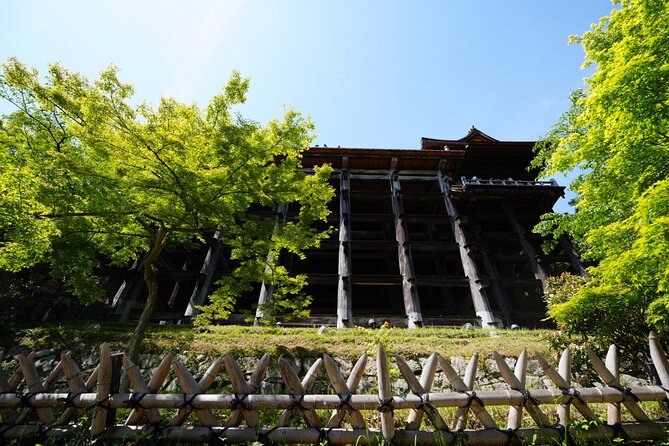
Kiyomizu-dera is the final major stop and the one most likely to reward the early schedule. Set on a hillside in eastern Kyoto, it combines impressive timber architecture with views across the city and surrounding areas.
The temple’s name means Pure Water Temple, a reference to the Otowa Waterfall associated with the complex. The best-known structures and viewpoints can be busy later in the day, so arriving before the peak period is a clear advantage.
Allow about an hour for the visit. That should give you time to take in the main buildings, enjoy the views, and hear the guide explain the site’s past. The grounds cover a substantial area, so you will not see every corner at a leisurely pace. Still, the visit gives you the essential experience without turning the whole morning into a single-temple stop.
The ride to Kiyomizu-dera is where the e-bike earns its keep. Eastern Kyoto is not flat, and the approach can be tiring on a standard bicycle. Electric assistance helps you arrive with enough energy to enjoy the temple instead of treating the visit as a recovery break.
Do not expect a completely effortless ride. You still need to handle the bicycle, keep up with the group, and manage the physical demands of cycling and walking. The moderate fitness requirement is important, especially for anyone who is not used to bikes or hills.
Guides, group size, and the personal touch
The tour includes an English-speaking guide, and the guide is central to its value. Without one, you could visit all three sites, but you would miss much of the cultural context that links the architecture, religious objects, and local customs.
Rin receives especially strong praise for combining historical explanation with photography. If Rin leads your outing, you may come away with more than memories on your phone, since the guide has been noted for taking excellent pictures. Hiro is described as personable and informative, which suggests a friendly, conversational approach rather than a dry lecture.
Guide assignments can vary, so you should not book on the assumption that a particular person will lead your departure. Still, the examples give you a useful idea of the service: expect explanation, questions, and a guide who can help frame the experience.
The maximum group size is eight. That is small enough to keep the group together without making every stop feel like a formal procession. It also gives you a better chance to ask about a specific statue at Sanjusangendo, a shrine symbol at Fushimi Inari, or a viewpoint at Kiyomizu-dera.
What the $67.41 price gets you

At $67.41 per person, the price is reasonable if you value convenience and guidance. It covers the e-bike, an English-speaking guide, and the stated temple admission. You are paying for transport between major sights, route planning, and interpretation, not just a bicycle rental.
The value is strongest for a first Kyoto visit or a short stay. In five hours, you cover three major locations without spending time figuring out bike hire, navigation, or the best order of stops. The early departure also lets you use the rest of the day for another part of the city.
There is one financial detail you should clarify. The tour information says temple admission is included, but one person reported paying ¥3,300 for three entries to the two temples. That could be a booking error, a communication problem, or a change in the fee arrangement. Before departure, ask the provider to confirm exactly which admissions are covered and whether you need to carry cash.
Food and drinks are not included. That is not a major drawback, but you should plan around it because the tour occupies the morning. Bring water if permitted and eat beforehand, since no meal stop is promised.
Who should book this Kyoto cycling tour?

I would recommend it to a first-time visitor who wants to see major Kyoto sights efficiently and prefers a guide’s explanation to exploring alone. It also suits anyone who likes active sightseeing but does not want a full day of walking.
The tour is a good match if you are comfortable on a bicycle and have moderate fitness. The e-bike reduces the effort on hills, but it does not remove the need to cycle, walk through temple grounds, and stay with the group.
It may be less suitable if you want a slow, photographic study of one temple, a long hike through all of Fushimi Inari, or a flexible schedule with no fixed route. The five-hour format is focused and efficient, not leisurely.
The tour is also weather dependent. If poor weather causes cancellation, you are offered another date or a full refund. For your own plans, avoid placing an important timed commitment immediately afterward, since cycling, temple visits, and morning traffic can affect the exact finish.
Should you book it?
Book this tour if you want three major Kyoto sights before the crowds, prefer an active morning, and like having a guide explain what you are seeing. The e-bike, small group, and central start point make the outing practical, especially during a short stay.
Before paying, confirm the admission arrangement and make sure you are comfortable with the fitness requirement. If those points work for you, this is a well-designed way to cover Fushimi Inari, Sanjusangendo, and Kiyomizu-dera in one morning without spending the day wrestling with Kyoto’s hills and transport system.
FAQ
Where does the Kyoto e-bike tour start?
It starts at the JR-Central Ticket Office at the Kyoto Station Shinkansen Hachijo Entrance, on the first floor.
Where does the tour finish?
The activity ends back at the meeting point at Kyoto Station.
How long does the tour last?
The tour lasts approximately five hours.
Which sights are included?
The route includes Fushimi Inari-taisha Shrine, Sanjusangendo Temple, and Kiyomizu-dera Temple.
Is the e-bike provided?
Yes. An e-bike is included in the tour price.
Is a guide included?
Yes. The experience includes an English-speaking guide.
Are temple admission fees included?
Temple admission is stated as included. However, one booking experience reported paying ¥3,300 for three entries to the two temples, so confirm the exact admission arrangement with the provider before departure.
What is the maximum group size?
The tour has a maximum of eight people.
Do I need a certain level of fitness?
Yes. The activity states that participants should have a moderate level of physical fitness.
What happens if the weather is poor?
The activity requires good weather. If it is canceled because of poor weather, you can choose another date or receive a full refund.
More Early Starts in Kyoto
- Kyoto Early Morning Tour with English-Speaking Guide
★ 5.0 · 1,427 reviews - Kyoto: Early Morning Tour with English-Speaking Guide
★ 4.9 · 1,128 reviews - Kyoto Early Bird Walking Tour
★ 5.0 · 377 reviews - From Kyoto: Nara Guided Morning Tour
★ 4.6 · 335 reviews
More Bike Days Around Kyoto
- Hidden Kyoto E-Biking tour
★ 5.0 · 1,843 reviews - Bike Tour Exploring North Kyoto plus Lunch
★ 5.0 · 1,087 reviews - Arashiyama Bamboo Forest & Hidden Gems Bike Tour (Early Bird)
★ 5.0 · 613 reviews - 5 Top Highlights of Kyoto Full Day Bike Tour (E-bike option)
★ 5.0 · 511 reviews
Newest Kyoto experiences on the site
- Treasures of Kyoto: Gion & historical Walking Tour★ 5.0 · 6 reviews
- Whisk Your Own Matcha: A Zen Matcha Experience at Temple★ 3.6 · 7 reviews
- Kyoto tea town for matcha lovers★ 5.0 · 16 reviews
- Uji: Private immersion into Kyoto’s tea and reglious culture★ 5.0 · 17 reviews
- Kyoto Matcha Green Tea Tour★ 4.5 · 23 reviews
- Uji and Wazuka Matcha Farm Half Day Private Guided Tour★ 5.0 · 21 reviews
- Utilising upcycled Matcha! Creating matcha incense (Uji, Kyoto)★ 5.0 · 6 reviews
- Sacred Temple Yoga Experience in Japan★ 5.0 · 3 reviews
Fushimi Inari Tours, compared.
Fushimi Inari, Kinkakuji, Bamboo Grove 1 Day Bus Tour
Read our review →
Fushimi Inari Hidden Hiking Tour (Private Option Available)
Read our review →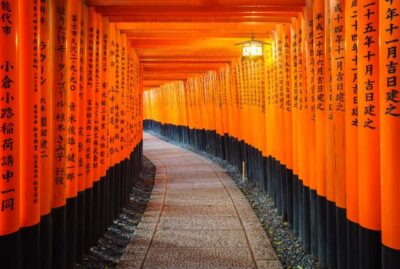
Kinkakuji,Arashiyama,FushimiInariShrine,NaraPark
Read our review →
Nara, Fushimi Inari Taisha, Arashiyama Bus Tour
Read our review →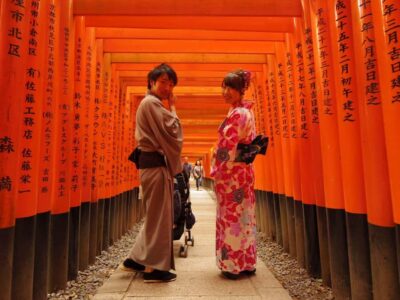
Arashiyama, Nara & Fushimi Inari Shrine w/Lunch
Read our review →
Nijo Castle, Kiyomizu & Fushimi Inari Guided Tour
Read our review →
Nijo, Kinkaku-ji, Arashiyama, Kiyomizu & Fushimi Inari
Read our review →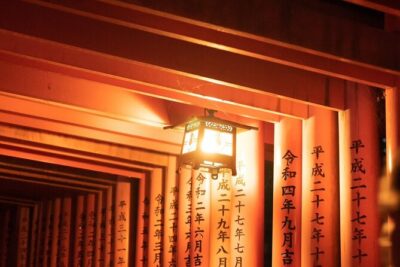
Browse the lists this tour appears in