
Reviewed · KYOTO EARLY MORNING TOURS
Kyoto: Early Morning Tour with English-Speaking Guide
Kyoto’s big three sights are spread across the city, but this early start lets you see Fushimi Inari, Arashiyama, and Kinkaku-ji in one morning. I like the quiet first visit to the torii gates and the way a guide handles the train and bus changes. I also like finishing around lunchtime, leaving your afternoon open.
The tradeoff is simple: this is a walking tour using public transportation, not a comfortable sightseeing bus. You need good shoes, an early alarm, and the discipline to reach Kyoto Station five to ten minutes early. Miss the meeting time and you cannot join later or receive a refund.
Key points at a glance
- Three major sights before the crowds: Visit Fushimi Inari first, then Arashiyama and Kinkaku-ji while the morning is still young.
- Small group of up to eight: The size allows guides such as Haruki, Aya, Hina, and Rin to answer questions and help with photos.
- Public transit is part of the lesson: Trains and a bus connect the sights, with transport costing about 1,240 yen extra.
- A guide adds cultural context: Expect explanations of Shinto, Buddhism, Japanese history, and local customs rather than a quick photo stop.
- The pace covers a lot: About 330 minutes includes three guided visits and several transfers, so expect steady walking.
- Finish near Kyoto Station: You return to the starting area around lunchtime, with the rest of the day free.
Why this early Kyoto route works
Kyoto is easiest to enjoy before the city wakes up fully. The popular shrines and temple grounds fill quickly, and the bamboo forest can feel very different once large groups arrive. This tour uses the first part of the day to tackle the places most visitors put at the top of their list.
You meet your guide at Kyoto Station’s Central Ticket Gate, the large gate near Kyoto Tower and a nearby 7-Eleven. Look for the GuideMe Japan sign. The guide contacts you through WhatsApp before the tour, so download it in advance and provide a Japanese phone number that works during your stay.
The group can include up to eight people. That is small enough for conversation without making this a private tour. The exact guide varies, but past departures have included Aya, Haruki, Hina, Hinano, Genki, Rin, Koi, Suzuka, and others. The strongest praise centers on clear English, friendly conversation, photo help, and practical advice for food and later sightseeing.
The early hour matters more than it may sound. One departure reported by participants began at 6:45 a.m., and that timing allowed the group to see the first site with much less congestion. You still will not have Kyoto entirely to yourself, especially in peak seasons or after unusual weather, but you give yourself the best chance of a calmer visit.
More early starts in Kyoto:
- Kyoto Early Morning Tour with English-Speaking Guide
★ 5.0 · 1,427 reviews - Arashiyama Bamboo Forest & Hidden Gems Bike Tour (Early Bird)
★ 5.0 · 613 reviews - Kyoto Early Bird Walking Tour
★ 5.0 · 377 reviews
Fushimi Inari before the torii gates fill
From Kyoto Station, the train ride to Fushimi Inari takes about ten minutes. That short opening journey is useful because your guide can explain the day’s route and help you get comfortable with Kyoto’s transit system right away.
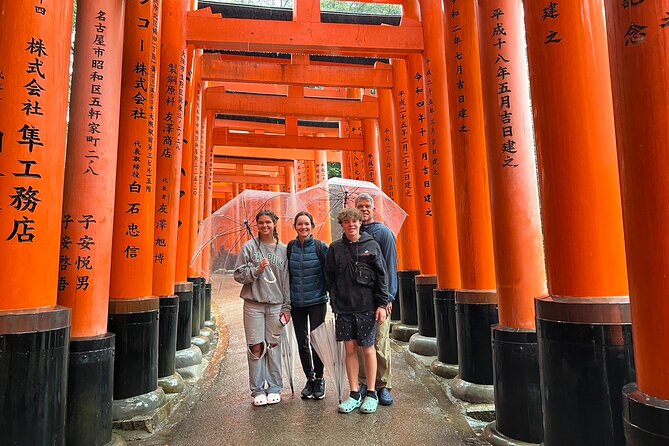
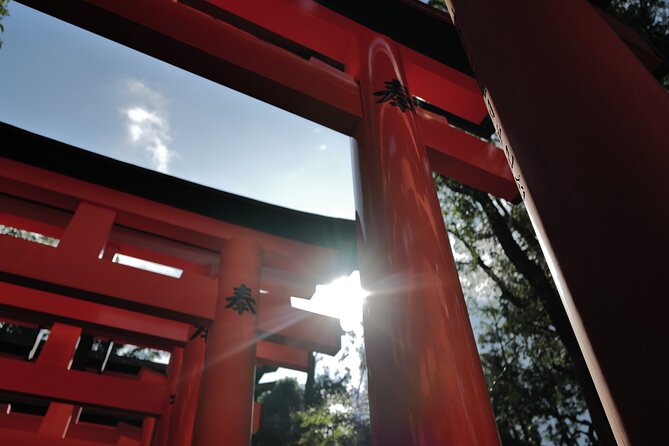
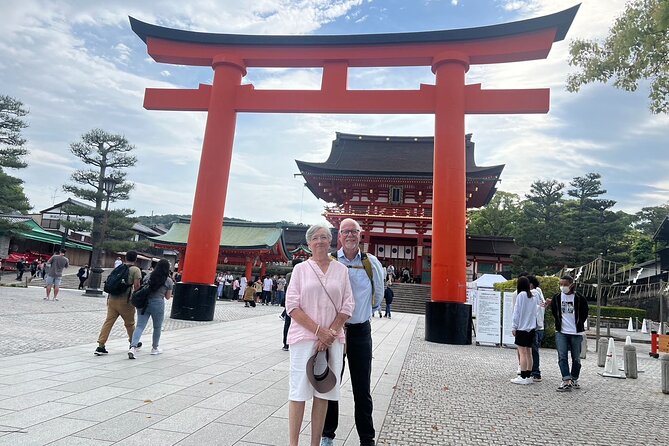
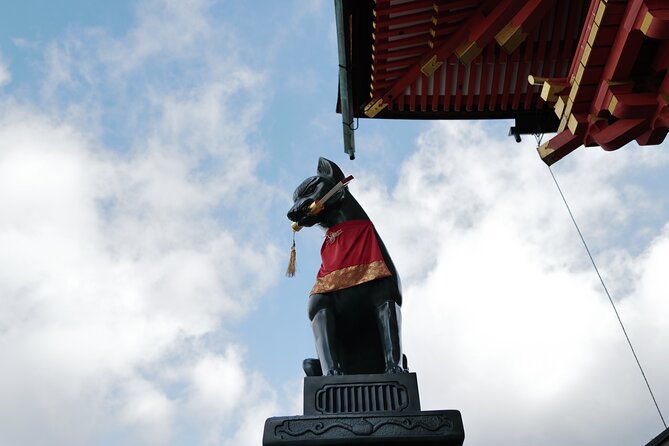
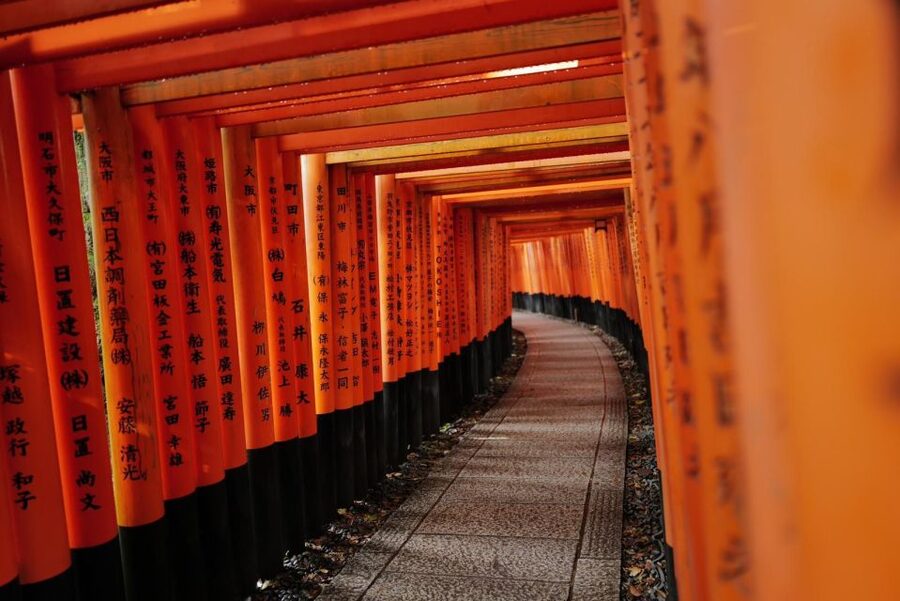
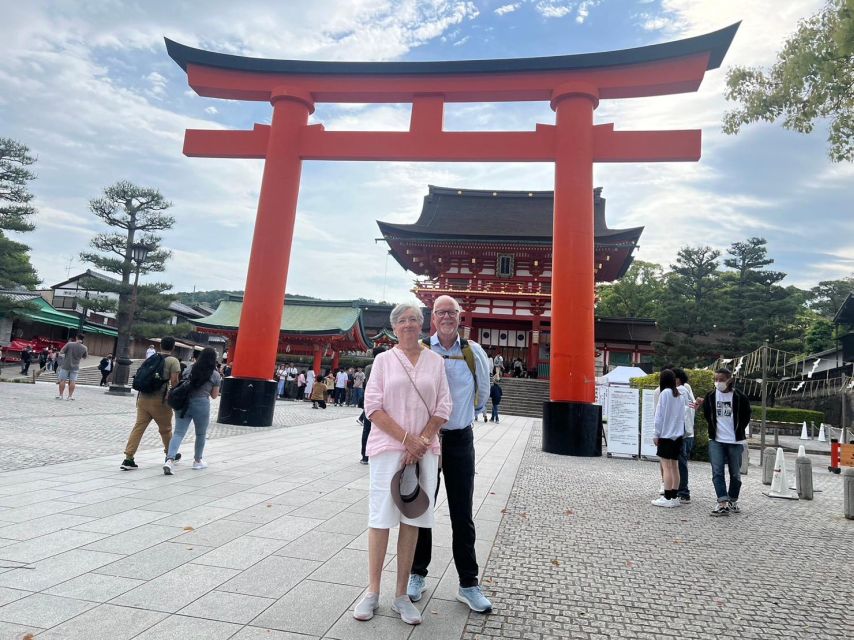
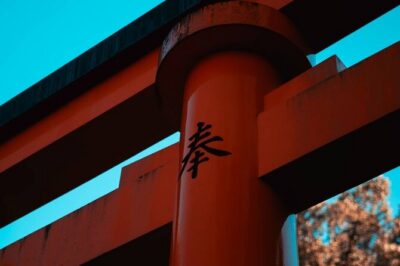
Fushimi Inari Taisha is known for its long paths of orange torii gates. The shrine is dedicated to Inari, a Shinto deity associated with rice, prosperity, and business. You do not need to walk the entire mountain to appreciate it. The guided visit lasts about 70 minutes, giving you time to see the main shrine area and walk beneath a section of the gates.
This is one of the best places for an early start. The corridors become harder to photograph once the paths fill, and the shrine loses some of its quiet, reflective quality. The tour gives you a chance to pause and understand how a Shinto shrine differs from a Buddhist temple.
The ground can be uneven, and the route may include steps. You should not treat this as a short stroll from a bus stop. Comfortable shoes are essential, and anyone who finds extended walking difficult should think carefully before booking.
Your guide can also help with small but important customs, such as how to approach a shrine respectfully. That context changes the visit from a quick picture stop into a more thoughtful introduction to Japanese religious practice.
Arashiyama and the bamboo forest
After Fushimi Inari, the group takes another train ride of about 30 minutes to Arashiyama. This is the longest transfer of the morning, but it connects two very different parts of Kyoto and saves you the trouble of planning the route yourself.
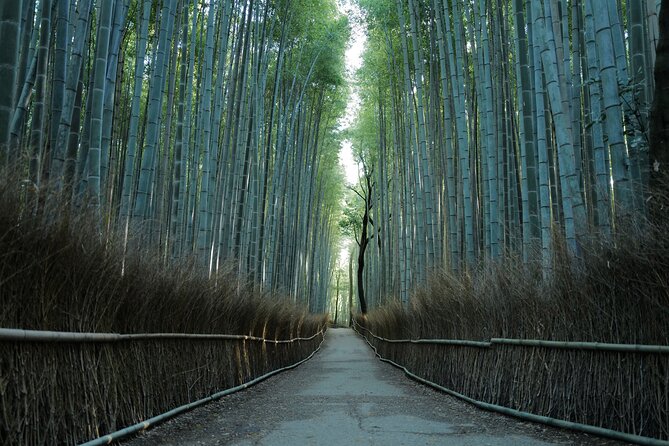
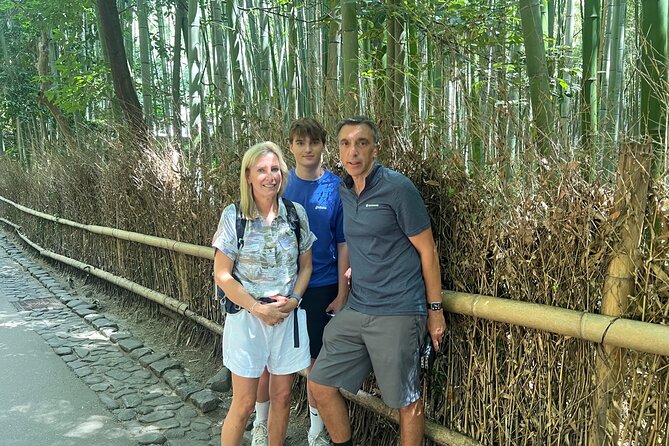
Arashiyama is famous for its bamboo grove, but the district offers more than one narrow path of tall green stalks. The guided hour gives you time to see the main area and understand why the district is such a popular stop. The bamboo forest is particularly striking in soft morning light, and winter can bring a special mood when snow covers the paths.
Keep your expectations sensible. The bamboo grove is not a remote wilderness walk. It is a well-known city attraction, and crowds can arrive quickly. The early timing helps, but the experience still depends on the season, day of the week, weather, and the number of other groups arriving at the same time.
The public transit approach also has a practical benefit. By following the guide through Kyoto’s train system, you learn how to move between major sights without relying on a private vehicle. Several participants found this useful for the rest of their stay, especially when they later needed to use trains and buses on their own.
The tour does not include lunch, and the group continues after Arashiyama rather than stopping for a meal. Bring water and consider eating before meeting, since the morning remains active until the return to Kyoto Station.
Kinkaku-ji, the Golden Pavilion
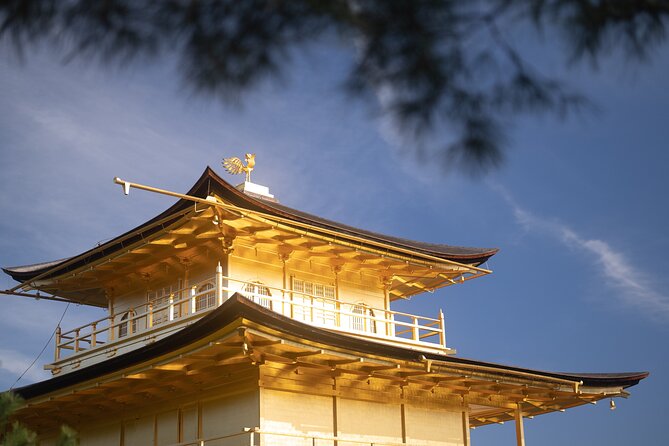
The route then uses a train for about 15 minutes and a bus for roughly 20 minutes before reaching Kinkaku-ji. The bus section can be the least predictable part of the morning. On Sundays and busy winter days, buses may be crowded or delayed, and one departure required a taxi after a bus problem. The guide handled that change, but a taxi is not something you should assume is included.
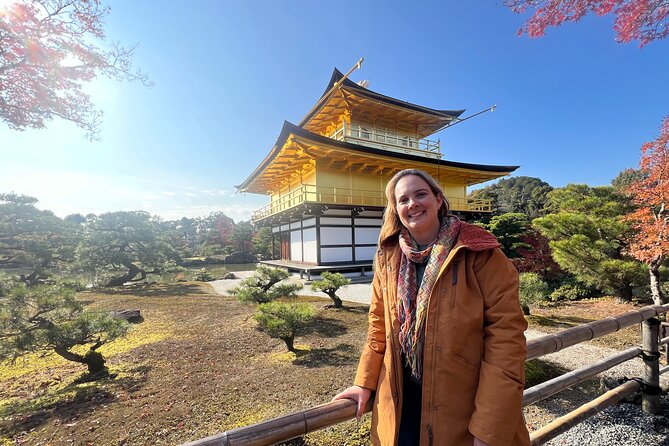
Kinkaku-ji is the Buddhist temple commonly called the Golden Pavilion. Its gold-covered upper levels reflect in the pond, creating one of Kyoto’s most recognizable views. The grounds are designed for a steady walk around the pavilion rather than an interior tour of the building.
The temple visit lasts about an hour. Your guide can explain the Buddhist setting, the role of the temple, and the meaning behind what you are seeing. This is especially helpful here because the pavilion is visually striking but easy to reduce to a single photograph if you visit without context.
The entrance fee is 500 yen and is not included. Bring cash. The tour also recommends carrying an IC card such as Suica, ICOCA, or PASMO, or a valid JR Pass. Public transport costs about 1,240 yen and are separate from the $101 tour price.
Kinkaku-ji is often the busiest stop because it comes later in the morning. That is the main weakness of the route. Fushimi Inari and Arashiyama benefit most from the early schedule, while the Golden Pavilion may already be busy by the time you arrive. Even so, having a guide manage the final transfer can be worthwhile, particularly if Kyoto’s bus system is new to you.
Same city, a completely different kind of day:
- PERFECT KYOTO 1-Day Bus Tour
★ 5.0 · 13,518 reviews - Kyoto: Fushimi Inari, Kinkakuji, Bamboo Grove 1 Day Bus Tour
★ 4.8 · 4,316 reviews - Kyoto: Tea Ceremony in a Traditional Tea House in Kiyomizu
★ 4.9 · 3,519 reviews - Kyoto Geisha Walking Tour: Gion District & Hidden Gems
★ 4.7 · 3,273 reviews
What the guide adds beyond directions
The guide is not simply there to point toward the next train. The best departures add stories about Kyoto’s past, explanations of Shinto and Buddhism, and practical advice for the rest of your visit.
Several guides have been praised for clear English and easy conversation. Haruki, for example, was singled out for explaining history and tradition in a way that worked well for both adults and an 11-year-old child. Aya received praise for her energy, cultural explanations, and restaurant suggestions. Hina and Hinano were noted for patience, site knowledge, and help with photographs.
You should not expect to choose a specific guide when booking. Names such as Haruki, Aya, Hina, Rin, Genki, Chihiro, and Koi have led different departures, but assignment depends on availability. The consistent value is the format: a small group, a live guide, and enough time to ask questions.
Photo help is another useful touch. Guides have taken pictures at the main stops, helped find good viewpoints, and offered advice on food and later destinations in Kyoto, Osaka, and elsewhere in Japan. That service is not a formal listed inclusion, so treat it as a helpful possibility rather than a guaranteed feature.
The real cost and value
The advertised price is $101 per person. Add about 1,240 yen for trains and buses, plus the 500 yen Kinkaku-ji entrance fee. You should also carry extra cash in case a transport change becomes necessary, although a taxi is not part of the standard price.
At first glance, this may look expensive for a half-day outing that does not include meals or transport. The value comes from what you avoid having to organize. You do not need to work out the order of three distant sights, locate the right train platforms, understand the bus connection to Kinkaku-ji, or spend time checking opening details and local customs.
The tour is especially useful during a short Kyoto stay. One morning covers three major sights that would be difficult to combine efficiently on your own, especially if you are unfamiliar with the city. You also return to Kyoto Station with the afternoon available for another district, a meal, or a slower visit to a place you want to explore further.
If you already know Kyoto’s transport system and prefer to linger at one location, the value is weaker. The route moves on after fixed periods, with about 70 minutes at Fushimi Inari and about an hour at both Arashiyama and Kinkaku-ji. Independent visitors can spend longer at one temple and skip the transfers.
Pace, comfort, and practical limits
The stated duration is 330 minutes, or five and a half hours, but the tour is described as approximately five hours and may finish around 30 minutes earlier or later. Transport delays, crowds, and the pace of the group can affect the timing.
You will walk between stations, platforms, shrines, temple grounds, and bus stops. The tour is not wheelchair or stroller accessible, and it is not recommended for people who use a cane. It is also not suitable for babies under one year, people with heart problems, or people over 95 years old.
This is not a good choice if you want a slow, private morning. The group can have eight participants, and the guide must keep everyone together. It is a better fit if you want structure and broad coverage.
Dress for the season and wear shoes that can handle several hours on foot. Bring cash, your IC card or JR Pass, a phone with WhatsApp, and a reachable phone number. Most important, arrive five to ten minutes early. The guide starts on time because other people are depending on the route, and late arrivals cannot join.
Who should book this Kyoto morning?
I would choose this tour for a first visit to Kyoto, a short stay, or a day when you want to see the city’s headline sights without spending hours on route planning. Families with older children can benefit from the guide’s explanations and help with transport, provided everyone is comfortable walking.
It also suits solo visitors and couples who want company without joining a large coach group. The group size makes it easier to ask questions and meet other people, while the public transit format gives you useful confidence for the rest of your Japan trip.
I would skip it if you dislike early mornings, have limited mobility, want a private guide, or prefer to explore one district at a relaxed pace. The route is efficient, but efficiency means movement. You will see a lot, not linger everywhere.
Should you book it?
Book this tour if your priority is seeing Kyoto’s three famous sights in one organized morning, with an English-speaking guide and the best possible chance of avoiding the heaviest crowds. The strongest reasons are the early Fushimi Inari visit, the small group, and the guide’s help with Kyoto’s trains and buses.
Before paying, add the transport and temple fees to the advertised price, check that you can manage the walking, and make sure you can reach Kyoto Station early. If those points work for you, this is a practical first-day introduction that leaves the rest of your afternoon free.
FAQ
Where does the tour begin?
It begins at Kyoto Station’s Central Ticket Gate, near Kyoto Tower and a nearby 7-Eleven. Look for a guide holding a GuideMe Japan sign. The guide also contacts you through WhatsApp before the tour.
How long does the tour last?
The stated duration is 330 minutes. The experience is described as approximately five hours and may finish around 30 minutes earlier or later.
Which sights are included?
The route visits Fushimi Inari Taisha, Arashiyama and its bamboo forest area, and Kinkaku-ji, also called the Golden Pavilion.
Is transportation included?
No. The tour uses public trains and a bus, and transport costs about 1,240 yen. Bring a Suica, ICOCA, PASMO, JR Pass, or another suitable way to pay for public transportation.
Is the Kinkaku-ji entrance fee included?
No. The entrance fee is 500 yen and should be paid separately.
Is this a private tour?
No. It is a small-group tour with up to eight participants.
What languages are available?
Live guiding is available in English and Korean. The tour information specifically identifies English-speaking guides for the experience.
Newest Kyoto experiences on the site
- Treasures of Kyoto: Gion & historical Walking Tour★ 5.0 · 6 reviews
- Whisk Your Own Matcha: A Zen Matcha Experience at Temple★ 3.6 · 7 reviews
- Uji: Private immersion into Kyoto’s tea and reglious culture★ 5.0 · 17 reviews
- Kyoto tea town for matcha lovers★ 5.0 · 16 reviews
- Kyoto Matcha Green Tea Tour★ 4.5 · 23 reviews
- Uji and Wazuka Matcha Farm Half Day Private Guided Tour★ 5.0 · 21 reviews
- Utilising upcycled Matcha! Creating matcha incense (Uji, Kyoto)★ 5.0 · 6 reviews
- Sacred Temple Yoga Experience in Japan★ 5.0 · 3 reviews
Kyoto Early Morning Tours, compared.
Kyoto Early Morning Tour with English-Speaking Guide
Read our review →
Arashiyama Bamboo Forest & Hidden Gems Bike Tour (Early Bird)
Read our review →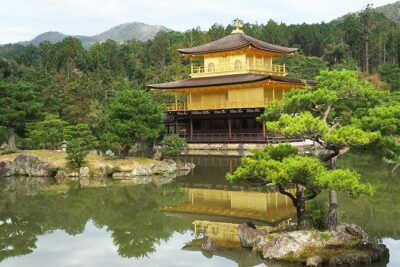
Kyoto Early Bird English Tour: Fushimi-Inari and Arashiyama
Read our review →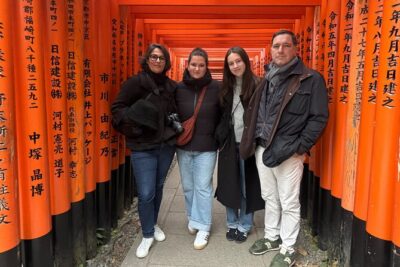
Kyoto Early Bird English Tour: Fushimi Inari & Gion(Private opt)
Read our review →
Browse the lists this tour appears in