
Reviewed · KYOTO EARLY MORNING TOURS
Kyoto Early Bird Walking Tour
Kyoto’s most famous sights are much easier to enjoy before the day gets going. This private morning tour takes you from Kyoto Station to Fushimi Inari’s red torii gates, Kinkaku-ji’s golden pavilion, and Arashiyama’s bamboo forest, with the route finished by noon.
I like two things right away. First, the guide handles the public transportation between sights scattered across the city, which saves you from sorting out train and bus connections while watching the clock. Second, guides such as Akiko, Kaz, Sumiko, Miho, and Makoto have been praised for clear explanations, family-friendly help, photo-taking, and thoughtful pacing. The trade-off is simple: you must wake early, walk quite a bit, and pay transport and Kinkaku-ji admission separately.
Key Points at a Glance
- Early access matters: Fushimi Inari, Kinkaku-ji, and Arashiyama grow crowded quickly, so the morning schedule is the main reason to book.
- Three major sights in one half-day: You see three very different sides of Kyoto without giving up your afternoon.
- Private format: Only your group takes part, allowing some flexibility in pace and site order.
- Public transit is part of the experience: Budget ¥1,220 per person for transportation and expect to use local trains, buses, and station connections.
- The walking is real: Comfortable shoes, water, and a reasonable level of fitness are important.
- Extra costs are modest but easy to miss: The ¥500 Kinkaku-ji admission is not included, and food and drinks are also your responsibility.
Why the Early Start Is the Main Attraction
This is not simply a tour with an early departure attached. The early departure is the point.
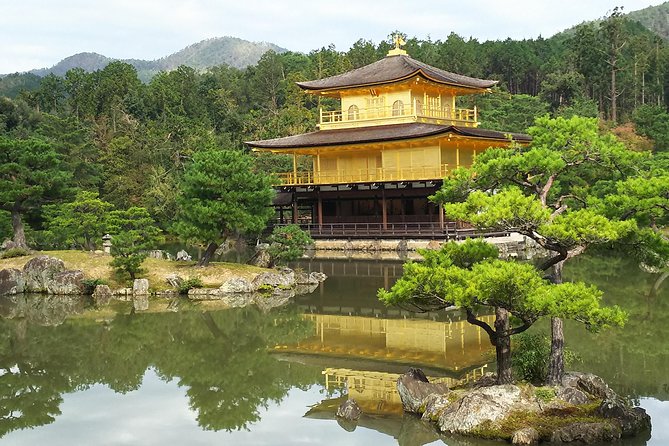
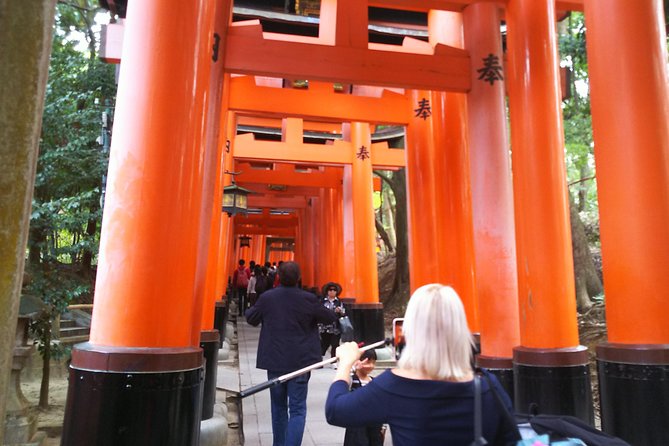
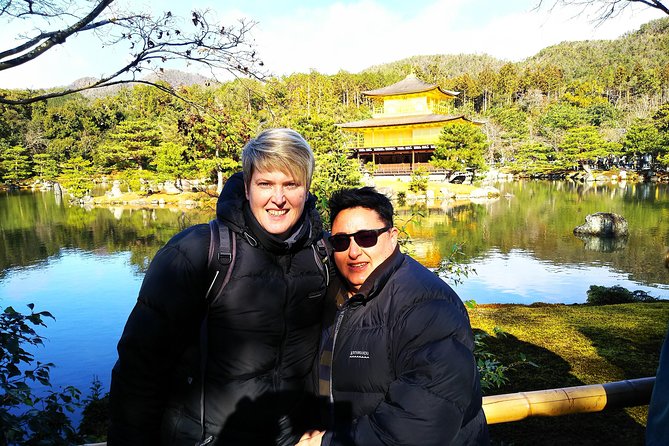
Kyoto’s famous places can change character within a few hours. At Fushimi Inari, you want enough breathing room to notice the repeating vermilion gates and the shaded path rather than spend the whole visit working around large groups. At Kinkaku-ji, the golden pavilion reflects in its pond with the calm morning light, and an early arrival gives you a better chance to see that view without a wall of people in front of it.
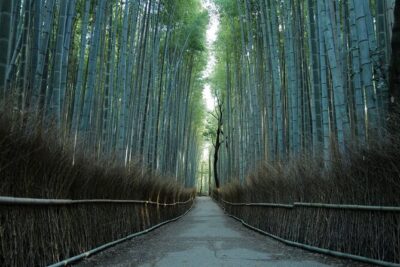
Arashiyama’s bamboo grove also rewards an early visit. The cool, tall grove is at its most peaceful before the midday rush and rising temperatures. You should not expect the forest to be empty, but starting early improves your odds of a more pleasant walk and better photographs.
The schedule also uses jet lag to your advantage. If you have just arrived in Japan, you may already be awake early. This tour gives that first restless morning a purpose and gets three major sights out of the way before lunch.
More early starts in Kyoto:
- Kyoto Early Morning Tour with English-Speaking Guide
★ 5.0 · 1,427 reviews - Kyoto: Early Morning Tour with English-Speaking Guide
★ 4.9 · 1,128 reviews - Arashiyama Bamboo Forest & Hidden Gems Bike Tour (Early Bird)
★ 5.0 · 613 reviews
Meeting at Kyoto Station and Getting Oriented
The tour begins at the Kyoto Station Building, at 901 Higashishiokōjichō in Shimogyo Ward. You meet your guide there and return to the same general meeting point when the activity ends.
That central start is useful, but Kyoto Station can feel large and confusing, especially when you are tired. Several guides have sent meeting-point photographs or clear instructions before departure, which can reduce some of that morning stress. Confirm the exact meeting details after booking and arrive with enough time to find the agreed spot.
The guide fee is included, but the local transportation fare is not. The stated transport cost is ¥1,220 per person. An IC card, such as a Suica card on your phone, can make trains, buses, and vending-machine purchases easier, though the tour information does not say that an IC card is required.
The route connects sights on different sides of Kyoto. This is where a private guide earns much of the fee. You do not need to work out which train or bus comes next, and you are less likely to lose time taking a wrong turn. The journey between stops is not dead time, either. Guides use it to answer questions and explain Japanese customs, history, and daily life.
Fushimi Inari Before the Crowds
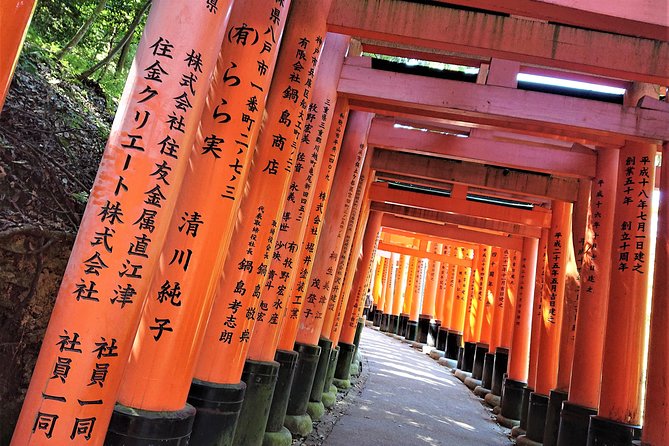
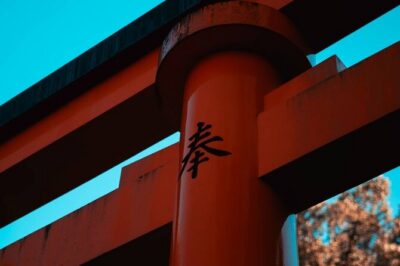
Your first major stop is Fushimi Inari-taisha, famous for its long tunnel of thousands of vermilion torii gates. Each gate was offered by a worshipper, often as thanks for good fortune connected with the deity enshrined here.
The color, repetition, and narrow paths make this one of Kyoto’s most recognizable sights. A guide helps turn a striking photo stop into a place with meaning. You can ask about the role of Shinto shrines, the torii gates, and the customs you see along the route rather than simply walk through and leave.
The scheduled visit is about one hour, with no admission fee. That does not mean the stop is effortless. You will be on your feet, and the ground may not always feel perfectly level. The tour is described as requiring moderate fitness, so it suits people comfortable with extended walking more than anyone looking for a relaxed sightseeing ride.
The early timing is particularly valuable here. Fushimi Inari is open-air and popular, so crowd levels can change fast. You should still expect other people, especially near the most famous gate sections, but an early start gives you a much better shot at a calmer visit.
Kinkaku-ji and the Golden Pavilion in Morning Light
Next comes Kinkaku-ji, also called the Golden Pavilion. The gilded building sits beside a pond and is one of Kyoto’s most familiar images. The visit is scheduled for about an hour, and the plan is to arrive as the temple opens, when the grounds are quieter.
The pavilion is not a place where you wander through every interior room. The main pleasure is seeing the building from the garden, taking in its reflection, and understanding its place in Zen and samurai culture. Your guide can explain the religious and historical setting, which adds useful context to what might otherwise be a quick photograph.
Admission is not included. The listed cost is ¥500 per person. Add that to the ¥1,220 transport fare and the tour price of $105.45, and the real cost is higher than the headline figure. Food and drinks are also extra.
Still, the value can be strong if you have limited time or feel uneasy navigating Kyoto alone. Kinkaku-ji is one of the city’s essential sights, and visiting near opening time is more useful than arriving later in the day after the grounds have filled. The visit is also short enough to keep the route moving.
More walking tours in Kyoto:
- Kyoto Geisha Walking Tour: Gion District & Hidden Gems
★ 4.7 · 3,273 reviews - Kyoto: Gion Magical Night Walking Tour with Geisha Trivia
★ 4.9 · 2,393 reviews - Kyoto: Gion Geisha District Walking Tour – Stories of Geisha
★ 4.7 · 2,187 reviews - Night Walk in Gion: Kyoto’s Geisha District
★ 4.5 · 2,003 reviews
Arashiyama Bamboo Forest Before Noon
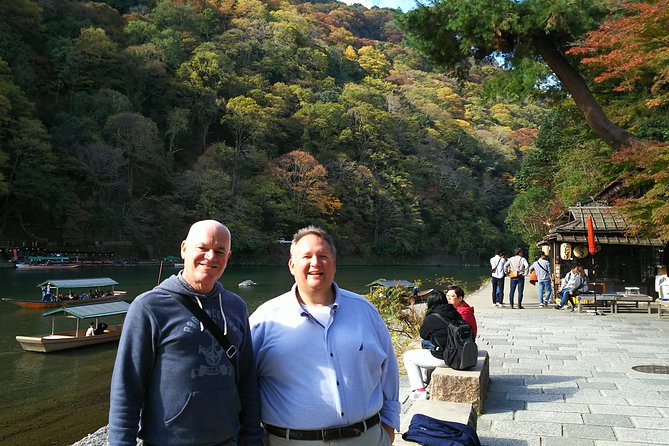
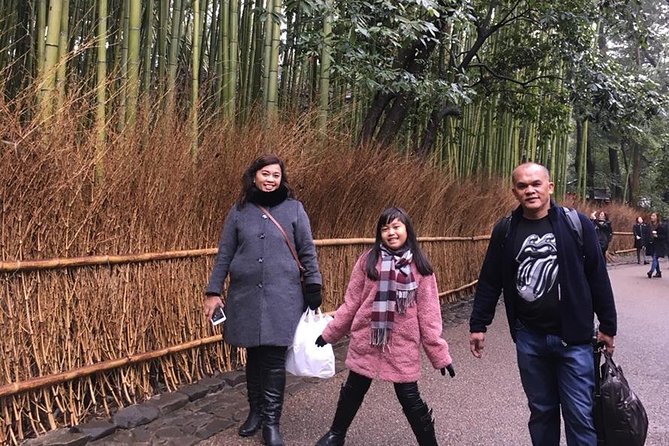
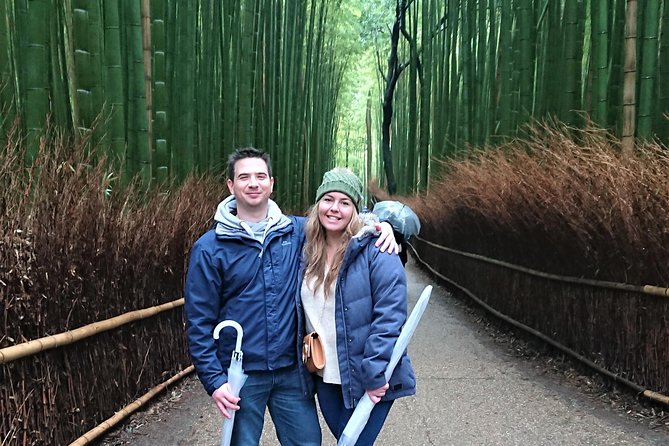
The final major stop is Arashiyama, where you walk through the famous bamboo forest. Tall bamboo closes in around the path, filtering the light and giving the place a cooler, quieter feel than the city streets.
The scheduled visit is about one hour, and the plan is to go before the midday crowds arrive. This is a sensible choice. The grove is not a private forest, and the path is a popular public attraction, but early morning improves the experience. You can pause, listen to the wind through the bamboo, and take photographs without feeling that you must hurry every few steps.
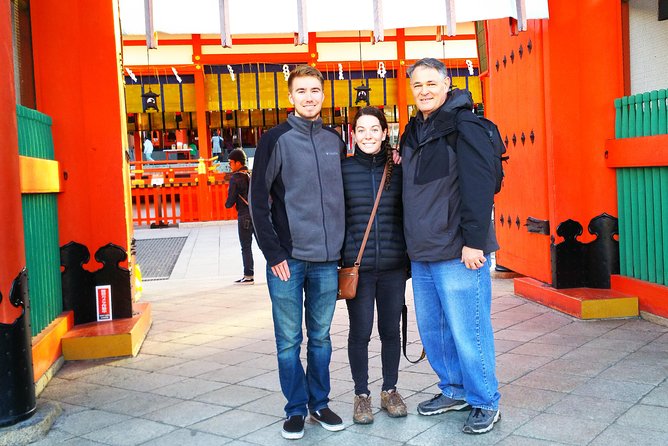
Your guide may also point out useful photo positions and help take pictures. Several guides, including Akiko, Makoto, and Sumiko, received particular praise for helping with photographs and finding good viewpoints. That can matter for couples and families who otherwise end up with plenty of scenery and very few pictures of themselves together.
The grove is visually powerful, but it is also the stop where expectations need managing. The bamboo path itself is not an all-day exploration, and this tour does not present Arashiyama as a full district visit. You get the signature forest walk, then return toward the meeting point with your afternoon still open.
What the Guides Add to the Morning
A private tour depends heavily on the guide, and the experience appears to draw on a broad team. Guides named in the supplied feedback include Akiko, Megumi, Kaz, Tomoko, Hiro, Sumiko, Emiko, Kazuo, Miho, Toshi, Makoto, Makiko, Naoko, and Miko.
The strongest pattern is not a single guide personality. It is the practical help they provide. Guides have explained Buddhist and Shinto ceremonies, answered questions about Japanese history and culture, helped families with children, found a pharmacy, checked on water and restroom needs, and offered local recommendations.
Some guides also adjust the route or starting time when possible. One group was accommodated with an earlier departure after the usual early slots had sold out. Another guide changed the order of the tour at the group’s request. These examples suggest useful flexibility, but you should not assume every change can be guaranteed.
A private format means only your group participates. That gives you more room to ask questions and request short pauses than a large group tour would. It does not turn the morning into a leisurely stroll. The route covers a lot of ground, and the guides keep moving to fit three distant sights into roughly five hours and fifteen minutes.
The Pace, Walking, and Transportation
The tour ends by noon, but the morning is active from start to finish. You will walk at all three locations, move through stations, board local trains or buses, and cover connecting streets. The route is a good fit if you want to see a lot quickly and a weaker choice if you prefer long, unhurried time at one temple.
Wear comfortable walking shoes. Bring water, especially in summer, and consider a sun umbrella if the forecast is hot. The supplied information says the experience is accessible to people with limited mobility and limited eyesight, but it also calls for moderate fitness and quite a bit of walking. If you have specific mobility needs, contact the provider before booking so the practical route can be clarified.
The tour is not recommended for people with heart conditions. Pets and animals are allowed according to the activity information, though you should confirm any practical restrictions before arriving.
Rain can affect the plan because the experience requires good weather. If poor weather causes cancellation, you are offered another date or a full refund. That policy is useful, but the early start means checking the forecast and dressing sensibly still matters.
Is $105.45 a Good Value?
The listed price is $105.45 per person. That is not the cheapest way to visit these sights, especially once you add ¥1,220 for public transportation and ¥500 for Kinkaku-ji admission. You also pay for your own food and drinks.
The value comes from three things: private guiding, time saved, and the early access strategy. If you already know Kyoto’s transport system and are happy to leave very early on your own, you can visit the same places for less. You will need to plan the route, monitor opening times, manage transfers, and keep the morning moving without help.
For a first Kyoto visit, a family, or anyone with only a short stay, the price is easier to justify. The guide gives you historical context, keeps the route organized, and helps you reach three major sights before lunch. Several people also found the tour especially useful on a first day in Kyoto because it gave them a quick sense of the city and its transport system.
Group discounts may be available, but the exact savings are not provided. Check the booking details for your party size before making a decision.
Who Should Book This Kyoto Morning Tour?
I would choose this experience if you want a fast introduction to Kyoto, have limited time, or do not want to puzzle over local trains and buses. It is also a good choice for families, since guides have helped with children, taken family photographs, and adjusted explanations to suit different ages.
It works well for couples who want better pictures together and for first-time visitors who want context at all three sites. If you are arriving with jet lag, the early start may feel surprisingly convenient.
I would think twice if you want a slow temple morning, dislike public transportation, or find five hours of walking tiring. The tour visits three headline attractions, but it does not leave much room for extended browsing, shopping, or spontaneous stops.
The free cancellation policy allows a full refund when you cancel at least 24 hours before the start time. Changes or cancellations inside that window are not accepted for a refund. Keep the cutoff in local Kyoto time.
My Verdict: Book It for Efficiency, Not Leisure
This is a smart Kyoto introduction built around one strong idea: see the city’s most famous sights before the day becomes crowded. Fushimi Inari, Kinkaku-ji, and Arashiyama offer three different experiences, and the guide makes the connections between them far easier.
Book it if you value early access, local transport help, and useful cultural explanation more than saving every yen. Skip it if you already know Kyoto well or want to linger at each place. For a first visit, especially with only a few days in town, finishing by noon and keeping the afternoon free is a very practical advantage.
FAQ
How long does the Kyoto Early Bird Walking Tour last?
The experience lasts approximately five hours and fifteen minutes. It ends by noon, leaving your afternoon free.
Where does the tour begin and end?
It begins at Kyoto Station Building, 901 Higashishiokōjichō, Shimogyo Ward, Kyoto. The activity ends back at the meeting point.
Which attractions are included?
The route visits Fushimi Inari-taisha Shrine, Kinkaku-ji Temple, and Arashiyama’s bamboo forest.
Is Kinkaku-ji admission included?
No. Kinkaku-ji admission costs ¥500 per person and is paid separately.
Are public transportation costs included?
No. The listed public transportation fare is ¥1,220 per person.
Is this a private tour?
Yes. Only your group participates in the activity.
Can I cancel for a full refund?
Yes, if you cancel at least 24 hours before the experience starts. Cancellations or changes made less than 24 hours before the start time are not refunded. If poor weather causes the provider to cancel, you are offered another date or a full refund.
Newest Kyoto experiences on the site
- Whisk Your Own Matcha: A Zen Matcha Experience at Temple★ 3.6 · 7 reviews
- Treasures of Kyoto: Gion & historical Walking Tour★ 5.0 · 6 reviews
- Kyoto tea town for matcha lovers★ 5.0 · 16 reviews
- Uji: Private immersion into Kyoto’s tea and reglious culture★ 5.0 · 17 reviews
- Kyoto Matcha Green Tea Tour★ 4.5 · 23 reviews
- Uji and Wazuka Matcha Farm Half Day Private Guided Tour★ 5.0 · 21 reviews
- Utilising upcycled Matcha! Creating matcha incense (Uji, Kyoto)★ 5.0 · 6 reviews
- Sacred Temple Yoga Experience in Japan★ 5.0 · 3 reviews
Kyoto Early Morning Tours, compared.
Kyoto Early Morning Tour with English-Speaking Guide
Read our review →Early Morning Tour with English-Speaking Guide
Read our review →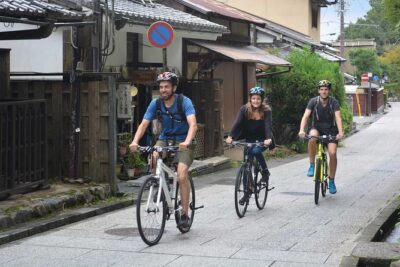
Arashiyama Bamboo Forest & Hidden Gems Bike Tour (Early Bird)
Read our review →
Kyoto Early Bird English Tour: Fushimi-Inari and Arashiyama
Read our review →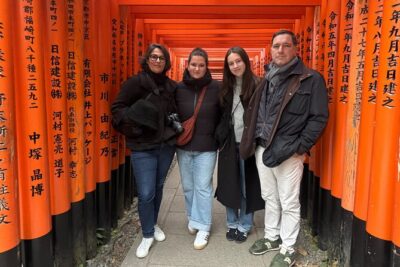
Kyoto Early Bird English Tour: Fushimi Inari & Gion(Private opt)
Read our review →
Browse the lists this tour appears in