
Reviewed · KYOTO CRAFT WORKSHOPS
Kyo-arashi Shibori Scarf Class
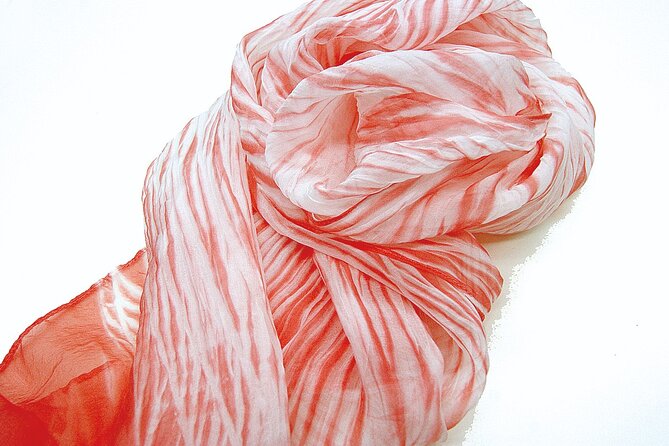
The best part of this Kyoto craft class is the reveal. You wrap silk around a pipe, bind it with string, dye it, then unfold the cloth to see a pattern you could not fully predict. I like that you create a useful souvenir rather than simply buying one, and that your scarf is made in a private session for your own group. The staff can guide you through the process in English.
I also like the chance to see the Kyoto Shibori Museum and try on a shibori kimono while the scarf dries. The main drawback is time: the class lasts only 30 to 60 minutes, so this is a short introduction rather than a full workshop in Japanese textile arts. At $50.30 per person, the value depends on how much you want the hands-on activity and finished silk scarf.
Key points to know before you book

- You make a 70-inch silk scarf: The finished piece measures about 180 by 44 centimeters, giving you a practical keepsake rather than a tiny craft.
- The kyo-arashi method creates the pattern: Folding, wrapping, binding, dyeing, and unfolding are all part of the process.
- Your color choice is personal: You choose the dye color for your scarf, so no two results need look exactly alike.
- The class is private to your group: This can make the instruction feel more focused and less rushed than a large group workshop.
- Museum entry and kimono try-on are included: Use the drying time to see the displays and try a shibori kimono.
- The experience suits children age 12 and older: Adult pricing applies to everyone, and the activity is near public transportation.
Making a silk scarf with the kyo-arashi method

Shibori is a Japanese resist-dyeing craft. Instead of painting a design directly onto cloth, you fold, compress, wrap, or bind parts of the fabric so the dye reaches them in different ways. When you open the cloth, the protected sections create the pattern.
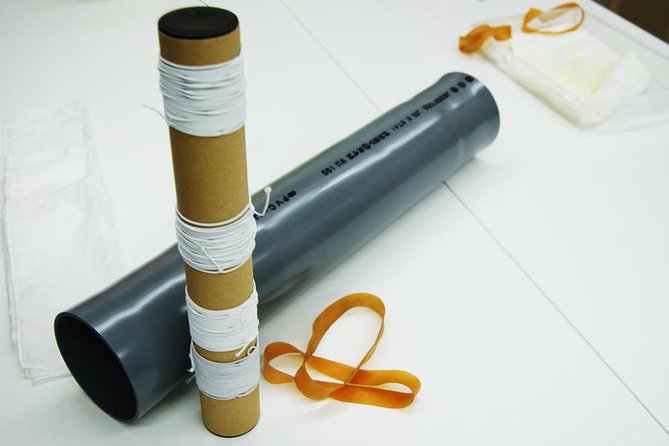
The kyo-arashi method used here has a clear physical process. You begin with a long silk scarf, about 70 inches by 17 inches. The instructor shows you how to fold it, wrap it around a pipe, and wind string around the fabric. You then push or bunch the silk toward the bottom of the pipe before applying the dye.
That order matters. The folds and tight sections control the final design, so your hands have a real role in the result. You are not simply choosing a printed pattern or watching a demonstration. You make several small decisions, then accept a little surprise when the cloth opens.
The class is usually individual, meaning your group receives attention rather than working in a crowded room. That is especially helpful if you have never handled fabric dye before. The technique sounds simple when explained, but the folding and binding need care. A professional instructor keeps the steps manageable and helps you avoid turning the scarf into a tangled tube of silk.
English-language guidance is available. Nina is specifically thanked for helping one group, and the staff are described as attentive and accommodating. You should still expect a practical craft lesson, not a long lecture. The focus is on getting your hands on the material and moving through the process.
More craft workshops in Kyoto:
- Kyoto : Chopsticks Making Workshop in Gion with Engraving Option
★ 5.0 · 958 reviews - Authentic knife making experience at a blacksmith in Kyoto
★ 4.8 · 350 reviews - Roketsu dyeing experience: M course Roketsu Dyeing Experience
★ 5.0 · 163 reviews
Choosing your color and accepting the surprise
The dye color is one of the most enjoyable choices. You can select a color that fits your taste, your wardrobe, or the mood you want to bring home from Kyoto. The color is personal, but the pattern depends on the way you fold and bind the scarf.
That gives the finished item more character than a standard souvenir. You know the main color because you chose it, yet the arrangement of light and dark areas only becomes clear when the string comes off and the scarf is unfolded. This is the small moment that makes the class memorable.
After dyeing, you unwind the string, roll the fabric with a towel, and press it. Then you open the scarf and see the effect of the kyo-arashi process. The instructions describe the scarf as drying during the rest of your visit, so ask the staff about handling and collection details on the day.
Do not expect a perfectly uniform result. Resist dyeing is built around variation. Small differences in pressure, folds, and binding can change the design. If you want a machine-perfect scarf, shop for one instead. If you like the idea of carrying home something shaped by your own hands, this is the point.
The Kyoto Shibori Museum between craft steps
The museum adds value to what would otherwise be a short dyeing class. While the scarf dries, you can browse the displays and see more examples of shibori work. This gives you a better sense of the craft beyond the single method used in your lesson.
The included museum admission is useful for first-time visitors who want context without setting aside half a day. You can connect the materials in front of you with the finished pieces on display. The class shows one process. The museum helps you place that process within a broader Japanese textile tradition.
You also have the opportunity to try on a shibori kimono. This is a light, visual part of the visit rather than a separate formal activity, but it adds a distinctly Kyoto touch. It helps you see how dyed textile patterns work on a larger garment, not only on a narrow scarf.
The museum and kimono portion should not be treated as a replacement for a major museum visit. The available information does not give a fixed amount of time for browsing or a detailed list of exhibits. Think of it as a useful extra included with the craft lesson, especially during the scarf’s drying period.
Do not rush away after the dyeing steps are complete. The museum displays and gift shop are both worth allowing time for, particularly if you want to compare your homemade piece with professionally finished shibori work.
Why the short format works, and where it falls short

The stated duration is about 30 to 60 minutes per class. That makes this easy to fit into a day of sightseeing around Kyoto. You can choose from multiple start times, which helps if you already have temple visits, meals, or train plans on your schedule.
A short session also works well for families. The process has a clear beginning, middle, and end. You fold, wrap, bind, dye, press, and open. Children age 12 and older can participate, and the activity is private to your group.
The tradeoff is that you will not become a shibori expert in one class. There is little room for a long history lesson, repeated practice, or several finished pieces. The staff’s job is to guide you toward one successful scarf, not to provide a complete textile course.
That focus suits most people who want a hands-on Kyoto memory. It is less suitable if you are looking for an all-day workshop or want to experiment with many fabrics and techniques. The class gives you a taste of the craft and one substantial item to take home.
Several groups also found the activity workable for families with young children, but the stated minimum age is 12. For booking purposes, follow the age rule rather than assuming younger children can join. Adult pricing applies to all ages.
Same city, a completely different kind of day:
- PERFECT KYOTO 1-Day Bus Tour
★ 5.0 · 13,518 reviews - Kyoto: Fushimi Inari, Kinkakuji, Bamboo Grove 1 Day Bus Tour
★ 4.8 · 4,316 reviews - Kyoto: Tea Ceremony in a Traditional Tea House in Kiyomizu
★ 4.9 · 3,519 reviews - Kyoto Geisha Walking Tour: Gion District & Hidden Gems
★ 4.7 · 3,273 reviews
The value of a $50.30 Kyoto souvenir
At $50.30 per person, this is not the cheapest way to buy a scarf in Kyoto. The price makes more sense when you count the silk scarf, personal instruction, dyeing materials, museum admission, and kimono opportunity as one experience.
You are paying for the making as much as the object. A shop-bought scarf may offer more refined or complex patterns, but it will not carry the memory of folding, binding, and opening the fabric yourself. The finished scarf is also a useful souvenir, not something that must sit on a shelf.
The private format strengthens the value. You are not being placed into a large class where an instructor must divide attention among many tables. The session is for your group, and the staff can respond to your pace and questions.
Still, price-sensitive shoppers should be realistic. The class is brief, and only one scarf is included in the described activity. If you care mainly about owning shibori, compare the cost with items in the museum gift shop. If you want a compact activity with a personal result, the price is easier to justify.
The class is often booked about 23 days ahead. That suggests you should not leave it until the final day of a Kyoto trip, especially if you need a particular start time. Multiple start times help, but popular dates can still fill.
Getting there and planning your visit
The meeting point is the Kyoto Shibori Museum at 135-5 Shikiamicho, Nakagyo Ward, Kyoto, postal code 604-8261. The activity ends back at the same meeting point, so you do not need to arrange a separate end location.
The museum is near public transportation. Two car parking spaces and two bicycle parking spaces are available, but those numbers are very limited. I would not build your plan around driving and finding a space. Public transportation is the safer choice, though the supplied details do not specify a particular station or route.
A mobile ticket is provided, and confirmation arrives at booking. Bring the booking information on your phone and allow enough time to reach the museum. The class itself is short, but arriving late could make a step-by-step craft harder to follow.
Wear something you can work comfortably in. The supplied details do not state a dress code or provide specific clothing rules, so you should follow the instructor’s directions around dye and fabric handling. If you are concerned about clothing, ask the provider before the session.
The activity is private to your group, and most people can participate. No special mobility information is provided, so contact the Kyoto Shibori Museum directly if you have a specific access need.
Who will enjoy this Kyoto craft class

I would choose this for anyone who wants a quieter, creative break from Kyoto’s temples and shopping streets. It gives you something to do with your hands and leaves you with a souvenir that has a story attached to it.
It is particularly well suited to:
- Families with participants age 12 or older
- Couples who want a shared keepsake
- Visitors interested in Japanese textiles
- First-time crafters who prefer clear guidance
- Shoppers who want to make rather than only buy
- Anyone with a spare hour near the museum
The private setup also works well if your group has mixed experience. A confident crafter can enjoy the design choices, while a beginner can rely on the instructor’s help. English guidance makes the process more approachable for international visitors.
I would hesitate to recommend it to someone who dislikes uncertain results, has no interest in textile crafts, or wants a long cultural lecture. The activity is practical and compact. Its charm comes from participation, not from an elaborate performance.
Cancellation and booking advice
You can cancel for a full refund up to 24 hours before the local start time. Changes or cancellations made less than 24 hours before the experience are not accepted for a refund.
Book early if you have a fixed Kyoto schedule. The average booking lead time is about 23 days, and multiple start times give you flexibility. Since the class takes place at one fixed meeting point and ends there, it is easy to pair with nearby plans, but keep your timetable loose enough to enjoy the museum displays and kimono try-on.
Should you book the Kyoto Shibori Museum class?
Book it if you want a personal Kyoto souvenir, enjoy learning by doing, and can spare 30 to 60 minutes for a guided craft. The silk scarf is a meaningful payoff, and the museum visit gives the short class more substance.
The strongest reasons to go are the private instruction, the freedom to choose your dye color, and the satisfying reveal when the bound fabric opens. Add the kimono opportunity and museum admission, and the $50.30 price becomes reasonable for a compact cultural activity.
Skip it if you are seeking a long workshop, a wide survey of Japanese dyeing, or the lowest-cost scarf in Kyoto. For most visitors who want a friendly, hands-on introduction and a useful souvenir, I would book ahead and keep time afterward to look around the museum and gift shop.
FAQ
Where does the shibori scarf class take place?
The class takes place at the Kyoto Shibori Museum, 135-5 Shikiamicho, Nakagyo Ward, Kyoto, 604-8261, Japan.
How long does the activity last?
Each class usually takes about 30 to 60 minutes.
What kind of scarf will I make?
You will dye a silk scarf measuring about 70 inches by 17 inches, or 180 centimeters by 44 centimeters.
Which shibori technique is taught?
The class teaches the kyo-arashi shibori method, using folding, wrapping, string binding, dyeing, pressing, and unfolding.
Can I choose the scarf color?
Yes. You can choose your preferred dye color for the scarf.
Is museum admission included?
Yes. Admission to the Kyoto Shibori Museum is included, along with the opportunity to try on a shibori kimono.
What is the minimum age, and can I cancel?
The minimum age is 12, and adult pricing applies to all ages. You can cancel up to 24 hours before the local start time for a full refund.
Newest Kyoto experiences on the site
- Treasures of Kyoto: Gion & historical Walking Tour★ 5.0 · 6 reviews
- Whisk Your Own Matcha: A Zen Matcha Experience at Temple★ 3.6 · 7 reviews
- Kyoto tea town for matcha lovers★ 5.0 · 16 reviews
- Uji: Private immersion into Kyoto’s tea and reglious culture★ 5.0 · 17 reviews
- Kyoto Matcha Green Tea Tour★ 4.5 · 23 reviews
- Uji and Wazuka Matcha Farm Half Day Private Guided Tour★ 5.0 · 21 reviews
- Utilising upcycled Matcha! Creating matcha incense (Uji, Kyoto)★ 5.0 · 6 reviews
- Sacred Temple Yoga Experience in Japan★ 5.0 · 3 reviews
Kyoto Craft Workshops, compared.
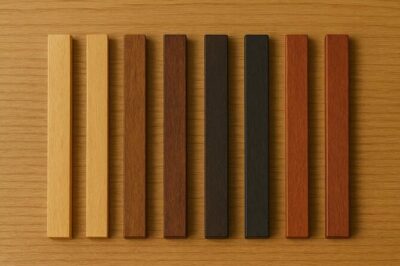
Chopsticks Making Workshop in Gion with Engraving Option
Read our review →
Authentic knife making experience at a blacksmith in Kyoto
Read our review →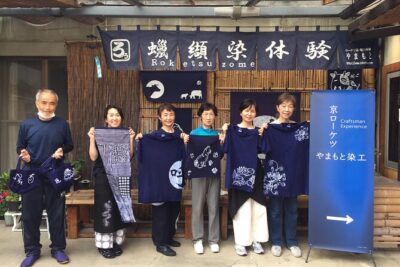
Roketsu dyeing experience: M course Roketsu Dyeing Experience
Read our review →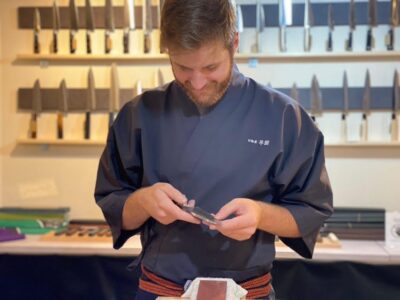
Beginner Knife Sharpening & Handle Fitting Workshop
Read our review →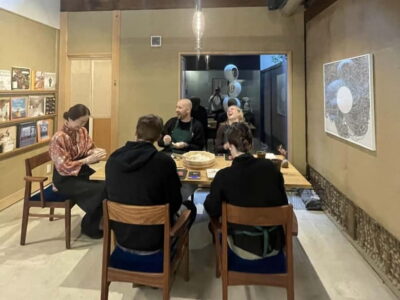
Japanese Archery Workshop with Experienced Instructor
Read our review →
Kyoto Michelin Ramen Workshop or Painting Ramen Essentials
Read our review →
Browse the lists this tour appears in