
Reviewed · KYOTO CRAFT WORKSHOPS
Ikebana Floral Design Workshop in Kyoto
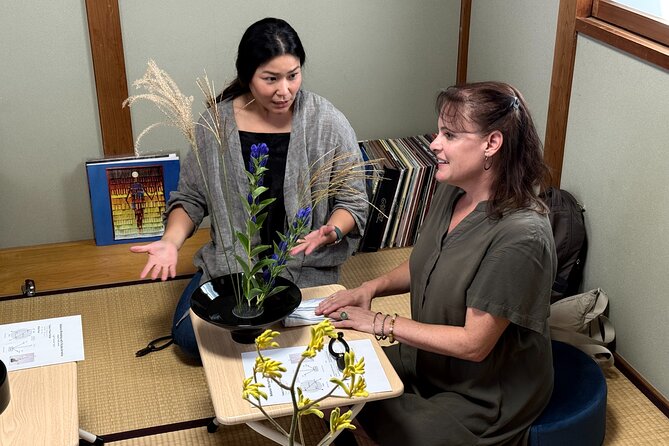
Kyoto’s HanaYou studio gives you something many sightseeing stops cannot: time to make something with your hands. In a 90-minute ikebana class, founder Ryoko Arnwine shows you how flower placement, balance, and harmony shape a Japanese arrangement, even if you have never held ikebana scissors.
I like the tiny maximum group of four, which keeps the lesson personal. I also like that the flowers are real and seasonal, so you leave with an arrangement rather than only a few photos on your phone. The class includes tea, a seasonal sweet, and a photo corner for your finished work.
The main consideration is practical: you must climb stairs to the second floor, and transportation to HanaYou is not included. At $97.73 per person, this is not a bargain activity for a quick souvenir, but it offers more than a basic craft lesson if you value instruction, cultural context, and a calm break from Kyoto’s busy sightseeing schedule.
Key points to know before booking
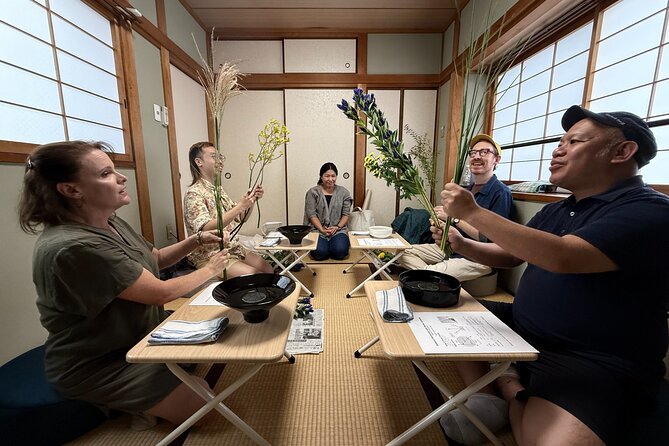
- Ryoko Arnwine leads the class: HanaYou’s founder provides instruction in English or Japanese, according to your preference.
- No prior experience is needed: You learn the basic ideas of balance, harmony, and intentional flower placement from the start.
- You take fresh flowers with you: Your finished arrangement can go back to your hotel.
- The group is limited to four people: This allows room for individual guidance during the hands-on work.
- Tea and a seasonal sweet are included: The refreshments add a quiet Japanese touch without taking over the class.
- The studio is on the second floor: Plan for stairs, and arrange your own transportation to and from the meeting point.
Why this small Kyoto class feels different
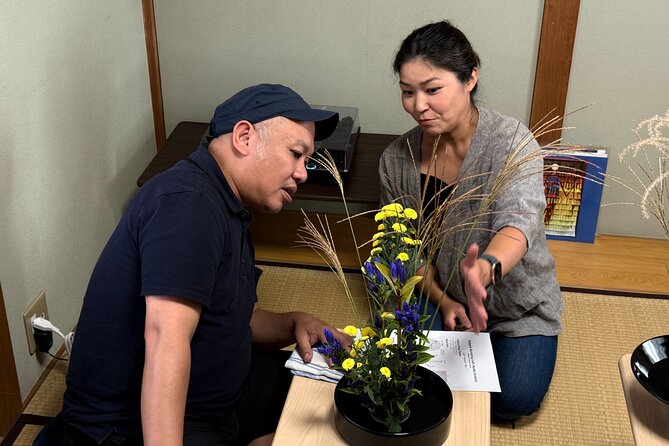
Ikebana is not simply putting flowers in a vase. The arrangement asks you to consider space, direction, height, and balance. A single stem can matter as much as a full cluster of blossoms. That makes this class a useful change of pace if your Kyoto plans are filled with temples, shrines, and packed walking routes.
You will work at HanaYou’s studio at Kawaramachi Marutamachi Iseyacho in Kamigyo Ward. The setting is described as quiet, which matters here. Ikebana depends on attention. You need a little silence to look at each branch and decide where it belongs.
Ryoko Arnwine, HanaYou’s founder, teaches the session. You can request English or Japanese guidance, so you do not need to know Japanese to take part. The class is designed for beginners, and the small group limit of four should make it easier to ask questions and receive help as your arrangement takes shape.
The experience also gives you a modest cultural lesson. The instruction includes ideas about the meaning behind flower placement, along with historical and cultural context. You are not just copying a finished example. You are learning why an arrangement is built in a certain way.
That distinction gives the activity its value. A quick flower-making class can produce a pleasant object. This one aims to help you understand the choices behind it.
More craft workshops in Kyoto:
- Kyoto : Chopsticks Making Workshop in Gion with Engraving Option
★ 5.0 · 958 reviews - Authentic knife making experience at a blacksmith in Kyoto
★ 4.8 · 350 reviews - Roketsu dyeing experience: M course Roketsu Dyeing Experience
★ 5.0 · 163 reviews
The 90-minute class, step by step
The session begins at HanaYou’s studio, where all the working equipment is provided. You use a vase, scissors, pins, and other studio items during the class. These tools remain at the studio, so you do not need to pack special equipment or buy an ikebana kit before arriving.
You then begin working with fresh seasonal flowers. The exact flowers are not specified in advance, which is part of the appeal. Seasonal material gives the arrangement a connection to the time of year, but it also means your finished piece will not be identical to one made during another month.
Ryoko guides you through the process rather than expecting you to know where to begin. The teaching focuses on balance, harmony, and the meaning of flower placement. You may adjust the angle of a stem, change the spacing, or rethink the shape of the display as you work.
That hands-on format is important. You are not sitting through a demonstration and then receiving a prebuilt arrangement. You create your own piece with support along the way. One beginner described learning how each placement affected the overall balance, then finishing with a personal arrangement.
The class lasts about an hour and a half. That is long enough to include instruction, arranging, cultural explanation, photographs, and refreshments without turning the session into a full-day commitment. You can fit it into a Kyoto itinerary more easily than a long cooking or craft course.
Still, do not treat the 90 minutes as a rushed photo stop. The point is to slow down. If you prefer fast-paced sightseeing and want to cover several attractions in an afternoon, this may feel too quiet. If you need a pause between major sights, the pace makes sense.
Learning balance, harmony, and flower placement
The strongest part of the lesson is the attention given to simple design principles. You learn that an arrangement is not judged only by how many flowers it contains. The spaces between stems, the direction of a branch, and the relationship between upright and lower elements all affect the result.
This is especially helpful for beginners because ikebana can look mysterious from the outside. A finished arrangement may appear effortless, while the choices behind it are quite deliberate. Ryoko’s guidance gives you a way to understand those choices without requiring a background in Japanese arts.
The cultural context adds another layer. The class includes discussion of ikebana’s history and traditions, so the flowers are not treated as a generic craft supply. You gain a clearer sense of why the arrangement is built with restraint and why each part has a role.
You can also ask for guidance in English or Japanese. For English-speaking visitors, that removes a major concern. You do not need to rely on watching silently or guessing what a gesture means. If you prefer Japanese instruction, that option is available as well.
The published feedback describes Ryoko as patient and clear, with special praise for the relaxed pace and the amount covered in the session. A first-time participant found the class approachable and left with a better understanding of balance, harmony, and placement. That is exactly the kind of result you should expect from a well-run beginner lesson: not mastery, but a useful foundation.
Fresh flowers, tea, and a finished arrangement
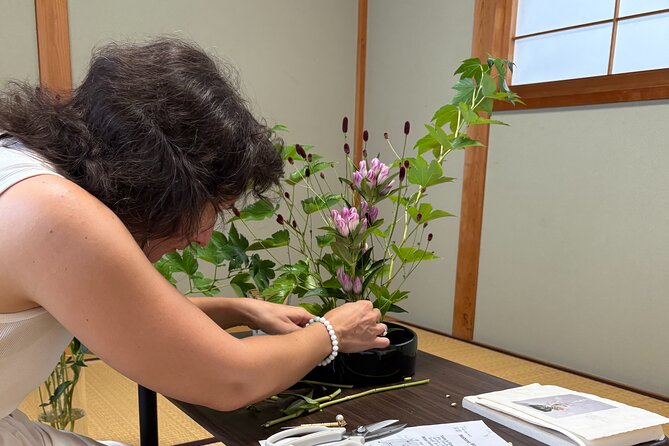
Your materials include fresh seasonal flowers, and you can take them back to your hotel after the class. This is a practical bonus, especially if you are staying nearby and can place the arrangement in your room soon after the session.
The flowers are not a permanent souvenir. They will not last as long as a ceramic piece or a printed craft item. But they offer something more personal. You leave with the direct result of the decisions you made during the class, and the arrangement can add a small reminder of Kyoto to the rest of your stay.
HanaYou also provides traditional Japanese tea and a seasonal sweet. These refreshments are a small part of the experience, not a separate tea ceremony. Think of them as a pleasant pause that supports the quiet mood of the class.
The photo corner is another useful detail. Your arrangement may look best immediately after you finish it, before travel, heat, or time changes the flowers. The setup gives you a place to photograph your work without trying to balance a vase in a crowded street or hotel room.
If you are taking the flowers back to your hotel, plan accordingly. The activity does not include transportation, and the flowers are not listed as specially packaged for a long journey. They are best treated as a same-day keepsake rather than something to carry across Japan for a week.
Same city, a completely different kind of day:
- PERFECT KYOTO 1-Day Bus Tour
★ 5.0 · 13,518 reviews - Kyoto: Fushimi Inari, Kinkakuji, Bamboo Grove 1 Day Bus Tour
★ 4.8 · 4,316 reviews - Kyoto: Tea Ceremony in a Traditional Tea House in Kiyomizu
★ 4.9 · 3,519 reviews - Kyoto Geisha Walking Tour: Gion District & Hidden Gems
★ 4.7 · 3,273 reviews
Group size, language, and the feel of the studio
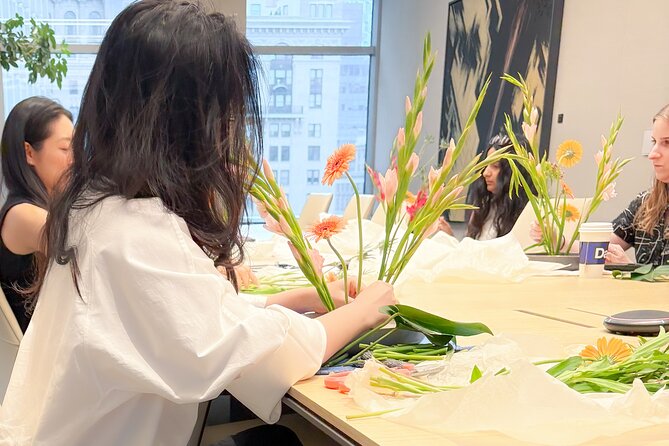
The maximum group size is four people. That is one of the clearest advantages of this activity. A larger class could make a hands-on art lesson feel like a demonstration, especially when everyone needs help with stems, pins, and placement.
With only a few people, you should have a better chance to receive individual attention from Ryoko. The available information does not promise a private class, so you may share the studio with other participants, but the four-person limit keeps the setting small.
The atmosphere is intended to be tranquil. That suits ikebana, where the value comes partly from looking carefully and making measured choices. You may find the class especially welcome after a morning of crowded streets or a long visit to a major temple complex.
The quiet setting also means this is not a high-energy group activity. If you want jokes, games, or a long list of tourist stops, choose something else. If you like learning a craft in a calm room, the format should fit well.
The option of English or Japanese instruction makes the class accessible to a wide range of visitors. Most people can participate, and no previous flower-arranging experience is required. The one physical detail to note is the staircase to the second floor. Anyone who finds stairs difficult should consider that before booking.
Is $97.73 a fair price?
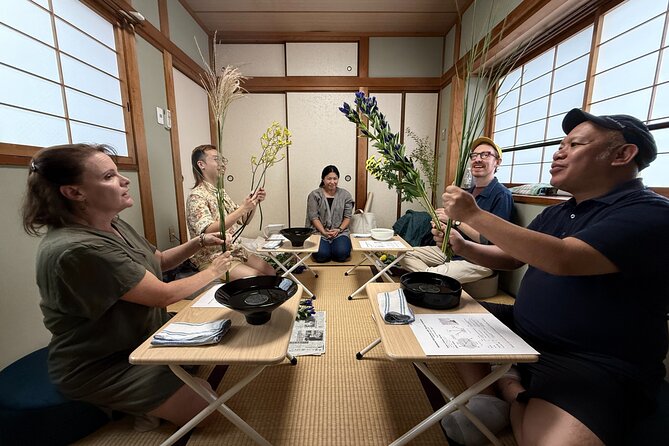
At $97.73 per person, the price is on the higher side for a 90-minute activity. You are not paying only for flowers. The fee covers instruction from HanaYou’s founder, use of the studio’s equipment, fresh seasonal materials, tea, a seasonal sweet, and access to the photo setup.
The small group also affects the value. A four-person maximum allows for more personal instruction than a large workshop. If you have always wanted to try ikebana but do not know how to begin, that guidance may be worth more than a cheaper, less personal craft session.
The price makes less sense if you mainly want a souvenir. Kyoto has many ways to buy a beautiful object for less than $97.73. Here, the point is the process, the cultural explanation, and the finished arrangement you make yourself.
I would also consider the time saved. The class takes about 90 minutes, with no long transfer or full-day commitment built into the activity. That makes it easier to place between other Kyoto plans, provided you allow time to reach the studio and return to your next stop.
Booking patterns suggest people reserve this experience well ahead, with an average booking time of 46 days before the class. That does not guarantee every date sells out, but the four-person limit gives you a good reason to reserve early if your Kyoto schedule is fixed.
Getting to HanaYou and planning your visit
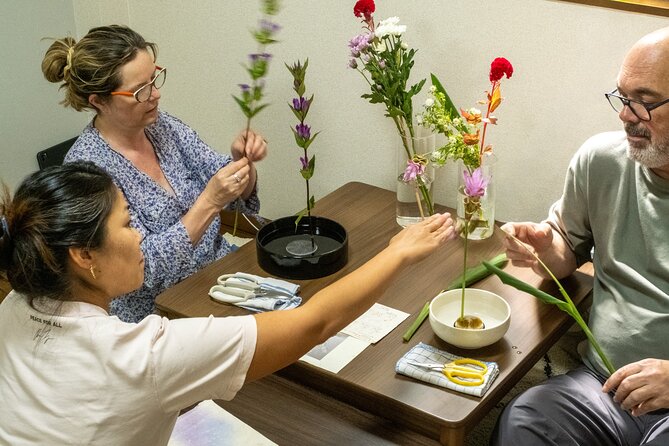
The meeting point is Kawaramachi Marutamachi Iseyacho, in Kyoto’s Kamigyo Ward, postal code 602-0873. The activity is near public transportation, but transportation to and from the studio is not included.
Give yourself enough time to locate the meeting point. A craft class is not the place to arrive breathless after a hurried transfer. You will need to climb stairs to the second floor, so include that in your planning.
The activity ends back at the meeting point. This makes it easier to arrange your next stop, but you should still allow time for the walk to public transportation and for carrying your fresh arrangement carefully.
A mobile ticket is available, and confirmation is provided when you book. Free cancellation is available up to 24 hours before the start time for a full refund. Changes or cancellations made less than 24 hours in advance are not accepted for a refund, with cut-off times based on Kyoto local time.
Who should book this experience?
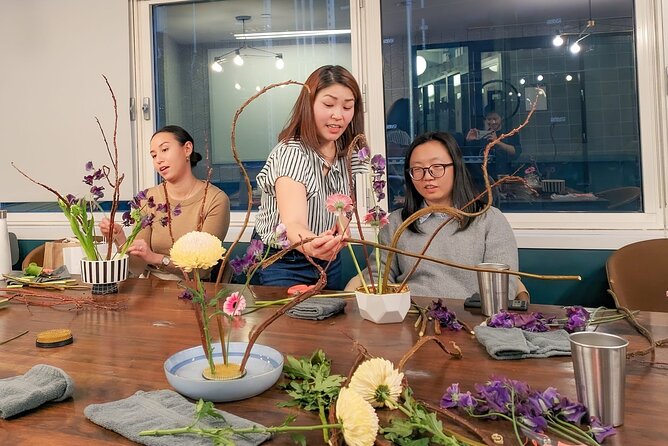
I would choose this class for you if you want a slower, more personal Kyoto activity and have an interest in Japanese arts. It is also a strong pick for first-time ikebana students because no previous experience is required and the instruction is available in English or Japanese.
Couples, friends, and solo visitors can all fit the format, as long as the group reaches no more than four people. The small setting may appeal to you if large organized activities feel impersonal.
This is less suitable if you want a permanent souvenir, a long cultural tour, or a class with extensive sightseeing outside the studio. The main event is the arrangement itself. You will not be visiting multiple attractions or being transported around Kyoto.
It may also be a poor fit if stairs are a problem. The studio is on the second floor, and no alternative access information is provided. Ask before booking if you need specific accessibility arrangements.
Should you book the HanaYou ikebana class?
Book it if you want to understand a Japanese art by doing it yourself. Ryoko Arnwine’s guidance, the four-person limit, seasonal flowers, and cultural explanation give the 90-minute class more substance than a simple flower-making souvenir stop.
Skip it if your budget is tight or you only want a low-cost activity. At $97.73, the value depends on caring about the instruction and the calm creative time, not just the vase of flowers you take away.
For most visitors who enjoy hands-on culture, I think the class earns its place in a Kyoto itinerary. Schedule it when you can slow down, arrive without a rush, and return the flowers to your hotel soon afterward.
FAQ
How long does the ikebana workshop last?
The hands-on class lasts approximately 90 minutes.
Do I need previous ikebana experience?
No. The class is designed for beginners, and no prior experience is required.
Who teaches the class?
HanaYou founder Ryoko Arnwine leads the session.
Is instruction available in English?
Yes. Guidance is available in English or Japanese, based on your preference.
What is included in the price?
The price includes 90-minute ikebana instruction, fresh seasonal flowers, use of studio equipment during class, access to a photo corner, traditional Japanese tea, and a seasonal sweet.
Can I take the flowers with me?
Yes. You can take your fresh flowers and finished arrangement back to your hotel.
Do I keep the vase and ikebana tools?
No. The vase, scissors, pins, and other equipment are for use during the class only and are not included as take-home items.
Where does the activity begin and end?
The activity begins and ends at Kawaramachi Marutamachi Iseyacho, Kamigyo Ward, Kyoto, 602-0873, Japan. The studio is on the second floor, and you need to walk up stairs.
Newest Kyoto experiences on the site
- Treasures of Kyoto: Gion & historical Walking Tour★ 5.0 · 6 reviews
- Whisk Your Own Matcha: A Zen Matcha Experience at Temple★ 3.6 · 7 reviews
- Kyoto tea town for matcha lovers★ 5.0 · 16 reviews
- Uji: Private immersion into Kyoto’s tea and reglious culture★ 5.0 · 17 reviews
- Kyoto Matcha Green Tea Tour★ 4.5 · 23 reviews
- Uji and Wazuka Matcha Farm Half Day Private Guided Tour★ 5.0 · 21 reviews
- Utilising upcycled Matcha! Creating matcha incense (Uji, Kyoto)★ 5.0 · 6 reviews
- Sacred Temple Yoga Experience in Japan★ 5.0 · 3 reviews
Kyoto Craft Workshops, compared.
Chopsticks Making Workshop in Gion with Engraving Option
Read our review →
Authentic knife making experience at a blacksmith in Kyoto
Read our review →
Roketsu dyeing experience: M course Roketsu Dyeing Experience
Read our review →
Beginner Knife Sharpening & Handle Fitting Workshop
Read our review →
Japanese Archery Workshop with Experienced Instructor
Read our review →
Kyoto Michelin Ramen Workshop or Painting Ramen Essentials
Read our review →
Browse the lists this tour appears in