
Reviewed · KYOTO CRAFT WORKSHOPS
Fish Cutting workshop in Kyoto Japan
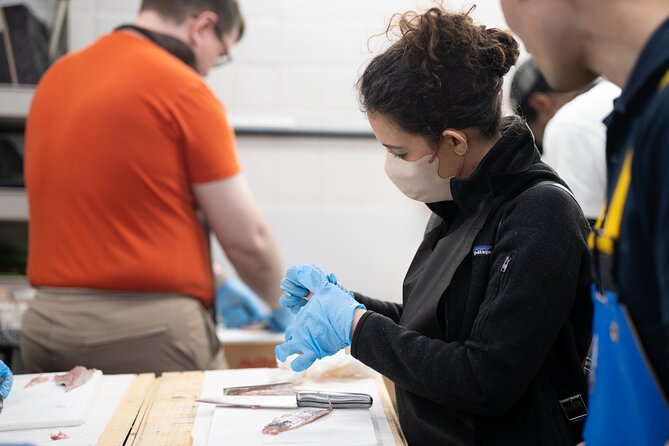
Kyoto’s fish-cutting workshop skips the usual tourist demonstration. You do the work yourself, learning how to handle raw fish, cut it into three pieces, and prepare sashimi under close instruction from a fishmonger with more than 20 years of experience. The shop itself has a 400-year history, which gives the lesson a strong connection to everyday Japanese food culture.
I like the small six-person maximum, since you can ask questions and receive direct help with each knife cut. I also like the simple reward at the end: your lunch is the sashimi you prepared, not a separate meal handed to you after a demonstration.
The main consideration is that this is real knife work with raw fish, not a casual food tasting. Children under eight are asked not to attend, and anyone uneasy around fish preparation should know that the class may include viewing the fish’s interior as part of the process.
Key points before you book
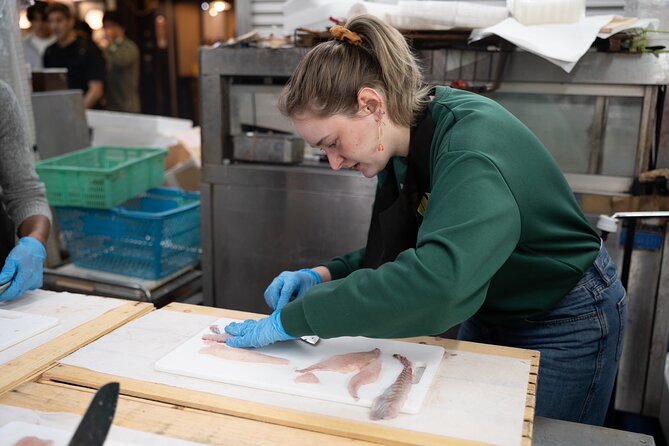
- You prepare your own sashimi: The lesson leads you through cutting fish into three pieces before you eat it.
- A 400-year-old fishmonger teaches the basics: The setting connects the class to Kyoto’s long fish-selling tradition.
- The group is capped at six people: You should have room to ask questions and receive hands-on correction.
- Lunch is included: You eat the fish you have prepared yourself.
- The class lasts about two and a half hours: It begins at 10:00 a.m. and returns to the meeting point.
- Knife handling matters: The activity is not recommended for children under eight.
What makes this Kyoto class different
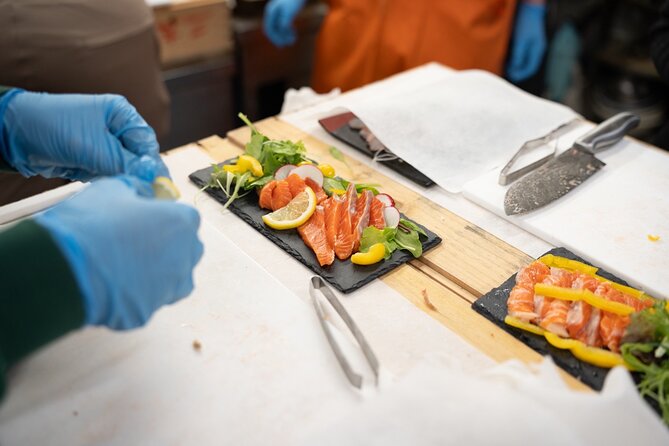
Most visitors meet Japanese fish through a sushi counter or a market stall. This class takes you one step earlier, to the preparation table. You learn why the handling and cutting of fish matter before it becomes the neat sashimi arranged on a plate.
That difference is important. A sushi meal lets you appreciate the finished product. Here, you begin to understand the work behind it: how to hold the fish, where to place the knife, how to make clean cuts, and how to treat a delicate ingredient with care.
The class takes place at Kimura Fresh Fish, at 483 Nakauoyacho in Kyoto’s Nakagyo Ward. The fishmonger has a 400-year history, while the instructor brings more than two decades of professional experience. You are not simply following a recipe from a printed card. You are learning basic fish-processing methods from someone who has worked with fish for years.
That does not make this an advanced professional course. The instruction is designed for beginners, and the fish is introduced carefully so you can take part even if you have never handled one before. Still, the work is genuine. You should arrive ready to use a knife and pay attention.
More craft workshops in Kyoto:
- Kyoto : Chopsticks Making Workshop in Gion with Engraving Option
★ 5.0 · 958 reviews - Authentic knife making experience at a blacksmith in Kyoto
★ 4.8 · 350 reviews - Roketsu dyeing experience: M course Roketsu Dyeing Experience
★ 5.0 · 163 reviews
Your 10:00 a.m. start at Kimura Fresh Fish
The meeting point is the fish shop itself, not a separate classroom or restaurant. That helps set the tone from the start. You enter a working food business with a long local history, then move into the practical lesson rather than spending time on a long introduction.
The activity begins at 10:00 a.m. and lasts about two hours and thirty minutes. Since no private transportation is included, you need to make your own way to 483 Nakauyocho, Nakagyo Ward, Kyoto. The location is near public transportation, which is useful for fitting the class into a morning in central Kyoto.
I would allow extra time to find the exact shop and settle in. A 10:00 a.m. start leaves your afternoon open for Nishiki Market, Gion, the Kyoto Imperial Palace area, or another central sight, but you do not want to arrive flustered before handling a sharp knife.
The class is limited to six people. That is one of the most useful features here. Fish preparation depends on small movements that are hard to see in a large group. With only a few people at the table, the instructor can watch your grip and cutting angle, answer questions as they come up, and step in when a cut needs correcting.
Learning how to handle and cut the fish
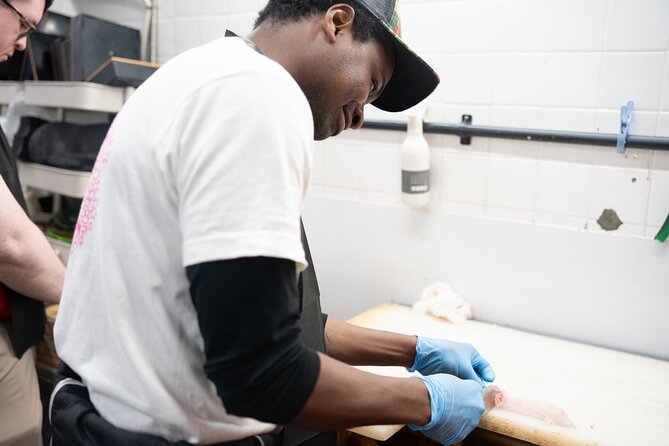
The first part focuses on safe handling and the basic method. You receive an explanation before you begin, so you are not expected to guess how to hold the fish or where to start.
You then cut the fish into three pieces yourself. The point is not speed. It is learning the sequence and developing enough control to make the cuts properly. If you are new to fish preparation, the careful instruction should make the process manageable, but you still need to concentrate.
The practical value is easy to see. A knife skill learned on this class can help you understand fish preparation at home, even if you never attempt sashimi again. You also begin to see why Japanese fish shops and sushi kitchens place such importance on sharp knives, clean cuts, and careful handling.
The class may include three types of fish, giving you a chance to notice that different fish do not always behave in the same way under the knife. The experience can also include looking at the fish’s interior. That may be fascinating for cooks and food enthusiasts, but it is worth knowing in advance if you prefer your food preparation less graphic.
The instruction is not presented as a race or a performance. The teachers demonstrate step by step, then supervise while you try. This format suits people who learn by watching and doing. It is less suitable if you want to sit back and simply observe.
Turning your work into a sashimi lunch
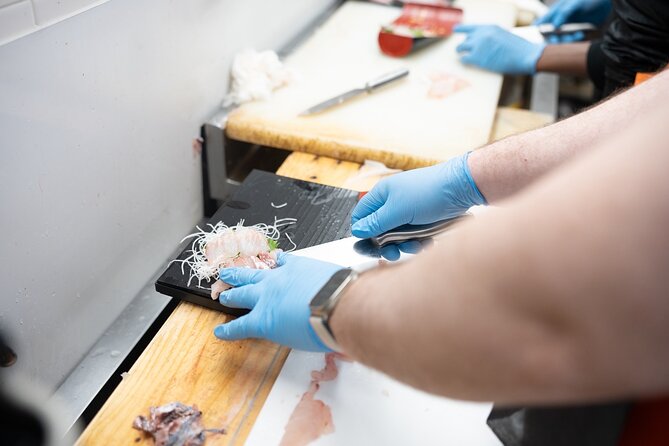
After the cutting work, you arrange the fish and sit down to eat. The meal is included in the price, and the central pleasure is that you are eating the food you prepared.
That gives the lunch more meaning than a standard included meal. You can compare the finished slices with the techniques you were just shown, and you have a direct reason to care about making clean, careful cuts.
The sashimi is served as the conclusion of the hands-on work, so you should come hungry. The class lasts long enough to include both instruction and lunch, but it is not a full-day food tour with several restaurants or tastings. Think of it as one focused meal paired with a practical lesson.
This format also helps you understand freshness and texture in a more direct way. You have handled the fish, watched it being prepared, and then tasted it. For anyone curious about Japanese food beyond the dining-room experience, that connection is the real value.
You do not need to be an expert in sashimi to enjoy the meal. The class is also worthwhile if your main interest is learning how to fillet fish. The instruction covers basic fish preparation, so the skills can be useful even if raw fish is not your usual choice.
Same city, a completely different kind of day:
- PERFECT KYOTO 1-Day Bus Tour
★ 5.0 · 13,518 reviews - Kyoto: Fushimi Inari, Kinkakuji, Bamboo Grove 1 Day Bus Tour
★ 4.8 · 4,316 reviews - Kyoto: Tea Ceremony in a Traditional Tea House in Kiyomizu
★ 4.9 · 3,519 reviews - Kyoto Geisha Walking Tour: Gion District & Hidden Gems
★ 4.7 · 3,273 reviews
The instructors and the feel of the lesson
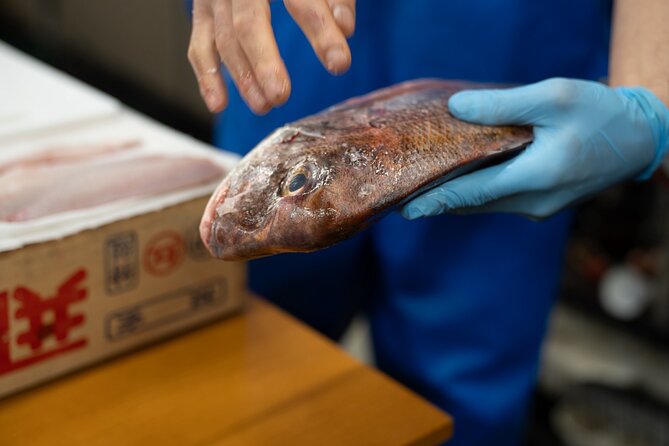
The teachers are described as supportive and interactive, with a teaching style that keeps beginners at ease. That matters because knife work can feel intimidating when an expert is watching. Here, the structure allows you to make the cuts yourself while receiving close supervision.
The instruction also leaves space for conversation. Past sessions have included talk about Kyoto, Japanese food, sushi, sashimi, and knives, along with informal exchanges about different countries and food traditions. That social side gives the class a warmer feel than a purely technical demonstration.
You should still expect a lesson, not a staged cultural show. The most valuable moments are likely to be the quiet ones when the instructor corrects your hand position or explains why a cut should follow a particular line.
The setting is intimate, and that can be a strength or a limitation. If you enjoy asking questions and working closely with an instructor, the small room and small group will suit you. If you prefer a large, lively food market tour with constant movement, this focused workshop may feel slower.
How much value do you get for $98.53?
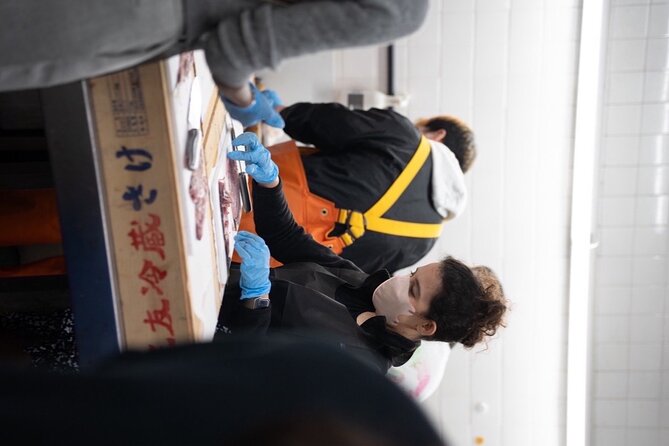
At $98.53 per person, this is more expensive than simply buying a sashimi lunch in Kyoto. You are paying for several things together: professional instruction, fresh fish, use of the shop setting, a small group, close supervision, and the meal at the end.
The price makes the most sense if you would normally pay for a cooking class or food activity during your trip. The class gives you a skill to take home, not only a plate to remember. It also offers access to a type of food preparation that is difficult to understand from a restaurant seat.
The value is weaker if your main goal is a large meal or a broad introduction to Kyoto cuisine. This is not a ramen class, a market walk, or a multi-stop tasting. It concentrates on one ingredient and one set of skills.
Booking patterns suggest that people reserve this about 48 days ahead on average. That is a useful sign for planning, especially since the group is limited to six. If this class fits your Kyoto schedule, booking early is sensible rather than waiting until the last few days.
Who should book this experience?
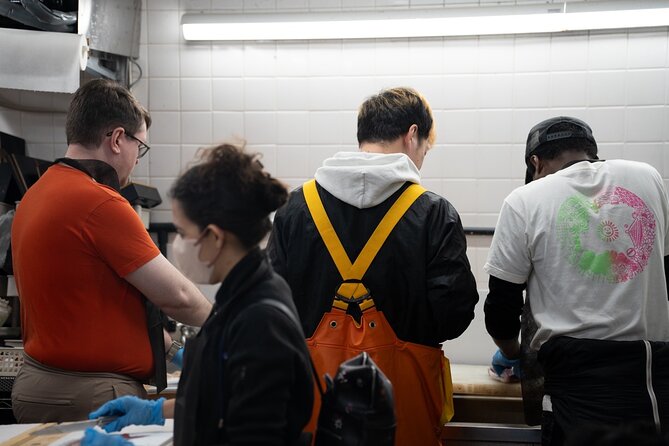
I would choose this class for cooks, food-focused visitors, and anyone who wants a more active connection with Japanese cuisine. It is especially well suited to you if you enjoy learning knife skills, asking practical questions, and eating something you helped prepare.
It also suits a couple, family group with older children, or a small group of friends who want a shared activity. The eight-year minimum matters, but older children should still be comfortable handling knives and working with raw fish.
You do not need previous fish-cutting experience. The lesson begins with instruction, and the teachers watch your work closely. A strong interest in Japanese food is more important than technical ability.
I would think twice if you dislike raw fish, feel uncomfortable seeing the inside of a fish, or want a relaxed activity with no practical work. The meal is sashimi, and the preparation is a real part of the class.
Timing, transport, and practical details
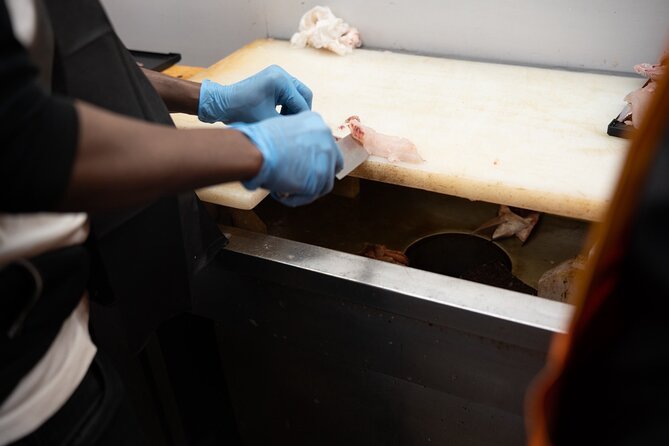
The experience starts and ends at Kimura Fresh Fish. There is no private pickup or drop-off, so transport to and from the shop is your responsibility. Since the location is near public transportation, it can be paired with other central Kyoto plans, but you should check your route before the morning begins.
A mobile ticket is provided, and booking confirmation arrives at the time of reservation. Wear something comfortable for standing and close work, although no special clothing requirements are provided.
The activity offers free cancellation if you cancel at least 24 hours before the 10:00 a.m. start time. Cancellations or changes made less than 24 hours in advance are not refunded or accepted, so leave room in your schedule before confirming.
Should you book the fish-cutting workshop?
Book it if you want to learn how sashimi begins, not just order it. The combination of a 400-year-old fishmonger, a six-person limit, close knife supervision, and a lunch made from your own preparation gives this class a clear purpose.
I especially like that the meal is tied directly to the lesson. You leave with a better sense of how fish is handled, why knife technique matters, and how much care goes into a simple-looking sashimi plate.
Skip it if you want a broad Kyoto food tour, a large meal, or a no-knife activity. For cooks and curious eaters, though, this is a focused and memorable way to spend a morning, with skills and stories that can follow you back to your own kitchen.
FAQ
Where does the fish-cutting workshop take place?
It takes place at Kimura Fresh Fish, located at 483 Nakauyacho, Nakagyo Ward, Kyoto, Japan.
What time does the experience start?
The class starts at 10:00 a.m.
How long does the workshop last?
The experience lasts approximately two hours and thirty minutes.
What will I learn during the class?
You will learn basic Japanese fish-processing techniques, including how to handle raw fish and cut it into three pieces for sashimi.
Do I eat the fish I prepare?
Yes. The fish you process is arranged and eaten as sashimi, and lunch is included.
How many people can join the workshop?
The activity has a maximum of six participants.
Is the class suitable for children?
Children under eight years old should not attend because the activity involves handling knives.
Is transportation included?
No. Private transportation is not included. The activity starts and ends at the meeting point, which is near public transportation.
What is the cancellation policy?
You can cancel for a full refund up to 24 hours before the experience starts. Cancellations or changes made less than 24 hours before the start time are not accepted or refunded.
Newest Kyoto experiences on the site
- Treasures of Kyoto: Gion & historical Walking Tour★ 5.0 · 6 reviews
- Whisk Your Own Matcha: A Zen Matcha Experience at Temple★ 3.6 · 7 reviews
- Kyoto tea town for matcha lovers★ 5.0 · 16 reviews
- Uji: Private immersion into Kyoto’s tea and reglious culture★ 5.0 · 17 reviews
- Kyoto Matcha Green Tea Tour★ 4.5 · 23 reviews
- Uji and Wazuka Matcha Farm Half Day Private Guided Tour★ 5.0 · 21 reviews
- Utilising upcycled Matcha! Creating matcha incense (Uji, Kyoto)★ 5.0 · 6 reviews
- Sacred Temple Yoga Experience in Japan★ 5.0 · 3 reviews
Kyoto Craft Workshops, compared.
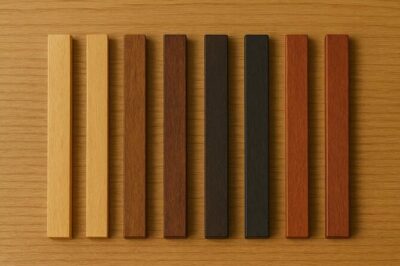
Chopsticks Making Workshop in Gion with Engraving Option
Read our review →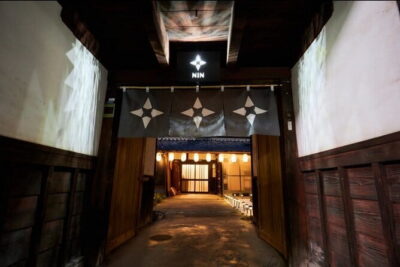
Authentic knife making experience at a blacksmith in Kyoto
Read our review →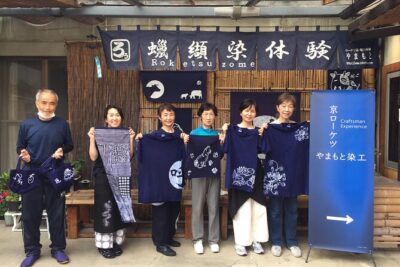
Roketsu dyeing experience: M course Roketsu Dyeing Experience
Read our review →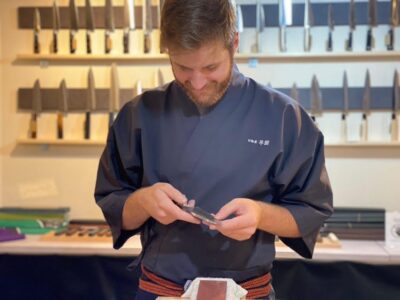
Beginner Knife Sharpening & Handle Fitting Workshop
Read our review →
Japanese Archery Workshop with Experienced Instructor
Read our review →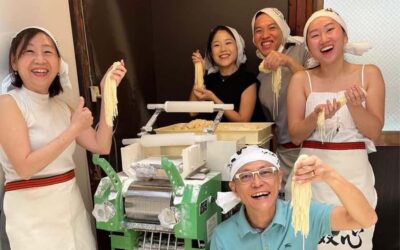
Kyoto Michelin Ramen Workshop or Painting Ramen Essentials
Read our review →
Browse the lists this tour appears in