
Reviewed · KYOTO CRAFT WORKSHOPS
Authentic Knife Making Experience at a Blacksmith in Kyoto
The hot steel is the star here. At Atelier NIN, you do not simply watch a blacksmith shape a blade. You hammer a metal billet, help form the knife, then grind, sharpen, and polish it into a working souvenir. The finished blade is about 13 to 15 centimeters long, and each one comes out a little different.
I like the small maximum of six people, since you get help without waiting behind a crowd. I also like that the class includes the uniform and tools, so you can arrive in ordinary sightseeing clothes and change before the work begins.
The main drawback is physical effort. Hammering hot steel for about an hour takes strength, and the later grinding work demands care. The basic knife has a simple iron handle, while a wooden handle costs extra, so check what finish you want before booking.
Key points to know before you book
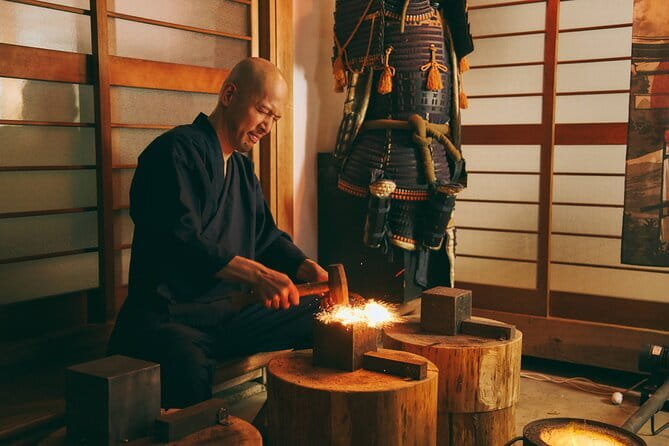
- You make a real knife: The process includes hammering, shaping, grinding, sharpening, and polishing rather than a short demonstration.
- The class is small: Atelier NIN accepts no more than six people, allowing the instructor to correct your technique.
- The finished blade is compact: Your knife will be approximately 13 to 15 centimeters long, with some variation based on your work.
- You need some stamina: Forging involves repeated hammer blows, and the workshop calls for moderate physical fitness.
- The setting adds to the outing: The studio is in Yase, on Kyoto’s outskirts, near Rurikoin and reached by a small train.
- Plan for the journey home: A sharp blade may need to go in checked luggage, not your carry-on bag.
Making a Japanese knife instead of buying one
Kyoto has no shortage of fine souvenirs, but a handmade knife gives you a story to carry home. You begin with a piece of steel and take part in the hard, noisy work that turns it into a useful kitchen tool.
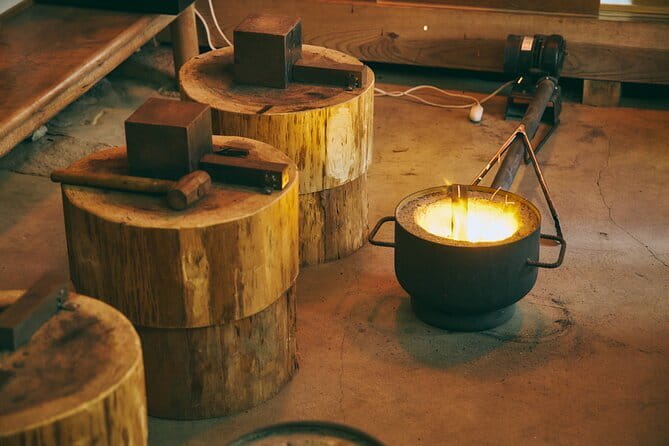
The key word here is forging. You heat and hammer the metal to flatten and lengthen it, then shape the rough blade. This is not a polished craft demonstration where you sit safely at a distance while someone else does the important work. You take the hammer in hand and put real effort into the first stage.
That makes the class more satisfying, but it also sets the right expectation. Your knife will be handmade, not factory-perfect. Small differences in shape are part of the point. The workshop staff step in when needed, yet they leave room for your own work to show.
Atelier NIN uses a traditional and simple construction. The basic knife has an iron handle rather than a wooden one. This keeps the class within its roughly two-and-a-half to three-hour format. A larger cooking knife would take more than five hours and cost more than $400, according to the workshop’s own comparison.
At about $158.52 per person, the class costs more than buying an ordinary knife in a department store. You are paying for steel, tools, instruction, protective clothing, workshop time, and a personal souvenir. For someone who wants a meaningful craft activity, that is a fair use of half a day. If you simply want a good Japanese kitchen knife, shopping will be faster and cheaper.
More craft workshops in Kyoto:
- Kyoto : Chopsticks Making Workshop in Gion with Engraving Option
★ 5.0 · 958 reviews - Authentic knife making experience at a blacksmith in Kyoto
★ 4.8 · 350 reviews - Roketsu dyeing experience: M course Roketsu Dyeing Experience
★ 5.0 · 163 reviews
Reaching Atelier NIN in Yase
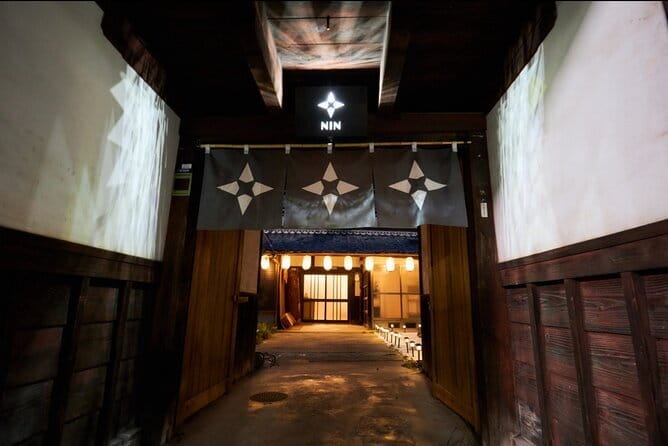
The meeting point is Atelier NIN at 168-1 Yasenosechō, Sakyo Ward, Kyoto, 601-1254. This is not central Kyoto. The studio is in the Yase area, near the Rurikoin stop named in the itinerary.
The ride itself can be part of the outing. One useful detail is that the train serving the area is a charming one-car train, giving the trip a slower, local feel. The studio sits within a residential area, and the final approach may require attention. Have your directions ready before leaving the station, since phone signal can be unreliable there.
The walk from the station may also feel longer than expected. Give yourself plenty of time and avoid arriving hot, rushed, or late in clothes you do not want near workshop dust. The activity ends at the same place where it begins, so you return to the meeting point after collecting your finished knife.
Rurikoin is listed as the itinerary stop, but the central activity is the blacksmith workshop itself. Do not book this expecting a full sightseeing tour of Kyoto’s temples. Book it as a craft outing in the Yase area, with the surrounding trip adding atmosphere.
Changing into the traditional work outfit
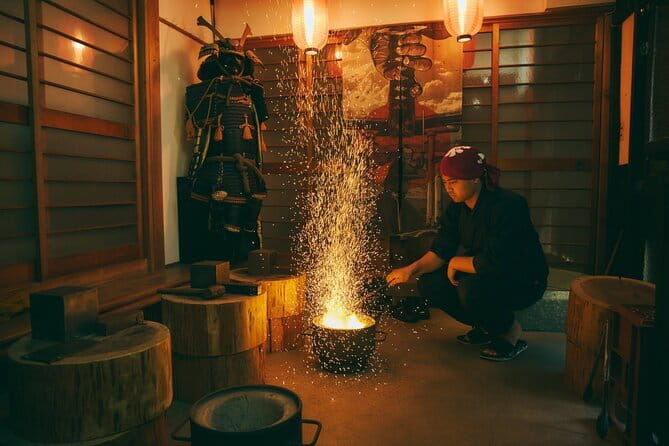
Before the metal work begins, you change into a traditional goldsmith-style work outfit. The clothing is practical as well as theatrical. It gives the class a clear break from ordinary sightseeing and helps you feel ready for workshop work.
A uniform is supplied, so you do not need to source protective clothing. Wear something comfortable underneath and choose clothes that allow easy movement. The class calls for repeated hammering, standing, bending, and careful work at the grinding equipment.
The information supplied for the activity does not promise specialist safety footwear. One person specifically found that shoes would have been preferable to bare feet around dropped tools or blades. I would treat this as a reason to follow the studio’s instructions closely and ask about footwear when you arrive, rather than assume the uniform covers every safety need.
The class is intended for beginners. You do not need prior blacksmithing experience, and the forging process is taught from the start. Still, beginners should respect the tools and let the instructors correct their grip, stance, and hammer swing.
The first hour: hammering hot steel
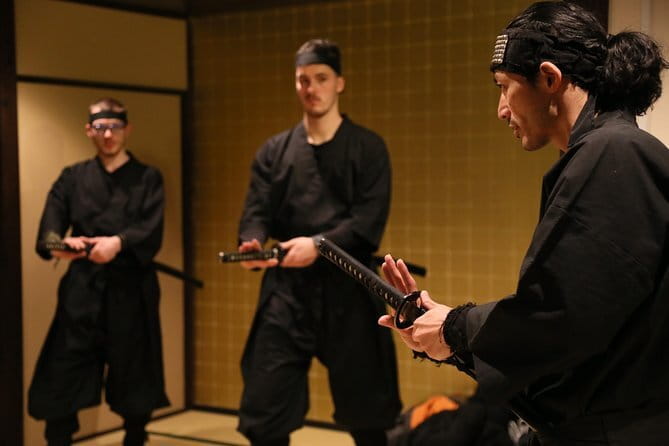
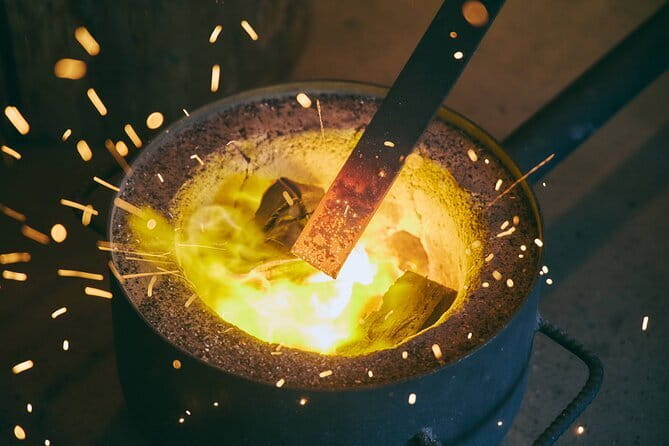
The forging stage takes roughly an hour and is the most physical part of the session. You hammer the heated metal billet to flatten it and draw it into a blade shape. The work is repetitive, loud, and more tiring than it may look in a short video.
This is where the small group matters. With no more than six people, the instructor can watch your technique and step in when you need help. Daiki is one instructor associated with the class, and the teaching style is hands-on, patient, and encouraging. You are allowed to work, but you are not left to guess what comes next.
The staff also help shape the blade after the initial forging. You can request a knife style, including a sashimi or utility form, though the final size remains around 13 to 15 centimeters. The handmade process means your individual result may vary.
You should expect heat, hammering, and some exertion. The activity recommends a moderate fitness level for good reason. This is not an ideal choice if you want a quiet seated craft lesson, have trouble with repetitive arm work, or prefer a short demonstration.
It is a good choice for couples, families with older children, and anyone who enjoys making something with both hands. A 13-year-old has completed the activity successfully, but the physical and sharp-tool aspects mean adults should judge each child’s readiness.
A few more Kyoto tours worth putting on the shortlist
- PERFECT KYOTO 1-Day Bus Tour
★ 5.0 · 13,518 reviews - Kyoto: Fushimi Inari, Kinkakuji, Bamboo Grove 1 Day Bus Tour
★ 4.8 · 4,316 reviews - Kyoto: Tea Ceremony in a Traditional Tea House in Kiyomizu
★ 4.9 · 3,519 reviews - Kyoto Geisha Walking Tour: Gion District & Hidden Gems
★ 4.7 · 3,273 reviews
Grinding and shaping the edge
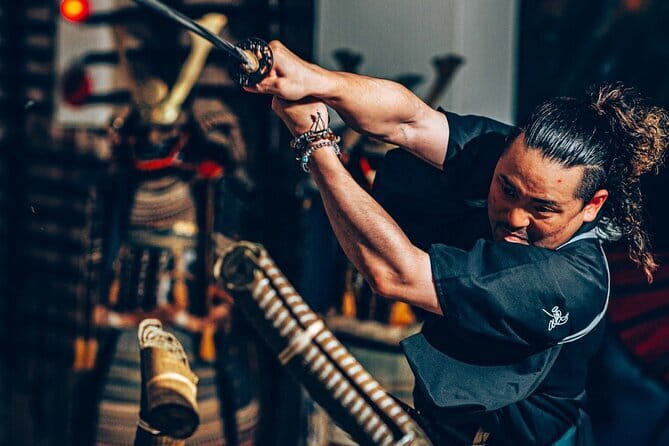
After forging, you move to grinding and sharpening. This stage takes up to about an hour and changes the rough metal into something that looks like a knife.
Grinding requires more precision than brute force. You hold the blade against a sanding belt to clean the surface and establish the edge. The angle matters. Too much pressure or the wrong angle can spoil the shape, so pay close attention to the demonstration and ask for help early.
This is the part where the experience can feel less guided than the forging stage. Some participants have wanted clearer instruction on the grinding angle and more support around the sanding belts. The best approach is to slow down, use the technique shown by the instructor, and ask for a correction before you remove too much metal.
You will also need to handle a blade that is becoming sharp. Keep your hands positioned as instructed and do not rush because another person has finished first. The goal is not to beat the clock. It is to leave with a blade you are happy to use.
The staff finish or correct some of the final sharpening work, helping the knife reach a functional standard. That balance is sensible. You still do the meaningful work, while the instructors help protect the final result from a beginner’s last-minute mistake.
Polishing and taking home a working souvenir

The final stage is polishing and presentation. Once the blade has been cleaned, sharpened, and finished, it is wrapped and placed in a gift bag. A small photo may also be provided as a memento.
The knife is not just a decorative token. The finished piece is sharp and functional. That makes it a memorable souvenir, but it also creates practical duties. If you are flying home, plan to place the knife in checked luggage if the blade length exceeds your airline’s carry-on rules. Do not assume a gift bag makes it acceptable in the cabin.
The standard design has an iron handle. A wooden handle may be available for an additional ¥5,000, with the option to attach it yourself at home. This can make the knife feel more finished, but it changes the final cost and adds work after the class.
Ask about the handle choice before the forging stage if you know you want wood. The included experience is based on the simpler iron-handled knife, so the wooden option should be treated as an extra rather than part of the advertised price.
What the $158.52 price really covers
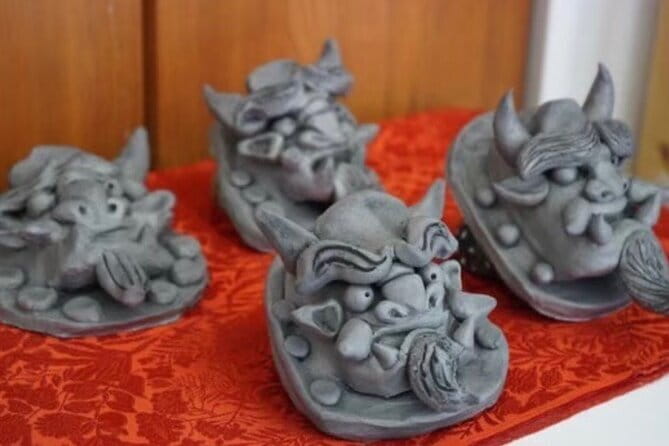
The price is high for a three-hour activity, but it includes more than an ordinary class ticket. You receive the uniform, the tool set, the steel, English-language guidance, workshop access, and the knife you help make.
The strongest value comes from the amount of hands-on time. You forge for around an hour, then spend substantial time grinding, sharpening, and polishing. This is a genuine making session, not a quick souvenir workshop where the staff complete most of the object.
Still, value depends on your interests. A chef, craft enthusiast, or visitor looking for a personal connection to Japanese workmanship may find the price worthwhile. Someone traveling on a tight budget may prefer to buy a knife and use the money for another Kyoto activity.
The small group helps justify the cost. A maximum of six allows more personal guidance than a large class. The English support also matters if you are unfamiliar with blacksmithing vocabulary or safety procedures.
Who will enjoy this most
I would choose this for you if you enjoy active experiences, traditional crafts, and souvenirs with a personal story. It works especially well for couples, families with older children, cooks, and anyone who has wanted to try blacksmithing without committing to a long course.
It is also a good fit for a short Kyoto visit. One person with only two days in the city still considered the workshop time well spent because it offered something different from temple visits and food tours.
You should think twice if your ideal holiday activity is relaxed, quiet, or fully polished from start to finish. Your blade may have small imperfections. That is normal for a handmade object, but you need to accept the learning process.
The physical work also matters. Hammering hot steel can leave you tired, and grinding demands patience. People with a moderate fitness level should manage it, but the workshop is not passive.
Practical details before you go
The class lasts about three hours, though the activity information also describes the working portion as two and a half hours. Allow extra time for changing clothes, instruction, and wrapping the knife.
All core materials and tools are supplied. Snacks are not included, and private transportation is not included. Toilets and water are available at the studio.
Confirmation is provided at booking, and the location is near public transportation. The workshop accepts a maximum of six people, so advance booking makes sense, especially since it has been booked more than 20 times in a recent week.
Free cancellation is available up to 24 hours before the start time for a full refund. Changes or cancellations made within 24 hours are not accepted for a refund, and the cut-off follows local Kyoto time.
Finally, plan the return journey before you begin. The studio is in a residential area, and phone service may be weak near the station. Save directions while you have a signal.
Should you book Atelier NIN?
Book this experience if you want to make a real Japanese knife rather than simply purchase one. The strongest parts are the hour of forging, the small group, the patient instruction, and the chance to take home a sharp tool shaped by your own work.
Skip it if you want a light activity, dislike repetitive hammering, or need a fully finished knife with no extra handle work. Also remember the transport and checked-luggage issue.
For the right person, this is one of Kyoto’s more personal souvenirs. You leave with a knife, but also with a clear sense of how much force, care, and patience go into Japanese kitchenware.
FAQ
Where does the knife-making experience take place?
It takes place at Atelier NIN, at 168-1 Yasenosechō, Sakyo Ward, Kyoto, 601-1254, Japan, in the Yase area of Kyoto.
How long does the activity last?
The experience lasts approximately three hours. The workshop also describes the hands-on format as about two and a half hours.
How many people can join the class?
The maximum group size is six people.
Is an English guide included?
Yes. English-language guidance is included, and instructor Daiki is associated with the class.
What is included in the price?
The price includes the uniform, the tool set used to make the knife, and English guidance.
How large is the finished knife?
The knife is approximately 13 to 15 centimeters long. The exact size can vary because each knife is handmade.
Does the knife have a wooden handle?
The standard knife has a simple iron handle. A wooden handle may be available for an additional ¥5,000.
Can I cancel for a full refund?
You can cancel at least 24 hours before the experience start time for a full refund. Cancellations or changes made less than 24 hours before the start time are not refunded or accepted.
Newest Kyoto experiences on the site
- Treasures of Kyoto: Gion & historical Walking Tour★ 5.0 · 6 reviews
- Whisk Your Own Matcha: A Zen Matcha Experience at Temple★ 3.6 · 7 reviews
- Kyoto tea town for matcha lovers★ 5.0 · 16 reviews
- Uji: Private immersion into Kyoto’s tea and reglious culture★ 5.0 · 17 reviews
- Kyoto Matcha Green Tea Tour★ 4.5 · 23 reviews
- Uji and Wazuka Matcha Farm Half Day Private Guided Tour★ 5.0 · 21 reviews
- Utilising upcycled Matcha! Creating matcha incense (Uji, Kyoto)★ 5.0 · 6 reviews
- Sacred Temple Yoga Experience in Japan★ 5.0 · 3 reviews
Kyoto Craft Workshops, compared.
Chopsticks Making Workshop in Gion with Engraving Option
Read our review →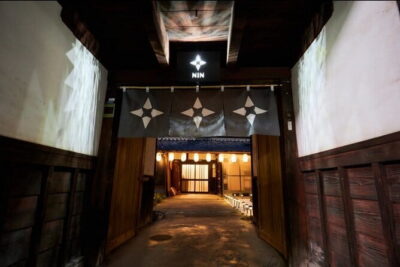
Authentic knife making experience at a blacksmith in Kyoto
Read our review →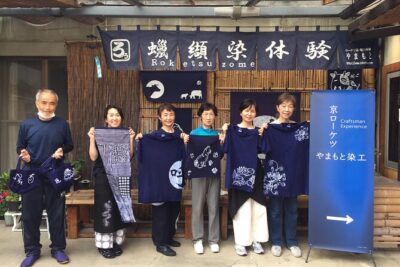
Roketsu dyeing experience: M course Roketsu Dyeing Experience
Read our review →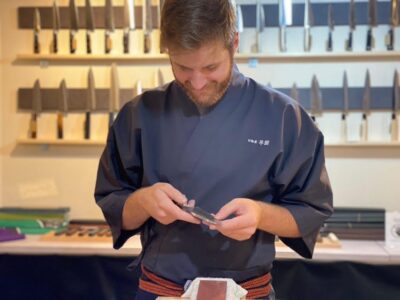
Beginner Knife Sharpening & Handle Fitting Workshop
Read our review →
Japanese Archery Workshop with Experienced Instructor
Read our review →
Kyoto Michelin Ramen Workshop or Painting Ramen Essentials
Read our review →
Browse the lists this tour appears in