
Reviewed · KYOTO CRAFT WORKSHOPS
Osaka: Japanese Drum Taiko Workshop
Japanese taiko is not a quiet cultural demonstration. It is a full-body activity, with firm strikes, set movements, and the shared rhythm of a group. This two-hour workshop near Takatsuki gives you both sides of the art: a powerful performance by a professional player and a friendly lesson where you play a simple piece yourself.
I like the easy location, just about 15 minutes by train from either Osaka or Kyoto, and the clear progression from history lesson to hands-on practice. I also like the personal touches, especially writing your wish in Kanji on a hachimaki and ending in a happi coat for a commemorative photo. The main catch is timing: late arrivals cannot join, and the total two hours includes travel, so you need to plan carefully.
Key points to know before booking
- A short trip from both Osaka and Kyoto: Meet at JR Takatsuki Station, not the separate Hankyu Takatsuki Station.
- A professional taiko performance comes first: You see the instrument played well before trying it yourself.
- Beginners are welcome: The instructor teaches basic movements and techniques before the group plays one simple song.
- English guidance is included: Guides such as Michiko and Naru have helped with translation and introductions.
- A cultural souvenir is built into the lesson: You write a personal wish on a traditional headband.
- The ending is made for a photo: You wear a happi and hachimaki for a keepsake picture.
Why this taiko workshop feels different
Many cultural activities ask you to watch, listen, and take a photo. This one asks you to make the sound yourself. That changes the experience. You are not simply hearing about taiko as part of Japanese festivals and daily life. You are learning the stance, movement, and timing that give the drum its force.
The workshop is designed for people with no previous taiko experience. That matters because the instrument can look intimidating when a professional player is handling it. You first see the finished skill, then break it into basic movements with help from the instructor.
I would not book this expecting a long musician-training course. You learn one simple piece with the group, and the session moves on after that. But for a first introduction, the format works well. You get enough instruction to participate with confidence, without spending half a day on technical drills.
The atmosphere also sounds friendly rather than formal. Aoi is one of the instructors associated with the workshop, and participants have especially valued the patient, encouraging teaching. English-speaking guides, including Michiko and Naru, help explain what is happening and translate the instruction.
More days that pair Kyoto with Osaka:
- Osaka/Kyoto:Kinkakuji,Arashiyama,FushimiInariShrine,NaraPark
★ 4.1 · 1,596 reviews - Kyoto/Osaka: Nara, Fushimi Inari Taisha, Arashiyama Bus Tour
★ 4.7 · 1,275 reviews - One-Day Tour of Kyoto’s Highlights from Osaka/Kyoto
★ 4.5 · 1,092 reviews
Meeting at JR Takatsuki Station
Your day begins at the central ticket gate on the second floor of JR Takatsuki Station. Stay upstairs and do not go down. The guide carries a banner showing a taiko drum, which gives you a clear marker once you are in the right place.
The station choice is useful. Takatsuki sits between Osaka and Kyoto, and the JR train from Osaka takes about 15 minutes. The same short rail connection makes the workshop practical if your plans are based in Kyoto. A taxi from Osaka is not a sensible alternative because of the higher cost and longer travel time.
Pay close attention to the station name. Takatsuki has both a JR station and a Hankyu station, and this activity meets at the JR station only. That is the sort of small detail that can ruin a tightly timed booking if you miss it.
Arrive 15 minutes early. The group cannot wait for late arrivals, and you cannot join once the activity has started. I would allow extra time to find the correct platform and station exit, especially if you are coming from another part of Osaka or Kyoto.
From the meeting point, transport to and from the studio is included. The two-hour duration includes that travel, so it is not two full hours of continuous drumming. Do not schedule a train, meal, or major attraction immediately afterward. Returning early is not recommended.
A short introduction to taiko culture
At the studio, you begin with an explanation of taiko’s history and place in Japanese life. This opening gives the workshop some needed context. Taiko is more than a large drum used for dramatic stage shows, and the introduction helps connect the instrument with Japanese cultural traditions.
The presentation is brief, which suits the activity. You are there to play, not sit through a long lecture. The history section also gives beginners a few ideas to listen for during the performance that follows.
One charming part comes next. You write a wish in Kanji on a hachimaki, the traditional headband you will use later. You may not be familiar with Japanese characters, but that is part of the appeal. The headband becomes both a small cultural activity and a personal souvenir.
The information does not say that you choose from a fixed list of wishes, so expect guidance rather than a formal calligraphy class. The point is to create something connected to your own visit before putting on the headband for the drumming and photo.
Watching a professional taiko performance
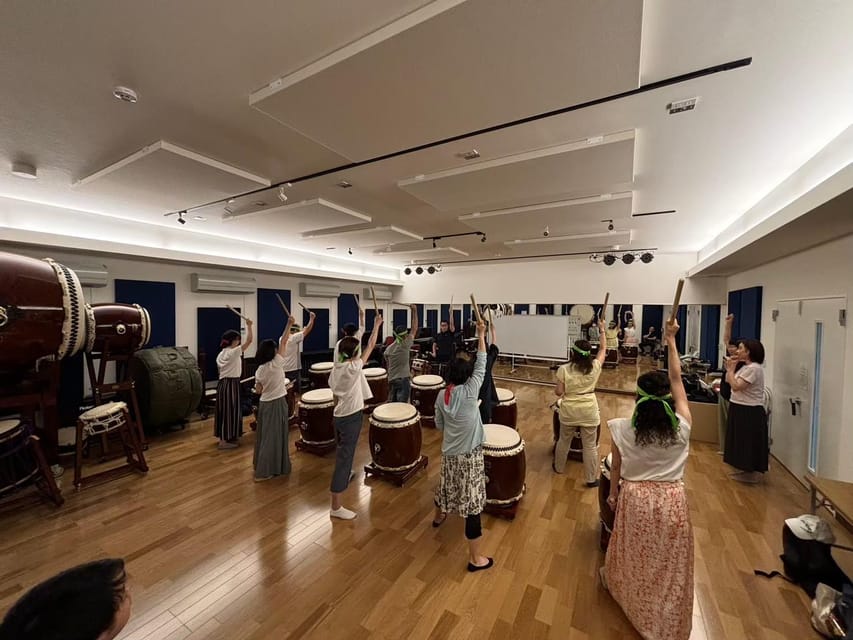
Before you pick up the drumsticks, a professional instructor gives a taiko demonstration. This is one of the strongest parts of the schedule because it lets you see the instrument at close range and understand the energy required.
The performance gives you a useful reference point. You can watch the player’s posture, arm movement, timing, and control before you attempt the basic technique. It also adds a real performance element to what could otherwise feel like a simple beginner music class.
Expect the demonstration to make the drums seem more powerful than they first appeared. Taiko is physical, and the sound works best when the player commits to the movement. The performance has been described as a highlight by people who appreciated seeing the instrument up close.
There is one practical limit. The professional performance is not an extended concert. The workshop needs to leave time for your lesson and group piece. If you already play percussion, you may wish for more time with the professional player, but the schedule is built around participation rather than a full stage show.
More craft workshops in Kyoto:
- Kyoto : Chopsticks Making Workshop in Gion with Engraving Option
★ 5.0 · 958 reviews - Authentic knife making experience at a blacksmith in Kyoto
★ 4.8 · 350 reviews - Roketsu dyeing experience: M course Roketsu Dyeing Experience
★ 5.0 · 163 reviews - Kyoto: Beginner Knife Sharpening & Handle Fitting Workshop
★ 4.9 · 141 reviews
Learning the basic movements
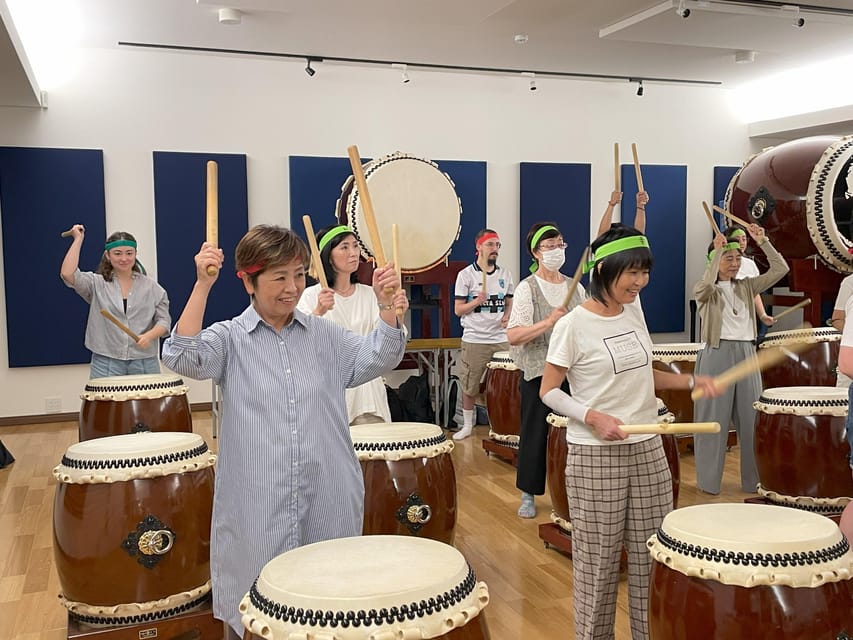
After the demonstration, the instructor teaches the first movements and techniques. The key benefit here is that the lesson is structured for complete beginners. You do not need to arrive knowing how to hold the sticks or follow a taiko rhythm.
The instructor leads the group through the basic pattern, and the English-speaking guide helps with translation. The teaching team is an important part of the experience. Friendly explanation makes a big difference when the instructions involve both sound and body movement.
You may find the lesson more physical than expected. One participant described it as a nice workout, which is a fair warning for anyone expecting a passive cultural stop. You will be standing and moving your arms, so comfortable clothing is sensible. The supplied information does not specify a dress code or changing facilities, so keep your outfit practical from the start.
People with percussion experience can still get something from the lesson. The rhythm may feel familiar, but the techniques and body movements are specific to taiko. Beginners, families with older children, and musicians curious about another percussion tradition all have a reason to join.
Children under seven cannot participate. The activity is better suited to children who can follow spoken instructions and keep pace with a group, though no maximum age is stated.
Playing one song with the group
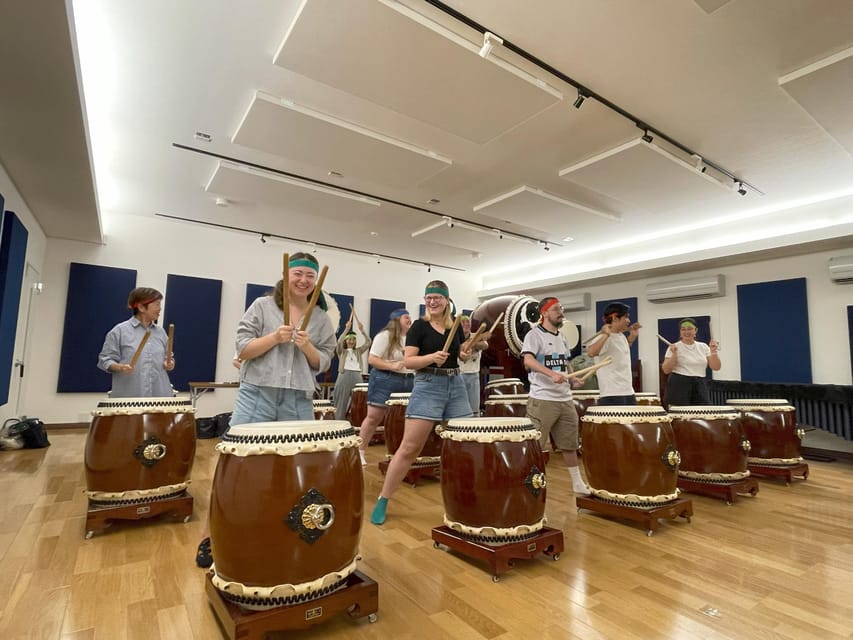
The workshop builds toward a simple piece of music played together. This is where the earlier explanation and movement practice pay off. Instead of tapping randomly or playing alone, you follow a shared pattern and contribute to a group sound.
That group element is the heart of the experience. You hear how separate players become one rhythm, even when nobody is a trained musician. It also removes some pressure. You are not expected to give a solo performance, and the instructor guides the group through the piece.
Do not expect a long set of songs. The activity ends after the group has completed one simple piece. That may feel short if you are keen on drumming, particularly if you already play another percussion instrument. Still, it keeps the workshop accessible and fits the two-hour schedule, including transport.
The lesson has a nice balance: you see a skilled performance, learn enough technique to participate, and then make music with the other people in your session. For a first taiko experience, that is a more useful sequence than watching a show alone.
Finishing with a happi and hachimaki photo
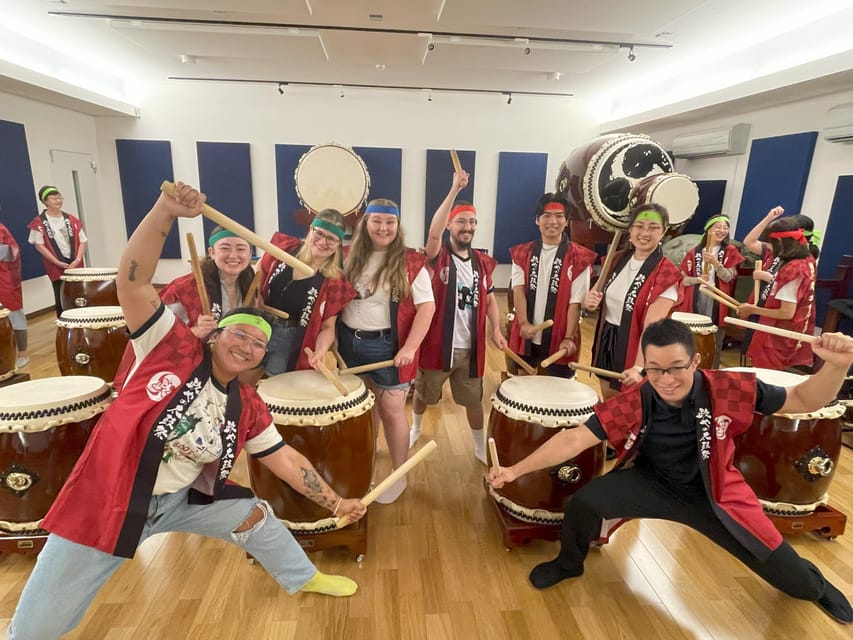
The final photo adds a traditional visual touch. You wear a happi, a festival-style coat, along with the hachimaki you prepared earlier. The result is a better memento than a standard group picture because the clothing connects directly to the activity.
Photos are provided to keep, and the staff take plenty during the session. There is no mention of a video recording being included, so do not book this expecting a professional film of your performance. If a video matters to you, ask the staff what is allowed before the drumming begins rather than assuming it will be available.
The photo also gives the workshop a clear ending. After the concentration and movement of the group piece, you have time to mark the occasion and leave with something tangible from the day.
Is the $103 price a good value?
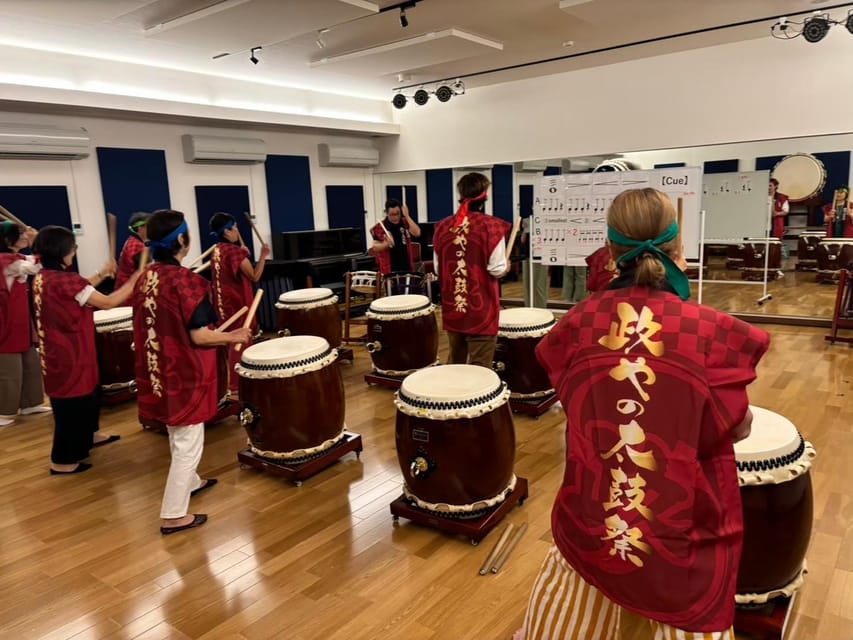
At $103 per person, this is not the cheapest short activity in the Osaka and Kyoto area. The price makes more sense when you count what is included: the taiko lesson, professional instructor, English guide, transport between JR Takatsuki Station and the studio, hachimaki, and the commemorative photo.
The value is strongest if you want an active cultural experience rather than a performance ticket. You are paying for instruction and participation, not only for access to a venue. The included transport also removes the need to work out a separate route to the studio.
The value is weaker if you only want to watch taiko. Observers pay 8,000 yen in cash at the studio, and they must be announced in advance so transport can be arranged. Since the main appeal is making music yourself, I would recommend participating unless someone in your group has a clear reason to sit out.
Some dates do not accept a single-participant booking. On those days, you may need to reserve and pay for two people, so solo visitors should check the booking conditions for their chosen date before making plans.
Free cancellation is available up to 24 hours in advance, and reserve-now, pay-later booking may be offered. Even with that flexibility, the strict late-arrival rule remains: no refund is given if you miss the start.
Who should book this experience?
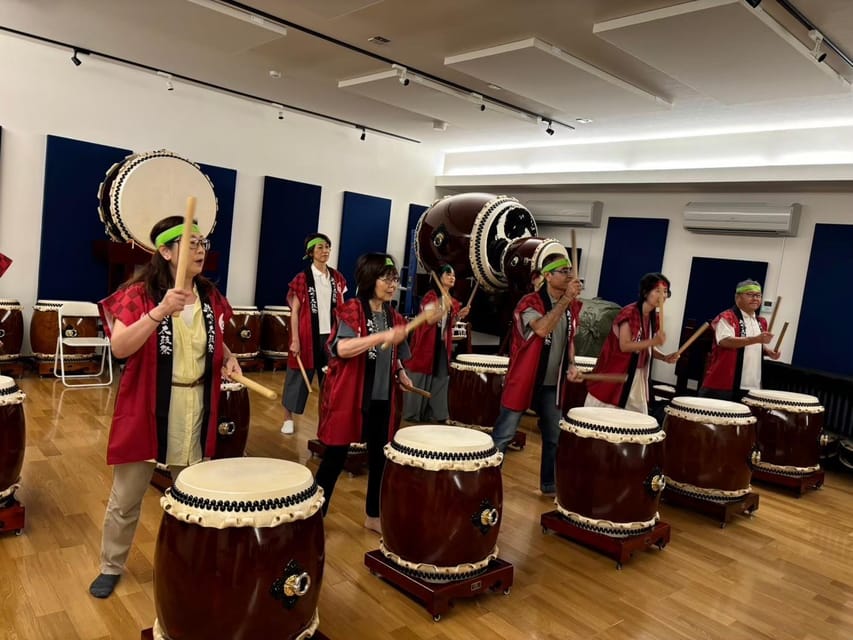
I would recommend it to families with children aged seven and above, couples looking for something beyond temples and shopping, and anyone who wants to bring home a cultural memory they helped create.
It is also a good fit for people who enjoy music but do not read music or play an instrument. The workshop is built around simple movements and group participation, not prior training. Experienced drummers may enjoy comparing taiko with familiar percussion, though they should understand that the hands-on portion is short.
This is less suitable for someone with a very tight sightseeing schedule. The workshop lasts two hours including travel, and you need to arrive early. It is also not ideal if you want a long concert, a detailed course in Japanese calligraphy, or several songs with a professional ensemble.
For an Osaka or Kyoto itinerary, Takatsuki offers a useful change of pace. You can reach it quickly by JR train, spend part of the day making a loud and memorable sound, then return to the city. That combination of easy access and active participation is the main reason I would consider it.
Should you book the taiko workshop?
Book it if you want to do something with your hands, learn a little about Japanese culture, and leave with a photo that reflects the experience. The professional demonstration, kind instruction, English support, and group song give the session a clear shape.
I would skip it only if your schedule cannot handle the fixed start time, if you need a longer music lesson, or if you plan to observe without joining. For most first-time participants, the $103 price is reasonable because transport, instruction, cultural context, and the keepsake photo are bundled together.
FAQ
Where does the taiko workshop meet?
Meet at the central ticket gate of JR Takatsuki Station on the second floor. Do not go downstairs. The guide will hold a banner showing a taiko drum.
Is the meeting point at Hankyu Takatsuki Station?
No. The meeting point is JR Takatsuki Station, not Hankyu Takatsuki Station.
How long does the activity last?
The total duration is two hours, including travel between the station and the studio.
How far is Takatsuki from Osaka?
The JR train from Osaka to Takatsuki takes about 15 minutes. Takatsuki is also about 15 minutes by train from Kyoto.
Is an English-speaking guide included?
Yes. The activity includes a live English-speaking guide. Guides such as Michiko and Naru have provided translation and support.
Do I need previous taiko experience?
No. The instructor teaches basic movements and techniques, and the workshop is designed for people without previous taiko experience.
Can children join?
Children under seven cannot participate.
What happens if I arrive late?
You must arrive 15 minutes early. The activity cannot wait for late arrivals, and you cannot join after the start time. No refund is given for missing the start.
Can I join as an observer without playing?
Yes, but observers pay 8,000 yen per person in cash at the studio. You must notify the organizer in advance because transport may not be arranged without notice.
Newest Kyoto experiences on the site
- Treasures of Kyoto: Gion & historical Walking Tour★ 5.0 · 6 reviews
- Whisk Your Own Matcha: A Zen Matcha Experience at Temple★ 3.6 · 7 reviews
- Kyoto tea town for matcha lovers★ 5.0 · 16 reviews
- Uji: Private immersion into Kyoto’s tea and reglious culture★ 5.0 · 17 reviews
- Kyoto Matcha Green Tea Tour★ 4.5 · 23 reviews
- Uji and Wazuka Matcha Farm Half Day Private Guided Tour★ 5.0 · 21 reviews
- Utilising upcycled Matcha! Creating matcha incense (Uji, Kyoto)★ 5.0 · 6 reviews
- Sacred Temple Yoga Experience in Japan★ 5.0 · 3 reviews
Kyoto Craft Workshops, compared.

Chopsticks Making Workshop in Gion with Engraving Option
Read our review →
Authentic knife making experience at a blacksmith in Kyoto
Read our review →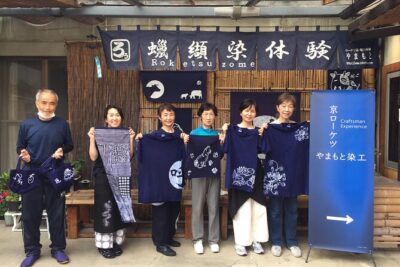
Roketsu dyeing experience: M course Roketsu Dyeing Experience
Read our review →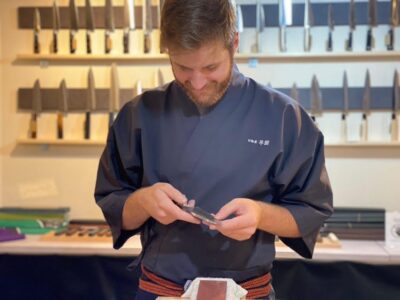
Beginner Knife Sharpening & Handle Fitting Workshop
Read our review →
Japanese Archery Workshop with Experienced Instructor
Read our review →
Kyoto Michelin Ramen Workshop or Painting Ramen Essentials
Read our review →
Browse the lists this tour appears in