
Reviewed · KYOTO CRAFT WORKSHOPS
Natural Indigo Dyeing with Local Masters (Private Atelier)
A 300-year-old indigo studio is the real star here. You enter a working family atelier, see the large vats used for kimono cloth, and use natural fermented indigo called sukumo to dye your own fabric. This feels far removed from a quick souvenir class. Sakura’s clear translation helps you follow the master artisan, even when the craft terms get technical.
I like two things especially: the dye changes from green to blue before your eyes, and the small group keeps the session personal. The indigo leaf tea and folding lesson add cultural context without padding the schedule. The main consideration is that the included item is a cotton furoshiki, while scarves and stoles cost extra, and the studio is not wheelchair accessible.
Key points at a glance
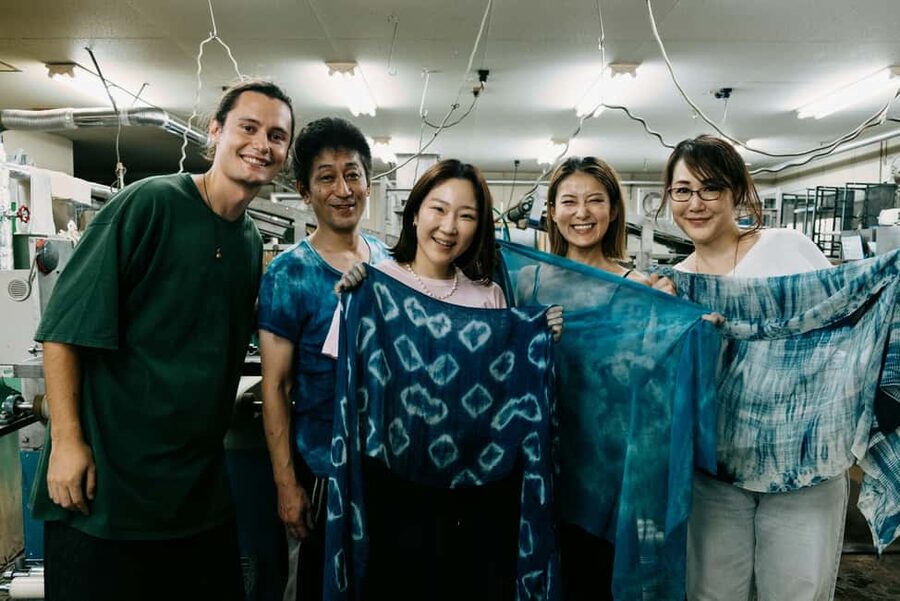
- A real working studio: Enter a family-run dye house in western Kyoto, with tools, vats, wooden floors, and handmade textiles around you.
- Natural fermented indigo: Use sukumo rather than chemical dye, with guidance from artisans who work with the process every day.
- Small group of six: The limited size gives you room to ask questions and receive help with folding, binding, and dipping.
- A practical souvenir: Make one cotton furoshiki, about 45 to 50 centimeters square, and learn how to wrap it traditionally.
- Useful bilingual support: English and Japanese are available, with Sakura praised for translating the artisan’s explanations clearly.
- A modest but fair upgrade path: Cotton and silk scarves, plus a wool stole, are available for an extra fee if you want something more substantial.
Why this Kyoto craft class feels different
Kyoto offers plenty of craft activities, but this one earns its place on a short itinerary because the setting is not a recreated workshop built for sightseeing. You visit a historic dye studio still connected to the work itself. The exact address is shared after booking, and the location is in western Kyoto, about 30 minutes from Kyoto Station by train and on foot.
That setting matters. You see the vats, tools, fabric, and gallery displays as part of a working place rather than a polished stage set. The family has opened the studio to international visitors through a local connection, so the experience has an unusually personal feel.
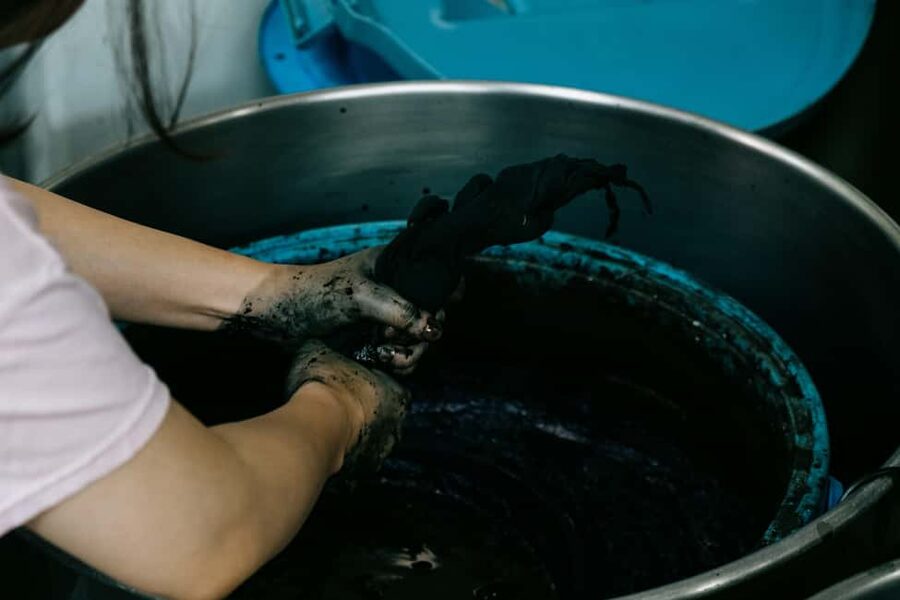
Natural indigo also gives the class more substance than a simple color-and-take-home activity. The fermented indigo paste, or sukumo, requires care and patience. You do not just add powder to a bucket and stir. The artisan explains the process, then helps you work with the vats in a controlled way.
The experience lasts about two hours, though the stated duration can run from 1.5 to 2 hours. That is a good length for Kyoto. You learn enough to understand the craft, but you are not locked into an all-day class when temples, gardens, and dinner still await.
More craft workshops in Kyoto:
- Kyoto : Chopsticks Making Workshop in Gion with Engraving Option
★ 5.0 · 958 reviews - Authentic knife making experience at a blacksmith in Kyoto
★ 4.8 · 350 reviews - Roketsu dyeing experience: M course Roketsu Dyeing Experience
★ 5.0 · 163 reviews
Entering the 300-year-old dye studio
The first 15 minutes are given to a welcome and short studio tour. You hear about indigo’s role in Japanese daily life and see the equipment used in traditional dyeing. This opening is important because it tells you what you are looking at before you begin handling cloth.
Expect a traditional interior with wooden floorboards. It has atmosphere, but it is not a modern activity center. Wear shoes that are comfortable for standing and clothes that can get dirty. Aprons, gloves, and shoe covers are provided, which helps protect your outfit, but I would still avoid anything precious or difficult to wash.
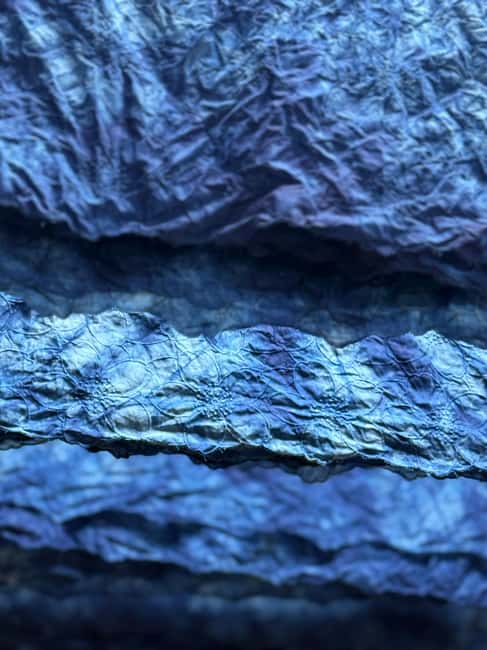
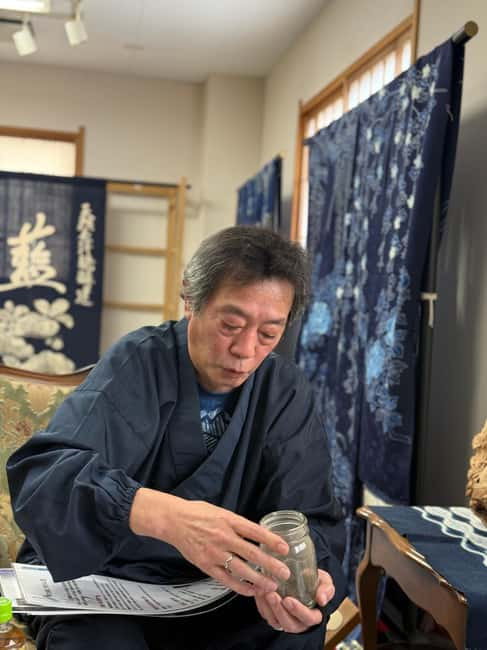
The studio includes a gallery and dyed items for sale. You may spend a little time looking at finished textiles, including kimono-related work and hand-stitched pieces. That makes the finished examples useful rather than decorative. You can see what careful folding, repeated dyeing, and skilled stitching can produce.
The master artisans lead the practical work, while the bilingual host explains the process in English. Sakura has been singled out for making the translation easy to follow, especially when the master is explaining the more complex parts of the craft. Chie is the listed experience provider, and the activity brings together the family’s working knowledge with local cultural support.
Folding cloth before the first dip
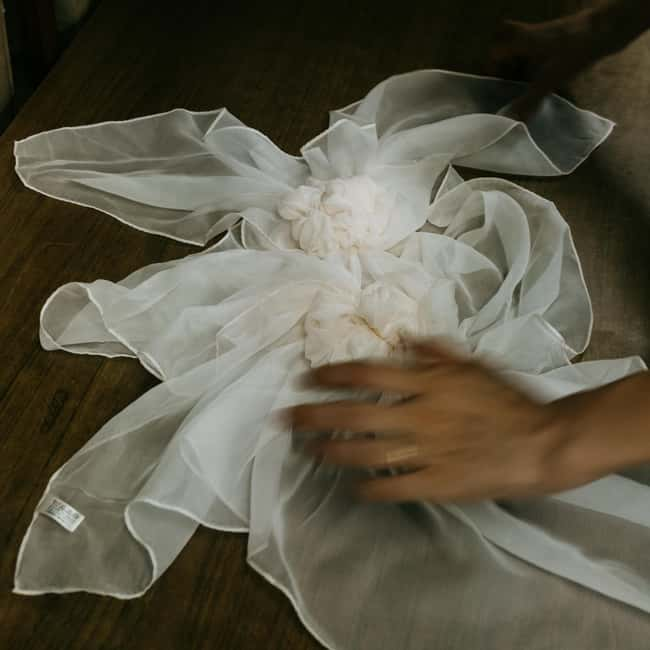
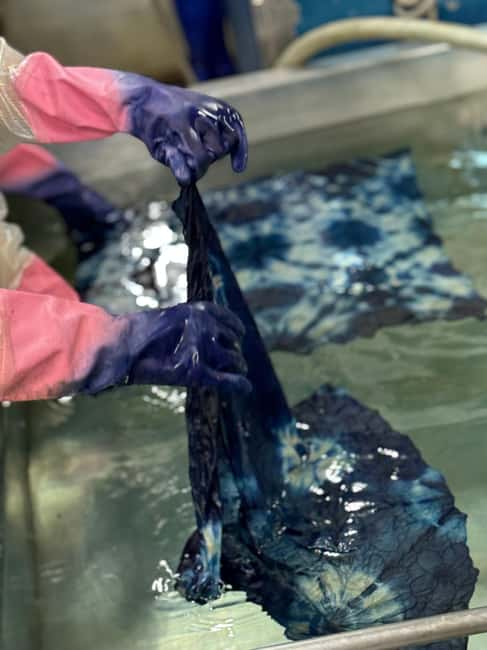
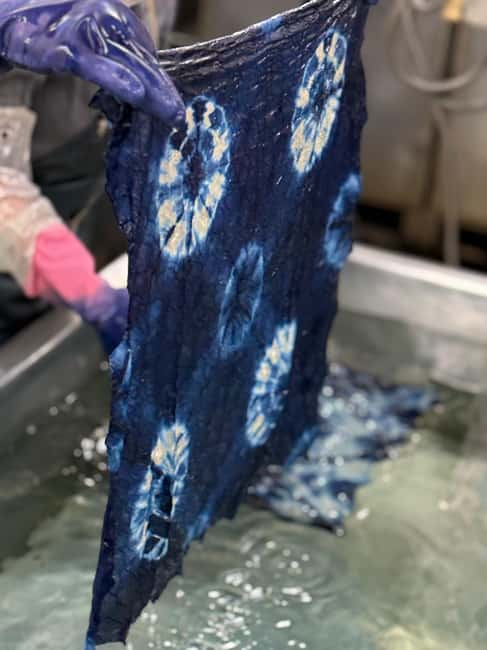
The main workshop takes about 60 minutes. You start by choosing a pattern and folding or binding the cloth. This is the shibori side of the activity, where pressure, creases, ties, and folded sections control how the indigo reaches the fabric.
You receive one cotton furoshiki, roughly 45 to 50 centimeters square. Furoshiki are square cloths traditionally used for wrapping and carrying objects, so your finished piece has a practical use. You also receive a demonstration of traditional furoshiki wrapping techniques, which gives the activity a second skill to take home.
Do not expect complete control over the final pattern. Shibori depends on how tightly the cloth is folded and bound, and the dye moves in its own way. That is part of the appeal, but perfection-minded children and adults should be ready for surprises.
The instructors guide you step by step, so previous craft experience is not needed. Children age eight and older can take part, and the activity works well for families because the process is hands-on without being physically demanding. You need to pay attention, though. The results depend on how you fold and secure the cloth.
Watching green cloth turn blue
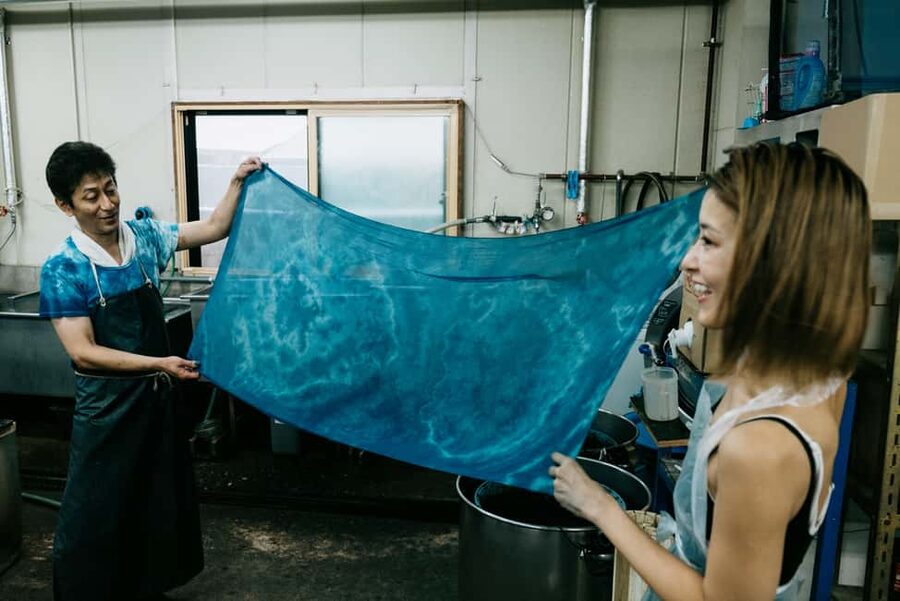
The most satisfying moment comes when the cloth leaves the vat. Natural indigo can look green at first. Exposure to air causes the color to oxidize, and the fabric shifts toward blue as you watch.
That small transformation explains why this workshop feels more memorable than a standard art class. You are not simply applying a color. You are seeing a chemical and traditional process unfold in real time, with the artisan nearby to show you how much dye to use and how to handle the cloth.
The large vats are especially impressive. They are used for fabric connected with kimono production, so your small piece sits within a much larger craft tradition. The contrast is fun: you get to work with the same type of material and process, but on a manageable item you can carry home.
You should not expect to dye a garment or a large textile during this session. The included material is one furoshiki. Larger fabric and clothing dyeing are not part of the basic activity.
A few more Kyoto tours worth putting on the shortlist
- PERFECT KYOTO 1-Day Bus Tour
★ 5.0 · 13,518 reviews - Kyoto: Fushimi Inari, Kinkakuji, Bamboo Grove 1 Day Bus Tour
★ 4.8 · 4,316 reviews - Kyoto: Tea Ceremony in a Traditional Tea House in Kiyomizu
★ 4.9 · 3,519 reviews - Kyoto Geisha Walking Tour: Gion District & Hidden Gems
★ 4.7 · 3,273 reviews
Choosing an upgrade without losing sight of the price
The listed price is $95 per person. For that amount, you receive the workshop, all tools and materials, one cotton furoshiki, an apron, artisan guidance, bilingual interpretation, indigo leaf tea, a folding demonstration, a small souvenir, and access to the private studio.
I consider that a reasonable price if you value the setting and the instruction. You are paying for a small-group session with a working artisan family, not just for a piece of dyed cloth. The maximum group size is six, which gives the class a calmer feel and makes it easier to ask for help.
The price needs a little care, however. Some information describes a choice of items at the session, while the included details specify one cotton furoshiki. The safest assumption is that the furoshiki is included and that upgrades cost extra.
Available upgrades include:
- A lightweight cotton scarf
- A silk scarf
- A wool stole made from Mongolian wool
A cotton scarf is the practical middle ground. It gives you more surface area to enjoy the pattern without adding the cost or delicacy of silk. The silk scarf is more luxurious, while the wool stole is the largest and warmest option. Ask about the extra cost before choosing, since the upgrade fees are paid on site and are not listed here.
You can also buy finished dyed items from the studio shop. Bring extra money only if you are genuinely interested in the textiles. You do not need to buy anything to make the workshop worthwhile.
Tea, stories, and a look at finished work
After the dyeing, allow 15 to 20 minutes for tea and conversation. The drink is made from indigo leaves and provides a quiet pause while your cloth settles and you look over the finished work.
This is also when you can ask questions that did not fit into the practical part of the class. You may hear more about the family’s methods, the role of indigo in Japanese life, and the effort needed to produce steady, deep color.
The tea is not a meal. No snack or lunch is included, so plan to eat before or after the activity if you need more than a light drink. The session itself has enough structure that you probably will not feel shortchanged, but it is worth knowing what the tea service does and does not provide.
You have time for photographs with your finished piece. The gallery and displayed textiles make good background subjects, though you should follow the studio’s directions about where photography is allowed.
Getting there and preparing well
The studio is in western Kyoto, with the address provided after booking. From Kyoto Station, allow about 30 minutes by train and on foot. Add a little extra time if you are unfamiliar with the neighborhood or if you need to find the entrance.
The location is not described as wheelchair accessible. Traditional wooden floors can also make movement less convenient for anyone who needs a smooth, step-free space. If access is important, ask for more detail before reserving.
Wear comfortable clothes and shoes. Indigo can stain, and there is no changing room. Aprons, gloves, and shoe covers help, but casual clothing remains the wise choice.
The studio has a restroom. English and Japanese are supported, but there is no indication of assistance in other languages. The bilingual host is there to explain the craft and translate the artisan’s instructions, not to provide a full multilingual service.
The minimum age is eight. Since the group is capped at six, children have a better chance of receiving direct help than they would in a large commercial class. Still, younger participants should be comfortable following instructions around dye vats and handling cloth carefully.
Who will enjoy this most
I would choose this for anyone who likes textiles, traditional crafts, or small cultural experiences that show how something is made. It is also a strong option for a second or third day in Kyoto, when you want a break from temple visits and a chance to meet local craftspeople.
Families with older children should find the activity accessible and engaging. The color change gives children a clear visual reward, while the folding and wrapping add something they can continue using at home.
It suits shoppers who prefer a handmade souvenir over another mass-produced item. The furoshiki takes up little luggage space, and every fold in the pattern comes from your own choices. If you want a scarf or stole, the upgrade gives you a more wearable result, but the basic cloth is enough for most people.
This may not be the right choice if you want a fast, highly polished tourist attraction, a large garment to dye, or a fully accessible venue. It is also less suitable if you dislike hands-on work or do not want to risk getting dye on casual clothing.
Practical value at $95
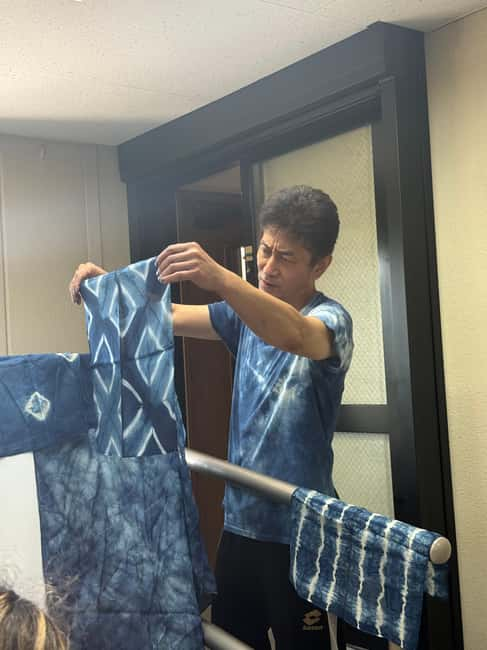
At $95, the experience is not the cheapest way to make a blue cloth in Kyoto. Its value comes from the combination of place, people, process, and group size.
You get to see a historic studio still connected to professional dye work. You receive help from artisans rather than only watching a demonstration. You also get cultural interpretation, tea, a wrapping lesson, and a finished object that has a clear use.
The workshop’s strongest feature is access. A regular shop visit might show you finished textiles, but it would not explain how the vats are maintained or let you work with the cloth yourself. A basic craft class might offer the hands-on part, but not the same working setting or connection with a multi-generational dyeing family.
I would compare the price with what you want from the souvenir. If your main goal is a large silk scarf, check the upgrade cost before booking. If your main goal is understanding natural indigo and making a small piece in a real studio, the base fee is easier to justify.
Free cancellation is available up to 24 hours before the activity, and you can reserve now and pay later. That is useful when your Kyoto schedule is still shifting. Transportation, shipping, meals, extra cloth, and large-item dyeing are not included.
Should you book it?
Book this if you want a small, genuine craft session with a finished souvenir and a clear look at traditional indigo work. The 300-year-old studio, natural fermented vats, patient instruction, and strong English support from Sakura make it more meaningful than a standard paint-and-take-home class.
Before you reserve, be comfortable with three points: the address arrives after booking, the studio is not wheelchair accessible, and the included item is a cotton furoshiki rather than a scarf or garment. If those details suit you, this is a worthwhile Kyoto experience for families, textile enthusiasts, and anyone who wants to spend two hours making something by hand.
FAQ
How long does the indigo dyeing experience last?
The activity lasts about two hours, with the stated duration ranging from 1.5 to 2 hours. The studio welcome and tour take about 15 minutes, dyeing takes about 60 minutes, and tea and closing time take 15 to 20 minutes.
What item is included in the workshop?
One cotton furoshiki cloth, approximately 45 to 50 centimeters square, is included. Larger fabric and garment dyeing are not included.
Can I dye a scarf instead?
Yes. Cotton scarves, silk scarves, and a wool stole are available as upgrades. The additional cost is paid on site, and the specific fees are not provided here.
Is the activity offered in English?
Yes. The experience is offered in English and Japanese. A bilingual cultural host provides English support, and Sakura has helped translate the artisan’s explanations.
What should I wear?
Wear comfortable clothes and shoes that can get dirty. An apron, gloves, and shoe covers are provided, but there is no clothing change room.
Is the studio wheelchair accessible?
No. The studio is not wheelchair accessible and has traditional wooden floorboards. A restroom is available on site.
Newest Kyoto experiences on the site
- Treasures of Kyoto: Gion & historical Walking Tour★ 5.0 · 6 reviews
- Whisk Your Own Matcha: A Zen Matcha Experience at Temple★ 3.6 · 7 reviews
- Kyoto tea town for matcha lovers★ 5.0 · 16 reviews
- Uji: Private immersion into Kyoto’s tea and reglious culture★ 5.0 · 17 reviews
- Kyoto Matcha Green Tea Tour★ 4.5 · 23 reviews
- Uji and Wazuka Matcha Farm Half Day Private Guided Tour★ 5.0 · 21 reviews
- Utilising upcycled Matcha! Creating matcha incense (Uji, Kyoto)★ 5.0 · 6 reviews
- Uji Tea Ceremony and UNESCO Heritage Walking Tour★ 5.0 · 20 reviews
Kyoto Craft Workshops, compared.
Chopsticks Making Workshop in Gion with Engraving Option
Read our review →
Authentic knife making experience at a blacksmith in Kyoto
Read our review →
Roketsu dyeing experience: M course Roketsu Dyeing Experience
Read our review →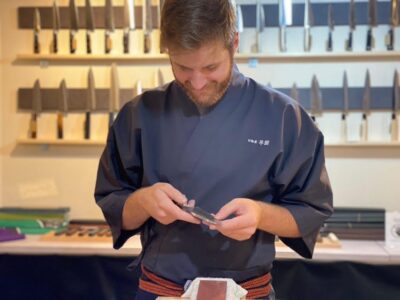
Beginner Knife Sharpening & Handle Fitting Workshop
Read our review →
Japanese Archery Workshop with Experienced Instructor
Read our review →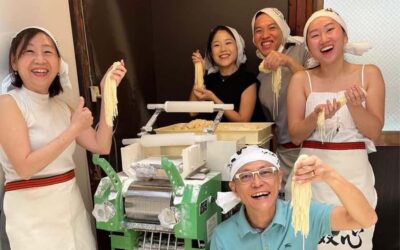
Kyoto Michelin Ramen Workshop or Painting Ramen Essentials
Read our review →
Browse the lists this tour appears in