
Reviewed · KYOTO CRAFT WORKSHOPS
Kyoto: Traditional Yuzen Dyeing Experience
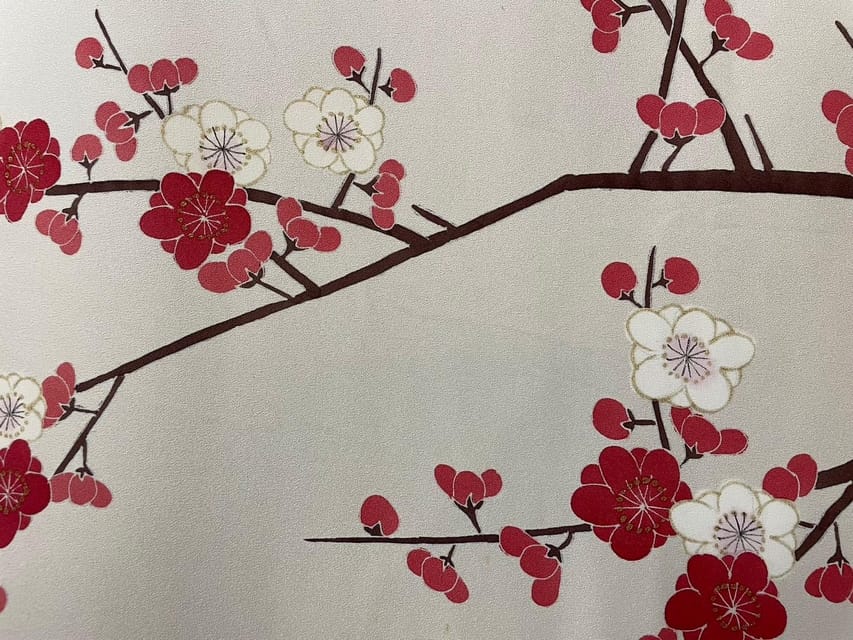
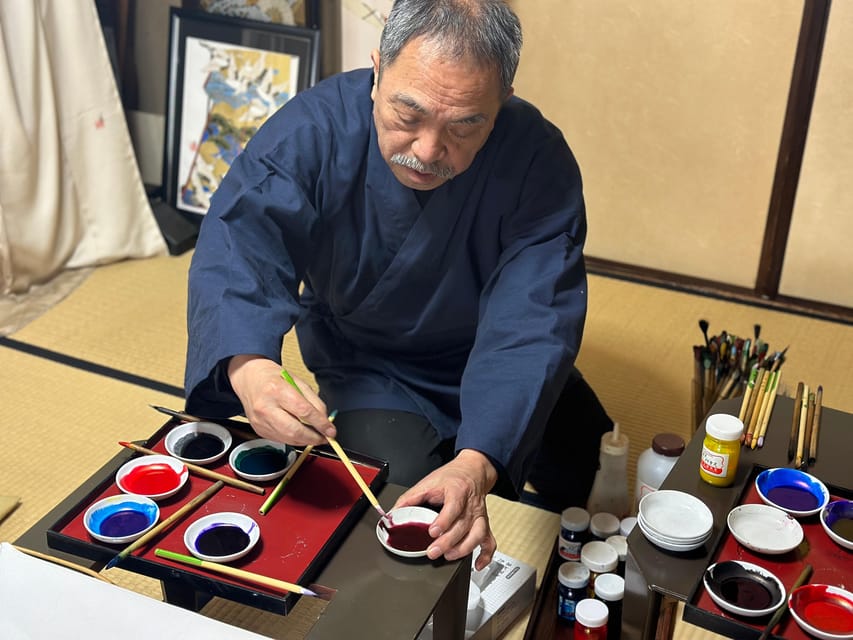
Kyoto Yuzen dyeing is not a quick tourist craft done at a crowded table. You work inside an artisan’s traditional machiya in Nishijin, surrounded by finished silk pieces and the quiet tools of the trade. The design is prepared for you, but the color choices and brushwork are yours.
I especially like the close guidance from Master Shin’Ichiro and the way he mixes each color for the fabric, not just from a fixed paint tray. I also like that the interpreter helps turn a technical craft into an easy, relaxed lesson. The main caution is the price: at $161 per person for two hours, this is a premium activity, and floor seating may be uncomfortable for some people.
Key points to know
- Paint silk in an artisan’s home: The workshop takes place in a traditional Kyoto townhouse in the Nishijin district.
- Master Shin’Ichiro mixes the colors: You choose a starting palette, and he helps create tones that work well together.
- Choose from prepared designs: Options have included phoenixes, cranes, fans, and a phoenix beneath a crescent moon.
- Small groups keep it personal: The maximum is six people, and some sessions may feel nearly private.
- Bring home finished artwork: Your silk piece becomes a useful keepsake rather than a disposable craft.
- Plan for a careful, seated activity: Wear clothes that can take a spot of dye, and ask ahead about allergies or sensitivities.
Entering a Nishijin machiya for a hands-on craft lesson
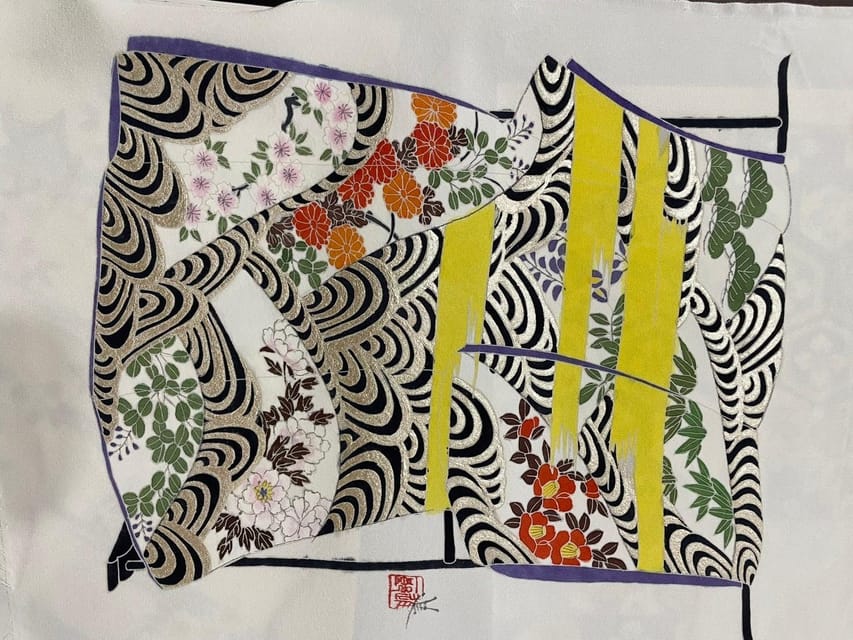
The setting is a major part of the experience. Nishijin is one of Kyoto’s best-known textile districts, and the class takes place inside the artisan’s own machiya rather than in a large commercial studio. You get to see a working home and view examples of Kyoto Yuzen made by the master.
This gives the two-hour session a calm, personal feel. The room is not simply a backdrop for a craft class. It connects your small piece of silk to the kind of household workshop where textile skills have been passed along for generations.
The space may overlook a small Zen garden, according to the activity details provided by past participants. That sort of quiet view matters here. Yuzen dyeing rewards patience, and the slower mood helps you pay attention to how much dye is on the brush and where it is going.
The workshop is limited to six people. That is small enough for the artisan and interpreter to watch your work closely, answer questions, and suggest color changes. If you book as a couple or family, you may have much of the room to yourselves, depending on the date.
More craft workshops in Kyoto:
- Kyoto : Chopsticks Making Workshop in Gion with Engraving Option
★ 5.0 · 958 reviews - Authentic knife making experience at a blacksmith in Kyoto
★ 4.8 · 350 reviews - Roketsu dyeing experience: M course Roketsu Dyeing Experience
★ 5.0 · 163 reviews
What happens during the two-hour class
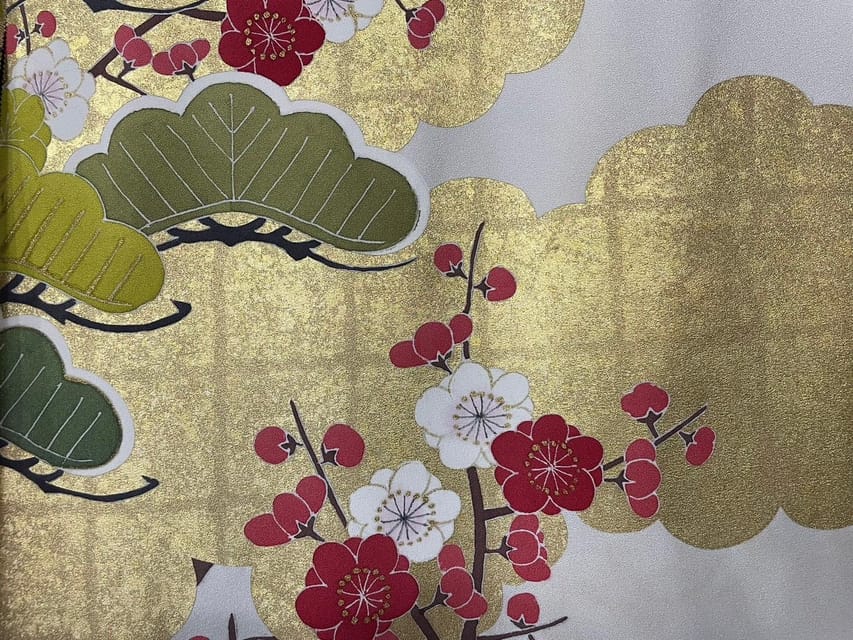
The session begins with an explanation of Yuzen dyeing, its place in Japanese culture, and the basic tools and materials. You then look at finished pieces and select a design to paint.
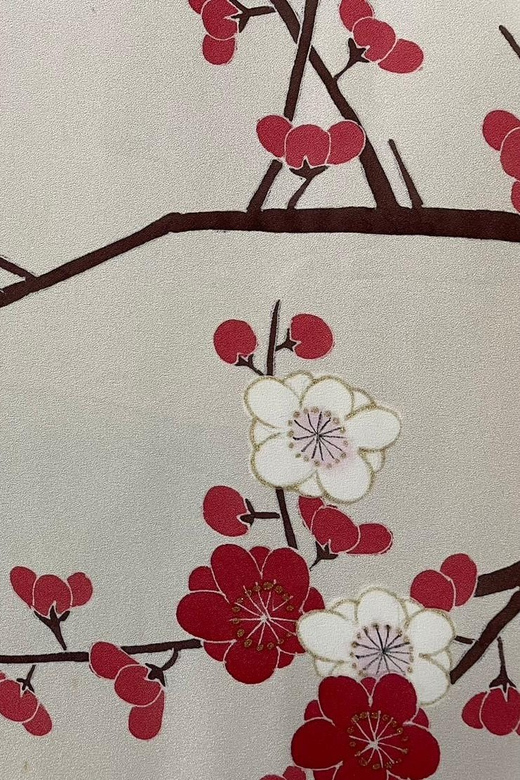
The available designs have included phoenixes, cranes, fans, and a phoenix set against a crescent moon. The exact selection may vary, and one useful point is that the choices are prepared in advance. Golden outlines are already printed or screened onto the silk, so you are not expected to draw a complex image from scratch.
This makes the class accessible to people without art training. You are filling in a prepared design, but the final result still reflects your choices. One practical tip: do not spend all your time choosing a motif. The painting itself needs a good share of the two-hour session.
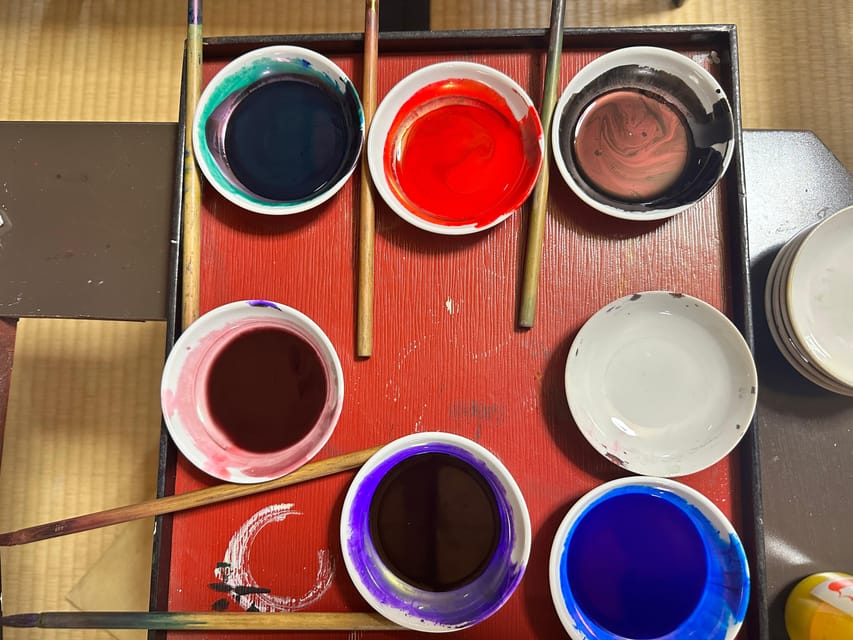
Next comes color planning. You generally choose one or two colors that appeal to you, then the artisan recommends the remaining tones. This is one of the strongest parts of the lesson. Master Shin’Ichiro understands how the dyes will look on silk and can adjust the palette so the finished image does not become a jumble of unrelated shades.
He mixes the colors for you, often adjusting the amount of dye and water to create the right tone. You can see the mixture before applying it, and he may show you an example of how that shade will appear on fabric. This is more useful than picking colors from a standard paint chart because the material changes how the color reads.
The interpreter explains the artisan’s instructions and helps the conversation move along. English and Chinese interpretation are available. Some sessions have used an interpreter named Ha, who also helped explain the process and take photographs. Since Master Shin’Ichiro does not speak English comfortably, the interpreter is an important part of the experience, not an extra decoration.
Painting the silk without losing the design
Once the colors are ready, you begin painting inside the prepared outlines. The technique is closer to controlled fabric painting than to the tie-dye activity you may have tried elsewhere. You are not twisting a T-shirt and hoping for a pattern. You are working slowly across a specific image.
The artisan guides you throughout. He can show you how much dye to load onto the brush and how wet the mixture should be. That matters because too much liquid can bleed beyond the outline. A light touch is better than trying to cover a section in one heavy stroke.
The work is simple enough for beginners, but it still asks for attention. You do not need advanced skill, and the design gives you a clear path. Still, perfectionists should expect small variations. The most satisfying result will look like a piece made by you with an artisan’s help, not like a factory-printed item.
I like this balance. You are given enough structure to avoid frustration, but you still make real choices about color and application. The artisan may suggest changes, yet he does not simply take over and produce the piece for you.
The pace can also vary. Some people finish close to the two-hour mark, while others take longer. There have been sessions that ran about 30 minutes over because the participants were still working. That extra patience is generous, but you should not assume every appointment can run late. If you have a train, dinner booking, or another timed visit, leave a buffer.
Why the artisan’s color advice matters
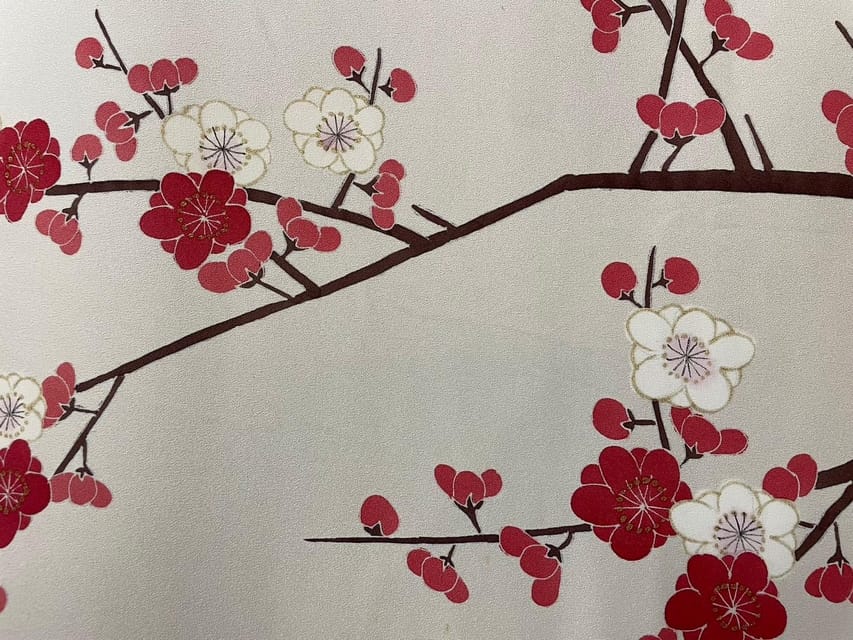
The most valuable part of this experience is not simply getting paint onto cloth. It is seeing how a practiced artist makes decisions that are easy to miss when you look at a finished kimono or silk panel.
A phoenix, crane, or fan may look simple at first. The balance comes from the relationship between the background, the central figure, and the smaller details. Master Shin’Ichiro can steer you toward tones that support the design without taking away your personal preference.
You might begin with a favorite blue or red. He then selects complementary shades and mixes them to suit the silk. This approach gives you a personal palette while keeping the result visually balanced.
The lesson also helps you understand why handmade textiles cost more than ordinary souvenirs. The work depends on careful preparation, exact color control, and a trained eye. You do not become a Yuzen master in two hours, but you gain a small sense of the judgment behind the craft.
A few more Kyoto tours worth putting on the shortlist
- PERFECT KYOTO 1-Day Bus Tour
★ 5.0 · 13,518 reviews - Kyoto: Fushimi Inari, Kinkakuji, Bamboo Grove 1 Day Bus Tour
★ 4.8 · 4,316 reviews - Kyoto: Tea Ceremony in a Traditional Tea House in Kiyomizu
★ 4.9 · 3,519 reviews - Kyoto Geisha Walking Tour: Gion District & Hidden Gems
★ 4.7 · 3,273 reviews
The artwork you take home
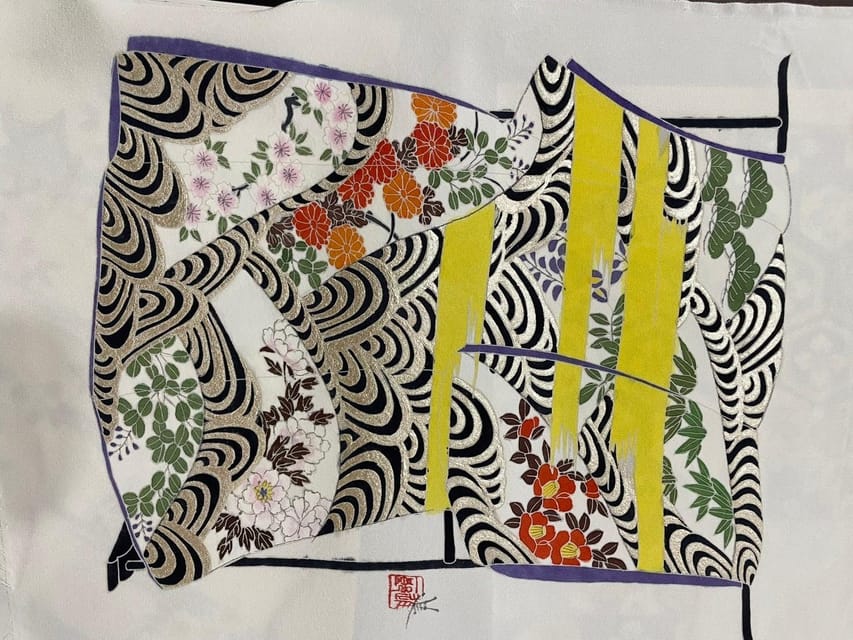
You finish with your own dyed silk artwork. It is a better souvenir than a generic Kyoto trinket because it records a specific afternoon, your chosen colors, and the artisan’s guidance.
The finished piece can serve as wall art, though the precise format and size are not specified in the activity information. You should treat it as a delicate textile and pack it with care for the journey home.
The artisan may iron the work to help dry and finish it before you leave. This final step gives you a completed piece rather than a damp project that needs attention in your hotel room.
You can also purchase additional works from the artisan, but those purchases are not included in the $161 price and require extra payment in cash. If you are interested in buying one of his finished pieces, carry enough cash and ask about the cost before making a decision.
Is $161 a fair price for two hours?
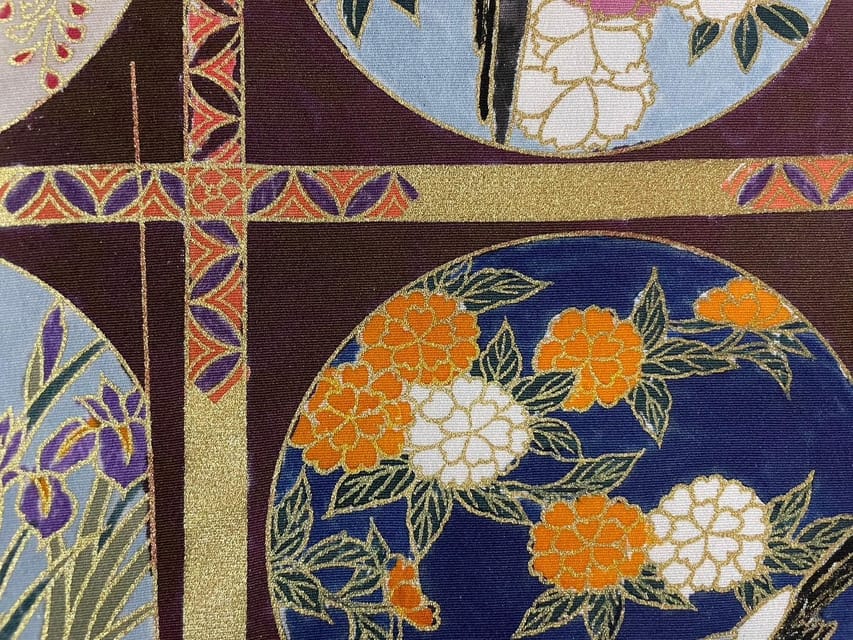
The price is high compared with a basic craft class. At $161 per person, you are paying for more than materials and a souvenir. The cost includes direct instruction from an artisan, an interpreter, entry to a private traditional home, access to the displayed Yuzen works, and a small group capped at six people.
I would consider it fair for someone who values personal instruction and traditional craft. The experience is particularly strong if you want a cultural activity that is quieter and more focused than a major sightseeing stop.
The value is less convincing if your main goal is simply to make an inexpensive souvenir. You may find cheaper art workshops in Kyoto, and this class does not include transportation or extra artwork purchases.
Think of the price as a combination of a private cultural visit and a guided art lesson. If you would happily pay for a small-group workshop with a working artisan, the cost makes more sense. If you are traveling on a tight budget, this is one of the first optional activities I would compare carefully with other Kyoto experiences.
Comfort, clothing, and practical concerns
Wear clothes you would not mind getting dye on. The activity is hands-on, and even careful painters can brush against a wet area or spill a small amount.
The activity is listed as wheelchair accessible, but there is an important comfort question. One detailed account described sitting on the floor for about two hours, so you should confirm the seating arrangement before booking if you need a chair or have trouble getting up and down.
The session is not suitable for children under 10 or babies under one year. Older children may enjoy it, and one group ranging from age 12 to 55 had a good time, but young participants need to sit carefully and follow instructions around dyes and tools.
The activity may involve chemicals. Tell the provider in advance about allergies or sensitivities. Alcohol, drugs, fireworks, and party groups are not allowed, which fits the quiet nature of the workshop.
Transportation to and from the meeting point is not included. Plan that separately, and allow enough time to find the townhouse without rushing. The exact meeting point and starting times should be checked when you reserve.
Free cancellation is available up to three days in advance for a full refund. That is helpful if your Kyoto schedule is still shifting, but the rule becomes stricter inside that window.
Who will enjoy this Kyoto experience most?
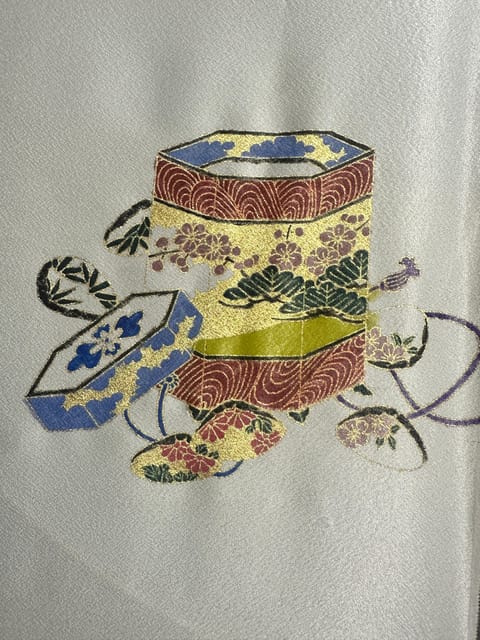
I would recommend it to art lovers, textile enthusiasts, couples, solo visitors, and anyone looking for a slower morning or afternoon in Kyoto. It also suits people who prefer meeting a local craftsperson to watching a large-scale demonstration.
It works well for families with children old enough to handle a brush and remain seated. The designs reduce the need for drawing skill, so you can take part even if you do not think of yourself as artistic.
The class may not suit you if you want a fast activity, dislike careful handwork, or feel uncomfortable sitting on the floor. It is also not ideal for a tightly packed day. The painting can take longer than planned, and you will enjoy it more if you are not watching the clock.
The limited choice of designs may disappoint you if you want to create a completely original image. The prepared outlines are part of what makes the class manageable, but they also limit your freedom. Ask about the current design selection if having many motifs is important to you.
My recommendation: book it for the craft, not just the souvenir
Book this experience if you want a personal introduction to Kyoto Yuzen and value time with an artisan. The setting, small group, interpreter, and careful color guidance make it more substantial than a standard paint-and-take-home class.
I would skip it if $161 feels too steep for a two-hour activity or if you need a fully chair-based lesson without confirming the setup. For the right person, though, this is a memorable way to spend part of a Kyoto day: you enter a real machiya, work beside Master Shin’Ichiro, and leave with silk art that carries your own decisions.
FAQ
Where does the Yuzen dyeing experience take place?
It takes place inside a traditional machiya townhouse in Kyoto’s historic Nishijin district.
How long does the activity last?
The scheduled duration is two hours. Some participants may need extra time to finish their artwork, so avoid booking another fixed activity immediately afterward.
What languages are available?
Live guidance is available in English and Chinese through an interpreter.
Who teaches the class?
The instruction comes directly from the artisan, identified in the activity details and participant accounts as Master Shin’Ichiro. An interpreter supports communication during the lesson.
What designs can I choose from?
Available designs have included phoenixes, cranes, fans, and a phoenix beneath a crescent moon. The exact selection may vary, and some accounts describe only a small number of options.
Do I need painting experience?
No. The silk already has prepared outlines, and the artisan guides you through the color selection and painting. You should still work carefully because excess dye can bleed.
What should I wear?
Wear comfortable clothes that you do not mind getting dye on.
Is the activity wheelchair accessible?
The activity is listed as wheelchair accessible. However, one account described sitting on the floor for two hours, so confirm the seating arrangement in advance if this affects you.
Can I cancel for a full refund?
Yes. You can cancel up to three days in advance for a full refund.
Newest Kyoto experiences on the site
- Treasures of Kyoto: Gion & historical Walking Tour★ 5.0 · 6 reviews
- Whisk Your Own Matcha: A Zen Matcha Experience at Temple★ 3.6 · 7 reviews
- Kyoto tea town for matcha lovers★ 5.0 · 16 reviews
- Uji: Private immersion into Kyoto’s tea and reglious culture★ 5.0 · 17 reviews
- Kyoto Matcha Green Tea Tour★ 4.5 · 23 reviews
- Uji and Wazuka Matcha Farm Half Day Private Guided Tour★ 5.0 · 21 reviews
- Utilising upcycled Matcha! Creating matcha incense (Uji, Kyoto)★ 5.0 · 6 reviews
- Uji Tea Ceremony and UNESCO Heritage Walking Tour★ 5.0 · 20 reviews
Kyoto Craft Workshops, compared.
Chopsticks Making Workshop in Gion with Engraving Option
Read our review →
Authentic knife making experience at a blacksmith in Kyoto
Read our review →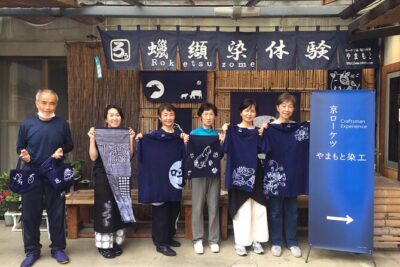
Roketsu dyeing experience: M course Roketsu Dyeing Experience
Read our review →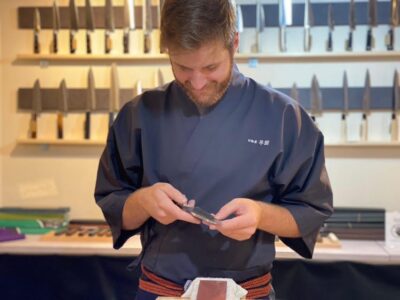
Beginner Knife Sharpening & Handle Fitting Workshop
Read our review →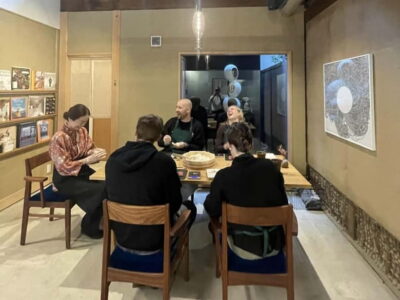
Japanese Archery Workshop with Experienced Instructor
Read our review →
Kyoto Michelin Ramen Workshop or Painting Ramen Essentials
Read our review →
Browse the lists this tour appears in