
Reviewed · KYOTO CRAFT WORKSHOPS
From Kyoto: Japanese Drum Taiko Workshop in Osaka
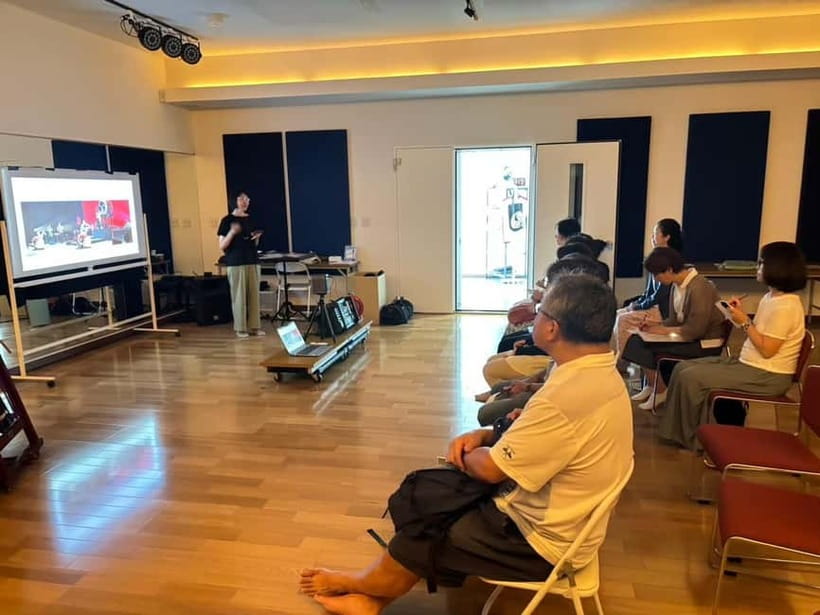
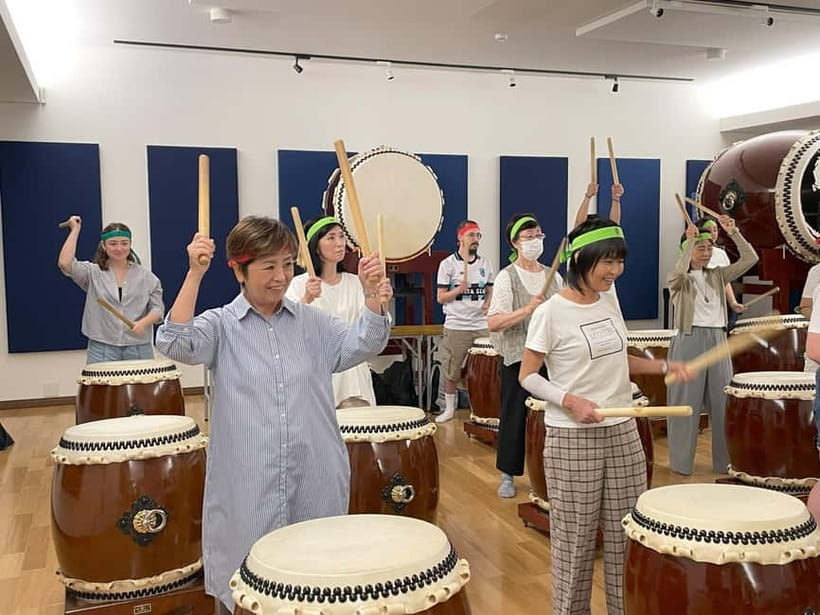
The loudest part of this Kyoto to Osaka outing is also the most memorable: you stand behind a Japanese Taiko drum, follow a professional player, and help perform a short piece with the group. Before that, you learn why these drums matter in Japanese life and write a wish on a traditional Hachimaki headband.
I like the easy rail connection and the patient, friendly teaching. I also like the small-group size, limited to 15 people, which gives you time to practice each section before playing together. The main drawback is the fixed schedule: Kyoto Station is huge, late arrivals cannot join, and the full outing takes 2.5 to 3 hours.
Key points to know before booking
- The experience begins at Kyoto Station: Meet at the Central Ticket Gate on the north side, not the Shinkansen Central Ticket Gate.
- You travel to Takatsuki by JR train: The ride takes about 12 minutes, followed by a short private car transfer to the studio.
- The session mixes culture and practice: You learn Taiko’s place in Japanese life, watch a professional performance, and then play yourself.
- You learn a complete short piece: The instructor breaks down movements, rhythms, and volume before the group performs together.
- Traditional dress is part of the finale: You wear a Happi coat and Hachimaki for a commemorative photo.
- The schedule is strict: Arrive 15 minutes early, and do not book this if you need to leave soon after the session.
Why the drum lesson is more than a quick photo stop
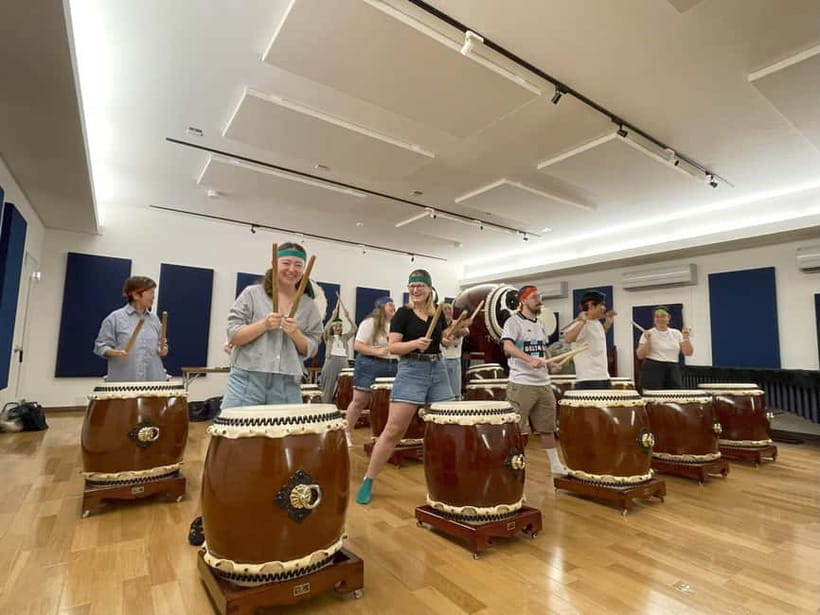
Many cultural activities let you watch. This one asks you to make the sound yourself. That changes the mood at once. Taiko drumming is physical, loud, and communal. You are not simply observing a Japanese tradition from the edge of the room. You are learning a small part of it through movement and rhythm.
The session is designed for beginners. You do not need musical experience, and the instructor teaches basic movements and techniques step by step. The goal is not to turn you into a concert drummer in one afternoon. It is to give you a clear feel for how Taiko works and the satisfaction of completing a short piece.
The English-speaking guide helps connect the activity to Japanese culture. You first hear about Taiko’s history and its importance in daily life. That introduction matters because the drums can otherwise seem like impressive stage instruments without much context. Here, the performance and the lesson are tied together.
The activity costs $112 per person. That is not a small add-on price for a short class, so you should judge it against what is included: English guidance, the JR ticket from Kyoto to Takatsuki, transport to and from the studio, a Taiko instructor, the Hachimaki, the lesson, the performance, and the costume photo.
For someone who wants an active cultural experience, the price is easier to justify than it would be for someone hoping only to watch a show. You receive instruction, use the drums, travel with the group, and take part in a final performance. It is also a useful choice when you want something different from temples, gardens, and food tours.
More days that pair Kyoto with Osaka:
- Osaka/Kyoto:Kinkakuji,Arashiyama,FushimiInariShrine,NaraPark
★ 4.1 · 1,596 reviews - Kyoto/Osaka: Nara, Fushimi Inari Taisha, Arashiyama Bus Tour
★ 4.7 · 1,275 reviews - One-Day Tour of Kyoto’s Highlights from Osaka/Kyoto
★ 4.5 · 1,092 reviews
Finding the correct Kyoto Station meeting point
Your first job is simply getting to the right part of Kyoto Station. Meet at the Central Ticket Gate on the north side, the side facing Kyoto Tower. This is not the Shinkansen Central Ticket Gate.
If you arrive by JR, leave through the Central Exit. If you come by subway, use Central 1 Ticket Gate and then Exit 6 to reach ground level. With Kyoto Tower on your right and the Kyoto Station building on your left, walk along the station building toward the central ticket area.
The guide carries a sign for the Taiko experience. Even so, allow extra time. Kyoto Station is large, and a wrong turn can cost you the entire activity because the train departure is fixed. Arrive at least 15 minutes early. The guide cannot wait for late arrivals, and there is no refund if you miss the start.
A taxi is not the best way to reach the meeting point. If you need to explain the location to a taxi driver, the Japanese instruction provided is: 京都駅の北側のタクシーおりばにつけてください。This directs the driver to the north side of Kyoto Station, near Kyoto Tower.
The short journey from Kyoto to the studio
Once the group is together, you take a JR train from Kyoto to Takatsuki. The ride takes about 12 minutes. The train is part of the package, so you do not need to arrange a separate ticket for this leg.
At Takatsuki, a private car takes you to the Taiko studio. The transfer is described as a short ride, around 5 to 12 minutes depending on the account, while the activity details describe about 10 minutes. The important point is that you do not need to find the studio on your own.
This transport setup is practical, but it also explains the strict start time. The group is tied to a particular train and pickup. If you arrive late at Kyoto Station, you cannot simply take a later train and meet the class halfway.
The total outing lasts about 2.5 to 3 hours, including transport. The listed activity time is 150 minutes, but you should treat the full block as longer once the meeting, train, car transfer, and return journey are counted. Do not plan a tight dinner reservation or another timed attraction immediately afterward.
Starting with Taiko culture and personal wishes
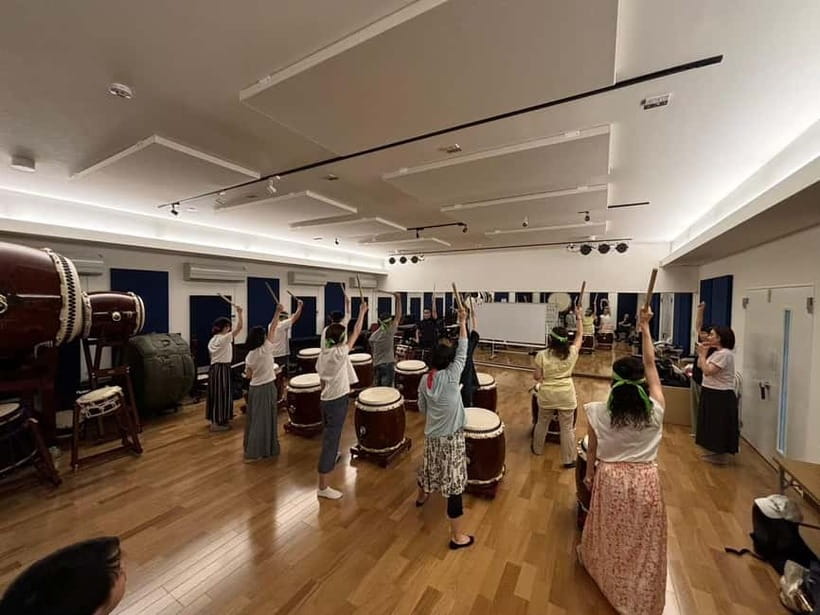
At the studio, the first part is a brief explanation of Taiko’s history and cultural role. This gives you a useful frame before the performance begins. You learn that the drum is part of Japanese life, not just a stage prop made for tourists to photograph.
You then try simple calligraphy by writing a wish on a Hachimaki. A Hachimaki is a traditional Japanese headband, and it becomes part of the closing photo. This small activity gives you something personal to take into the lesson. It also makes the final costume picture less generic because the headband carries your own written wish.
The calligraphy is not presented as a full brush-painting class. Think of it as a short, hands-on cultural introduction before the main drumming. If you enjoy activities that let you create something, rather than only listen to a guide, this is a welcome touch.
More craft workshops in Kyoto:
- Kyoto : Chopsticks Making Workshop in Gion with Engraving Option
★ 5.0 · 958 reviews - Authentic knife making experience at a blacksmith in Kyoto
★ 4.8 · 350 reviews - Roketsu dyeing experience: M course Roketsu Dyeing Experience
★ 5.0 · 163 reviews - Kyoto: Beginner Knife Sharpening & Handle Fitting Workshop
★ 4.9 · 141 reviews
Watching a professional performance up close
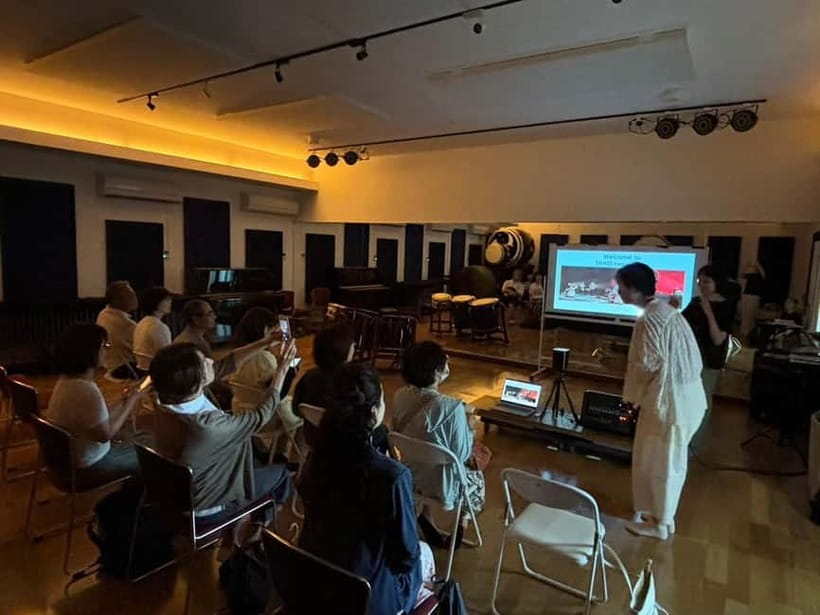
Before you play, a professional Taiko performer gives a demonstration. This is the moment when the scale and force of the drums become clear. The sound is powerful, and the performance shows the control needed to keep rhythm, movement, and volume together.
The demonstration also gives you a realistic target. You will not be expected to copy a professional performance in full. Instead, you see what trained playing looks like, then move into a simpler version suited to beginners.
The instructor has been identified in sessions as Yusuke, while guides have included Michiko, Mie, and Michie. Staff names can vary by date, but the format remains the same: an English-speaking guide helps with the visit, and a Taiko instructor leads the playing.
This order works well. If you started with a complicated explanation of technique, the drum might feel intimidating. Seeing the performance first gives the lesson energy, while the beginner-level instruction keeps the activity approachable.
Learning movements, rhythm, and volume
The lesson takes up most of the hands-on time. You learn the basic stance, movements, and techniques, then practice a short piece. The instructor breaks the music into manageable sections instead of asking the group to remember everything at once.
You may find the piece harder than it first sounds. One of the useful details of this class is that it includes changes in rhythm and volume, not just a repeated beat. You practice individual sections before bringing them together, so you can understand your part before the group performance.
This is where the small group matters. With no more than 15 people, the instructor can keep the class together and give the session a clear pace. You still need to pay attention and follow directions, but you are not expected to learn alone from a distant stage.
The drumming is active. You use your arms and body, and the sound is strong. Anyone who dislikes loud noise or physical activity should think twice. For most people, though, the energy is the point. It is difficult to remain passive when a room full of drums starts to sound together.
Finishing with a group performance
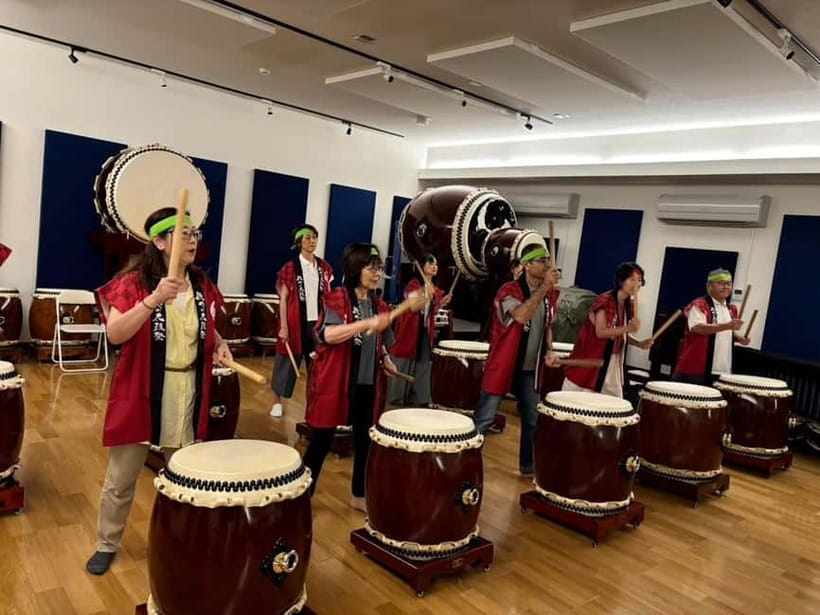
At the end, you play the short piece with the other participants. This is the payoff for the practice. The music may be simple, but performing it together gives the class a clear finish and a shared goal.
A video may be set up during the final playing, as happened during one session. The supplied details do not promise a video for every date, so treat that as possible rather than guaranteed. The commemorative photo is the dependable finale.
For the picture, you wear a traditional Happi and Hachimaki. The Happi is a Japanese festival-style coat, and the headband connects back to the wish-writing activity. The photo gives you a keepsake that feels tied to the class, not just a standard studio portrait.
The final picture is especially useful for families and small groups. Children old enough to participate can enjoy the costume and the performance, while adults get a record of the activity beyond a few blurry phone photos.
Who will get the most from this experience
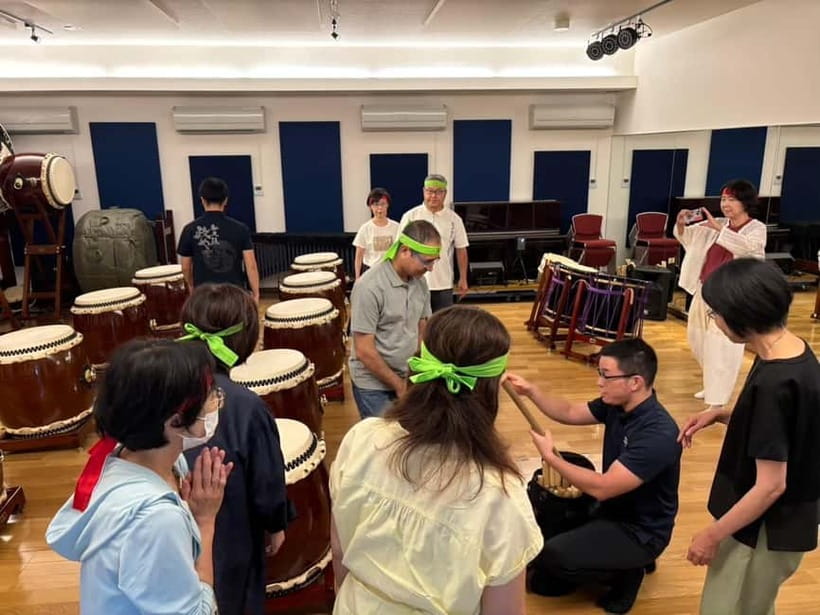
I would choose this outing if you want to do something active and distinctly Japanese during a Kyoto stay. It suits couples, families with children aged seven or older, and friends who enjoy trying a skill together.
It is also a good fit if your Japan schedule already includes several quiet cultural visits. The Taiko class gives you a change of pace without losing the cultural content. You still learn about a Japanese tradition, but through sound, movement, and practice.
The activity is less suitable for anyone who needs a very flexible schedule. The fixed train, strict meeting time, and 2.5 to 3 hour commitment leave little room for a late start. It is also not designed for children under seven, who cannot participate.
Single participants should check the date before booking. Some days do not accept a booking for just one person. On those dates, you may need to book and pay for two participants, so solo visitors should confirm the requirement before committing.
Practical value at $112 per person
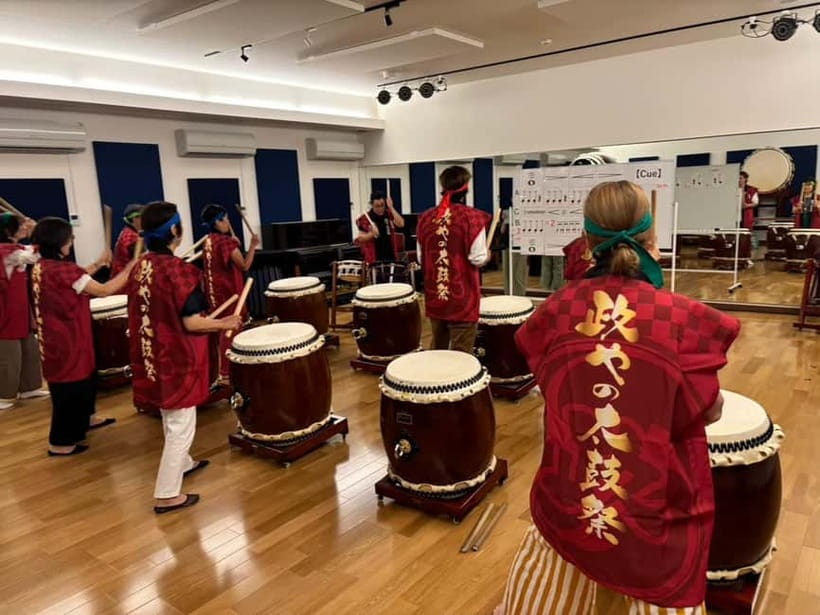
At $112, this is a premium half-day activity. You are paying more than you would for a basic museum visit or an ordinary train ride, but the fee covers several moving parts: the guide, rail ticket, private car transfer, professional performance, instruction, drum use, Hachimaki, costume, and photo.
The strongest value comes from participation. If you only want to see Taiko performed, a concert may offer a longer and more polished show. If you want to understand the basics and play yourself, this class gives you far more than a viewing-only event.
The small-group cap also helps the price. You are not joining a large crowd that moves quickly from one demonstration to the next. The teaching is structured around practice, and you have a clear chance to take part in the final piece.
Reserve and pay later is available, and cancellation is free up to 24 hours before the start time. These terms help if your Kyoto plans are still shifting. They do not change the need to arrive early on the day itself.
Should you book the Kyoto Taiko workshop?
Book it if you want a hands-on cultural activity, enjoy learning in a group, and can spare a full three-hour block from Kyoto. The strongest reasons are the professional demonstration, the guided beginner lesson, the short group performance, and the easy train and car transfer.
Skip it if you are looking for a long concert, dislike loud physical activities, or have a tight schedule around the start and finish. At $112, it needs to be more than a quick photo opportunity to feel worthwhile.
For most people who want an active memory of Japan, I think the format works well. You learn the cultural background, make a wish on a Hachimaki, hear the drums at full force, then create your own smaller version. That combination gives the afternoon a real sense of purpose.
FAQ
Where does the Taiko experience meet in Kyoto?
It meets at the Central Ticket Gate of JR Kyoto Station, on the north side facing Kyoto Tower. Do not go to the Shinkansen Central Ticket Gate. The guide holds a sign for the Taiko experience.
How early should I arrive?
Arrive 15 minutes before the scheduled start. The train schedule is fixed, and late arrivals cannot join the activity. No refund is given for missed starts.
How long does the experience take?
The listed activity duration is 150 minutes, but the total time including train and car travel is about 2.5 to 3 hours. Plan enough time afterward.
How do I reach the Taiko studio?
You take a JR train from Kyoto to Takatsuki, which takes about 12 minutes. A private car then takes you from Takatsuki Station to the studio and returns you afterward.
Is the activity taught in English?
Yes. An English-speaking guide accompanies the experience, and a Taiko instructor teaches the drum lesson.
Can children participate?
Children under seven cannot participate. The provided information does not set a maximum age.
What happens during the Taiko lesson?
You learn about Taiko’s cultural history, write a wish on a Hachimaki, watch a professional performance, learn basic drumming movements and techniques, practice a short piece, perform it with the group, and take a commemorative photo in a Happi and Hachimaki.
Newest Kyoto experiences on the site
- Treasures of Kyoto: Gion & historical Walking Tour★ 5.0 · 6 reviews
- Whisk Your Own Matcha: A Zen Matcha Experience at Temple★ 3.6 · 7 reviews
- Kyoto tea town for matcha lovers★ 5.0 · 16 reviews
- Uji: Private immersion into Kyoto’s tea and reglious culture★ 5.0 · 17 reviews
- Uji and Wazuka Matcha Farm Half Day Private Guided Tour★ 5.0 · 21 reviews
- Kyoto Matcha Green Tea Tour★ 4.5 · 23 reviews
- Utilising upcycled Matcha! Creating matcha incense (Uji, Kyoto)★ 5.0 · 6 reviews
- Sacred Temple Yoga Experience in Japan★ 5.0 · 3 reviews
Kyoto Craft Workshops, compared.

Chopsticks Making Workshop in Gion with Engraving Option
Read our review →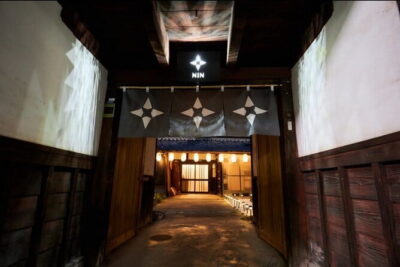
Authentic knife making experience at a blacksmith in Kyoto
Read our review →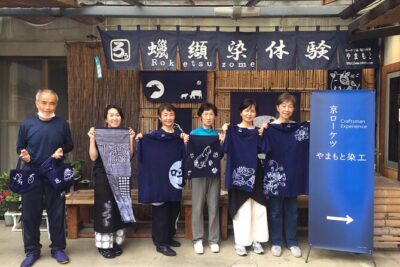
Roketsu dyeing experience: M course Roketsu Dyeing Experience
Read our review →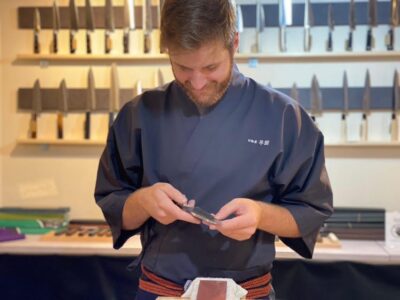
Beginner Knife Sharpening & Handle Fitting Workshop
Read our review →
Japanese Archery Workshop with Experienced Instructor
Read our review →
Kyoto Michelin Ramen Workshop or Painting Ramen Essentials
Read our review →
Browse the lists this tour appears in