
Reviewed · KYOTO GEISHA & MAIKO EXPERIENCES
Kyoto: Maiko Dinner in Traditional Restaurant and Tour
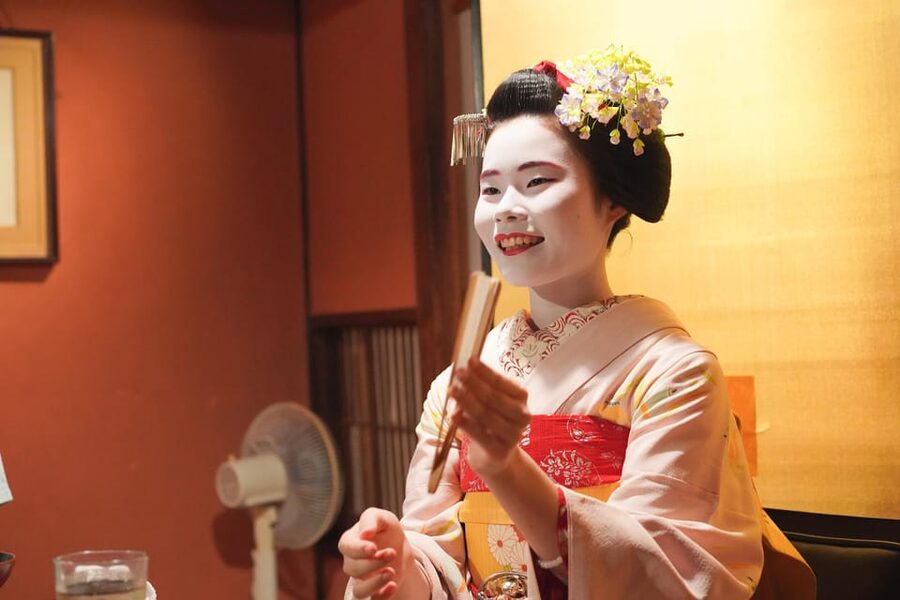
A maiko dinner gives you something most Kyoto sightseeing does not: a guided look at Gion’s living entertainment tradition, followed by an evening with a maiko in a traditional restaurant. You walk the old streets, learn how to behave, eat Kyoto cuisine, and watch dance, conversation, and games unfold in a small group.
I like the seven-person group limit, since it gives you a fair chance to ask questions and join the games. I also like that the English-speaking guide explains the food and helps translate, which makes the meeting feel more natural instead of like a silent stage show.
The main drawback is the price, $292 per person, and the firm food and mobility limits. This is not a casual dinner for families, vegans, wheelchair users, or anyone who needs a gluten-free meal.
Key points at a glance
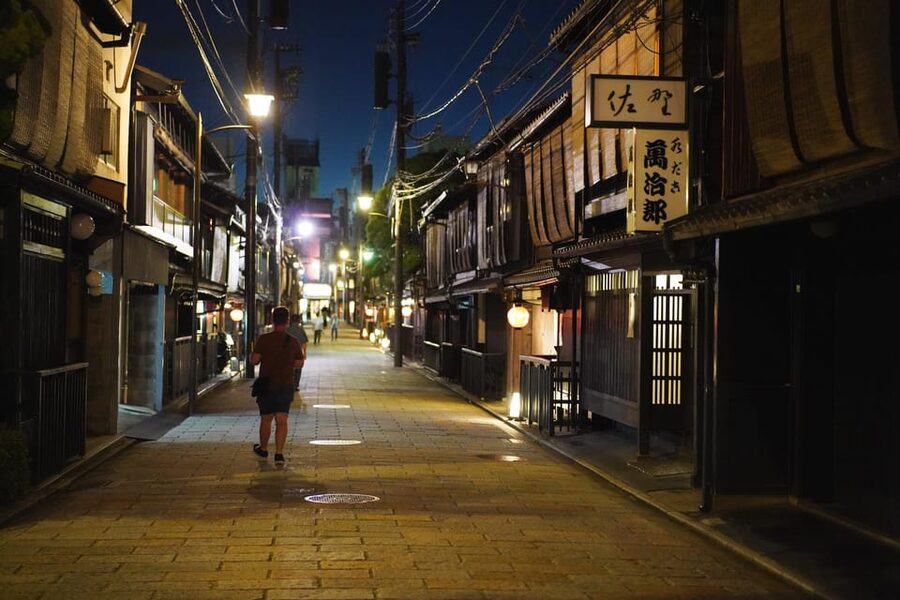
- Gion begins the evening: Walk from Gion Shijo Station through traditional machiya streets with a local guide.
- Dinner takes place in a roughly 100-year-old machiya: The setting supplies much of the atmosphere before the maiko even arrives.
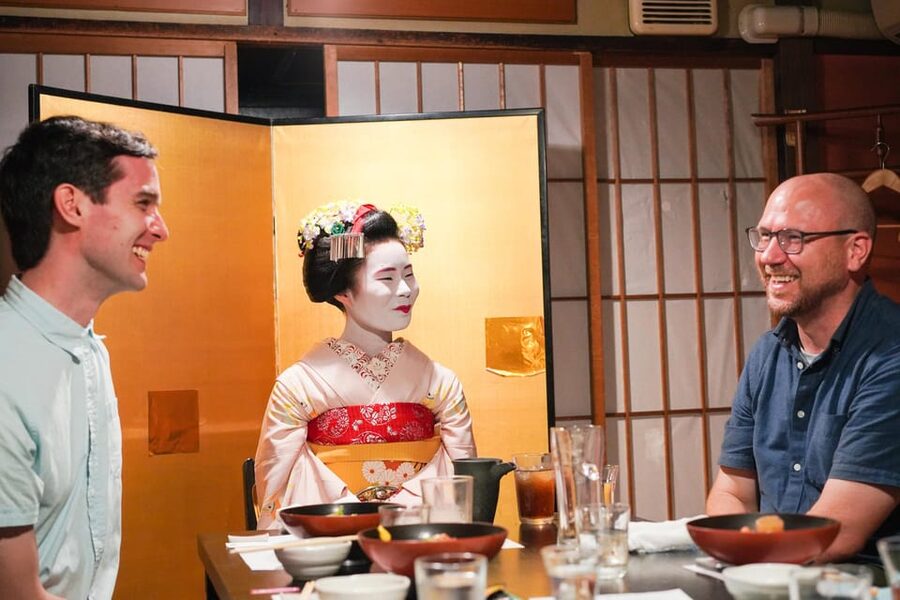
- The maiko program is interactive: Expect traditional dance, questions through your guide, Japanese music, drinking games, and a group photo.
- Kyoto sake is included: The all-you-can-drink plan covers sake and other available drinks during dinner.
- The small group matters: With no more than seven people, you get more room for conversation and photos.
- Plan around the restrictions: Children under 15, wheelchair users, vegans, and people with gluten intolerance should choose another activity.
Starting beside Gion Shijo Station
The meeting point is in front of the Izumo no Okuni Statue, directly outside Exit 5 of Gion Shijo Station. Your guide holds a MagicalTrip board, so the start is fairly easy to find if you arrive with a few minutes to spare.
The timing is useful for an evening in Kyoto. The full experience lasts 210 minutes, with about 40 minutes set aside for Gion and roughly 2 hours and 50 minutes for the restaurant portion, including dinner and the maiko program. You return to the Kawabatacho area at the end.
Your guide could be Yusuke, Hikari, Eri, Pico, T, or another member of the English-speaking team. The individual guides vary, but their role is important: they explain customs, describe the dishes, translate questions, and show you how to take part without treating the maiko like a prop.
The group is capped at seven people. That is small enough for a proper conversation, but it is still a shared event. If you want a private table and complete control over the pace, a private tour is the better choice. It is also the recommended option for anyone bringing a child aged 14 or younger.
More geisha and maiko evenings in Kyoto:
- Kyoto Geisha Walking Tour: Gion District & Hidden Gems
★ 4.7 · 3,273 reviews - Kyoto: Gion Magical Night Walking Tour with Geisha Trivia
★ 4.9 · 2,393 reviews - Kyoto: Gion Geisha District Walking Tour – Stories of Geisha
★ 4.7 · 2,187 reviews
Walking Gion, where maiko culture began
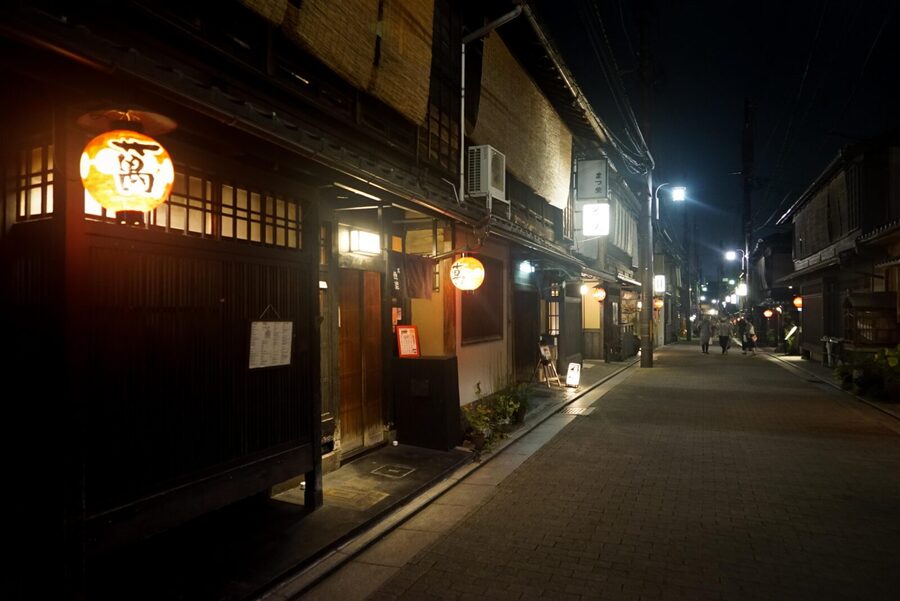
The first part is a guided walk through Gion, the district associated with Kyoto’s maiko culture. You pass traditional streets and machiya architecture while hearing about the origins and working life of maiko.
This walk gives the dinner useful context. Without it, the evening could feel like a quick performance added to a meal. With it, you have a better sense of the district, the buildings, and the customs that shape the encounter.
The tour description does not promise a long list of specific landmarks, so think of this as a cultural orientation rather than a major sightseeing circuit. You spend about 40 minutes on foot, and some locations are not suitable for wheelchairs or strollers. If walking is difficult, book a private tour or choose an experience with easier access.
Gion’s streets can also feel quite different depending on the season. Kyoto summers can reach 40°C, while winter temperatures can fall to -5°C. Wear comfortable shoes and dress for the forecast. The walk is short compared with a full-day city tour, but you still want to arrive ready for uneven streets and outdoor weather.
Before dinner: learning the rules of the evening
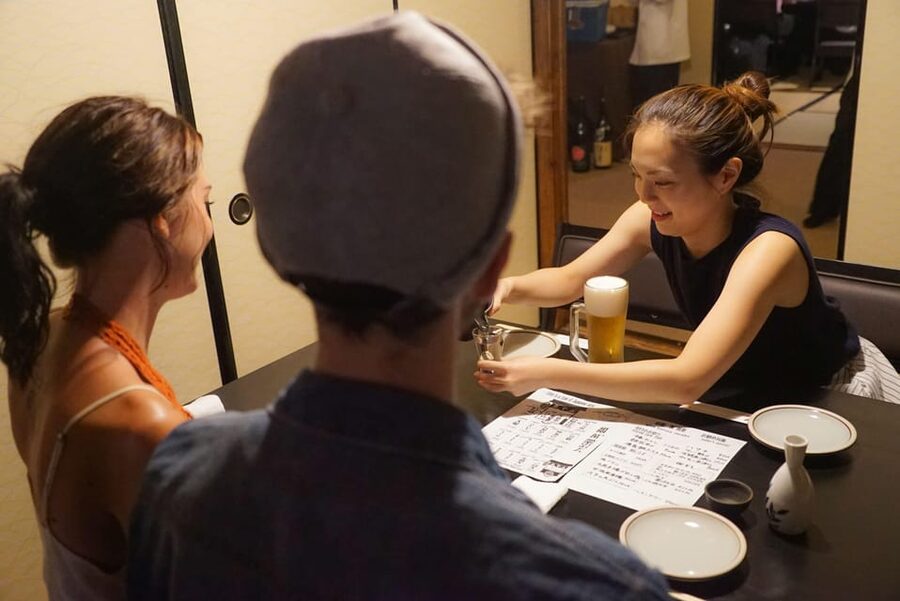
After the walk, the group moves to a traditional Kyoto shop or machiya setting before the main meal. While you wait for the maiko, the guide explains Kyoto cuisine, local drinks, and polite ways to interact.
This briefing is one of the most useful parts of the experience. A maiko is not simply a costumed entertainer. She is a young performer in training within a demanding traditional arts world. The guide helps you understand when to ask questions, how to join a game, and how to enjoy the evening without making the interaction awkward.
You should expect translation help throughout the meeting. Several guides, including Hikari and Eri, have been praised for explaining maiko culture clearly and translating back and forth. That matters because conversation is a major part of the evening, not an extra added after the dance.
The guide also explains the food and the drinks. If you have not eaten a Kyoto-style course meal before, this introduction helps you notice the balance of appearance, texture, and delicate flavor rather than rushing through unfamiliar dishes.
Dinner in a century-old Kyoto machiya
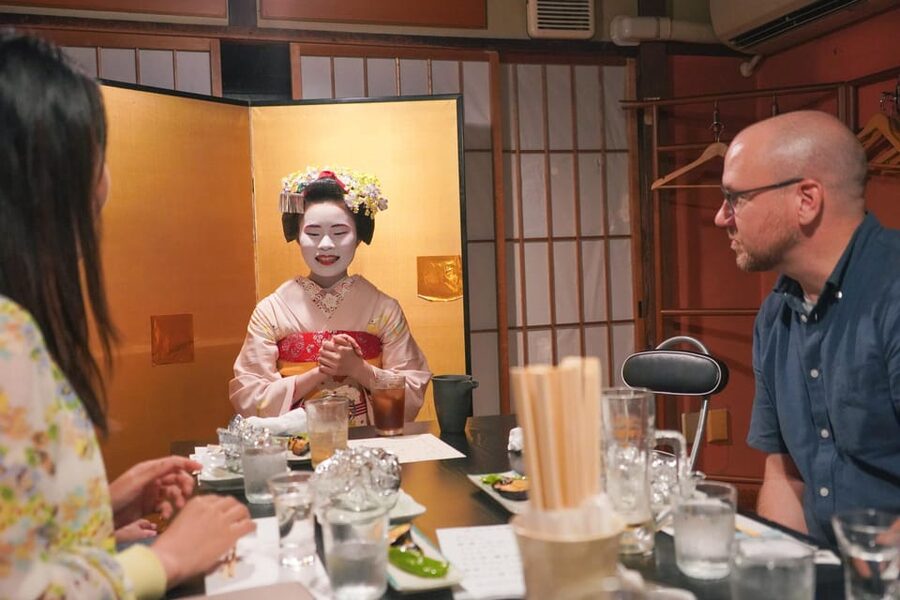
The restaurant occupies a roughly 100-year-old machiya building. These narrow traditional townhouses are closely linked with Kyoto’s old merchant districts, so the setting feels more connected to the city than a modern hotel dining room would.
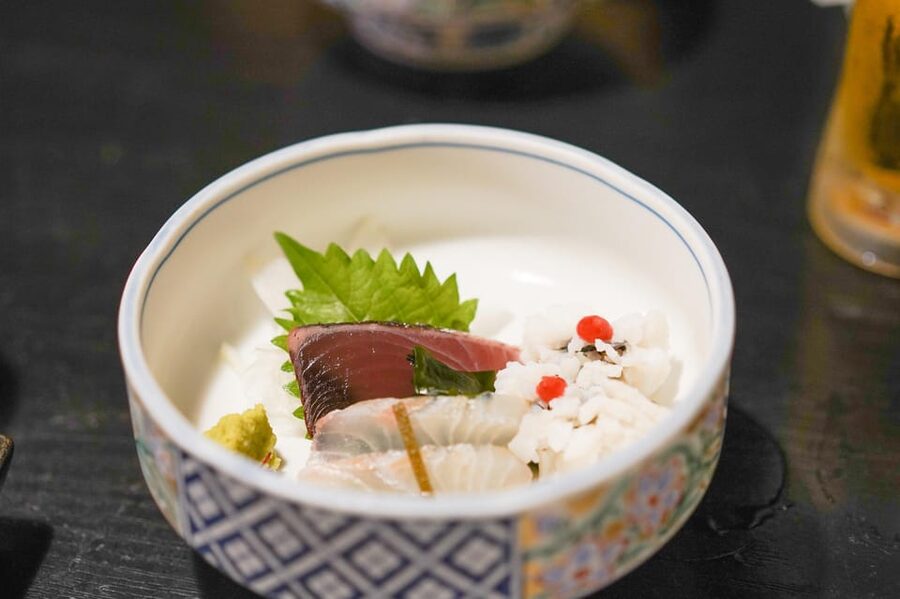
The meal is a full Kyoto-style course, with dishes designed to look as carefully arranged as they taste. The food is described as delicate and visually appealing, and the dinner is included in the price rather than offered as an optional add-on.
An all-you-can-drink package is also included. Kyoto sake is part of the offering, giving you a chance to try a local drink while staying with the theme of the evening. You do not need to order each drink separately, which keeps the dinner moving and makes the high upfront price easier to understand.
Still, $292 is a major expense. You are paying for much more than a meal: a small-group Gion walk, an English-speaking guide, dinner, drinks, a live traditional performance, translation, and a photo opportunity. If you only want to see a maiko dance, this is not good value. If you want a structured cultural evening with food and personal interaction, the package makes more sense.
The restaurant has received strong praise for both the food and the staff. That does not mean the menu will suit every palate. Kyoto cuisine often values subtle seasoning and presentation, so diners expecting a large, strongly flavored meal may find it lighter than expected.
A few more Kyoto tours worth putting on the shortlist
- Kyoto Gion Cultural Walk & Geisha Show with Dining Options
★ 5.0 · 518 reviews - Kyoto Gion Cultural Walk & Geisha Show with Dining Options
★ 5.0 · 483 reviews - Dinner with Maiko in a Traditional Kyoto Style Restaurant Tour
★ 5.0 · 175 reviews - Kyoto: Geisha Dinner & Gion Cultural Walk
★ 5.0 · 73 reviews
Meeting the maiko
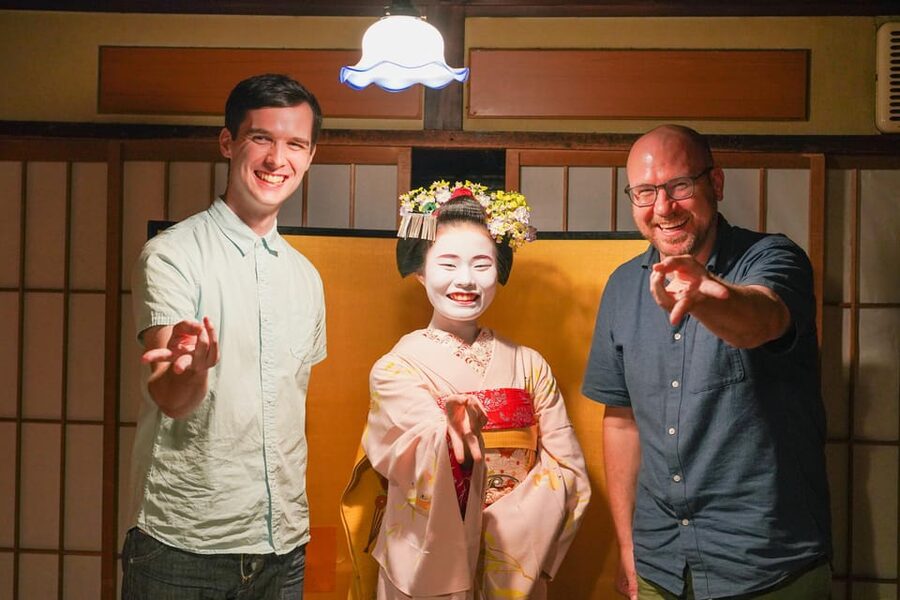
The maiko usually enters after dinner is underway. This timing works well. You have settled into the room, learned the basic etiquette, and had enough food and conversation to enjoy the arrival without feeling rushed.
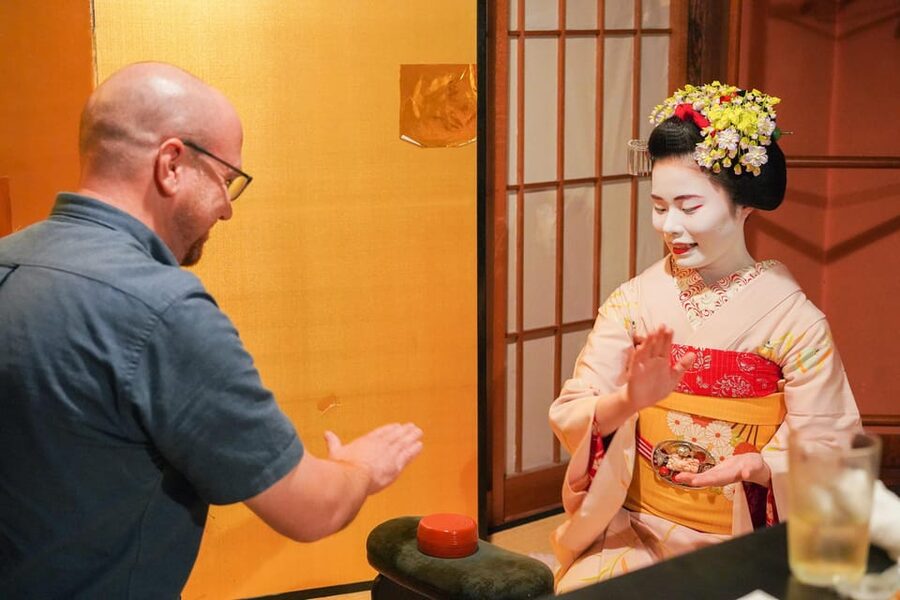
The program includes traditional dance performed to Japanese music. The dance is not the only attraction. You also get time for conversation, questions, drinking games, and photographs. The guide acts as a bridge, translating questions and explaining what is happening.
The personal element is what makes this experience different from watching a performance in a theater. You might ask about the maiko’s training, daily life, or career, provided the topic is handled respectfully and the guide helps manage the exchange. The exact maiko may vary, so you should not book expecting one named performer.
The drinking games are part of the traditional social setting, but you can take part at your own pace. The all-you-can-drink arrangement does not mean you need to drink heavily. Pace yourself, especially if you plan to use the opportunity to ask questions or remember the performance clearly.
The group photo comes near the end. It gives you a concrete souvenir of the evening, though you should treat the photograph as a memory rather than the whole purpose of the meeting. The dance, conversation, and explanation are the stronger reasons to book.
What the strongest parts of the experience offer
The guides are central to the evening. Yusuke has been praised for his energy and clear answers, while Hikari, Eri, and Pico have been singled out for explaining Gion and maiko culture in an approachable way. The guide you receive depends on the date, but you should expect a host who keeps the evening organized and helps the group communicate.
The food also plays a larger role than simple catering. You eat a Kyoto course meal in an old machiya, with the guide explaining the dishes and local drinks. That setting makes the dinner feel like part of the cultural program, not a break between activities.
The maiko’s manner can shape the mood of the evening. The experience is designed to be friendly and interactive, with games and questions alongside the dance. The small group helps here, since seven people allow for more direct contact than a large tour bus group.
The strong overall rating of 4.8 from 55 recorded ratings fits the pattern of praise: the guide, dinner, translation, and maiko interaction receive the most attention. I would give those elements more weight than the photo alone when deciding if the cost works for you.
Food restrictions and practical limits
Vegetarians can request a vegetarian menu in advance, but the available dishes may still use fish stock. You need to state dietary needs or allergies at least one day before the tour. Requests made on the day cannot be accommodated.
There is no vegan or gluten-free option. The kitchen is not operated by the tour company, so an allergy-free meal and exact substitutions cannot be guaranteed. If you have a serious allergy, gluten intolerance, or strict dietary requirements, skip this activity rather than hoping the menu can be changed.
The tour is not suitable for wheelchair users, and some parts are not accessible to strollers. It is also not recommended for people with mobility problems. A private tour is suggested if walking is difficult, but you should still confirm that the private format meets your access needs before booking.
Children under 15 are not accepted on the shared tour. Families with younger children need to book privately, so this evening is aimed mainly at adults and older teenagers who can follow the etiquette and enjoy the food and drinks.
Bad weather can also lead to cancellation for safety reasons. Kyoto’s summers and winters can be severe, so bring suitable clothing and shoes rather than treating this as an indoor-only dinner.
Cancellation, timing, and booking value
You can cancel up to seven days before the start for a full refund, and rescheduling is also available within that period. That deadline is strict enough that I would not book until your Kyoto schedule is settled.
At 210 minutes, this is an evening commitment. Do not place it beside a distant dinner reservation, a night train, or a major ticketed performance. Start times vary, so check availability and allow room for the walk, the meal, and the final photo.
The price becomes easier to defend if you value several parts at once. You receive:
- A guided Gion walk
- An English-speaking cultural guide
- A full Kyoto-style meal
- All-you-can-drink service, including sake
- A maiko dance and conversation
- Drinking games
- Tour photographs and a group photo
If your main goal is a low-cost look at Gion, spend less on a neighborhood walk or cultural show. If you want a single evening that combines place, food, explanation, and personal contact, this is a more complete option.
Who should book this maiko dinner?

I would recommend it to adults who want an organized introduction to maiko culture and who enjoy asking questions. It suits first-time visitors who want help understanding Gion, as well as repeat visitors who have never had access to a maiko or geiko experience.
It is especially good for people who value context. The guide does not just point out old buildings, then leave you at dinner. The walk, meal, etiquette briefing, translation, performance, and games are linked into one evening.
You should hesitate if you dislike group activities, cannot eat the available menu, have difficulty walking, or want a quiet meal without audience participation. The drinking games and conversation are part of the design, so this is not a detached theater performance.
Should you book it?
Book this tour if you want a polished, small-group cultural evening in Gion and can comfortably spend $292 on it. The maiko conversation and dance, backed by a guide who translates and explains the customs, are the heart of the experience.
Skip it if you need vegan or gluten-free food, accessible routes, a child-friendly outing, or a cheaper way to see traditional dance. For the right visitor, this is one of Kyoto’s more personal evening activities, with enough food, history, and local guidance to make the price reasonable.
FAQ
How long does the maiko dinner tour last?
The experience lasts 210 minutes, or 3 hours and 30 minutes. It includes a 40-minute walk through Gion and about 2 hours and 50 minutes at the restaurant for dinner, drinks, and the maiko program.
Where is the meeting point?
Meet in front of the Izumo no Okuni Statue, directly outside Exit 5 of Gion Shijo Station. The guide holds a board marked MagicalTrip.
Is the tour conducted in English?
Yes. An English-speaking live guide leads the experience and helps translate between the group and the maiko.
Is dinner included?
Yes. The price includes a Kyoto-style course meal and an all-you-can-drink package, including Japanese sake. A vegetarian menu is available with advance notice, but some dishes may contain fish stock.
Can children join the tour?
Children under 15 cannot join the shared tour. If you want to bring a child aged 14 or younger, you need to book a private tour.
Is the tour suitable for vegans, people with gluten intolerance, or wheelchair users?
No. The tour does not offer vegan or gluten-free options, and some locations are not wheelchair accessible. It is also not recommended for people with mobility issues.
More Dinners Worth Booking in Kyoto
- Private Dinner with a Geisha
★ 5.0 · 65 reviews - Kyoto Evening Gion Food Tour Including Kaiseki Dinner
★ 5.0 · 62 reviews - Kyoto: Lunch or Dinner with Maiko
★ 4.2 · 52 reviews - Private Dinner with Maiko and Geiko in Kyoto
★ 5.0 · 28 reviews
Newest Kyoto experiences on the site
- Treasures of Kyoto: Gion & historical Walking Tour★ 5.0 · 6 reviews
- Whisk Your Own Matcha: A Zen Matcha Experience at Temple★ 3.6 · 7 reviews
- Kyoto tea town for matcha lovers★ 5.0 · 16 reviews
- Uji: Private immersion into Kyoto’s tea and reglious culture★ 5.0 · 17 reviews
- Kyoto Matcha Green Tea Tour★ 4.5 · 23 reviews
- Uji and Wazuka Matcha Farm Half Day Private Guided Tour★ 5.0 · 21 reviews
- Utilising upcycled Matcha! Creating matcha incense (Uji, Kyoto)★ 5.0 · 6 reviews
- Uji Tea Ceremony and UNESCO Heritage Walking Tour★ 5.0 · 20 reviews
Kyoto Geisha & Maiko Experiences, compared.
Kyoto Geisha Walking Tour: Gion District & Hidden Gems
Read our review →
Gion Magical Night Walking Tour with Geisha Trivia
Read our review →
Gion Geisha District Walking Tour – Stories of Geisha
Read our review →
Best of Kyoto: Gion, Geisha, Pagodas & Cobblestones
Read our review →
Kyoto Gion Geisha District Walking Tour – The Stories of Geisha
Read our review →
Kyoto Gion: 2-Hour Geisha Culture & History Walking Tour
Read our review →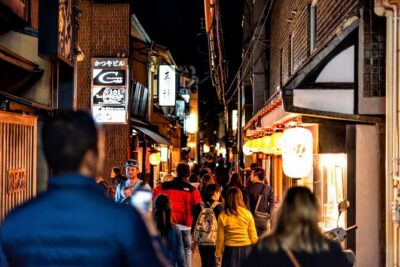
Kyoto Gion Night Walk & Geisha District Guided Tour
Read our review →Browse the lists this tour appears in