
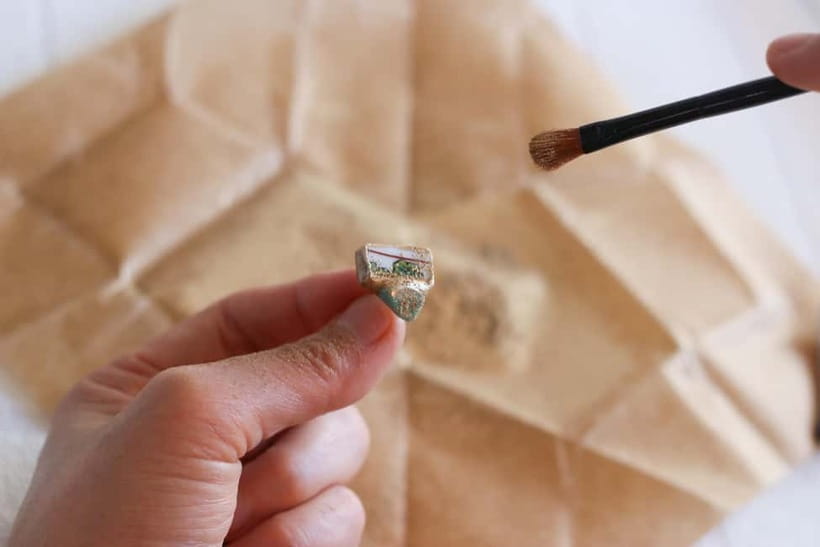
Reviewed · KYOTO CRAFT WORKSHOPS
Kyoto: Kintsugi Jewelry Workshop with Natural Stones
Broken pottery gets a new life in this hands-on Kyoto workshop. You use synthetic lacquer and gold powder to turn Japanese pottery shards, natural stones, shells, and pearls into jewelry. Instructor Natsuka guides you through each step in a 100-year-old townhouse near Fushimi Inari Taisha.
I especially like the thoughtful material choices, from Arita and Oribe pottery to colorful stones, and the small group of no more than 10 people. You also leave with a useful souvenir rather than a shop-bought trinket. The one drawback is that the 150-minute session requires careful, patient handwork, so it may not suit anyone looking for a quick activity or easy wheelchair access.
Key points at a glance
- Make two jewelry pieces: Several participants have made a couple of pieces during the session, giving the $106 price more weight than a simple demonstration.
- Choose from Japanese pottery shards: Materials may include Arita, Karatsu, Oribe, Kyoto, Shigaraki, and Hagi pottery, along with stained glass, shells, pearls, and natural stones.
- Work with instructor Natsuka: The teaching is calm and step by step, with English and Japanese instruction available.
- Craft in a 100-year-old townhouse: The atelier is only about three minutes from Fushimi Inari Taisha, but the setting feels quieter than the shrine approach.
- Take your jewelry home the same day: Your finished piece becomes a personal Kyoto souvenir with visible signs of its repaired past.
- Plan for a narrow alley: There is no parking, and the entrance is reached on foot from either Inari Station or Ryukoku Daimae-Fukakusa Station.
Why this kintsugi workshop feels different
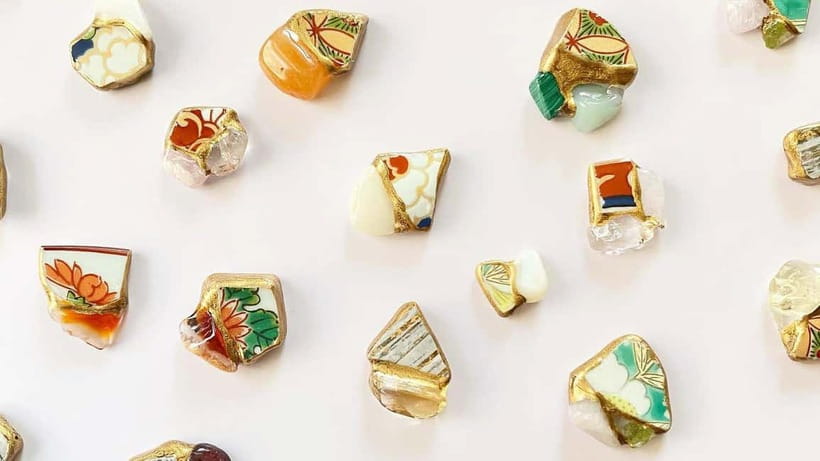
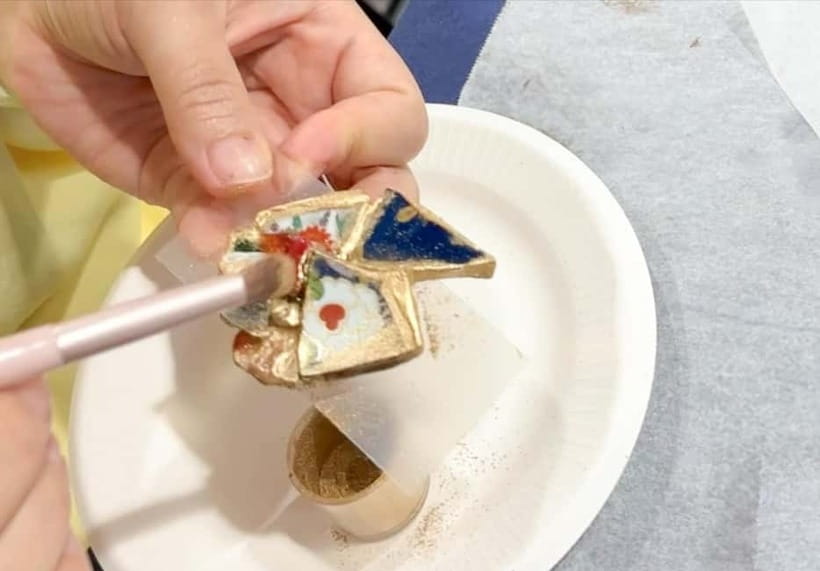
Kintsugi is usually associated with repairing broken ceramics using visible gold lines. Here, the same idea is adapted into a wearable craft. Instead of restoring one complete bowl or plate, you select fragments and combine them with other materials to make jewelry.
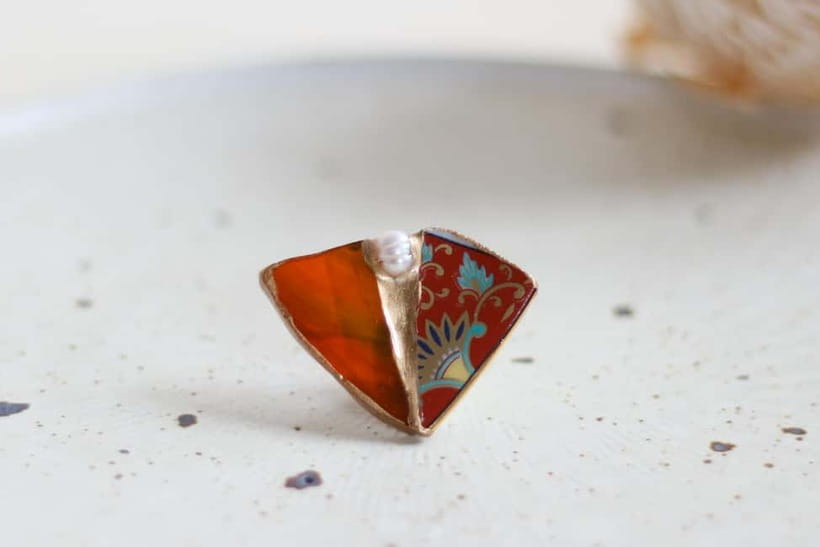
That change matters. You are not simply watching an artisan repair an object. You are making design decisions yourself. A dark pottery shard may work with a pale stone. A curved ceramic piece may become the center of a brooch. A shell or pearl can soften the look of a sharp-edged fragment.
The workshop also introduces the ideas behind kintsugi and wabi sabi, including the value of imperfection and the beauty of giving damaged things another life. You do not need prior art experience. The instructor explains the process clearly, and the group size leaves room for individual help.
I like that the finished work does not try to hide every flaw. The gold accents make the break part of the design. That gives your souvenir a stronger connection to Kyoto than a generic accessory bought in a station shop.
More craft workshops in Kyoto:
- Kyoto : Chopsticks Making Workshop in Gion with Engraving Option
★ 5.0 · 958 reviews - Authentic knife making experience at a blacksmith in Kyoto
★ 4.8 · 350 reviews - Roketsu dyeing experience: M course Roketsu Dyeing Experience
★ 5.0 · 163 reviews
Arriving near Fushimi Inari Taisha
The atelier is a short walk from two railway stations. From JR Inari Station, allow about five minutes on foot. The same walking time applies from Keihan Ryukoku Daimae-Fukakusa Station.
The route ends at a traditional one-story Kyoto house with a white engrace curtain at the entrance. Pay attention to the photo map and the building description, since this is not a large commercial studio with an obvious street sign. The street in front is a narrow alley, so you cannot drive up to the door.
The location is one of the activity’s best features. Fushimi Inari Taisha is one of Kyoto’s busiest sights, and the shrine’s famous torii gates can fill quickly. This workshop gives you a reason to spend time in the area without staying on the main shrine path all day.
A practical plan is to visit Fushimi Inari before or after the class. You are close enough to combine the two, but you should allow time to find the atelier and settle in. There is no parking, so arrive by train and walk.
Choosing pottery, stones, and the right jewelry
The material table is where much of the creative work begins. You can choose from pottery connected with several Japanese traditions, including:
- Arita
- Karatsu
- Oribe
- Kyoto
- Shigaraki
- Hagi
You may also select stained glass, natural stones, shells, or pearls. This range makes the session more personal, but it can also make the first few minutes feel like a design puzzle. You are choosing both the materials and the final mood of the piece.
The pottery shards carry different colors, textures, and patterns. Some may have a bold glaze, while others offer a quieter, earthy surface. You can pair a fragment with a colorful stone for contrast or keep the design restrained and let the gold repair lines do the work.
The available accessory types include earrings, rings, necklaces, brooches, tie pins, cufflinks, and other pieces. Your choice may affect how much space you have to work with. A brooch or pendant can hold a larger ceramic shard, while earrings and rings call for smaller, lighter elements.
The instructor helps you make practical choices, but the final design is yours. That balance is important. Too much direction would turn the class into a paint-by-numbers activity. Too little would leave beginners staring at a pile of materials with no idea where to start.
The 150-minute making process
The session lasts about two and a half hours. Expect a calm sequence rather than a fast demonstration followed by rushed work.
First, Natsuka explains the background of kintsugi and introduces the materials. You learn how broken pottery can become a new object and how the gold-colored joins are part of the visual appeal. You also receive guidance on the different accessory formats and the materials available.
Next comes the design stage. This is where you select your pottery shard, stone, pearl, shell, or glass element. Take your time here. The strongest finished pieces usually come from a simple combination that lets each material show clearly.
The construction stage uses synthetic lacquer and gold powder. The synthetic lacquer is used instead of traditional urushi lacquer to reduce the risk of allergic reactions. That makes the workshop more approachable for a wider range of people, although you are still working with craft materials and should follow the instructor’s directions carefully.
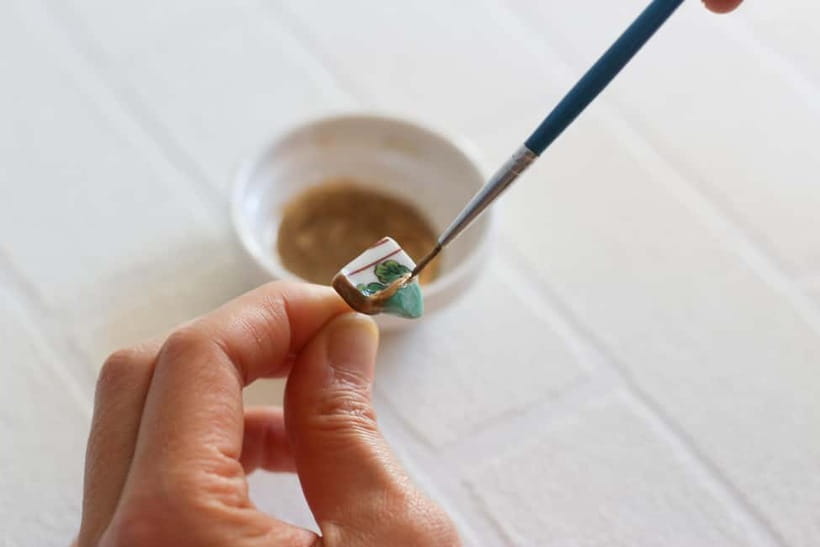
Natsuka demonstrates the process and then helps you apply it. You should expect close attention to detail. The gold effect is not a button you press. You work through a series of small steps, and the final look depends on how the pottery and other pieces are arranged.
The last part is devoted to finishing the jewelry and checking the result. Depending on your choices and pace, you may create two pieces. Several participants have done so, which makes the price more appealing. You take the finished jewelry home on the same day.
One useful point: do not arrive expecting a quick souvenir-making stop between shrine photos. The appeal lies in the unhurried process. One particularly slow session ran well beyond the scheduled time because the instructor allowed the makers to finish without pressure. That level of flexibility may not happen every time, but it reflects the workshop’s patient style.
Same city, a completely different kind of day:
- PERFECT KYOTO 1-Day Bus Tour
★ 5.0 · 13,518 reviews - Kyoto: Fushimi Inari, Kinkakuji, Bamboo Grove 1 Day Bus Tour
★ 4.8 · 4,316 reviews - Kyoto: Tea Ceremony in a Traditional Tea House in Kiyomizu
★ 4.9 · 3,519 reviews - Kyoto Geisha Walking Tour: Gion District & Hidden Gems
★ 4.7 · 3,273 reviews
The instructor and the small-group setting
The class is limited to 10 people, with instruction in English and Japanese. That is a useful size for a craft activity. You can work independently, but you are not left alone when a piece needs adjustment or a step is unclear.
Natsuka is praised for being patient, calm, and clear. She explains the origins of the craft, the pottery regions, and the idea of upcycling broken materials. She also demonstrates the technique before you try it, which is especially helpful if you have never handled lacquer or gold powder.
The setting is informal and personal. This is a traditional Kyoto home and atelier, not a large classroom built for mass tourism. Refreshments have also been provided during sessions, adding to the relaxed pace, though you should not treat them as the main reason to book.
The atmosphere suits solo visitors, couples, friends, and families who enjoy making things together. An eight-year-old participant completed the activity with a parent, showing that children can take part, but there is no stated minimum age or formal child policy. Younger makers will need close adult attention because the work involves small pieces and craft materials.
What the $106 price buys you
At $106 per person, this is not a bargain-bin craft class. The value comes from several parts working together: 150 minutes of instruction, access to a broad selection of Japanese pottery and decorative materials, the use of synthetic lacquer and gold powder, and one or more finished jewelry pieces to take home.
The price also covers something less tangible but still important: direct time with an artisan in a historic Kyoto house. You are paying for guidance while making a personal object, not just for materials placed on a table.
If you only want a cheap souvenir, the workshop will feel expensive. You can buy attractive earrings or ceramics for less. If you value a keepsake connected to your own time in Japan, the calculation changes. Your finished piece records the choices you made, the pottery you selected, and the kintsugi lesson behind it.
The possibility of making two pieces strengthens the value. Earrings, a ring, a brooch, a necklace, or a tie pin can also be used after the trip. That makes this a better buy for people who prefer practical souvenirs over display items.
The main limitations to know before booking
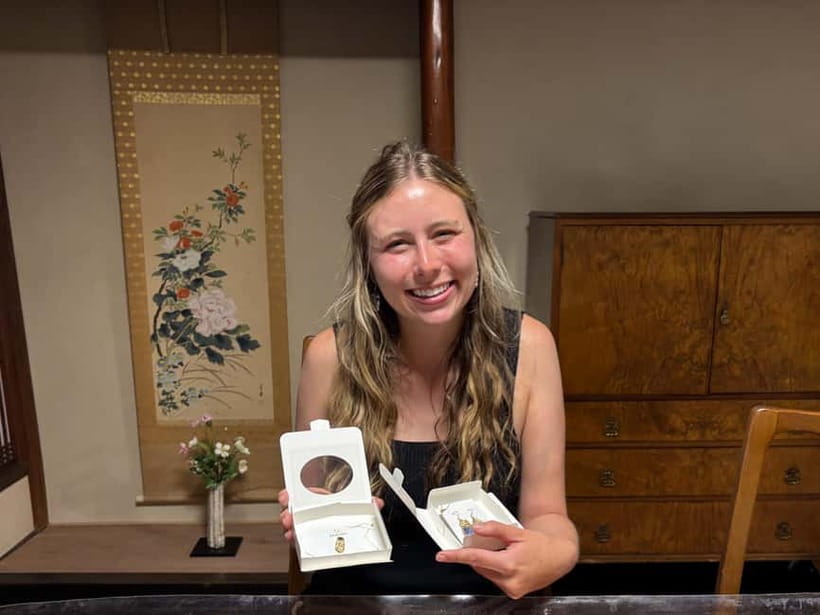
The workshop is not suitable for wheelchair users. The traditional house, narrow alley, and walking route from the stations may also be difficult for anyone who has trouble with uneven or confined access, though no further accessibility details are provided.
There is no parking at the atelier, and the alley is not suitable for vehicles. Plan to arrive by train and walk from one of the nearby stations.
The work requires patience. If you prefer a polished product with little effort, choose a different activity. Small jewelry pieces demand attention, and your result may look handmade rather than factory-perfect. That is part of the point, but it is worth knowing before you book.
The class also depends on personal taste. You may find the material selection exciting, or you may find the number of choices a little overwhelming at first. Natsuka’s guidance helps, but you still need to make the final design decisions.
Who should book this activity
I would recommend this workshop to anyone who wants a quieter Kyoto activity with a strong handmade element. It works particularly well for:
- People who enjoy crafts, jewelry, pottery, or design
- Couples looking for a shared souvenir-making activity
- Solo visitors who want a calm, social class
- Families with older children who can work carefully
- Visitors who have already seen Fushimi Inari and want a different way to experience the neighborhood
- Anyone who prefers meaningful souvenirs to mass-produced gifts
It is less suitable if you have limited hand mobility, need step-free access, dislike detailed work, or have only a small gap between other bookings.
The activity also makes sense on a rainy Kyoto day. You stay indoors, learn about Japanese pottery, and spend a few hours making something instead of rushing between outdoor sights. It is a good change of pace after several crowded temples.
Booking and timing advice
The session lasts 150 minutes, and starting times vary, so check availability before planning the rest of your day. Give yourself enough time to reach the townhouse from the station. The entrance is easy to miss if you are hurrying.
You can cancel up to 24 hours in advance for a full refund, and the reserve-now, pay-later option lets you hold a place without paying immediately. These terms help if your Kyoto schedule is still shifting.
Because the group is capped at 10, book ahead if you want a particular day or time. The class is near a major sight, but its small scale means it does not function like a walk-in shrine activity.
Should you book the kintsugi jewelry workshop?
Book it if you want to make something yourself, enjoy a patient pace, and like the idea of carrying home jewelry with a story. The combination of Japanese pottery shards, natural stones, gold accents, and a 100-year-old townhouse gives the activity a clear sense of place.
The strongest reasons to go are Natsuka’s careful instruction, the wide choice of materials, and the chance to make two personal pieces in a small group. The main reasons to skip it are the price, the need for detailed handwork, and the lack of wheelchair access.
For me, the best part is the shift in focus. You begin with broken fragments, then spend time deciding how they should fit together. By the end, the repaired joins are no longer damage to hide. They are the feature you take home.
FAQ
Where does the kintsugi jewelry workshop take place?
It takes place in a 100-year-old traditional one-story Kyoto townhouse near Fushimi Inari Taisha.
How far is the atelier from the train stations?
The atelier is about a five-minute walk from either Keihan Ryukoku Daimae-Fukakusa Station or JR Inari Station.
How long does the workshop last?
The scheduled duration is 150 minutes.
What languages does the instructor speak?
Instruction is available in English and Japanese.
How many people can join the workshop?
The activity is a small-group class limited to 10 participants.
What materials are included?
Materials include synthetic lacquer and gold powder. You can also choose from pottery shards, natural stones, stained glass, shells, and pearls.
Which types of Japanese pottery may be available?
The selection may include Arita, Karatsu, Oribe, Kyoto, Shigaraki, and Hagi pottery.
What kinds of jewelry can I make?
Options include earrings, rings, necklaces, brooches, tie pins, cufflinks, and other accessory types.
Can I take my finished jewelry home?
Yes. You can take your handmade jewelry home on the same day.
Is the workshop accessible to wheelchair users?
No. The activity is not suitable for wheelchair users.
Is parking available at the atelier?
No. There is no parking, and the narrow street in front of the atelier is unsuitable for vehicles.
Can I cancel my reservation?
You can cancel up to 24 hours in advance for a full refund.
Can I reserve now and pay later?
Yes. The activity offers a reserve-now, pay-later option.
Can children take part?
There is no stated minimum age. An eight-year-old has taken part with a parent, but children will need appropriate adult support for the craft work.
Newest Kyoto experiences on the site
- Treasures of Kyoto: Gion & historical Walking Tour★ 5.0 · 6 reviews
- Whisk Your Own Matcha: A Zen Matcha Experience at Temple★ 3.6 · 7 reviews
- Kyoto tea town for matcha lovers★ 5.0 · 16 reviews
- Uji: Private immersion into Kyoto’s tea and reglious culture★ 5.0 · 17 reviews
- Kyoto Matcha Green Tea Tour★ 4.5 · 23 reviews
- Uji and Wazuka Matcha Farm Half Day Private Guided Tour★ 5.0 · 21 reviews
- Utilising upcycled Matcha! Creating matcha incense (Uji, Kyoto)★ 5.0 · 6 reviews
- Sacred Temple Yoga Experience in Japan★ 5.0 · 3 reviews
Kyoto Craft Workshops, compared.
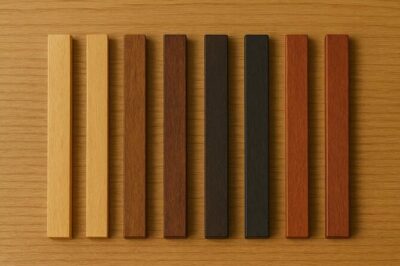
Chopsticks Making Workshop in Gion with Engraving Option
Read our review →
Authentic knife making experience at a blacksmith in Kyoto
Read our review →
Roketsu dyeing experience: M course Roketsu Dyeing Experience
Read our review →
Beginner Knife Sharpening & Handle Fitting Workshop
Read our review →
Japanese Archery Workshop with Experienced Instructor
Read our review →
Kyoto Michelin Ramen Workshop or Painting Ramen Essentials
Read our review →
Browse the lists this tour appears in