
Reviewed · KYOTO CRAFT WORKSHOPS
Hanakoushi cotton Scarf Class
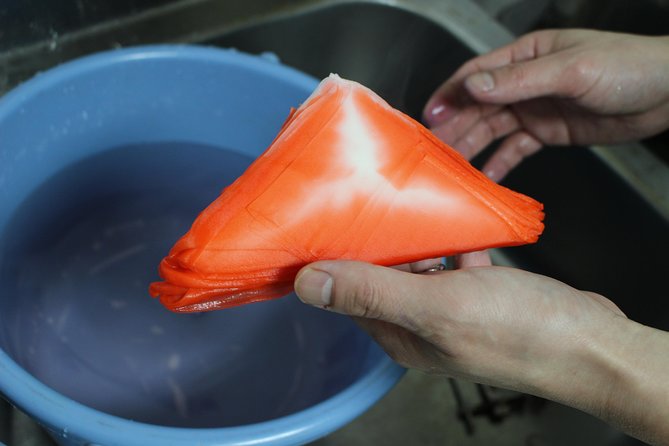
The best part of this Kyoto class is that you do not simply buy a souvenir, you make one. At the Kyoto Shibori Museum, you choose a color, fold a long scarf, and watch a plain piece of fabric turn into a patterned keepsake using the traditional hanakoushi shibori method. The class is private, so your party gets direct help rather than being lost in a large workshop.
I like two things here: the finished scarf is useful, not just decorative, and the short lesson opens a door into an old Japanese craft without demanding half a day. I also like that the drying time gives you a chance to see the museum’s textiles, tools, and video. The main drawback is that some of the hands-on work has been simplified, so anyone expecting to master complex shibori techniques may find the activity too easy.
Key details before you book
- A private class for your party: You receive individual attention, with sessions commonly lasting about 30 to 60 minutes.
- A 175-by-50-centimeter scarf: The finished piece is large enough to use as a light wrap or gift.
- Choose your own color: Your color choice gives the result a personal touch, though the folding method guides the final pattern.
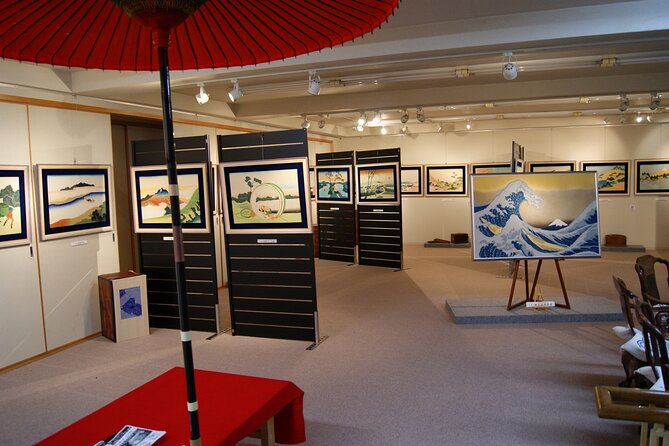
- Museum time while the scarf dries: Use about 30 minutes to view shibori pieces, tools, samples, and a historical video.
- A compact Kyoto craft stop: The museum is near public transportation and the activity ends where it begins.
- Good value for a hands-on souvenir: At $43.35 per person, you pay for instruction, materials, a private session, and a finished scarf.
Folding a Kyoto scarf into a pattern
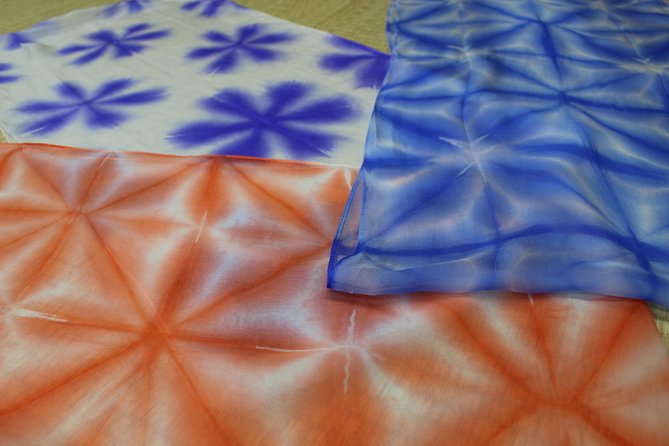
Shibori is a Japanese resist-dyeing craft. Fabric is folded, tied, stitched, clamped, or otherwise protected before dye is applied. The covered sections resist the color, leaving the pale shapes and sharp contrasts that make shibori textiles so recognizable.
This class focuses on hanakoushi, also referred to in the activity description as sekka shibori. The process has been adapted for visitors, which is good news if you want to create something without spending hours tying tiny sections of cloth. You learn a particular fold, select a color, and then dye the fabric.
That simplicity is part of the appeal. You can finish a scarf in a short visit, and a staff member can correct your folds before the dye goes on. The private format matters here. If you are unsure how tightly to fold the fabric or where to place your hands, you can ask at once.
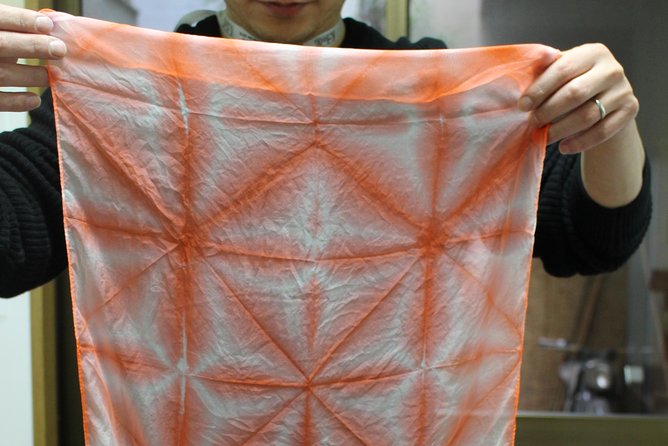
Do not expect to design every detail of the pattern from scratch. The folding method does much of the visual work, and the finished result includes an element of surprise. That is typical of resist dyeing and helps explain why several participants were pleased when they unfolded their scarves and saw the final design.
More craft workshops in Kyoto:
- Kyoto : Chopsticks Making Workshop in Gion with Engraving Option
★ 5.0 · 958 reviews - Authentic knife making experience at a blacksmith in Kyoto
★ 4.8 · 350 reviews - Roketsu dyeing experience: M course Roketsu Dyeing Experience
★ 5.0 · 163 reviews
What happens during the 30-minute class
Your appointment begins at the Kyoto Shibori Museum at 135-5 Shikiamicho in Nakagyo Ward. The activity is designed for your own party, not a mixed public group, so the pace can suit your group. Most sessions take about 30 minutes to 60 minutes, depending on the class and drying time.
First, you choose a color. This is a small decision, but it gives you control over the mood of the scarf. A bright color may make a lively souvenir, while a quieter shade may be easier to wear at home. The available color choices are not specified, so you should treat the selection as something to make on site rather than planning a particular shade in advance.
Next comes the fold. The instructor shows you how to arrange the 175-by-50-centimeter fabric in the required way. This is the key stage, since the folds determine which areas resist the dye. The work is hands-on, but it is not a long technical lesson. You are learning one accessible method rather than every form of shibori.
Then you apply the color. Staff members are described as friendly, patient, and easy to understand, and English support is available according to the class feedback. Nina guided one solo participant through the process, while Yokahama-san helped a family understand the wider craft and its place in Japanese culture.
After dyeing, the scarf needs time to dry. The drying period is about 30 minutes, so the class may take longer than the first quick estimate suggests. This is not dead time. You can use it to view the museum displays, watch the explanatory material, and browse the shop.
The Kyoto Shibori Museum gives the class context
The museum is small, but it adds real value to the workshop. You can see finished shibori pieces, tools, fabric samples, and examples of the painstaking work behind more elaborate designs. The displays help you understand why a simple folding activity is connected to a much larger craft tradition.
I would not plan an entire afternoon around the museum alone. It is compact, and one comment described it as a short break from Kyoto’s busy streets rather than a large museum visit. That is not a criticism so much as a useful expectation. The class is the main event, with the exhibits giving you context before or after you make the scarf.
A historical video and show-and-tell material may be available during your visit. These help explain the different techniques and the care required for more complex pieces. You begin with a visitor-friendly method, then see what skilled makers can do when the process becomes more demanding.
The contrast is worthwhile. Your scarf may take minutes to fold and dye, while the museum’s more intricate examples show how much time and control traditional work can require. You leave with a better sense of the gap between a short introductory class and professional shibori production.
Why the finished scarf is worth the price
The class costs $43.35 per person. For Kyoto, that is a reasonable price if you want a private craft activity with materials, instruction, museum access, and a finished item to take away. You are not paying only for admission to a small museum. You are paying for a guided process and a scarf that would otherwise be another shop purchase.
The value depends on what you want. If your goal is to learn advanced textile technique, this session will not go far enough. If you want a personal souvenir and a clear introduction to shibori, the price is easier to justify.
The scarf is listed as 70 inches by 17 inches, or about 175 by 50 centimeters. That is a generous size for a handmade keepsake. You can use it, give it as a gift, or pack it flat in your luggage. Several people made more than one scarf, which can work well for couples or families who want matching souvenirs without making identical choices.
There is one detail worth checking before you arrive. The class information describes the scarf as cotton in one place and silk in another, while the participant comments also refer to silk scarves. Since fabric affects feel, care, and value, confirm the material with the museum when booking or at the start of the class.
Same city, a completely different kind of day:
- PERFECT KYOTO 1-Day Bus Tour
★ 5.0 · 13,518 reviews - Kyoto: Fushimi Inari, Kinkakuji, Bamboo Grove 1 Day Bus Tour
★ 4.8 · 4,316 reviews - Kyoto: Tea Ceremony in a Traditional Tea House in Kiyomizu
★ 4.9 · 3,519 reviews - Kyoto Geisha Walking Tour: Gion District & Hidden Gems
★ 4.7 · 3,273 reviews
A shop filled with shibori gifts
The museum shop extends the experience beyond your own project. It carries shibori items, fabrics, clothing, purses, and other Japanese craft goods. You might find something for a family member who does not need another standard Kyoto souvenir.
A purse or samue, a traditional work garment, can make a more distinctive gift than mass-produced merchandise. The shop also gives you a chance to compare your beginner scarf with finished goods made by experienced craftspeople. That comparison can make the price and labor behind the craft easier to appreciate.
Set a spending limit before you browse. The class price does not include additional purchases, and the shop may tempt you with items that are more refined than anything you can make in 30 minutes. That is part of the fun, but it is best to see the shop as optional rather than part of the required cost.
The private format works best for beginners
The class suits couples, families, and solo participants. A family of five can take part together, while a solo participant may receive one-on-one guidance. The private setup also helps if people in your group work at different speeds.
I would recommend it for anyone who wants a cultural activity that is calm, short, and practical. It fits well between sightseeing stops, especially since the museum is near public transportation and the activity returns to the same meeting point.
It is also a good option for people who do not usually choose craft workshops. The instructions are simplified, staff can guide you through the fold, and you do not need prior textile experience. Most people can participate.
The class may be less satisfying for a serious textile artist or anyone hoping to practice several complicated techniques. You will learn one method, not a full course in shibori. The museum can show you more advanced work, but the practical lesson remains introductory.
Timing your visit around the drying period
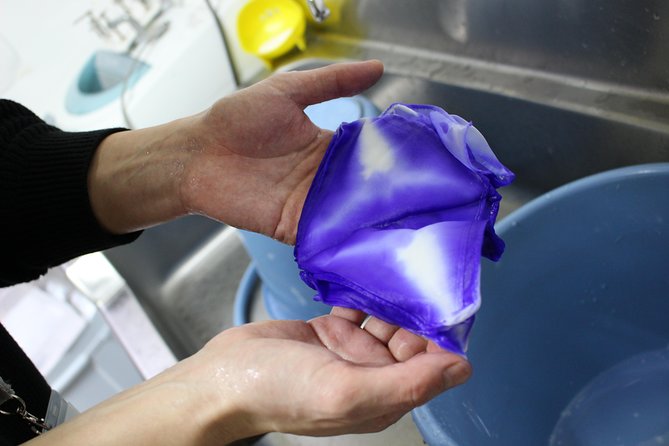
Although the activity is advertised as approximately 30 minutes, the full process can run longer. The scarf needs about 30 minutes to dry, and sessions are usually described as lasting 30 to 60 minutes.
Plan the class as a one-hour stop rather than a strict half-hour appointment. That gives you time to finish the dyeing, look through the museum, and visit the shop without rushing. If your Kyoto schedule is tightly packed, leave a little room before your next booking.
The museum visit is especially useful during drying. You can examine the tools and samples while waiting, rather than sitting around with a damp scarf. The activity therefore works best when you treat the museum viewing as part of the class, not as an unrelated extra.
Because the activity is booked an average of 23 days ahead, popular dates may fill before your Kyoto schedule is final. You do not need to reserve months ahead based on the information available, but booking several weeks before your visit is sensible if your dates are fixed.
What the strongest praise tells you
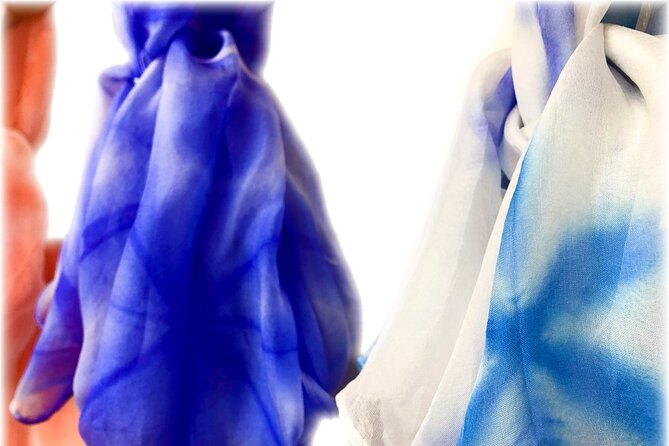
The most consistent positive points are the staff, the ease of the process, and the quality of the finished scarf. Those details matter more than the basic promise of dyeing fabric.
Staff members are repeatedly described as kind, patient, welcoming, and clear. Nina is named as a helpful guide for a solo class, and Yokahama-san is credited with adding wider cultural explanation for a family group. The class appears set up for beginners who may not know the Japanese terms or understand the folding method at first.
The finished scarf also earns strong praise. People were proud of the results and surprised by how attractive the patterns looked. That does not mean every scarf will look identical or perfect. Resist dyeing includes chance, and your fold and color choice will affect the outcome. Still, the guided method gives you a good chance of leaving with something attractive and usable.
The museum itself adds a second layer. You see the small-scale craft activity, then view works that show the patience and control behind advanced shibori. That combination is more satisfying than a workshop with no context.
The main limitation: an easy introduction, not mastery
One participant found the class disappointing because there was not enough to do personally. That criticism is important. The workshop has been simplified for visitors, so the instructor does much of the setup and teaches a single folding method.
You should book this for the result and the introduction, not for a long period of independent making. If you want to tie, stitch, or shape fabric through several methods, you may find the session too short. The museum display can still be interesting, but it will not replace a full-day textile course.
On the other hand, that simplicity is exactly why the class fits a Kyoto sightseeing day. You can try a traditional craft without giving up a large block of time. The tradeoff is clear: less technical depth, easier participation, and a finished scarf you can carry home.
Practical booking notes for Kyoto
The meeting point is the Kyoto Shibori Museum at 135-5 Shikiamicho, Nakagyo Ward, Kyoto 604-8261. The activity ends back at the same location, and the museum is near public transportation.
A mobile ticket is provided, and confirmation is received at booking. Free cancellation is available if you cancel at least 24 hours before the local start time. Cancellations or changes inside that window are not refunded or accepted.
The activity has a current rating of 4.8 out of 5, with 94 percent recommending it, based on 18 ratings. That is a strong result, though the small number means you should still match the class to your own expectations.
Should you book the Hanakoushi cotton scarf class?
Book it if you want a private, beginner-friendly craft activity with a useful souvenir at the end. The $43.35 price is fair when you include the instruction, scarf, museum viewing, and personal attention. It is especially well suited to couples, families, solo visitors, and anyone who wants more than another ready-made gift from Kyoto.
Skip it if you want advanced shibori training or a long, fully independent workshop. The method is intentionally simple, and some of the work is guided closely by the staff. For most sightseers, though, that is a sensible trade. You get a taste of a serious Japanese craft, a compact museum visit, and a scarf that carries a personal connection to Kyoto.
FAQ
Where does the scarf class take place?
The class takes place at the Kyoto Shibori Museum, located at 135-5 Shikiamicho, Nakagyo Ward, Kyoto 604-8261, Japan.
How long does the experience last?
The activity is approximately 30 minutes, though classes commonly take 30 to 60 minutes. The scarf needs about 30 minutes to dry, and you can view the museum during that time.
Is the class private?
Yes. Only your party participates in the activity, allowing for direct instruction and a more personal pace.
What will I make during the class?
You will dye a scarf measuring about 175 by 50 centimeters using the hanakoushi shibori method. The supplied details describe the fabric as cotton in one place and silk in another, so confirm the material when you arrive.
Is the activity suitable for beginners?
Yes. Most people can participate, and the method has been simplified for visitors. Staff members provide guidance through the folding and dyeing steps.
What is the cancellation policy?
You can cancel for a full refund up to 24 hours before the experience starts. Cancellations or changes made less than 24 hours before the start time are not refunded or accepted.
Newest Kyoto experiences on the site
- Treasures of Kyoto: Gion & historical Walking Tour★ 5.0 · 6 reviews
- Whisk Your Own Matcha: A Zen Matcha Experience at Temple★ 3.6 · 7 reviews
- Kyoto tea town for matcha lovers★ 5.0 · 16 reviews
- Uji: Private immersion into Kyoto’s tea and reglious culture★ 5.0 · 17 reviews
- Kyoto Matcha Green Tea Tour★ 4.5 · 23 reviews
- Uji and Wazuka Matcha Farm Half Day Private Guided Tour★ 5.0 · 21 reviews
- Utilising upcycled Matcha! Creating matcha incense (Uji, Kyoto)★ 5.0 · 6 reviews
- Sacred Temple Yoga Experience in Japan★ 5.0 · 3 reviews
Kyoto Craft Workshops, compared.
Chopsticks Making Workshop in Gion with Engraving Option
Read our review →
Authentic knife making experience at a blacksmith in Kyoto
Read our review →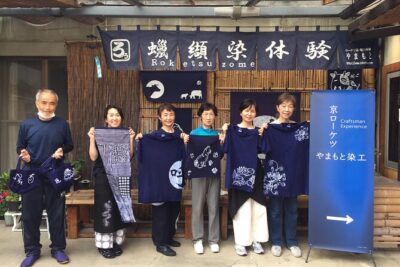
Roketsu dyeing experience: M course Roketsu Dyeing Experience
Read our review →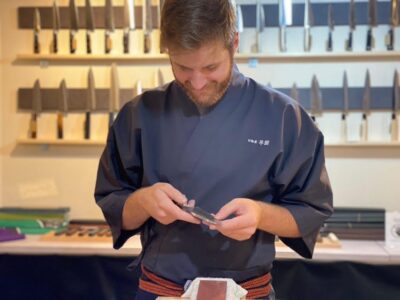
Beginner Knife Sharpening & Handle Fitting Workshop
Read our review →
Japanese Archery Workshop with Experienced Instructor
Read our review →
Kyoto Michelin Ramen Workshop or Painting Ramen Essentials
Read our review →
Browse the lists this tour appears in