
Reviewed · KYOTO CRAFT WORKSHOPS
Traditional Japanese Flower Styling Workshop – Ikebana in Kyoto
The best thing about this Kyoto ikebana workshop is that it does not leave you with a pretty arrangement and no way to repeat it. Master Fooraku teaches forms you can make at home with ordinary flowers, simple tools, and containers you already own. You also get a look at the ideas behind Japanese floral design, not just a quick craft lesson.
I like the relaxed, private format and the chance to work inside Sogetsu WEST, a major ikebana space with more than 300 flower containers. I also like the practical focus on keeping flowers fresh and adapting the art to daily life. The main consideration is the price, $104.24 per person for about 1 hour and 45 minutes, which is fair for a private lesson but more than a short group craft class.
Key points before you book
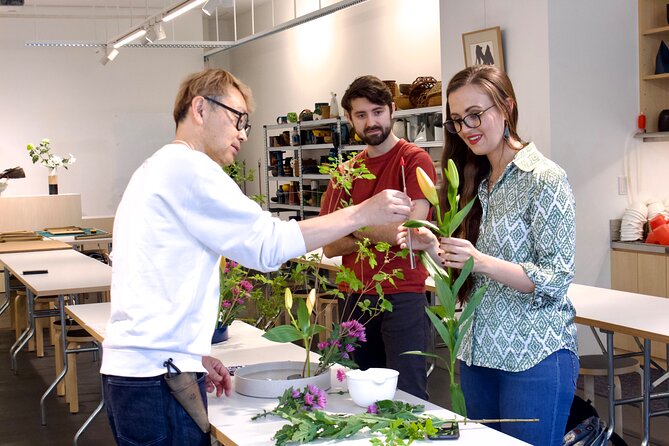
- Master Fooraku brings more than 30 years of ikebana study to a calm, hands-on lesson.
- You can repeat the techniques at home without special flowers, tools, or Japanese containers.
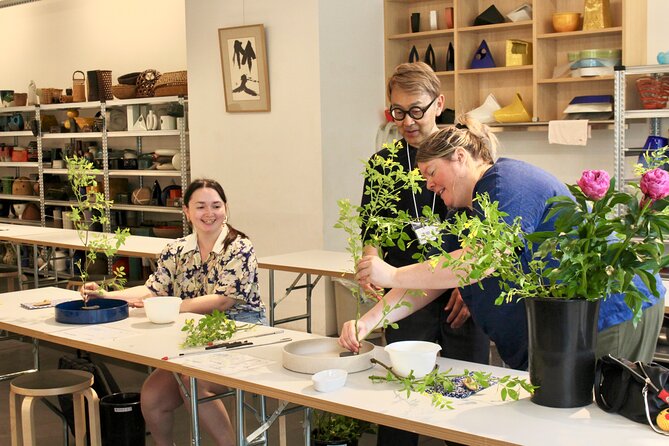
- Sogetsu WEST has more than 300 flower containers, giving the workshop a strong setting for learning.
- The private format keeps the lesson personal, with only your own group taking part.
- You finish with a photograph of your arrangement and relaxed conversation about Japanese food and culture.
- The session lasts about 1 hour and 45 minutes and starts and ends at Sogetsu WEST in Kyoto.
Why this Kyoto flower lesson feels different
Many flower-arranging classes give you materials, show you one design, and send you home with a finished piece. This workshop takes a more useful approach. You learn the basic forms of ikebana, then see how those ideas can work beyond a formal Japanese setting.
That matters because ikebana is not simply flower arranging. The placement of stems, the open space around them, the angle of each branch, and the changing shape of the whole piece all play a part. The arrangement is meant to show beauty in an intentional way, rather than fill every gap with flowers.
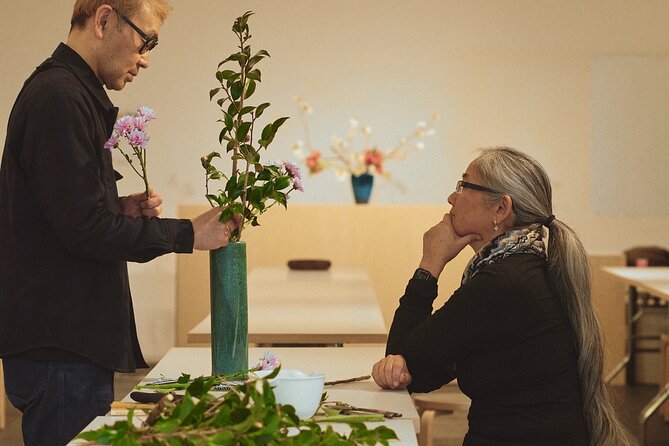
Master Fooraku explains the history and philosophy of the art, then connects those ideas to practical methods. You learn how to keep flowers fresh and how to create different styles without relying on a special vase. For me, that makes this more useful than a one-time souvenir activity.
The workshop takes place at Sogetsu WEST, described as a leading ikebana space in western Japan. Its collection includes more than 300 flower containers. You may not use all of them during your lesson, but the setting gives you a sense of how varied Japanese floral vessels can be.
More craft workshops in Kyoto:
- Kyoto : Chopsticks Making Workshop in Gion with Engraving Option
★ 5.0 · 958 reviews - Authentic knife making experience at a blacksmith in Kyoto
★ 4.8 · 350 reviews - Roketsu dyeing experience: M course Roketsu Dyeing Experience
★ 5.0 · 163 reviews
Entering Sogetsu WEST at 20-4 Sujakudōnokuchichō
You meet at Sogetsu WEST, at 20-4 Sujakudōnokuchichō in Kyoto’s Shimogyo Ward. The venue is near public transportation, which helps when you are fitting the class into a day of sightseeing. The activity ends at the same place, so there is no second location to find afterward.
The exact meeting instructions are important in Kyoto, where addresses can be difficult to match with a familiar landmark. Keep the full address with your mobile ticket and allow enough time to locate the venue. Confirmation arrives when you book, and the ticket is mobile, so you do not need to print anything.
This is a private activity. That means your group receives the teacher’s attention rather than joining a large room full of people working at different speeds. A private format is especially helpful here because the teacher needs to adjust stems, angles, and spacing for your individual arrangement.
The workshop suits most participants, and the supplied information does not list special physical requirements. Still, you should be comfortable taking part in a hands-on flower-arranging lesson for nearly two hours.
The first lesson: what ikebana is trying to express
The opening part introduces the basic forms of ikebana. You learn that the art is built around choices: where a stem points, how much space surrounds it, and how the different parts relate to one another.
This is where the workshop gains its cultural value. Japanese aesthetics often give as much attention to empty space and seasonal change as to the main subject. In ikebana, a small number of stems can carry a lot of visual weight. The point is not to copy a dense bouquet.
Master Fooraku also explains the background and philosophy of the practice. His more than 30 years of study give the introduction useful depth, while the relaxed teaching style keeps it from feeling like a formal lecture. The focus remains on helping you understand enough to make your own piece.
The explanation is in English, and the experience information notes that Master Fooraku’s English was good. That makes the session workable for English-speaking visitors who want more than a demonstration.
Choosing flowers, containers, and a workable style
The next stage brings the ideas into your hands. You create an ikebana arrangement under Master Fooraku’s guidance, using techniques that can be adapted when you return home.
One of the strongest parts of the lesson is its flexibility. You do not need special flowers or traditional Japanese containers to keep practicing. That is a big advantage if you are traveling with limited luggage or simply want a realistic hobby rather than a display piece that cannot be repeated.
Sogetsu WEST’s collection of more than 300 flower containers adds an extra layer to the setting. Containers affect the balance and mood of an arrangement, so seeing a broad range helps you understand that the vase is not an afterthought. At the same time, the teacher makes clear that you can use ordinary options at home.
The workshop covers several ikebana styles and techniques. The precise flowers used can vary, so you should not book this expecting one fixed arrangement or a guaranteed type of bloom. The value is in learning how to make choices with the materials available.
Same city, a completely different kind of day:
- PERFECT KYOTO 1-Day Bus Tour
★ 5.0 · 13,518 reviews - Kyoto: Fushimi Inari, Kinkakuji, Bamboo Grove 1 Day Bus Tour
★ 4.8 · 4,316 reviews - Kyoto: Tea Ceremony in a Traditional Tea House in Kiyomizu
★ 4.9 · 3,519 reviews - Kyoto Geisha Walking Tour: Gion District & Hidden Gems
★ 4.7 · 3,273 reviews
Creating your own arrangement with Fooraku’s guidance
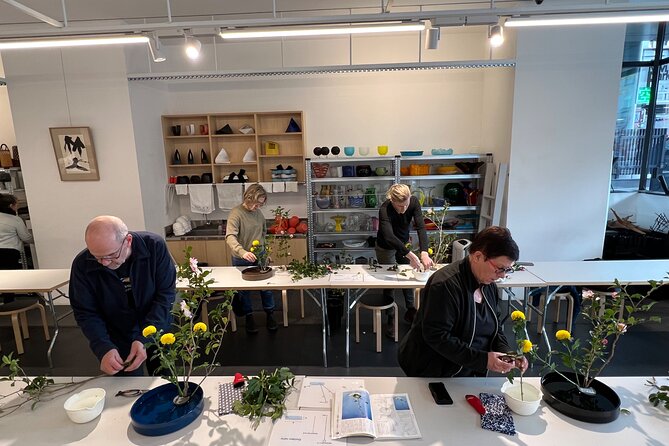
The hands-on section is the center of the experience. You work on your own piece while Master Fooraku helps you shape it. This is not a class where you are simply handed a model and told to copy it.
That guidance matters for beginners. A stem can look awkward because of a small change in angle, or an arrangement can lose its balance when too many elements crowd the center. Having an experienced teacher point out those adjustments saves you from guessing.
I like that the lesson aims for a unique arrangement rather than a perfect replica. You learn a structure, then make choices within it. The result should feel personal while still reflecting the basic principles introduced earlier.
The pace also seems well judged for a short cultural activity. At about 1 hour and 45 minutes, you have enough time for instruction, arranging, photography, and conversation without giving up most of your day. It is long enough to feel like a real lesson, but short enough to fit before dinner or another Kyoto plan.
Flower care and taking the skill home
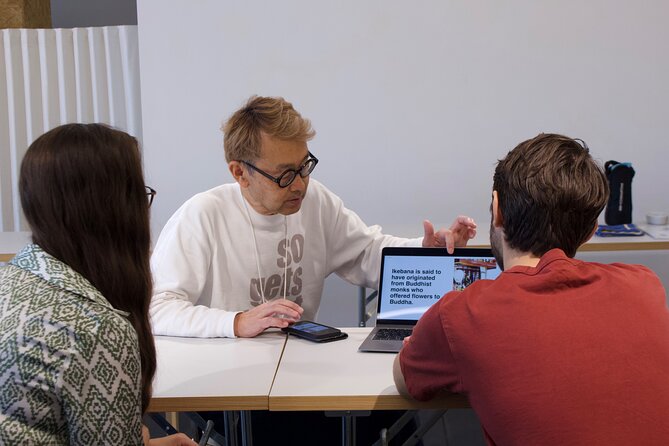
The practical flower-care advice may be the most useful part after the trip. You learn techniques for keeping flowers fresh, which helps your arrangement last longer and gives you a better chance of practicing at home.
The workshop also explains how to work without special materials. You can use the basic forms with ordinary flowers and containers, so the lesson does not end when you leave Kyoto. If you already enjoy flowers, this can become a repeatable part of your home life.
You should keep your expectations realistic. The experience introduces the art and gives you a foundation, but 1 hour and 45 minutes is not enough to cover every school, form, or advanced technique in ikebana. Think of it as a focused first lesson with practical tools, not a professional certification course.
Session slides are available by email on request. Ask for them during or after the activity if you want a written reminder of the material. That is helpful since the visual details of an arrangement can be easy to forget after a full day of Kyoto sightseeing.
A photograph, then a useful cultural conversation
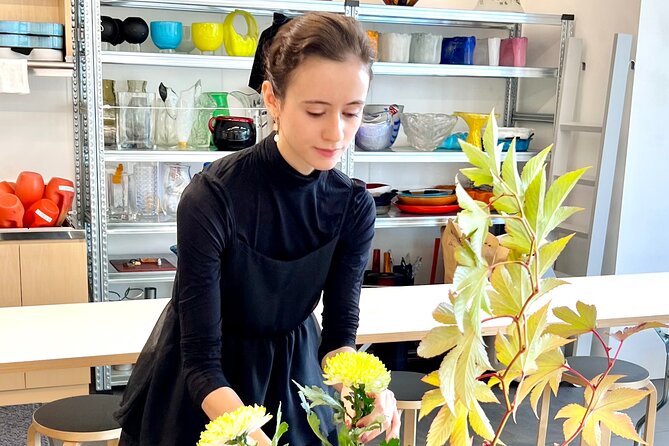
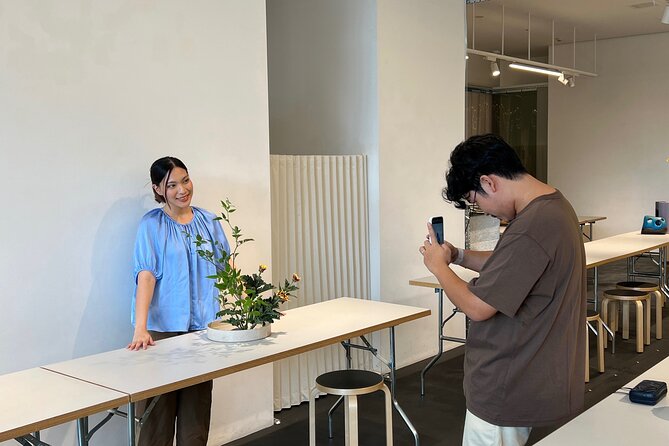
After you finish your arrangement, the session includes a photograph of your work. That gives you a record of the piece beyond the flowers themselves, which will naturally change as they age.
The closing conversation is informal. You can ask about Japanese food, culture, and traditions, and you may also share something about your own country and background. This makes the final portion feel more like a personal meeting than a quick exit after the craft is done.
The conversation is not a separate sightseeing stop, so you should not expect a tour of Kyoto or a broad cultural lecture. Its value is direct access to the person teaching you. If you have a specific question about Japanese customs, ask it while the session is winding down.
What $104.24 buys you
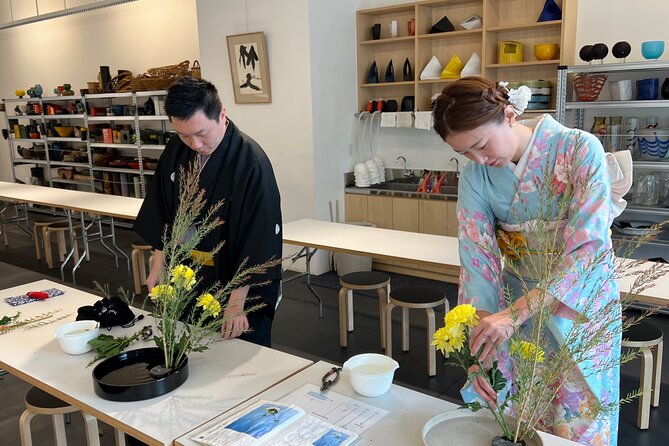
At $104.24 per person, this is not the cheapest way to spend an hour in Kyoto. The price makes more sense if you value private instruction, cultural context, and a skill you can continue using at home.
You are paying for a small-group experience with Master Fooraku, an instructor who has studied ikebana for more than 30 years. You also get the use of a specialist venue, hands-on help, flower-care advice, a finished arrangement, a photograph, and time for questions.
The value is weaker if you only want a quick souvenir or a simple flower craft. A shorter group activity may suit you better in that case. But if you want personal guidance and a deeper look at Japanese aesthetics, the private format helps justify the cost.
The session has received a 5 out of 5 rating from 10 published ratings, with a 100 percent recommendation rate. That is a small sample, so I would not treat it as proof that every participant will have the same experience. It does support the picture of a well-received, personal lesson, especially for people interested in floral arts and Japanese culture.
Who should book this workshop
I would choose this activity if you enjoy making things with your hands, like asking cultural questions, or want a quieter break from Kyoto’s busy sightseeing areas. It also works well for couples, families with interested older children, friends, or solo visitors who prefer a private session.
It is a good match for anyone who has admired ikebana but assumed it required a special room, expensive containers, or rare flowers. The home-friendly approach removes those barriers.
You may want to skip it if your Kyoto schedule is extremely tight, if you have no interest in flowers, or if you prefer a fast demonstration with little participation. The lesson asks you to pay attention and make your own choices. That is its strength, but it may not suit someone looking for passive entertainment.
Because the class takes place indoors and returns to the same meeting point, it can also serve as a calm change of pace during a sightseeing-heavy day. The venue is near public transportation, though you should still plan your route carefully using the complete address.
Booking and cancellation details
The activity is confirmed at the time of booking and uses a mobile ticket. Free cancellation is available if you cancel at least 24 hours before the local start time.
Cancellations made less than 24 hours before the start are not refunded, and changes inside that period are not accepted. If your Kyoto schedule may shift, keep that deadline in mind before booking.
Should you book the Sogetsu WEST ikebana lesson?
Book it if you want a genuine, hands-on introduction to Japanese floral design rather than a quick photo opportunity. The strongest reasons are Master Fooraku’s long experience, the private setting, and the fact that you learn methods that can work with ordinary flowers and containers at home.
At $104.24, it is a considered purchase, but the lesson offers more than materials and a finished arrangement. You receive cultural context, personal instruction, practical flower-care advice, a photograph, and room for questions. If those details matter to you, this is a strong Kyoto activity for a quiet morning or afternoon.
FAQ
Where does the ikebana workshop take place?
The workshop takes place at Sogetsu WEST, 20-4 Sujakudōnokuchichō, Shimogyo Ward, Kyoto, 600-8842, Japan.
How long does the experience last?
The activity lasts approximately 1 hour and 45 minutes.
What is the price?
The listed price is $104.24 per person.
Who teaches the class?
The class is taught by Master Fooraku, who has studied ikebana for more than 30 years.
Is the activity private?
Yes. Only your group participates in the private activity.
Do I need special flowers or a traditional Japanese vase?
No. The workshop teaches you how to create different ikebana styles without special flowers, tools, or traditional Japanese containers.
Does the workshop include flower-care advice?
Yes. The lesson includes techniques for keeping flowers fresh.
Can I receive the session slides?
Yes. Session slides can be sent by email upon request.
What is the cancellation policy?
You can cancel for a full refund up to 24 hours before the experience start time. Cancellations or changes made less than 24 hours before the start are not accepted for a refund.
Newest Kyoto experiences on the site
- Treasures of Kyoto: Gion & historical Walking Tour★ 5.0 · 6 reviews
- Whisk Your Own Matcha: A Zen Matcha Experience at Temple★ 3.6 · 7 reviews
- Kyoto tea town for matcha lovers★ 5.0 · 16 reviews
- Uji: Private immersion into Kyoto’s tea and reglious culture★ 5.0 · 17 reviews
- Kyoto Matcha Green Tea Tour★ 4.5 · 23 reviews
- Uji and Wazuka Matcha Farm Half Day Private Guided Tour★ 5.0 · 21 reviews
- Utilising upcycled Matcha! Creating matcha incense (Uji, Kyoto)★ 5.0 · 6 reviews
- Sacred Temple Yoga Experience in Japan★ 5.0 · 3 reviews
Kyoto Craft Workshops, compared.
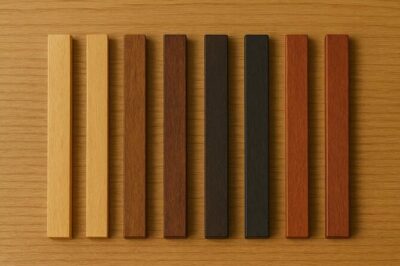
Chopsticks Making Workshop in Gion with Engraving Option
Read our review →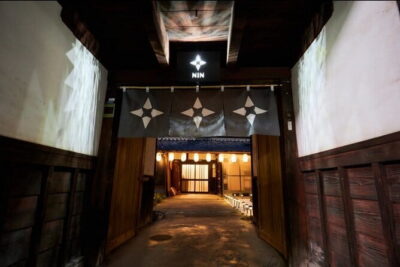
Authentic knife making experience at a blacksmith in Kyoto
Read our review →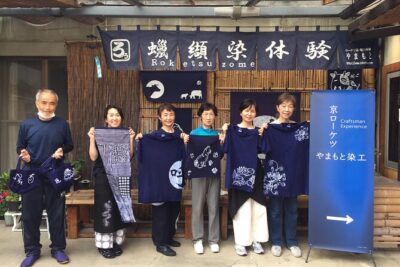
Roketsu dyeing experience: M course Roketsu Dyeing Experience
Read our review →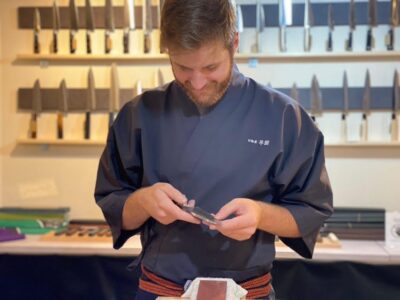
Beginner Knife Sharpening & Handle Fitting Workshop
Read our review →
Japanese Archery Workshop with Experienced Instructor
Read our review →
Kyoto Michelin Ramen Workshop or Painting Ramen Essentials
Read our review →
Browse the lists this tour appears in