
Reviewed · KYOTO CRAFT WORKSHOPS
Let’s make only one original onigawara in the world
Kyoto has no shortage of souvenirs, but few begin as a lump of clay under your hands. At 瓦工房 You家, artisan Yuya breaks the making of an onigawara into simple steps, helping you shape a small demon-faced roof tile that will later be fired and sent home.
I like the personal result: every clay guardian takes a different shape, even when everyone follows the same basic method. I also like the small setting, normally limited to five people, where Yuya can give patient, hands-on help. The main catch is that shipping costs extra, and your finished piece arrives later rather than leaving with you.
Key points to know before booking
- Make a traditional roof guardian: Shape an onigawara, the demon-faced tile placed on Japanese roofs to help protect buildings from evil and rainwater.
- Beginner-friendly instruction: Yuya turns a difficult craft into clear, manageable steps, so you do not need previous clay experience.
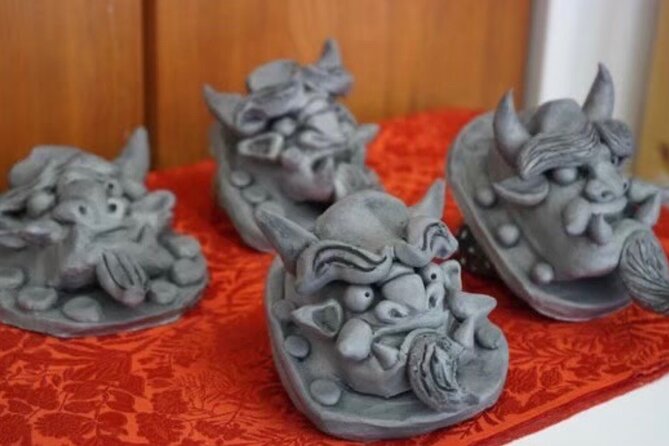
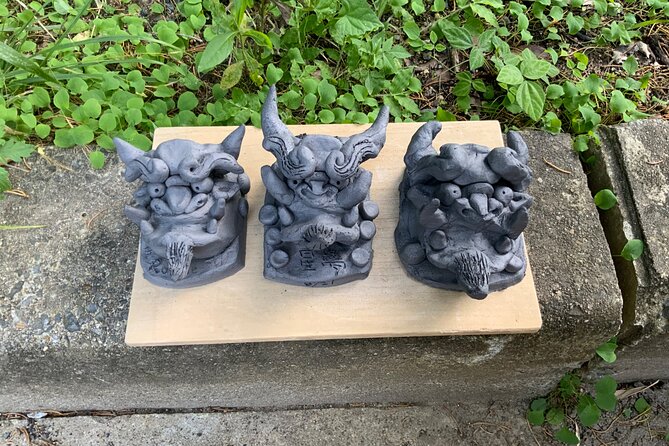
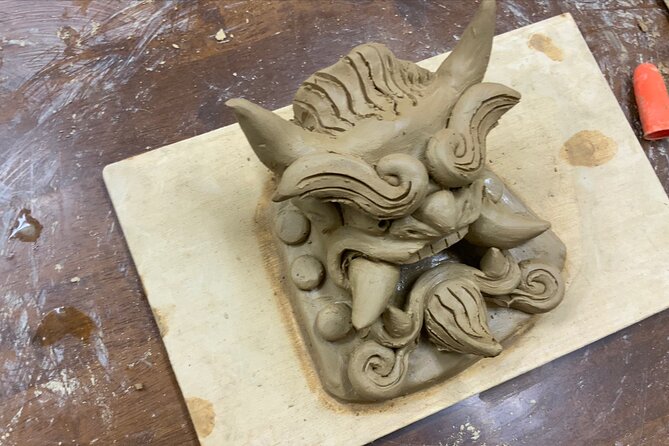
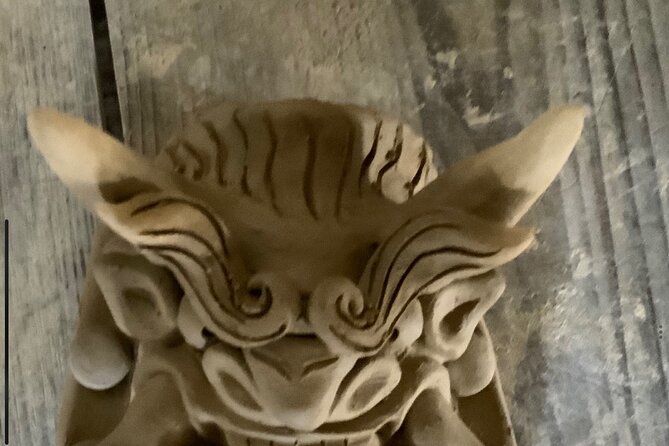
- Every piece is different: The same process produces fierce, comic, lumpy, or highly stylized oni, depending on your hands and imagination.
- Small classes feel personal: The normal maximum is five people, though larger groups of five or more can be arranged at another location.
- Your souvenir is fired later: The tile must dry and be kiln-fired before it can be sent to your home.
- Allow more than two hours: The advertised time is about two hours, but several people have taken closer to three hours to finish carefully.
Why an onigawara makes a better Kyoto souvenir
An onigawara is not just a little clay monster. It comes from the roofline of Japanese architecture, where demon faces and gargoyle-like figures were placed at the ends of the main roof ridge. Their purpose was practical and symbolic: they helped direct rainwater away from the roof and were believed to guard the building from harm.
That gives the activity a useful connection to what you see around Kyoto. Once you know what to look for, the fierce faces on temples and older buildings become easier to notice. Your own piece will be much smaller and simpler than a full roof ornament, but the basic idea remains.
I like this connection between making and seeing. You are not just buying a decorative object in a shop. You learn what the object means, then make your own version. It gives the souvenir a story that a packaged charm cannot match.
The workshop also presents a modern take on an old craft. Tile production has changed over time, but the class uses a hands-on process that lets you work directly with natural clay and see how a complicated form develops from simple parts.
More craft workshops in Kyoto:
- Kyoto : Chopsticks Making Workshop in Gion with Engraving Option
★ 5.0 · 958 reviews - Authentic knife making experience at a blacksmith in Kyoto
★ 4.8 · 350 reviews - Roketsu dyeing experience: M course Roketsu Dyeing Experience
★ 5.0 · 163 reviews
What happens when you arrive at 瓦工房 You家
The meeting point is 瓦工房 You家, at 373-2 Yamazakichō in Kyoto’s Higashiyama Ward. The activity begins and ends at the same place, and the studio is near public transportation.
The class starts with an explanation of kawara, Japan’s traditional roof tiles, and the role of onigawara. This introduction matters because the demon face is not an arbitrary craft project. It is tied to Japanese building customs, roof construction, protection, and decoration.
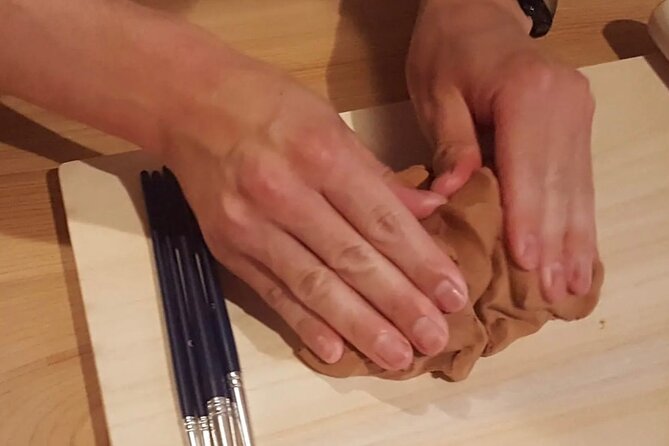
Then Yuya demonstrates the basic method. The class is designed around a simple handmade course, and the process has been developed so that children and people who do not consider themselves good with their hands can complete an oni.
You should expect clay, tools, close attention, and a few moments when your sculpture looks less promising than the sample. That is normal. The form is built step by step, and the final face begins to appear only after the parts are joined and refined.
Building your demon face from simple clay forms
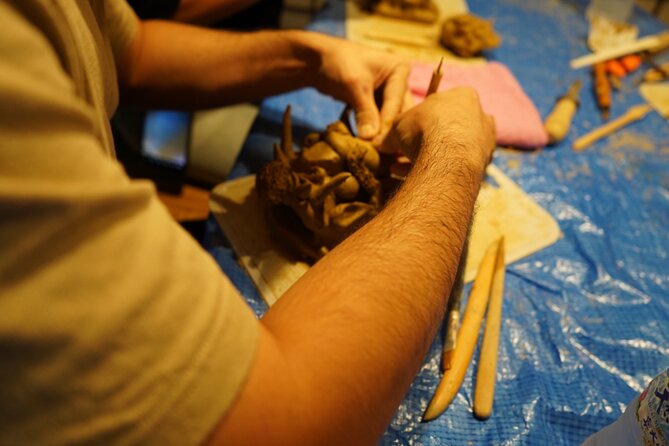
The appeal of the class is the way Yuya breaks a difficult object into manageable stages. You do not need to invent a complete sculpture from nothing. Instead, you shape a set of parts and bring them together in your own way.
The method gives beginners a useful balance. You have enough structure to avoid staring at a blank lump of clay, but enough freedom to make the result your own. You can change the expression, proportions, and small design choices within the basic form.
This is where the pieces become personal. One person may produce a fierce guardian, while another creates something rounder, stranger, or almost playful. A family group can follow the same instructions and still finish with a collection of very different faces.
Yuya’s teaching is one of the strongest parts of the experience. His English is described as clear enough for instructions, even when casual conversation may be less smooth. He demonstrates each stage, checks that the class understands, and offers suggestions without taking over the design.
That approach is especially helpful if you are worried about your artistic ability. You may think your clay is misshapen halfway through. Keep going. The finished form often looks far better once the eyes, mouth, horns, and other features come together.
A calm break from Kyoto sightseeing
Kyoto days can become a steady march between temples, stations, restaurants, and crowded streets. This workshop gives you a reason to sit down and concentrate on one small task.
I like the change of pace. The work is active, but not hurried in the usual sightseeing sense. You listen, shape, adjust, and talk with the instructor and the people around you. It can be a good morning activity or an afternoon pause between visits.
The setting is intimate rather than polished like a large craft attraction. That is part of its appeal. You are visiting a working craft space and spending time with an artisan who makes the process understandable.
Families should find the format approachable. Children and teenagers can take part, and the instruction is broken into clear techniques. Adults with no pottery background are also well suited to the class. Experienced sculptors may enjoy adding their own refinements, though the basic project remains guided.
The advertised duration is about two hours. In practice, you should leave room for longer. One adult group needed almost three hours, and a complete beginner reported taking about three hours. If you have a train reservation or another fixed appointment, do not schedule it too tightly after the workshop.
A few more Kyoto tours worth putting on the shortlist
- PERFECT KYOTO 1-Day Bus Tour
★ 5.0 · 13,518 reviews - Kyoto: Fushimi Inari, Kinkakuji, Bamboo Grove 1 Day Bus Tour
★ 4.8 · 4,316 reviews - Kyoto: Tea Ceremony in a Traditional Tea House in Kiyomizu
★ 4.9 · 3,519 reviews - Kyoto Geisha Walking Tour: Gion District & Hidden Gems
★ 4.7 · 3,273 reviews
What happens after you finish the clay work
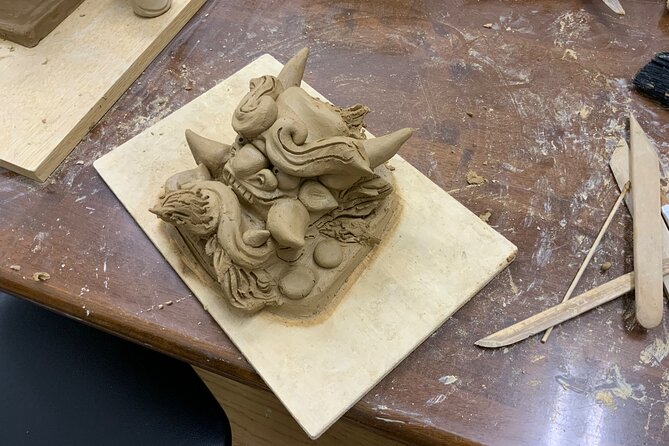
You do not take the unfired tile home. After the class, the onigawara is fired in a kiln at the factory. The clay needs time to dry and cure before that stage, so the completed piece is sent to your home later.
The wait can be several weeks. One family was told to expect about two months, while other experiences describe delivery after a few weeks. The exact timing may vary, so plan on patience rather than expecting a quick shipment.
This arrangement is practical for an international visit. A fired clay sculpture can be heavy and fragile, and carrying it through airports would be awkward. Having it shipped protects you from packing problems, though it also means you do not see the final fired version before leaving Japan.
Shipping is not included in the listed price. The cost is paid separately, and one important detail is that the amount may be given at the end of class and paid in cash. Bring cash for this extra charge. Since the exact shipping amount is not provided in the activity details, ask about it before or during the booking process if your budget is tight.
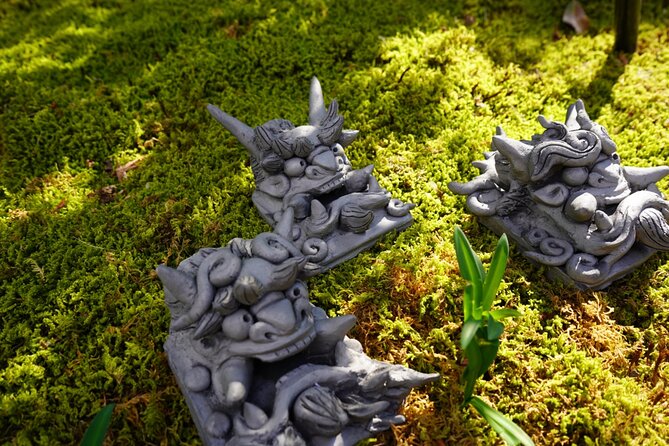
The finished object is meant to be more than a decoration. The traditional onigawara served as a guardian, and you can display your small version at home, in a garden, or wherever you want a reminder of Kyoto and the work you put into it.
Group size, language, and practical comfort
The standard class has a maximum of five people. That limit is a real advantage because clay work benefits from individual correction. If your finger placement or construction needs adjusting, Yuya has a better chance to help than an instructor managing a large room.
Private-feeling sessions can happen naturally when only one booking is scheduled. The class is not automatically cancelled simply because the group is small, which is useful if you are booking as a couple or solo participant.
Groups of five or more are accepted, with capacity listed up to 40 people. For larger groups, the location changes, so confirm the arrangement before booking. The small-group format described for the regular workshop may not be the same as the setup for a large party.
English instruction is available. Yuya uses clear demonstrations and simple explanations, and the teaching method does much of the work even when conversation is not perfectly fluent. If you have questions, ask as you go. The instructor is accustomed to helping beginners through each stage.
The class uses soil and clay, so wear clothes that can get dirty. An apron is not included. Bottled water is included, but the activity does not list food, drinks beyond water, or other supplies as included.
Most people can participate, and service animals are allowed. Since the work involves handling clay and shaping a sculpture, anyone who wants to join should be comfortable with a hands-on craft activity.
Is the $89.17 price good value?
At $89.17 per person, this is not a cheap souvenir purchase. It is a guided craft lesson, cultural explanation, kiln firing, and later delivery of a personal object.
The value depends on what you want from Kyoto. If you only want a small gift to pack immediately, a shop-bought charm will cost less and require no waiting. If you want an activity that gives you time with a local artisan and leaves you with something you made yourself, the price is easier to justify.
The small group is important here. You are paying for instruction rather than simply access to clay. Yuya’s step-by-step teaching helps turn a project that can be difficult into one that beginners can complete. The kiln firing also adds a professional finish that you could not achieve in the workshop alone.
Remember to budget for shipping separately. That extra charge changes the final cost, especially if you are making more than one piece or joining as a family. Still, the fired souvenir has a personal value that is hard to measure against an ordinary purchase.
Group discounts are available, which may improve the price for larger parties. Since the location changes for groups, confirm both the discount and meeting arrangement before you commit.
Who should book this Kyoto workshop?
I would choose this for families, creative couples, teenagers, and anyone who wants a quiet activity between major sightseeing stops. It is also a good fit if you prefer souvenirs with a clear connection to local culture.
You do not need pottery experience. In fact, the process seems designed for people who are starting from zero. You should be willing to follow instructions, get your clothes dirty, and accept that your sculpture may look odd before it comes together.
This may not suit you if you need to leave Kyoto with the finished object in your luggage. It also may not be right if you dislike delayed shipping or unexpected extra costs. The class requires patience twice: first while the clay takes shape, and later while it dries, fires, and travels home.
I would also avoid booking it immediately before a fixed appointment. The listed duration is approximately two hours, but the careful pace can stretch toward three.
Should you book this onigawara experience?
Book it if you want to make something personal, enjoy practical cultural activities, and can wait for a fragile souvenir to be fired and shipped. Yuya’s patient instruction makes the project realistic for beginners, while the small class size gives the session a friendly, personal feel.
Skip it if your priority is a quick, low-cost souvenir or a tightly timed itinerary. You must also plan for dirty clothes, separate shipping, and a wait of several weeks or more.
For the right visitor, this is a memorable way to connect Kyoto’s roofline with your own hands. You leave the workshop without the final tile, but with the satisfaction of knowing exactly how it began.
FAQ
How long does the onigawara workshop last?
The advertised duration is approximately two hours. The work can take closer to three hours, especially for beginners or anyone who wants to refine the sculpture carefully.
Where does the experience begin and end?
It begins and ends at 瓦工房 You家, located at 373-2 Yamazakichō, Higashiyama Ward, Kyoto, 605-0841, Japan.
What is an onigawara?
An onigawara is a traditional Japanese roof tile or roof ornament, often shaped with a demon or gargoyle-like face. It was used to help protect buildings from evil and rainwater.
Do I need previous pottery experience?
No. The instructor teaches the project in simple stages, and the activity is designed so beginners, children, and people who consider themselves clumsy with their hands can participate.
Who teaches the workshop?
The instructor is Yuya, an onigawara artisan who demonstrates each step and helps participants shape their individual pieces.
How many people can join the regular class?
The regular activity has a maximum of five participants. Groups of five or more can also be accepted, with the location changing for larger groups.
Do I take my onigawara home immediately?
No. The piece is fired in a kiln at the factory after the workshop and then shipped to your home once the drying and firing process is complete.
Is shipping included in the price?
No. Shipping is not included in the experience fee. The shipping charge is paid separately, and cash may be required at the end of the class.
What should I wear?
Wear clothes that can get dirty because the activity uses soil and clay. An apron is not included.
Newest Kyoto experiences on the site
- Treasures of Kyoto: Gion & historical Walking Tour★ 5.0 · 6 reviews
- Whisk Your Own Matcha: A Zen Matcha Experience at Temple★ 3.6 · 7 reviews
- Kyoto tea town for matcha lovers★ 5.0 · 16 reviews
- Uji: Private immersion into Kyoto’s tea and reglious culture★ 5.0 · 17 reviews
- Kyoto Matcha Green Tea Tour★ 4.5 · 23 reviews
- Uji and Wazuka Matcha Farm Half Day Private Guided Tour★ 5.0 · 21 reviews
- Utilising upcycled Matcha! Creating matcha incense (Uji, Kyoto)★ 5.0 · 6 reviews
- Sacred Temple Yoga Experience in Japan★ 5.0 · 3 reviews
Kyoto Craft Workshops, compared.
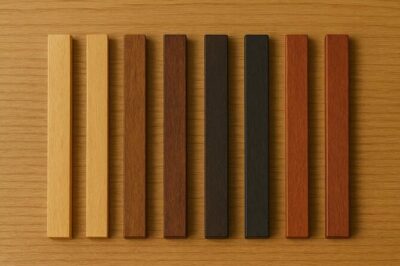
Chopsticks Making Workshop in Gion with Engraving Option
Read our review →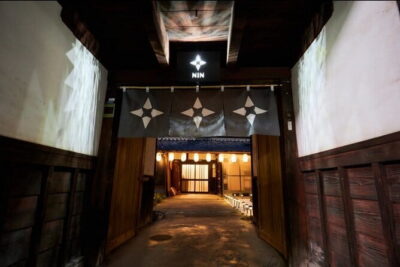
Authentic knife making experience at a blacksmith in Kyoto
Read our review →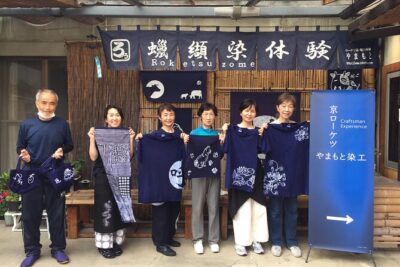
Roketsu dyeing experience: M course Roketsu Dyeing Experience
Read our review →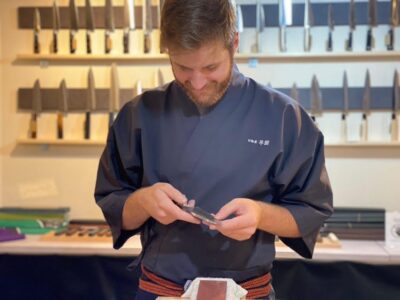
Beginner Knife Sharpening & Handle Fitting Workshop
Read our review →
Japanese Archery Workshop with Experienced Instructor
Read our review →
Kyoto Michelin Ramen Workshop or Painting Ramen Essentials
Read our review →
Browse the lists this tour appears in