
Reviewed · KYOTO CRAFT WORKSHOPS
Kyoto Cultural IKEBANA Experience@SEKKA FLOWERS
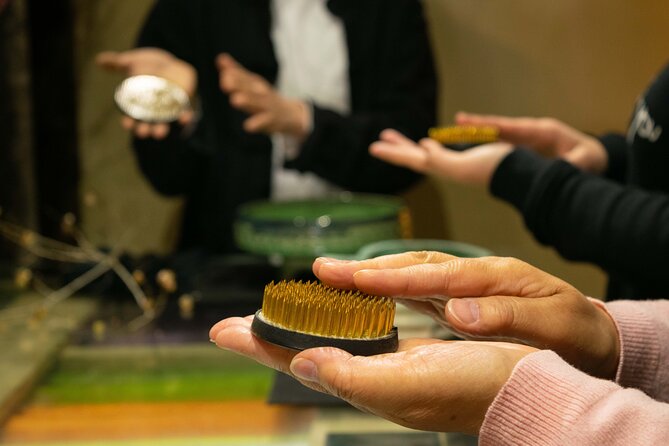
Ikebana here is not a quick craft project. You work with flowers and branches in their natural forms, then place your arrangement in the tokonoma, the alcove traditionally used to display art in a Japanese room. The setting is a flower shop inside a roughly 100-year-old townhouse, which gives the short lesson a strong sense of place.
I like two things in particular: the class is capped at six people, and the teaching leaves room for personal taste rather than forcing every arrangement into one correct pattern. Taro-san and Chiaki-san guide beginners clearly, then give you space to make your own choices.
The main limitation is time. At about 40 minutes, this is an introduction, not a full study of ikebana. The $65.15 price makes sense if you value the setting, instruction, and finished flowers, but it may feel high if you only want a basic souvenir activity.
Key points to know before booking
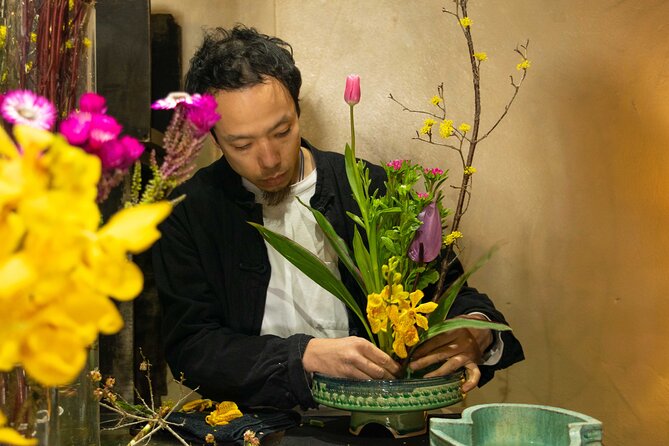
- Create your own arrangement: You work directly with seasonal flowers and branches instead of only watching a demonstration.
- Use a traditional display alcove: Your finished piece is placed in a tokonoma inside the Japanese-style room.
- Learn wabi-sabi: The lesson focuses on natural shapes, simplicity, and the beauty of imperfection.
- Small class size: A maximum of six people allows for personal guidance without turning the lesson into a large group event.
- Convenient temple-area location: The flower shop is near Kinkaku-ji and Daitoku-ji in northern Kyoto.
- Flowers may follow you onward: Arrangements have been delivered to accommodations after the class, allowing you to enjoy them beyond the workshop.
A quiet flower lesson in northern Kyoto
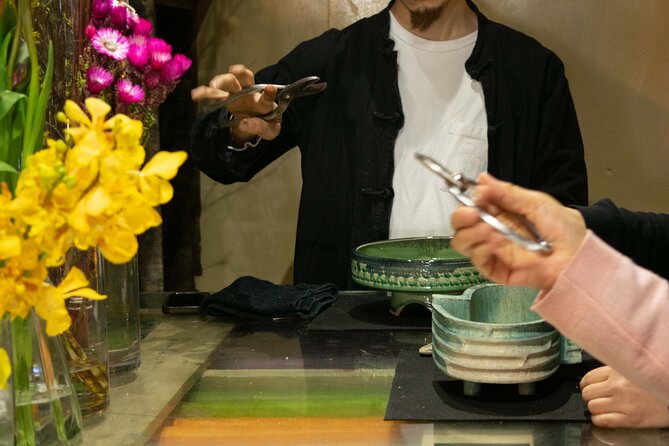
Kyoto can be noisy, crowded, and tightly scheduled, especially around its famous temples. This ikebana class offers a useful change of pace. You step into a traditional townhouse, handle flowers, listen to the instructors, and pay attention to shape and balance for less than an hour.
That change matters. Ikebana is not simply putting flowers in a vase. The arrangement gives attention to the line of a branch, the direction of a stem, the open space between elements, and the natural character of each flower. You are encouraged to work with what the plant is doing rather than forcing it into a stiff design.
The class is based on classical forms. At the same time, the teaching recognizes that a beginner needs room to experiment. That balance is one of the strongest reasons to choose this activity. You receive enough structure to understand the basic ideas, but your finished arrangement does not need to look identical to anyone else’s.
The session also introduces wabi-sabi, a Japanese aesthetic that finds beauty in simplicity, age, irregularity, and change. You do not need prior knowledge of Japanese art to appreciate the idea. A curved branch, a slightly uneven flower, or a gap in the arrangement can become part of the design rather than a problem to correct.
More craft workshops in Kyoto:
- Kyoto : Chopsticks Making Workshop in Gion with Engraving Option
★ 5.0 · 958 reviews - Authentic knife making experience at a blacksmith in Kyoto
★ 4.8 · 350 reviews - Roketsu dyeing experience: M course Roketsu Dyeing Experience
★ 5.0 · 163 reviews
Inside the 100-year-old townhouse
The class takes place at SEKKA FLOWERS, a flower shop in a renovated traditional townhouse. The building is approximately 100 years old, so the setting adds more than a decorative backdrop. You are learning a traditional Japanese art inside the kind of older domestic space where a flower arrangement makes cultural sense.
The arrangement is displayed in a tokonoma, an alcove in a traditional Japanese room. In Japan, this space is meant for a carefully chosen piece of art or seasonal decoration. Seeing your own work placed there changes the lesson from a simple flower activity into a small exercise in presentation.
This is also a practical choice for a Kyoto itinerary. The shop is near Kinkaku-ji Temple and Daitoku-ji Temple, two important stops in the northern part of the city. You can pair the class with temple sightseeing, though the exact order of your day will depend on your transportation and reservations.
The location is near public transportation, but the supplied details do not specify a particular station or route. Use the full meeting address, 44-4 Murasakino Kamimonzenchō, Kita Ward, Kyoto, 603-8217, Japan, when planning your arrival. I would allow enough time to find the townhouse without rushing, since a short class leaves little room for a late start.
What happens during the 40-minute class
The experience lasts about 40 minutes. That compact format suits visitors with a busy Kyoto schedule, families, and anyone who wants a cultural activity without giving up half a day.
You begin with an introduction to ikebana and its place in Japanese art. The instructors explain the principles behind the arrangement, including the way flowers and branches can keep their natural forms. The emphasis is not only on color. Line, height, direction, spacing, and the character of the plant all matter.
You then make your own arrangement with guidance from the instructors. Taro-san and Chiaki-san are described as warm and encouraging, with a teaching style that combines instruction and creative freedom. They explain the principles, answer questions, and avoid treating a beginner’s choices as mistakes.
That approach is important. A hands-off class can leave you wondering what to do, while an overly strict class can turn a personal activity into a copying exercise. Here, you are given a framework and then allowed to make your own decisions.
At the end, your work is displayed in the tokonoma. This provides a clear finish to the lesson and lets you see how the arrangement works in a traditional room. The display also helps you understand why ikebana places such value on empty space and the relationship between an object and its setting.
The class does not promise a long technical course, and 40 minutes is not enough to cover every school or method of ikebana. Think of it as a focused introduction that gives you a working feel for the art.
Seasonal flowers and the idea of natural beauty
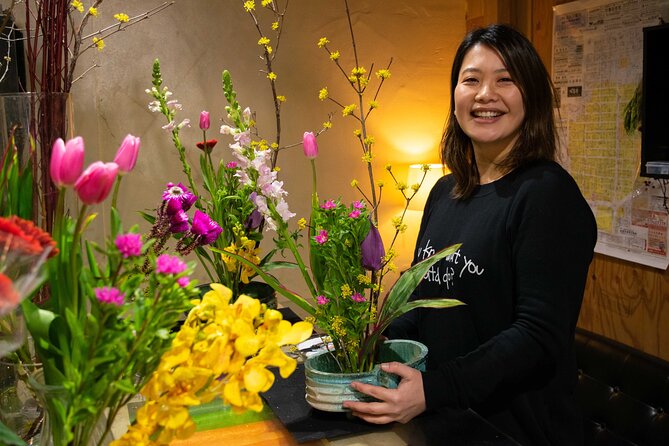
One of the most appealing parts of the activity is its connection to the seasons. The flowers used in Japan change throughout the year, so the arrangement you make will reflect the time of your visit.
The exact flowers are not specified, and that is probably appropriate. Ikebana depends on what is available and attractive at the time. Rather than presenting the same fixed souvenir year-round, the class connects your work with the current season.
You are also asked to respect the natural state of the flowers and branches. That may mean keeping an unusual curve, allowing a stem to lean, or leaving open space around a bloom. The lesson trains you to look carefully before cutting or placing anything.
I find that idea especially useful for first-time participants. You do not need to memorize a long list of rules to begin noticing form. The activity gives you a new way to look at ordinary plant material, which can make the class feel more meaningful than a standard make-and-take workshop.
The finished arrangement is personal, but it is also temporary. Flowers change. Leaves open, stems bend, and blossoms fade. That temporary quality fits the wabi-sabi theme and gives the souvenir a life beyond the photograph.
A few more Kyoto tours worth putting on the shortlist
- PERFECT KYOTO 1-Day Bus Tour
★ 5.0 · 13,518 reviews - Kyoto: Fushimi Inari, Kinkakuji, Bamboo Grove 1 Day Bus Tour
★ 4.8 · 4,316 reviews - Kyoto: Tea Ceremony in a Traditional Tea House in Kiyomizu
★ 4.9 · 3,519 reviews - Kyoto Geisha Walking Tour: Gion District & Hidden Gems
★ 4.7 · 3,273 reviews
The instructors and the small-group feel
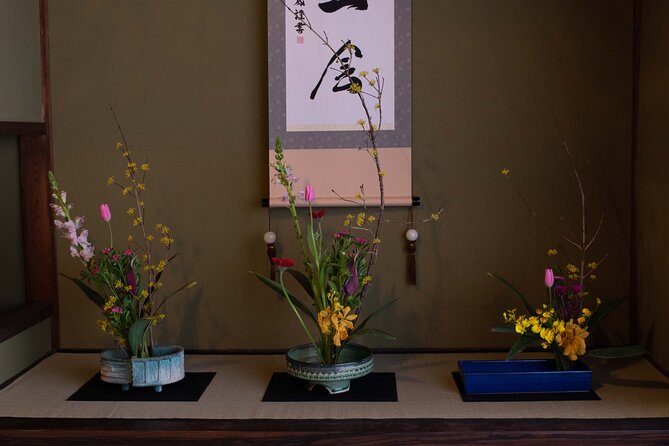
Taro-san and Chiaki-san are the named instructors associated with the experience. Their role is not simply to demonstrate. They help you understand the principles, then encourage you to make an arrangement that reflects your own choices.
A maximum of six people is a useful detail. Small numbers usually make it easier to ask questions and receive help with placement, cutting, or balance. It also keeps the room calmer, which suits an activity based on observation and concentration.
The class has worked well for couples and families. A couple can create arrangements side by side, while parents and children can share the basic ideas without needing prior experience. The fact that all ages in one family have enjoyed the activity suggests that it is flexible, though very young children may need help handling flowers and tools.
The teaching style also makes the class suitable for solo participants. You are not expected to arrive with a partner or a background in Japanese arts. Beginners are welcome, and there is no stated requirement for previous ikebana practice.
Service animals are allowed, and most people can participate. The available information does not provide detailed accessibility measurements or equipment notes, so anyone with specific mobility needs should confirm those points before booking.
What your finished arrangement means for your day
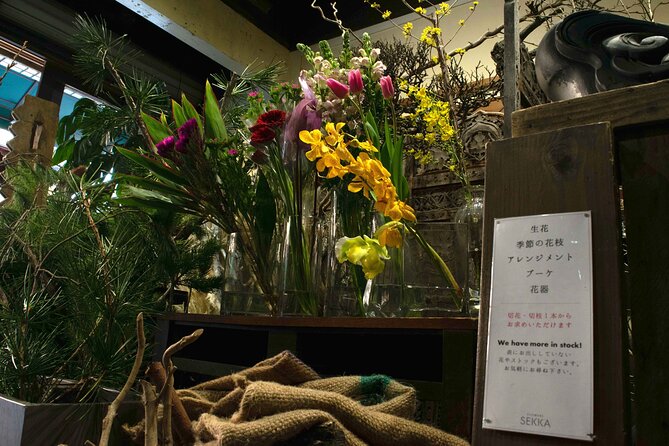
A nice feature of this class is that your flowers may not have to end at the shop. Past participants have had their arrangements delivered to their accommodations afterward. This allows you to enjoy the work at your hotel or lodging rather than carrying it around Kyoto for the rest of the day.
Because delivery details can depend on the arrangement and your accommodation, confirm the current procedure when booking or at the start of the class. The experience information supports delivery to accommodations, but it does not specify a delivery range, timing, or whether every property qualifies.
If delivery is available for your booking, it adds real value to the activity. You are not only making a temporary display and leaving it behind. You can continue seeing the flowers during your stay, perhaps on a hotel table or in your room.
You should also remember that flowers are fragile. If you plan to move to another city immediately afterward, delivery may be more useful than carrying the arrangement yourself. If you are staying in Kyoto for a few nights, the finished work becomes a pleasant reminder of the lesson.
Is $65.15 a fair price?
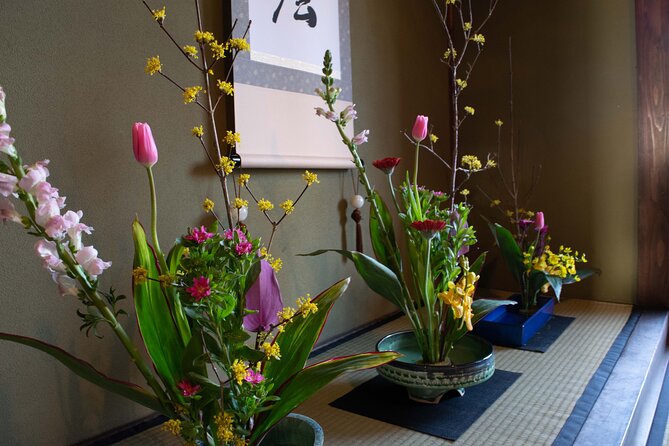
At $65.15 per person, this is not Kyoto’s cheapest cultural activity. The class lasts only around 40 minutes, so the price per minute is high if you judge it as a simple craft lesson.
The value improves when you consider what is included in the experience itself: a traditional townhouse setting, a small class, instructor guidance, seasonal flowers, the tokonoma display, and the possibility of delivery to your accommodation. You are paying for a compact cultural encounter in a distinctive setting, not just for plant material.
I would see the price as reasonable for someone who wants a personal activity near the northern Kyoto temples. It is especially appealing if you prefer a quiet class to a crowded sightseeing stop or if you want a souvenir that you make yourself.
For budget-focused visitors, the cost may be harder to justify. A 40-minute lesson will not provide the depth of a multi-session ikebana course. If your main goal is to learn advanced technique, look for a longer program. If your goal is to try a traditional Japanese art in a small group, this price is easier to defend.
The mobile ticket is convenient, and free cancellation is available when you cancel at least 24 hours before the start time. Changes or cancellations made inside that window are not accepted for a refund, and all cut-off times use local Kyoto time.
Who will enjoy this experience most
This class is a strong fit for first-time visitors who want something more personal than another temple visit. It gives you contact with a Japanese art form and does so without requiring a full day or previous study.
I would also recommend it for:
- Couples looking for a calm shared activity
- Families who want a hands-on cultural lesson
- Solo visitors who enjoy creative work in a small group
- Flower lovers interested in seasonal Japanese design
- Visitors staying near Kinkaku-ji or Daitoku-ji
- Anyone who wants a handmade souvenir rather than a shop-bought object
It may be less suitable if you dislike short scheduled activities, expect a detailed course in ikebana technique, or need confirmed accessibility information that is not provided here.
Planning the class with temple visits
The northern Kyoto location makes it easy to think of the class as part of a temple-area day. Kinkaku-ji is nearby, and Daitoku-ji is also in the area. You can plan the flower class before or after sightseeing, depending on your booking time and how long you want at each temple.
Do not assume the class itself will take up your whole morning or afternoon. At 40 minutes, it is best used as an anchor between other plans. Still, leave room for local transportation and finding the exact townhouse address.
The experience ends back at the meeting point. This makes onward planning simple, but it also means you should not expect a guided transfer to another attraction. You arrange your own transportation after the lesson.
A mobile ticket keeps check-in straightforward. Confirmation is provided at booking, so keep the ticket available on your phone and check the meeting address before leaving for the class.
My recommendation: book or skip?
I recommend booking this ikebana class if you want a small, calm, hands-on Kyoto activity with a traditional setting and a personal result. The best parts are the old townhouse, the tokonoma display, the seasonal flowers, and the patient balance between instruction and freedom.
Book it with realistic expectations. You will get an introduction, not a full education in ikebana, and 40 minutes passes quickly. At $65.15, the experience is worthwhile when the setting and finished arrangement matter to you.
Skip it if you want the lowest-cost activity, a long technical lesson, or a fully detailed accessibility plan. For everyone else, especially couples, families, and visitors already planning time near Kinkaku-ji or Daitoku-ji, this is an appealing way to slow down and see Kyoto through flowers.
FAQ
Where does the ikebana experience take place?
It takes place at SEKKA FLOWERS, located at 44-4 Murasakino Kamimonzenchō, Kita Ward, Kyoto, 603-8217, Japan. The flower shop is inside a renovated traditional townhouse that is approximately 100 years old.
How long does the class last?
The experience lasts approximately 40 minutes.
Is the class suitable for beginners?
Yes. Beginners are welcome, and no previous ikebana experience is required.
How many people can join?
The activity has a maximum of six participants.
Is the activity near major Kyoto sights?
Yes. The flower shop is near Kinkaku-ji Temple and Daitoku-ji Temple. It is also near public transportation.
Can I take my flower arrangement with me afterward?
Arrangements have been delivered to accommodations after the class. Confirm the current delivery details for your booking, since the available information does not specify delivery timing or coverage.
What is the cancellation policy?
You can cancel for a full refund up to 24 hours before the experience begins. Cancellations or changes made less than 24 hours before the start time are not accepted for a refund.
Newest Kyoto experiences on the site
- Treasures of Kyoto: Gion & historical Walking Tour★ 5.0 · 6 reviews
- Whisk Your Own Matcha: A Zen Matcha Experience at Temple★ 3.6 · 7 reviews
- Kyoto tea town for matcha lovers★ 5.0 · 16 reviews
- Uji: Private immersion into Kyoto’s tea and reglious culture★ 5.0 · 17 reviews
- Kyoto Matcha Green Tea Tour★ 4.5 · 23 reviews
- Uji and Wazuka Matcha Farm Half Day Private Guided Tour★ 5.0 · 21 reviews
- Utilising upcycled Matcha! Creating matcha incense (Uji, Kyoto)★ 5.0 · 6 reviews
- Sacred Temple Yoga Experience in Japan★ 5.0 · 3 reviews
Kyoto Craft Workshops, compared.
Chopsticks Making Workshop in Gion with Engraving Option
Read our review →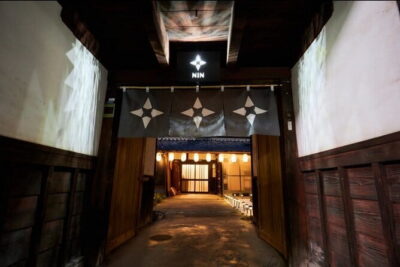
Authentic knife making experience at a blacksmith in Kyoto
Read our review →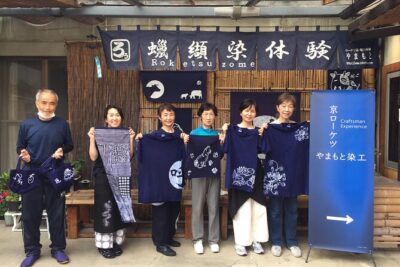
Roketsu dyeing experience: M course Roketsu Dyeing Experience
Read our review →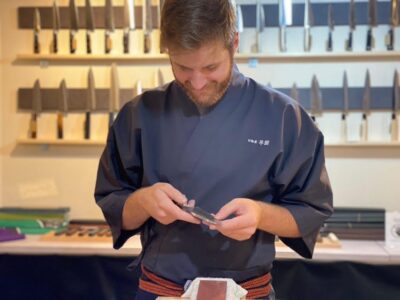
Beginner Knife Sharpening & Handle Fitting Workshop
Read our review →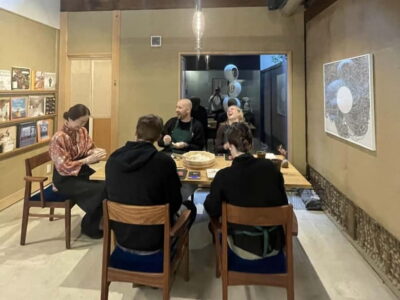
Japanese Archery Workshop with Experienced Instructor
Read our review →
Kyoto Michelin Ramen Workshop or Painting Ramen Essentials
Read our review →
Browse the lists this tour appears in