
Reviewed · KYOTO CRAFT WORKSHOPS
Fukusa Shibori Class
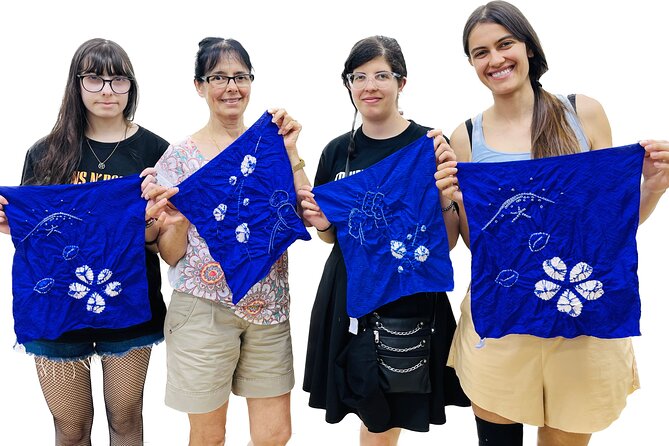
Kyoto’s Fukusa Shibori Class gives you something many sightseeing stops do not: a chance to make a real Japanese craft with your own hands. In 60 to 90 minutes at the Kyoto Shibori Museum, you’ll stitch and gather silk, wrap it with traditional methods, and dye a 38 by 38 centimeter cloth to take home.
I like the clear introduction to two techniques, kasamaki and nuishime, and I like that the class includes both making and looking. You can study finished examples in the museum, then see how the patterns are formed as you work. The staff, including an instructor named Roy, are described as patient and helpful during the tricky steps.
The main drawback is time. An hour to an hour and a half gives you a pleasant taste of shibori, not a full course in the craft. At $71.67 per person, the price is reasonable if you value instruction, materials, museum access, and a handmade souvenir, but it may feel high if you only want a quick activity.
Key points before you book
- You make a 38 by 38 centimeter silk wrapping cloth using two shibori methods.
- Kasamaki and nuishime create patterns through stitching, gathering, and wrapping, not ordinary painting.
- The class lasts about 60 to 90 minutes, making it easy to fit into a Kyoto sightseeing day.
- A skilled teacher guides the process, with Roy named as one instructor who helps students through the work.
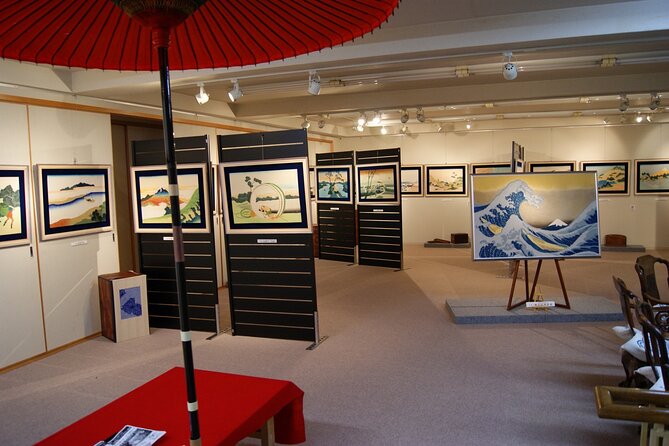
- Museum displays and traditional tools add context before and during the hands-on portion.
- The group can include up to 15 people, so this is personal instruction in a small class, but not a private lesson.
What shibori means in this Kyoto class
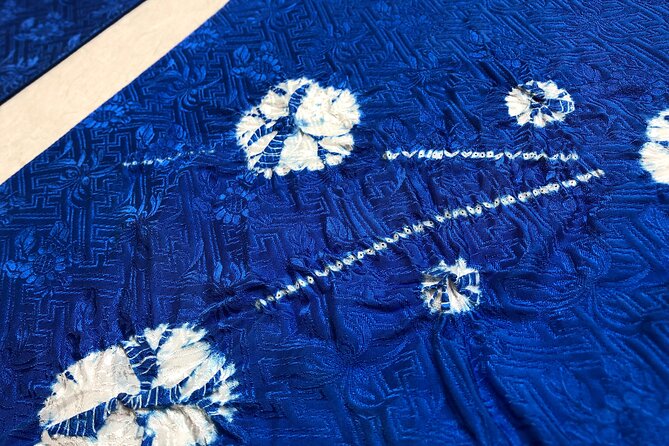
Shibori is a family of Japanese cloth-dyeing methods. Instead of brushing color onto a flat piece of fabric, you control where the dye can reach by folding, stitching, gathering, tying, or wrapping the cloth.
That is what makes this class useful. You are not simply decorating a pre-made souvenir. You are learning how small changes in thread tension and fabric arrangement affect the final pattern.
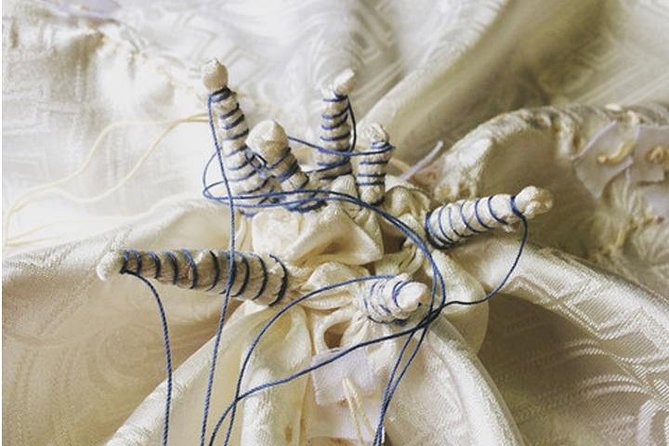
The two methods here offer different lessons. Kasamaki involves stitching around the shape you want to create, pulling the thread tight, and wrapping the gathered thread several times around a cone of fabric. Nuishime involves stitching along a line and then pulling the thread tight.
Those instructions sound simple. In practice, the thread must be pulled firmly enough to shape the cloth, but not so roughly that you lose control. The class gives you a teacher nearby for precisely these moments.
More craft workshops in Kyoto:
- Kyoto : Chopsticks Making Workshop in Gion with Engraving Option
★ 5.0 · 958 reviews - Authentic knife making experience at a blacksmith in Kyoto
★ 4.8 · 350 reviews - Roketsu dyeing experience: M course Roketsu Dyeing Experience
★ 5.0 · 163 reviews
Inside the Kyoto Shibori Museum
The meeting point is the Kyoto Shibori Museum at 135-5 Shikiamicho in Nakagyo Ward. The activity begins and ends there, so you do not need to manage a second meeting point after the class.
Before or around the hands-on work, you can see displays of shibori pieces and visit the museum shop. This matters because the finished examples show you what these techniques can produce when handled by an experienced maker.
I would take a few minutes to look closely at the cloth on display. Notice how the pattern is not just a color choice. It comes from the areas protected from dye, the areas exposed to it, and the way the fabric was gathered before coloring.
The museum setting also helps place your own work in context. Your cloth will be a beginner’s piece, and that is fine. The point is not to match a professional textile in one short session. The point is to understand the process well enough to recognize the skill behind the finished museum examples.
The hands-on work: stitching and gathering silk
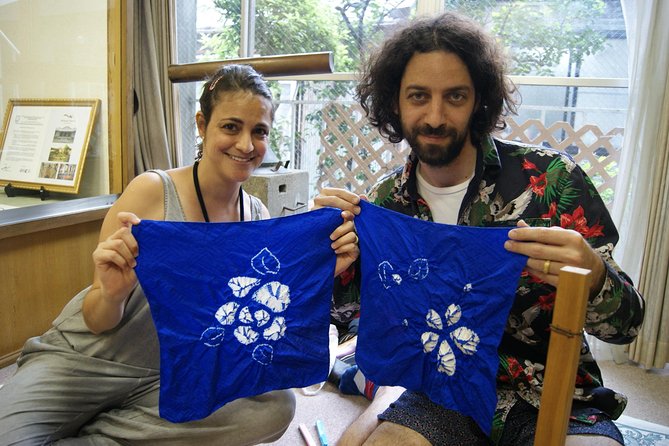
The class uses traditional shibori tools and fabrics. You’ll work on a silk wrapping cloth measuring 38 by 38 centimeters, a useful size for a keepsake rather than a tiny sample.
The first stage involves shaping the fabric with stitching. With kasamaki, you stitch around the form you want to create. Once the thread is pulled, the cloth gathers, and the thread is wrapped around the cone-shaped section several times.
Nuishime works along a line. You stitch the line, then pull the thread tight to create a controlled section in the cloth.
This is where an instructor adds real value. Written directions can tell you what to do, but they cannot easily show the right amount of tension or explain why a fold is not sitting correctly. The class gives you a person to watch your hands and help you correct the work before dyeing.
One review singled out Roy for careful teaching and for helping the student understand the process rather than simply copying movements. That distinction is important. You want to leave knowing what the thread did to the fabric, not just remembering a sequence of steps.
Dyeing the 38 centimeter silk cloth
Once the stitching and gathering are complete, the cloth is dyed. The wrapped and tightened sections resist the color, creating the pattern that makes shibori recognizable.
The reveal is the most satisfying part of the activity. Before dyeing, your silk cloth is a small bundle of stitched shapes. Afterward, the cloth shows how those shapes controlled the color.
The result will depend on your stitching and on how tightly you gathered the fabric. That variation is part of the appeal. Two people following the same basic instructions can produce different patterns.
You take the finished silk wrapping cloth home with you. It is a practical souvenir in the sense that it is a real textile, not just a paper certificate or a photograph from a workshop. It also carries a clear connection to your time in Kyoto because you made it using techniques taught at the museum.
The class details do not specify the exact drying or finishing process, so you should follow the teacher’s instructions for handling the cloth after dyeing. Ask before folding or packing it if it still feels damp.
Same city, a completely different kind of day:
- PERFECT KYOTO 1-Day Bus Tour
★ 5.0 · 13,518 reviews - Kyoto: Fushimi Inari, Kinkakuji, Bamboo Grove 1 Day Bus Tour
★ 4.8 · 4,316 reviews - Kyoto: Tea Ceremony in a Traditional Tea House in Kiyomizu
★ 4.9 · 3,519 reviews - Kyoto Geisha Walking Tour: Gion District & Hidden Gems
★ 4.7 · 3,273 reviews
What makes the class worth the $71.67 price
At $71.67 per person, this is not the cheapest short activity in Kyoto. The value comes from several parts working together: the silk material, use of traditional tools, instruction, museum displays, and the finished cloth you bring home.
I would compare it with the cost of buying a quality Japanese textile. Here, you are paying not only for an object, but also for the chance to understand how its pattern was made. If you enjoy craft, design, textiles, or cultural activities, that combination can justify the price.
The value is less clear if you are looking for a broad museum tour or a long, advanced lesson. The class lasts only 60 to 90 minutes, and the supplied information describes an introduction to two techniques rather than a detailed study of every shibori style.
The group limit is 15 people. That keeps the session small enough for help from the instructor, though it is not the same as booking a private class. Families and couples can work side by side, and the minimum age is 8.
Why this works well on a hot Kyoto afternoon
One useful feature of this activity is its length. A 60 to 90 minute class can fill a gap between larger sightseeing plans without taking over your whole day.
A class also gives you a change of pace. Kyoto can involve a lot of walking, temples, gardens, and crowded streets. Sitting down with fabric and thread offers a quieter way to spend part of the afternoon.
One participant specifically described the activity as a good choice on a hot afternoon. That makes practical sense, though the supplied details do not specify the museum’s exact indoor conditions. You can count on the class itself being an indoor craft activity at the museum.
The work requires attention, so do not schedule it when you need to rush immediately afterward. You’ll get more from the class if you allow enough time to listen, stitch, and look at the result without watching the clock.
A good choice for families and creative visitors
The minimum age is 8, and adult pricing applies to every age. That makes the class suitable for a family with older children, but the price structure is worth noting before you book. There is no lower child rate stated here.
I like this as a family activity because everyone can make an individual piece while sharing the same lesson. One family described enjoying the process together, with professional shibori makers nearby to help.
It also suits adults who want to do something creative in Kyoto without committing to a full-day workshop. You do not need to arrive as an artist. The techniques are explained during the class, and the teacher helps with the difficult parts.
The experience may be less appealing if you prefer to stay completely passive. You will be stitching, pulling thread, and handling fabric. The finished cloth depends partly on your care, so this is an activity rather than a demonstration.
Getting there and planning the visit
The museum is near public transportation, and the listed meeting point is easy to use as both the start and finish. You receive confirmation at booking, and the activity is offered with a mobile ticket.
Two car parking spaces and bicycle parking are available. Since the parking supply is very limited, do not plan on driving there and assuming a space will be free. Public transportation is the safer choice based on the information provided.
The experience is usually booked about 21 days ahead. That does not guarantee that every date sells out, but it is a useful planning signal. If the class is an important part of your Kyoto schedule, booking a few weeks ahead is sensible.
The group maximum is 15 people. Confirm your meeting time carefully and arrive ready to begin at the museum, since the activity does not include a separate pickup service.
The main limits to keep in mind
The short duration is both a benefit and a restriction. You can fit the class into a packed Kyoto itinerary, but you will not become an expert in kasamaki or nuishime after one session.
The class also focuses on one silk wrapping cloth. You are not making several pieces or choosing from a long menu of projects. That keeps the lesson focused, but it limits the range of techniques you can try.
The product details do not state whether the final dyeing is handled entirely during the class or whether any finishing step follows later. Ask the instructor if you need to know exactly when the cloth will be ready for packing.
Finally, adult pricing applies to any age. Families should calculate the full cost before booking, especially when several children are joining.
Cancellation and practical booking notes
You can cancel for a full refund up to 24 hours before the local start time. Cancellations made less than 24 hours before the activity are not refunded, and changes within that period are not accepted.
Most people can participate, and the minimum age is 8. The activity ends back at the Kyoto Shibori Museum, which makes the return logistics simple.
Bring your mobile ticket and allow yourself enough time to find the museum. Since the work involves dye and fabric, wear clothing you do not mind using during a craft session, although the supplied information does not specify the exact materials or protective clothing provided.
Should you book the Fukusa Shibori Class?
Book it if you want a short, hands-on Kyoto activity that teaches a real craft and gives you a textile to take home. The strongest reasons are the patient instruction, the chance to try both kasamaki and nuishime, and the museum setting with finished examples nearby.
I would especially recommend it to families with children age 8 or older, couples looking for a shared activity, and anyone who enjoys textiles or making things by hand. Roy’s careful teaching, along with help from experienced shibori makers, makes the class more approachable than trying to copy the process alone.
Skip it if you want a long workshop, a broad survey of Japanese dyeing, or the lowest-cost activity possible. At $71.67, the class earns its price through instruction, materials, museum access, and the handmade silk cloth. If those parts appeal to you, this is a worthwhile way to spend an hour in Kyoto.
FAQ
Where does the Fukusa Shibori Class take place?
The class takes place at the Kyoto Shibori Museum, 135-5 Shikiamicho, Nakagyo Ward, Kyoto, 604-8261, Japan.
How long does the class last?
The activity lasts approximately 60 to 90 minutes.
What will I make?
You will dye a 38 by 38 centimeter silk wrapping cloth using kasamaki and nuishime shibori methods.
What are kasamaki and nuishime?
Kasamaki involves stitching around a shape, pulling the thread tight, and wrapping the gathered threads around a cone of fabric. Nuishime involves stitching along a line and pulling the thread tight.
Can I take my finished cloth home?
Yes. The silk wrapping cloth you make during the class is provided as a keepsake to take home.
What is the minimum age?
The minimum age is 8. Adult pricing applies to all ages.
How many people can join the class?
The activity has a maximum group size of 15 people.
Can I cancel for a refund?
Yes. You can cancel at least 24 hours before the local start time for a full refund. Cancellations made less than 24 hours before the start time are not refunded.
Newest Kyoto experiences on the site
- Treasures of Kyoto: Gion & historical Walking Tour★ 5.0 · 6 reviews
- Whisk Your Own Matcha: A Zen Matcha Experience at Temple★ 3.6 · 7 reviews
- Kyoto tea town for matcha lovers★ 5.0 · 16 reviews
- Uji: Private immersion into Kyoto’s tea and reglious culture★ 5.0 · 17 reviews
- Kyoto Matcha Green Tea Tour★ 4.5 · 23 reviews
- Uji and Wazuka Matcha Farm Half Day Private Guided Tour★ 5.0 · 21 reviews
- Utilising upcycled Matcha! Creating matcha incense (Uji, Kyoto)★ 5.0 · 6 reviews
- Sacred Temple Yoga Experience in Japan★ 5.0 · 3 reviews
Kyoto Craft Workshops, compared.
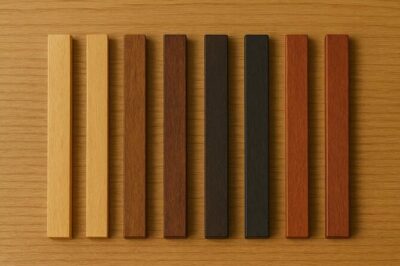
Chopsticks Making Workshop in Gion with Engraving Option
Read our review →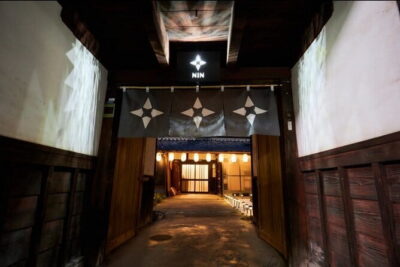
Authentic knife making experience at a blacksmith in Kyoto
Read our review →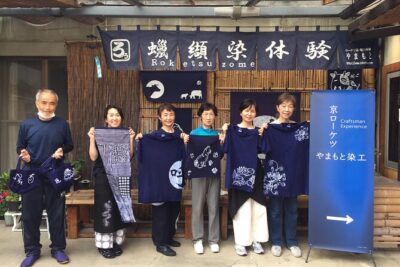
Roketsu dyeing experience: M course Roketsu Dyeing Experience
Read our review →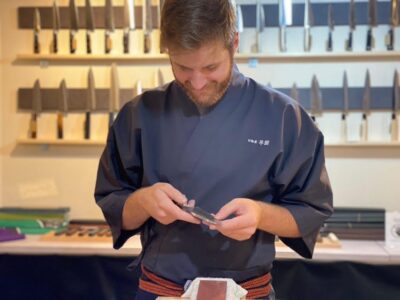
Beginner Knife Sharpening & Handle Fitting Workshop
Read our review →
Japanese Archery Workshop with Experienced Instructor
Read our review →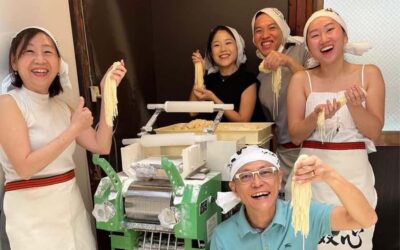
Kyoto Michelin Ramen Workshop or Painting Ramen Essentials
Read our review →
Browse the lists this tour appears in