

Reviewed · KYOTO CRAFT WORKSHOPS
Itajime Shibori Scarf Class
Itajime shibori turns folded fabric, dye, and a little guesswork into a scarf you can actually use. At Kyoto’s Shibori Museum, you choose Japanese fabric, learn the basic technique from a friendly instructor, and watch a pattern appear when the folded cloth is opened.
I like two things here: you make a real souvenir, not a factory-made trinket, and the museum gives the class useful cultural context. The small group, capped at 10 people, also allows for personal help. The main consideration is the short, variable timing. Plan for about an hour, and remember that the class is held on the second floor, which can be hard to spot from the street.
Key points at a glance
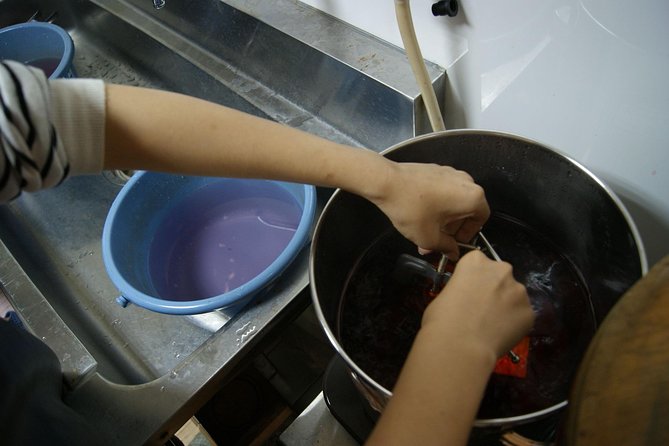
- Make your own itajime scarf: Fold and dye fabric using a traditional Japanese resist-dyeing method.
- See the museum upstairs: View shibori textiles, kimono fabrics, and detailed masterpieces while your scarf dries.
- Expect personal instruction: Staff members, including June and Kenji, are known for patient, careful help.
- Good for families: Children from age 6 can take part, and adult pricing applies to everyone.
- Keep the schedule flexible: The activity lasts about 30 minutes to 1 hour, with the museum visit fitting naturally into the wait.
- Convenient Kyoto stop: The museum is near public transportation and about a two-minute walk from Nijo Castle.
What itajime shibori means for your finished scarf
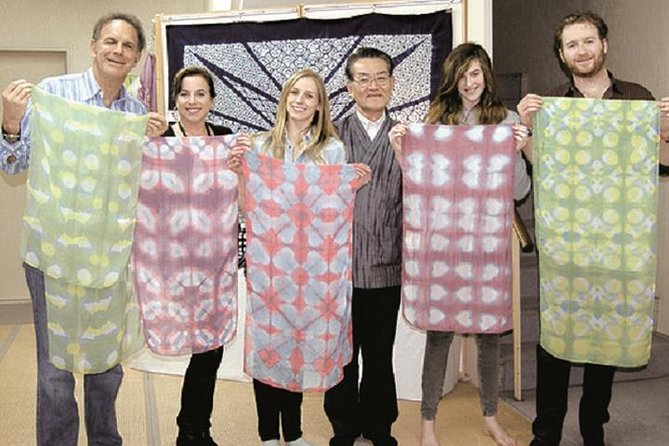
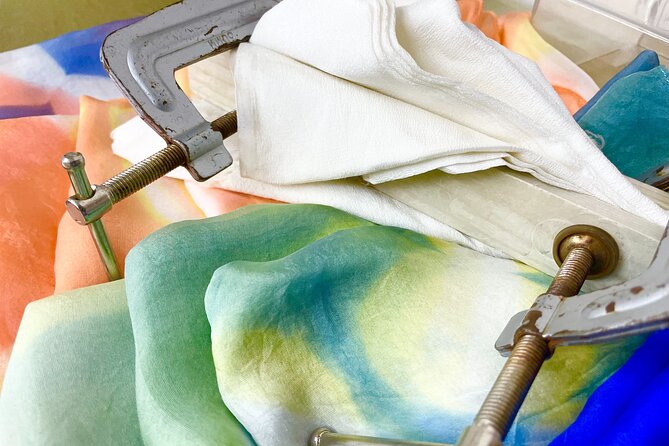
Shibori is Japan’s traditional method of shaping cloth before dyeing it. Instead of painting a pattern directly onto the material, you fold, clamp, bind, or otherwise protect parts of the fabric so the dye cannot reach them evenly.
Itajime is the folded-and-resisted form used in this class. The final design depends on the folds, the placement of the dye, and the way the fabric is opened. That gives your scarf a handmade look. It also means you should not expect a perfectly predictable result.
That uncertainty is part of the fun. You make choices about the fabric, colors, and pattern, but the final reveal remains a small surprise. If you are not naturally artistic, do not worry. The instruction is hands-on, and the process is simple enough for beginners.
The finished scarf is more meaningful than a standard shop purchase because you can explain how it was made. It also gives you a direct connection to a craft that has been used in Japanese textile work for centuries.
More craft workshops in Kyoto:
- Kyoto : Chopsticks Making Workshop in Gion with Engraving Option
★ 5.0 · 958 reviews - Authentic knife making experience at a blacksmith in Kyoto
★ 4.8 · 350 reviews - Roketsu dyeing experience: M course Roketsu Dyeing Experience
★ 5.0 · 163 reviews
Arriving at the Kyoto Shibori Museum
The class takes place at the Kyoto Shibori Museum, a specialist museum and workshop near Nijo Castle. The location is useful if you are planning a day around the castle, since the museum is described as roughly a two-minute walk away.
The museum is near public transportation, but the workshop room is on the second floor and is not always clearly marked from the street. I would allow a few extra minutes to find the entrance, especially if you are arriving close to your start time.
The setting is small and personal rather than grand. That works well for a craft lesson. You are not being moved through a large commercial studio. Instead, staff can focus on the individual steps and answer questions as you work.
The experience accepts mobile tickets, and confirmation is provided at booking. Two car parking spaces and bicycle parking spaces are available, though these are limited. Public transportation is the more practical choice for most people visiting central Kyoto.
Choosing fabric, colors, and a pattern
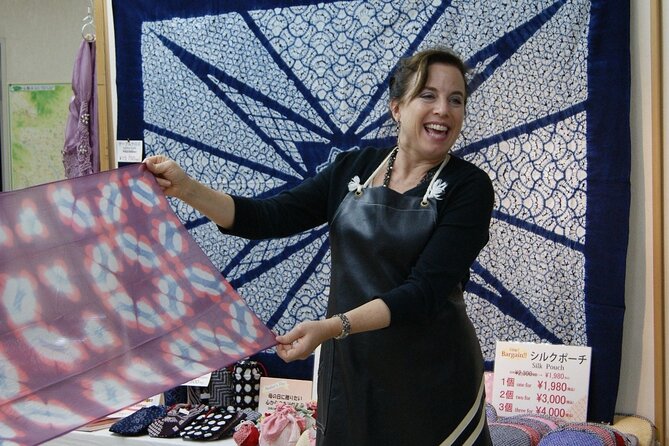
The class begins with a choice of Japanese fabrics and colors. This is an important part of the activity because the scarf will reflect your decisions, not just the instructor’s demonstration.
You may want to think about the person who will use the scarf before you begin. A calm color combination can make a wearable souvenir, while stronger contrasts will show the folded pattern more clearly. The supplied details do not specify the full range of fabrics or colors, so the exact selection can vary.
The instructor then explains how to fold and prepare the material. The method is approachable, but small changes in the folds can affect the pattern. Listen closely to the directions before adding dye. The staff are there to help, and the instruction is designed for first-time participants.
The class is not a formal art course. You are learning one accessible technique and using it to produce a finished item in a short session. That makes it a good fit for a busy Kyoto itinerary, especially if you want something more active than shopping or sightseeing.
The hands-on dyeing process
The best part of the activity is the moment when you stop watching and start working. You handle the cloth, follow the folding method, apply the dye, and wait to see how the protected areas have shaped the design.
The staff are praised for clear explanations and close attention. One instructor named June is specifically noted for patience and kindness, while Kenji and his team are associated with the museum and workshop. You might receive one-on-one help, depending on the group and the pace of the session.
Because the class is limited to 10 people, it should feel more manageable than a large craft demonstration. The maximum size does not guarantee a private lesson, but it does keep the activity relatively small. Solo participants can take part, and families can work alongside one another.
The minimum age is 6. That makes this a practical family activity, but young children will still need adult help with the folding and dyeing steps. Adult pricing applies to all ages, so check the total cost carefully if you are booking for a group with children.
Same city, a completely different kind of day:
- PERFECT KYOTO 1-Day Bus Tour
★ 5.0 · 13,518 reviews - Kyoto: Fushimi Inari, Kinkakuji, Bamboo Grove 1 Day Bus Tour
★ 4.8 · 4,316 reviews - Kyoto: Tea Ceremony in a Traditional Tea House in Kiyomizu
★ 4.9 · 3,519 reviews - Kyoto Geisha Walking Tour: Gion District & Hidden Gems
★ 4.7 · 3,273 reviews
The grand reveal and drying time

Once the dyeing is finished, the scarf needs time to dry. The wait is not wasted. You can use it to explore the museum’s upstairs display, watch a film about the process, and see examples of the highly detailed work that traditional shibori can produce.
The opening of the folded scarf is the small climax of the class. The pattern you saw only in your imagination becomes visible. The result may be geometric, uneven, bold, or delicate. That handmade variation is exactly what separates this from a printed scarf bought in a department store.
The scarf is dried and packaged before you leave, according to the activity details described by past participants. The timing can vary, so do not schedule a train departure immediately after the class. Give yourself room to see the displays and collect the finished item without rushing.
The class itself may take only 30 minutes, or it may run closer to an hour. The museum visit helps fill the drying period, but the total time still depends on the group and the work involved.
Why the museum visit matters

The upstairs exhibition adds real value. Without it, you would learn one dyeing method and leave with a scarf. With it, you can see how much skill and labor go into more elaborate shibori pieces.
Displays include traditional textile work, kimono fabrics, and finished shibori art. The examples show techniques far more intricate than the beginner activity. That contrast is useful. Your scarf becomes an introduction to the craft rather than a stand-alone souvenir.
A film about the process is also available. This helps explain how shibori connects to Japanese textile production and kimono making. One especially memorable element described in the museum experience is the chance to learn about the construction of kimono fabrics and the many forms of hand dyeing.
The museum is not huge, so you should not expect a full-day cultural attraction. Its strength is focus. You get a short, clear look at one Japanese craft, then try a simplified form of it yourself.
The people make a difference
Craft classes depend heavily on the instructor, and this one appears to benefit from a warm, personal approach. Staff members are described as kind, engaging, and willing to answer questions. That matters when a technique feels unfamiliar or when your pattern does not look quite like the sample.
The museum has a family connection to shibori. Kenji is associated with the operation, and the craft has been passed through generations, including a grandfather who was a shibori master. That background gives the workshop a stronger sense of place than a generic tie-dye lesson.
You may also receive a small personal touch at the end. A certificate has been provided to at least one young participant, and the museum is known for careful finishing and packaging. These details are not guaranteed for every booking, but they help explain why the class feels personal rather than rushed.
The staff can also point you toward other shibori pieces and products. A leather and shibori purse is one example of the kind of item available for purchase. Shopping is not the main purpose, but it can help you see how the technique is used beyond the class scarf.
Is $43.60 a fair price?
At $43.60 per person, this is not the cheapest craft activity in Kyoto. It is also more than the price of an ordinary souvenir scarf. The value comes from the combination of instruction, materials, a finished handmade item, and museum admission.
If you only want a scarf, buying one may cost less and take less time. But that misses the main reason to book this activity. You are paying for the process, the explanation, and the chance to make a personal object.
The price is easier to justify if you use the full visit. Look through the upstairs exhibition, watch the process film, ask questions, and take time with the displays while the scarf dries. The museum adds context that you would not get from a stand-alone workshop.
For families, the cost can add up because children pay the adult rate. For a couple, solo visitor, or small group interested in Japanese crafts, the price is more reasonable. A solo participant may also benefit from the extra attention possible in a small class.
Who will enjoy this most
I would put this high on the list for people who want a calm, creative break from temples and shopping. Kyoto days can become a parade of beautiful buildings, and a hands-on hour gives you a different way to connect with the city.
It works especially well for:
- Families with children age 6 and older
- Couples seeking a shared souvenir
- Solo visitors who enjoy crafts and museum displays
- Anyone interested in textiles, kimono, or traditional dyeing
- People looking for an activity near Nijo Castle
- Visitors who want a compact indoor plan
You do not need drawing skills. The class is structured around a technique, not freehand design. Teenagers can enjoy it too, and the activity gives them something concrete to do rather than another passive museum visit.
It may be less suitable if you have no interest in crafts or want a long, detailed workshop. The session is brief, and the exact duration can vary. You should also be comfortable with a second-floor classroom and a small amount of standing or hands-on work, although the supplied information says most people can participate.
Practical planning for your Kyoto day
Pairing the museum with Nijo Castle is the most natural plan. The two-minute distance makes it easy to build the class into a sightseeing block. You could visit the castle first, make the scarf afterward, and spend the drying time viewing the museum.
Book with the mobile ticket ready and look carefully for the entrance. The second-floor classroom is not strongly marked from the street, so this is one place where arriving early pays off.
The group limit is 10 people. That is small enough to support personal instruction but large enough that the room may not feel private. If you are booking for a family or group, everyone can take part, but remember that adult pricing applies across the booking.
Free cancellation is available if you cancel at least 24 hours before the start time. Cancellations or changes made within 24 hours are not refunded or accepted, and the cutoff uses Kyoto local time.
My call: book it if you want more than a souvenir
I recommend the Itajime Shibori Scarf Class if you want a short, friendly introduction to a real Japanese craft. The strongest reasons are the hands-on work, the small-group setting, and the museum display that shows how far shibori can be taken by master artisans.
Book it as part of a Nijo Castle outing, not as a full-day attraction. Give yourself enough time to find the second-floor room, make the scarf, see the exhibition, and wait for the finished piece to be dried and packaged.
Skip it if you are searching only for the lowest-cost scarf or a long technical workshop. For everyone else, especially families, solo visitors, and anyone who likes textile arts, this is a useful and memorable hour in Kyoto.
FAQ
How long does the Itajime Shibori Scarf Class last?
The activity lasts approximately 30 minutes to 1 hour. The exact timing can vary, especially while the scarf dries and the group completes the process.
Where does the class take place?
The class is held at the Kyoto Shibori Museum in Kyoto, Japan. The classroom is on the second floor.
What is included in the experience?
You receive instruction in making an itajime shibori scarf, choose from Japanese fabrics, use traditional tools and dyeing methods, visit the museum, and take your finished scarf home.
Is museum admission included?
Yes. Admission to the Kyoto Shibori Museum is included.
What is the minimum age?
The minimum age is 6 years old. Adult pricing applies to all ages.
How many people can join the class?
The activity has a maximum of 10 participants.
Can I cancel for a full refund?
Yes, if you cancel at least 24 hours before the experience start time. Cancellations or changes made less than 24 hours before the start time are not refunded.
Newest Kyoto experiences on the site
- Whisk Your Own Matcha: A Zen Matcha Experience at Temple★ 3.6 · 7 reviews
- Treasures of Kyoto: Gion & historical Walking Tour★ 5.0 · 6 reviews
- Kyoto tea town for matcha lovers★ 5.0 · 16 reviews
- Uji: Private immersion into Kyoto’s tea and reglious culture★ 5.0 · 17 reviews
- Kyoto Matcha Green Tea Tour★ 4.5 · 23 reviews
- Uji and Wazuka Matcha Farm Half Day Private Guided Tour★ 5.0 · 21 reviews
- Utilising upcycled Matcha! Creating matcha incense (Uji, Kyoto)★ 5.0 · 6 reviews
- Sacred Temple Yoga Experience in Japan★ 5.0 · 3 reviews
Kyoto Craft Workshops, compared.
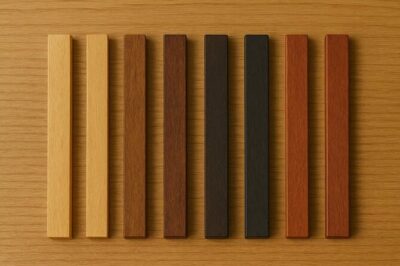
Chopsticks Making Workshop in Gion with Engraving Option
Read our review →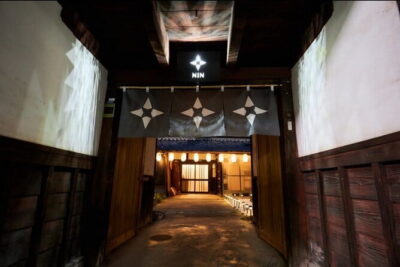
Authentic knife making experience at a blacksmith in Kyoto
Read our review →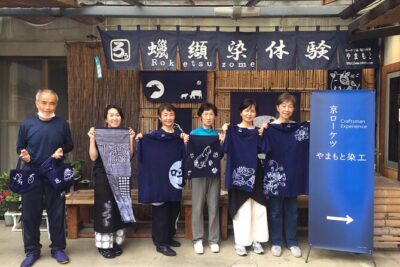
Roketsu dyeing experience: M course Roketsu Dyeing Experience
Read our review →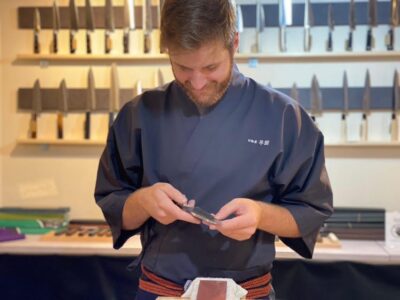
Beginner Knife Sharpening & Handle Fitting Workshop
Read our review →
Japanese Archery Workshop with Experienced Instructor
Read our review →
Kyoto Michelin Ramen Workshop or Painting Ramen Essentials
Read our review →
Browse the lists this tour appears in