
Reviewed · KYOTO EARLY MORNING TOURS
Kyoto Morning Tour with English Speaking Guide
Kyoto packs some of its most famous sights into this three-hour morning tour. You begin at Fushimi Inari, walking beneath rows of red torii gates, then cross the city to Arashiyama for bamboo, shrine grounds, and a Zen setting. It is a brisk introduction to Kyoto’s sacred places and natural beauty.
I like the efficient route and the help of an English-speaking local guide. Guides named Ryu and Liu have led past departures, offering useful explanations, local customs, restaurant ideas, and even help with photographs. I also like the modest $50 price, which includes the listed admissions.
The trade-off is simple: this is not a slow, reflective day. You cover several major sights in about three hours, with walking and some rail transfers. The tour also requires moderate fitness, and the inclusion of Arashiyama Monkey Park should be confirmed, since it is listed among the inclusions but not given a timed stop in the schedule.
Key points
- Fushimi Inari comes first: Spend about 90 minutes among Kyoto’s famous red torii gates, with context from your guide.
- Arashiyama covers more than bamboo: The morning includes the bamboo grove and Nonomiya Shrine, with the Monkey Park listed as an included entry.
- Small-group format: The group is limited to 15 people, a useful size for questions and keeping track of the party.
- Rail transfers are part of the rhythm: Your guide handles the transfers, but you should expect a fair amount of walking.
- Good first-day orientation: You see three very different sides of Kyoto without committing an entire day.
- Flexible cancellation: Cancel at least 24 hours before the start for a full refund.
Why this morning route works for a first Kyoto visit
Kyoto can feel scattered at first. Fushimi Inari sits in the city’s southeast, while Arashiyama lies far to the west. Visiting both independently is perfectly possible, but you need to understand the rail system, allow for transfers, and judge how much time to spend at each place.
This tour solves much of that puzzle in one morning. You meet at the McDonald’s by the JR Kyoto Station Hachijo Entrance at 9:00 am, then move through a carefully chosen set of sights. Fushimi Inari gives you a famous Shinto shrine and mountain path. Arashiyama adds bamboo, another shrine, and access to a Zen temple setting described in the tour overview.
I would see this as an orientation rather than a complete study of Kyoto. You get the broad picture: red gates, green bamboo, Shinto practice, imperial connections, and Zen gardens. You do not get long free periods at any one place, nor much time for shopping or a sit-down meal.
The tour is limited to 15 people. That matters at busy Kyoto sights. A guide can explain what you are seeing, answer questions, and keep the group moving without the impersonal feel of a large coach outing.
More early starts in Kyoto:
- Kyoto Early Morning Tour with English-Speaking Guide
★ 5.0 · 1,427 reviews - Kyoto: Early Morning Tour with English-Speaking Guide
★ 4.9 · 1,128 reviews - Arashiyama Bamboo Forest & Hidden Gems Bike Tour (Early Bird)
★ 5.0 · 613 reviews
Fushimi Inari and its thousands of red gates
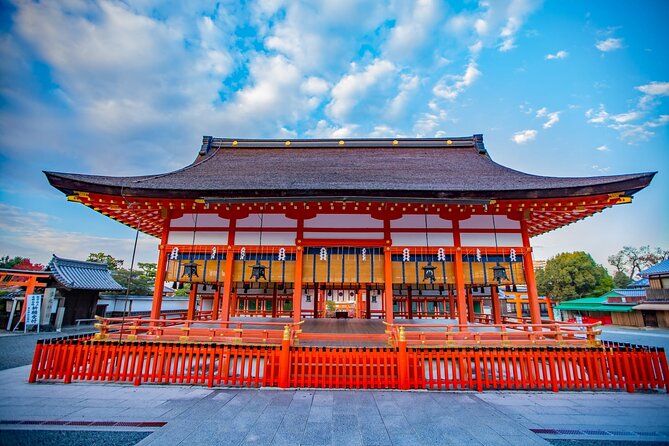
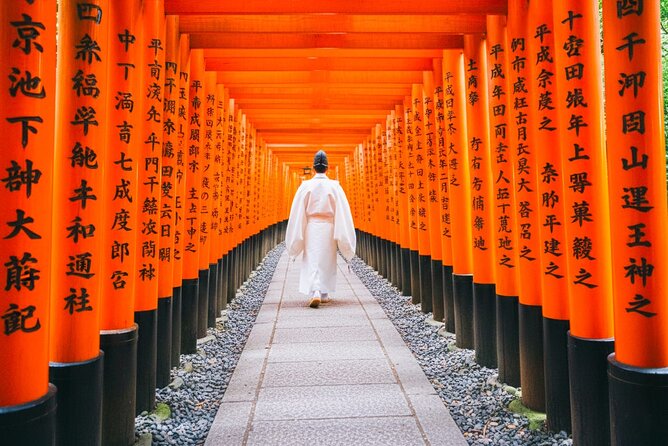
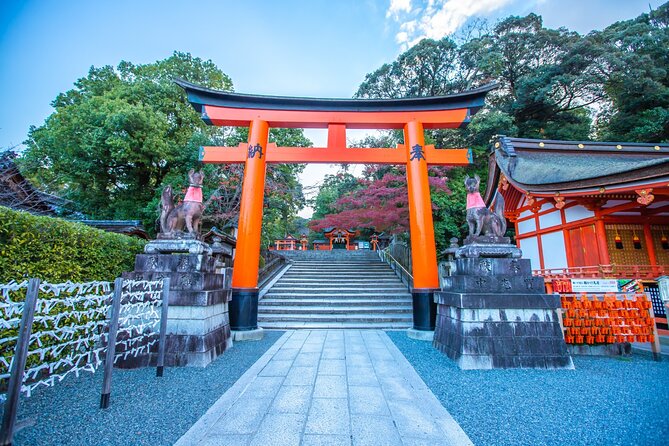
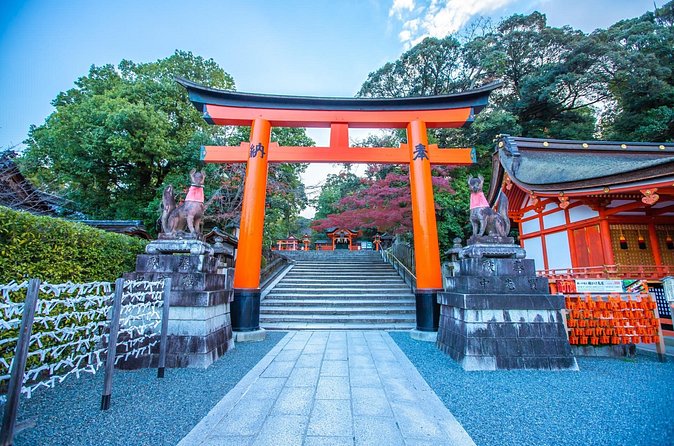
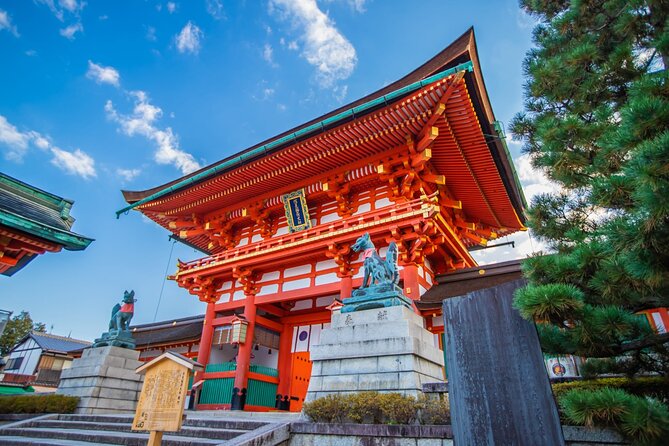
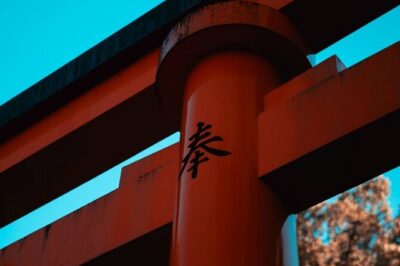
Fushimi Inari Taisha is the visual star of the morning. Its torii gates form long orange-red corridors that climb through wooded slopes, creating one of Kyoto’s most recognizable scenes.
You have about 90 minutes here, which gives you time to walk through the lower sections and get a feel for the mountain route. The gates were donated by individuals and businesses, and the shrine is linked with Inari, a Shinto deity associated with rice, prosperity, and business success. The supplied tour description promises an explanation of the site’s spiritual meaning, so this is more than a quick photo stop.
The timing is sensible. Fushimi Inari can absorb half a day if you climb far up the mountain, but most people want to experience the gate-lined paths rather than complete every trail. Your guide can give the visit some shape and help you understand why the place matters.
You should still expect uneven ground, steps, and uphill walking. The tour asks for moderate physical fitness, and that warning is worth taking seriously. Even if you do not go far up the mountain, the shrine is not a flat, effortless stop.
Bring comfortable shoes. Keep your camera ready, but do not let the famous gate tunnel become the whole experience. Look for the smaller shrine details, the fox imagery connected with Inari, and the way the path shifts from open shrine grounds to shaded woodland.
The guide’s role is especially useful here. Ryu, one of the guides named in past departures, is described as well versed in Kyoto’s history and culture and willing to take photographs. Liu is also noted for clear explanations, kindness, and practical recommendations. Guide assignments can change, so you should not book on the assumption that one particular person will lead your group.
Rail transfers and the value of a guided morning
The move from Fushimi Inari to Arashiyama is part of the experience, not just dead time. Past participants describe rail transfers during the tour, with the guide handling the process. That can be helpful if you are still getting used to Kyoto’s trains and station signs.
You should not expect a private vehicle or a door-to-door ride. The tour is built around public transportation and walking. That keeps the price at $50, but it also means you need to stay with the group and listen for transfer instructions.
For me, this is one of the strongest reasons to book a guide for this particular combination of sights. Fushimi Inari and Arashiyama are both easy to locate on a map, but reaching them in one short morning takes planning. The guide takes care of the route while adding explanations along the way.
The drawback is pace. A rail transfer, a group of up to 15, and three scheduled stops leave little room for delays. If you want to linger over breakfast, browse shops, or stop for a snack, this morning will feel tight. Food and drinks are not included, so eat before meeting or plan to buy something separately.
Arashiyama Bamboo Forest and its quiet visual appeal
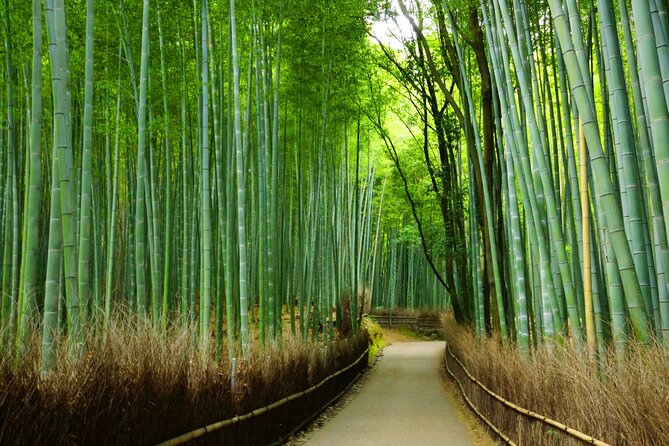
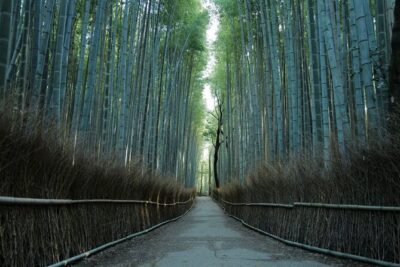
Arashiyama’s bamboo grove offers a very different mood from Fushimi Inari. Instead of red gates climbing a wooded mountain, you walk along a path enclosed by tall bamboo stalks. The light filters through the leaves, and the grove creates a cool, green corridor.
You have about an hour in the Arashiyama portion of the morning. That time is shared with the bamboo area and the nearby Nonomiya Shrine, so do not expect a long, unhurried wander through every part of western Kyoto.
The bamboo grove is famous for its appearance, and it is easy to treat it as a photograph backdrop. A guide can help you place it in the wider setting of Arashiyama, where temples, shrines, hills, and river views all form part of the district. The value here is not only the picture. It is the contrast with the solemn red gates you saw earlier.
The path can be busy, especially at a popular morning hour. The tour does not promise a private or empty walk, so set your expectations accordingly. You will be sharing the route with other people, and the group may need to keep moving to stay on schedule.
This is also a place where a small group helps. A party of 15 is easier to gather on a narrow path than a large bus group. Still, listen carefully when the guide gives a meeting time and location. Arashiyama offers many tempting side paths, and wandering off can make the next stop harder to reach.
Same city, a completely different kind of day:
- PERFECT KYOTO 1-Day Bus Tour
★ 5.0 · 13,518 reviews - Kyoto: Fushimi Inari, Kinkakuji, Bamboo Grove 1 Day Bus Tour
★ 4.8 · 4,316 reviews - Kyoto: Tea Ceremony in a Traditional Tea House in Kiyomizu
★ 4.9 · 3,519 reviews - Kyoto Geisha Walking Tour: Gion District & Hidden Gems
★ 4.7 · 3,273 reviews
Nonomiya Shrine and the imperial connection
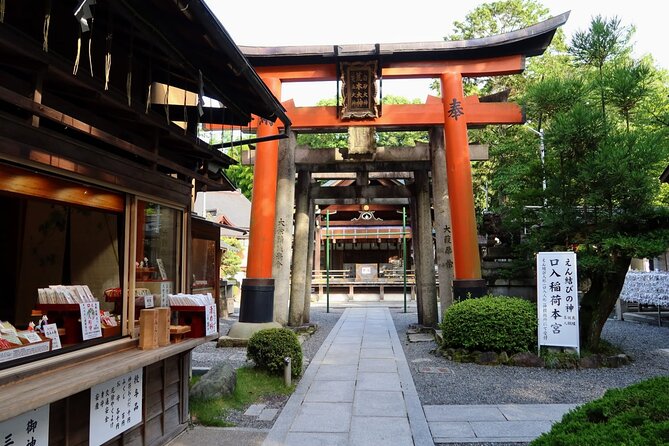
Nonomiya Shrine is a smaller, more peaceful stop within the Arashiyama visit. It is known for its black torii gate and its connection with imperial princesses. Surrounded by bamboo, it gives you a quieter spiritual setting after the more famous grove.
The scheduled time is about 30 minutes. That is enough to see the shrine, hear its story, and appreciate the contrast between its dark gate and the pale, green bamboo around it.
I like this addition because it keeps the morning from becoming a parade of famous photographs. Nonomiya introduces a more intimate side of Kyoto. You are not only checking off the bamboo grove. You are also seeing how religious sites fit into the city’s older traditions.
The stop is compact, so do not expect the same scale as Fushimi Inari. Its appeal comes from atmosphere and meaning rather than size. Your guide’s explanation can make the difference between a quick look and a place you remember.
The Zen temple setting and the Monkey Park question
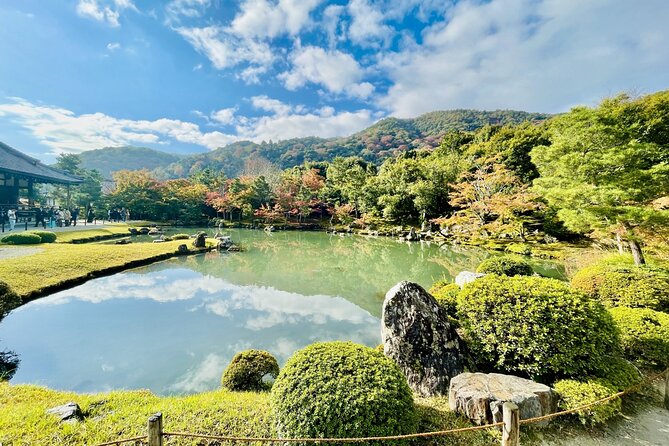
The tour overview also describes a historic Zen temple with carefully arranged gardens and old architecture. It presents this as a moment for peace and reflection within the morning route.
At the same time, the detailed stop schedule names Fushimi Inari, Arashiyama Bamboo Forest, and Nonomiya Shrine, while the included services list entry to Arashiyama Monkey Park, Iwatayama. This creates a practical point to clarify before you go: the Monkey Park is included in the stated admissions, but it is not assigned its own time block in the schedule.
The park sits on a hill, and the tour already requires moderate fitness. Since the information provided does not explain how the park fits into the three-hour route, ask the operator what is actually visited on your date. Do not assume that the tour includes a full visit to every place named in the general description.
This is the one part of the experience that needs the clearest confirmation. The core route is easy to understand: Fushimi Inari, Arashiyama Bamboo Forest, and Nonomiya Shrine. The Zen temple and Monkey Park references suggest additional coverage, but the timing is not fully spelled out.
What $50 gets you in practical terms
At $50 per person, the tour is priced as a low-cost guided introduction rather than a luxury excursion. You receive a local guide, the listed admissions, and help with the rail transfers. Food and drinks are extra.
The strongest value comes from the combination of transport help and cultural explanation. You can visit Fushimi Inari and Arashiyama on your own, but a guide adds structure and context. You also avoid spending your first Kyoto morning figuring out how to connect two distant districts.
The price is less compelling if you already know Kyoto’s train system, prefer to set your own pace, or want to spend a full morning at one site. Independent sightseeing gives you more control and may cost less, depending on your transport and chosen admissions.
The tour receives a 4.7 out of 5 rating from 12 ratings, with 92 percent recommending it. That is a positive signal, but the small number of ratings means I would still pay attention to the practical limits: the schedule is short, walking is substantial, and one reported booking problem involved the guide not arriving.
That last point is unusual but important. Confirmation is sent at booking, and the experience provider is With Japan. Keep your confirmation details handy and arrive at the meeting point early, especially because the group departs at 9:00 am.
Who should book this Kyoto morning tour
I would recommend it to a first-time visitor who wants to see Kyoto’s two most recognizable districts without spending a full day on organized sightseeing. It also suits you if you appreciate explanations of local customs and traditions, or if rail transfers in an unfamiliar city make you uneasy.
It is a good match for people who enjoy walking and can keep a steady pace. Comfortable shoes matter more than stylish ones here. The route combines shrine paths, bamboo paths, station movement, and possible hills.
You may want another plan if you have limited mobility, dislike group schedules, or want long periods for quiet observation. The tour requires moderate fitness and does not offer a leisurely meal break.
Families and couples can also use it as a first look at Kyoto, provided everyone is comfortable walking and staying with the group. The small maximum group size makes it easier to hear the guide and ask questions.
Booking details worth knowing before you go
The meeting point is McDonald’s at the JR Kyoto Station Hachijo Entrance, at 8-3 Higashishiokōji Takakurachō, Shimogyo Ward, Kyoto, 600-8214. The activity begins at 9:00 am and ends back at the same meeting point.
Mobile tickets make the booking simple. Confirmation is provided when you book, and the experience is usually reserved about 21 days ahead, so booking early is sensible if your Kyoto dates are fixed.
You can cancel for a full refund up to 24 hours before the start time. Changes or cancellations inside that window are not accepted, and the amount paid is not refunded. The tour also requires a minimum number of people, so if the operator cancels for that reason, you will be offered another date or experience, or a full refund.
Should you book it?
Book this tour if you want efficient coverage, local explanation, and help with the train connections between Fushimi Inari and Arashiyama. At $50, it is a fair deal for a first morning in Kyoto, especially with admissions and a small group included.
Skip it if your priority is freedom. You will see less by moving at your own pace, but you will have more time for temple gardens, cafés, shops, and quiet corners. Before paying, ask how the Zen temple and Monkey Park fit into the three-hour schedule. If the operator confirms the exact route and you are ready for a brisk walk, this is a practical way to get your Kyoto bearings fast.
FAQ
How long does the Kyoto morning tour last?
The tour lasts approximately three hours.
What time does the tour start?
It starts at 9:00 am.
Where does the tour meet?
The meeting point is McDonald’s at the JR Kyoto Station Hachijo Entrance, 8-3 Higashishiokōji Takakurachō, Shimogyo Ward, Kyoto, 600-8214, Japan.
Where does the tour end?
The activity ends back at the meeting point.
What sights are included in the scheduled route?
The scheduled stops are Fushimi Inari Taisha Shrine, Arashiyama Bamboo Forest, and Nonomiya Shrine.
Is Arashiyama Monkey Park included?
Entry to Arashiyama Monkey Park, Iwatayama, is listed as included. The detailed schedule does not give the park its own stop, so confirm how it fits into your departure.
Is food included?
No. Food and drinks are not included.
Can I cancel for a full refund?
Yes. You can cancel at least 24 hours before the local start time for a full refund. Cancellations or changes made less than 24 hours before the start are not accepted for a refund.
Newest Kyoto experiences on the site
- Treasures of Kyoto: Gion & historical Walking Tour★ 5.0 · 6 reviews
- Whisk Your Own Matcha: A Zen Matcha Experience at Temple★ 3.6 · 7 reviews
- Kyoto tea town for matcha lovers★ 5.0 · 16 reviews
- Uji: Private immersion into Kyoto’s tea and reglious culture★ 5.0 · 17 reviews
- Kyoto Matcha Green Tea Tour★ 4.5 · 23 reviews
- Uji and Wazuka Matcha Farm Half Day Private Guided Tour★ 5.0 · 21 reviews
- Utilising upcycled Matcha! Creating matcha incense (Uji, Kyoto)★ 5.0 · 6 reviews
- Sacred Temple Yoga Experience in Japan★ 5.0 · 3 reviews
Kyoto Early Morning Tours, compared.
Kyoto Early Morning Tour with English-Speaking Guide
Read our review →Early Morning Tour with English-Speaking Guide
Read our review →
Arashiyama Bamboo Forest & Hidden Gems Bike Tour (Early Bird)
Read our review →
Kyoto Early Bird English Tour: Fushimi-Inari and Arashiyama
Read our review →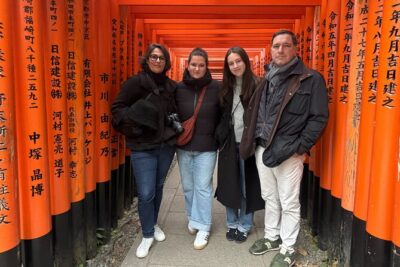
Kyoto Early Bird English Tour: Fushimi Inari & Gion(Private opt)
Read our review →Browse the lists this tour appears in