
Reviewed · KYOTO COOKING CLASSES
Kyoto: Morning Japanese Bento Cooking Class
Kyoto’s morning bento class turns familiar Japanese dishes into a hands-on cultural lesson. You’ll learn to prepare sushi, tempura, teriyaki chicken, miso soup, and several smaller dishes, then arrange them into a lunch you can eat yourself.
I like the small-class feel, which allows patient explanations and practical help. I also like that the recipes are designed for home cooking, with useful tips about finding ingredients outside Japan. The main consideration is that ingredients are already prepared, so this is more about assembling and cooking dishes than practicing knife skills.
Key points to know
- Several dishes in one morning: Prepare sushi, tempura, teriyaki chicken, miso soup, and other bento favorites during a three-hour session.
- A useful cultural lesson: Learn why bento became such an important Japanese meal and how different dishes fit together in one box.
- English instruction: The class is taught in English, with clear demonstrations and written recipes to take home.
- Small-group attention: Past classes have ranged from private sessions to groups of about eight or ten people.
- Dietary requests are possible: Vegetarian and no-shellfish versions have been provided when arranged in advance.
- Lunch is the finished product: Your cooking becomes a complete bento meal, included in the $67 price.
What happens at Cooking Sun in Kyoto
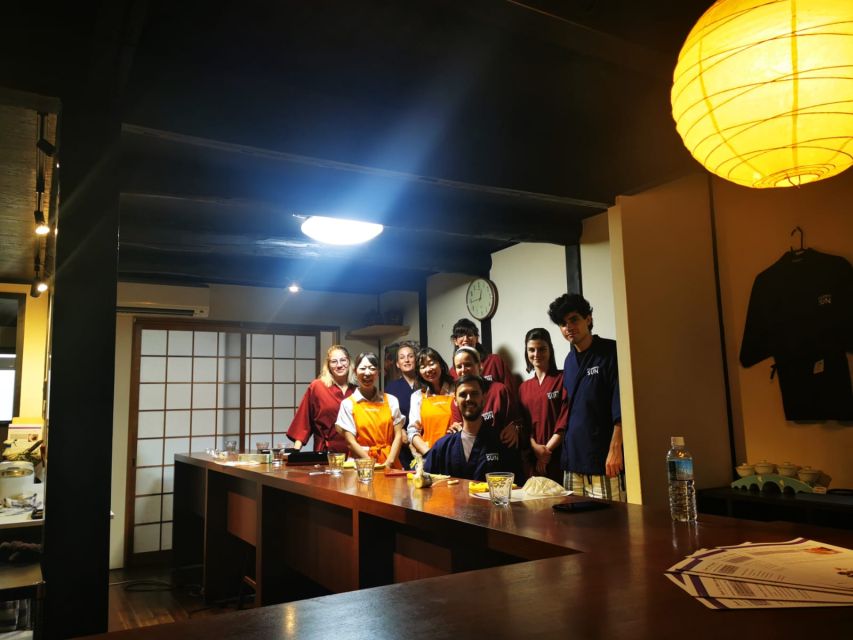
You’ll meet at Cooking Sun on Funayacho in Kyoto’s Shimogyo Ward. Hotel pickup is not included, so allow time to find the address and arrive ready for a morning of cooking.
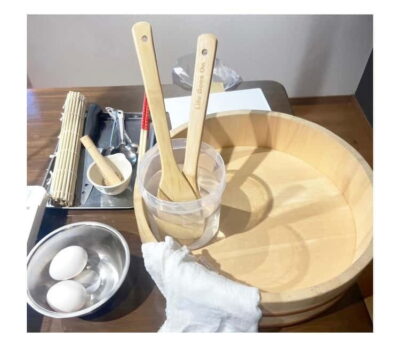
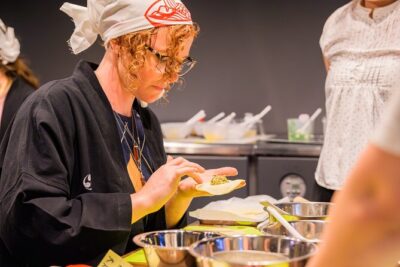
Once inside, you’ll collect an apron, utensils, and the ingredients for the class. The kitchen provides the basic setup, which means you can focus on the food rather than packing equipment or worrying about what to buy.
The class lasts about three hours, though the stated duration can run from two and a half to three hours. That is a useful amount of time for this menu. You are not rushing through a single recipe, but you are also not giving up an entire day of sightseeing.
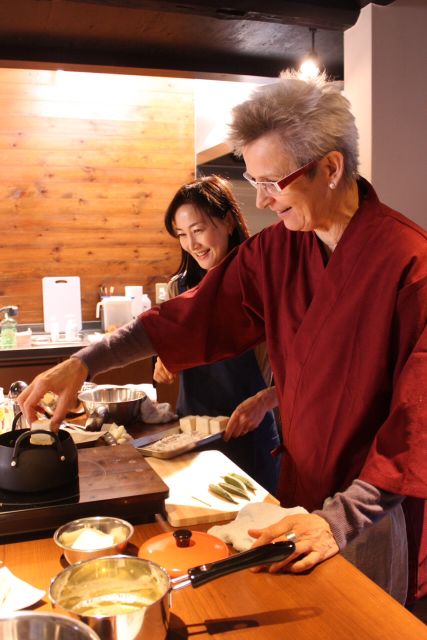
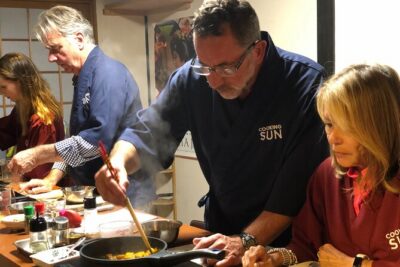
The instructor demonstrates each dish, then you follow along. Past instructors have included Mei, Mae, Tomoko, and Yukari, and the teaching style is clearly aimed at visitors who may know little about Japanese cooking. Explanations are given in English, and several people have found the instructions easy to follow.
I would expect the class to move through multiple preparations rather than treat one dish as a long technical project. That is part of the appeal. You get a broad introduction to Japanese home-style cooking in one sitting.
More cooking classes in Kyoto:
- Ramen Cooking Class at Ramen Factory in Kyoto
★ 5.0 · 1,937 reviews - Kyoto: Ramen Cooking Class at a Ramen Factory with Souvenir
★ 4.9 · 532 reviews - Kyoto: Ramen, Gyoza, and Onigiri Cooking Class
★ 5.0 · 445 reviews
Why bento makes a good introduction to Japanese food
Bento is more than a box with compartments. It is a way of combining rice, protein, vegetables, fried food, soup, and small side dishes into one practical meal.
The tradition reaches back to the late Kamakura Period, from 1185 to 1333. Today, bento is part of everyday Japanese food culture, from homemade lunches to takeaway meals. The class gives you a reason to look at a bento box as a carefully planned meal rather than a collection of random items.
That context matters. When you learn why different dishes are placed together, the cooking feels less like a string of unrelated recipes. You begin to see how texture, color, flavor, and portion size work together.
The finished box also gives you an immediate sense of progress. Instead of learning one sauce or one roll and stopping there, you leave having made a full lunch.
The cooking itself: sushi, tempura, teriyaki, and soup
The menu includes several Japanese staples, including sushi, tempura, teriyaki chicken, and miso soup. Some classes have covered as many as six or seven traditional dishes, so the exact mix may vary.
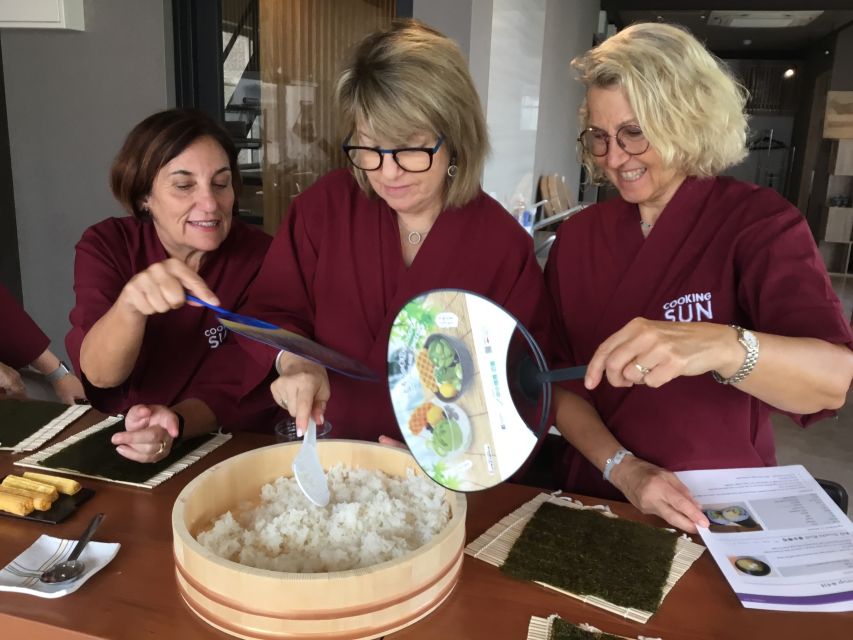
Sushi is a natural part of the lesson because it introduces rice preparation, seasoning, and careful shaping. You’ll get a practical look at how a simple roll is put together, rather than only eating the finished product at a restaurant.
Tempura adds a different technique. The point is not just frying ingredients, but learning how batter and cooking time affect the final texture. The class also covers mirin, a sweet rice seasoning often used in Japanese cooking, which can be helpful when you try the recipes at home.
Teriyaki chicken brings a familiar flavor profile into the lesson. It is one of the easier dishes to recognize and recreate, which makes it a good confidence builder for home cooks.
Miso soup rounds out the meal with a basic Japanese soup that many visitors have eaten but never prepared. You get to see how it fits with the rice, fried food, and side dishes in the bento.
The class is not presented as a knife-skills workshop. The ingredients are already prepared, so your time goes toward cooking, seasoning, shaping, and arranging. That will suit you if you want a practical food experience. If you hoped to learn detailed Japanese cutting techniques from whole vegetables, this may feel limited.
A class that works for beginners and experienced cooks
You do not need to arrive with Japanese cooking experience. The instructions are broken into manageable steps, and the instructors provide extra guidance when someone needs it.
That said, the class is not only for beginners. One person who already knew a lot about Japanese food still found useful new techniques and small tips to take home. The menu offers enough variety to keep an experienced home cook interested without turning the morning into an advanced examination.
The pace appears to be one of the class’s strengths. It is organized enough to cover a lot, but the teaching remains relaxed. Families have also found it workable, including a family with two ten-year-olds who were able to participate and enjoy the food.
Teenagers can take part as well. Extra help has been given when needed, which is useful if one member of your group is less confident in the kitchen.
Same city, a completely different kind of day:
- PERFECT KYOTO 1-Day Bus Tour
★ 5.0 · 13,518 reviews - Kyoto: Fushimi Inari, Kinkakuji, Bamboo Grove 1 Day Bus Tour
★ 4.8 · 4,316 reviews - Kyoto: Tea Ceremony in a Traditional Tea House in Kiyomizu
★ 4.9 · 3,519 reviews - Kyoto Geisha Walking Tour: Gion District & Hidden Gems
★ 4.7 · 3,273 reviews
Small groups make a real difference
The group size is important here. Past sessions have included just two people, four people, six people, eight people, and about ten people. The exact number depends on the booking date, but the class is not described as a large demonstration where you watch from the back.
A smaller group means more access to the instructor and less waiting for equipment. It also creates a pleasant chance to meet people from other countries while you work.
There is one fair limitation. In at least one larger session, participants shared cooking equipment and would have preferred more individual interaction. That is not a serious problem for most people, but it is worth remembering if you want a private cooking lesson.
The instructors have also taken photos and videos during class for participants. Do not count on a professional photo session, but you may have someone capture parts of the experience while you cook.
The food culture comes through in the details
The best part of a class like this is not just the final meal. It is the small explanations that give familiar ingredients a place in Japanese daily life.
You’ll hear about the bento tradition and the role of common dishes in Japanese cuisine. You can also ask how to find ingredients once you return home. That practical advice matters because a cooking class is only truly useful if you can repeat at least some of it in your own kitchen.
Written recipes are provided, which gives the experience a life beyond your Kyoto visit. Several dishes are considered easy enough to make at home, including sushi rolls and teriyaki chicken.
You may also get tips on equipment. One participant enjoyed the class enough to buy cooking tools for making the recipes later. That does not mean you need to purchase anything, but the lesson can help you figure out which parts of Japanese cooking are worth continuing.
What your lunch is like
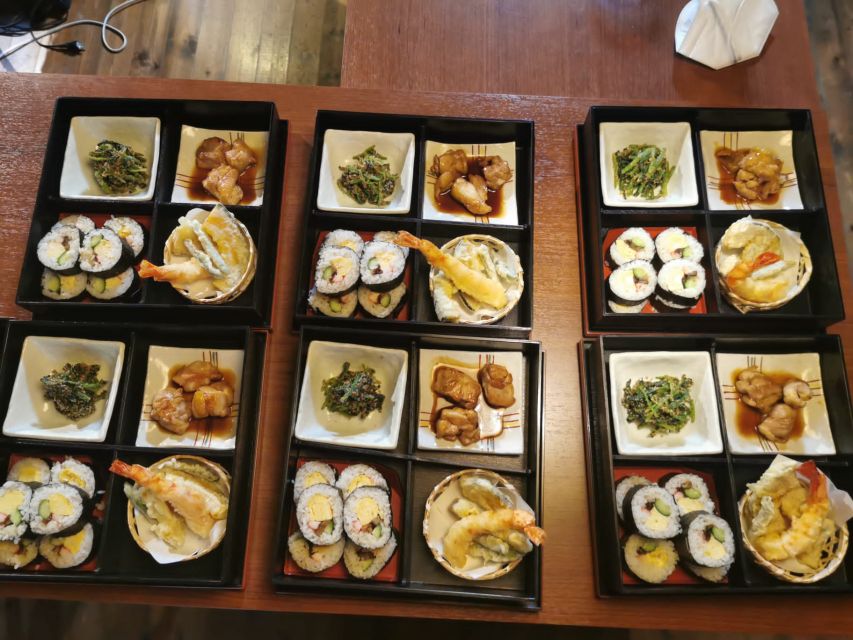
Once the cooking is finished, you arrange the dishes in your bento box and sit down to eat. Lunch is included, and it consists of the food you have prepared.
This is a satisfying finish because you can taste the result immediately. You are not handed a pre-made meal after watching a demonstration. The lunch reflects the work you have done during the morning.
Expect a generous range of flavors and textures. The menu brings together rice, fried food, sauced chicken, soup, sushi, and smaller side dishes. The variety is what makes the bento feel like a complete Japanese meal.
If you have dietary needs, tell the provider when booking. Vegetarian meals and no-shellfish versions have been accommodated, but you should not wait until the class begins to raise the issue.
Price and overall value at $67
At $67 per person, this class costs more than buying a casual Japanese lunch. The value comes from the combination of instruction, ingredients, equipment, an apron, recipes, and the meal itself.
You are also paying for access to a local cooking setting and an English-speaking instructor who can explain more than a recipe card can. If you want to learn several dishes and repeat them at home, the price is reasonable for a three-hour activity.
The value is strongest for people who enjoy cooking or want a cultural activity beyond temples and shopping. You get a meal, but the class also gives you skills and context you can carry into the rest of your trip.
It is less compelling if you mainly want to eat and have little interest in preparing food. You could spend less on lunch elsewhere in Kyoto. This experience earns its price through participation, not simply through the amount of food served.
Who should book this class
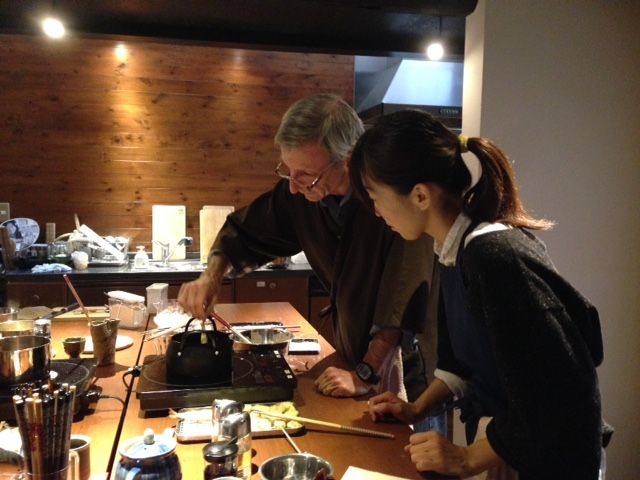
I would recommend it for first-time visitors who want an approachable introduction to Japanese food. You’ll learn familiar dishes in a setting where questions are welcome, and you do not need prior experience.
It is also a good choice for families. Children around ten have taken part, and teenagers have received patient help. The multiple dishes keep the session moving, though younger children may need close adult supervision while cooking.
Couples and solo visitors can benefit from the social side of a small class. You get to meet people from different places without committing to a full-day group tour.
Vegetarians and people avoiding shellfish should contact the provider before booking. The class has adapted meals in the past, but advance notice is essential.
I would hesitate only if you want advanced knife work, a private lesson guaranteed for your group, or a class focused on one highly technical dish. This is a broad, friendly introduction rather than a specialist masterclass.
Practical details before you go
The meeting point is Cooking Sun, Funayacho, Shimogyo Ward, Kyoto, Kyoto 600-8466. Hotel pickup and drop-off are not included, so plan your own route.
The listed language is English, and the class is wheelchair accessible. Starting times vary, so check availability for the morning session you want.
The price includes the cooking class, ingredients, apron, utensils, and lunch. You do not need to bring cooking supplies.
You can reserve now and pay later, which helps if your Kyoto plans are still changing. Cancellation is free up to 24 hours in advance for a full refund.
Should you book the Kyoto morning bento class?
Book it if you want to do more than photograph Japanese food. The class gives you a complete morning of cooking, cultural background, social contact, and lunch, with recipes to help you repeat the experience at home.
I especially like the balance: the menu is broad enough to feel substantial, but the steps remain accessible. Just remember that the ingredients are prepped for you, and that a larger group may mean sharing equipment.
For $67, this is a strong pick for food lovers, families, and curious first-time visitors. It is one of the better ways to turn a meal in Kyoto into a skill you can take home.
FAQ
How long does the Kyoto bento cooking class last?
The class lasts about three hours, with the stated duration ranging from two and a half to three hours.
What dishes will I learn to make?
The class includes sushi, tempura, teriyaki chicken, and miso soup. Other traditional bento dishes may also be included, with some sessions covering six or seven dishes.
Is lunch included?
Yes. You eat the bento lunch made during the class, and lunch is included in the price.
Is the class taught in English?
Yes. English instruction is provided.
Are ingredients, utensils, and an apron included?
Yes. The class includes ingredients, an apron, and utensils.
Can dietary requirements be accommodated?
You should advise the provider of dietary requirements when booking. Vegetarian and no-shellfish versions have been provided.
Is hotel pickup included?
No. You must make your own way to Cooking Sun at Funayacho in Kyoto’s Shimogyo Ward.
Can I cancel for a full refund?
Yes. You can cancel up to 24 hours in advance for a full refund.
Newest Kyoto experiences on the site
- Treasures of Kyoto: Gion & historical Walking Tour★ 5.0 · 6 reviews
- Whisk Your Own Matcha: A Zen Matcha Experience at Temple★ 3.6 · 7 reviews
- Kyoto tea town for matcha lovers★ 5.0 · 16 reviews
- Uji: Private immersion into Kyoto’s tea and reglious culture★ 5.0 · 17 reviews
- Kyoto Matcha Green Tea Tour★ 4.5 · 23 reviews
- Uji and Wazuka Matcha Farm Half Day Private Guided Tour★ 5.0 · 21 reviews
- Utilising upcycled Matcha! Creating matcha incense (Uji, Kyoto)★ 5.0 · 6 reviews
- Sacred Temple Yoga Experience in Japan★ 5.0 · 3 reviews
Kyoto Cooking Classes, compared.
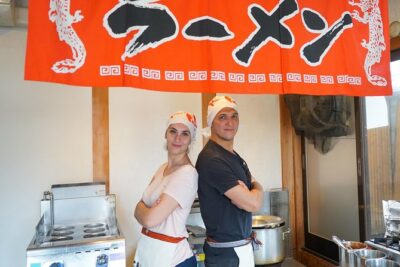
Ramen Cooking Class at Ramen Factory in Kyoto
Read our review →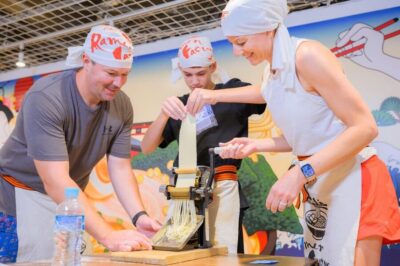
Ramen Cooking Class at a Ramen Factory with Souvenir
Read our review →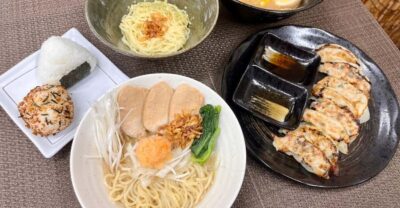
Japanese Washoku Bento Small Group Cooking Class
Read our review →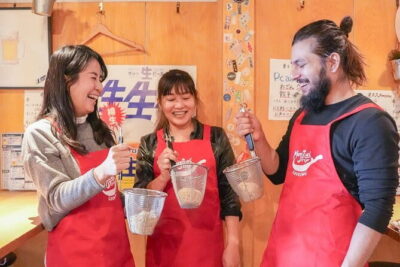
Kyoto Ramen and Gyoza Cooking Class with Professional Chefs
Read our review →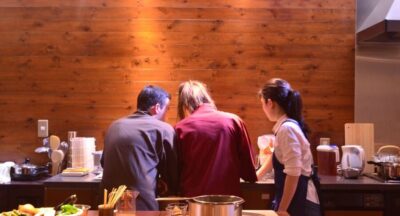
Gyoza Cooking Class in Kyoto: Traditional Japanese Dumplings
Read our review →Browse the lists this tour appears in