
Reviewed · KYOTO COOKING CLASSES
Kyoto: Hands-on Takoyaki and Okonomiyaki Cooking (1 Hour)
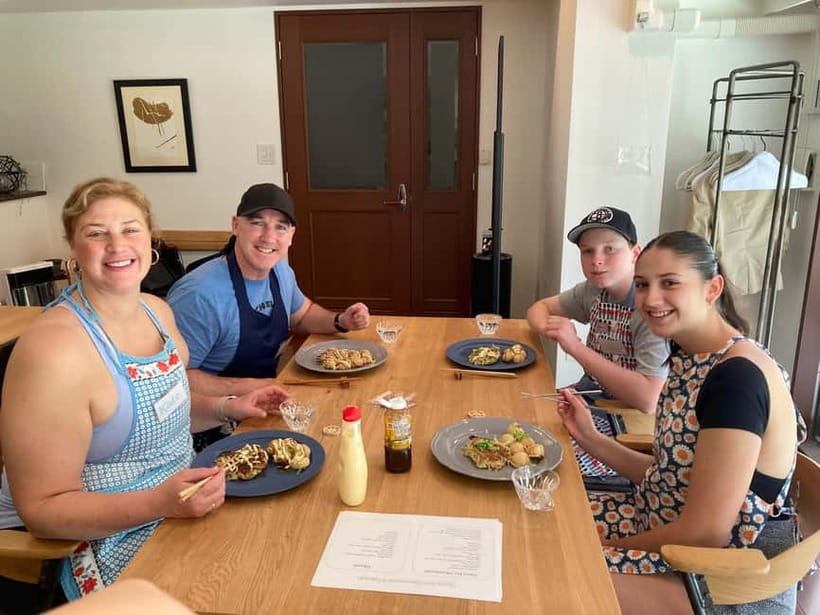
Making takoyaki and okonomiyaki gives you a quick, tasty introduction to everyday Kansai cooking. You mix, pour, turn, and eat your own food, rather than sitting through a long demonstration. I like the one-hour length and the small limit of six people, which keeps this easy to fit between Kyoto sights.
I also like the practical location, about a 10-minute walk from Shijo or Karasuma Station, and the fact that gluten-free, vegan, halal-friendly, and allergy-conscious ingredients can be arranged. The main consideration is time: an hour is enough for a friendly introduction, but not for a detailed cooking course. One past class also felt rushed and underprepared, although the December 2025 update says experienced instructors now lead or supervise every session.
Key points at a glance
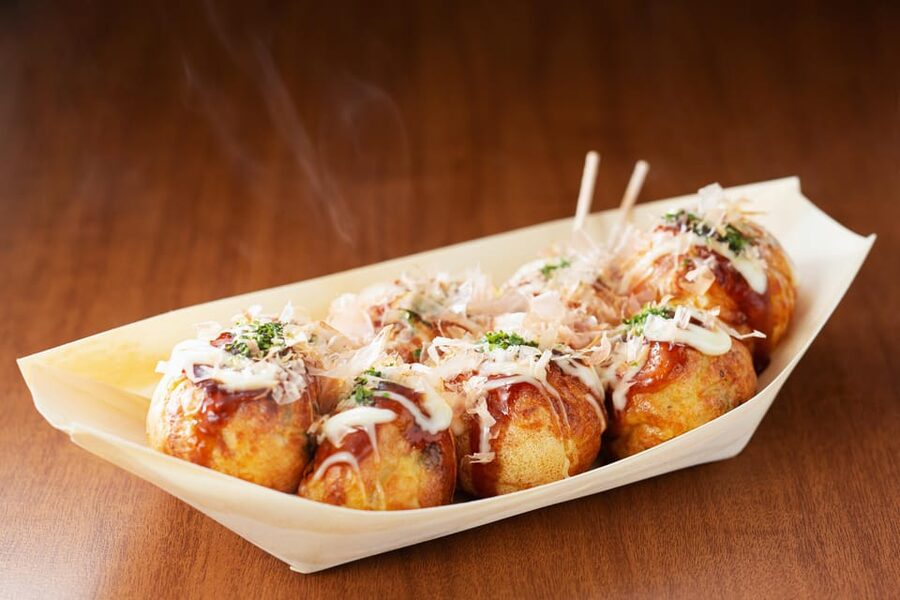
- Two Kansai classics in one hour: You prepare both okonomiyaki and takoyaki, then sit down to eat them.
- A small group of up to six: The format leaves room for questions and personal help.
- Beginner-friendly by design: You learn by doing, with the instructor stepping in when needed.
- Convenient central Kyoto setting: The meeting point is roughly 10 minutes on foot from Shijo or Karasuma Station.
- Dietary needs can be planned for: Request gluten-free, vegan, halal-friendly, or allergy-conscious ingredients when booking.
- A useful hands-on souvenir: The methods and basic ideas can be repeated at home after your Japan trip.
A fast taste of Kansai cooking
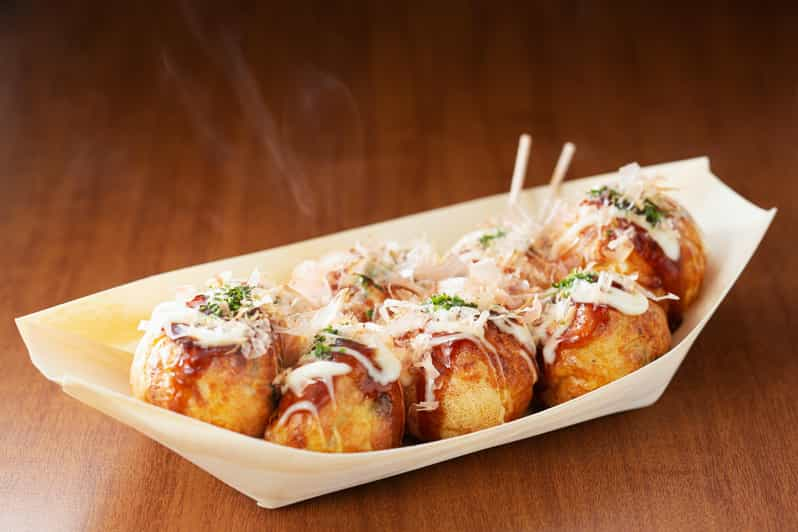
This is not a formal culinary school course. It is a short, friendly kitchen activity built around two foods that are closely tied to casual eating in the Kansai region.
Okonomiyaki is often described as a savory Japanese pancake, though that label only gets you part of the way there. The name points to cooking ingredients the way you like them, and the dish can include a batter, cabbage, and other selected ingredients. Takoyaki are small round batter snacks traditionally made with octopus. You cook them in a special molded pan and turn them as they set.
The class puts both dishes together because they use related basic methods and ingredients, but they do not feel identical to make. Okonomiyaki gives you a larger surface to manage. Takoyaki asks for more attention as you shape and turn the little balls. In a short session, that contrast keeps the activity lively.
You are not expected to arrive with cooking experience. The point is to take part, ask questions, and get a feel for the process. If you prefer a lecture with a polished demonstration, this may feel too casual. If you want to use your hands and eat lunch or dinner afterward, the format makes good sense.
More cooking classes in Kyoto:
- Ramen Cooking Class at Ramen Factory in Kyoto
★ 5.0 · 1,937 reviews - Kyoto: Ramen Cooking Class at a Ramen Factory with Souvenir
★ 4.9 · 532 reviews - Kyoto: Ramen, Gyoza, and Onigiri Cooking Class
★ 5.0 · 445 reviews
What happens during the one-hour class
The meeting point is on the third floor. Take the elevator, then press the doorbell for room 302. That instruction is simple, but you should have it ready before you arrive, since this is not a large restaurant entrance with a prominent reception desk.
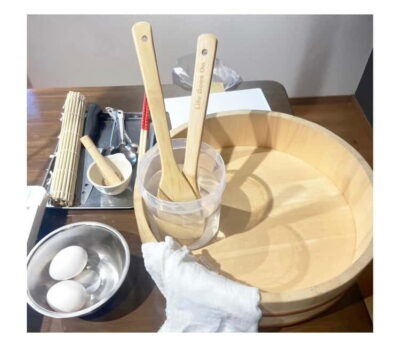
The class begins with preparation and guidance from the instructor. You receive an apron and use the provided cooking utensils. The instructor explains the basic process in English or Japanese, then lets you work through the steps yourself.
The exact rhythm depends on the group. A pair may move quickly and spend more time asking questions. A full group of six may need a little more coordination around the cooking space. The newer operating plan says experienced instructors now lead or supervise each class, with the flow adjusted so the two dishes can be prepared comfortably within the hour.
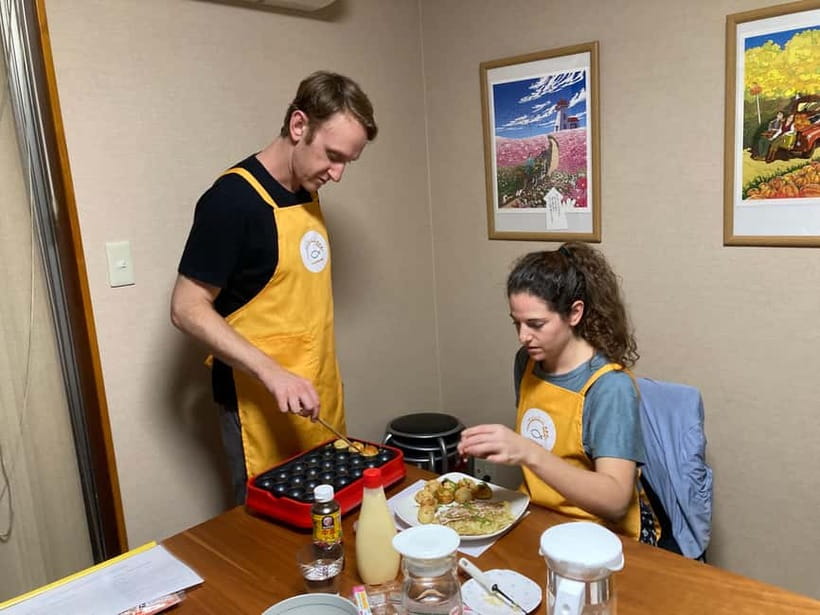
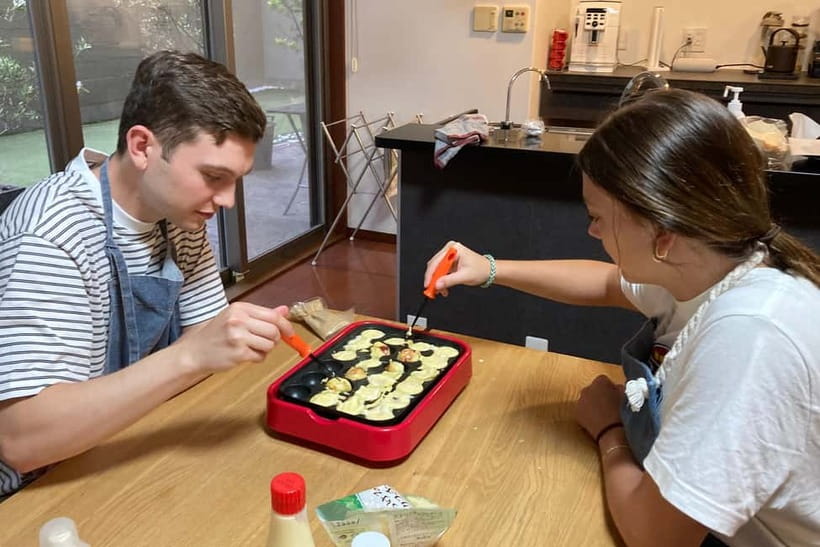
You will prepare the okonomiyaki and takoyaki during the same compact session. The instructor supports you as needed rather than taking over every step. That matters because turning takoyaki, in particular, is part of the fun. The finished shape may not look perfect on your first try, but the slightly lopsided result is part of making the food yourself.
At the end, you sit down and eat what you made. The ingredient cost for this meal is included, so the activity is not only a lesson. It also supplies lunch or dinner, depending on the starting time you choose.
Do not expect a long cultural talk, several recipes, or a full market visit. The class is best understood as a focused cooking break with a meal attached.
Why these two dishes belong together
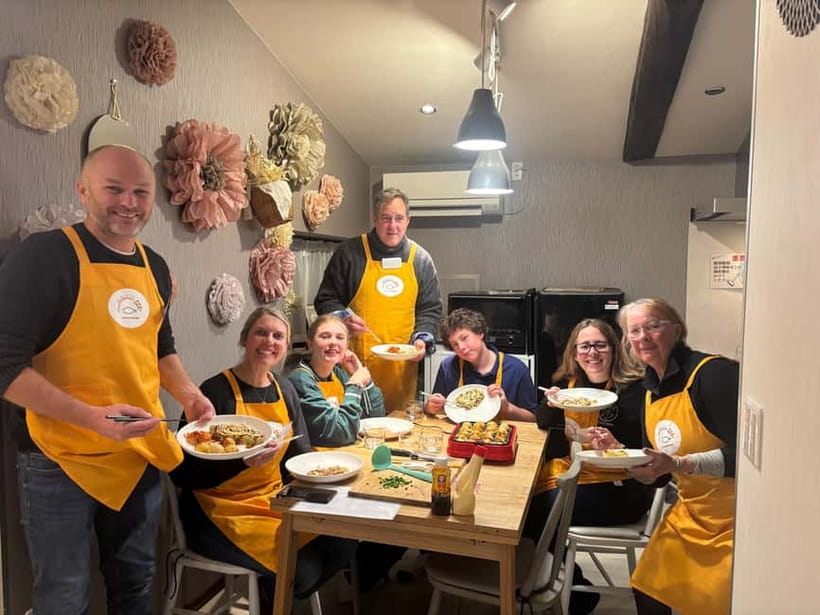
Okonomiyaki has been eaten in Japan since the Taisho era, from 1912 to 1926. Takoyaki arrived during the Showa era, from 1926 to 1989. Both are now familiar comfort foods, especially in Kansai, and both fit the informal side of Japanese food culture.
That context gives the class more value than simply making two random dishes. You are learning about foods people eat in ordinary settings, not just a ceremonial dish prepared for special occasions. The recipes also show how Japanese cooking can use a simple base and turn it into something social, filling, and adaptable.
The two dishes share enough ingredients and methods to work well in a short class. You are not switching from one completely unrelated cuisine to another. At the same time, the cooking feels different enough to teach you two useful techniques.
Okonomiyaki is the easier dish to understand at a glance. You combine ingredients, cook the mixture, and serve it as a hearty savory pancake. Takoyaki demands more active handling. The small molds require you to watch the batter and shape it as it cooks.
I like this pairing for first-time visitors because you leave with a clearer sense of two well-known Japanese foods, not just one recipe. If you later see takoyaki stands or okonomiyaki restaurants elsewhere in Japan, you will have a better idea of what goes into them.
A small class with a personal feel
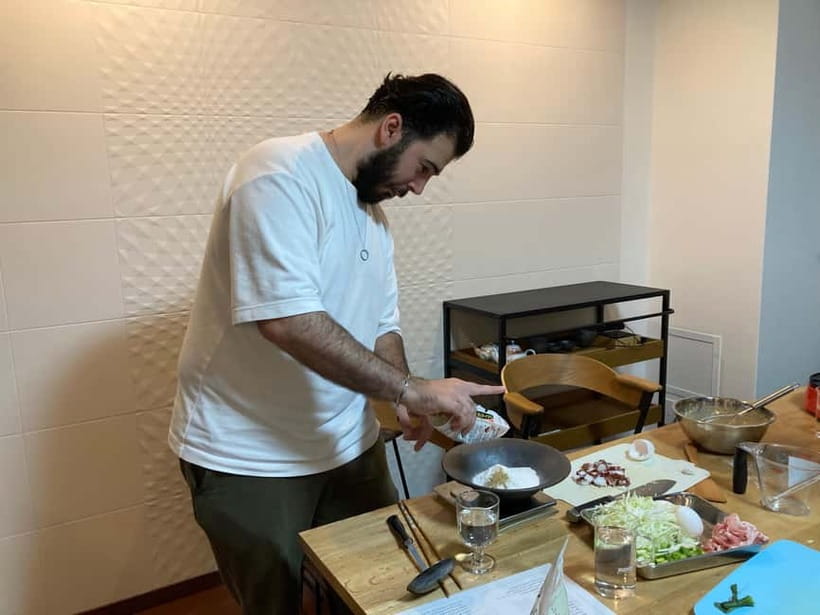
The maximum group size is six, and some sessions may be much smaller. A two-person class, for example, gives you more space to talk with the instructor and ask about Japanese food culture. That personal contact was one of the strongest positives in the available feedback.
This small format also helps if you are nervous about cooking. You can ask for the next step without stopping a large demonstration. The instructor can watch your progress and offer help when a pan or batter needs attention.
The experience provider is the Japan Association of Washoku Lifestylists. Instruction is available in English and Japanese. Marie is named as an especially warm and helpful instructor in one recent session, though your own teacher may be someone else.
The tone is casual rather than polished and theatrical. That can be a strength. You are likely to feel more like a person cooking in a small local kitchen than a customer watching a staged show. It can also mean that the experience depends on the instructor and the pace of the class.
A past session was described as late and underprepared, with the host checking notes and cleaning before the cooking time was fully over. That is a fair concern, especially when you are paying $56 for only one hour. The December 2025 change is important here: all classes are now led or supervised by experienced instructors, and the class flow has been refined. I would still book this for the hands-on activity, not for a highly formal production.
Same city, a completely different kind of day:
- PERFECT KYOTO 1-Day Bus Tour
★ 5.0 · 13,518 reviews - Kyoto: Fushimi Inari, Kinkakuji, Bamboo Grove 1 Day Bus Tour
★ 4.8 · 4,316 reviews - Kyoto: Tea Ceremony in a Traditional Tea House in Kiyomizu
★ 4.9 · 3,519 reviews - Kyoto Geisha Walking Tour: Gion District & Hidden Gems
★ 4.7 · 3,273 reviews
Location and timing in Kyoto
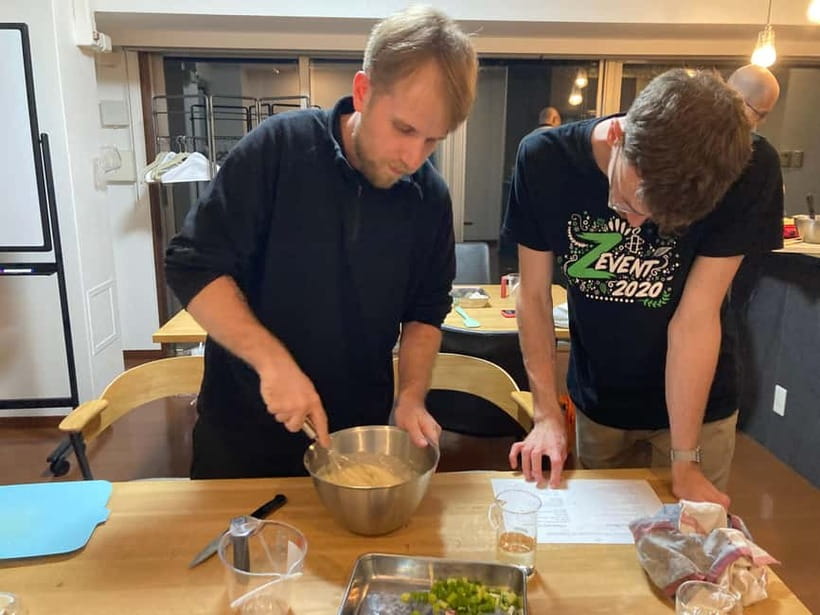
The class is about a 10-minute walk from Shijo Station or Karasuma Station. That makes it easy to pair with shopping, sightseeing, or an evening meal in central Kyoto.
It is also about 15 minutes from JR Kyoto Station by train or bus, followed by a short walk. From Nishiki Market, the walk is roughly 15 minutes. That location makes the activity a sensible add-on after browsing the market, though you should allow enough time to find the building and reach the third floor.
The one-hour duration is the biggest scheduling advantage. Kyoto days can fill quickly with temples, gardens, and transport connections. A longer cooking course can force you to cut another sight. This one fits more easily into a half-day plan.
You should not schedule it so tightly that you arrive breathless. The meeting point is in a building, and you need to use the elevator and doorbell for room 302. Give yourself a little extra time to locate the entrance, especially if you are coming from Nishiki Market or changing trains.
Starting times vary, so check availability for the day you want. The food is presented as lunch or dinner, which lets you place it around your sightseeing rather than treating it as a separate full-day activity.
Dietary planning is worth doing early
Gluten-free, vegan, halal-friendly, and allergy-conscious options are available. You must mention your needs when booking so the ingredients can be adjusted before the class.
That advance notice matters more here than at a restaurant where you can simply ask for a change at the table. The instructor needs to prepare the right ingredients for a hands-on recipe, and cross-contact concerns may require planning.
If you have a serious allergy, describe it clearly when you reserve. The available information confirms that allergy-friendly preparation can be arranged, but it does not provide a full ingredient list or explain the kitchen’s separate preparation procedures. You should use the booking message to give precise details rather than relying on a last-minute request.
For someone following a vegan, halal, or gluten-free diet, this option is especially useful because it allows you to join a local food activity without guessing what is in the batter or toppings. You should still confirm your requirements before paying.
Is $56 a fair price?
At $56 per person, this is not the cheapest way to eat okonomiyaki and takoyaki in Kyoto. A casual restaurant meal will usually cost less, although the price comparison is not equal.
Here, you are also paying for instruction, ingredients, an apron, cooking utensils, and a small group setting. The meal you make is included, so you do not need to add a separate lunch or dinner afterward unless you are still hungry.
I think the value depends on what you want from the hour. If you only want to taste the dishes, spend less at a restaurant or food stand. If you want to learn the basic process, ask questions, and make the food yourself, the price is more reasonable.
The small group limit improves the value. Six people is enough for a social session but still small enough for individual help. A two-person booking gives you an even more personal experience, based on the way recent sessions have been organized.
The price is harder to justify if you expect a polished professional cooking school, a long cultural lesson, or a take-home recipe booklet. Those features are not promised. This is a compact activity, and the main product is the act of cooking and eating together.
Who will enjoy this most
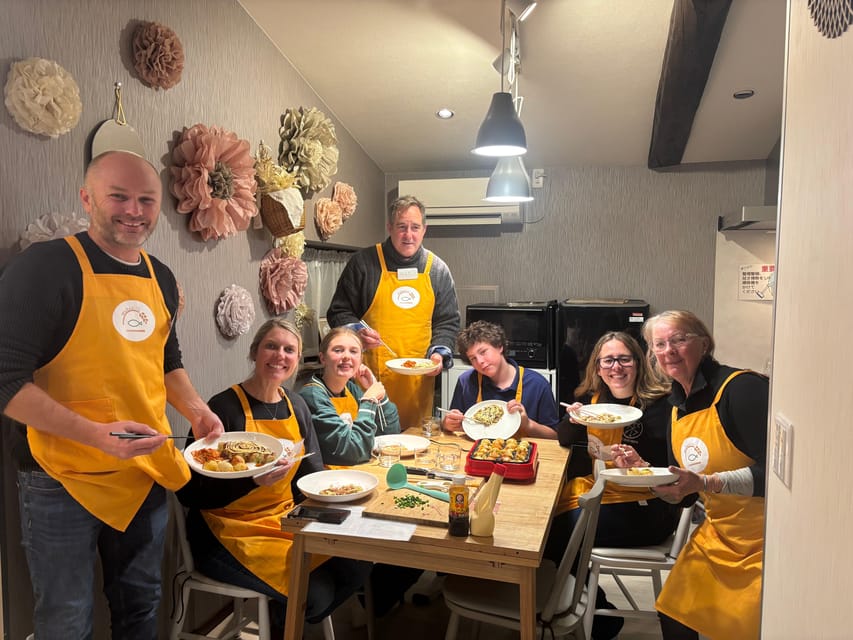
I would recommend the class to first-time visitors who want one direct introduction to Japanese comfort food. You do not need to know anything about the dishes before arriving.
It also works well for couples, friends, and families with an hour to spare. The two-person format can feel personal, while a fuller group adds a little social energy. Since the work is simple enough for beginners, you do not need to divide your party by cooking ability.
Food-focused visitors will get the most from it. You learn enough to recognize the main ideas behind both dishes, and you may be able to repeat them at home with the right pan and ingredients.
This is less suitable if you dislike participatory activities or want to sit quietly while an expert handles every step. It may also disappoint you if you want a long lesson on regional food history. The class gives context, but the main focus is cooking.
For children, the provided information does not state an age range or special child policy. I would confirm that detail before booking if you are planning a family activity.
Booking details that matter
The experience costs $56 per person and lasts one hour. The maximum group size is six, and instruction is offered in English or Japanese.
The price includes the cooking experience, ingredients for lunch or dinner, an apron, and cooking utensils. Transportation to and from the location is not included, so you will need to make your own way to the central Kyoto meeting point.
You can cancel up to 24 hours in advance for a full refund. A reserve-now, pay-later option is available, which helps if your Kyoto schedule is still changing.
Send dietary information at the time of booking. Do not wait until you arrive, especially if you need gluten-free, vegan, halal-friendly, or allergy-conscious ingredients.
Should you book this Kyoto cooking class?
Book it if you want a short, active food experience near central Kyoto. The best reasons are the two-dish format, the small group size, the included meal, and the chance to cook everyday Kansai favorites yourself.
I would be more cautious if you are paying mainly for polished instruction. The one-hour schedule is tight, and one earlier session had organizational problems. The December 2025 supervision update addresses that concern, but the experience remains casual by design.
For most first-time visitors, I think it is a good use of an hour, especially after Nishiki Market or between central Kyoto sights. Just send dietary requests in advance, leave time to find room 302, and choose it for friendly hands-on cooking rather than a full culinary course.
FAQ
How long does the cooking experience last?
The class lasts one hour.
What foods will I make?
You will prepare okonomiyaki and takoyaki, two popular Japanese comfort foods associated especially with the Kansai region.
Is the class suitable for beginners?
Yes. The experience is designed as a casual, hands-on activity, and the instructor provides guidance as you cook.
How many people can join?
The class is limited to six participants.
What languages are available?
Instruction is available in English and Japanese.
Are ingredients and a meal included?
Yes. The experience price includes the ingredients for lunch or dinner, as well as the cooking activity.
Are aprons and utensils provided?
Yes. Aprons and cooking utensils are available for rental during the class.
Can dietary restrictions be accommodated?
Gluten-free, vegan, halal-friendly, and allergy-conscious options are available. You must provide the details when booking so the ingredients can be adjusted.
How do I reach the meeting point?
The location is about a 10-minute walk from Shijo Station or Karasuma Station, about 15 minutes from JR Kyoto Station by train or bus plus a short walk, and roughly a 15-minute walk from Nishiki Market. Take the elevator to the third floor and press the doorbell for room 302.
Newest Kyoto experiences on the site
- Treasures of Kyoto: Gion & historical Walking Tour★ 5.0 · 6 reviews
- Whisk Your Own Matcha: A Zen Matcha Experience at Temple★ 3.6 · 7 reviews
- Kyoto tea town for matcha lovers★ 5.0 · 16 reviews
- Uji: Private immersion into Kyoto’s tea and reglious culture★ 5.0 · 17 reviews
- Kyoto Matcha Green Tea Tour★ 4.5 · 23 reviews
- Uji and Wazuka Matcha Farm Half Day Private Guided Tour★ 5.0 · 21 reviews
- Utilising upcycled Matcha! Creating matcha incense (Uji, Kyoto)★ 5.0 · 6 reviews
- Sacred Temple Yoga Experience in Japan★ 5.0 · 3 reviews
Kyoto Cooking Classes, compared.
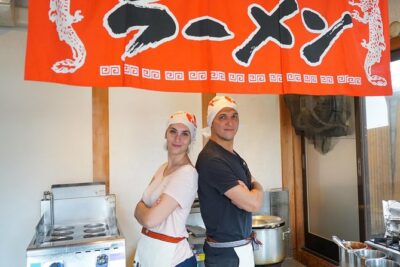
Ramen Cooking Class at Ramen Factory in Kyoto
Read our review →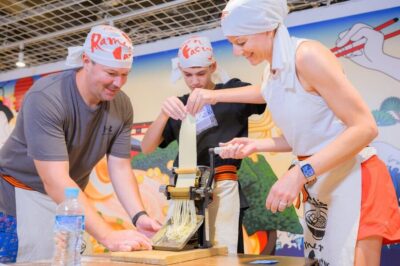
Ramen Cooking Class at a Ramen Factory with Souvenir
Read our review →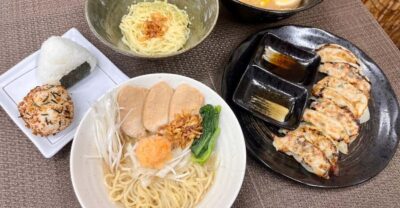
Japanese Washoku Bento Small Group Cooking Class
Read our review →
Kyoto Ramen and Gyoza Cooking Class with Professional Chefs
Read our review →
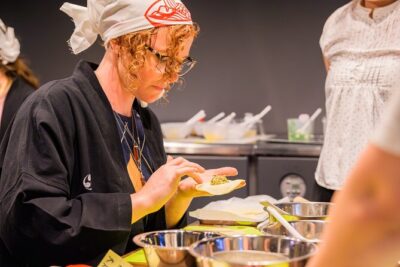
Gyoza Cooking Class in Kyoto: Traditional Japanese Dumplings
Read our review →Browse the lists this tour appears in