
Reviewed · FUSHIMI INARI TOURS
Kyoto Guided Walking Tour Highlight of Kiyomizu & Fushimi Inari
Kyoto packs three very different sights into this four-hour morning walk: Kiyomizu-dera for sweeping views, Sanjusangendo for its remarkable hall of 1,001 Kannon statues, and Fushimi Inari for its long tunnel of red torii gates. I like the route because it mixes major sights with useful context, and I like the small maximum of eight people, which makes questions and conversation much easier. The main catch is simple: you will walk a fair amount, and the ¥170 train fare is not included.
The timing also makes sense. You meet at 8:30 am at the Kyoto Ceramic Center, visit the first two temples, then take a short train ride from Shichijo Station to Fushimi Inari. Guides including Naomi have been praised for clear explanations, good energy, and making the walk feel more like time with a local than a lecture.
Key points at a glance
- Three major Kyoto sights in four hours: Kiyomizu-dera, Sanjusangendo, and Fushimi Inari fit into one focused morning.
- A small group of up to eight: You get a better chance to ask questions and stay connected with the guide.
- Sanjusangendo adds something different: Its hall of 1,001 Thousand-Armed Kannon statues gives the route more depth than a two-shrine visit.
- A short train ride links the route: The ¥170 fare is separate, so bring an IC card or coins.
- Guides bring history to life: Naomi is named in several accounts, with praise for her energy, humor, and ability to answer questions.
- Moderate walking in all weather: Comfortable shoes matter, and the tour runs rain or shine.
Why this Kyoto route works so well
Many first visits to Kyoto become a race between temples. This route avoids that problem by giving you three stops with clearly different moods and purposes. You begin in Higashiyama, where Kiyomizu-dera offers one of the city’s best-known views, move indoors at Sanjusangendo, then finish at Fushimi Inari, where the torii gates create a very different kind of shrine visit.
I like that the route is not built around one single photo stop. Kiyomizu-dera gives you classic Kyoto scenery, Sanjusangendo offers art and religious history, and Fushimi Inari lets you walk through a setting that feels immediately recognizable. The guide’s explanations help connect the buildings to Japanese Buddhist and Shinto traditions instead of leaving you with only a collection of photographs.
The small size matters here. With no more than eight people, you can usually hear the guide more easily and ask about details as they come up. Several accounts especially praise Naomi for her energy, humor, and answers to questions. That is useful on a walking tour, where the quality of the guide can shape the whole morning.
More ways to walk the Fushimi Inari gates:
- Kyoto: Fushimi Inari, Kinkakuji, Bamboo Grove 1 Day Bus Tour
★ 4.8 · 4,316 reviews - Fushimi Inari Hidden Hiking Tour (Private Option Available)
★ 5.0 · 1,750 reviews - Osaka/Kyoto:Kinkakuji,Arashiyama,FushimiInariShrine,NaraPark
★ 4.1 · 1,596 reviews
Starting at Kiyomizu-dera at 8:30
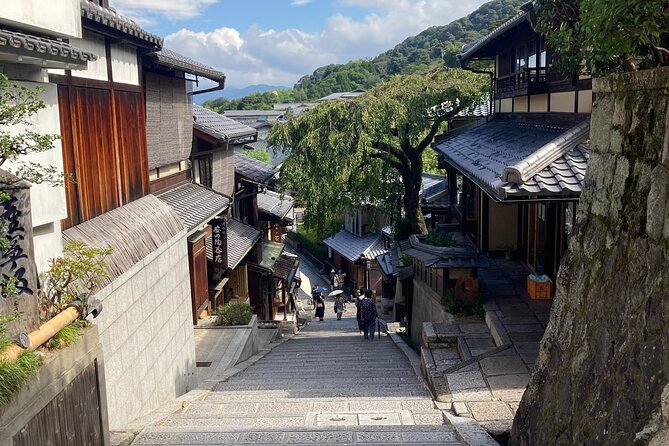
The meeting point is the Kyoto Ceramic Center, at 583-1 Yūgyōmaechō in Higashiyama Ward. The tour begins at 8:30 am, and the first stop is Kiyomizu-dera, one of Kyoto’s best-known Buddhist temples.
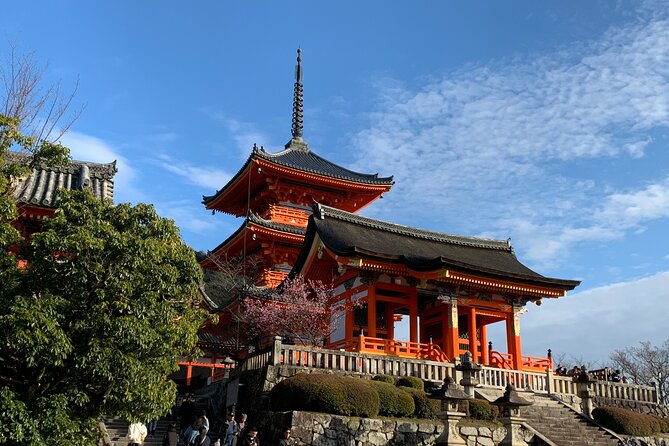
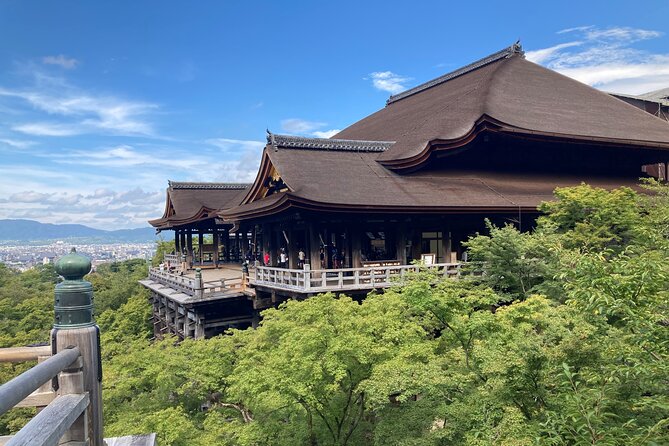
The temple dates from the late eighth century and is famous for its large wooden stage. From here, you get broad views toward the surrounding trees and hills, with especially attractive scenery when the cherry trees are in bloom. Even outside blossom season, the elevated setting gives this first stop a strong visual opening.
You have about one hour at Kiyomizu-dera, with admission included. That is enough time to take in the main setting without turning the visit into a rushed photo stop. The guide can also give you a clearer sense of what you are seeing, including the temple’s Buddhist role and why the wooden stage has become such a familiar image of Kyoto.
Kiyomizu-dera is popular, so do not expect solitude. The practical advantage of arriving in the morning is that you are beginning before the day has fully built up. Conditions can still be busy, but the early start gives the group a better chance to move comfortably.
The approach and temple grounds involve walking, and some surfaces may be uneven. You should wear shoes that you can use for several hours without complaint. If rain is in the forecast, bring suitable protection rather than assuming the tour will be postponed. It runs rain or shine.
Sanjusangendo and its 1,001 statues
The second stop is Sanjusangendo Temple, reached after the opening visit to Kiyomizu-dera. You have about 30 minutes here, and admission is included.
Sanjusangendo is known for its long hall containing 1,001 statues of the Thousand-Armed Kannon, the Buddhist Goddess of Mercy. The name Sanjusangendo refers to the hall’s thirty-three bays, a detail that gives the building its distinctive form and helps explain why this is not just another temple stop.
This visit changes the pace. At Kiyomizu-dera, the big appeal is the open setting and the view. At Sanjusangendo, the focus shifts indoors to repeated statues, symmetry, and quiet attention. I like this contrast because it keeps the tour from feeling like three versions of the same sight.
Thirty minutes is brief, but that is part of the tour’s design. You get a concentrated look rather than an extended museum-style visit. If Buddhist sculpture is a major interest of yours, you may wish you had more time. For a first Kyoto tour, though, the short stop gives you a meaningful introduction while leaving room for the final shrine.
The guide’s role is useful here. A hall filled with hundreds of statues can be hard to interpret without context. A clear explanation helps you understand why the figures matter and what makes the hall special, rather than simply noting that there are many of them.
The ¥170 train ride to Fushimi Inari
After Sanjusangendo, the group goes to Shichijo Station and takes a train to the Fushimi Inari area. The ride itself takes about five minutes, but the fare is separate from the tour price.
Bring an IC card or ¥170 in coins. This is a small cost, but it is the sort of detail that can slow things down if you are not ready. Having the fare prepared keeps the group moving and saves you from searching for change at the station.
I see the train as a sensible part of the route. Walking all the way between these locations would take more time and energy, and the short ride lets the tour cover more ground within four hours. It also gives you a quick change of scene between the temple district and Fushimi Inari.
The tour ends in front of the sanctuary at Fushimi Inari Taisha. That makes the finish practical if you want to continue exploring the shrine on your own, though the scheduled guided portion is about 45 minutes.
More Kiyomizu-dera visits and hillside walks:
- Kyoto: Tea Ceremony in a Traditional Tea House in Kiyomizu
★ 4.9 · 3,519 reviews - Kyoto: Nijo Castle, Kiyomizu & Fushimi Inari Guided Tour
★ 4.7 · 700 reviews - Kyoto: Nijo, Kinkaku-ji, Arashiyama, Kiyomizu & Fushimi Inari
★ 5.0 · 699 reviews - Kyoto Tea Ceremony & Kiyomizu-dera Temple Walking Tour
★ 5.0 · 115 reviews
Fushimi Inari and the famous torii gates
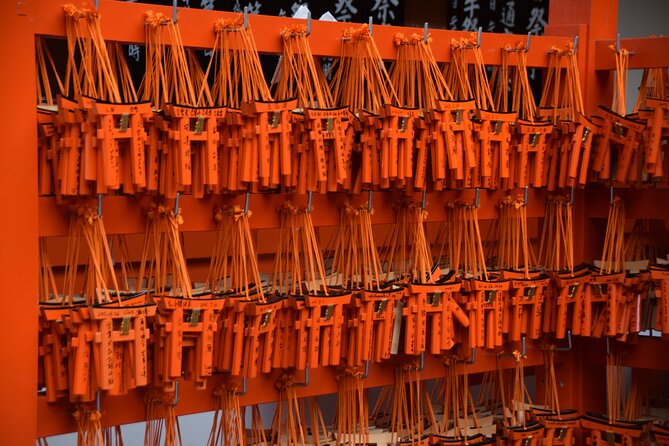
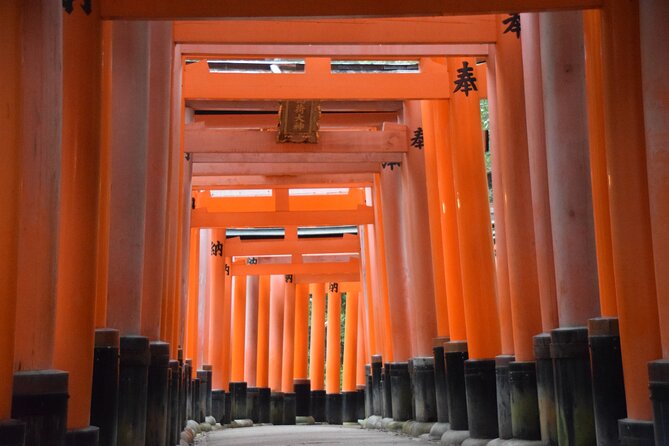
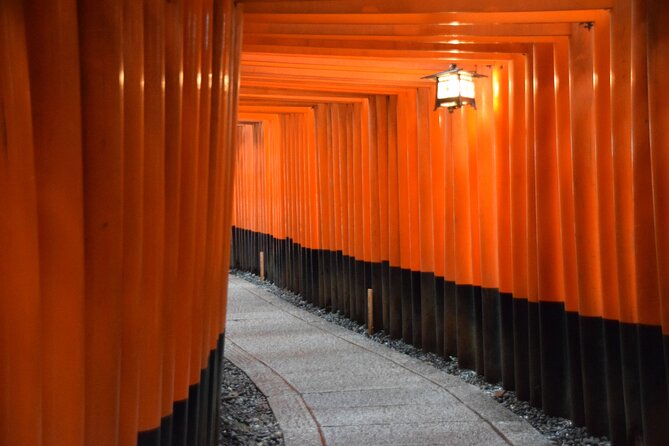
Fushimi Inari Taisha is dedicated to Inari, the Shinto deity associated with rice, agriculture, and prosperity. The shrine is best known for its thousands of red torii gates, which form long passages up the wooded mountain.
You have about 45 minutes here, with no admission fee. The gates are the obvious draw, but the place is more than a backdrop for photographs. The route introduces you to a working Shinto shrine and the visual language of donated torii, layered one after another along the paths.
The time available lets you experience the atmosphere and walk through part of the gate route, but it is not enough to cover every path. Fushimi Inari extends much farther than the main sanctuary area, so you should not expect a full mountain hike during the guided tour.
One especially appealing detail is the reference to a quieter path in the Fushimi Inari area. A guide who knows the route may take you away from the most obvious flow and show you a more peaceful section. This is where a small group and a local guide can add real value. You are not simply arriving, taking a picture, and leaving.
The tour ends at the sanctuary, not back at the original meeting point. That is convenient if Fushimi Inari is your next destination, but you should plan the rest of your day from the Fushimi Inari area rather than assuming you will return to central Kyoto.
How much walking should you expect?
The tour describes the walking as moderate, and that is the right way to think about it. You will move through temple grounds, streets, a station, and shrine paths over several hours. Even if the schedule feels relaxed, your feet will notice the distance more than they would on a bus tour.
The route includes enough walking for you to ask questions and get to know the guide and the other people in the group. That social side can be a real benefit, especially if you enjoy learning through conversation rather than listening silently from the back of a large group.
Comfortable walking shoes are essential. I would also dress for changing weather because the tour runs in rain or shine. Kyoto’s temple and shrine visits are outdoor-heavy, and the final stop at Fushimi Inari includes paths with an uphill feel if you go beyond the sanctuary area.
Most people can take part, but anyone who dislikes walking should consider a slower, more stationary tour instead. The four-hour length is manageable, yet this is not a ride-and-stop sightseeing experience.
What the $78.18 price really covers
At $78.18 per person, this tour is not the cheapest way to see the three locations. You could visit the sites independently for less, especially since Fushimi Inari has free admission and the train costs only ¥170.
The value comes from the structure. Your admission to Kiyomizu-dera and Sanjusangendo is included, the route is organized for you, and a guide provides explanations while you move between sites. You also avoid spending part of the morning working out how to connect the temples and shrine.
The price makes the most sense if you are visiting Kyoto for the first time, want cultural context, or prefer not to manage the route alone. It is less compelling if you already know these sites well, speak confidently about Japanese religious architecture, or enjoy planning your own temple visits.
The group cap of eight helps justify the cost. A small group usually gives you more room to ask about customs, history, and practical matters. Accounts of the tour place particular emphasis on the guide’s ability to explain topics clearly and keep the mood light. That personal connection is the main reason to pay more than the entry fees alone.
Who should book this experience?
I would recommend this tour to a first-time Kyoto visitor who wants a strong introduction without giving up an entire day. You get three major sights, a short train connection, and a finish at one of the city’s most recognizable shrines.
It also suits people who enjoy walking and asking questions. The guide-led format works best if you want more than directions and photographs. The small size gives you a better chance to speak with the guide, and the route allows time for history, trivia, and cultural explanations.
Families with older children may find the variety useful. Kiyomizu-dera offers views, Sanjusangendo offers a striking indoor display, and Fushimi Inari supplies the famous torii gates. Very young children or anyone needing frequent rest may find the walking pace harder.
I would be cautious about booking it if your main goal is a long hike through all of Fushimi Inari. The guided stop there is about 45 minutes, so the experience gives you an introduction rather than a complete mountain route. You can continue on your own after the tour ends.
The tour is available with a mobile ticket, and confirmation is provided when you book. Free cancellation is available up to 24 hours before the start time. Changes or cancellations inside that window are not refunded, so keep the local Kyoto time in mind.
Should you book this Kyoto walking tour?
Book it if you want a well-planned half-day with three very different sights and a guide who can make the history easier to understand. The combination of Kiyomizu-dera’s views, Sanjusangendo’s statues, and Fushimi Inari’s torii gates gives you a broad taste of Kyoto in a short span.
The best reasons to choose it are the small group, the useful route design, and the chance to ask questions along the way. The main limits are the moderate walking, the short time at each location, and the separate train fare.
If you are comfortable with those limits, this is a practical choice for a first Kyoto morning. I would bring good shoes, an IC card or ¥170 in coins, and enough space in your schedule to continue exploring after the guide leaves you at Fushimi Inari.
FAQ
How long does the Kyoto walking tour last?
The tour lasts approximately four hours.
What time does the tour start?
The tour starts at 8:30 am.
Where does the tour begin?
It begins at the Kyoto Ceramic Center, Kyoto Ceramic Art Association Official Shop and Gallery, at 583-1 Yūgyōmaechō in Kyoto’s Higashiyama Ward.
Where does the tour end?
It ends in front of the sanctuary at Fushimi Inari Taisha.
Which attractions are included?
The tour visits Kiyomizu-dera Temple, Sanjusangendo Temple, and Fushimi Inari Taisha Shrine.
Are admission tickets included?
Admission to Kiyomizu-dera and Sanjusangendo is included. Entry to Fushimi Inari is free.
Is the train fare included?
No. The train fare from Shichijo Station to Fushimi Inari is separate. You should prepare an IC card or ¥170 in coins.
How large is the group?
The tour has a maximum of eight people.
How much walking is involved?
A moderate amount of walking is involved. Comfortable walking shoes are recommended.
Does the tour operate in bad weather?
Yes. The tour runs rain or shine.
Can I cancel for a full refund?
Yes, if you cancel at least 24 hours before the experience start time. Cancellations or changes made less than 24 hours before the start time are not refunded.
More Walking Tours in Kyoto
- Kyoto Geisha Walking Tour: Gion District & Hidden Gems
★ 4.7 · 3,273 reviews - Kyoto: Gion Magical Night Walking Tour with Geisha Trivia
★ 4.9 · 2,393 reviews - Kyoto: Gion Geisha District Walking Tour – Stories of Geisha
★ 4.7 · 2,187 reviews - Night Walk in Gion: Kyoto’s Geisha District
★ 4.5 · 2,003 reviews
Newest Kyoto experiences on the site
- Treasures of Kyoto: Gion & historical Walking Tour★ 5.0 · 6 reviews
- Whisk Your Own Matcha: A Zen Matcha Experience at Temple★ 3.6 · 7 reviews
- Kyoto tea town for matcha lovers★ 5.0 · 16 reviews
- Uji: Private immersion into Kyoto’s tea and reglious culture★ 5.0 · 17 reviews
- Kyoto Matcha Green Tea Tour★ 4.5 · 23 reviews
- Uji and Wazuka Matcha Farm Half Day Private Guided Tour★ 5.0 · 21 reviews
- Utilising upcycled Matcha! Creating matcha incense (Uji, Kyoto)★ 5.0 · 6 reviews
- Sacred Temple Yoga Experience in Japan★ 5.0 · 3 reviews
Fushimi Inari Tours, compared.
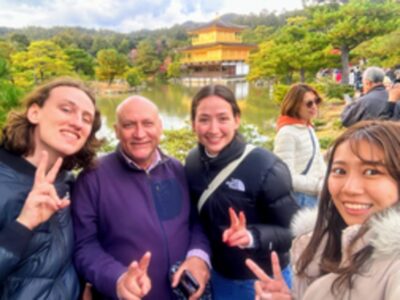
Fushimi Inari, Kinkakuji, Bamboo Grove 1 Day Bus Tour
Read our review →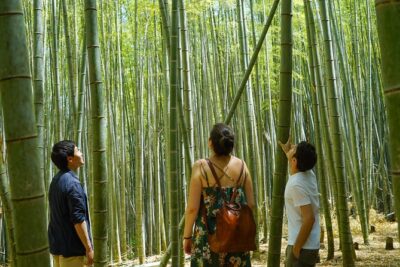
Fushimi Inari Hidden Hiking Tour (Private Option Available)
Read our review →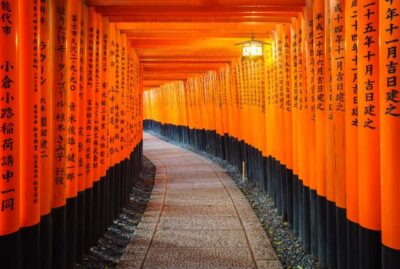
Kinkakuji,Arashiyama,FushimiInariShrine,NaraPark
Read our review →
Nara, Fushimi Inari Taisha, Arashiyama Bus Tour
Read our review →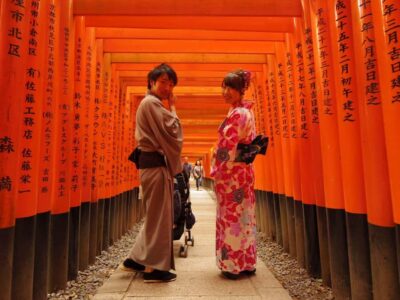
Arashiyama, Nara & Fushimi Inari Shrine w/Lunch
Read our review →
Nijo Castle, Kiyomizu & Fushimi Inari Guided Tour
Read our review →
Nijo, Kinkaku-ji, Arashiyama, Kiyomizu & Fushimi Inari
Read our review →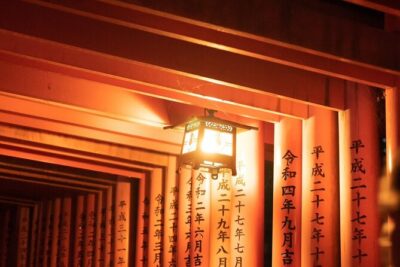
Browse the lists this tour appears in