
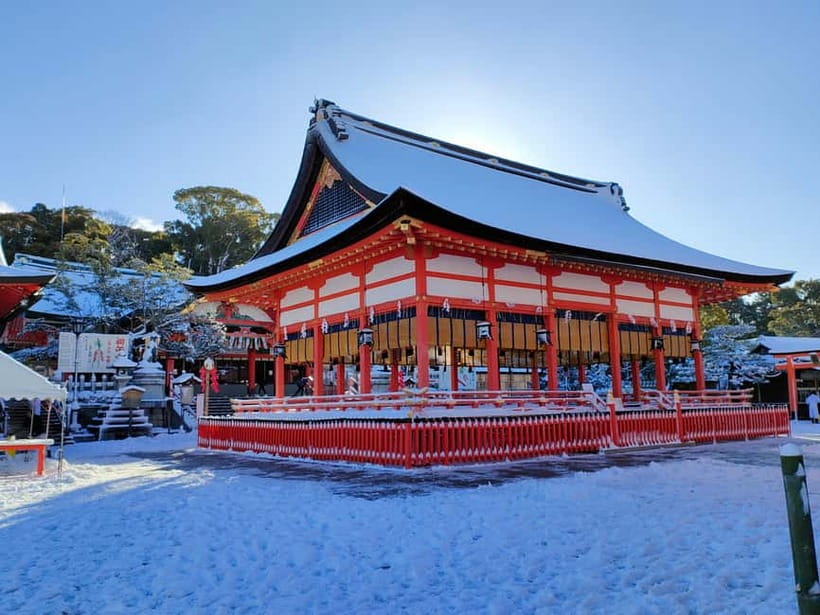
Reviewed · KYOTO EARLY MORNING TOURS
Kyoto: Early Morning Walking Tour with Local Guide
Kyoto’s famous sights are much easier to appreciate before the tour buses arrive. This early-morning private walk takes you from Kiyomizu-dera through old lanes, temple grounds, Gion, and finally Fushimi Inari, pairing big-name sights with quieter corners that a local guide can point out.
I like the calm start and the sensible finish at Fushimi Inari, where you can catch a train onward. I also like the flexible private format. Guide Michele has adapted the route for families and added stories about everyday Japanese life, not just dates and temple names.
The main consideration is the pace. Six hours on foot, with stairs and temple grounds, can feel long in warm weather. The price is also best for a group of several people, since the $316 fee covers up to 10 rather than charging each person separately.
Key points at a glance
- Kiyomizu-dera before the crowds: Begin near the temple’s Koyasunoto Pagoda and enjoy cooler air and open views.
- Old Kyoto on foot: Sannen-zaka, Ninen-zaka, and Gion offer some of the city’s most appealing traditional streets.
- A private, adjustable route: Your guide can adapt the walk to your group, including families with children.
- Michele’s local perspective: Expect stories about Japanese customs, daily routines, and less-visited corners.
- Two very different temple experiences: Chion-in offers quiet scale and impressive architecture, while Fushimi Inari brings the famous red torii gates.
- A practical end point: The tour finishes at Fushimi Inari, with easy access to trains.
Why an early start changes Kyoto
Kyoto is not difficult to enjoy, but its best-known sights fill quickly. Kiyomizu-dera, Gion, and Fushimi Inari are major stops on nearly every first visit, so timing matters. Starting early gives you a better chance to hear your guide, take photographs, and notice details without weaving through large groups.
The morning also suits the eastern Kyoto route. You begin high in the Higashiyama area, walk downhill or across fairly manageable streets through old neighborhoods, then continue toward Chion-in, Yasaka Shrine, Gion, and Fushimi Inari. The sequence makes geographical sense instead of sending you back and forth across the city.
You meet at the Family Mart opposite the Higashiyama Fire Station at 4 Chome-182-18 Kiyomizu. You can also request a hotel meeting point within Kyoto city. If you choose the shop, allow time to reach it before the start, since transportation to the meeting point is not included.
This is a private group tour, so you are not tied to the interests or walking speed of strangers. English and Italian are available. Michele is specifically identified as one of the guides, and the strongest praise for his work focuses on flexibility, family-friendly pacing, and explanations that connect famous sites with ordinary Japanese life.
More early starts in Kyoto:
- Kyoto Early Morning Tour with English-Speaking Guide
★ 5.0 · 1,427 reviews - Kyoto: Early Morning Tour with English-Speaking Guide
★ 4.9 · 1,128 reviews - Arashiyama Bamboo Forest & Hidden Gems Bike Tour (Early Bird)
★ 5.0 · 613 reviews
Kiyomizu-dera and the Koyasunoto Pagoda
Kiyomizu-dera is the natural opening act. The approach brings you into the old Higashiyama district, where temple lanes and traditional buildings create a clear sense of old Kyoto before you even reach the main grounds.
The scheduled visit lasts about an hour. You can expect time for sightseeing around the temple and the Koyasunoto Pagoda, along with broad views over Kyoto from the elevated setting. The early hour is the real advantage here. You get a quieter look at one of Kyoto’s most popular temples and a cooler start to a long walk.
The Kiyomizudera entrance fee is not included and costs about $3. That is a small extra, but you should carry some room in your budget. Food and drinks are also your responsibility, so bring water rather than counting on a lengthy café stop during the route.
Wear shoes that handle uneven streets and temple approaches. This is not a difficult mountain hike, but the route includes walking for much of the day, and temple sites can involve steps. Sunscreen is useful too, especially once the morning warms up.
Sannen-zaka, Ninen-zaka, and Yasaka Pagoda
The traditional streets of Sannen-zaka and Ninen-zaka are among the most attractive parts of the walk. Their sloping lanes, old-style buildings, and small shops give you a better feel for Kyoto’s architectural character than a quick visit to an isolated temple can.
Early morning is important here. Many shops may not yet be open, but that is partly the point. You can focus on the streets themselves rather than treating the area as a shopping stop. Your guide can explain what you are seeing and lead you through the district with more context than you would get from simply following a map.
The five-story Yasaka Pagoda is one of the area’s most recognizable sights. It rises above the narrow streets and makes a fine photograph, but it also helps you understand the shape of eastern Kyoto. You see how temples, lanes, and residential areas fit together rather than viewing the pagoda as a stand-alone attraction.
Do not expect a long, formal visit inside every building along this part of the route. The value is in walking through the district, seeing the street details, and learning how the area connects with Kiyomizu-dera and Gion.
Chion-in’s grand temple architecture
Chion-in receives about 30 minutes, making it a shorter stop than Kiyomizu-dera or Gion. That is enough for an introduction to the grounds and its impressive architecture, though not enough for a slow, detailed examination of every corner.
The temple provides a change of mood. After the narrow lanes of Higashiyama, the grounds feel more spacious and composed. The architecture gives your guide plenty to explain, and the quieter setting lets you pause without the pressure of a crowded photo queue.
This is one reason a guide helps. Temple names can blur together after several days in Kyoto. A local explanation gives Chion-in its own place in the morning instead of making it just another stop between better-known sights.
The 30-minute timing also keeps the full route moving. If you like lingering at temples for an hour or more, you may wish the schedule allowed extra time here. On the other hand, the tour is designed to cover several major areas in one morning and afternoon, so a shorter visit is a practical trade.
More walking tours in Kyoto:
- Kyoto Geisha Walking Tour: Gion District & Hidden Gems
★ 4.7 · 3,273 reviews - Kyoto: Gion Magical Night Walking Tour with Geisha Trivia
★ 4.9 · 2,393 reviews - Kyoto: Gion Geisha District Walking Tour – Stories of Geisha
★ 4.7 · 2,187 reviews - Night Walk in Gion: Kyoto’s Geisha District
★ 4.5 · 2,003 reviews
Yasaka Shrine and the edge of Gion
Yasaka Shrine is scheduled for about 30 minutes. It is a lively religious site with a strong connection to the surrounding Gion district, and it offers a different visual experience from the more secluded feel of Chion-in.
Your guide can help you understand basic shrine customs and Japanese religious practice. The tour information specifically promises discussion of Japanese rituals and daily life, which adds useful meaning to gestures and spaces that can otherwise seem mysterious to first-time visitors.
From Yasaka Shrine, the route leads into Gion. This is Kyoto’s well-known geisha district, though it is important to set realistic expectations. Gion is a neighborhood, not a stage show. You are walking through its streets and learning about the area, not receiving a guarantee of seeing geisha.
The quiet morning is a good time to observe the lanes respectfully. Keep your camera ready, but remember that residential and working areas are not open-air attractions. A guide can help you understand the difference between looking at the district and getting in the way of people who live and work there.
Gion with a local guide
Gion receives about an hour, giving it more time than Yasaka Shrine or Chion-in. That makes sense. The district is best understood through small details: the street layout, the traditional facades, and the customs connected with entertainment houses and local life.
This is also where the guide’s personal knowledge matters most. Michele has been praised for explaining not only history but also everyday Japanese society. That can turn a pretty walk into a more useful cultural lesson, especially if you want to understand how Kyoto functions beyond its monuments.
The route may include less-touristed corners rather than only the famous lanes. The exact path can change because this is a private tour, and flexibility is one of its better features. Families can ask for adjustments, and your guide can respond to your interests and energy level.
Still, flexibility is not the same as an unlimited custom tour. The morning has several fixed highlights and must reach Fushimi Inari later. Tell the guide early if you care most about photography, religious customs, architecture, or local life, so the available time is used well.
The 15-minute train to Fushimi Inari
A local train links the Gion area with Fushimi Inari, and the ride takes about 15 minutes. This short break is welcome after several hours on foot. Train transportation is part of the route, but other transportation, such as getting to the meeting point, is not included.
The change from walking through old streets to riding a local train also gives the day a practical Kyoto feel. You are not sealed inside a sightseeing vehicle. You move through the city as residents do, then continue on foot at one of its most famous shrines.
Your guide can help with this transition, but you should still wear comfortable shoes and keep water handy. The tour does not include food or drinks, and there is no listed meal break. If you need regular snacks, carry them from the start.
Fushimi Inari’s endless red torii gates
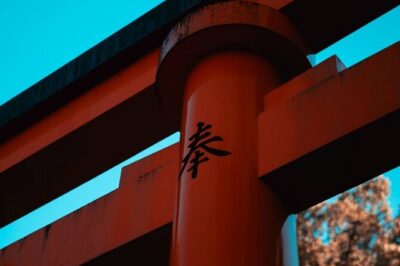
Fushimi Inari Taisha is the final major stop, with about an hour for sightseeing. It is famous for its long corridors of red torii gates, which climb through the wooded grounds and create one of Kyoto’s most memorable scenes.
The phrase endless red torii is not an exaggeration in the visual sense. The gates continue far beyond the first photo spots, though this tour’s one-hour visit is an introduction rather than a full exploration of the entire mountain route. You can see the most recognizable approach and decide how much farther you want to go within the available time.
This stop can be much busier than the early part of the tour, especially because it is one of Kyoto’s signature sights. The early start helps the overall day, but by the time you arrive, the shrine may not feel as quiet as Kiyomizu-dera. That contrast is worth knowing before you book.
Ending here is convenient. Fushimi Inari has easy train access, so you can continue to another part of Kyoto or return to your hotel without retracing the whole route. Transportation from the end point is not included, but the location is well placed for onward travel.
What $316 means for a private group
The listed price is $316 for a group of up to 10 people. For one or two people, that is a substantial outlay compared with joining a larger group. For a family or group of six to 10, the arithmetic looks much better, especially if you value a private guide and the ability to adjust the pace.
At 10 people, the guide cost works out to about $32 per person before the temple entrance fee and any transport costs. At four people, it is about $79 per person. That gives you a useful way to judge the value rather than looking only at the total price.
You are paying for a six-hour route that joins several major sights without requiring you to plan the order, find the best walking connections, or work out the train transfer to Fushimi Inari. The included visits cover Kiyomizu-dera, Sannen-zaka, Ninen-zaka, Yasaka Pagoda, Yasaka Shrine, Chion-in, Gion, and Fushimi Inari.
The tradeoff is that food, drinks, the approximately $3 Kiyomizudera admission, and travel to and from the tour are extra. If you already feel comfortable navigating Kyoto, the private guide may not be essential. If you want cultural explanations and a carefully linked first look at eastern Kyoto, the cost becomes easier to justify.
Who will enjoy this Kyoto walk
I would recommend this for first-time visitors who want to cover several major sights in one well-organized day. It also suits families, since the route can be adjusted and the guide has experience shaping the walk around children’s needs.
It is a good fit for anyone who prefers streets and temples to a bus tour. You spend most of the time outside, moving through real neighborhoods and religious sites rather than looking through a vehicle window.
You should think twice if you dislike long walks, early starts, or a fixed six-hour commitment. You should also consider another plan if your main goal is a slow, detailed study of one temple. This route favors range and local explanation over long stays at any single site.
Book this tour if you want an early start, a private guide, and a broad introduction to Kyoto’s eastern temples, old streets, Gion, and Fushimi Inari. The value is strongest for families and groups of several people. If you are traveling alone or as a couple and already know Kyoto well, $316 may be hard to defend. For a first visit, though, the calm opening, flexible guiding, and convenient Fushimi Inari finish make it a sensible way to get your bearings.
FAQ
How long does the Kyoto walking tour last?
The tour lasts six hours.
What time does the tour start?
Starting times vary. You need to check availability when booking, and an early start is recommended to avoid crowds and cooler temperatures.
Where is the meeting point?
The main meeting point is the Family Mart opposite the Higashiyama Fire Station at 4 Chome-182-18 Kiyomizu, Higashiyama Ward, Kyoto, 605-0862.
Can I meet the guide at my hotel?
Yes. You can request a different meeting point, such as your hotel, if it is in Kyoto city.
Is this a private tour?
Yes. The tour is for a private group of up to 10 people.
Which languages are available?
The live guide is available in English or Italian.
Is the Kiyomizu-dera entrance fee included?
No. The Kiyomizudera entrance fee is about $3 and is paid separately.
Is transportation included?
The route includes a local train ride of about 15 minutes to Fushimi Inari. Transportation to the meeting point and from the end point is not included.
Where does the tour finish?
The tour ends at Fushimi Inari Shrine, which has easy access to trains.
What should I bring?
Bring comfortable shoes, a camera, sunscreen, and water. Food and drinks are not included.
Can I cancel the booking?
You can cancel up to 24 hours in advance for a full refund. A reserve-now, pay-later option is also available.
Newest Kyoto experiences on the site
- Whisk Your Own Matcha: A Zen Matcha Experience at Temple★ 3.6 · 7 reviews
- Treasures of Kyoto: Gion & historical Walking Tour★ 5.0 · 6 reviews
- Kyoto tea town for matcha lovers★ 5.0 · 16 reviews
- Uji: Private immersion into Kyoto’s tea and reglious culture★ 5.0 · 17 reviews
- Kyoto Matcha Green Tea Tour★ 4.5 · 23 reviews
- Uji and Wazuka Matcha Farm Half Day Private Guided Tour★ 5.0 · 21 reviews
- Utilising upcycled Matcha! Creating matcha incense (Uji, Kyoto)★ 5.0 · 6 reviews
- Sacred Temple Yoga Experience in Japan★ 5.0 · 3 reviews
Kyoto Early Morning Tours, compared.
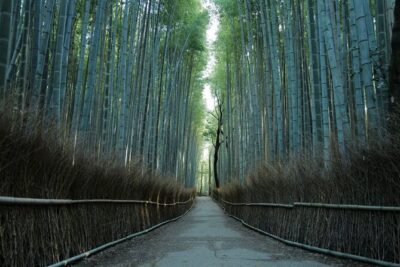
Kyoto Early Morning Tour with English-Speaking Guide
Read our review →Early Morning Tour with English-Speaking Guide
Read our review →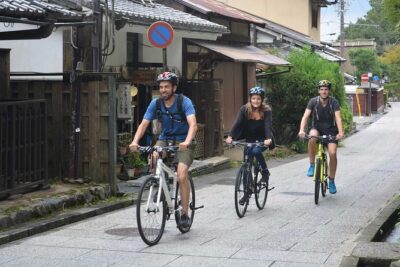
Arashiyama Bamboo Forest & Hidden Gems Bike Tour (Early Bird)
Read our review →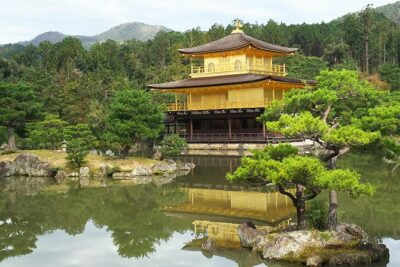
Kyoto Early Bird English Tour: Fushimi-Inari and Arashiyama
Read our review →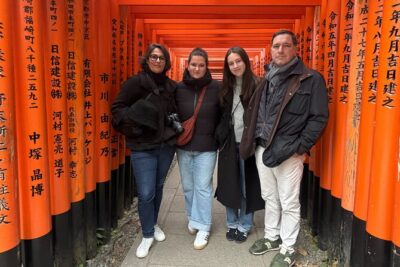
Kyoto Early Bird English Tour: Fushimi Inari & Gion(Private opt)
Read our review →Browse the lists this tour appears in