
Reviewed · GION DISTRICT TOURS
Kyoto Early Bird English Tour: Gion & Higashiyama(Private opt)
Kyoto’s old streets are at their best before the crowds arrive, and this early morning walking tour puts Gion and Higashiyama in a sensible three-hour route. You’ll see wooden machiya houses, shrine gates, Yasaka Pagoda, and Kiyomizu-dera without having to puzzle over a map. The 7 a.m. departure is the smart choice if quiet streets and better photographs matter to you.
I like the mix of major sights and smaller stops, especially Yasui-Konpiragu and colorful Yasaka Koshin-Do. I also like the personal touch from guides such as Ikki Kataoka, who explains the landmarks in clear English and takes professional photos during the walk. The main drawback is the pace and physical demand: this is a walking tour with several hours on foot, and the ¥500 Kiyomizu-dera admission is extra.
Key points at a glance
- Early 7 a.m. start: A useful way to see Gion before the busiest period.
- Eight Kyoto stops: The route includes Hanamikoji Street, Yasaka Pagoda, Kiyomizu-dera, and Yasaka Shrine.
- Guide-led context: An English-speaking local guide explains what you are seeing instead of leaving you with a self-guided map.
- Private or small-group choice: The tour is offered in flexible formats, though you should confirm the exact option at booking.
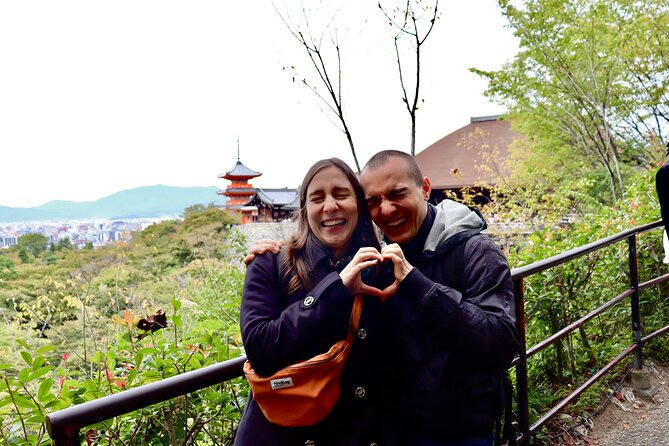
- Photos included: Professional photos are taken during the walk, a useful bonus for couples, families, and solo visitors.
- Extra temple charge: Kiyomizu-dera costs ¥500 per person, while the other listed stops are free.
Why an early start makes sense in Gion
Gion is Kyoto’s best-known geisha district, but it is not a theme park built for quick snapshots. Its appeal comes from the narrow streets, traditional wooden machiya houses, teahouses, and the sense that the district still has a daily life beyond sightseeing.
Starting early gives you a calmer introduction. You can pay attention to the architecture and hear the guide without as much street noise around you. You might also find the mood more respectful at this hour, since Gion is a living neighborhood as well as a place of cultural interest.
The tour begins at the Statue of Izumo-no-Okuni in Kawaramachi, in Kyoto’s Higashiyama Ward. You should arrive on time. If you are late, you cannot join the walk and will not receive a refund, so allow enough time to reach the meeting point by public transportation.
The route is designed for people who want to understand the setting, not simply collect photos. That matters in Gion, where a guide can explain the difference between a traditional teahouse district and a public sightseeing street. The guide also helps you move from one area to the next without stopping to check directions.
More ways to walk Gion:
- Kyoto Geisha Walking Tour: Gion District & Hidden Gems
★ 4.7 · 3,273 reviews - Kyoto: Gion Magical Night Walking Tour with Geisha Trivia
★ 4.9 · 2,393 reviews - Kyoto: Gion Geisha District Walking Tour – Stories of Geisha
★ 4.7 · 2,187 reviews
Hanamikoji Street and the old Gion atmosphere
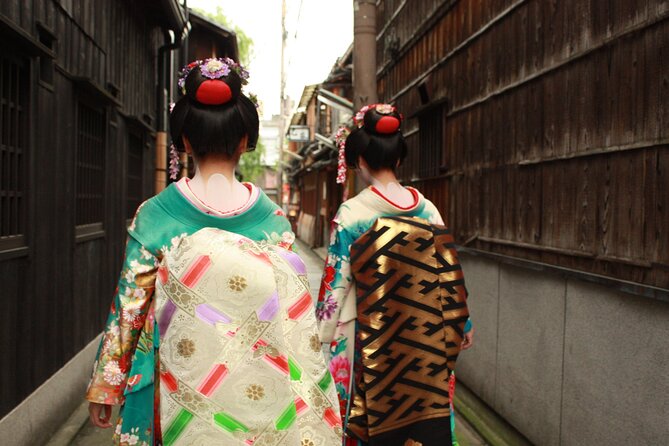
The first stops introduce you to Gion and Hanamikoji Street. Hanamikoji is one of the district’s best-known streets, lined with traditional buildings and teahouses. It is also a place where you may have the chance to see geisha or maiko, although no sighting is guaranteed.
Keep your expectations sensible here. The value is not just in spotting a performer in traditional dress. The wooden facades, restrained street design, and atmosphere give you a clearer idea of how Kyoto presents its older neighborhoods.
You have about 10 minutes in Gion and 15 minutes on Hanamikoji Street. That is enough for an introduction and photographs, but not enough for a long independent wander. If you want extended time in Gion’s lanes, you will need to return on your own after the tour.
This short stop also shows why an English-speaking guide can be useful. A good explanation gives meaning to details you might otherwise pass without noticing. The supplied information identifies the guides as passionate local English speakers, and Ikki Kataoka is specifically praised for clear English, patience, and detailed explanations.
Yasui-Konpiragu and a very specific kind of shrine visit
Yasui-Konpiragu is not simply another pretty shrine. It is known for prayers to end harmful relationships and sever unwanted ties, while also helping people seek better connections.
That purpose gives the stop a different tone from the grander temples on the route. You get 15 minutes here, enough to learn why people visit and to see a side of Japanese religious practice that is personal and practical.
I like this inclusion because it breaks up the standard first-time Kyoto route. Kiyomizu-dera and Yasaka Shrine are essential sights, but a smaller shrine with a distinct purpose can be easier to remember. The stop also gives the guide a chance to explain local customs rather than simply point out a famous building.
Do not expect a long ceremony or a private spiritual session. The tour provides sightseeing and commentary, not a religious service.
Yasaka Pagoda and Kyoto’s most photographed streets
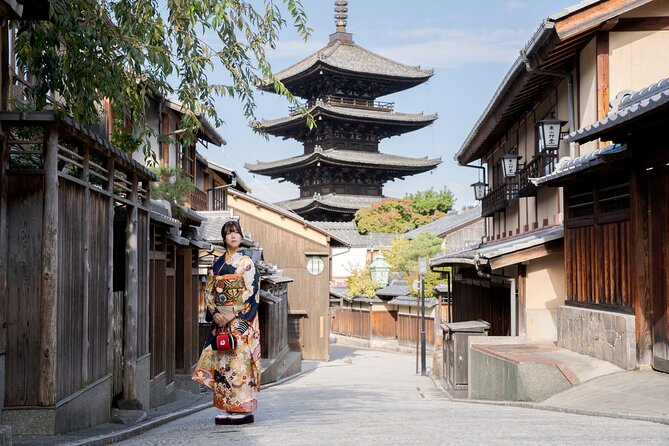
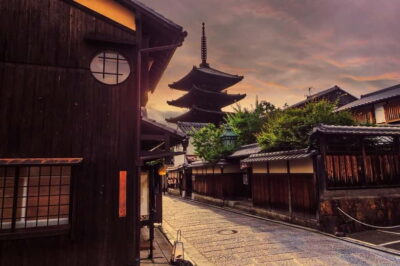
Yasaka Pagoda, also called Hokanji Temple, is one of the visual anchors of Higashiyama. Its wooden structure rises above the surrounding streets and is described as one of the oldest wooden structures in Japan.
You have around 15 minutes here. That is a short visit, but the pagoda is well suited to a guided walking route because its setting matters as much as the building itself. The nearby streets show how Kyoto’s traditional architecture, small shops, and temple buildings fit together.
The guide can help you frame the pagoda within the neighborhood instead of treating it as an isolated photo stop. This is also one of the places where having professional photos taken can be helpful. You can focus on looking around instead of handing your phone to a stranger.
The route does not promise entry inside every building. The attraction here is the exterior view and the surrounding streets. If you want a long photography session, this tour’s fixed timing may feel brief.
More of the old streets around Higashiyama:
- Kyoto: Private Rickshaw Tour of Gion and Higashiyama Area
★ 5.0 · 144 reviews - Kyoto: Historic Higashiyama Walking Tour
★ 5.0 · 31 reviews - Kyoto: Kiyomizudera, Higashiyama and Yasaka Discovery Tour
★ 4.8 · 17 reviews - Private Walking Tour in Gion and Higashiyama
★ 5.0 · 15 reviews
Sannenzaka and Ninenzaka, Kyoto’s stone-paved approach
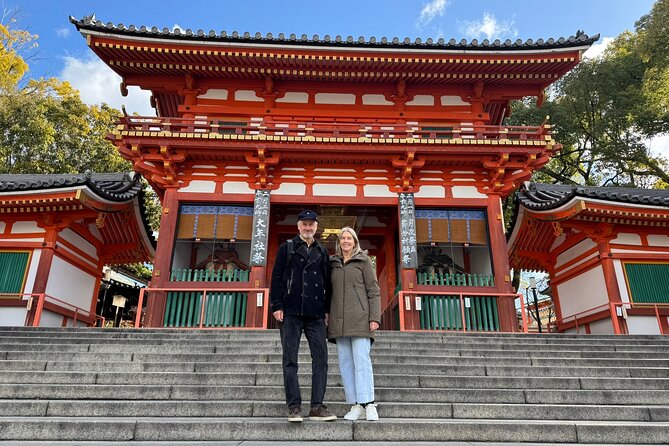
Sannenzaka and Ninenzaka are among Higashiyama’s most attractive walking streets. Stone paving, wooden buildings, souvenir shops, and restaurants create the old-Kyoto setting many people hope to see.
The route allows about 15 minutes here. That gives you an introduction, but not much shopping time. The streets can tempt you to stop at every shop, so keep an eye on the guide and the clock.
This section is also a reminder that the tour is physically active. You are not being carried between attractions by vehicle. You are walking through historic streets and onward toward Kiyomizu-dera, so comfortable shoes and a moderate level of fitness are important.
I like this part of the route because it connects the sights. Rather than seeing a shrine, a pagoda, and a temple as unrelated points, you move through the streets that link them. You get a better feel for Higashiyama as a district.
Kiyomizu-dera, the main event
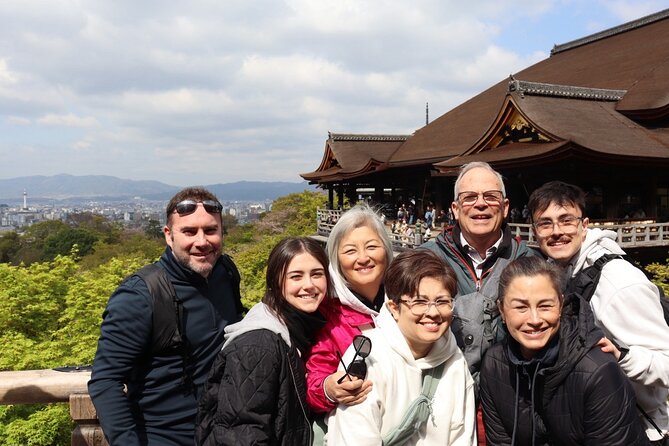
Kiyomizu-dera receives about an hour, making it the longest stop of the morning. That is appropriate. It is the route’s major temple visit, set on a mountain with broad views across Kyoto City.
The ¥500 admission fee is not included, so bring money for the entrance. The other listed stops have no admission charge. At roughly $64.01 per person, the tour price needs to be judged as a guide service rather than an admissions package. You are paying for route planning, English commentary, a private or small-group format when available, and photography, while still covering Kiyomizu-dera separately.
An hour lets you see the temple at a more useful pace than a quick photo stop. You can take in the buildings, the views, and the setting while the guide explains the place. The early start is especially valuable here because Kiyomizu-dera is one of Kyoto’s most popular sights.
The route description says the temple is located on top of a mountain and commands a panoramic view. That means you should expect walking and some physical effort. The tour is not designed for someone who wants a slow, seated morning with minimal movement.
Ikki Kataoka receives especially strong praise for patience, clear English, and detailed explanations. That may matter if you want to ask questions or need a guide who will not rush an older member of your party. One morning departure was also praised for combining detailed commentary with excellent photographs, which is a useful pairing at a scenic temple.
Yasaka Koshin-Do and a burst of color
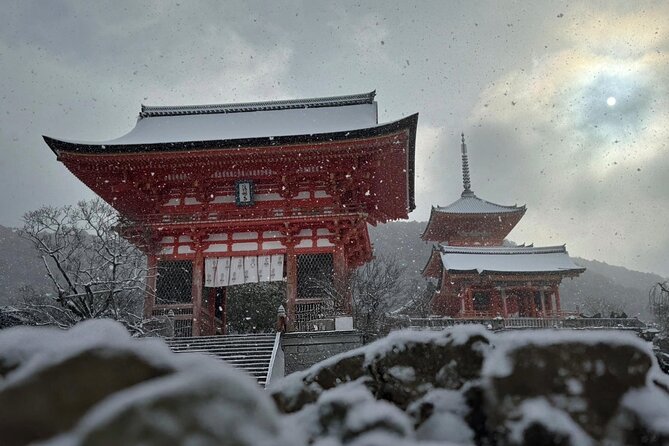
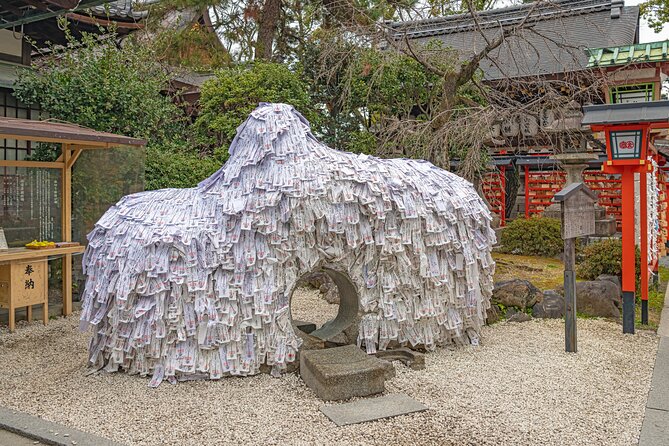
Yasaka Koshin-Do is a small, unusual stop known for its bright decorations. The description notes that its construction date is unknown and that its colors are striking compared with the more subdued look of many temples.
You have about 15 minutes here. This is a quick visit, but it adds variety after the larger temple grounds. The colorful ornaments make it an appealing place for photographs, and the guide can explain why this small temple has such a distinctive appearance.
This stop is a good example of the tour’s balance. You receive the headline sight at Kiyomizu-dera, then smaller religious sites that you might not choose on a first visit without local guidance. The route does not focus only on the most famous locations.
Yasaka Shrine closes the loop
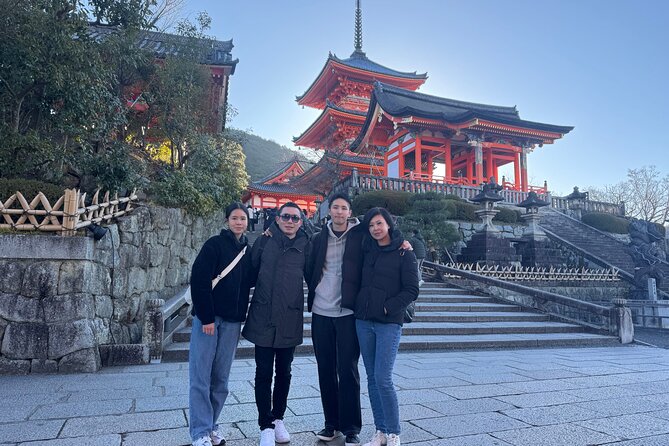
The final stop is Yasaka Shrine, with about 30 minutes set aside for the visit. The shrine is dedicated to gods associated with prosperity and protection and serves as the headquarters of approximately 2,300 related shrines across Japan.
It is a fitting finish because the tour begins in Gion and ends back at the meeting point after reaching one of Kyoto’s major Shinto sites. The shrine gives you a final look at a large, active place of worship rather than ending at a shopping street.
The tour ends where it began, at the Izumo-no-Okuni statue. That makes onward planning easier, especially if you want to continue around central Kyoto after lunch. Food and drinks are not included, so plan your own refreshment stop after the walk.
What the guide and photos add
The guide is the main reason to choose this tour instead of following a phone map. You get explanations as you move, help with the order of sights, and a local point of view on places that can otherwise blur together.
The strongest guide feedback centers on Ikki Kataoka. He is described as patient with older participants, clear in English, detailed in his explanations, and capable with a camera. Those qualities are practical, not decorative. A patient guide can make a three-hour walk easier, while good photographs let you stay present instead of constantly taking your own.
Professional photos are included. The exact number and delivery method are not provided, so you should confirm those details if the photos are a major reason for booking. Still, this is a useful inclusion for couples or families who often return from a trip with plenty of scenery but few good pictures of themselves together.
The experience is described as private, though the booking information also presents private and small-group options. If having only your own party is important, confirm the format before paying.
Price, timing, and who gets the best value
At $64.01 per person, this is not the cheapest way to walk through Gion. But price comparisons should include what you would need to arrange yourself. The tour covers a concentrated route, supplies an English-speaking guide, includes professional photos, and removes the work of navigating between eight stops.
You also avoid paying extra for most of the sights. Only Kiyomizu-dera has a listed admission charge, ¥500 per person. Food and drinks are separate.
The tour is a good fit for:
- First-time Kyoto visitors who want orientation in Gion and Higashiyama
- People who prefer clear English commentary rather than reading signs
- Couples and families who want professional photos
- Older participants who value a patient guide and a planned route
- Visitors willing to start early and walk for about three hours
It is less suitable if you want a relaxed shopping morning, long visits at each stop, or a tour with little walking. The schedule gives you a broad introduction, not unlimited free time.
The 7 a.m. departure is the strongest choice if available. It helps you see the streets before the day becomes crowded and was specifically praised for the quieter atmosphere and strong photographs. If you prefer to sleep late, the value of this tour drops because the early timing is one of its main advantages.
Practical details before you book
Wear comfortable shoes and expect to spend most of the three hours on foot. A moderate level of physical fitness is required, and the route includes historic streets plus a temple located on a mountain.
Bring money for the ¥500 Kiyomizu-dera entrance fee. You should also plan for your own food and drinks, since they are not included.
The tour is near public transportation, and confirmation is provided at booking. Arrive early at the Statue of Izumo-no-Okuni. The late-arrival rule is strict: missing the meeting time means you cannot join and will not receive a refund.
Free cancellation is available up to 24 hours before the start time. Cancellations or changes made inside that period are not refunded or accepted.
Should you book this Kyoto morning walk?
Book it if you want a focused introduction to Gion and Higashiyama, prefer an English-speaking guide, and like the idea of professional photographs along the way. The combination of major sights, smaller shrines, clear commentary, and an early start gives you a lot in three hours.
I would choose the private format for a family, older couple, or anyone who wants to ask plenty of questions. I would choose the small-group option if available when keeping the price lower matters more than complete control of the pace.
Skip it if you want to spend half a day shopping in Sannenzaka and Ninenzaka, or if walking through hilly historic streets sounds tiring. For most first-time visitors who can handle the early start, this is a well-planned way to meet Kyoto’s old eastern districts before the crowds take over.
FAQ
How long does the Kyoto Gion and Higashiyama tour last?
The tour lasts approximately three hours.
What time does the early morning tour start?
A morning departure at 7 a.m. is available according to the tour information and guide feedback.
What places are visited?
The route includes Gion, Hanamikoji Street, Yasui-Konpiragu, Yasaka Pagoda, Sannenzaka and Ninenzaka, Kiyomizu-dera Temple, Yasaka Koshin-Do, and Yasaka Shrine.
Is Kiyomizu-dera admission included?
No. Admission to Kiyomizu-dera costs ¥500 per person and is paid separately.
Are the other stops free to enter?
The listed admission information shows no admission fee for the other stops.
Is the tour private or shared?
The tour offers private or small-group options. The additional tour information describes the activity as private, so confirm the format available for your selected booking.
Is the tour conducted in English?
Yes. A local English-speaking guide leads the experience.
Are photographs included?
Yes. Professional photos are taken during the tour. The exact number and delivery details are not specified.
What happens if I arrive late?
You will not be able to join the tour and will not receive a refund if you miss the meeting time.
Can I cancel for a full refund?
Yes. You can cancel at least 24 hours before the start time for a full refund. Cancellations and changes made less than 24 hours before the start time are not accepted.
More Early Starts in Kyoto
- Kyoto Early Morning Tour with English-Speaking Guide
★ 5.0 · 1,427 reviews - Kyoto: Early Morning Tour with English-Speaking Guide
★ 4.9 · 1,128 reviews - Arashiyama Bamboo Forest & Hidden Gems Bike Tour (Early Bird)
★ 5.0 · 613 reviews - Kyoto Early Bird Walking Tour
★ 5.0 · 377 reviews
Newest Kyoto experiences on the site
- Treasures of Kyoto: Gion & historical Walking Tour★ 5.0 · 6 reviews
- Whisk Your Own Matcha: A Zen Matcha Experience at Temple★ 3.6 · 7 reviews
- Uji: Private immersion into Kyoto’s tea and reglious culture★ 5.0 · 17 reviews
- Kyoto tea town for matcha lovers★ 5.0 · 16 reviews
- Kyoto Matcha Green Tea Tour★ 4.5 · 23 reviews
- Uji and Wazuka Matcha Farm Half Day Private Guided Tour★ 5.0 · 21 reviews
- Utilising upcycled Matcha! Creating matcha incense (Uji, Kyoto)★ 5.0 · 6 reviews
- Sacred Temple Yoga Experience in Japan★ 5.0 · 3 reviews
Gion District Tours, compared.
Kyoto Geisha Walking Tour: Gion District & Hidden Gems
Read our review →
Gion Magical Night Walking Tour with Geisha Trivia
Read our review →
Gion Geisha District Walking Tour – Stories of Geisha
Read our review →
Best of Kyoto: Gion, Geisha, Pagodas & Cobblestones
Read our review →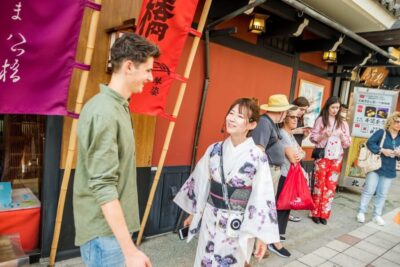
Kyoto Night Foodie Tour in Gion (9+ dishes + 6 Sake tastings)
Read our review →
Kyoto Gion Geisha District Walking Tour – The Stories of Geisha
Read our review →
Kyoto Gion: 2-Hour Geisha Culture & History Walking Tour
Read our review →Browse the lists this tour appears in