
Reviewed · ARASHIYAMA BAMBOO GROVE TOURS
Kyoto: Arashiyama Walking Tour – UNESCO World Heritage
Arashiyama packs some of Kyoto’s best-known sights into a short, scenic walk: Tenryu-ji Temple, the Bamboo Grove, and Monkey Park. You begin with Zen gardens, pass through tall bamboo, browse small shops, and finish with Japanese macaques and a broad view over Kyoto.
I like the way the tour combines culture with an easy-to-understand route. I also like that both admission tickets are included, so you do not need to sort out temple and park entry as you go. The main consideration is the pace: 90 minutes is brief, and Monkey Park involves an uphill walk, so this suits you best if you have moderate fitness and want an introduction rather than a slow, all-day visit.
Key points at a glance
- Tenryu-ji comes first: Spend about 50 minutes with a guide in one of Kyoto’s major Zen temple compounds and its Sogenchi Garden.
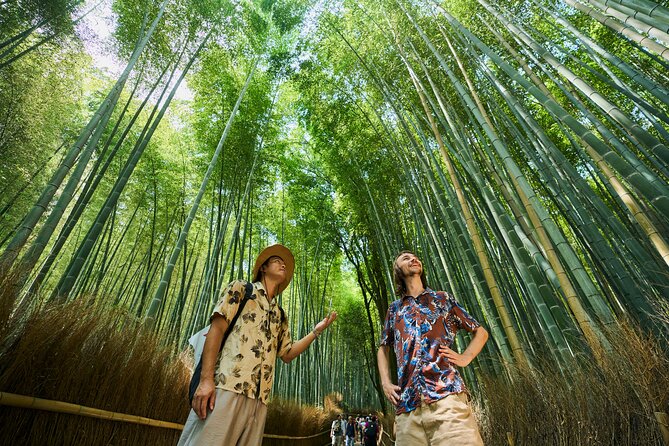
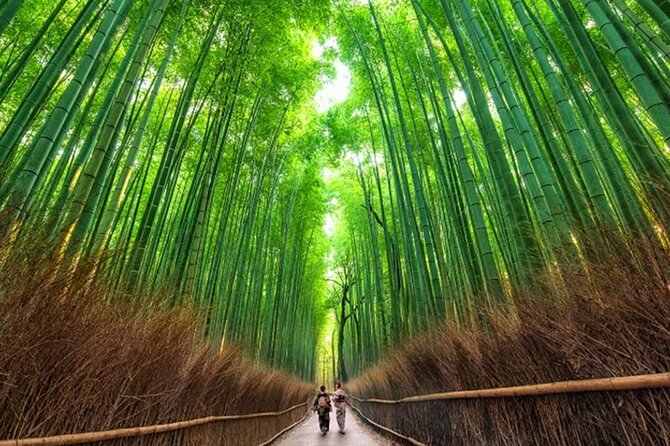
- The Bamboo Grove is built for photos: The route leads through one of Arashiyama’s most recognizable sights, with context about its cultural importance.
- Monkey Park finishes the walk: Your guide handles the admission ticket, then you continue on your own after reaching the entrance.
- Uta is the guide to look for: Her clear English, personal cultural insight, and careful meeting communication have been especially praised.
- The small group limit matters: A maximum of 12 people keeps this more personal than a large coach-style outing.
- Food is not part of the tour: You can browse matcha sweets, wagashi, and local gifts, but there is no sit-down meal stop.
Why this short Arashiyama walk works
Arashiyama can feel like a collection of famous names on a map. Tenryu-ji, the Bamboo Grove, Togetsukyo Bridge, and Monkey Park all sit within the same general area, but the experience is better when someone explains how the pieces fit together.
This tour gives you that structure without taking half a day. You meet near the Randen Arashiyama area, then walk through the temple grounds before heading toward the bamboo and the river. The route ends at Monkey Park Iwatayama, where you say goodbye to your guide at the entrance and continue at your own pace.
That ending is useful. You get a guided introduction to the area, but you are not forced to leave the monkeys on someone else’s schedule. You can decide how long you want to stay inside the park after the formal tour ends.
The tradeoff is that the experience moves along. The stated duration is about 1 hour and 30 minutes, including the principal stops and the walk between them. If you want long temple contemplation, extensive shopping, or a full afternoon in Arashiyama, you will need to add your own time before or after the tour.
More mornings in Arashiyama and the bamboo grove:
- Kyoto: Fushimi Inari, Kinkakuji, Bamboo Grove 1 Day Bus Tour
★ 4.8 · 4,316 reviews - Osaka/Kyoto:Kinkakuji,Arashiyama,FushimiInariShrine,NaraPark
★ 4.1 · 1,596 reviews - Kyoto/Osaka: Nara, Fushimi Inari Taisha, Arashiyama Bus Tour
★ 4.7 · 1,275 reviews
Starting with Tenryu-ji and Sogenchi Garden
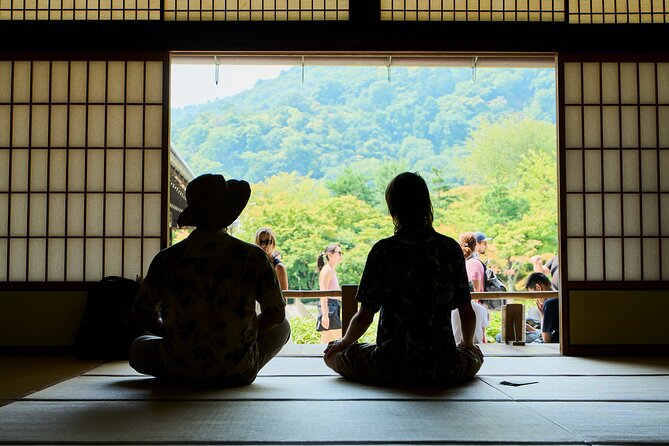
Tenryu-ji is the strongest cultural part of the walk. This major Zen temple is recognized as a UNESCO World Heritage site, and its Sogenchi Garden is especially important because it joins carefully arranged garden features with the natural setting around Arashiyama.
You spend about 50 minutes here, with admission included. That gives your guide enough time to explain the temple’s Zen tradition and point out why the garden is valued, rather than simply leading you through for a quick photograph.
The garden changes character with the seasons. Cherry blossoms bring a soft spring setting, while autumn leaves give the grounds stronger color. The supplied information does not promise a particular seasonal view, so plan around the time of year you visit rather than expecting one fixed scene.
I appreciate that the tour begins here instead of rushing straight to the Bamboo Grove. The bamboo is visually striking, but Tenryu-ji gives the area some cultural grounding first. You get a better sense of Arashiyama as a place shaped by temples, gardens, mountains, and long-standing traditions, not just a popular photo stop.
Still, 50 minutes is not a full temple visit. If you are especially interested in Zen architecture or garden design, you may want to return later and spend more time on your own. This tour provides an introduction and interpretation, not an exhaustive study.
Walking through Arashiyama’s famous bamboo
After Tenryu-ji, the route enters the Bamboo Grove. This is the part most people picture when they hear Arashiyama: tall bamboo rising on both sides of a narrow walking path, creating a cool, enclosed corridor that looks very different from ordinary Kyoto streets.
The guide adds value here by explaining why the grove matters culturally. That context helps turn a quick photo stop into a more meaningful part of your day.
You should keep your expectations realistic. The Bamboo Grove is one of Kyoto’s most photographed locations, so the experience is not designed as a private walk through untouched forest. The tour information promises the setting and the guide’s explanation, but it cannot promise an empty path.
The timing can still work in your favor. Since the Bamboo Grove connects naturally with Tenryu-ji and the rest of Arashiyama, you avoid wasting time finding the main route yourself. Have your camera ready, but leave room to look up from the screen. The bamboo is tall, simple, and most effective when you take in the scale of the path rather than chasing a single perfect image.
Shops, sweets, and small Kyoto souvenirs
The walk also passes local souvenir shops, kawaii character stores, and places selling Japanese sweets. You might find matcha treats, wagashi, or bamboo-themed gifts along the way.
This section is not a formal shopping tour, and the schedule does not include a meal. Food and drinks from street vendors are extra, and there is no sit-down dining stop. That is worth knowing if you are expecting lunch or a tasting session.
I like this informal shopping time because it gives the route some everyday texture. Arashiyama is more than temples and scenic paths. Small purchases such as sweets or handcrafted bamboo items can also make better souvenirs than a generic city magnet.
You will need to watch the clock. With a short tour and Monkey Park still ahead, browsing is likely to be brief. If you want to shop carefully or sample several sweets, plan to return after the tour. The guide can introduce the area, but this is not the right outing for a long retail session.
More walking tours in Kyoto:
- Kyoto Geisha Walking Tour: Gion District & Hidden Gems
★ 4.7 · 3,273 reviews - Kyoto: Gion Magical Night Walking Tour with Geisha Trivia
★ 4.9 · 2,393 reviews - Kyoto: Gion Geisha District Walking Tour – Stories of Geisha
★ 4.7 · 2,187 reviews - Night Walk in Gion: Kyoto’s Geisha District
★ 4.5 · 2,003 reviews
Crossing toward Monkey Park Iwatayama
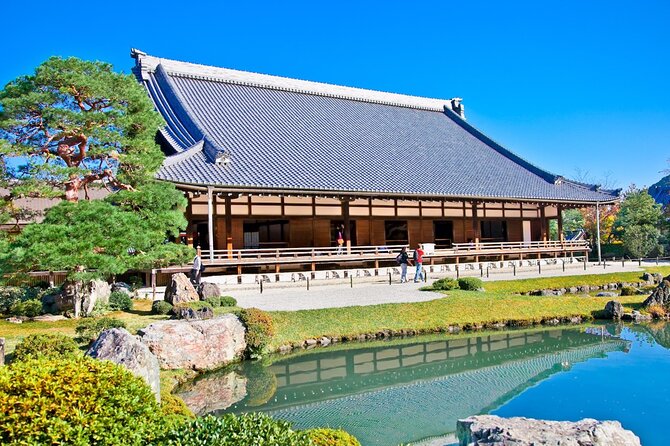
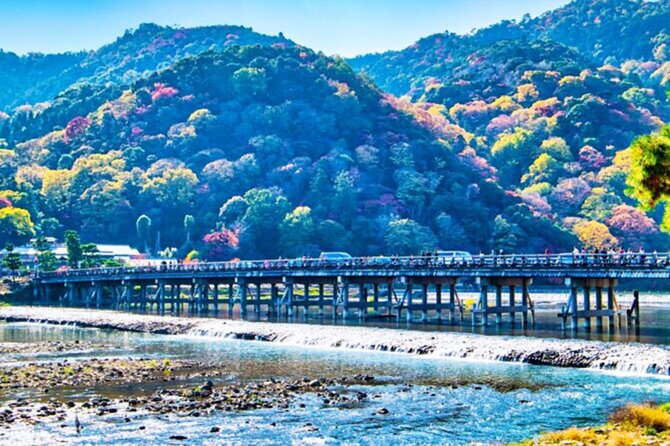
The route continues across Arashiyama’s famous bridge toward Monkey Park. The bridge is one of the area’s recognizable points, and the walk shifts from temple grounds and shop streets toward the park entrance.
Your guide purchases the Monkey Park ticket, and admission is included in the tour price. Once you reach the entrance, the guided portion ends. You then explore the park independently, which gives you freedom to set your own pace.
Monkey Park is not simply an animal viewing area at street level. It is a mountaintop park, and reaching the top requires an uphill walk. The tour details call for moderate physical fitness, so sturdy shoes and a willingness to climb are sensible choices.
At the top, you can see Japanese macaques close up and enjoy a wide view over Kyoto. The park combines light hiking, wildlife, and scenery in one stop. That makes it a good counterpoint to the quiet temple garden and the narrow Bamboo Grove.
There is also an important wildlife point here. The attraction is seeing wild Japanese macaques in their own park setting, not a staged animal show. Follow the park’s directions and keep a respectful distance from the animals. The supplied details do not specify the length of time included after dismissal, so you should treat the guided tour as ending at the entrance and allow your own schedule for the park.
Guide Uta and the value of a small group
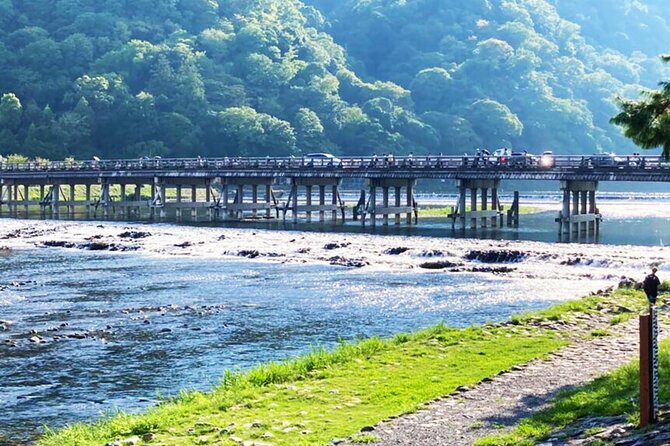
The guide can make a real difference on a short tour, and Uta is the named guide associated with the strongest praise. Her English is described as very good, and she brings personal insight from having lived in England. That can help when you want more than memorized facts about temples and customs.
Uta has also been praised for explaining small details of Kyoto and for creating open conversations about Japanese culture, both traditional and modern. One account describes clear communication the evening before the walk, including help with meeting arrangements. Another recalls her sharing shaved ice with the group, a small personal touch rather than a promised feature of the tour.
You should not book on the assumption that a particular guide or extra treat is guaranteed. Guide assignments and incidental moments can vary. Still, the available information suggests that the human side of this experience is one of its main strengths.
The group size is capped at 12 people. That is small enough for questions and easier conversation, while still large enough that the walk has a group-tour feel. If you prefer a fully private visit, this is not advertised as private. If you dislike large groups, the limit is a helpful middle ground.
What $52.33 buys you

At $52.33 per person, this is not the cheapest way to walk through Arashiyama. The value comes from combining a local guide with two admission fees and a carefully arranged route.
You receive entry to Tenryu-ji, entry to Monkey Park, and a guide for about 90 minutes. You also avoid spending your first hour working out how the major sights connect. For a first visit to Kyoto, that organization can be worth paying for, especially if you want cultural explanation rather than only directions.
The price is less attractive if you already know Arashiyama well or plan to visit the temple and park on your own. The tour does not include meals, hotel pickup, or drop-off, and it is too short to cover every corner of the district.
I see it as a good-value orientation walk for someone with limited time. You get the central sights, two included tickets, and a guide who can add context. You then have the option to remain in the area and explore independently.
The fact that it is often booked 37 days ahead suggests that you should not leave it until the last moment if the timing matters to you. The experience offers free cancellation up to 24 hours before the start time, but cancellations or changes within 24 hours are not refunded or accepted.
Meeting point, timing, and practical planning
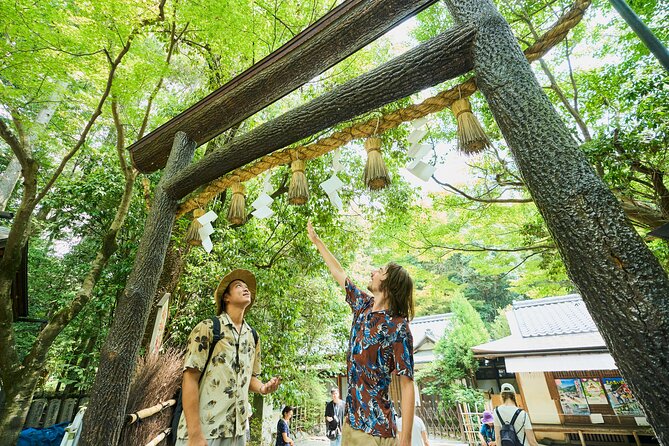
The starting point is near Concept Randenarashiyamaekikita Coin Parking Lot, at 17-1 Sagatenryuji Tsukurimichicho in Ukyo Ward. The tour does not include hotel pickup or drop-off, so you need to make your own way to the meeting point.
A mobile ticket is provided, and confirmation is received at booking. The location is near public transportation, which makes the start practical for visitors already moving around Kyoto by train or tram.
The end point is Monkey Park Iwatayama at 61 Arashiyama Nakaoshita-cho. This is not the same place as the start, so plan your day as a one-way walk through Arashiyama rather than expecting to return to the meeting point with the guide.
Wear shoes suitable for walking and the uphill section at Monkey Park. The tour is short, but the combination of temple paths, city walking, the Bamboo Grove, bridge crossing, and a climb makes it more active than the duration might suggest.
Bring water if you need it. You can buy food and drinks from vendors in the area, but they are not included and the group will not stop for a sit-down meal.
Who should book this Arashiyama tour?
I would choose this tour if you are visiting Kyoto for the first time, want help understanding the main sights, and prefer a compact morning or afternoon activity. It also works well if you want a guide for the cultural parts but enjoy exploring independently once you reach Monkey Park.
Families and mixed-age groups may like the variety. The route offers gardens, bamboo, shops, bridge views, sweets, and monkeys instead of asking you to spend the entire time inside a temple. The uphill park section still means that every person in your party should be comfortable with moderate physical activity.
This is also a good match for anyone who values conversation. Uta’s reported style includes cultural discussion and attention to small details, which can make the short route feel more personal.
I would skip it if you want a slow photography walk, a full meal experience, a private guide, or hotel transportation. I would also skip it if climbing to a mountaintop park is not comfortable for you.
Should you book it?
Book this Arashiyama walk if you want the area’s essential sights organized into a short route, with Tenryu-ji and Monkey Park admission included. The best reasons are the useful combination of temple, bamboo, shops, and wildlife, plus the chance to learn from a local guide such as Uta.
Do not book it expecting a full-day exploration. The tour is an efficient introduction, not a complete Arashiyama itinerary. If you reserve it, arrive ready to walk, keep shopping brief, and save extra time afterward for the Bamboo Grove or Monkey Park if you want a slower look.
FAQ
How long does the Arashiyama walking tour last?
The tour lasts approximately 1 hour and 30 minutes.
What sights are included?
The route includes Tenryu-ji Temple, the Arashiyama Bamboo Grove, local shops and sweets shops along the way, the famous bridge area, and Monkey Park Iwatayama.
Are admission fees included?
Yes. Admission to Tenryu-ji Temple and Monkey Park is included.
Does the tour include food or drinks?
No. Food and drinks from street vendors are not included, and the tour does not stop for a sit-down meal.
Where does the tour begin?
It begins near Concept Randenarashiyamaekikita Coin Parking Lot at 17-1 Sagatenryuji Tsukurimichicho, Ukyo Ward, Kyoto.
Where does the tour end?
The guided portion ends at the entrance to Monkey Park Iwatayama. You then explore the park on your own.
How many people can join the tour?
The activity accepts a maximum of 12 people.
Do I need to be physically fit?
You should have a moderate level of physical fitness. Monkey Park is on a mountain and requires an uphill walk.
More History-Led Days in Kyoto
- Kyoto Gion: 2-Hour Geisha Culture & History Walking Tour
★ 5.0 · 1,186 reviews - Kyoto Gion Historical Walking Tour
★ 5.0 · 188 reviews - Historical Kyoto E-Bike Tour
★ 5.0 · 181 reviews - Kyoto: Nijo Castle World Heritage Guided Tour with Admission
★ 5.0 · 128 reviews
Newest Kyoto experiences on the site
- Treasures of Kyoto: Gion & historical Walking Tour★ 5.0 · 6 reviews
- Whisk Your Own Matcha: A Zen Matcha Experience at Temple★ 3.6 · 7 reviews
- Kyoto tea town for matcha lovers★ 5.0 · 16 reviews
- Uji: Private immersion into Kyoto’s tea and reglious culture★ 5.0 · 17 reviews
- Uji and Wazuka Matcha Farm Half Day Private Guided Tour★ 5.0 · 21 reviews
- Kyoto Matcha Green Tea Tour★ 4.5 · 23 reviews
- Utilising upcycled Matcha! Creating matcha incense (Uji, Kyoto)★ 5.0 · 6 reviews
- Sacred Temple Yoga Experience in Japan★ 5.0 · 3 reviews
Arashiyama Bamboo Grove Tours, compared.
Fushimi Inari, Kinkakuji, Bamboo Grove 1 Day Bus Tour
Read our review →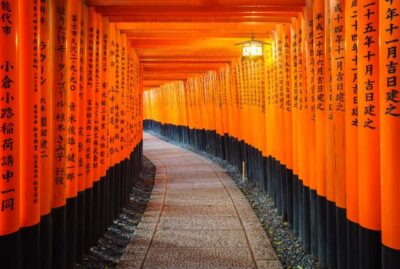
Kinkakuji,Arashiyama,FushimiInariShrine,NaraPark
Read our review →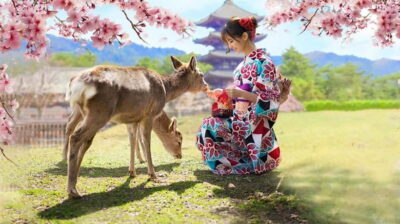
Nara, Fushimi Inari Taisha, Arashiyama Bus Tour
Read our review →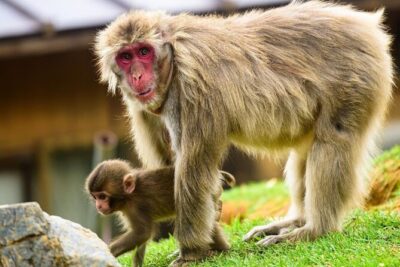
Kyoto Arashiyama Walking Tour: Bamboo, Monkeys, Gardens & Secrets
Read our review →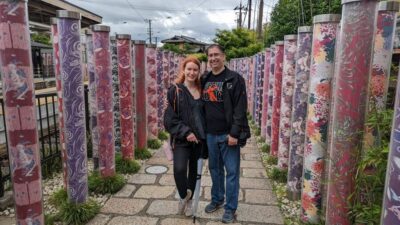
Arashiyama Bamboo, Temple, Monkeys, or Secret Sake Brewery
Read our review →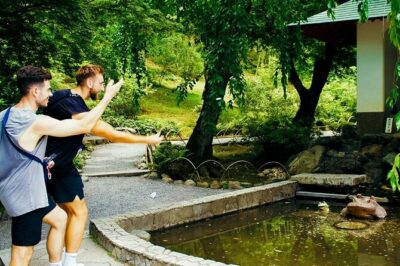
Arashiyama Bamboo Forest, Monkeys, Matcha & Temple Tour
Read our review →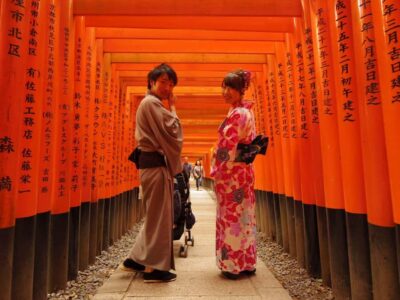
Arashiyama, Nara & Fushimi Inari Shrine w/Lunch
Read our review →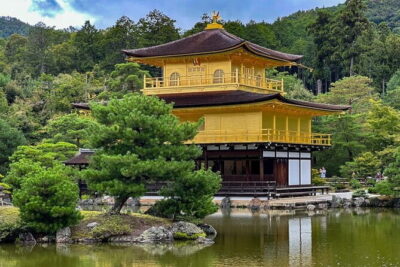
Nijo, Kinkaku-ji, Arashiyama, Kiyomizu & Fushimi Inari
Read our review →Browse the lists this tour appears in