
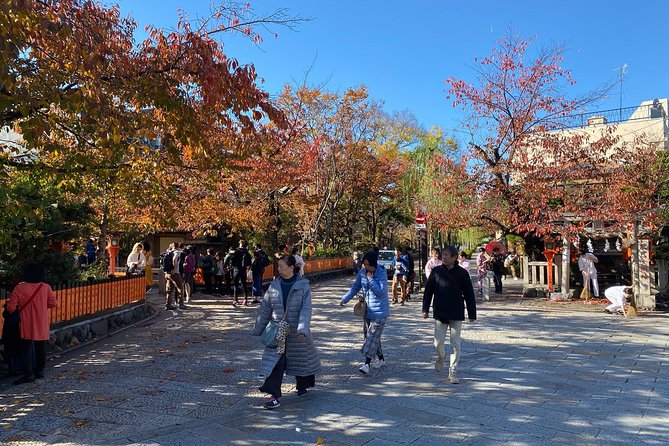
Reviewed · GION DISTRICT TOURS
Kyoto Gion Historical Walking Tour
Kyoto’s most memorable sights are often strung along narrow lanes rather than gathered in one neat attraction. This tour follows that thread from Gion to Higashiyama, linking Tatsumi Bridge, Chion-in, Maruyama Park, Yasaka Pagoda, and Kiyomizu-dera in one well-planned walk. You get temples, old streets, religion, theater, geisha culture, and modern Kyoto in a single afternoon.
I like the strong historical storytelling, especially the way guides such as Jay and Ben connect Kyoto’s temples and streets to samurai, emperors, monks, and the Meiji Restoration. I also like the small group limit of 12, which makes it easier to ask questions and hear the guide in crowded parts of Gion.
The catch is simple: this is a serious walking tour, not a gentle stroll. Expect roughly three hours on foot, cobblestones, slopes, and some stair climbing. Kiyomizu-dera admission, lunch, and gratuity are not included, so bring water, eat beforehand, and wear proper shoes.
Key points to know before you book
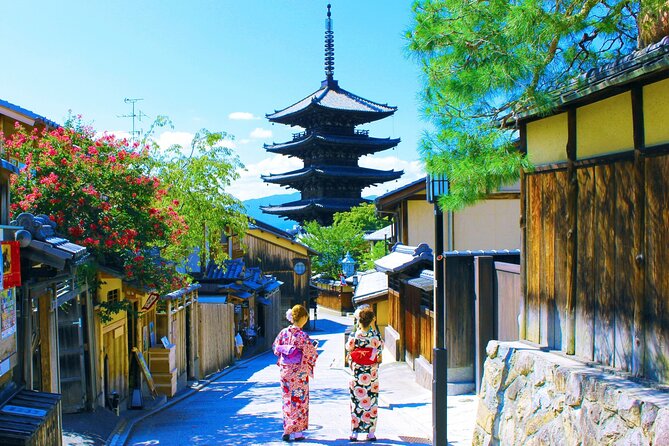
- Gion to Kiyomizu-dera route: The tour crosses Kyoto’s eastern highlights instead of circling one neighborhood.
- History with local context: Guides explain geisha culture, theater, Buddhism, samurai, emperors, and the Meiji Restoration.
- Small group format: The maximum group size is 12 people, though a quiet date may feel almost private.
- Three hours of walking: The route includes stone paths, slopes, and stairs, so comfortable footwear matters.
- Strong English guiding: Jay, Ben, Ayumi, Michel, and Tommy are among the guides praised for clear English, humor, and helpful recommendations.
- Good value at $40: The fee covers the walking guide, while temple admission, food, and gratuity cost extra.
Why this Kyoto walk works so well
I like this route because it gives you a useful map of Kyoto’s eastern side. You begin near the modern Shijo area and gradually move into the old Gion quarter, temple grounds, landscaped parkland, and the preserved lanes of Higashiyama. By the end, you are at Kiyomizu-dera, one of Kyoto’s major sights.
That progression matters. If you visit these places alone, it is easy to see pretty buildings without understanding how they fit together. A guide can explain why a Buddhist gate is so large, how Kyoto’s religious institutions shaped the city, and how old entertainment districts relate to modern Japanese culture.
The tour also makes a good first-day activity. It gives you names, directions, and historical background that can make later visits easier. You may hear about a temple or lane you want to revisit, or get practical suggestions for gardens, shops, and other places to see the next day.
The tour is offered with a mobile ticket and starts at Ben’s Cookies Kyoto Shijo, at 89 Shinchō in the Shimogyo Ward. It ends in front of the entrance to Kiyomizu-dera, so you do not return to the starting point. That one-way design saves backtracking, but plan your evening from the Higashiyama area rather than central Shijo.
More ways to walk Gion:
- Kyoto Geisha Walking Tour: Gion District & Hidden Gems
★ 4.7 · 3,273 reviews - Kyoto: Gion Magical Night Walking Tour with Geisha Trivia
★ 4.9 · 2,393 reviews - Kyoto: Gion Geisha District Walking Tour – Stories of Geisha
★ 4.7 · 2,187 reviews
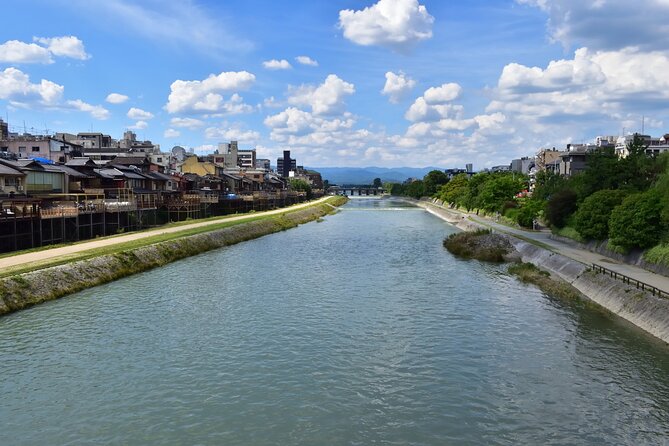
Tatsumi Bridge and the Gion Shibashi lanes
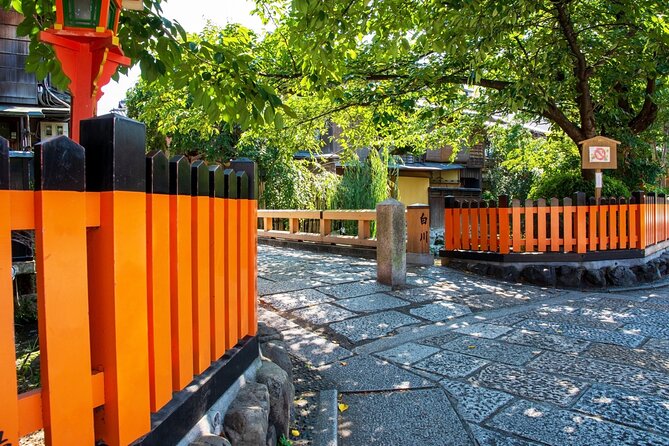
The first stop is Tatsumi Bridge, reached through Gion Shibashi. This is one of the prettiest parts of Gion, with a traditional feel that makes an immediate contrast with central Kyoto’s larger streets.
The stop lasts about 15 minutes and has no admission fee. Your guide can help you read the area as more than a photo setting, explaining the relationship between Gion’s narrow lanes, traditional entertainment, and Kyoto’s long cultural life.
This is also a sensible place to begin the historical discussion. The tour covers geisha culture and theater, subjects that can be reduced to clichés if you explore without context. A clear guide helps you understand the district as a working cultural neighborhood rather than a stage set.
Gion can be crowded, so keep close to the group and listen carefully. The small group limit helps, but this is still one of Kyoto’s popular areas. Be respectful with photography and avoid blocking doorways or private entrances.
Chion-in’s giant Sanmon gate
From Gion, the route moves toward Chion-in Temple and its Sanmon gate. The gate stop is short, about 10 minutes, but it gives you a powerful first look at the scale of the temple complex.
Sanmon is a huge wooden Buddhist gate, and its size makes the point before the guide says a word. This was not built as a modest neighborhood shrine. It signals religious power, money, craftsmanship, and the importance of Chion-in within Kyoto’s Buddhist tradition.
A short stop here works well because the gate is mainly an exterior sight on this route. You get the architectural impact and the explanation without spending a large portion of the walk inside one complex.
Chion-in Temple and Buddhist Kyoto
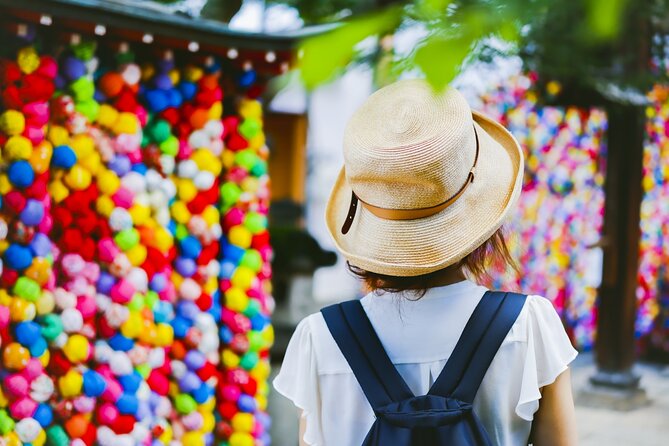
The tour allows about 20 minutes at Chion-in Temple. Founded in the 13th century, it is one of Kyoto’s major temples and an important place for understanding Japanese Buddhism.
This is one of the stops where the guide’s background makes a real difference. The tour is not just a procession of famous names. Guides such as Jay have been praised for explaining how monks, samurai, emperors, and religious institutions influenced Japanese history. That wider frame gives Chion-in more meaning than a quick photograph from the gate.
You should not expect a full, unhurried temple visit during this three-hour route. The scheduled time is enough for orientation and key sights, but not for examining every building or wandering every corner. If Chion-in becomes a favorite, return later with more time.
The route’s historical emphasis is a strong point for adults who want more than surface-level sightseeing. It may be less successful for a young child who loses interest after several temple stops. One family completed the walk with an eight-year-old, but the amount of information and the three-hour length can be demanding for children.
More walking tours in Kyoto:
- Night Walk in Gion: Kyoto’s Geisha District
★ 4.5 · 2,003 reviews - Kyoto Gion Geisha District Walking Tour – The Stories of Geisha
★ 5.0 · 1,441 reviews - Nishiki Market Brunch Walking Tour (7 Tastings + Brunch)
★ 5.0 · 1,355 reviews - Kyoto Arashiyama Walking Tour: Bamboo, Monkeys, Gardens & Secrets
★ 5.0 · 1,216 reviews
Maruyama Park, a pause among the temples
Maruyama Park provides a welcome change after the temple grounds. The stop lasts about 10 minutes and offers an urban park setting within Kyoto’s eastern temple district.
The park is valued for its natural beauty and cultural role, but on this tour it also works as a breathing space. You are still learning, but the setting is less formal than a gate or temple hall. It helps break up the visual rhythm of wooden buildings, stone paths, and religious structures.
Do not count on a long rest or a meal here. The route keeps moving, and one detailed account of the experience specifically advised eating before the tour and carrying water or snacks. Bathroom breaks may be available, but this is not organized as a food tour.
Nene-no-Michi and the old Higashiyama mood
Next comes Nene-no-Michi, or the Path of Nene. This stone-paved lane is named for Nene, the wife of Toyotomi Hideyoshi, a major figure in Japanese history.
This section shows why a walking tour is useful in Kyoto. Nene-no-Michi is not only a single monument. Its value comes from the way the path, old buildings, temples, and surrounding lanes form a historical district. A guide can point out connections that are easy to miss when you are focused only on reaching the next attraction.
The lane is scenic, but expect other people around you. The route passes through some of Kyoto’s most popular eastern streets, and the narrow paving leaves little room for a large group to spread out. Comfortable shoes are essential, particularly if you are not used to walking on uneven stone.
Yasaka Pagoda and the famous Higashiyama view
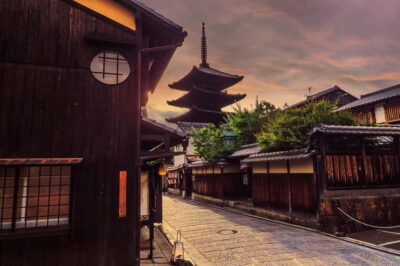
Hōkan-ji Temple, better known as Yasaka Pagoda, is one of the clearest visual markers on the route. Its five-story pagoda rises above the Higashiyama district and makes an excellent photo stop.
The planned stop is about 10 minutes, with no admission fee included at this point. The pagoda is especially useful as a guidepost. Once you recognize it, you have a better sense of where you are within the eastern hills.
The surrounding lanes can be busy, and the best views often come from simply looking along the street toward the pagoda. Your guide can help you pause in a sensible place instead of stopping in the middle of a narrow passage.
This is a good example of the tour’s balance. You see an iconic Kyoto image, but you also keep moving through the district rather than spending the whole afternoon at one landmark.
Ninen-zaka and Sannen-zaka
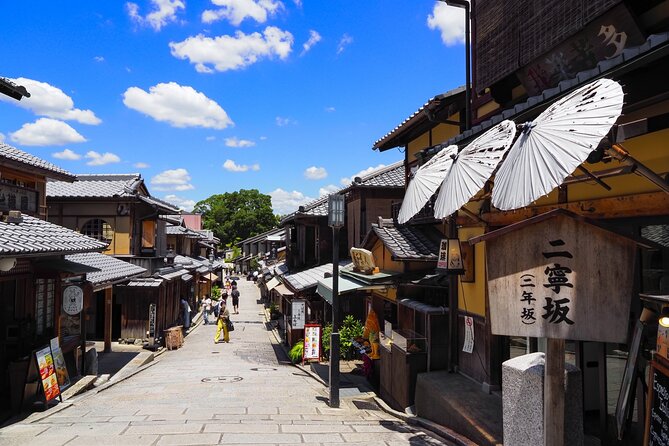
The route then follows Ninen-zaka and Sannen-zaka, two historic slopes lined with traditional buildings, tea houses, shops, and souvenirs.
Ninen-zaka means Two-Year Slope, while Sannen-zaka means Three-Year Slope. Their names are memorable, but the main appeal is the atmosphere: stone paving, old-style facades, rising lanes, and a strong sense of Kyoto’s preserved eastern quarter.
The scheduled stops are brief, about five minutes at Ninen-zaka and 10 minutes at Sannen-zaka. That tells you what this tour is designed to do. You will get an introduction and see the key route, but you will not have much time to shop or linger over tea.
I would save serious shopping for after the walk. The tour ends at Kiyomizu-dera, and you can return to these lanes later if a shop catches your eye. During the group walk, focus on staying together and listening for the history behind the streets.
These slopes are also where the physical demands become more obvious. The paths are pedestrian routes, but they are not flat. One participant specifically noted that the amount of stair climbing should be taken seriously. If hills or stairs are difficult for you, ask about the route before booking.
Kiyomizu-dera, the final landmark
The final stop is Kiyomizu-dera, a UNESCO World Heritage Site dating to the 8th century. It sits on a hillside above Kyoto and is known for its broad city views and striking temple setting.
The tour allows about 10 minutes here, and admission is not included. That is important. The walk brings you to the entrance, but you should expect to pay the temple entry fee if you want to continue inside.
Ten minutes is enough for a guide-led introduction and a sense of the setting. It is not enough for a full visit to one of Kyoto’s most important temples. If you want to explore the buildings, views, and grounds properly, plan extra time after the tour.
Ending here is convenient because Kiyomizu-dera is a major destination in its own right. You can continue on your own, return to the Higashiyama lanes, or arrange your next activity from this part of the city. The tour does not include lunch or transportation after the finish.
The guides make the difference
The most praised part of this experience is the guiding. Jay is repeatedly described as engaging, funny, and able to connect Kyoto’s story to wider Japanese history. He has a graduate degree in history from the United States, and his English is described as clear and easy to follow.
Ben is praised for memorable stories, good pacing, and useful suggestions for gardens, temples, and shops. Ayumi is noted for her energy, enthusiasm, and explanations of geisha and samurai culture. Tommy is described as warm, accommodating, and good at answering questions. Michel is also praised for being helpful and offering suggestions for the following day.
You cannot select a particular guide from the information provided, so treat these names as examples of the guiding style rather than a promise. The important point is that this tour depends heavily on the person leading it. The strongest experience comes when you ask questions and make use of the guide’s local knowledge.
One guide even walked a participant back toward Gion, and another group was told in advance when the walk might run overtime so anyone with a later reservation could leave. Those details suggest a flexible approach, but you should still avoid scheduling a tight appointment immediately afterward.
Is $40 a fair price?
At $40 per person, the tour is good value if you want historical explanation along with the sightseeing. You are paying for about three hours of guiding across several major districts, not simply entrance to one temple.
The price is less attractive if you only want photographs or prefer to set your own pace. You will need to pay separately for Kiyomizu-dera admission, buy your own food and drinks, and decide what to give the guide as a gratuity.
The small group limit helps justify the price. A maximum of 12 people is manageable in narrow lanes and makes questions practical. On a quiet date, the group may be smaller, and some participants have received what felt like a private tour.
Who should book this walk?
Book it if you want an efficient introduction to Gion and Higashiyama, especially on your first Kyoto visit. It suits adults who enjoy history, religion, architecture, and local culture, and it is particularly useful if you want a guide to explain the meaning behind the sights.
It can also suit families with older children who can manage three hours of walking and a steady stream of historical information. Younger children may find the temple-heavy route tiring.
You should reconsider if you have difficulty with hills, uneven paving, or stairs. The tour requires moderate physical fitness, although service animals are allowed and the route is near public transportation.
The experience requires good weather and a minimum number of people. If poor weather or low bookings cancel it, you are offered another date or a full refund. You can also cancel for a full refund up to 24 hours before the start time. A mobile ticket makes meeting easier, but arrive at Ben’s Cookies Kyoto Shijo with enough time to find the group.
Should you book the Kyoto Gion Historical Walking Tour?
I would book this tour early in a Kyoto stay if you want the city to make sense, not just look pretty. The route covers Gion, Chion-in, Maruyama Park, Nene-no-Michi, Yasaka Pagoda, the two historic slopes, and Kiyomizu-dera for $40. That is a lot of ground and context in three hours.
Go in with realistic expectations. You are not getting a slow temple meditation or a food outing. You are getting a brisk, information-filled walk with strong English guiding, some stairs, crowded lanes, and a useful introduction to Kyoto’s eastern side. Wear good shoes, eat first, carry water, and save extra time for Kiyomizu-dera at the end.
FAQ
How long does the Kyoto Gion Historical Walking Tour last?
The tour lasts approximately three hours.
Where does the tour begin?
It begins at Ben’s Cookies Kyoto Shijo, 89 Shinchō, Shimogyo Ward, Kyoto, 600-8001, Japan.
Where does the tour end?
The tour ends in front of the entrance to Kiyomizu-dera at 1-chōme-294 Kiyomizu, Higashiyama Ward, Kyoto, 605-0862, Japan.
Which sights are included on the route?
The route includes Tatsumi Bridge, Chion-in Temple’s Sanmon gate, Chion-in Temple, Maruyama Park, Nene-no-Michi, Yasaka Pagoda, Ninen-zaka, Sannen-zaka, and Kiyomizu-dera.
Is admission to the temples included?
Admission fees are not included. Kiyomizu-dera is specifically listed as requiring an admission fee.
Is lunch included?
No. Lunch is not included, so eat before the walk or bring snacks and water.
How large can the group be?
The maximum group size is 12 people.
Is the tour suitable for people with limited mobility?
The tour requires moderate physical fitness and includes substantial walking, slopes, and some stair climbing. Check your own comfort with these conditions before booking.
What is the cancellation policy?
You can cancel up to 24 hours before the start time for a full refund. Cancellations or changes made less than 24 hours before the tour are not refunded or accepted. The tour may also be rescheduled or refunded if poor weather or insufficient bookings cause cancellation.
More History-Led Days in Kyoto
- Kyoto Gion: 2-Hour Geisha Culture & History Walking Tour
★ 5.0 · 1,186 reviews - Historical Kyoto E-Bike Tour
★ 5.0 · 181 reviews - Kyoto: Nijo Castle World Heritage Guided Tour with Admission
★ 5.0 · 128 reviews - Kyoto: Private 2.5 Hour Historical Walking Tour
★ 4.9 · 121 reviews
Newest Kyoto experiences on the site
- Treasures of Kyoto: Gion & historical Walking Tour★ 5.0 · 6 reviews
- Whisk Your Own Matcha: A Zen Matcha Experience at Temple★ 3.6 · 7 reviews
- Kyoto tea town for matcha lovers★ 5.0 · 16 reviews
- Uji: Private immersion into Kyoto’s tea and reglious culture★ 5.0 · 17 reviews
- Kyoto Matcha Green Tea Tour★ 4.5 · 23 reviews
- Uji and Wazuka Matcha Farm Half Day Private Guided Tour★ 5.0 · 21 reviews
- Utilising upcycled Matcha! Creating matcha incense (Uji, Kyoto)★ 5.0 · 6 reviews
- Sacred Temple Yoga Experience in Japan★ 5.0 · 3 reviews
Gion District Tours, compared.
Kyoto Geisha Walking Tour: Gion District & Hidden Gems
Read our review →
Gion Magical Night Walking Tour with Geisha Trivia
Read our review →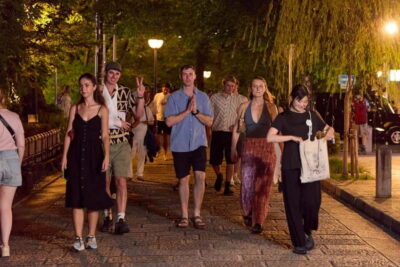
Gion Geisha District Walking Tour – Stories of Geisha
Read our review →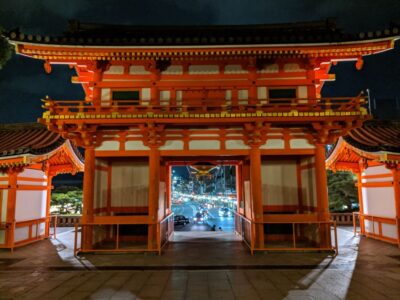
Best of Kyoto: Gion, Geisha, Pagodas & Cobblestones
Read our review →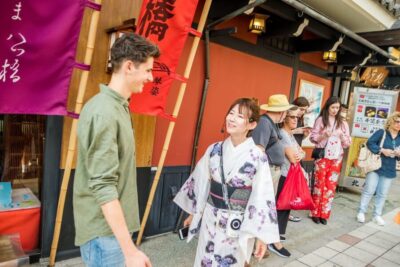
Kyoto Night Foodie Tour in Gion (9+ dishes + 6 Sake tastings)
Read our review →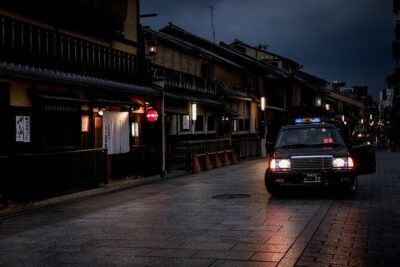
Kyoto Gion Geisha District Walking Tour – The Stories of Geisha
Read our review →
Kyoto Gion: 2-Hour Geisha Culture & History Walking Tour
Read our review →Browse the lists this tour appears in