
Reviewed · KYOTO WALKING TOURS
Kyoto: Private 2.5 Hour Historical Walking Tour
Kyoto makes more sense when someone explains what you are looking at. This private walk connects Yasaka Shrine, a Zen temple, Yasaka-no-to Pagoda, and Kiyomizu-dera in one compact route, turning beautiful sights into a readable story about religion, politics, art, and daily customs.
I especially like the careful introduction to shrine worship and the quiet pause inside Entokuin, where you can sit with traditional rooms and dry gardens. I also like the personal teaching style associated with guides such as Hisako and Hiroko, who have used hand-drawn maps, colored illustrations, and prepared notes to make difficult Japanese history easier to follow.
The main thing to consider is pace. This is a walking tour through famous parts of eastern Kyoto, and entry fees, food, drinks, insurance, and transport to the meeting point are not included. The advertised timing varies between two and two and a half hours, so allow about two and a half hours in your day.
Key points at a glance
- A private route for up to five people: You get a guide for your own small group rather than joining a large crowd.
- Four very different sights: The walk moves from Shinto worship at Yasaka Shrine to Zen gardens, a pagoda viewpoint, and Buddhist Kiyomizu-dera.
- Useful cultural instruction: Your guide explains how to worship at a shrine and how Shinto and Buddhist sites differ.
- Strong visual teaching: Guides such as Hisako and Hiroko have used their own drawings, maps, and illustrations to explain history and architecture.
- A good first Kyoto walk: The route gives you ideas and context you can use at temples and shrines for the rest of your trip.
- Extra costs are easy to overlook: Temple admission is not included, and you must arrange your own way to Yasaka Shrine.
Why this short Kyoto walk works
The best feature of this experience is its shape. You do not simply visit four unrelated photo stops. You follow a natural east Kyoto route, beginning at Yasaka Shrine and ending at Kiyomizu-dera, with smaller lanes and religious sites between the big names.
That matters because Kyoto can feel like a parade of gates, statues, roofs, and wooden buildings. Without context, you may admire the view but miss the meaning. Here, the guide begins with a map of Kyoto and explains the city’s place in Japanese history before the walk gets under way.
A private group also changes the tone. You can ask why a shrine has a particular gate, how to tell a Buddhist temple from a Shinto shrine, or what a symbol means without waiting for a large group to move on. The guide can adjust the explanation to your interests and leave time for pictures or a short rest.
Past guides have included Hisako, Hiroko, and Takayuki Ishii. The names assigned to a particular booking can vary, but the strongest pattern in the experience is the guide’s personal preparation. Several guides have brought folders with bullet points, maps, drawings, and pictures. One guide has even written down suggestions for places to visit in Kanazawa after learning a guest’s onward plans.
More walking tours in Kyoto:
- Kyoto Geisha Walking Tour: Gion District & Hidden Gems
★ 4.7 · 3,273 reviews - Kyoto: Gion Magical Night Walking Tour with Geisha Trivia
★ 4.9 · 2,393 reviews - Kyoto: Gion Geisha District Walking Tour – Stories of Geisha
★ 4.7 · 2,187 reviews
Starting at Yasaka Shrine
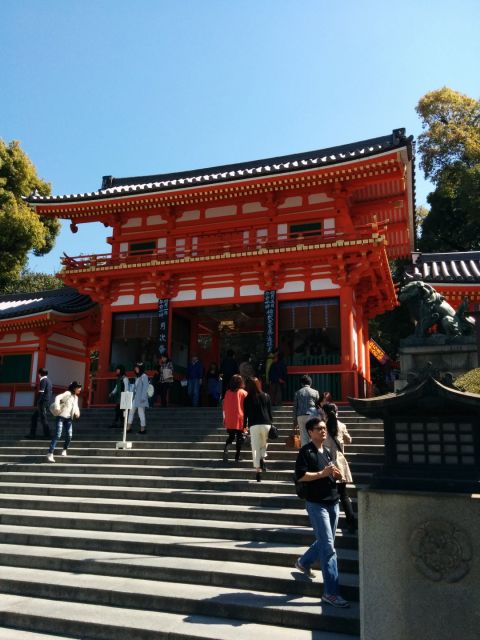
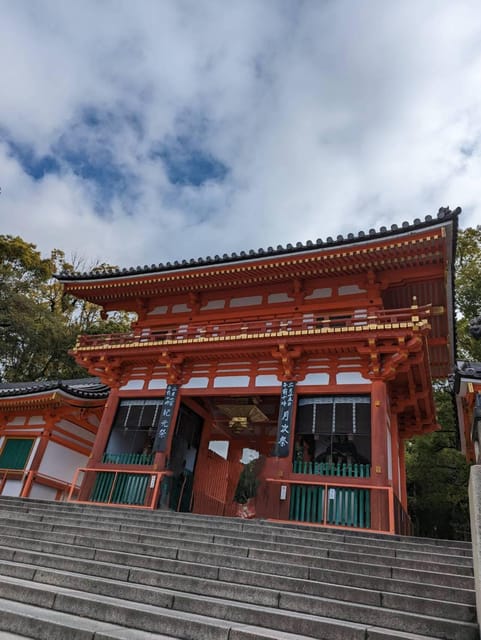
Meet at the west gate, also called the red gate, of Yasaka Shrine. If you arrive by train, Gion-Shijo Station on the Keihan Line and Kawaramachi Station on the Hankyu Line are the stated rail options. From either station, walk east along Shijo Street, then climb the stone steps toward the gate.
By bus, get off at the Gion stop. The stone steps are before the red gate, so the meeting point is not hidden inside the shrine grounds. Even so, give yourself time to find it, especially if you are arriving after a long train ride or carrying luggage.
Your guide begins with a map of Kyoto. This is a smart use of the first few minutes because it gives you a sense of direction before you start moving through Gion and the Higashiyama area.
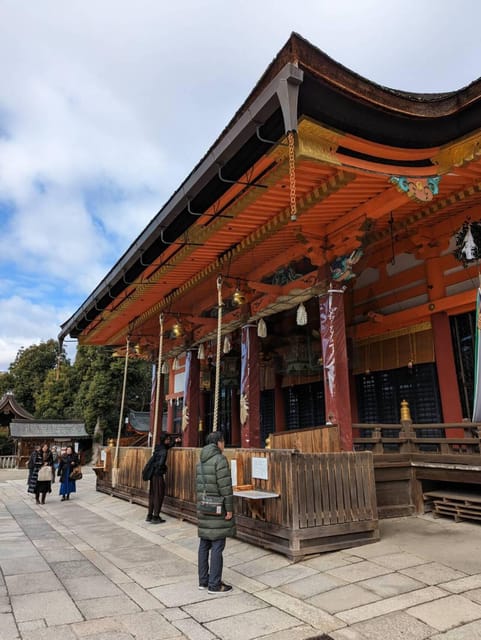
At Yasaka Shrine, the focus is on Shinto and shrine manners. You learn how to worship at a shrine rather than simply copying the person in front of you. This is one of the tour’s most useful features for first-time visitors, since the gestures, purification process, and differences between shrines and temples can otherwise blur together.
Yasaka Shrine is also a good place to begin because it introduces the older religious traditions that you will compare with Buddhism later in the walk. The guide can explain the site in relation to Kyoto’s wider story, including the political and cultural forces that shaped the city.
Maruyama Park and Nene-no-michi
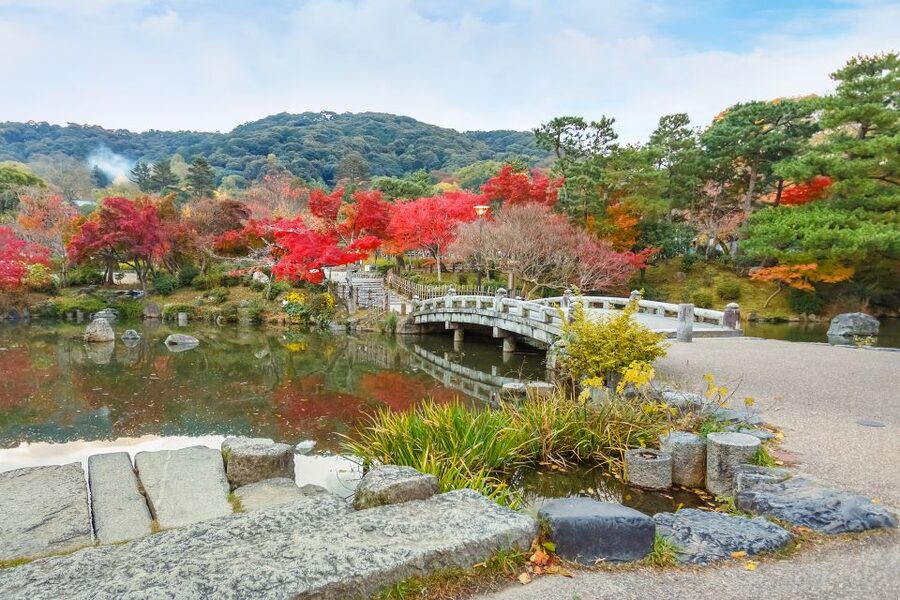
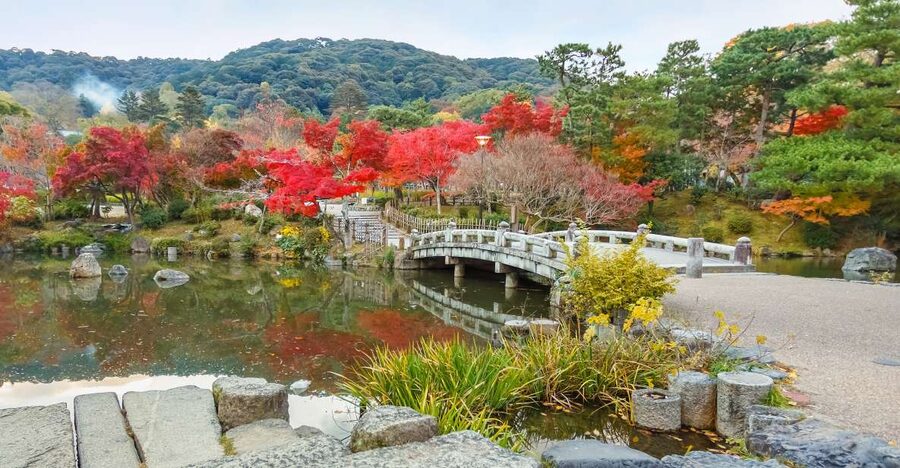
From Yasaka Shrine, you walk through Maruyama Park. The route then reaches Nene-no-michi, a well-known street named for Nene, the wife of Toyotomi Hideyoshi, a major political figure of late sixteenth-century Japan.
This section gives the walk some breathing room. You are not standing at a single monument while a guide delivers a speech. You are moving through a historic part of Kyoto and connecting names from Japan’s political past with the streets and temples around you.
The walk itself is generally easy to follow, but this is still an outdoor tour. Wear comfortable shoes, as requested, and expect stone steps, paved streets, and regular walking between stops. Weather can affect your enjoyment, and the route offers limited relief from heat or rain while you are moving between sites.
Entokuin, the quiet center of the tour
Entokuin is the most reflective stop. It is a Zen temple associated with Nene, and the visit includes dry gardens, traditional Japanese rooms, and paintings on sliding doors.
I like this part because it slows the tour down. The grander Kyoto sights can be noisy and crowded, while a Zen temple asks you to look more carefully. The dry garden is not just something to photograph. It gives your guide a chance to explain how space, rocks, gravel, rooms, and framed views work together in traditional Japanese design.
The temple’s sliding-door paintings and rooms also help you understand that Japanese architecture is not built around heavy furniture and decorated walls in the way many Western visitors expect. The rooms are spare, flexible, and closely tied to the garden outside.
One past booking included a calligraphy experience, but that is not listed as a standard part of this tour, so you should not book expecting it. The reliable feature is the visit to the temple, its rooms, and its dry gardens.
The official stop lasts about 40 minutes. That is enough time to hear an explanation, look around, and take in the quiet without turning the visit into a rushed photo stop. If you are especially interested in Zen, art, architecture, or Japanese aesthetics, this may be the part you value most.
More history-led days in Kyoto:
- Kyoto Gion: 2-Hour Geisha Culture & History Walking Tour
★ 5.0 · 1,186 reviews - Kyoto Gion Historical Walking Tour
★ 5.0 · 188 reviews - Historical Kyoto E-Bike Tour
★ 5.0 · 181 reviews - Kyoto: Nijo Castle World Heritage Guided Tour with Admission
★ 5.0 · 128 reviews
Yasaka Koshin-do and the five-storied pagoda
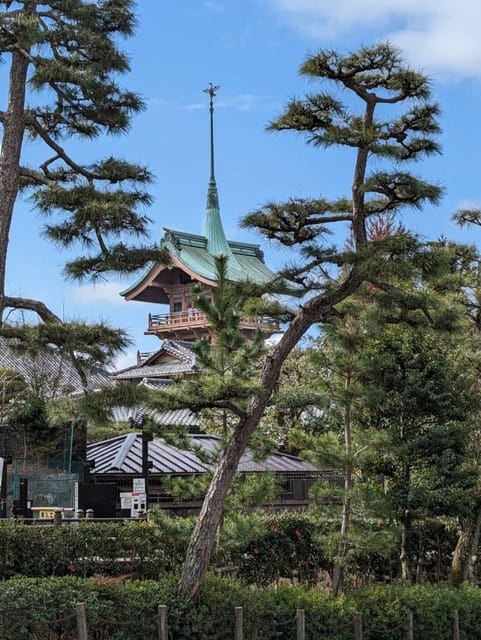
After Entokuin, the route continues on foot to Yasaka Koshin-do. The temple visit is listed at about 15 minutes, followed by a viewpoint stop.
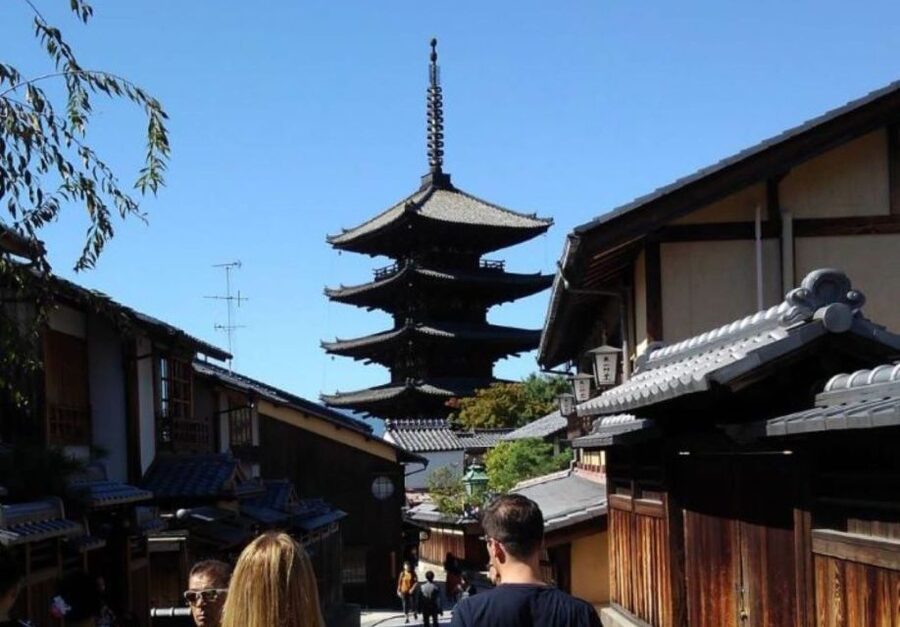
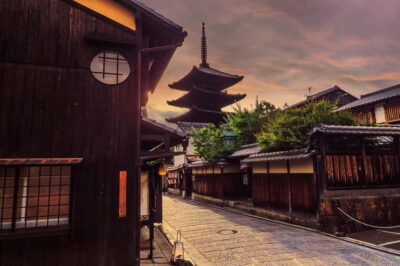
This is a smaller, more local-feeling pause than Kiyomizu-dera. You can use it to ask questions and notice details you might walk past alone. The route then brings you near Yasaka-no-to, the five-storied pagoda commonly associated with the area.
You see the pagoda from outside rather than entering it. That distinction is important if you are comparing this tour with one that includes interior access. Still, the outside view is a strong part of the walk, especially from the nearby street that is used as a popular photo spot.
The guide can explain why pagodas matter in Buddhist architecture and how this vertical structure fits into the surrounding old streets. The photo stop is not a long formal visit, but it gives you a chance to take the classic Kyoto picture without losing the historical thread.
Kiyomizu-dera and its wooden stage
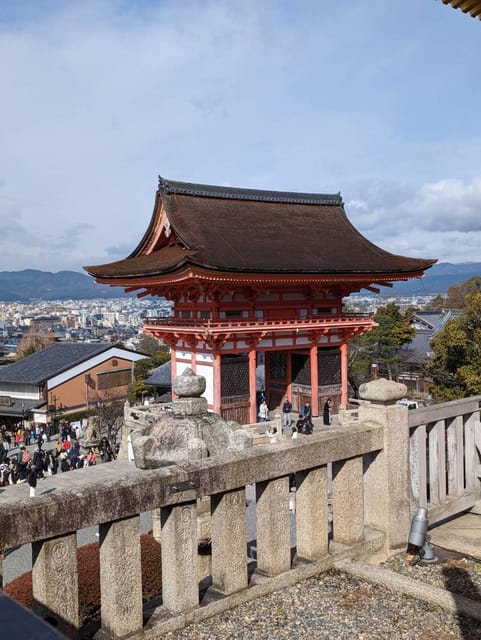
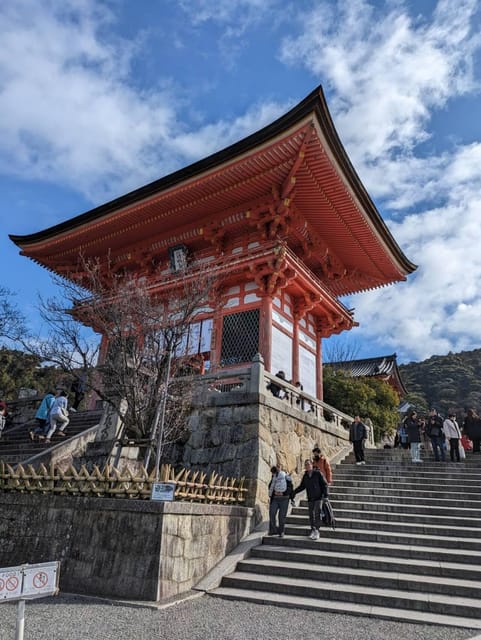
The final major stop is Kiyomizu-dera, one of Kyoto’s most visited temples. The temple was originally built in the eighth century, and its main object of worship is Kannon Bodhisattva.
The tour includes Buddhist statues and an explanation of the temple’s religious role. This is where the earlier introduction to Shinto and Zen becomes useful. You are now seeing a major Buddhist site with a better idea of what separates it from Yasaka Shrine and Entokuin.
Kiyomizu-dera’s wooden stage is the visual highlight. It is attached to the main hall and built without nails. From the stage, you can see the surrounding scenery and the three-storied Koyasu Pagoda.
Koyasu means easy birth, and women visit the pagoda to pray for a safe delivery. This is the kind of small detail that can make a familiar sight more memorable. Instead of seeing only a pretty pagoda in the distance, you understand why people have come to it for generations.
The temple visit is listed at about 35 minutes. That is enough for the guide to explain the main features, but Kiyomizu-dera can reward a much longer visit if you return later on your own. The tour ends after you leave the main hall, so you may want to stay in the area afterward.
Pure water, iron, and matchmaking
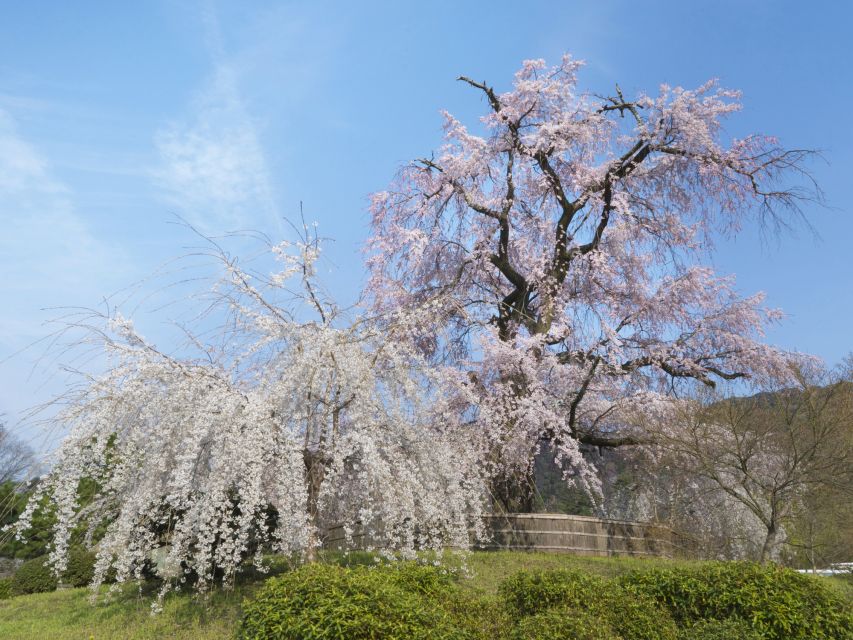
The name Kiyomizu means pure water. A stream from the mountain behind the temple runs through the grounds, and many people line up to drink from it.
Your guide also points out an iron stick and iron clogs donated to the temple. The iron stick is very heavy, and you may try to lift it. It is a welcome change from listening alone, since the small physical challenge makes the temple’s collection easier to remember.
Before the tour ends, you receive an explanation of Jishu Shrine, associated with matchmaking. This gives the final part of the visit a human touch. Kiyomizu-dera is not only architecture and scenic views. It is also a place where people come with practical hopes, including health, childbirth, love, and good fortune.
The guide’s teaching style
This experience is particularly strong when you enjoy asking questions. The most praised guides have explained Japanese religion, imperial history, samurai rule, shogunates, geography, philosophy, language, aesthetics, and modern Japan.
That does not mean every booking will become a four-hour seminar. The planned walk is short, and the route has a set shape. But the private format gives you room to follow an interesting question instead of hearing only a fixed script.
The hand-drawn material is a real advantage. Several guides have used their own maps, watercolors, pencil drawings, and simple diagrams. This can be more helpful than a wall of dates, especially when you are trying to understand the relationship between the imperial family, shoguns, Buddhist institutions, and Kyoto’s role as a former capital.
English is the listed language. The supplied experience information names an English-speaking live guide, and past visitors have described the explanations as clear. One older booking involved children aged 12 and 9, with the guide switching languages to help the family understand, but you should confirm language needs when booking if your group has special requirements.
Timing, price, and what you pay for
The listed price is $80 per private group of up to five people. That makes the tour especially good value for a family or a small group of friends. Divided among five people, the guide cost is modest for a private two to two and a half hour walk.
Admission fees to the temples are extra. Meals, drinks, insurance, and transport to the meeting point are also excluded. The listing describes the duration as two hours in one place and 2.5 hours in the title and schedule, while the route details add up to roughly two hours and five minutes before any extra conversation or delays. I would plan on two and a half hours rather than trying to fit something immediately afterward.
A private guide is most worthwhile when you want interpretation, not just transport between sights. If your main goal is to photograph Kiyomizu-dera and move on, you can visit the area independently. If you want to understand the worship customs, religious differences, historical names, and design choices, the fee buys useful context.
The free cancellation policy allows cancellation up to 24 hours before the start for a full refund. You can also reserve and pay later, which helps if your Kyoto schedule is still changing.
Who should book this walk?
I would recommend it to first-time Kyoto visitors who want a clear introduction before exploring more temples and shrines alone. It is also a good choice for families, couples, and small groups who prefer conversation over a fixed large-group script.
History fans will get the most from it, especially if you enjoy asking how religion, government, architecture, and everyday customs connect. The tour also suits visitors who like visual teaching and do not want to rely only on dates and names.
You may want something else if you dislike walking, need a fully accessible route, or want extended time inside each major temple. The route includes stone steps and outdoor walking, and the temple admission costs are extra. It is also not a food tour, a transport tour, or a broad overview of every Kyoto district.
Practical advice before you go
Wear comfortable shoes. The route includes walking between Yasaka Shrine, Entokuin, Yasaka Koshin-do, the pagoda viewpoint, and Kiyomizu-dera, with stone steps along the way.
Arrive at the red west gate of Yasaka Shrine rather than assuming the guide will meet you at a train station. Keep your phone available for the booking contact, and allow extra time if you are using public transport.
Do not schedule this as a rushed connection to another appointment. The guide may stop for questions, photos, or a short rest, and the private format works best when you are not watching the clock.
If you are visiting Kyoto early in your trip, this walk can help you read later sights on your own. You will already have practiced shrine manners and heard the basic differences between Shinto and Buddhism.
Should you book it?
Book this tour if you want meaning behind the monuments and prefer a personal guide who can explain rather than simply point. The combination of Entokuin’s quiet rooms, the pagoda viewpoint, and Kiyomizu-dera’s famous stage gives you a good mix of calm, beauty, and major Kyoto sights.
Skip it if you want a fast photo circuit, a fully self-guided visit, or a tour with all admission fees included. For most small groups, though, $80 for a private English walk is a fair price, especially when the guide brings maps, drawings, and the patience to answer questions.
FAQ
Where does the Kyoto walking tour begin?
It begins at the west gate, also called the red gate, of Yasaka Shrine.
Where does the tour finish?
The walk finishes at Kiyomizu-dera, after the visit to the main hall and the explanation of Jishu Shrine.
How long does the tour last?
The activity is described as two hours in the booking information and 2.5 hours in the title and route description. Plan for about two and a half hours.
What is included in the price?
A live English-speaking guide is included. The tour is private for a group of up to five people.
Are temple admission fees included?
No. Admission fees to the temples are not included. Meals, drinks, insurance, and transport to and from the meeting point are also excluded.
What should I bring?
Bring comfortable shoes for walking. The route includes streets, temple grounds, and stone steps.
Newest Kyoto experiences on the site
- Treasures of Kyoto: Gion & historical Walking Tour★ 5.0 · 6 reviews
- Whisk Your Own Matcha: A Zen Matcha Experience at Temple★ 3.6 · 7 reviews
- Kyoto tea town for matcha lovers★ 5.0 · 16 reviews
- Uji: Private immersion into Kyoto’s tea and reglious culture★ 5.0 · 17 reviews
- Kyoto Matcha Green Tea Tour★ 4.5 · 23 reviews
- Uji and Wazuka Matcha Farm Half Day Private Guided Tour★ 5.0 · 21 reviews
- Utilising upcycled Matcha! Creating matcha incense (Uji, Kyoto)★ 5.0 · 6 reviews
- Sacred Temple Yoga Experience in Japan★ 5.0 · 3 reviews
Kyoto Walking Tours, compared.
Kyoto Geisha Walking Tour: Gion District & Hidden Gems
Read our review →
Gion Magical Night Walking Tour with Geisha Trivia
Read our review →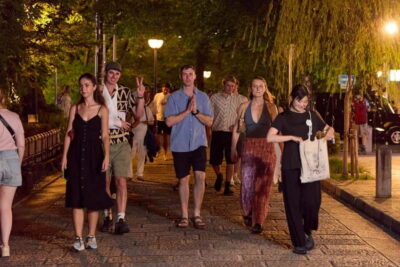
Gion Geisha District Walking Tour – Stories of Geisha
Read our review →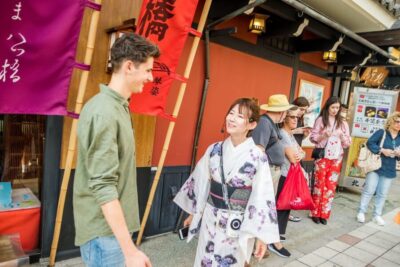
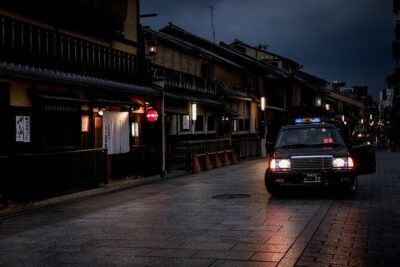
Kyoto Gion Geisha District Walking Tour – The Stories of Geisha
Read our review →
Nishiki Market Brunch Walking Tour (7 Tastings + Brunch)
Read our review →
Kyoto Arashiyama Walking Tour: Bamboo, Monkeys, Gardens & Secrets
Read our review →
Kyoto Gion: 2-Hour Geisha Culture & History Walking Tour
Read our review →Browse the lists this tour appears in