

Reviewed · KYOTO COOKING CLASSES
Japanese Cuisine Cooking Class in Kyoto
The best part of this Kyoto cooking class is its focus on everyday food rather than restaurant showmanship. Near Toji Temple, Iku teaches you to cook rice in a clay pot, make miso, and assemble a traditional meal of one soup and five side dishes. You eat what you prepare, then finish with matcha tea.
I like the small, personal setting, where you can ask about Japanese ingredients, utensils, and food customs as you work. I also like the mostly vegetable-based menu and the practical recipes, which give you a fair shot at repeating the meal at home. The main consideration is timing: this class runs only on Tuesdays and begins at 11:30 a.m.
Key points to know before booking
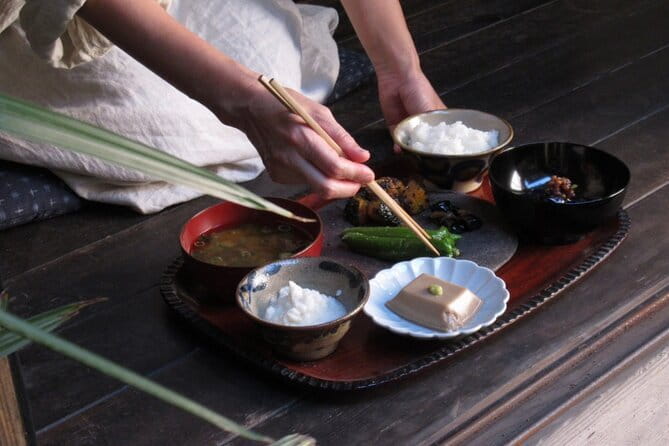
- Clay-pot rice is the hands-on centerpiece: You learn how rice is cooked in a traditional pot rather than simply watching it arrive in a bowl.
- The meal includes six prepared items: You make miso soup plus five side dishes, then plate and eat the finished food.
- Most ingredients are vegan: Fish and eggs may be used, but dietary requests can be discussed in advance.
- Iku teaches in English and Japanese: You can ask questions about cooking, tools, ingredients, and culture during the class.
- The class meets near Kyoto Station and Toji Temple: The machiya location is about a five-minute walk from Kyoto Station.
- The price covers the working essentials: At $71.67 per person, your fee includes taxes, utensils, recipes, and writing supplies.
A Kyoto cooking class built around home-style food
I like cooking classes that teach food you can understand, not just food that looks good in a photograph. This experience centers on healthy Japanese home cooking, with a menu built from vegetables and familiar staples such as rice, miso, soup, and side dishes.
The instructor is listed as Iku. The class description also identifies the teacher as a chef and nutritionist who previously ran a French restaurant serving home-style meals on Yakushima, a World Heritage site. That background helps explain the approach here: Japanese food is treated as daily nourishment, not a performance.
You should expect a practical lesson rather than a formal culinary school session. The class is conducted in both English and Japanese, and you are encouraged to ask questions as you cook. That matters in Japan, where a cooking lesson can also explain why certain ingredients are used, how utensils work, and how a dish fits into ordinary meals.
The class lasts about three hours. That gives enough time to watch demonstrations, take notes, help prepare the dishes, plate the food, and eat together without turning lunch into a rushed stop between sightseeing appointments.
More cooking classes in Kyoto:
- Ramen Cooking Class at Ramen Factory in Kyoto
★ 5.0 · 1,937 reviews - Kyoto: Ramen Cooking Class at a Ramen Factory with Souvenir
★ 4.9 · 532 reviews - Kyoto: Ramen, Gyoza, and Onigiri Cooking Class
★ 5.0 · 445 reviews
Reaching the machiya near Toji Temple
The meeting point is 411-2 Kujocho, Minami Ward, Kyoto, postal code 601-8473. The cooking space is described as a Kyoto machiya exhibition room near Toji Temple, about a five-minute walk from Kyoto Station.
That location is useful if you are staying near the station or planning to visit Toji Temple the same day. You do not need private transportation, and the activity ends back at the meeting point. Public transportation is nearby, though the tour does not include any private transfer.
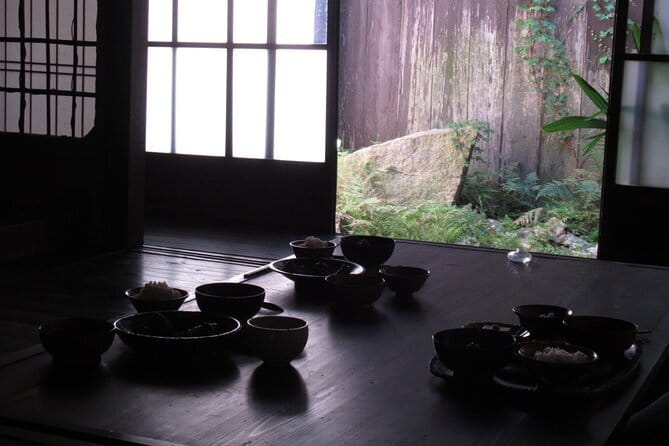
The setting matters. A machiya is a traditional Kyoto-style townhouse, so you are not simply entering a generic cooking studio. The available information does not promise a full architectural tour, but the venue gives the class a more local feel than a large commercial kitchen.
Plan your morning carefully. The start time is 11:30 a.m., and the class runs for roughly three hours. If you want to visit Toji Temple before cooking, allow enough time to reach the meeting point without arriving flustered. If you prefer to visit after lunch, the end point makes that simple as well.
What happens first: watching, asking, and taking notes
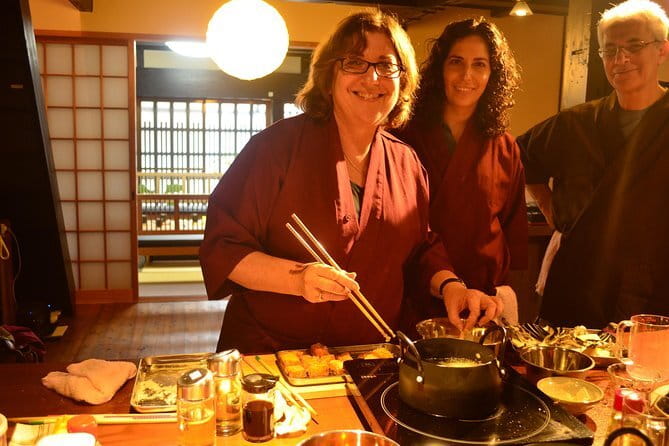
The lesson begins with demonstrations from the instructor. You will watch the cooking process, take notes, taste elements of the food, and help with parts of the preparation.
One useful detail from the class description is the supply of writing implements and recipes. You are not expected to rely on memory alone. Bring the information home, especially if you want to repeat the dishes in your own kitchen.
The instruction appears to suit beginners. The goal is to explain how to prepare the dishes and how to use basic ingredients, rather than test your knife skills or professional cooking speed. You can ask about Japanese cuisine, utensils, and food culture as the work progresses.
The class is described as private, with only your group participating. At the same time, it is also described as a small-group class, so the exact feel may depend on how your booking is arranged. Either way, this is not presented as a large class where you watch from the back of a room.
Clay-pot rice and the value of simple technique
Rice is easy to overlook in Japan because it arrives at nearly every meal, perfectly cooked and ready to eat. Learning to prepare it in a clay pot gives you a closer look at the technique behind that everyday staple.
The class demonstrates how to cook rice in a clay pot, then lets you take part in making the meal. This is one of the more useful parts of the lesson because the method is tied to a basic food you can use again and again.
The information provided does not specify the exact clay pot, rice variety, or cooking time, so you should not expect a detailed equipment list before arrival. Still, the lesson clearly treats rice as more than a side dish. It is part of the structure of the meal and a chance to understand a traditional cooking method.
I would pay close attention here and write down the visual cues the instructor gives you. Timing, heat, and resting are often just as important as the ingredient list. The supplied recipe should help, but the demonstration is likely where the practical details become easiest to grasp.
Same city, a completely different kind of day:
- PERFECT KYOTO 1-Day Bus Tour
★ 5.0 · 13,518 reviews - Kyoto: Fushimi Inari, Kinkakuji, Bamboo Grove 1 Day Bus Tour
★ 4.8 · 4,316 reviews - Kyoto: Tea Ceremony in a Traditional Tea House in Kiyomizu
★ 4.9 · 3,519 reviews - Kyoto Geisha Walking Tour: Gion District & Hidden Gems
★ 4.7 · 3,273 reviews
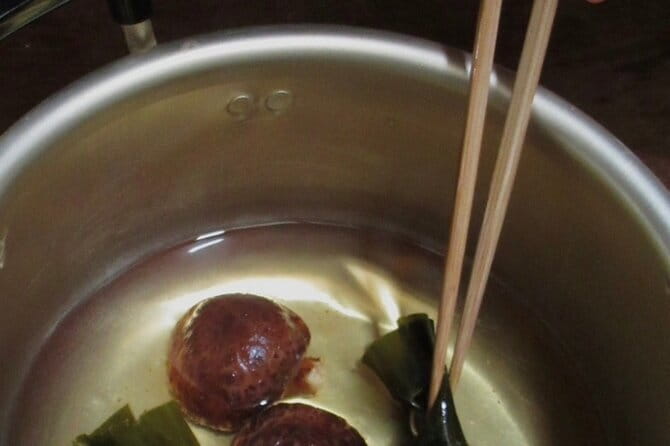
Making miso and learning the role of fermentation
Miso is another key lesson. You will learn how to make or prepare miso as a fermented food, then use it in the meal, including the soup.
That is valuable because miso can seem like a single flavor when you encounter it in restaurants. In a cooking class, you can ask how it is used, what it contributes to soup, and how it fits into Japanese home cooking.
The available details do not say that you will take miso home or complete a long fermentation process during the three-hour class. Keep your expectations focused on learning the method and role of miso, not on producing a finished batch for later storage.
For anyone interested in healthy cooking, this part gives the class more substance than a simple recipe exchange. Fermented foods are part of the lesson, and the instructor’s nutrition background adds useful context without turning the class into a lecture.
The one-soup, five-side-dish meal
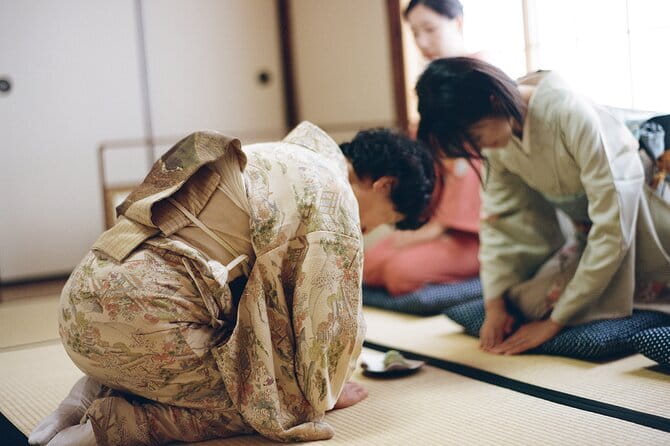
After the demonstrations and preparation, you will complete a meal of one soup and five side dishes. The menu is based largely on vegetables, and one description characterizes the dishes as vegetable-focused.
This meal format is a strong reason to choose the class. Japanese home cooking often works through several modest dishes rather than one oversized main course. You get to see how rice, soup, pickled or seasoned vegetables, and other small plates work together at the table.
The exact dishes can vary, and the supplied information does not provide a fixed menu. That is worth keeping in mind if you need to avoid particular ingredients. Fish and eggs may be used, even though most ingredients are vegan.
You will help prepare the dishes, plate them, and then eat what you have made. The plating step gives the meal a finished shape, while eating together lets you judge how the flavors balance. One of the class’s strengths is that the food is not made only for display. You sit down to a complete meal at the end.
Dietary requests and vegan suitability
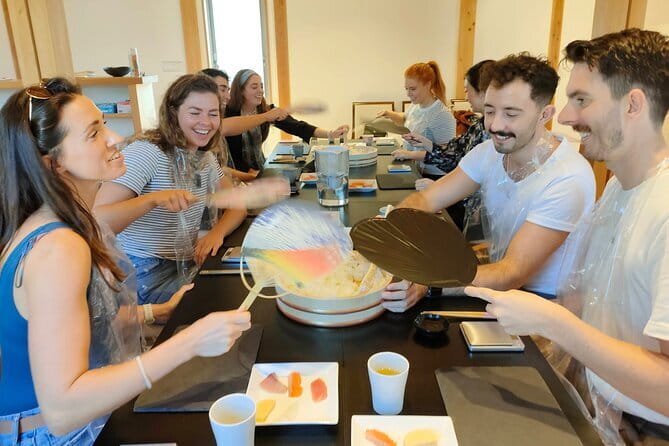
Most of the ingredients are vegan, but this is not automatically a completely vegan class. Fish and eggs may be included, so you should contact Iku in advance if you have allergies or follow a strict vegan diet.
This advance message is especially important for people with serious allergies. The class information says dietary choices can be accommodated, but it does not list every possible substitution or guarantee a separate preparation area.
Vegetarians and people who simply want more vegetable-based food should find the menu appealing. If you eat fish and eggs but prefer a lighter Japanese meal, the class also fits that preference well.
I would send a clear message before booking or as soon as you book. State the ingredient you need to avoid and whether your request is a preference, an allergy, or a strict dietary rule. That gives the instructor a fair chance to respond.
English instruction and the personal scale
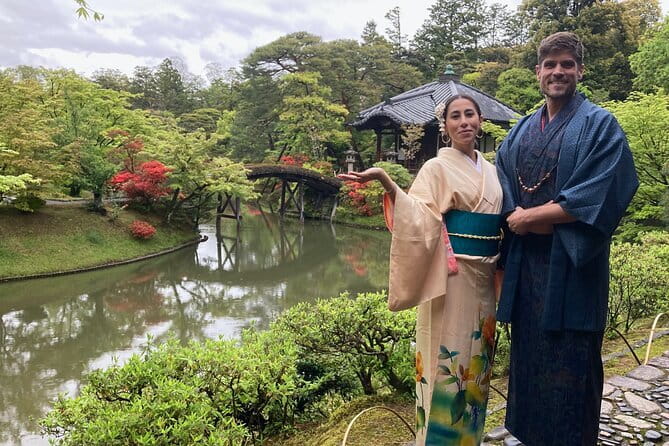
The class is taught in English and Japanese. That makes it easier to follow the demonstrations and ask questions, especially when discussing unfamiliar ingredients or kitchen tools.
The personal scale is another advantage. The experience is designed for a private group, and the small-class format makes it easier to see what the instructor is doing. You should have more room to ask why a technique is used, not just what to do next.
The available comments about the experience point to careful teaching, clear answers, attractive presentation, and time spent explaining basic ingredients. I would treat those as signs of the class’s style rather than promises that every session will be identical.
The instructor’s name appears as Iku in the experience details, while individual comments also use the name Ikumi and one refers to Haneta. If knowing the instructor’s exact name matters to you, confirm it when you book. The important practical point is that the class is led directly by the chef and nutritionist described above, not by an anonymous demonstration team.
Is $71.67 a fair price?
At $71.67 per person, the class costs more than a standard lunch in Kyoto, but you are paying for much more than the food. The price includes about three hours of instruction, ingredients, cooking utensils, recipes, writing supplies, all fees, and taxes.
The value is strongest if you want an activity that combines lunch with useful instruction. You prepare several dishes, learn two traditional techniques, and receive recipes to use later. For a private activity with only your group participating, that is a reasonable package for people who value personal attention.
The value is weaker if you only want to eat Japanese food. You will spend part of the three hours watching, taking notes, and working in the kitchen. A restaurant meal would be easier and probably cheaper, but it would not teach you how to make clay-pot rice, miso-based soup, and several side dishes.
The class also makes sense for families and friends who want to share a hands-on activity. One published account describes a family looking for an authentic experience, while another notes that a group of three appreciated the intimate format. Those details suggest the class works best when everyone in your party wants to participate, not when one person cooks and the others wait.
Timing, cancellation, and practical details
The class takes place every Tuesday and starts at 11:30 a.m. It lasts approximately three hours and ends at the same meeting point.
Mobile tickets are provided, and booking confirmation is received at the time of booking. Service animals are allowed, and the venue is near public transportation.
Cancellation is free up to 24 hours before the scheduled start time. If you cancel inside that period, the payment is not refunded, and changes made inside 24 hours are not accepted. The cut-off follows Kyoto local time.
The class is often booked well ahead, with an average booking lead time of 74 days. That suggests you should reserve early if Tuesday is your only workable day or if you are planning around a tight Kyoto schedule.
Who should book this Kyoto class?
I would choose this experience if you want a calm, food-centered activity with direct instruction. It suits curious beginners, vegetarians, people interested in Japanese home cooking, and anyone who wants a meal that feels connected to local habits rather than a simple tasting stop.
It is also a good choice for a small private group that enjoys asking questions. The English and Japanese format removes much of the language worry, while the recipes and writing materials make the class useful after your holiday.
You may want to skip it if you need a fully fixed menu, cannot eat fish or eggs without confirmed substitutions, or have no interest in cooking. The menu is mostly vegan, but it is not automatically strict vegan, and the exact five side dishes are not specified in advance.
Should you book it?
Book this class if you want to understand how a Japanese meal is built, not just sample one. The combination of clay-pot rice, miso, five side dishes, a machiya setting, and a private group gives you a focused three-hour experience near Kyoto Station.
Before paying, send your dietary requirements to Iku, confirm the instructor’s name if needed, and check that a Tuesday at 11:30 a.m. fits your plans. At $71.67, the class is good value for anyone who will use the recipes and enjoys hands-on learning. If you only want lunch, spend the money at a restaurant instead.
FAQ
Where does the Japanese cooking class take place?
The class takes place at 411-2 Kujocho, Minami Ward, Kyoto, postal code 601-8473. The venue is a Kyoto machiya exhibition room near Toji Temple, about a five-minute walk from Kyoto Station.
What time does the class begin?
The class begins at 11:30 a.m.
How long does the experience last?
The cooking class lasts approximately three hours.
What food will I prepare?
You will help make rice, soup, and several side dishes. The completed meal includes one soup and five side dishes.
Is the food vegan?
Most ingredients are vegan, but fish and eggs may also be used. Contact the instructor in advance if you need a completely vegan meal.
Can I mention allergies or dietary restrictions?
Yes. You should tell the instructor about allergies in advance. You should also send a message ahead of time if you require a completely vegan diet.
Is the class taught in English?
Yes. Instruction is provided in both English and Japanese.
What is included in the price?
The price includes all fees and taxes, cooking utensils, recipes, and writing implements.
Can I cancel for a full refund?
Yes, if you cancel at least 24 hours before the experience start time. Cancellations made less than 24 hours before the start are not refunded, and changes inside that period are not accepted.
Newest Kyoto experiences on the site
- Treasures of Kyoto: Gion & historical Walking Tour★ 5.0 · 6 reviews
- Whisk Your Own Matcha: A Zen Matcha Experience at Temple★ 3.6 · 7 reviews
- Kyoto tea town for matcha lovers★ 5.0 · 16 reviews
- Uji: Private immersion into Kyoto’s tea and reglious culture★ 5.0 · 17 reviews
- Kyoto Matcha Green Tea Tour★ 4.5 · 23 reviews
- Uji and Wazuka Matcha Farm Half Day Private Guided Tour★ 5.0 · 21 reviews
- Utilising upcycled Matcha! Creating matcha incense (Uji, Kyoto)★ 5.0 · 6 reviews
- Sacred Temple Yoga Experience in Japan★ 5.0 · 3 reviews
Kyoto Cooking Classes, compared.
Ramen Cooking Class at Ramen Factory in Kyoto
Read our review →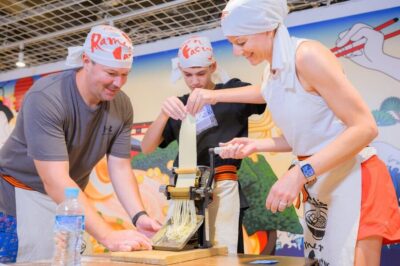
Ramen Cooking Class at a Ramen Factory with Souvenir
Read our review →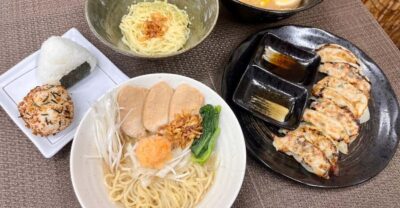
Japanese Washoku Bento Small Group Cooking Class
Read our review →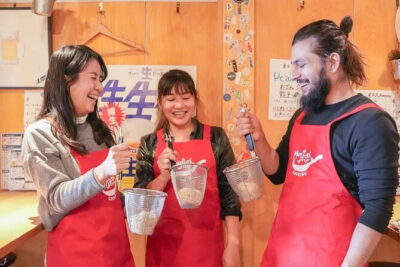
Kyoto Ramen and Gyoza Cooking Class with Professional Chefs
Read our review →
Gyoza Cooking Class in Kyoto: Traditional Japanese Dumplings
Read our review →Browse the lists this tour appears in